
Dogs can have a wide range of fruits, vegetables, proteins, and human foods, and Golden Retrievers are well-suited to most of them when prepared and served appropriately. The questions owners search for most, from “can dogs have blueberries” to “can dogs have chicken every day,” all have specific answers, and for this breed, those answers come with portion context that generic lists never provide.
Golden Retrievers are one of the highest-risk breeds for obesity-related health decline. Their documented tendency toward weight gain, joint disease, and certain cancers means every food that enters the bowl, including extras that seem minor, deserves a quick check against daily caloric limits. What is safe for a Labrador at the same weight is often safe for a Golden too, but the frequency and volume that makes sense for this breed is more conservative. I apply a stricter serving discipline with Goldens than I would with many other breeds, not because the foods are different, but because the cumulative risk of overfeeding is higher.
Fruit dog food additions are one of the most common questions I see. Golden Retrievers can have fruit as a supplement, but the natural sugar content means frequency and portion size matter more than most owners expect, particularly for seniors with slower metabolisms.
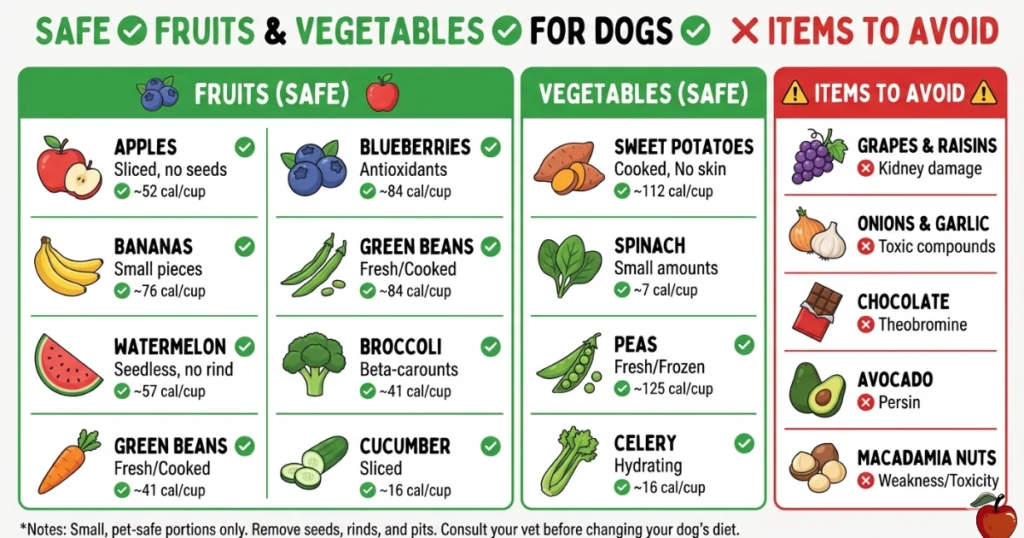
Can Dogs Have These 10 Fruits? Golden Retriever Answers
Can dogs have the most common fruits? Yes, with preparation. Here are the ten owners’ questions, with serving guidance for a 65-pound adult Golden Retriever.
Blueberries.
Yes. One of the best fruit dog food additions for this breed. Ten to fifteen berries per serving. Rich in antioxidants that support cellular health and may reduce oxidative stress, which is relevant for a breed with above-average cancer rates according to the Morris Animal Foundation Golden Retriever Lifetime Study.
Apples.
Yes, with preparation. Remove the core and all seeds before serving. Apple seeds contain amygdalin, which metabolizes into cyanide, according to the AKC. One to two thin slices per serving is appropriate.
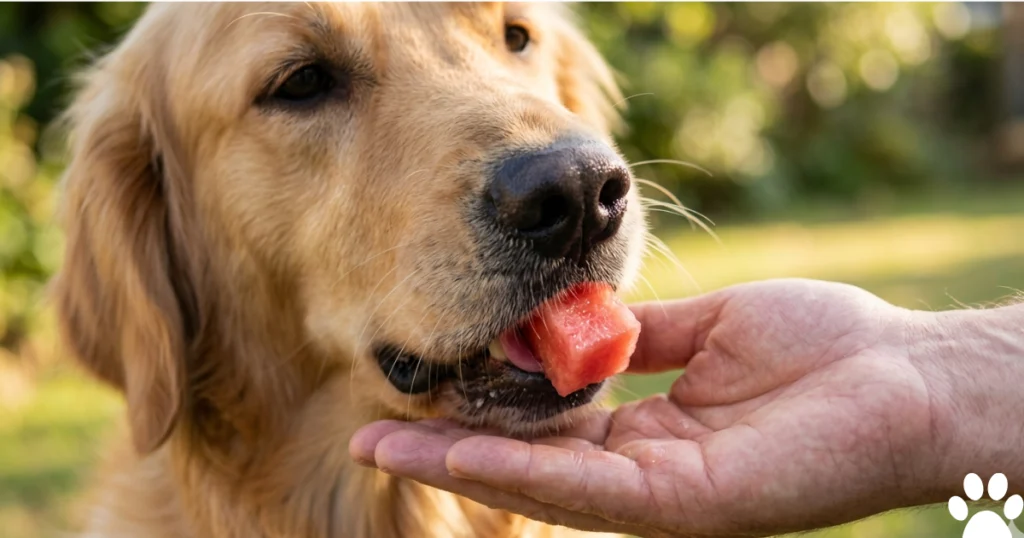
Watermelon.
Yes. Remove the rind and every seed before serving. High water content makes it excellent for hydration in warm weather. Two small cubes are a sensible serving for a 65-pound Golden.
Strawberries.
Yes. Two to three medium berries. High in vitamin C, moderate in sugar. Fine for daily use at this portion.
Bananas.
Yes, but sparingly. One to two thin slices occasionally. Bananas contain more sugar and calories than most fruits and are not the best daily choice for weight-prone Goldens.
Mango.
Yes. Remove the pit and skin before serving. The pit contains small amounts of cyanide and is a serious choking risk. One to two small cubes occasionally. Mango is high in sugar and best used as an infrequent treat.
Pineapple.
Yes, in small amounts. Remove the skin and core. Two to three small chunks occasionally. High in natural sugar, so use it rarely for a senior Golden or one managing their weight.
Pears.
Yes. Remove the core and seeds. One to two small slices. Similar nutritional profile to apples with comparable sugar content.
Oranges.
Yes, in very small amounts. Remove peel and seeds. One segment for a 65-pound Golden. The high acidity can cause stomach upset in sensitive dogs, so introduce slowly.
Raspberries.
Yes, but in strict moderation. Raspberries contain naturally occurring xylitol at very low levels. They are not toxic in the amounts typically fed as treats, but I keep this to five or six berries at most for an adult Golden and avoid feeding them to seniors with any known metabolic conditions.
Grapes and cherries.
No. Grapes and raisins cause acute kidney failure through an unidentified mechanism. No safe dose exists. Cherries contain cyanide in their pits, stems, and leaves. Call your vet immediately if your Golden eats either of them.
Can Dogs Have These 10 Vegetables? The Golden Retriever Breakdown
Can dogs have vegetables as regular extras? Yes, and for this breed, several vegetables are more useful than most commercial treats.
Carrots.
Yes, raw or cooked. The single best daily extra for a weight-prone Golden Retriever. Low in calories, high in fiber, and satisfying to chew. A small handful of baby carrots is appropriate for a 65-pound adult.
Green beans.
Yes, plain and unseasoned. An excellent low-calorie meal extender. Replacing up to a quarter of kibble with plain green beans cuts caloric intake without reducing bowl volume.
Broccoli.
Yes, in small amounts. Two tablespoons of florets for a 65-pound Golden. The isothiocyanate compounds in broccoli can irritate the gastrointestinal tract at higher doses, so treat it as an occasional rather than a daily supplement.
Pumpkin.
Yes, plain canned, no additives. 1 to 2 tablespoons per meal. One of the most genuinely useful vegetables dogs can have for digestive health. It normalizes both loose and firm stools through soluble fiber.
Sweet potato.
Yes, cooked and plain only. One to two tablespoons. Never raw. Raw sweet potato is harder to digest and can cause digestive upset in sensitive Goldens.
Celery.
Yes. Small pieces, no seasoning. Low in calories and provides a mild breath-freshening effect from the water and fiber content. Cut into small rounds to prevent choking.
Peas.
Yes, fresh or frozen. Avoid canned peas with added sodium. A small handful is fine. Peas contain purines, which can be problematic for dogs with kidney issues, so check with your vet before feeding any Golden with known kidney concerns.
Bell peppers.
Yes, raw or lightly cooked, no seeds. Red bell peppers are the highest in antioxidants and are the best choice. Remove all seeds and white membrane before serving. A few small strips are enough.
Spinach.
Yes, in very small amounts and only occasionally. Spinach contains oxalic acid, which blocks calcium absorption and can stress the kidneys when consumed in large amounts. A few leaves occasionally are fine. Do not make it a regular extra for Golden Retrievers, given the breed’s documented kidney health considerations in later life.
Cucumber.
Yes. One of the lowest-calorie vegetables dogs can have. Mostly water, mildly crunchy, and very well-tolerated. Excellent for senior Goldens or any dog in active weight management.
Onions, garlic, leeks, and chives. No, in any form. These alliums destroy red blood cells by causing oxidative damage to hemoglobin, leading to hemolytic anemia, according to VCA Animal Hospitals. All forms are toxic, including powdered, cooked, and dehydrated. Call your vet immediately after any ingestion.
Can Dogs Have Chicken, Beef, and Other Proteins?
Can dogs have chicken?
Yes. Plain, boneless, skinless cooked chicken is one of the safest and most digestible proteins for Golden Retrievers. One to two ounces per serving. Never feed cooked chicken bones, which splinter and can cause intestinal puncture or obstruction.
Can dogs have beef?
Yes, lean and cooked, without seasoning. Plain cooked ground beef or lean steak cuts with no fat trimming are fine. Remove excess fat before serving. High-fat cuts and beef preparations increase the risk of pancreatitis, which is relevant for any overweight Golden.
Can dogs have turkey?
Yes. Plain, boneless, skinless cooked turkey with no seasoning is safe. It is a useful protein rotation for Goldens showing early signs of sensitivity to chicken, since the two proteins are distinct enough immunologically to reduce cross-reactivity. Never feed turkey skin, which is high in fat and a known digestive trigger.
Can dogs have eggs?
Yes, fully cooked only. One egg, two to three times per week for a 65-pound adult. Raw egg whites contain avidin, which blocks biotin absorption over time and can cause deterioration of the coat and skin.
Can dogs have fish?
Yes. Cooked salmon, sardines in water, and whitefish are excellent for Golden Retrievers. Omega-3 fatty acids from fish reduce systemic inflammation, support joint health, and visibly improve coat condition. Two to three ounces of cooked salmon, two to three times per week, is a practical target.

Can Dogs Have Frozen, Canned, Cooked, or Homemade Versions?
The competitor gap in every “can dogs have” article is the preparation method. Owners do not just ask if their dog can have blueberries. They ask if their dog can have frozen blueberries, canned fruit, or homemade dog food. The answer changes depending on how the food is prepared.
Frozen.
Yes, for most fruits and vegetables. Frozen blueberries, peas, and green beans are safe and well-tolerated. Frozen fruit is often preferred as a warm-weather treat. Avoid any frozen product with added sugar, syrup, or artificial sweeteners, especially xylitol.
Canned.
Depends on the contents, not the format. Plain canned pumpkin with no additives is excellent. Canned vegetables packed in plain water with no sodium added are generally safe. Canned fruit in syrup or with added sugar is not appropriate. Always check the label for sweeteners before serving any canned product.
Cooked.
For vegetables and proteins, plain cooking improves digestibility. Steam or boil without any oil, butter, salt, garlic, or onion. A baked sweet potato with skin removed is safe. Fried versions of any food are unsuitable because the fat content increases the risk of pancreatitis, particularly for Golden Retrievers already carrying excess weight.
Raw.
Safe for most vegetables, such as carrots, cucumbers, bell peppers, and celery. Not recommended for sweet potato or pumpkin, which are better cooked. Not recommended for proteins. Raw chicken and fish pose bacterial and parasitic risks that cooking eliminates.
Homemade dog food.
Possible, but nutritionally complex. A homemade diet for a Golden Retriever requires careful balancing of protein, fat, calcium, and micronutrients. Homemade meals fed without a veterinary nutritionist’s input commonly result in calcium and zinc deficiencies over time. If you pursue this route, work from a recipe formulated by a board-certified veterinary nutritionist rather than a general internet guide.

Expert Insight
The preparation method matters as much as the ingredient. A plain cooked sweet potato is a valuable fiber source for a Golden Retriever. That same sweet potato fried in oil, seasoned, or mixed with butter changes its risk profile entirely. For owners adding human food to a Golden’s diet, the rule is simple: the plainer the preparation, the safer and more useful the addition.
When to Call the Vet
| URGENT — Call immediately | MONITOR — Watch 24–48 hours |
| Grapes, raisins, or grape juice consumed in any amount | Loose stool after a new fruit or vegetable introduction |
| Onion, garlic, or allium ingestion in any form | Single vomiting episode with no other symptoms |
| Chocolate or xylitol ingestion | Mild gas after broccoli, peas, or cauliflower |
| Cherry pit, mango pit, or apple seeds swallowed | Slight lethargy after a larger than usual food extra |
| Seizures, collapse, or tremors after eating | Temporary loose stools after frozen fruit |
| Pale or white gums at any point | Reduced appetite for under 24 hours |
Decision Framework: Can Dogs Have These Based on Your Golden’s Situation
If your Golden is under 6 months old, skip all fruit dog food additions and human food extras entirely. Their digestive system is still settling, and introducing variables makes it harder to identify reactions.
If your adult Golden is at a healthy weight and under 7 years old, the full lists above apply. Apply the 10% treat rule: no more than 140 to 180 calories of extras daily for a 65-pound active adult.
If your Golden is overweight or your vet has flagged weight concerns, remove all high-sugar fruits, including bananas, mangoes, and pineapples. Default to carrots, cucumber, green beans, and plain cooked fish as the only daily extras. These support satiety and coat health without adding meaningful calories.
If your Golden is 8 or older, reduce fruit frequency and prioritize vegetables and omega-3 rich proteins. Senior Goldens with slowed metabolism gain weight from extras more quickly than owners expect.

For more on building a complete feeding plan, see our safe foods for dogs guide, the dog friendly foods breakdown, and the full human food list for dogs.
Can dogs have blueberries every day?
Yes, dogs can have blueberries daily in small amounts. Ten to fifteen berries is an appropriate daily serving for a 65-pound Golden Retriever. They are low in sugar relative to other fruits and provide antioxidants that may support cellular health in a breed with elevated cancer risk.
Can dogs have bananas as a regular treat?
Dogs can have bananas, but not as a daily treat. Bananas are high in natural sugar and calories. Occasionally, one to two thin slices are appropriate for an adult Golden Retriever. For a Golden managing their weight, rotate bananas out in favour of lower-sugar options like blueberries or apple slices.
Can dogs have frozen fruit safely?
Yes, dogs can have frozen fruit as long as no sugar, syrup, or sweeteners have been added. Frozen blueberries and watermelon cubes are popular warm-weather treats. Always check the ingredient label before serving any commercially frozen fruit product. Xylitol in any frozen product is immediately dangerous.
Can dogs have mango, and is it safe for Golden Retrievers?
Dogs can have mango with the pit and skin fully removed. The pit contains cyanide and poses a serious choking risk. For a 65-pound Golden Retriever, one to two small cubes occasionally is fine. Mango is high in sugar, making it an infrequent treat rather than a daily one.
Can dogs have fruit dog food mixed into their kibble?
Yes, adding fruit dog food extras to kibble is safe when the fruit is prepared correctly and portioned to account for daily caloric intake. Plain blueberries, apple pieces, or small amounts of cooked pumpkin are suitable additions. Avoid anything with added sugar or sweeteners, and reduce kibble slightly to compensate for the extra calories.
Is fruit dog food a good supplement for Golden Retrievers with joint issues?
Blueberries and tart cherries are the most relevant fruit additions to dog food for joint support in Golden Retrievers. The antioxidants in blueberries reduce oxidative stress in joint tissue. They are not a substitute for omega-3 supplementation or a veterinarian-recommended joint supplement, but they provide a useful low-calorie addition.
Can dogs have canned fruit safely?
Dogs can have canned fruit only when it is packed in plain water with no added sugar, syrup, or sweeteners. Most commercially canned fruit contains syrup, which makes it unsuitable. Plain canned pumpkin with no additives is a safe and useful exception. Always read the full ingredient label before serving any canned product.
Can dogs have cooked chicken every day?
Dogs can have plain cooked chicken regularly, but daily feeding as the sole protein source increases the risk of developing a food sensitivity over time. Golden Retrievers are more prone to protein-based food allergies than many breeds. Rotating between chicken, turkey, salmon, and eggs across the week reduces that risk while keeping protein intake consistent.
Can dogs have raw vegetables, or do they need to be cooked?
Dogs can have most vegetables raw, including carrots, cucumbers, celery, and bell peppers. Broccoli and green beans are safe raw or cooked. Sweet potato and pumpkin are better served cooked since raw versions are harder to digest. Cooking should always be plain, with no oil, butter, salt, garlic, or onion.
Can dogs have beef safely?
Yes, dogs can have plain cooked lean beef with no seasoning. Remove visible fat before serving, as high-fat beef cuts elevate pancreatitis risk in overweight dogs. Ground beef at 90% lean or leaner, cooked without oil or seasoning, is a practical choice. Never feed processed beef products like hot dogs, sausage, or deli meat due to high sodium and additive content.
Can dogs have fried chicken or baked chicken differently?
Dogs can safely have plain baked chicken. Fried chicken is not appropriate because the cooking oil sharply increases the fat content and may contain seasoning coatings containing onion or garlic powder. Baked, boiled, or steamed, with no seasoning, is always the safest preparation method for any chicken dish.
Can dogs have homemade food instead of kibble?
Dogs can have homemade food, but a complete homemade diet requires input from a board-certified veterinary nutritionist to avoid nutritional deficiencies. Calcium and zinc shortfalls are the most common issues in homemade diets fed without professional guidance. Homemade extras alongside a complete commercial kibble are much simpler to manage safely than a fully homemade diet.
Can Golden Retrievers have the same fruits as other breeds?
Golden Retrievers can have the same fruits as most other breeds, but the serving sizes and frequency should be more conservative. Their food motivation means they will eat more than is ideal if given the opportunity, and their above-average obesity and cancer rates make caloric discipline around extras more important than for many other breeds.
Can Golden Retrievers have frozen vegetables as a treat?
Yes, frozen green beans and frozen peas without added sodium are excellent treat options for Golden Retrievers, especially those managing their weight. They are low in calories, and the cold temperature provides a satisfying texture. Avoid any frozen vegetable product with added sauce, seasoning, or salt.
What should I do if my Golden Retriever eats fruit they should not have?
For grapes, raisins, or cherries, call your vet immediately, regardless of the amount consumed. For high-sugar fruits like mango or pineapple in excess, monitor for loose stools, vomiting, or lethargy over 24 hours. Symptoms that persist beyond 24 hours or any signs of abdominal pain or pale gums require immediate veterinary attention.
Conclusion
Dogs can have a wide range of fruits, vegetables, proteins, and human foods, and Golden Retrievers are no exception. The answers to the most common “can dogs have” questions are almost always yes, with one condition: the preparation must be plain, and the portion must fit within the breed’s daily caloric limits. That single discipline, applied consistently, is what keeps a broad and varied diet genuinely safe for this breed.
The one actionable step I recommend for any Golden Retriever owner is to pick two or three approved fruit dog food extras, two or three vegetable additions, and one protein rotation, then stick to those while counting them against the daily 10% treat allowance.
Golden Retrievers are curious, food-motivated dogs, and most owners find their dog has very clear opinions about which fruits and vegetables they enjoy once they start exploring. Has your Golden surprised you with a food preference you did not expect? Some Goldens go wild for cucumber and ignore blueberries entirely, while others treat frozen green beans like the best reward they have ever received. What has your Golden decided they cannot live without, and how did you discover it?