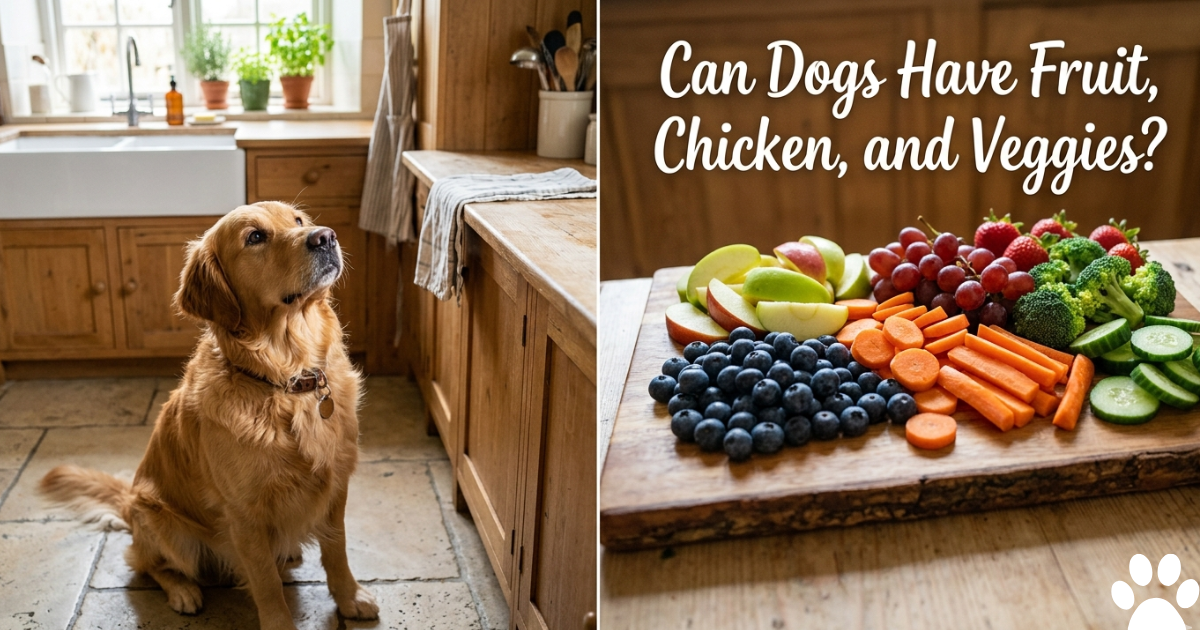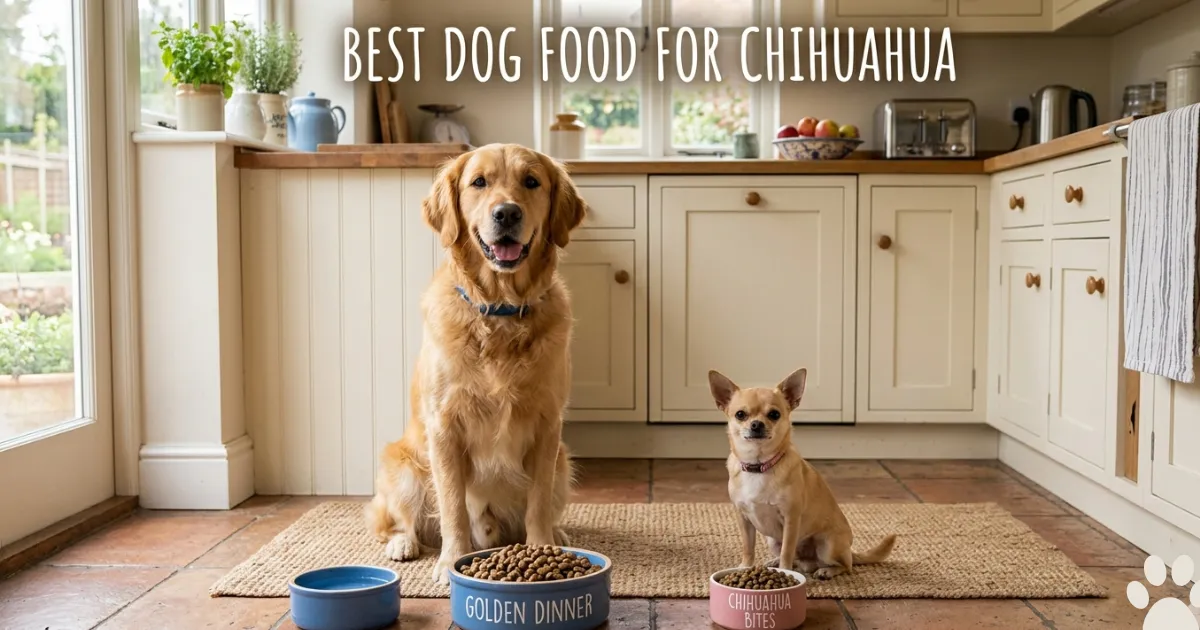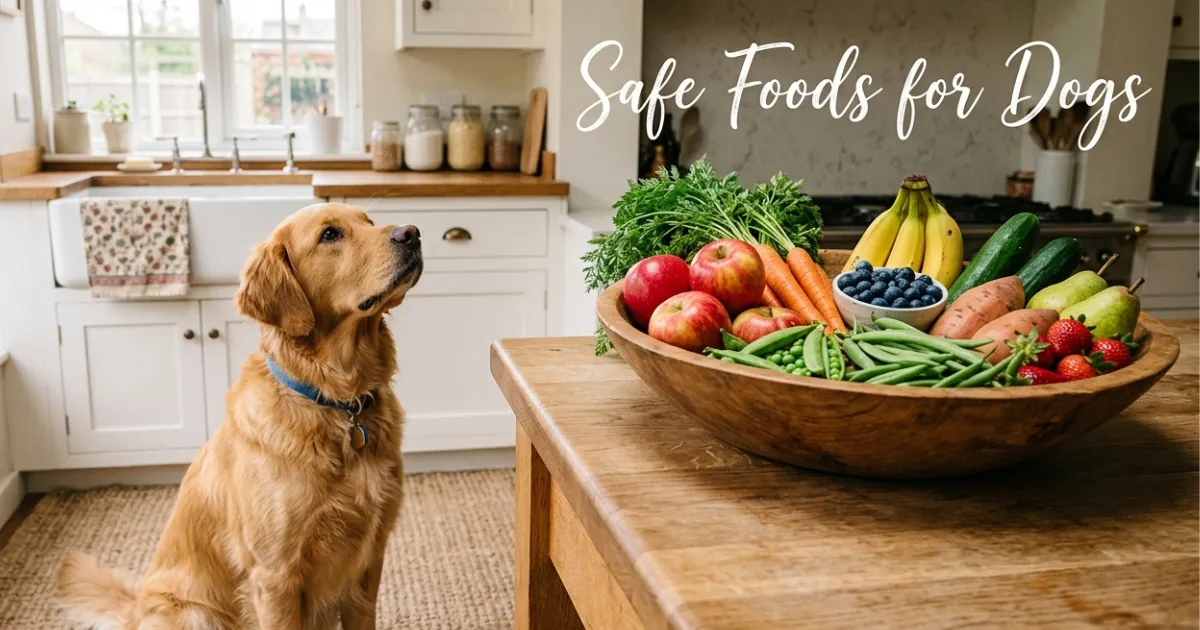
Stuff dogs can eat safely includes fruits, vegetables, cooked lean proteins, plain grains, and some dairy products. Golden Retrievers can enjoy most of these without issue, but the way this breed lives in most households, with multiple family members offering extras throughout the day, changes how strictly you need to apply the rules.
That last point is what generic lists never address. Most articles tell you blueberries are safe and stop there. They do not tell you that in a household with two adults and two kids, a Golden Retriever may receive the same “safe” food from four different hands across a single day. What looked like a sensible amount from one person’s perspective adds up to a genuine caloric problem by evening. Golden Retrievers are among the most food-motivated breeds in existence, and they are skilled at working every room in the house. I have seen healthy Goldens gain noticeable weight from extras alone, with no change to their primary kibble.
Golden Retrievers require roughly 1,400 to 1,800 calories per day, depending on sex, age, and activity level, according to AKC nutritional guidelines. The commonly cited 10% treat rule means that extras from all sources combined should not exceed 140-180 calories daily for most adults. A single tablespoon of peanut butter contains around 95 calories. Two tablespoons and one biscuit, and you are already at the ceiling before lunch.
The Full List of Stuff Dogs Can Eat, Built for Golden Retrievers
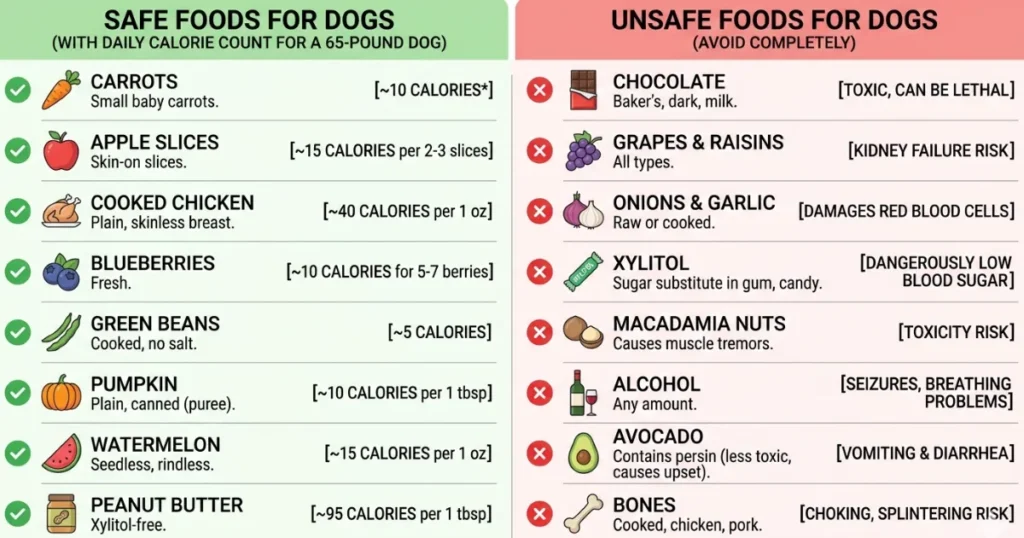
Stuff dogs can eat spans five broad categories. Here is what each one looks like through a Golden Retriever lens, with serving sizes that account for a 65-pound adult.

Fruits dogs can eat safely:
Blueberries.
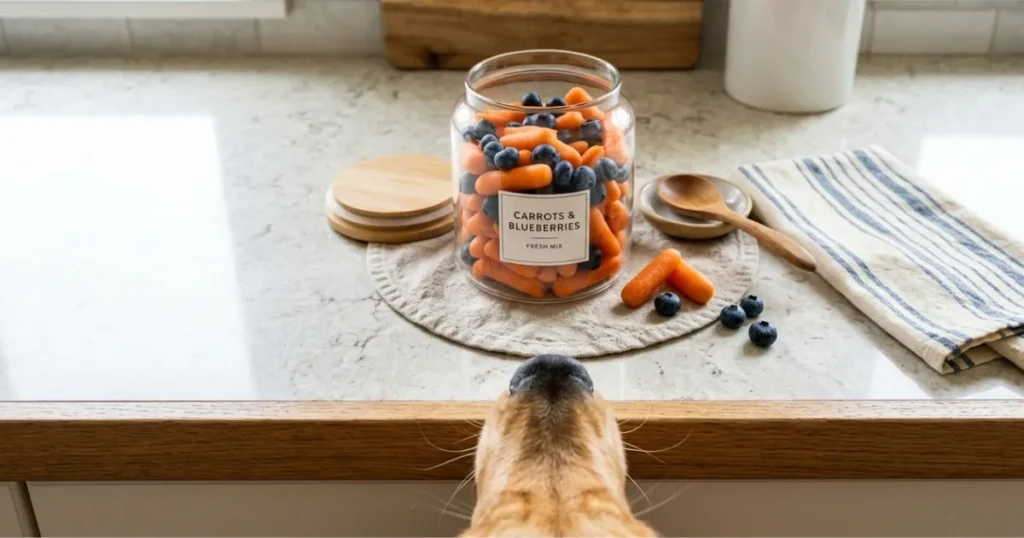
Safe and useful. Around 10 to 15 berries per serving. The antioxidants support cellular health, and they are low enough in sugar to use as daily training rewards without concern.
Apple slices.
Remove the core and seeds before serving. Apple seeds contain amygdalin, which releases cyanide when metabolized, according to the AKC. One to two thin slices is a fine serving.
Watermelon.
Remove the rind and all seeds. High water content makes it an excellent warm-weather treat. Two small cubes are a sensible amount for a 65-pound Golden.
Strawberries.
Two to three medium berries. High in vitamin C and fiber, moderate in sugar. Fine for daily use in small amounts.
Bananas.
Use sparingly. One to two thin slices occasionally. Bananas are higher in sugar and calories than most owners realize, and are not ideal for Goldens already managing their weight.
Vegetables dogs can eat:
Carrots.
The single best everyday extra for this breed. Low in calories, satisfying to chew, and high in beta-carotene. A small handful of baby carrots is appropriate for a 65-pound adult.
Green beans.
Plain, raw or cooked with no seasoning. Excellent meal extender for weight-managing Goldens. Replacing up to a quarter of kibble volume with green beans cuts calories without reducing visible bowl fullness.
Broccoli.
Safe in small amounts. Cap at two tablespoons of florets for a 65-pound Golden. The isothiocyanate compounds in broccoli cause gastric irritation at higher volumes, so treat it as an occasional item rather than a daily one.
Cooked pumpkin.
Plain canned pumpkin puree with no additives is one of the most useful things dogs can eat for digestive support. One to two tablespoons in a meal regulates both loose and firm stools.
Cooked sweet potato.
One to two tablespoons. High in fiber and vitamin A, gentle on the gut, and a better carbohydrate option than most commercial treats.
Proteins dogs can eat:
Plain cooked chicken.
Boneless, skinless, no seasoning. One to two ounces per serving. Easily digestible and a reliable high-value training reward.
Plain cooked salmon.
Two to three ounces, two to three times per week. Rich in omega-3 fatty acids that reduce systemic inflammation and support coat health in a breed prone to skin conditions.
Fully cooked eggs.
One egg, two to three times per week. High in protein and biotin. Always fully cooked. Raw egg whites contain avidin, which blocks biotin absorption and can cause skin and coat issues over time.
Plain cooked turkey.
Similar to chicken. Boneless, skinless, no seasoning. A useful protein rotation option for Goldens that are sensitive to chicken.
Grains and starches that dogs can eat:
Plain white rice.
Plain white rice upset stomach. Easy to digest, stool-binding, gentle on the gut. Combine with plain boiled chicken for a full, bland diet during recovery.
Plain oatmeal.
Cooked in water with no sugar, sweeteners, or flavoring. Two to three tablespoons. Higher in fiber than white rice and a better regular addition for senior Goldens.
You can find more on feeding structure for Goldens through the Golden Retriever food category, our dog friendly foods guide, and the full safe foods for dogs breakdown.
Things Dogs Can Eat: The Quick-Reference Table for Golden Retrievers
Things dogs can eat cover a wider range than most owners expect. This table covers the items owners search for most often.
| Food | Safe? | Serving for 65-lb Golden | Notes |
| Blueberries | Yes | 10–15 berries | Low sugar, antioxidants, good daily treat |
| Apple slices | Yes (no seeds) | 1–2 slices | Remove core; seeds contain amygdalin |
| Watermelon | Yes (no rind/seeds) | 2 small cubes | Hydrating; seeds cause intestinal risk |
| Carrots (raw) | Yes | Small handful | Best daily treat for weight-prone Goldens |
| Green beans (plain) | Yes | Small handful | Excellent low-calorie meal extender |
| Cooked chicken | Yes | 1–2 oz | Plain, boneless, skinless only |
| Cooked salmon | Yes | 2–3 oz, 2–3x per week | Omega-3s for skin and joint health |
| Cooked eggs | Yes | 1 egg, 2–3x per week | Fully cooked only |
| Peanut butter | Yes (check label) | 1 tsp maximum | Must be xylitol-free; calorie-dense |
| Plain yogurt | Yes | 1–2 tbsp | Plain, unsweetened only; check for xylitol |
| Plain pumpkin puree | Yes | 1–2 tbsp | Digestive fiber; canned plain only |
| Grapes or raisins | NO | None | Acute kidney failure; call vet immediately |
| Chocolate | NO | None | Theobromine causes cardiac/neurological harm |
| Onion or garlic | NO | None | Destroys red blood cells; all forms toxic |
| Xylitol | NO | None | Severe hypoglycemia at 0.1 g/kg body weight |
| Macadamia nuts | NO | None | Tremors, hyperthermia, weakness; call vet |
All serving sizes apply to a 65-pound adult Golden Retriever. Scale down proportionally for younger or lighter dogs. Goldens under 6 months should receive no human food supplements.
The Multi-Person Household Problem Nobody Mentions
Every article on stuff dogs can eat treats feeding as a solo act. One person, one treat, one occasion. That is not how Golden Retriever households work.
Golden Retrievers are exceptional social operators. They are warm, persistent, and remarkably good at reading which family member is most likely to give them something from the kitchen. In my experience with this breed, the result is a dog that receives “one small treat” from three or four people in a single day, each believing they are the only one who gave anything. The cumulative total is often two to three times the intended amount.
This is the gap that no generic list addresses. A banana slice is not the problem. A banana slice given by four different people is 80 to 100 extra calories before the evening meal. Across a week, 560 to 700 calories above the dog’s actual requirement. Across a month, that is measurable weight gain. For a breed that carries significant orthopedic risk from excess weight, those uncounted calories have real consequences.
The practical fix is simple. Pick two or three approved extras per week, keep them in a single designated spot in the kitchen, and agree as a household that treats come from that container, and only from that container. When it is empty for the day, it is empty. This one structural change does more for Golden’s weight management than any food swap.

Expert Insight
Caloric control in Golden Retrievers is fundamentally a household management problem, not just a food selection problem. The breed’s food motivation means that wherever food appears, the dog will pursue it. Without a shared household rule about who feeds what and how much, even the most nutritious extras quickly exceed the daily threshold. Structure the feeding environment first. Then worry about which foods are on the approved list.
Myths about Stuff Dogs Can Eat: What Golden Retriever Owners Get Wrong
Myth 1: “Natural” means low-calorie.
Bananas, peanut butter, and coconut oil are all natural. They are also calorie-dense. For a weight-prone breed, “natural” is not a proxy for “unlimited.” A tablespoon of natural peanut butter contains roughly the same calories as a medium dog biscuit.
Myth 2: Raw vegetables are always better than cooked.
For most vegetables, raw is fine. Broccoli and sweet potato are easier to digest when lightly cooked. Pumpkin is only useful as a digestive aid when cooked or canned plain. Raw sweet potato can be harder on the gut than a small cooked portion.
Myth 3: If a food is on the safe list, any amount is fine.
No. The safe list tells you what is not toxic. It does not tell you what is calorie-neutral. Green beans are safe. Two pounds of green beans in a sitting would cause significant gastrointestinal distress. Every safe food still has a practical serving cap for a dog of a specific weight.
Myth 4: Goldens can eat the same stuff as Labs or other retrievers.
Golden Retrievers share some predispositions with Labradors but differ in meaningful ways. Goldens have a higher documented rate of food-related allergies, particularly to chicken and beef proteins, and a known predisposition to hypothyroidism that slows metabolism in mid to late life. Breed-blind feeding advice misses those differences entirely.
Stuff Dogs Can Eat by Life Stage: Golden-Specific Breakdown
Under 6 Months
Skip all human food entirely. A Golden Retriever puppy under 6 months has a digestive system still calibrating around its primary food. Introducing extras at this stage makes it much harder to identify what is causing any digestive or skin reactions that may appear. Patience here pays off later.
Adult Golden Retrievers (1-7 Years).
This is the life stage where the full list in the table above applies. The goal is variety, rotation, and portion discipline. Use low-calorie items like carrots and green beans as the daily default, and reserve higher-calorie items like peanut butter and cheese for specific purposes, such as training or hiding medication.
Senior Golden Retrievers (8 Years and Older).
Senior Goldens often develop hypothyroidism, which suppresses metabolism and makes weight gain faster and harder to reverse. Approximately one in eight Golden Retrievers develops hypothyroidism, according to data from the American College of Veterinary Internal Medicine. At this stage, prioritize plain pumpkin, green beans, cooked oatmeal, and omega-3-rich fish over sugar-containing fruits. Reduce or eliminate peanut butter and cheese from the regular rotation unless the dog is significantly underweight.
What to Avoid: Stuff That Is Dangerous for Golden Retrievers.
TOXIC – Call your vet immediately
Grapes and raisins cause acute kidney failure in dogs through a mechanism not yet fully identified. No safe dose has been established for any size of dog. Even a small number warrants an immediate call to your vet, not a wait and see approach. Xylitol, found in sugar-free gum, certain peanut butters, and some baked goods, causes severe hypoglycemia by triggering a rapid, uncontrolled insulin release.
As little as 0.1 grams per kilogram of body weight is life-threatening, according to VCA Animal Hospitals. Chocolate contains theobromine, which disrupts cardiac rhythm and can cause seizures. Dark chocolate and baking chocolate have the highest theobromine concentration, but neither is safe. Onions and garlic in all forms, including cooked and powdered, destroy red blood cells by causing oxidative damage, leading to hemolytic anemia.
PROBLEMATIC – Monitor for 24-48 hours
High-fat scraps such as turkey skin, fatty meat trimmings, or processed deli meat are not acutely toxic but frequently trigger vomiting or diarrhea and are a known pancreatitis trigger in dogs that are already overweight or have digestive sensitivity. Raw dough contains active yeast that continues to ferment in the stomach, causing bloating and producing alcohol as a byproduct.
UNSUITABLE for Golden Retrievers specifically
Feeding chicken as the sole protein source across both kibble and extras increases the risk of sensitization in a breed already prone to protein-based food allergies. Goldens can develop immune responses to a protein they are exposed to repeatedly over months or years. Rotating protein sources reduces that risk without restricting what the dog can eat.
When to Call the Vet.
| URGENT — Call immediately | MONITOR — Watch 24–48 hours |
| Any grapes, raisins, or grape-containing food consumed | Loose stool after a new food introduction |
| Xylitol ingestion from any source | Single vomiting episode with no other symptoms |
| Any chocolate or cocoa ingestion | Mild gas or bloating after high-fiber vegetables |
| Onion or garlic ingestion in any form | Brief appetite reduction after a new food |
| Macadamia nut ingestion | Lethargy lasting under 12 hours with no other signs |
| Seizures, collapse, or tremors after eating | Temporary increase in water consumption |
| Pale or white gums at any point | — |
| Bloated or visibly distended abdomen | — |
Decision Framework: Which Stuff Dogs Can Eat Belongs in Your Golden’s Routine.
If your Golden is under 6 months old, give no extra human food. Wait until they are fully established on their primary diet.
If your Golden is an adult at a healthy weight and you have one person managing feeding, use the full list in this guide with the 10% calorie rule as your ceiling. For a 65-pound active adult who requires around 1,600 calories daily, that means no more than 160 calories from all sources combined.
If your Golden is overweight or your household has multiple people who regularly offer extras, apply the designated container rule. One container of approved items in one place in the kitchen. Nothing outside it counts as a treat.
If your Golden is over 8 years old or has been diagnosed with hypothyroidism, remove high-calorie items from the rotation entirely and default to plain green beans, cooked carrots, and plain pumpkin as the only daily extras. Introduce omega-3 rich fish twice weekly to support joint and coat health as metabolism slows.
What stuff can dogs eat safely every single day?
The safest stuff dogs can eat every day includes raw carrots, plain green beans, and small amounts of cooked lean protein like chicken or turkey. These are low in calories, easy to digest, and safe for daily use without exceeding a Golden Retriever’s caloric ceiling.
What stuff dogs can eat is also useful for Golden Retriever weight management?
Green beans are the best stuff dogs can eat for weight management in Golden Retrievers. They add volume and fiber to a meal without adding significant calories. Replacing up to a quarter of a 65-pound Golden’s kibble portion with plain green beans keeps the bowl satisfying while reducing total caloric intake by a measurable amount.
What things dogs can eat help with a Golden Retriever’s coat and skin?
Things dogs can eat that directly support coat and skin health in Golden Retrievers include cooked salmon, canned sardines in water, and fully cooked eggs. These provide omega-3 fatty acids and biotin, which reduce inflammation and support coat condition. For a 65-pound Golden, 2 ounces of plain salmon, two to three times weekly, is a practical serving.
What things dogs can eat should I add to my Golden’s meals when they have an upset stomach?
The best things dogs can eat for an upset stomach are plain boiled chicken, plain white rice, and plain canned pumpkin puree. These are gentle on the digestive tract and widely recommended by veterinarians for dietary recovery. Avoid any seasoning, fat, or dairy additions until the stomach settles fully.
Can dogs eat the same stuff as Golden Retrievers, or is it breed-specific?
Most safe human foods apply across breeds, but the amounts and frequency matter more for Golden Retrievers due to their high food motivation, predisposition to weight gain, and higher rate of protein-based food allergies. What counts as a sensible treat for a Beagle may be too much for a 65-pound Golden eating from multiple family members across a day.
Can dogs eat apples every day as a regular snack?
Yes, apple slices are safe for daily use in small amounts. Always remove the core and seeds before serving, as apple seeds contain amygdalin, which releases cyanide when digested. One to two thin slices is an appropriate daily serving for a medium to large dog. Avoid apple juice or applesauce, which contain added sugar.
Can dogs eat peanut butter as a daily treat?
Peanut butter is safe for dogs in small amounts, but daily use can add up quickly in terms of fat and calories. A teaspoon is a serving. For a Golden Retriever managing their weight, peanut butter works better as an occasional reward than a daily one. Always verify the label is xylitol-free before serving any brand.
What human foods can dogs eat to help with joint health?
Cooked salmon and other fatty fish are the human foods dogs can eat that most directly support joint health. The omega-3 fatty acids in fish reduce systemic inflammation, which is particularly relevant for Golden Retrievers, a breed with above-average rates of hip dysplasia and elbow issues. Plain cooked sardines in water are a budget-friendly equivalent to salmon.
Is it safe to give my Golden Retriever a variety of different foods in the same week?
Yes, rotating between approved foods across the week is safer than feeding the same item every day. Variety reduces the risk of developing a sensitivity to one specific protein, provides a broader range of nutrients, and keeps high-value training treats genuinely high-value. Aim to rotate through at least 3 or 4 different items weekly.
What stuff can dogs eat that also works as a pill hider for medication?
A small cube of low-fat cheese, a teaspoon of plain peanut butter, or a small piece of soft cooked chicken are all reliable pill-hiding vehicles that dogs will eat without hesitation. For a Golden on a restricted diet, a small cube of plain cooked sweet potato also works and adds less fat than cheese.
What should I do if my Golden Retriever eats something from the unsafe list?
Call your vet immediately if your pet ingests grapes, raisins, xylitol, chocolate, onions, garlic, or macadamia nuts. Do not wait for symptoms to appear. For these foods, early treatment significantly improves outcomes. For lower-risk items, such as a small amount of high-fat food, monitor for vomiting, loose stools, or lethargy over 24 to 48 hours, and contact your vet if symptoms persist or worsen.
Are there things Golden Retriever puppies can eat that adult dogs can have too?
After 6 months, Golden Retriever puppies can safely try plain cooked chicken, plain pumpkin puree, and raw carrot pieces in very small amounts. These are all things adult Goldens eat regularly. Introduce each food one at a time in tiny portions, and monitor for digestive changes for 48 hours before adding anything else.
How do I know if my Golden Retriever has a sensitivity to something they are eating?
The most common signs of food sensitivity in Golden Retrievers are persistent paw licking, recurring ear infections, dull or flaky coat, and loose stools that recur without an obvious cause. These symptoms often appear days to weeks after introducing a new food rather than immediately. If you suspect a food sensitivity, remove the most recently added item and monitor for improvement over one to two weeks.
Is it safe to let multiple family members give my Golden treats throughout the day?
It is safe only if the household tracks total daily extras across all sources. Each portion may be appropriate, but the cumulative total across multiple family members can easily exceed a Golden’s daily treat budget of 140 to 180 calories. Designating a single treat container that all family members draw from is the most reliable way to prevent accidental overfeeding.
What is the most important thing to know about stuff dogs can eat when you have a Golden Retriever?
The most important principle is that the safe list and the unlimited list are not the same thing. Everything on the approved list still has a caloric value and a practical serving size. For a food-motivated breed living in a multi-person household, applying both pieces of that knowledge together is what keeps the safe list genuinely safe over time.
Conclusion.
Stuff dogs can eat covers a genuinely wide range of fruits, vegetables, proteins, and grains, and Golden Retrievers can enjoy most of it safely with the right approach. The single most actionable takeaway is this: audit how many people in your household offer extras daily. Then set a shared limit and stick to it. That structural decision protects your Golden’s weight more than any swap on the food list itself.
For more on portion-aware feeding for this breed, check out our safe foods for dogs guide and the dog friendly foods breakdown. Golden Retrievers are brilliant at making every person in the house feel like the special one who gave them something today.
If your Golden has successfully convinced multiple family members to give the “only treat of the day,” you are not alone. How does your household manage treat-giving across multiple people? Have you found a system that actually works, or is your Golden still running the room?