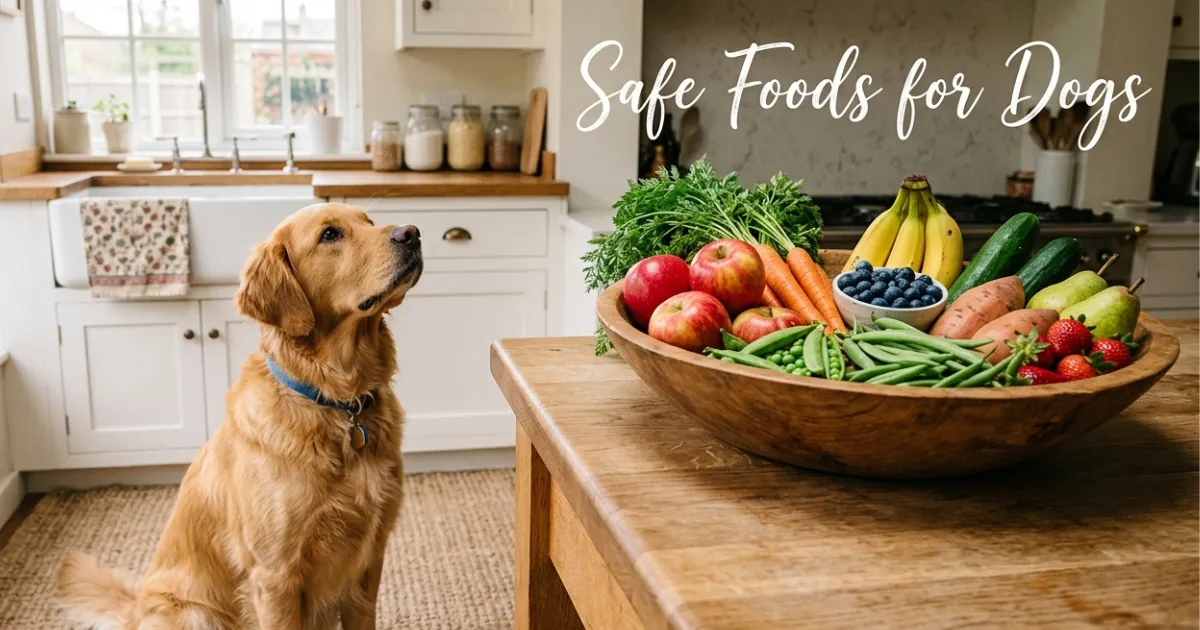
Dog safe vegetables include carrots, green beans, peas, broccoli, sweet potatoes, and zucchini. Toxic vegetables for dogs include onions, garlic, leeks, chives, and wild mushrooms. This guide covers every major vegetable, the correct serving sizes for a Golden Retriever’s weight, and what to do if your dog eats something harmful.
I’ve fed vegetables to Goldens for years, and one thing most generic articles miss is that this breed has a specific reason to care about vegetable choices beyond general safety. Golden Retrievers carry a lifetime cancer incidence of approximately 60%, according to the Morris Animal Foundation Golden Retriever Lifetime Study, making antioxidant-rich, low-calorie vegetables a genuinely useful tool, not just an occasional snack. A Golden who snacks on carrots instead of commercial treats reduces caloric load while adding beta-carotene, a precursor to vitamin A that supports cellular health.
Golden Retrievers are also food-motivated to a fault. This breed will eat quickly, eat often, and eat things they should not. That appetite is something to work with, not against. When you understand which dog safe vegetables to keep on hand, you give yourself a low-calorie, high-reward treat that works with your Golden’s health profile instead of adding to its risks.
Which Dog Safe Vegetables Are Best for Golden Retrievers?
Dog safe vegetables for Golden Retrievers include options that are low in sugar, easy to digest, and rich in nutrients that support this breed’s specific health predispositions. The table below shows the most common vegetables, their safety status, preparation method, and the reasoning behind each recommendation.
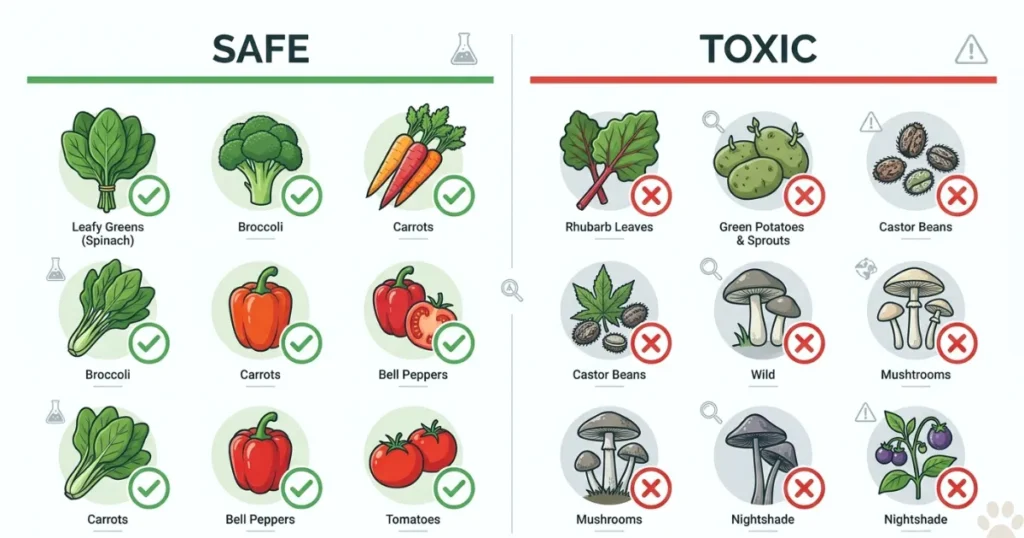
| Vegetable | Safety Status | Preparation | Key Benefit for Goldens |
| Carrots | Safe | Raw or steamed | Beta-carotene, low calorie, dental abrasion |
| Green beans | Safe | Plain, steamed | Fiber, low calorie, supports weight management |
| Broccoli | Safe in small amounts | Lightly steamed | Sulforaphane, antioxidant support |
| Sweet potato | Safe | Cooked, no skin | Beta-carotene, fiber, joint-supportive nutrients |
| Peas | Safe | Fresh or frozen | Protein, vitamins A, K, and B |
| Zucchini | Safe | Raw or cooked | Low calorie, vitamins C and B6 |
| Spinach | Caution | Lightly steamed, limited | Oxalic acid can impair calcium absorption |
| Cabbage | Caution | Cooked, small amounts | Gas-producing, not dangerous in moderation |
| Onion | TOXIC | Never | Damages red blood cells, causing hemolytic anemia |
| Garlic | TOXIC | Never | Thiosulfate poisoning, organ damage |
| Leeks | TOXIC | Never | Same family as onions, same mechanism |
| Wild mushrooms | TOXIC | Never | Multiple toxins, possible liver failure |
Notes: “Caution” vegetables are not dangerous in small, occasional amounts but carry risks with overfeeding. “TOXIC” vegetables should never be fed, regardless of the amount.
What Vegetables Can Dogs Not Eat?
What vegetables can dogs not eat? The answer starts with the allium family. Onions, garlic, chives, leeks, and shallots are all toxic to dogs and remain dangerous whether raw, cooked, or dried.
The mechanism is specific
These plants contain compounds called organosulfoxides that break down into disulfide and thiosulfate when metabolized. In dogs, these compounds oxidize hemoglobin in red blood cells, leading to a condition called Heinz body hemolytic anemia. The red blood cells rupture faster than the bone marrow can replace them. For a 65-pound adult Golden Retriever, even a small amount of cooked onion consumed regularly over several days can trigger a dangerous anemia. Symptoms may not appear for 24 to 72 hours after ingestion, according to the ASPCA Animal Poison Control Center.
Wild mushrooms are equally dangerous. Store-bought white mushrooms are generally safe, but any wild mushroom your Golden encounters in the yard or on a walk should be treated as potentially toxic. The Amanita family, which includes the Death Cap and Destroying Angel species, contains amatoxins that cause irreversible liver and kidney failure. There is no safe way to confirm that a wild mushroom is non-toxic visually. If your Golden eats a wild mushroom, call your vet immediately.
Avocado also belongs on this list, though most owners think of it as a fruit. The flesh, skin, and pit all contain persin, a fungicidal toxin that causes vomiting, diarrhea, and fluid accumulation around the lungs and heart in dogs. The pit poses a separate blockage risk for a large dog like a Golden, which could swallow it whole.
What Vegetables Are Bad for Dogs in Smaller Doses?
What vegetables are bad for dogs is not always a binary question. Some vegetables are safe in small amounts but cause real problems when overfed. Understanding the mechanism matters more than memorizing a list.
Broccoli and the Isothiocyanate Threshold.
Broccoli is one of the most valuable vegetables you can feed a Golden Retriever in small amounts. It contains sulforaphane, a compound that activates detoxification enzymes and has been studied for anti-proliferative properties in cancer research, which is particularly relevant for this breed given its genetic cancer predisposition. However, broccoli florets contain isothiocyanates, natural compounds that irritate the canine gastrointestinal tract when consumed in large quantities. For a 65-pound adult Golden Retriever, broccoli should not exceed 10% of the daily food intake in a single serving. If it reaches 25% or more of their meal, it becomes actively harmful. Lightly steamed broccoli is preferable to raw because it reduces the isothiocyanate load while preserving the sulforaphane content.
Spinach and Calcium Absorption.
Spinach is high in vitamins A, B, C, and K, as well as iron. The problem is oxalic acid. This compound binds calcium in the gut and reduces how much the body absorbs. For a breed already predisposed to joint and bone stress from its larger frame, feeding spinach in large or frequent amounts is counterproductive. An occasional handful mixed into food poses no real risk. Feeding it daily does.
Cabbage, Kale, and Gas Production.
Cabbage and kale are not toxic to Golden Retrievers, but they are gas-producing. The fermentation of their cruciferous fiber in the colon produces hydrogen sulfide. For a breed that tends toward sensitive digestion, particularly as they age, large amounts of these vegetables cause bloating and discomfort. Feed them cooked food in small amounts, no more than a few times a week.
Dog Safe Vegetables: The Competitor Gap Most Articles Miss
Most “dog safe vegetables” guides treat every breed the same. They list safe and unsafe foods, offer generic portion advice, and move on. What they miss entirely is the interaction between vegetable choices and Golden Retriever-specific health predispositions.
Golden Retrievers have one of the highest cancer rates among breeds. The Morris Animal Foundation has enrolled over 3,000 Goldens in a longitudinal lifetime study tracking dietary patterns alongside health outcomes. While results are ongoing, the veterinary oncology research available today consistently supports the use of antioxidant-rich, low-glycemic vegetables as a component of a cancer risk reduction diet. In a 2005 study published in the Journal of Veterinary Internal Medicine, Scottish Terriers fed yellow-orange vegetables such as carrots three or more times per week showed a statistically reduced risk of transitional cell carcinoma of the bladder.
This is not a claim that vegetables cure or prevent cancer. Carrot sticks do not replace veterinary care. But the evidence is clear enough that choosing dog safe vegetables with antioxidant and anti-inflammatory properties, rather than defaulting to commercial treats high in refined carbohydrates, is a meaningful dietary decision for a breed with a 60% lifetime cancer rate. Carrots, broccoli (in small amounts), sweet potato, and green beans all belong in a Golden Retriever’s snack rotation for this reason specifically.
Expert Insight
For Golden Retrievers, the caloric value of vegetables is only part of the picture. The phytonutrient profile of vegetables like broccoli, sweet potato, and carrots provides antioxidant and anti-inflammatory support that matters specifically for a breed carrying both a genetic cancer predisposition and a high likelihood of joint inflammation in later years. The goal is not to supplement a diet, but to structure one.
Serving Size Guide for Dog Safe Vegetables by Weight.
Every serving recommendation here applies to a healthy adult Golden Retriever. Adjust for puppies, seniors, and dogs with existing health conditions only with veterinary guidance.
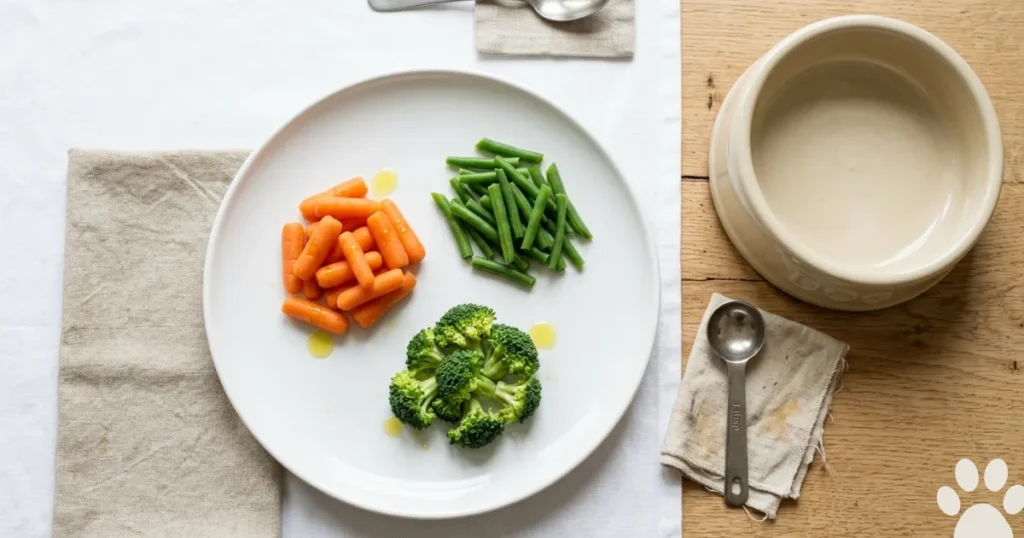
For a 55-pound Golden Retriever.
- Carrots: Two medium baby carrots or half of one large carrot, raw.
- Green beans: A small handful (roughly 10-12 beans), plain and unseasoned.
- Broccoli: Two or three small florets, lightly steamed, no more than three times per week.
- Sweet potato: One tablespoon of cooked, plain sweet potato mixed into a meal.
For a 65 to 75-pound Adult Golden Retriever.
- Carrots: One full medium carrot, raw, or two steamed.
- Green beans: A generous handful, up to 15 beans.
- Broccoli: Four to five small florets, steamed, no more than three times per week.
- Sweet potato: Two tablespoons cooked, plain, no butter, no seasoning, and no skin.
For a 75 to 90-pound Golden Retriever.
These Goldens are at the top of the healthy weight range or are overweight. Stick to green beans and raw carrots as the primary vegetable treats. Both are under 35 calories per 100 grams and produce high satiety relative to their caloric load. Sweet potato and peas are higher in natural sugars and starch, and should be limited to once or twice a week at the same volumes listed above.
All vegetables must be plain. No salt, butter, garlic powder, onion powder, or mixed seasonings. These additions are what turn an otherwise safe vegetable into a veterinary emergency.
Decision Framework: Which Dog Safe Vegetables to Feed Based on Your Golden.
If your Golden Retriever is under 6 months old, skip all vegetables except small pieces of steamed carrot or plain green beans. Puppies are developing their digestive systems and do not need the added fiber load that cruciferous vegetables bring. Introduce one vegetable at a time, one week apart, and watch for loose stools.
If your adult Golden weighs between 55 and 75 pounds and is at a healthy body condition score, any vegetable in the “safe” column above is appropriate in the volumes described.
If your Golden is overweight or weighs more than 75 pounds, green beans are your best option. They are dense, filling, and low in calories. Some vets recommend replacing up to 10% of a dog’s kibble volume with plain green beans temporarily to reduce caloric intake without increasing hunger. Always confirm this approach with your veterinarian before implementing it.
If your Golden is over 8 years old, reduce raw vegetables and shift to steam. Older Goldens have reduced digestive enzyme production and less efficient gut motility. Steamed vegetables are easier to break down, reducing the risk of gas-related discomfort and partial blockage from fibrous plant material.
If your Golden has a history of pancreatitis, avoid high-fat preparations entirely and stick to plain carrots and green beans. Broccoli and sweet potato are fine in small amounts, but peas and corn should be avoided due to their starch content.
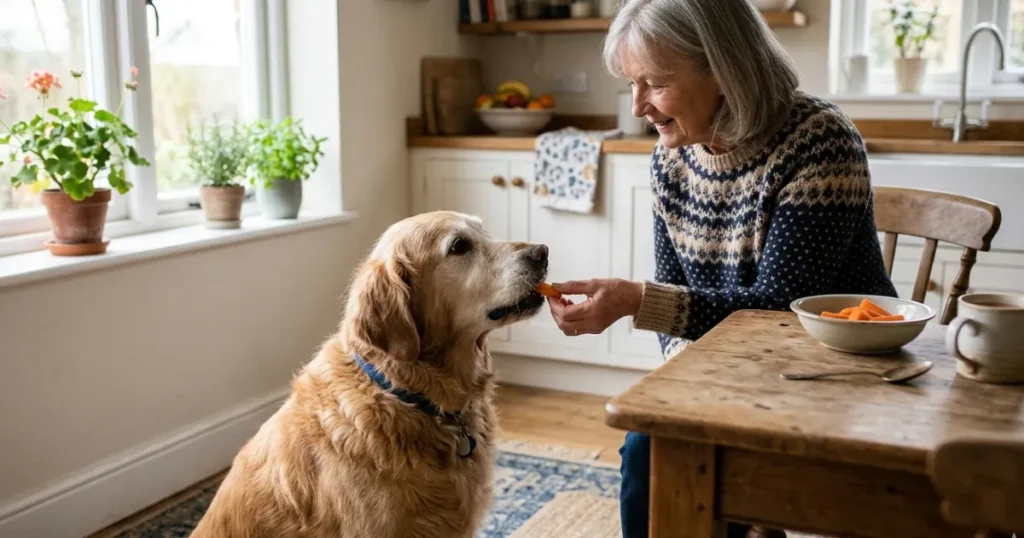
Warning: Vegetables That Look Safe but Are Not.
TOXIC – Call your vet immediately
Onions, garlic, leeks, and chives damage canine red blood cells through thiosulfate toxicity, triggering hemolytic anemia. Symptoms include weakness, pale gums, rapid breathing, and collapse. These can appear 24 to 72 hours after ingestion. Do not wait for symptoms to develop if you know your Golden ate these. Call the ASPCA Animal Poison Control Center at (888) 426-4435 immediately.
Wild mushrooms contain multiple toxins, depending on the species. Amatoxins from Amanita species cause acute liver failure, which may not be apparent until 24 to 48 hours after ingestion when irreversible damage has already occurred.
PROBLEMATIC – Monitor for 24 to 48 hours
Raw broccoli in large amounts can cause gastrointestinal irritation due to isothiocyanates. Watch for drooling, pawing at the mouth, vomiting, or diarrhea. If these symptoms persist for more than 12 hours or your Golden appears lethargic, call your vet.
Spinach fed in large or frequent quantities can, over time, impair calcium absorption and contribute to kidney stress in dogs with pre-existing kidney vulnerabilities. An occasional serving is not dangerous. Daily feeding is.
UNSUITABLE – Avoid, not dangerous in small amounts
Corn on the cob poses a mechanical blockage risk regardless of whether the corn kernels themselves are safe. A Golden Retriever will swallow chunks of cob, and these do not pass. This is a known cause of gastrointestinal obstruction in large breeds.
Rhubarb leaves contain oxalic acid at concentrations high enough to cause kidney failure. The stalk is less dangerous but still not worth the risk.
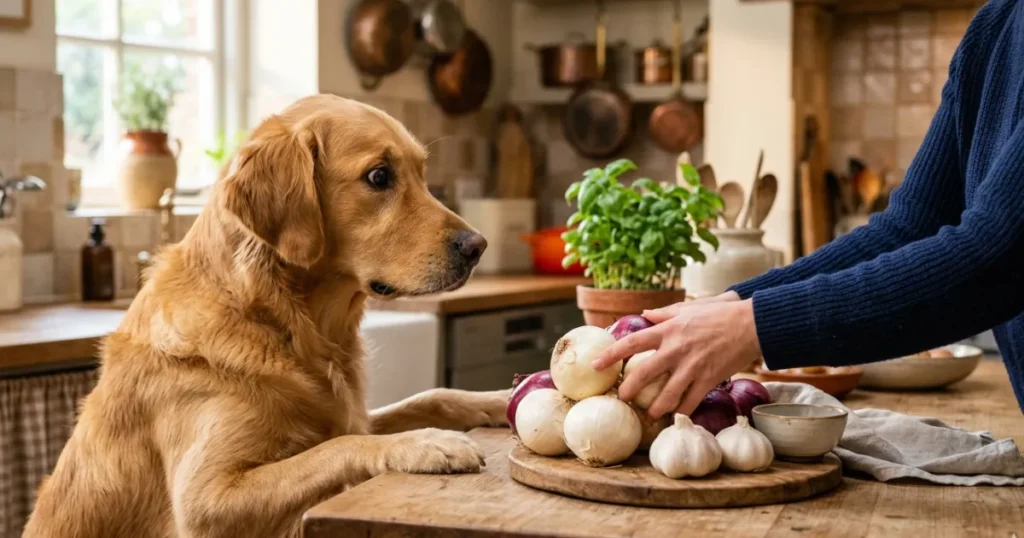
When to Call the Vet.
| URGENT — Call immediately | MONITOR — Watch 24 to 48 hours |
| Ingestion of any onion, garlic, leek, or chive product | Loose stools after a new vegetable introduction |
| Ingestion of a wild or unidentified mushroom | Mild vomiting after a large serving of raw broccoli or cabbage |
| Pale or white gums after ingestion of any food | Excessive gas or bloating after cruciferous vegetables |
| Collapse, weakness, or difficulty breathing | Reduced appetite for one meal following a new food |
| Suspected corn cob ingestion (blockage risk) | Soft stools from overfeeding sweet potatoes or peas |
Observable symptoms only warrant the “call immediately” category. Do not wait for a second symptom if your Golden has eaten a confirmed toxic food as vegetable.
What dog safe vegetables can I feed my Golden Retriever every day?
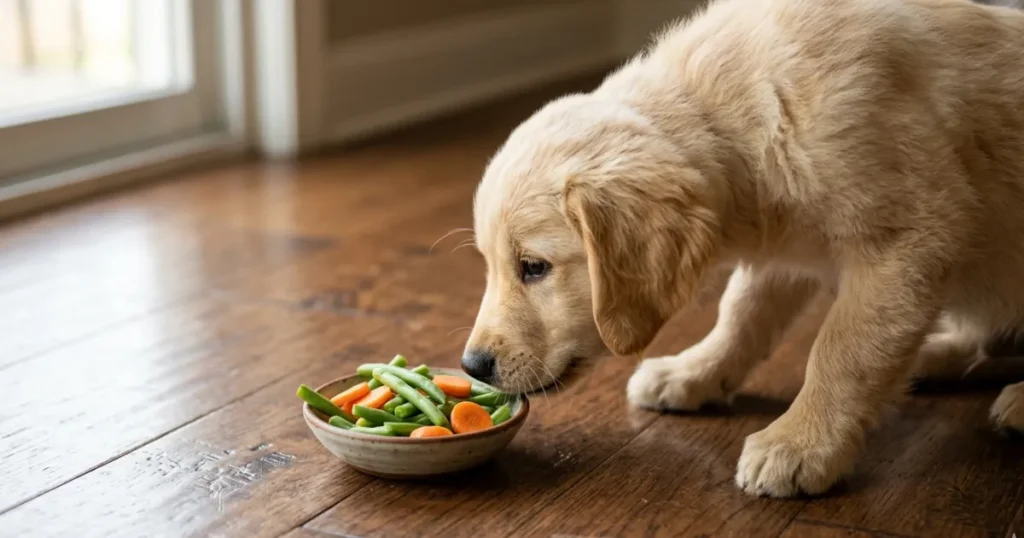
The safest daily dog safe vegetables for a Golden Retriever are raw carrots and plain green beans. Both are low in calories, high in fiber, and well-tolerated by most Goldens. Limit each serving to one medium carrot or a small handful of green beans for a 65-pound adult dog. Introduce new vegetables one at a time and monitor stool consistency.
Are dog safe vegetables enough to replace commercial treats for my Golden?
Dog safe vegetables can replace a significant portion of commercial treats, but not all of them. Carrots, green beans, and broccoli florets work well as training rewards and between-meal snacks. They should stay within the 10% daily caloric treat budget. Commercial treats formulated for dental health or joint support may serve functions that vegetables cannot replicate.
What vegetables can dogs not eat under any circumstances?
Dogs cannot safely eat onions, garlic, leeks, chives, and shallots in any form, whether raw, cooked, powdered, or dried. Wild mushrooms are also completely avoided. These are not dose-dependent cautions. Even small amounts of the allium family damage red blood cells and cause hemolytic anemia, according to the ASPCA Animal Poison Control Center.
What vegetables are bad for dogs when fed in large amounts?
Vegetables that are bad for dogs in large amounts include broccoli (causes GI irritation from isothiocyanates above 10% of daily intake), spinach (oxalic acid impairs calcium absorption over time), and cabbage or kale (produces significant intestinal gas due to cruciferous fiber fermentation). These are safe in small, infrequent servings but become problematic when overfed.
Can my dog eat carrots every day?
Yes. Carrots are one of the safest daily vegetables for dogs. They are low in calories, high in beta-carotene, and provide mild abrasive action on teeth during chewing. For a medium-sized dog, one to two medium carrots per day falls well within a healthy dietary range. Larger quantities can occasionally cause orange-tinted stools due to beta-carotene concentration, which is harmless.
How many vegetables can I give my dog without upsetting their stomach?
Start with a single tablespoon of any new vegetable and observe for 24 hours before increasing the amount. Most dogs tolerate vegetables well when introduced gradually. The 10% rule applies: all treats, including vegetables, should make up no more than 10% of your dog’s total daily calories. For a 65-pound Golden Retriever eating roughly 1,400 calories per day, that is approximately 140 calories from all treat sources combined.
Is it safe to give my Golden Retriever raw vegetables every day?
Raw carrots, cucumbers, and zucchini are safe for most Golden Retrievers to eat daily. Raw broccoli and raw cabbage should be limited due to their gas-producing compounds and gastrointestinal irritants. Senior Goldens over 8 years old generally digest steamed vegetables more easily than raw ones, due to reduced gut enzyme activity as the digestive system ages.
Are vegetables good for dogs with sensitive stomachs?
Yes, but only the right ones. Plain green beans, steamed carrots, and cooked sweet potatoes are gentle on most sensitive stomachs because they are low in compounds that ferment or irritate. Cruciferous vegetables such as broccoli, kale, and cabbage should be avoided for dogs with sensitive digestion. Always introduce any new food slowly and in small amounts.
Can dogs eat broccoli safely?
Yes, dogs can eat broccoli safely in small amounts. Lightly steamed broccoli florets are preferable to raw. The concern with larger amounts is isothiocyanates, natural compounds in the florets that irritate the digestive tract. For a medium-sized dog, two to four small florets three times a week is well within a safe range. Broccoli stems are safe but tougher to digest.
What happens if my Golden Retriever eats onion or garlic by accident?
Call your vet or the ASPCA Animal Poison Control at (888) 426-4435 immediately. Do not wait for symptoms. Onion and garlic toxicity in dogs works through a time-delayed mechanism, with red blood cell damage accumulating over 24 to 72 hours. Early intervention gives your vet the best chance to prevent anemia from developing. Even small amounts of onion powder in table scraps or seasoned food can be enough to cause harm in a dog of your Golden’s size.
Are vegetables safe for Golden Retriever puppies?
Yes, in very limited amounts and starting after 8 weeks of age. Plain steamed carrot pieces and small green beans are the safest starting points. Puppies have developing digestive systems and lower tolerance for high-fiber vegetables. Skip broccoli, cabbage, kale, and spinach entirely until your Golden is at least 6 months old. Portion sizes for a puppy should be no larger than the tip of your thumb per serving.
Do vegetables help with Golden Retriever joint health?
Some vegetables support the anti-inflammatory processes relevant to Golden Retriever joint health. Sweet potato is high in beta-carotene and manganese, both of which support connective tissue health. Broccoli contains sulforaphane, which has documented anti-inflammatory properties. These are supportive additions to a well-rounded diet, not substitutes for joint supplements your vet may recommend if your Golden shows signs of hip dysplasia or arthritis.
Are Green Vegetables Especially Good for Golden Retrievers?
Green vegetables, including green beans, broccoli, zucchini, and peas, provide fiber, vitamins K and C, and folate. For Golden Retrievers specifically, the antioxidant content of these vegetables provides some support, given this breed’s elevated cancer risk. Green beans in particular are valuable for overweight Goldens because they are very low in calories and filling, making them a practical replacement for calorie-dense commercial treats.
How do I know if my Golden ate a vegetable that is bad for dogs?
Watch for vomiting, diarrhea, lethargy, pale gums, excessive drooling, or abdominal pain in the 24 to 48 hours following any new food. Onion and garlic toxicity often shows no visible symptoms for one to three days while internal damage accumulates. If you know your Golden ate something from the toxic list, do not wait for symptoms. Call your vet immediately.
What is the easiest dog safe vegetable to start with for a Golden who has never had vegetables before?
Raw baby carrots. They require no preparation, no cooking, and no portioning guidance beyond one or two pieces. They are almost universally well-tolerated, low in calories, and most Goldens enjoy them immediately because of their natural sweetness. Starting with carrots lets you assess your Golden’s interest in vegetables and tolerance for them before introducing anything with a higher fiber load or more complex preparation requirements.
Conclusion.
Dog safe vegetables for Golden Retrievers include carrots, green beans, and small amounts of broccoli, sweet potato, peas, and zucchini. Each serves a practical purpose for this breed, from low-calorie treat replacement to antioxidant support that matters given the Golden’s documented cancer predisposition.
The most important rule is preparation.
Plain, unseasoned, and sized appropriately for your dog’s weight. Raw carrots and plain green beans are the simplest starting point for any Golden owner looking to reduce commercial treat consumption without sacrificing reward value. Know the toxic list, know the portions, and your Golden eats well.
I’d love to hear how your Golden handles vegetables in practice.
- Does your Golden have a favourite vegetable treat they go absolutely wild for?
- Have you noticed any digestive differences between raw and steamed options in your specific dog?
Drop it in the comments. Goldens vary more than most owners expect in how they respond to the same food, and real owner experience with this breed is exactly the kind of detail that helps other Golden owners make better decisions for their dogs.