
Senior dog hearing loss is a common, usually gradual part of aging, called presbycusis. It typically affects both ears, starts with high-pitched sounds, and is not painful. Before assuming it is age, have your vet rule out treatable causes like ear infections and wax buildup. Age-related loss cannot be reversed, but dogs adapt well to hand signals and simple home changes and continue to live happy lives.
Noticing that your older dog no longer comes when called, or sleeps through the doorbell, is a quiet, poignant moment for any owner. Senior dog hearing loss creeps in slowly, and many owners first mistake it for stubbornness or aging in general.
Here is the reassuring truth. Age-related hearing loss is common; it is not painful, and dogs cope with it remarkably well. Your dog is not suffering, and with a few adjustments, your bond and your dog’s happy life continue as before.
There is also an important practical point. Not all hearing loss is permanent aging. Some causes, like an ear infection or a plug of wax, are treatable, so a vet visit is always the right first step.
This guide covers the signs, how to tell age from a fixable problem, the ear care an older Golden needs, and the simple ways to help a hard-of-hearing dog thrive. To learn how this breed’s ears are built, start with the full breed ear care guide.
What causes senior dog hearing loss?
Most age-related hearing loss has a specific medical name and a clear mechanism. Understanding it helps you know what to expect. This kind of knowledge sits alongside the rest of our breed health content and our Golden Retriever homepage.
Presbycusis, the usual cause
The most common cause is presbycusis, which simply means age-related hearing loss. It develops as the tiny sound-sensing structures deep in the inner ear gradually wear out with age.
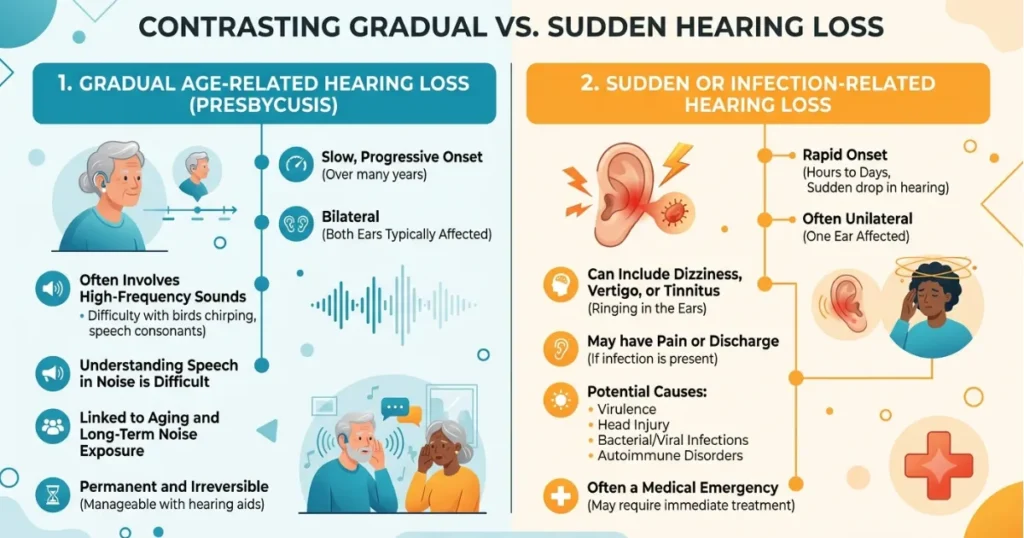
This kind of loss has a typical pattern. It usually affects both ears; it comes on slowly over months or years, and it tends to take the high-pitched sounds first before progressing to lower ones. It often begins in the last third of a dog’s life. It is not painful, and it is a natural part of aging rather than a disease.
Because the change is so gradual, most dogs adjust to it as it happens, leaning more heavily on their other senses without any distress. This is part of why senior dog hearing loss so often goes unnoticed for a while. The dog is not struggling. It is quietly compensating, using its nose and eyes to read the world much as it always did. By the time you notice, your dog has usually already adapted a great deal on its own.
The treatable causes worth ruling out
Not every case is simple aging, and this is the important part. Several treatable ear problems can cause or worsen hearing loss, which is why a vet check matters.
- Ear infections, especially long-running ones, can reduce hearing and are treatable.
- A buildup of wax or debris can physically block sound, and it clears with proper cleaning.
- Chronic untreated ear disease can thicken the canal over time, as chronic infections harm hearing.
Because some causes are fixable, never simply assume old age. A vet visit sorts the treatable from the permanent.
Signs of hearing loss in dogs
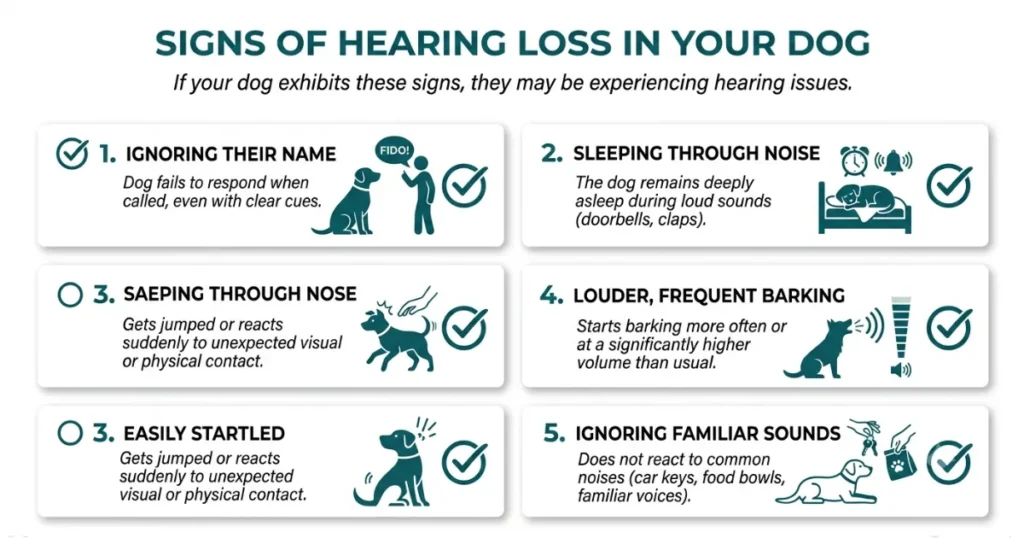
The signs of hearing loss in dogs are easy to miss at first, because dogs are so good at compensating using their other senses. Watch for these changes in an older dog.
- Not responding to their name or familiar sounds they used to react to
- Sleeping more deeply and not waking at noises that once roused them
- Being easily startled by touch or by someone approaching unseen
- Barking more loudly than before, since they cannot hear themselves
- Ignoring the doorbell, the kettle, or a squeaky toy they used to love
- Seeming confused or disoriented, especially in new places
One sign deserves care. A dog that startles when touched is not being difficult. It simply did not hear you approach, which can be frightening. Approaching gently and within sight helps a great deal.
A simple home hearing check
You can do a gentle check at home. When your dog is relaxed and facing away, make a distinct sound from a distance, a clap or a whistle, without letting them feel the vibration or see you move. If there is no response over several tries, note it and mention it to your vet. This is a clue, not a diagnosis.
Is it age, or a treatable ear problem?
This is the question that matters most, because the answer changes what you do next. Telling age-related loss from a fixable problem comes down to a few clues and, above all, a vet exam.
| Clue | Points toward |
| Very gradual, over months, both ears | Age-related presbycusis |
| Sudden onset, over days | A treatable problem; see a vet promptly. |
| Head shaking, odor, discharge, scratching | An ear infection, treatable |
| Visible dark or heavy wax | A blockage clears with cleaning. |
| No other ear signs, just slow decline | More likely age |
The single most useful step is a veterinary exam. Your vet looks in the ear canal, checks for infection, wax, or a blockage, and can advise whether the loss is treatable or age-related. To read the ear signs yourself in the meantime, reading ear wax and discharge helps, and if you spot infection signs, spotting an ear infection covers what comes next.
A specialized hearing test called a BAER test can measure hearing precisely, but it usually needs a referral and is not routinely used for straightforward age-related loss. For most senior dogs, a good ear exam is enough to guide care.
Ear care for senior dogs
Good ear care for senior dogs will not reverse age-related hearing loss, but it does two valuable things. It keeps the ears healthy and comfortable, and it prevents the treatable problems that can make hearing worse.
Keep up gentle routine care
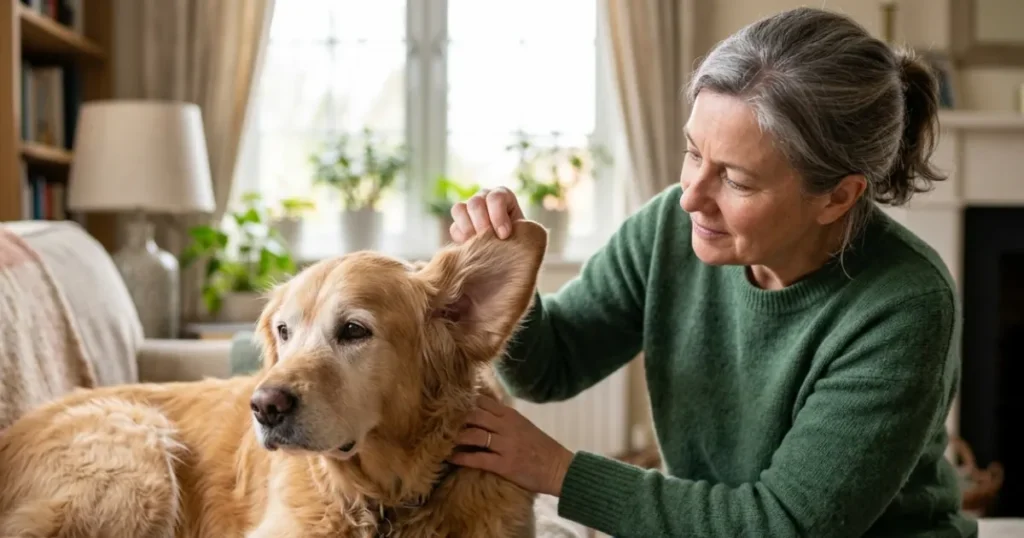
Older Goldens still benefit from the same core routine, done gently. Check the ears weekly, looking and smelling for changes, and clean only when you see wax or debris, using a vet-approved cleaner and a cotton ball. The method is in safe routine ear cleaning. Never use cotton swabs, and be extra gentle with an older dog who may have stiff joints or be less patient.
Watch for problems more closely
Senior dogs can be more prone to ear issues, and catching them early protects both comfort and remaining hearing. Stay alert for the signs of infection, mites, or heavy wax, and see your vet promptly rather than waiting. Ruling out mites is quick, as how mite treatment works explains, and for anything you find, skip the internet fixes, since why home remedies are risky explains why.
Regular vet checks matter more now
As your dog ages, routine veterinary checkups become more important, not less. Your vet can catch a developing ear problem before it harms hearing further and monitor the ears as part of overall senior care. Mention any hearing changes you have noticed at every visit.
Helping a dog with hearing loss adapt
This is the hopeful part and the part that matters most day to day. Dogs adapt to hearing loss remarkably well, and a few simple changes keep your senior dog safe, connected, and happy.
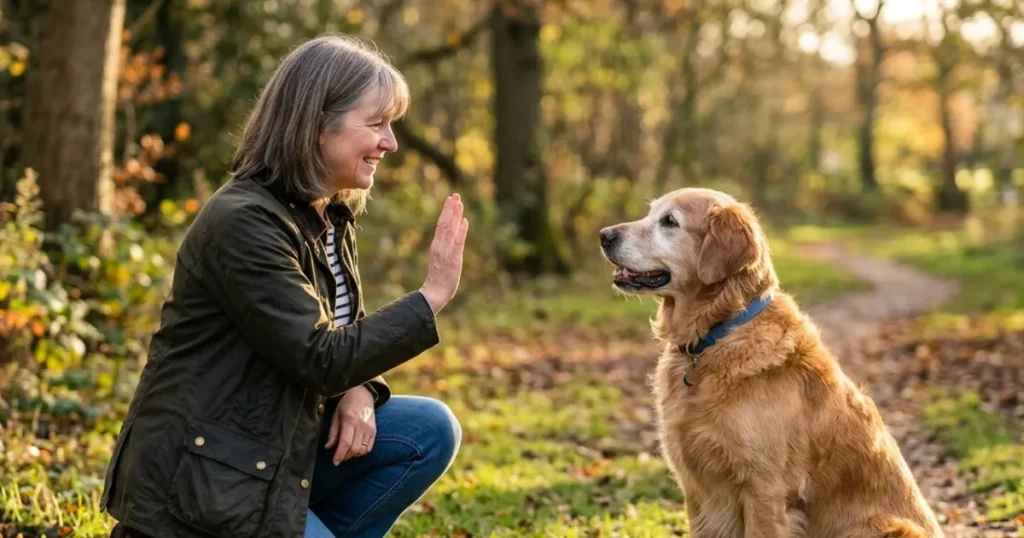
Switch to hand signals
Dogs read body language beautifully, often better than words. Teach or use clear hand signals for key cues like sit, stay, and come. If your dog still has some hearing, pair each spoken word with a unique gesture now, so the signal is already familiar as hearing fades.
Use vibration and sight, not sound
Get your dog’s attention with a gentle touch, a wave in their field of view, or a stamp on the floor whose vibration they can feel. A flashlight flicking on and off can call a dog in from the yard at night. These small tools replace the sounds your dog can no longer hear.
Keep them safe
A dog that cannot hear traffic or an approaching person needs a little extra protection. Keep your dog leashed near roads, since they cannot hear cars, and always approach gently and within sight so you never startle them awake. A tag or note on the collar that says the dog is deaf helps anyone who meets them.
Keep the bond strong
Above all, keep engaging with your senior dog. Hearing loss does not dull affection, play, or connection. Touch, scent, sight, and routine all keep your bond as strong as ever, and many owners find their communication actually deepens.
It helps to remember what has not changed. Your dog still knows your scent, still watches for you at the window, and still greets you with the same joy. A game of fetch, a sniff-filled walk, a warm spot on the sofa beside you—none of these depend on hearing. Many families say that adapting to a deaf senior brought them closer, because it made them slower, gentler, and more attentive to the small visual cues that were always there. The change asks a little more presence from you, and it usually gives that back in kind.
Expert Insight
When owners tell me their old Golden is going deaf, the first thing I do is look in the ears, because now and then it is a wax plug or an infection I can actually treat. When it is simply age, I reassure them, because these dogs do wonderfully. They lean on their nose and their eyes, they stay bonded to their family, and they carry on being themselves.
The Reassuring Version
It is common and usually gradual.
Age-related hearing loss affects many older dogs, often in the last third of their life. It is not painful.
Rule out the fixable first.
An ear infection or wax buildup can mimic or worsen hearing loss, and those are treatable. See your vet.
Sudden loss is different.
A rapid change in hearing warrants a prompt vet visit.
Dogs adapt beautifully.
With hand signals and a few home adjustments, a hard-of-hearing senior can live a full, happy life.
What is senior dog hearing loss?
Senior dog hearing loss is a gradual, age-related decline in hearing called presbycusis. It develops as the inner ear’s sound-sensing structures wear out with age, usually affecting both ears and beginning with high-pitched sounds. It is common, painless, and a natural part of aging.
What are the signs of hearing loss in dogs?
The signs of hearing loss in dogs include not responding to their name, sleeping through noises, being easily startled by touch, barking more loudly, and ignoring familiar sounds. In older dogs these changes come on gradually and are easy to miss at first.
At what age do Golden Retrievers start to lose their hearing?
Age-related hearing loss usually begins in the last third of a dog’s life, often around eight to ten years or later, though it varies. For a Golden Retriever, mention any hearing changes to your vet, who can rule out treatable causes first.
Can senior dog hearing loss be reversed?
Age-related hearing loss from presbycusis cannot be reversed because the inner ear structures have worn out. However, hearing loss caused by an ear infection or wax buildup often can be treated, which is why a vet exam is always the right first step.
Is my dog going deaf or just ignoring me?
It can be hard to tell, since both look similar. Try a gentle home check, making a sound when your dog faces away and cannot see or feel you. No response over several tries points to hearing loss, which a vet can confirm.
Can an ear infection cause hearing loss in dogs?
Yes. Ear infections, especially chronic ones, can reduce hearing, and untreated ear disease can thicken the canal over time. The good news is that infection-related hearing loss is often treatable, so any suspected infection in a senior dog should be seen by a vet.
What ear care do senior dogs need?
Ear care for senior dogs is the same gentle routine as any adult, done more carefully. Check weekly, clean only when needed with a vet-approved cleaner and cotton ball, and see your vet promptly for any signs of infection or heavy wax.
How do I communicate with a deaf senior dog?
Use hand signals for key cues, get attention with gentle touch or vibration through the floor, and use sight cues like a wave or a flashlight. Dogs read body language well, so most adapt to visual communication quickly and happily.
Should I be worried if my old dog suddenly went deaf?
Yes, a sudden change in hearing warrants a prompt vet visit. Unlike gradual age-related loss, sudden deafness can point to a treatable problem such as an infection, a blockage, or another condition that benefits from quick attention.
Is hearing loss painful for dogs?
No. Age-related hearing loss itself is not painful; it is a gradual, natural change. However, an ear infection that affects hearing can be painful, which is another reason to have a vet check the ears rather than assuming the cause is simply age.
How can I keep my deaf senior dog safe?
Keep your dog leashed near roads, since they cannot hear traffic, and always approach within sight so you do not startle them. A collar tag noting they are deaf helps others, and vibration or visual cues let you get their attention safely.
Will my senior dog still have a good quality of life with hearing loss?
Yes, absolutely. Dogs adapt to hearing loss remarkably well and continue to enjoy full, happy lives. They rely more on scent and sight, stay closely bonded to their families, and with a few simple adjustments, thrive well into their senior years.
The bottom line
Senior dog hearing loss is one of the gentler parts of aging. It is common, usually gradual, and not painful, and most dogs adapt to it with grace. Your older Golden is not suffering, and your relationship carries on as warmly as ever.
The one essential step is a vet visit, because some causes, like an infection or a wax plug, are treatable and can be mistaken for permanent age-related loss. Rule those out, keep up gentle ear care, and watch for the treatable problems that can make hearing worse.
Then focus on adapting. Hand signals, gentle touch, visual cues, and a few simple safety adjustments let a hard-of-hearing senior live a full and happy life right to the end. Many owners find their bond only deepens as they learn to communicate in new ways.
Watching a beloved Golden grow old and lose a little hearing is bittersweet, and it is something many of us go through with our own dogs in time. We would like to hear from you. When did you first notice your senior Golden’s hearing changing, and how did you tell it apart from ordinary aging? If you have found hand signals or other tricks that keep you connected with a hard-of-hearing dog, please share them. Your experience could bring real comfort to another owner facing the same gentle change.