
Normal dog ear wax is pale yellow to light brown and produces little smell. Dark brown or black waxy buildup often points to yeast, dry coffee-ground debris points to mites, and yellow or green pus points to bacteria. Red or bloody wax needs urgent care. Any wax paired with a strong odor, redness, or pain means it is time to see a vet.
Dog ear wax tells a story, and once you can read it, you catch problems early. The color, the texture, and above all the smell of that dog ear wax each point somewhere different.
A little pale, waxy buildup is normal and healthy. It is the ear cleaning itself. The moment that wax turns dark, dries into crumbs, turns to pus, or starts to smell, it is signaling a problem underneath.
Here is the key idea for this whole guide. This page helps you identify what you are seeing. It does not treat it. Once you know what you are likely looking at, you follow the link to the page that handles it.
We will walk through each color, what a smell adds, the classic mites vs yeast question, and when to stop guessing and call the vet. For how this breed’s ear shape sets up so many of these problems, start with how Golden Retriever ears are built.
What normal dog ear wax looks like
Before you can spot a problem, you need to know normal. Healthy dog ear wax, called cerumen, is the ear’s own cleaning system. It traps dust and debris and carries them out.
Normal wax is pale yellow to light brown, soft, and slightly greasy. There is not much of it, and it has almost no smell. A quick look and sniff each week tells you where your dog sits. You can build this check into routine care using other Golden Retriever health guides and the rest of our Golden Retriever Insights.
Two things matter as much as color. The amount, since a sudden increase is a signal. And the smell, since a healthy ear barely has one. If your dog’s ears are clean, pale, and odor-free, leave them be. Over-cleaning a healthy ear causes its own problems, as the safe way to clean a dog’s ears explains.
It helps to know why the ear makes wax in the first place. The glands lining the canal produce cerumen constantly, and it slowly migrates outward, carrying trapped dirt and dead skin with it. A healthy ear is self-cleaning. That is exactly why a sudden change in the amount or color is worth noticing, because it means the normal system has been disrupted by something.
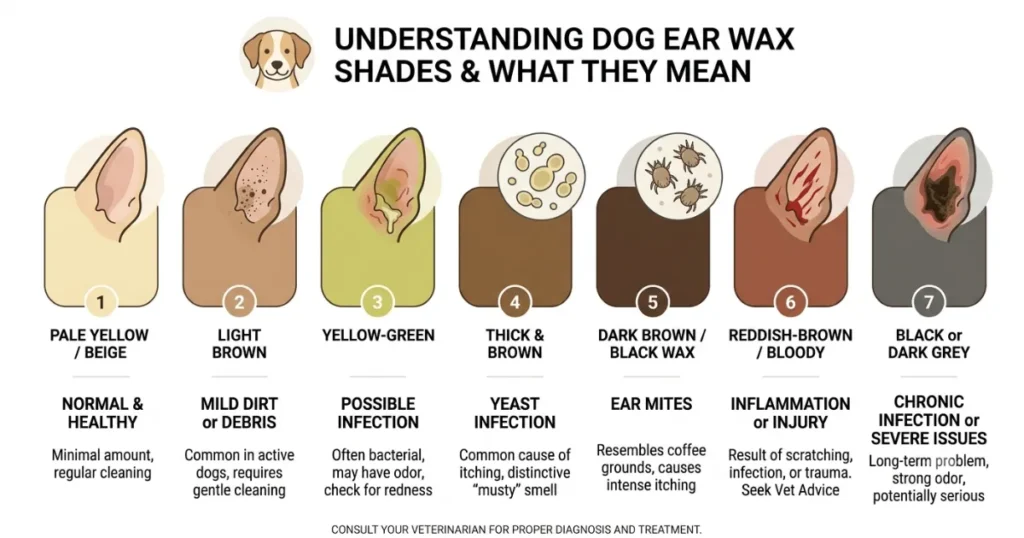
The dog ear wax color chart
Here is the full picture. Use it to match what you see, then read the note underneath, because color alone is never the whole answer.
| Color and texture | Most likely meaning | What to do |
| Pale yellow to light brown, small amount | Normal, healthy wax | Nothing. Leave it alone |
| A lot of light brown, with odor | Possible early infection | Check closely, book if it smells |
| Dark brown or black, waxy and greasy | Often a yeast infection | Book a vet visit |
| Dark, dry, crumbly, like coffee grounds | Often ear mites | Book a vet visit |
| Yellow, thick, pus-like | Often a bacterial infection | Book a vet visit |
| Green | Bacterial or fungal infection | Book a vet visit |
| Gray | Yeast, or a buildup of dirt | Clean gently, recheck, book if it returns |
| Red or bloody | Injury or a damaged eardrum | Call your vet promptly |
One rule sits above the whole chart. Color points you in a direction, but odor and behavior confirm it. Pale wax with redness, itching, and a smell can still mean infection, while dark wax in a comfortable dog with no smell may just need a gentle clean.
Black gunk in dog’s ear: mites or yeast?
Black gunk in dog’s ear is the single most common thing owners worry about, and it has two usual causes. Telling them apart is the heart of this page.
If it is dry and crumbly
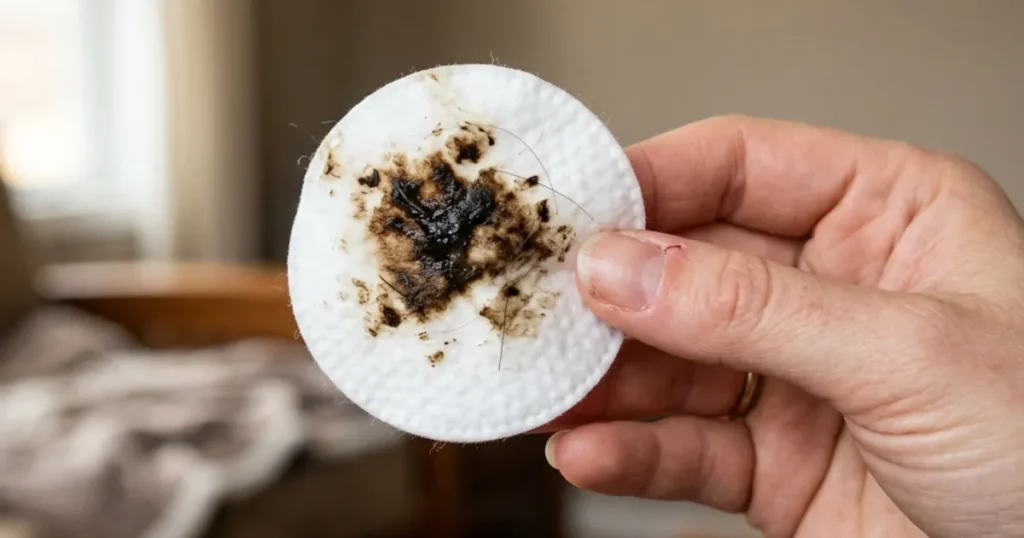
Dark, dry debris that looks like coffee grounds points toward mites. The ears are usually very itchy, both are often affected, and you may even see tiny white specks moving in the debris. Those are the mites themselves.
Mites are contagious to other pets, which changes how you handle them. The full picture is in treating ear mites across a household.
If it is waxy and greasy
Dark brown or black wax that is greasy rather than dry points more toward yeast. It often carries a musty smell, and the ear may be red and uncomfortable.
Yeast infections in this breed usually sit on top of an allergy, which is why they return if only the surface is treated. That connection is covered in the cause behind recurring infections.
You cannot always tell the two apart at home, and they can occur together. This is why the black gunk in dog’s ear always deserves a vet’s swab rather than a guess.
Brown discharge in dog ear: when to worry
Brown discharge in dog ear sits in a gray zone because some brown is normal and some is not. The difference comes down to amount, texture, and smell.
A small amount of light brown, soft wax in a comfortable dog is usually fine. A lot of it, or a sudden increase, is worth watching. Dark brown that is waxy and smelly leans toward yeast, while dark brown that is dry and crumbly leans toward mites.
The tie-breaker is almost always the smell and the dog’s comfort. Brown wax with no odor and no scratching is likely just wax. Brown discharge in dog ear that smells, itches, or comes with redness has crossed into problem territory and needs a look. What that treatment involves is covered in how vets diagnose and treat ear infections.
Texture is the other detail worth noting. Wax that is soft and pliable is usually the normal kind, while discharge that is watery, sticky, or crusty is more likely tied to a problem. Run your eye over all three at once, which are color, texture, and smell, and you will read the ear far more accurately than color alone allows.
Smelly dog ears: what the odor tells you
Of all the signs, smell is the most reliable. A healthy ear barely smells at all, so any noticeable odor means something is growing.
Smelly dog ears usually fall into two camps. A musty, yeasty smell points toward yeast. A foul, rotten smell points more toward bacteria. Neither is something you can fix with cleaning alone.
Here is why smell matters so much. It is often the earliest sign, appearing before you can see much at all. If you lift the flap and catch a strong odor from arm’s length, book a visit even if the ear looks close to normal. Smelly dog ears rarely clear on their own, because the smell is the byproduct of an active overgrowth.
Do not reach for home remedies to mask the smell. Many are useless or harmful, and the safe list is short, as safe and unsafe home treatments set out.

Ear mites vs yeast infection: the full comparison
The ear mites vs yeast infection question comes up constantly because both cause dark debris and itching. This table settles it as far as appearance can.
| Feature | Ear mites | Yeast infection |
| Debris | Dry, dark, crumbly, coffee grounds | Dark brown or black, waxy, greasy |
| Smell | Mild to moderate | Musty, stronger |
| Ears affected | Usually both | Often one |
| Itch | Sudden and intense | Present, often milder |
| Moving specks | Sometimes visible | Never |
| Most common in | Puppies and young dogs | Any age, often with allergies |
| Contagious | Yes, to other pets | No |
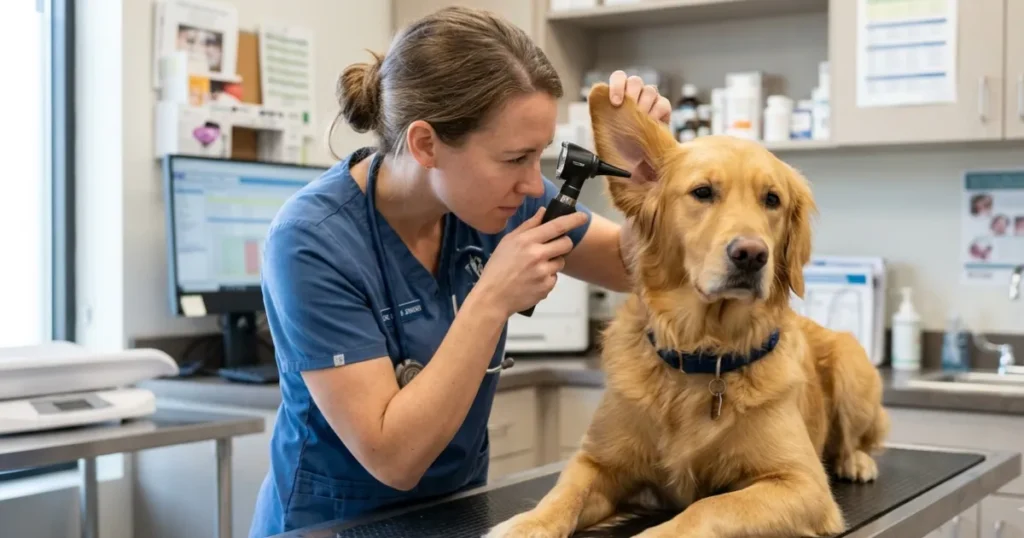
Two cautions apply. First, mites and yeast can occur together, since the irritation from mites invites a secondary yeast overgrowth. Second, you cannot be certain from looks alone. This comparison narrows it down, but a vet’s swab under a microscope is what confirms it. That single test decides the treatment, so it is worth the visit.

When to stop guessing and see a vet
This page is a starting point, not a diagnosis. Use this list to know when identification ends and veterinary care begins.
| Sign | Why it matters |
| Any strong or foul smell | Points to an active overgrowth that needs treatment |
| Red or bloody discharge | May mean injury or a damaged eardrum |
| Yellow or green pus | Points to a bacterial infection |
| Pain when you touch the ear | The ear should not be handled or cleaned until a vet checks it |
| A head tilt or loss of balance | It may mean the deeper ear is involved |
| Debris that returns days after cleaning | Points to an underlying cause, not just wax |
The theme is simple. Wax you can identify and monitor. Anything that smells, hurts, bleeds, or keeps coming back is past the point of guessing. Wet ears after swimming are a frequent trigger for the whole cycle, which is why wet ears cause trouble is worth reading for a water breed.
One more habit helps here. When you spot something worth watching, note the date and what you saw. If the same color and smell are back within a week or two of a clean, that pattern tells your vet far more than a single snapshot, and it often points to an underlying cause rather than simple wax.
Quick Read: What the Color Means
- Pale yellow to light brown: Normal. Leave it alone
- Dark brown or black, waxy: Often yeast
- Dark, dry, crumbly like coffee grounds: Often mites
- Yellow or green, pus-like: Often bacteria
- Red or bloody: Injury or a damaged eardrum. See a vet
- Any color plus a strong smell or pain: Book a visit
Expert Insight
Owners are often surprised how much I rely on smell. I can learn more from one careful sniff of an ear than from a long look, because odor tells me something is actively growing before the ear even looks that bad. If you learn one skill from this page, learn to smell your dog’s ears each week.
What color should normal ear wax be in dogs?
Normal ear wax is pale yellow to light brown, soft, and slightly greasy, with very little smell. There should not be much of it. Any strong odor, dark color, or sudden increase is a reason to look more closely.
What does dark brown or black ear wax mean?
Dark brown or black ear wax often points to a yeast infection when it is waxy and greasy or to ear mites when it is dry and crumbly like coffee grounds. Both deserve a vet visit to confirm and treat.
What is the black gunk in dog’s ear?
Black gunk in dog’s ear is usually either yeast or mites. Dry, crumbly, coffee-ground debris suggests mites, while greasy, waxy black buildup suggests yeast. A vet swab under a microscope tells the two apart reliably.
Is brown discharge in dog ear normal?
A small amount of light brown, odorless wax is normal. Brown discharge in dog ear that is heavy, dark, smelly, or paired with scratching is not normal and points toward yeast or mites. Amount and smell are the key clues.
Why do my dog’s ears smell bad?
Smelly dog ears usually mean an active infection. A musty smell points toward yeast, and a foul, rotten smell toward bacteria. A healthy ear barely smells, so any strong odor is worth a vet visit, even if the ear looks fairly normal.
How do I tell ear mites from a yeast infection?
In the ear mites vs yeast infection question, mites usually cause dry coffee-ground debris in both ears with intense itching, while yeast causes greasy, musty, dark wax more often in one ear. Only a vet’s swab confirms which it is.
What does yellow or green ear wax mean?
Yellow, thick, pus-like wax or green discharge usually points to a bacterial infection, especially with a foul smell. This needs veterinary treatment. Call your vet promptly if you see yellow to greenish discharge from the ear.
Can I clean dark wax out of my dog’s ear myself?
You can gently clean visible wax if the ear is not painful, red, or smelly. If it is, leave it alone and see a vet, since cleaning a problem ear can worsen it. Never insert a cotton swab into the canal.
What does red or bloody ear wax mean?
Red or bloody wax can mean injury to the ear canal or a damaged eardrum and sometimes severe infection. This is not something to monitor at home. Call your vet promptly if you see red or bloody discharge.
Do Golden Retrievers get more ear wax than other dogs?
Golden Retrievers are prone to ear problems because of their hanging ears and hairy canals, which trap wax and moisture. The wax itself is not unusual, but conditions that increase it, like allergies and infections, are more common in the breed.
Does smelly ear wax in a Golden Retriever always mean infection?
Usually, yes. A strong smell from a Golden Retriever’s ear almost always signals an active yeast or bacterial overgrowth. A healthy ear is close to odorless, so a noticeable smell is a reliable early warning that warrants a vet visit.
How often should I check my dog’s ear wax?
Check weekly by lifting the flap, looking at the color, and smelling the ear. Weekly checks catch changes in color, amount, or odor early, which is when problems are easiest and cheapest to treat. Checking is not the same as cleaning.
What happens if I ignore dark, smelly ear wax?
Ignored infections can worsen, spread deeper, and reach the middle ear, where treatment is longer and harder. Dark, smelly wax rarely resolves on its own. Early identification and a vet visit prevent a minor problem from becoming a serious one.
The bottom line
Dog ear wax is one of the clearest windows into your dog’s ear health, once you know how to read it. Pale yellow to light brown with little smell is normal. Dark, dry, crumbly debris leans toward mites, greasy dark wax toward yeast, and yellow or green pus toward bacteria.
The most reliable clue of all is smell. A healthy ear barely has one, so any strong odor is an early warning worth acting on. Color points you in a direction, but smell and your dog’s comfort confirm it.
Remember what this page is for. It helps you identify what you are seeing, not treat it. Once you know what the wax is telling you, follow it up with the right care, and never wait out an ear that smells, hurts, bleeds, or keeps coming back.
Every owner learns to read their own dog’s ears over time, and the wax is a big part of that. Some catch a color change early; others only notice once the smell arrives.
We would like to hear what tipped you off. What color or smell first told you something was wrong with your Golden’s ears, and what did it turn out to be? If a vet’s swab surprised you with mites when you expected yeast or the reverse, tell us. That kind of detail helps other owners read their own dog’s ears more accurately.