If you are asking why does my dog keep getting ear infections, the usual answer is an underlying allergy, not bad luck. Allergies to food or the environment inflame the ear canal and let yeast and bacteria overgrow. Each course of drops clears the flare, but the allergy remains, so the infection returns. Breaking the cycle means treating the root cause with your vet.
“Why does my dog keep getting ear infections?” is one of the most common and most frustrating questions vets hear. You treat the ear, it clears up, and weeks later it is back.
Here is the truth that changes everything. A single ear infection is usually a one-off. Repeated infections almost never are. When they keep returning, the ear is not the real problem. It is the messenger, telling you something deeper is driving the inflammation.
That something is most often an allergy. And until the allergy is addressed, no amount of cleaning or drops will stop the cycle for good.
This guide explains the real causes of these recurring infections, why treating the surface fails, and how vets break the cycle. For how this breed’s ear shape makes it vulnerable in the first place, start with the anatomy behind the breed’s ear trouble.
Why Does My Dog Keep Getting Ear Infections? The layered answer
Vets think about ear disease in layers, not as a single problem. Understanding those layers explains why repeat infections happen. It is a theme that runs through our wider health coverage and the rest of our Golden Retriever Insights.
An infection you can see, the redness, the discharge, and the smell, is the surface. Underneath sit the factors that let it happen and the factors that keep it coming back. Treating only the surface is why so many owners feel stuck.
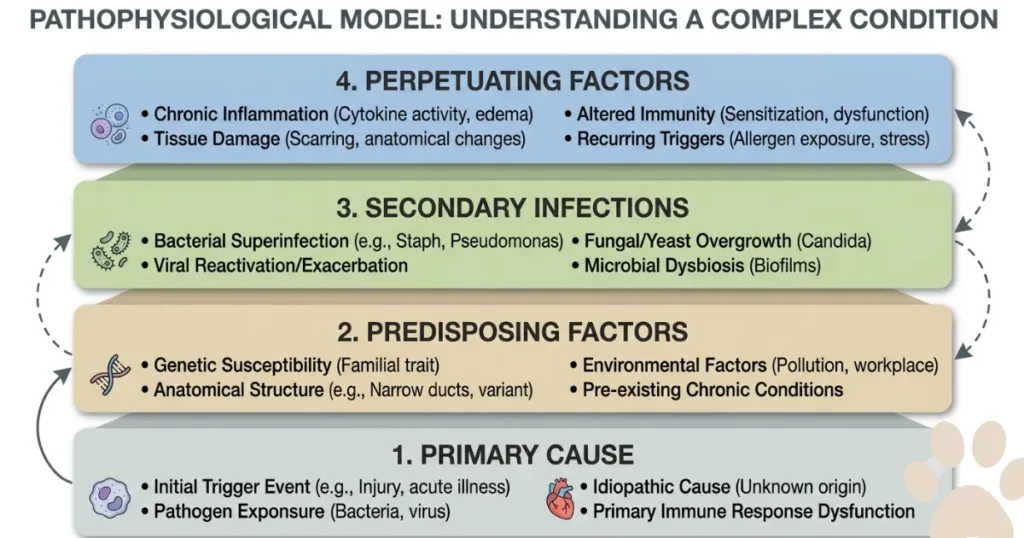
The four layers
- Primary causes start the inflammation. Allergies, hormonal disease, and parasites live here.
- Secondary factors are the yeast and bacteria that overgrow once the ear is inflamed. This is the infection you treat.
- Predisposing factors make the ear vulnerable, like the breed’s floppy flap, hairy canal, and love of water.
- Perpetuating factors are the lasting changes, like a thickened canal, that stop the ear from healing fully.
Ear drops clear the secondary layer. If a primary cause like an allergy is untreated, the inflammation returns, the yeast and bacteria overgrow again, and you are back where you started. That single insight is the answer to the whole question.
Dog Ear Infection Allergies: the most common reason by far
For most dogs with recurring ear infections, the culprit is allergies. The numbers make the case.
According to VCA Animal Hospitals, allergies are involved in as many as 43 percent of ear infection cases, especially chronic or recurrent ones. Even more striking, ear infections occur in 65 to 80 percent of dogs with food allergies. For a breed prone to allergic skin disease, like the golden retriever, this is the first place a vet looks.
How an allergy causes an ear infection
The mechanism is worth understanding because it explains why the ear keeps flaring. An allergic reaction inflames the skin, including the skin lining the ear canal. That inflammation breaks down the skin barrier and increases wax production.
The ear normally carries small numbers of yeast and bacteria. Once the canal is inflamed and waxy, those organisms overgrow explosively. The dark discharge, the smell, and the swelling are the visible result. The microbes did not start the problem. The allergy did by creating the perfect environment for them.
This is why so many owners feel they are fighting the wrong battle. They scrub, dry, and medicate the ear, and it works for a while, but the immune reaction underneath keeps resetting the clock. The two most common culprits that move into that inflamed ear are a yeast called Malassezia pachydermatis and a bacterium called Staphylococcus pseudintermedius. Both are normal residents of dog skin in small numbers. It is the allergy that hands them the opportunity to take over.
Two kinds of allergy, two patterns
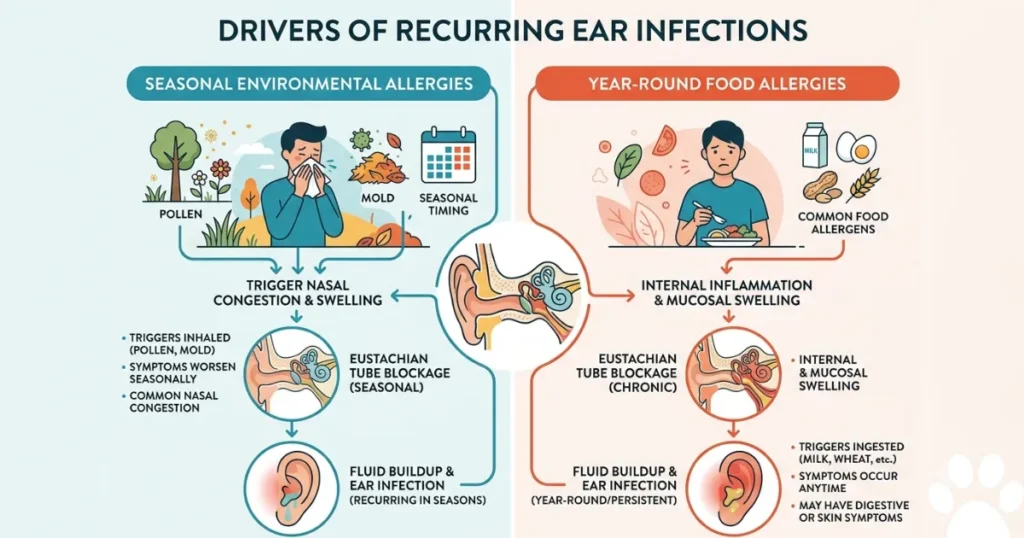
Allergies driving ear infections fall into two groups, and the timing offers a clue.
Environmental allergies, called atopic dermatitis, often follow the seasons, so the ears flare around the same time each year with pollens and molds. Food allergies tend to cause infections that recur year-round, with no seasonal pattern. A dog whose ears flare every spring points one way. A dog whose ears never fully settle points to the other. To match the flare signs to what you are seeing, knowing how to read ear wax and discharge helps.
Chronic ear infections in dogs: the other causes
Allergies lead the list, but they are not the only driver of chronic ear infections in dogs. A good vet rules out the others too.
| Underlying cause | How it drives repeat infections |
| Food allergy | Year-round inflammation of the ear canal skin |
| Environmental allergy | Seasonal or year-round inflammation, atopic dermatitis |
| Hypothyroidism | Low thyroid hormone predisposes skin and ears to infection |
| Ear canal changes | Thickening and narrowing from past infections trap debris |
| Resistant organisms | Stubborn bacteria that survive standard treatment |
| Foreign body or growth | A grass seed or mass keeps one ear inflamed |
Two of these deserve a note. Hypothyroidism, a hormone problem, is a recognized cause of repeated skin and ear infections, which is why vets sometimes run blood tests for a dog whose ears will not settle. And when only one ear is repeatedly affected, with no allergy signs elsewhere, a vet looks harder for a foreign body or growth in that single canal.
Why treating the surface keeps failing
This is the heart of the frustration. You do everything right, the ear clears, and it comes back. Here is why.
Ear drops and cleaners work on the secondary layer, the yeast and bacteria. They are good at it. But they do nothing about the allergy or hormone problem underneath. The moment the drops stop, the primary cause reignites the inflammation, and the cycle restarts.
Worse, each round of infection can leave the ear a little more damaged. Repeated inflammation thickens and scars the canal, and it can even calcify over time. Those perpetuating changes make each infection harder to treat than the last, which is why breaking the cycle early matters.
There is also the resistance problem. Repeated courses of the same medication can select for stubborn bacteria that no longer respond, turning a simple infection into a difficult one. This is why a vet swabs the ear rather than reaching for the same drops each time, a point covered in what an ear infection involves.
How vets break the cycle
Stopping recurring infections means shifting the goal from treating flares to finding the cause. Here is how a vet approaches it.
Step 1: Treat the current infection properly
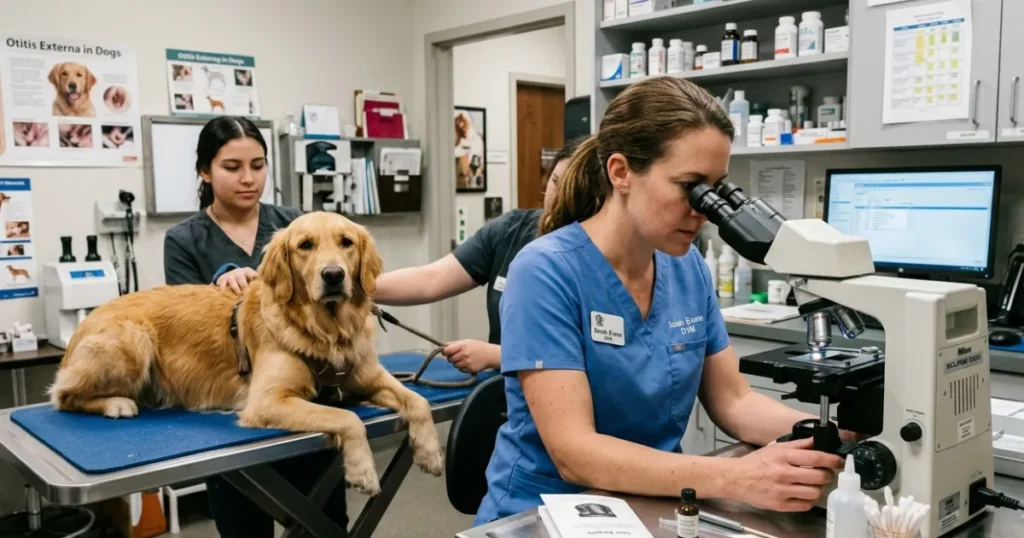
First, the active infection is cleared, guided by cytology, meaning a swab checked under a microscope, and sometimes a culture to identify resistant bacteria. This makes sure the right medication is used, not a guess.
Getting this step right matters more with each repeat infection. A dog on its fourth flare may be carrying different organisms than it did on its first, and a swab is the only way to know. Skipping that step and reusing an old prescription is one of the fastest ways to breed resistant bacteria and turn a manageable ear into a stubborn one.
Step 2: Hunt for the primary cause
Next comes the detective work. The vet looks for the driver underneath, most often an allergy. For a suspected food allergy, this usually means a strict diet trial over several weeks. For environmental allergy, it may mean allergy testing and a longer-term management plan.
This is the step owners find hardest, because it takes patience. A food trial only works if it is followed strictly, with no treats or table scraps slipping in, for the full length your vet sets. Cutting it short is the most common reason a trial fails to give a clear answer. The reward for seeing it through is real, though, because a confirmed trigger is something you can then avoid for life.
Step 3: Manage the cause for the long term
Once the cause is found, the focus shifts to managing it. That might mean a diet change, allergy treatment, thyroid medication, or ongoing skin care. Control the primary cause, and the ear infections fade on their own.
Step 4: Support the ear day to day
Good routine care backs up the medical plan. Regular gentle cleaning as your vet advises, drying after every swim, and managing canal hair all reduce flare-ups. The method is in how a proper ear clean works, water management in drying the ears after every swim, and the hair question of should you remove ear hair.
What you can do at home
You cannot diagnose the underlying cause yourself, but you play a big role in breaking the cycle.
Keep a simple diary of when the infections happen. A seasonal pattern points toward environmental allergy, while a year-round one points toward food. That record is genuinely useful to your vet. Beyond that, follow the full treatment course every time rather than stopping when the ear looks better, keep up the routine care, and resist the urge to try internet remedies, many of which make things worse. The safe options are few, as set out in which home treatments actually help.
The Key Point
If your dog gets one ear infection, that is an event. If your dog keeps getting them, that is a pattern, and the pattern almost always has a cause underneath.
- The most common cause by far: allergies to food or the environment.
- Why drops alone fail: they treat the infection, not the allergy driving it.
- The fix: find and manage the underlying cause with your vet, not just the latest flare.
Expert Insight
When an owner tells me their dog is on a third or fourth ear infection, I stop treating the ear as the problem. I start asking about itchy paws, belly rashes, and whether the flares track the seasons. The ear is usually just the loudest symptom of an allergy that has been there all along.

Why do repeat ear infections keep happening in dogs?
Most often because of an underlying allergy to food or the environment. The allergy inflames the ear canal, letting yeast and bacteria overgrow. Each treatment clears the infection but not the allergy, so it returns until the root cause is managed.
Can allergies really cause recurring ear infections in dogs?
Yes. Allergies are involved in as many as 43 percent of ear infection cases and affect most dogs with food allergies. They inflame the ear canal and break down its natural defenses, which is why allergic dogs get infection after infection.
How do I stop chronic ear infections in dogs?
Breaking chronic ear infections in dogs means finding and treating the underlying cause, usually an allergy, rather than just the flares. Your vet clears the infection, hunts for the primary cause with diet trials or allergy testing, and then manages that cause long term.
Are recurring ear infections a food allergy or environmental allergy?
Timing offers a clue. Infections that recur year-round often point to a food allergy, while those that flare seasonally often point to an environmental allergy. Only your vet can confirm which, usually with a diet trial or allergy testing.
Why do my dog’s ear infections keep coming back after treatment?
Because the drops treat the infection, not the cause. If an allergy or hormone problem is driving the inflammation, it reignites once treatment stops. Repeated infections also scar the canal, making each one harder to clear than the last.
Can a dog’s ear infection be cured for good?
A single infection can be cured. Recurring ones can be controlled rather than cured by managing the underlying cause. Once the allergy or hormone problem is well managed, most dogs stop getting infections, though the cause itself may need lifelong care.
What tests find the cause of chronic ear infections?
Vets use cytology, a swab checked under a microscope, to identify yeast and bacteria, and sometimes a culture for resistant organisms. To find the primary cause, they may run a diet trial, allergy testing, or blood tests for thyroid disease.
Do Golden Retrievers get more chronic ear infections?
Yes. Golden Retrievers are prone to allergic skin disease, the leading cause of recurring ear infections, and they have floppy, hairy, water-loving ears. That combination makes them one of the breeds most likely to develop repeat ear problems.
Can hypothyroidism cause ear infections in dogs?
Yes. Hypothyroidism, an underactive thyroid, predisposes dogs to repeated skin and ear infections. It is one reason a vet may run blood tests for a dog whose ears keep flaring despite good treatment, especially with other signs like weight gain or a poor coat.
Why does only one of my dog’s ears keep getting infected?
When only one ear is repeatedly affected, with no allergy signs elsewhere, a vet looks for a local cause in that canal, such as a grass seed, a foreign body, or a growth. This usually needs a deeper look, sometimes under sedation.
Is it bad to keep using the same ear drops repeatedly?
It can be. Repeated use of the same medication can select for resistant bacteria that no longer respond. This is why a vet swabs the ear to guide treatment rather than reaching for the same drops each time an infection returns.
How long does it take to break the cycle of recurring infections?
It varies. Finding a food allergy through a diet trial takes several weeks, and managing an environmental allergy is ongoing. Once the underlying cause is controlled, infections usually become far less frequent, but the cause itself often needs long-term management.
Can diet help my dog’s recurring ear infections?
If a food allergy is the cause, yes. A strict vet-guided diet trial can identify a trigger food, and avoiding it often reduces infections dramatically. Diet will not help if the cause is environmental allergy or another problem, which is why diagnosis matters first.
When should I see a vet about repeated ear infections?
See your vet any time an infection returns after treatment, and certainly by the second or third episode. Repeated infections signal an underlying cause that needs finding. Early action also prevents the lasting canal damage that makes future infections harder to treat.
The bottom line
Why does my dog keep getting ear infections has a clear answer for most dogs. The ear is not the real problem. It is the visible symptom of something deeper, and that something is usually an allergy.
This is why drops alone keep failing. They clear the infection but leave the cause untouched, so it returns, often leaving a little more canal damage each time. Breaking the cycle means shifting the goal from treating flares to finding and managing the root cause with your vet.
If your dog is on a second or third infection, stop chasing the flares and start looking underneath. Find the cause, manage it well, and the ear infections that felt inevitable often fade away for good.
Recurring ear infections wear owners down, and the answer often takes time to uncover. Some dogs go through many rounds before anyone connects the ears to an allergy.
We would like to hear your story. How many infections did your Golden have before a vet found the underlying cause, and what did it turn out to be: food, environment, or something else? If managing the cause finally broke the cycle, tell us what worked. Your experience could help another owner stop chasing flares and start fixing the real problem.