
A Golden Retriever ear infection shows up as head shaking, scratching, redness, odor, and discharge, usually caused by yeast or bacteria growing on top of an allergy or trapped moisture. It rarely clears on its own. Most cases need a vet visit, an ear swab checked under a microscope, and prescribed ear medication. Head shaking with pain or a head tilt needs same-day care.
A Golden Retriever ear infection is one of the most common reasons this breed ends up at the vet. It is also one of the most misread, because owners often try to clean it away when it needs medicine.
The signs are easy to spot once you know them. Head shaking, scratching, a strong smell, redness, and dark discharge are the classic five. The harder part is knowing what is behind it and knowing when a symptom means today rather than this week.
Here is the key fact. An ear infection is almost never the whole story. It’s usually the visible result of an allergy, trapped water, or another cause underneath.
This guide covers the seven signs, the difference between yeast and bacterial infections, how vets diagnose and treat them, and the warning signs that mean call now. For why this breed is set up for ear trouble in the first place, start with our full Golden Retriever ear care guide.
The 7 signs of a Golden Retriever ear infection
Most infected ears show several of these at once. One sign alone may be nothing. Three or more together means booking a visit. This kind of early-warning knowledge sits alongside the rest of our health guides and more golden retriever care advice.
- Head shaking. Repeated through the day. Often the first thing owners notice.
- Scratching or pawing at the ear. Sometimes rubbing the head along furniture or the floor.
- A strong smell. A healthy ear barely smells. Odor means something is growing.
- Redness inside the flap or canal. The lining looks angry rather than pale pink.
- Discharge. Brown, yellow, or black material in the canal or on the flap.
- Swelling or heat. The ear feels warm and looks puffy at the opening.
- Pain or sensitivity. Your dog pulls away, whines, or will not let you near the ear.
Keep a simple rule in mind. The more signs stacked together, and the more pain involved, the sooner your dog needs to be seen. To match what you are seeing to a likely cause, our color and odor guide to ear discharge walks through what each type of discharge suggests.
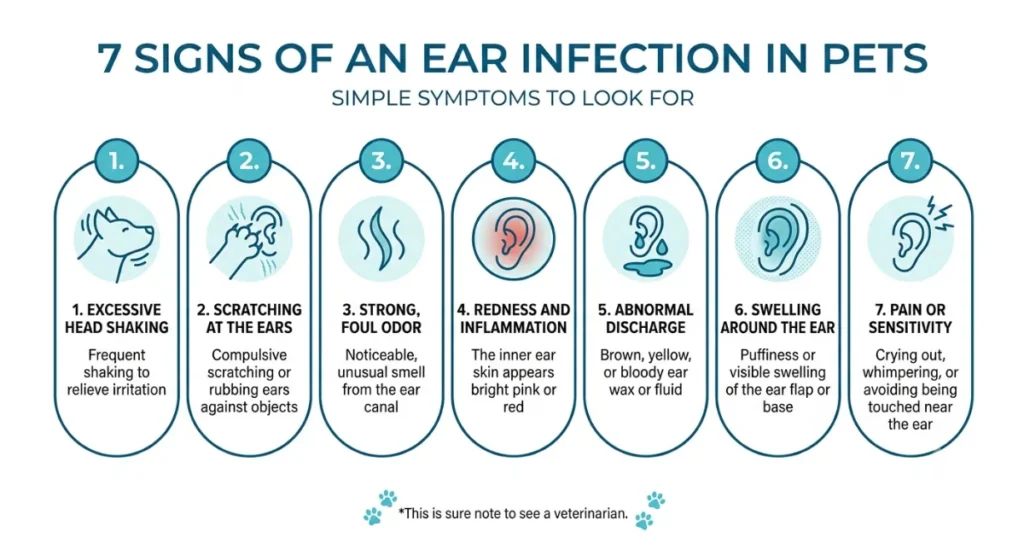
Dog ear infection symptoms: what they tell you
Reading the dog ear infection symptoms correctly saves time and worry. Each sign points somewhere.
Smell is the quickest clue
A musty, yeasty smell usually points to yeast. A foul, putrid smell more often points to bacteria. You cannot confirm the type by smell alone, but it gives you and your vet a head start.
Discharge color and texture add detail
Yeast infections often bring a dark brown or black waxy discharge. Bacterial infections can bring a yellow or greenish discharge that looks more like pus. Dry, crumbly, coffee-ground debris points more toward mites than infection.
Pain changes the timeline
Mild redness with a little wax can wait for a routine appointment. Crying, flinching, or a head tilt cannot. Pain means the infection is either severe or reaching deeper into the ear, and that moves it to same-day care.
None of these signs tells you the underlying cause, though. That is why a proper diagnosis matters and why a dog on repeat infections needs the allergy link behind chronic ear trouble looked at, not just another course of drops.
Dog ear yeast infection versus bacterial: how they differ
A dog ear yeast infection and a bacterial one look alike at a glance. They itch, they smell, and they redden the ear. The differences matter because the treatments differ.
| Feature | Yeast infection | Bacterial infection |
| Smell | Musty, sweetish | Foul, putrid |
| Discharge | Dark brown or black, waxy | Yellow or green, pus-like |
| Common trigger | Warmth and moisture, allergies | Often follows another problem |
| How it is confirmed | Ear swab under a microscope | Ear swab, sometimes a culture |
Two things are worth knowing. Many infected ears carry both yeast and bacteria at once, which is why a vet checks a swab rather than guessing. And most yeast infections in this breed sit on top of an allergy, which means clearing the yeast without treating the allergy just buys time.
The one you can sometimes rule in yourself is mites, which produce that dry, dark, coffee-ground debris. If that is what you see, read what ear mites are and how to clear them before you assume infection.

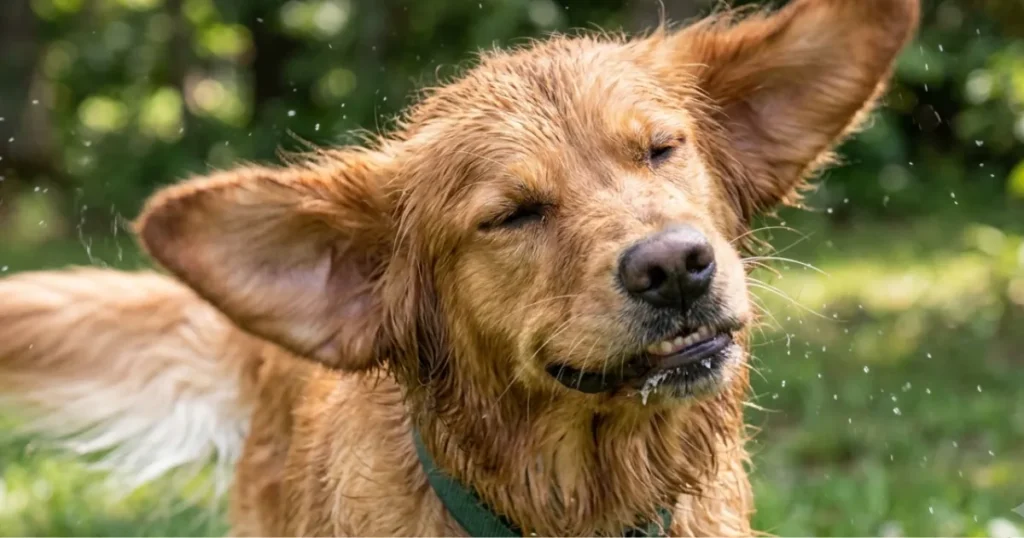
Why is my dog shaking his head so much?
If you are asking why is my dog shaking his head, the ear is the first place to look. Head shaking is the body’s attempt to clear something irritating from the canal, whether that is fluid, discharge, or inflammation.
An occasional shake is normal. Repeated shaking through the day is not; in this breed it is an ear infection until proven otherwise.
Here is the part owners miss: Hard, repeated head shaking can cause a second problem on its own. It can burst small blood vessels in the ear flap and create a swelling called an aural hematoma, which is a pocket of blood under the skin. That swelling needs veterinary treatment. So the head shaking is both a sign of the infection and a risk in its own right, which is why you should not simply wait it out.
Drying the ears properly after every swim prevents a lot of this, and our post-swim drying routine covers how for a water breed.
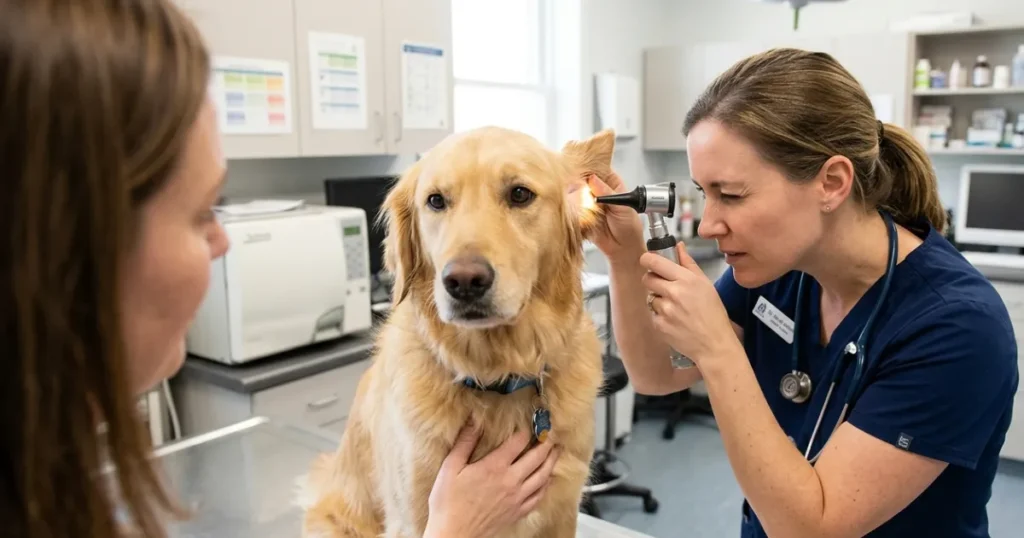
How vets diagnose and treat an ear infection
This is the part owners most often get wrong by trying to handle it at home. An ear infection is a medical diagnosis, not a cleaning job.
The diagnosis
Your vet does three things. They take a history, they look down the canal with an otoscope, and they examine a swab of the discharge under a microscope. That last step, called cytology, is what tells them whether it is yeast, bacteria, or both. Guessing gets it wrong often enough to matter.
They also check whether the eardrum is intact, because that decides which medications are safe to use.
The treatment
Treatment usually combines a thorough cleaning done by the clinic with prescribed ear medication aimed at what the cytology found. Your vet may also treat pain and inflammation.
The doses and specific drugs are your vet’s call, matched to your dog and confirmed against the eardrum check. Never use leftover medication from a previous infection or another dog, because the wrong drug on a ruptured eardrum can cause lasting harm.
A gentle at-home clean before the visit is fine only if the ear is not painful. If it hurts, leave it alone and let the clinic handle it. The safe method is in our step-by-step ear cleaning method.
What not to do
Do not pour hydrogen peroxide, rubbing alcohol, or undiluted vinegar into an infected ear. They sting inflamed tissue and can make things worse. For the full list of what is safe and what is harmful, see our safety guide to home ear remedies.
The Golden Ear Infection Action Guide
Use this to decide what to do right now, based on what you see.
| What you see | What it likely means | What to do |
| Occasional shake, ear looks normal | Probably nothing | Check the ear, watch for a day |
| Redness, mild odor, light discharge, no pain | Early infection | Book a vet visit this week |
| Strong smell, heavy discharge, clear discomfort | Established infection | Book within a day or two |
| Crying, flinching, or pain on touch | Severe or deep infection | Call your vet the same day |
| Head tilt, stumbling, circling | Possible middle or inner ear | Call your vet immediately |
| Sudden soft swelling of the flap | Likely aural hematoma | Call your vet immediately |
The guide has one message. An infection caught early is a quick fix. An infection ignored can reach the middle ear, where treatment is longer and harder.
When to Call the Vet Today
Most ear infections can wait a day or two for an appointment. Some cannot. Call your veterinarian the same day if your Golden shows any of these:
- A head tilt, stumbling, or circling
- Crying out or flinching when you touch the ear
- A sudden soft swelling of the ear flap
- One ear that looks or smells far worse than the other, with obvious pain
These point to a deeper or severe infection that needs urgent care.
Expert Insight
The Goldens I see for a first ear infection usually get better fast. The ones I worry about are the repeat visitors, because by the third or fourth infection the real question is no longer which drop to use. It is an allergy nobody has treated yet.
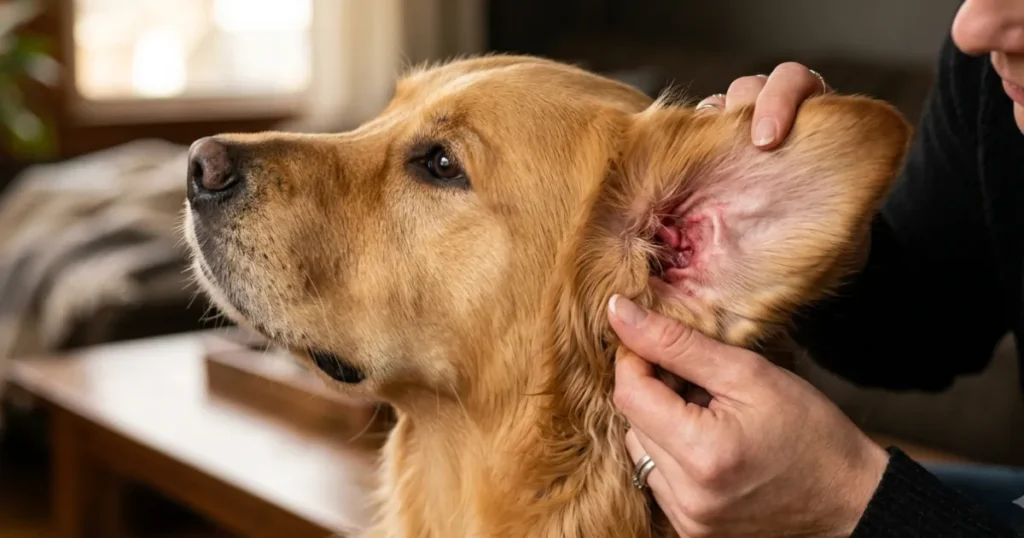
What are the signs of a Golden Retriever ear infection?
The main signs are head shaking, ear scratching, a strong smell, redness, discharge, swelling, and pain. Most infected ears show several signs at once. Three or more together mean your Golden needs a vet visit.
Can a Golden Retriever ear infection clear up on its own?
Rarely. The infection usually sits on top of an allergy or trapped moisture, so it tends to persist or worsen without treatment. Most cases need a vet visit and prescribed ear medication to resolve.
What are the most common dog ear infection symptoms?
The most common dog ear infection symptoms are head shaking, scratching, odor, redness, and dark discharge. Pain, swelling, and heat can follow. A head tilt or loss of balance is a serious sign that needs same-day care.
How do I know if my dog has a yeast or bacterial ear infection?
You often cannot tell for certain at home. A dog ear yeast infection tends to smell musty with dark, waxy discharge, while bacterial infections smell foul with pus-like discharge. Only an ear swab under a microscope confirms which.
Why is my dog shaking his head so much?
Repeated head shaking usually means something is irritating the ear canal, most often an infection. If you are wondering why is my dog shaking his head, check for redness, odor, and discharge, and book a vet visit if you find them.
Is a dog ear infection an emergency?
Usually not, but sometimes yes. Redness and mild discharge can wait a day or two. A head tilt, loss of balance, severe pain, or a swollen ear flap needs same-day veterinary care, as these point to a deeper or severe infection.
Can I treat my Golden’s ear infection at home?
No. An ear infection needs a vet to identify the cause and prescribe the right medication. Home treatment often delays proper care and can worsen the ear. Never pour peroxide, alcohol, or vinegar into an infected ear.
How do vets treat an ear infection in a Golden?
The vet examines the ear, checks a swab under a microscope, and confirms the eardrum is intact. Treatment usually combines a professional cleaning with prescribed ear medication aimed at the yeast or bacteria found.
Why does my Golden Retriever keep getting ear infections?
Repeat infections in Goldens are most often driven by an underlying allergy to food or the environment. Clearing each infection without treating the allergy lets it return. Recurrent cases need an allergy workup, not just more drops.
Can head shaking hurt my dog’s ear?
Yes. Hard, repeated head shaking can burst small blood vessels in the ear flap and cause an aural hematoma, a blood-filled swelling that needs veterinary treatment. This is one reason not to wait out a suspected infection.
What does an infected Golden Retriever ear smell like?
Often strong and unpleasant. A musty, yeasty smell points toward yeast, while a foul, putrid smell points more toward bacteria. Any noticeable odor from the ear is a reason to check it closely and book a visit.
How long does a dog ear infection take to heal?
A mild, early infection often improves within a week or two of correct treatment. Infections that have reached the middle or inner ear take much longer. Following the full course of medication matters, even after the ear looks better.
Are Golden Retrievers more prone to ear infections?
Yes. Their hanging ears, hairy canals, and love of water create warm, moist conditions where yeast and bacteria grow. UK veterinary data shows Goldens are diagnosed with ear inflammation at roughly twice the rate of mixed-breed dogs.
Can I use my dog’s old ear medication for a new infection?
No. Never reuse leftover ear medication. The new infection may be a different type, and the wrong drug can cause harm, especially if the eardrum is damaged. Always let your vet confirm the cause first.
When should I take my Golden to the vet for an ear infection?
Book within the week for redness, odor, or mild discharge. Go the same day for severe pain, a head tilt, loss of balance, or a swollen ear flap. When in doubt, an earlier visit is always the safer choice.
The bottom line
A Golden Retriever ear infection is common, treatable, and rarely something to handle alone. The signs are clear once you know them, and the seven to watch for are head shaking, scratching, odor, redness, discharge, swelling, and pain.
The mistake this breed’s owners make most is treating an infection like a cleaning problem. It is a medical one. It needs a vet to identify whether it is yeast, bacteria, or both, and to prescribe the right medication rather than a guess.
Watch for the head shaking, act on the smell, and never wait out real pain or a head tilt. Catch it early, and it is a quick fix. Leave it, and it can reach the middle ear, where the road back is far longer.
Ear infections are one of the most common things Golden owners deal with, and every dog seems to have a pattern. Some get one and never another. Others go through round after round before the real cause turns up. We would like to hear your experience. What was the first sign you noticed, and how quickly did your vet get it under control? If your Golden turned out to have an allergy as the reason for repeat infections, tell us how you found out. That story helps other owners connect the dots sooner.