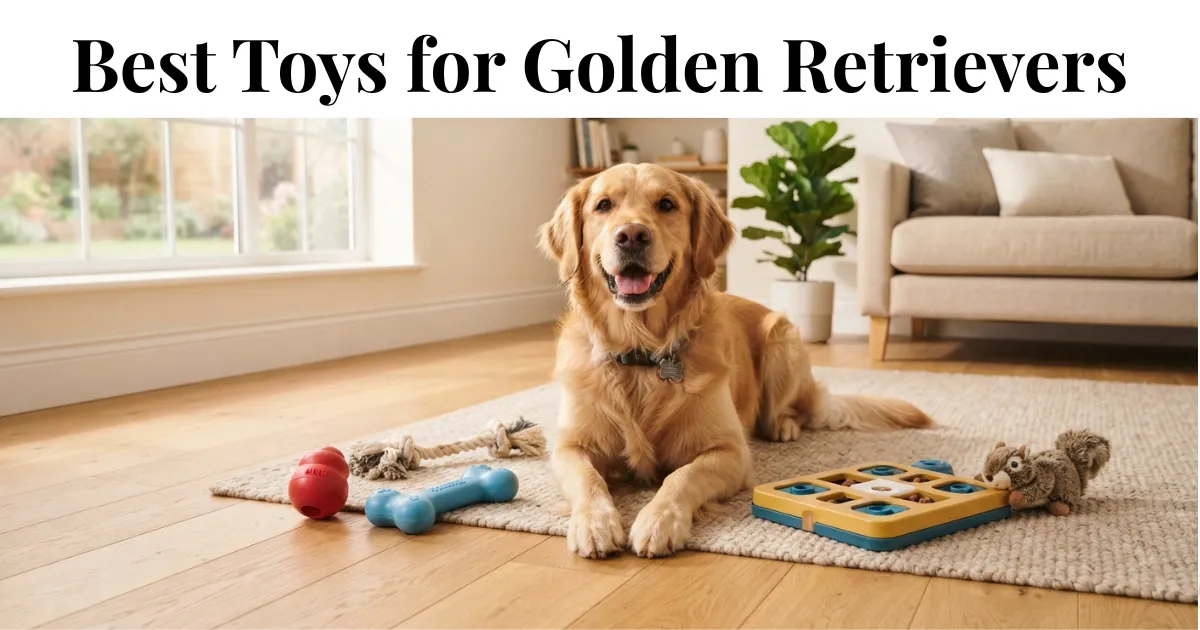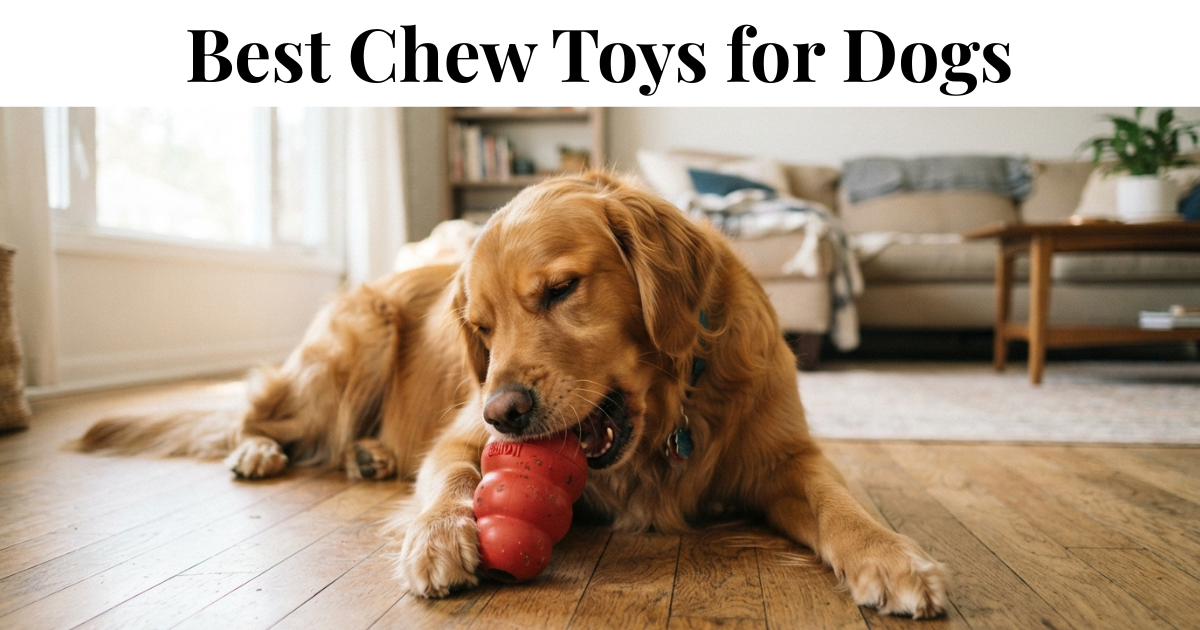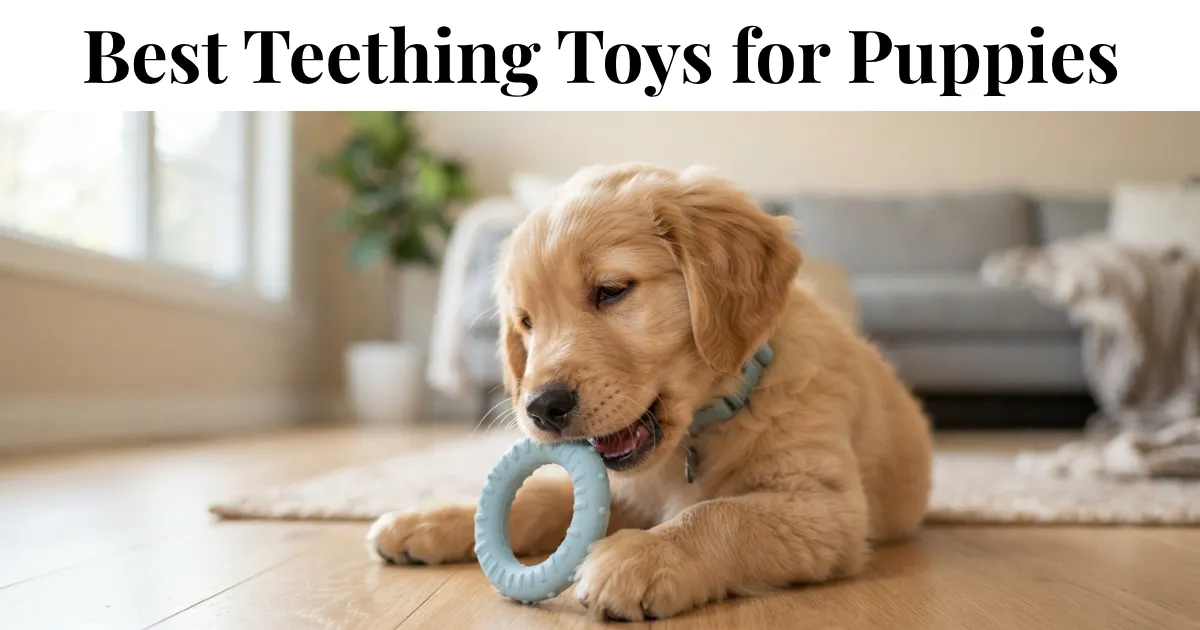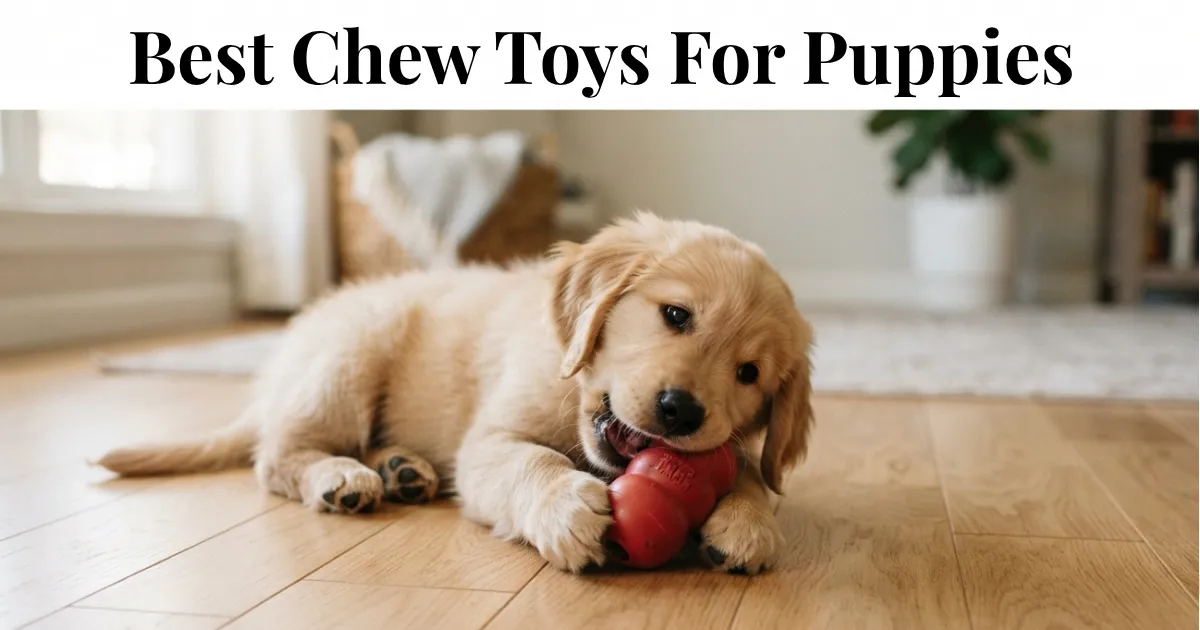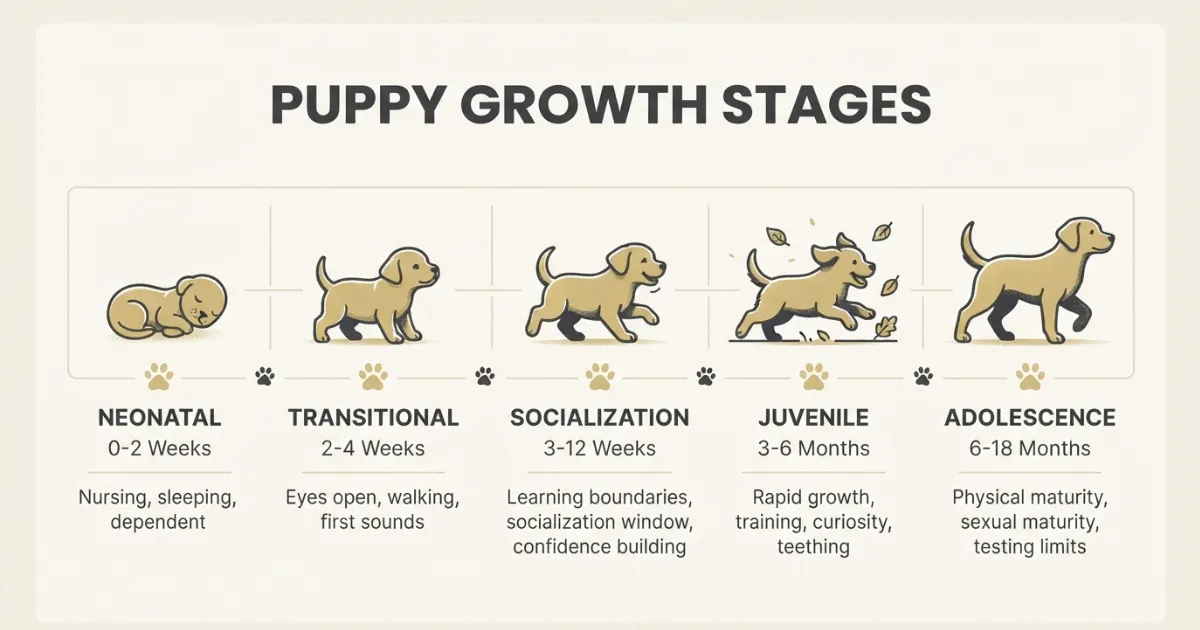
The best puppy toys cover a puppy’s core needs: a chew toy, a teething toy, a plush comforter, a fetch toy, and a puzzle. Choose safe, correctly sized options, rotate a small set, and supervise. That simple starter kit keeps a puppy busy, soothed, and happily out of trouble through the demanding early months.
New puppies come with a lot of energy and very few off switches. Toys are how you channel that energy into something other than your shoes and furniture. The right ones make the whole first year easier.
You do not need a mountain of them, though. This roundup covers the best puppy toys by category and age, how we pick them, and the safety rules that matter. For the breed-wide view, see our toy buying guide.
Key Takeaways
- The best puppy toys cover five needs: a chew, a teething toy, a plush comforter, a fetch toy, and a puzzle.
- Buy a small starter kit rather than a huge pile, then rotate it to keep a clever puppy interested.
- Match each toy to your puppy’s age and size, sizing up as it grows so nothing becomes a choking risk.
- Safe puppy toys are non-toxic, correctly sized, and durable, with no small parts to chew off and swallow.
- Supervise play, retire damaged toys promptly, and hand the chewing and teething deep dives to the guides linked below.
What every puppy needs: the starter kit
You can cover almost every need with a handful of toys. The best puppy toys are not about quantity but about hitting each type once. One good option per need beats three of the same, and it costs far less over a year.
The five must-have toy types
- A chew toy for the constant urge to gnaw.
- A teething toy to soothe sore gums during the teething months.
- A plush comforter for security and gentle play.
- A fetch toy to burn energy and feed the retrieving instinct.
- A puzzle feeder to tire the busy puppy brain.
Five toys sound too few until you use them, but each covers a real need, and rotation does the rest. Add a rope toy for tug, and you have a complete set. For more on early puppy needs, see our puppy health guides, part of the Golden Retriever Insight site.
The best puppy toys by category
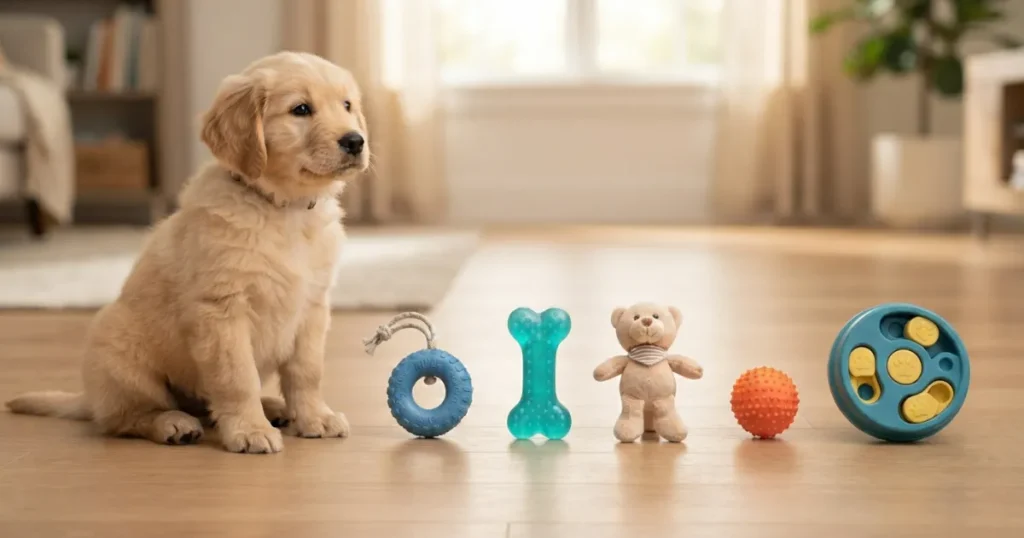
The best puppy toys each do a different job. Here is the pick of each category, with links to the deeper guides.
Chew toys
- Durable rubber chews give sharp puppy teeth a safe target.
- A stuffable rubber toy, filled and frozen, keeps a puppy busy for ages.
- Choose the puppy or large-breed size, and check it often for wear.
- For the full breakdown, see the best puppy chew toys.
Teething toys
- Soft, freezable teethers use cold to soothe sore gums.
- Keep a couple in the freezer, ready for a flare-up.
- Rotate them through the worst teething weeks so a cold one is always ready.
- For the details, see our teething toy picks.
Plush and comfort toys
- Soft toys offer comfort, especially in the first weeks away from the litter.
- Fine for gentle players, but supervise, since strong chewers can tear out stuffing or a squeaker.
- A soft comforter left in the crate can also ease a new puppy’s first nights.
- Wash it regularly, since a well-loved comforter gets grubby fast.
Fetch and retrieve toys
- Balls, soft discs, and light bumpers feed the natural urge to chase and carry.
- A floating fetch toy is perfect for water-loving breeds like Goldens.
- Pick a rubber ball or bumper over a fuzzy tennis ball for a strong chewer.
- Keep fetch sessions short for a young puppy to protect growing joints.
Puzzle and enrichment toys
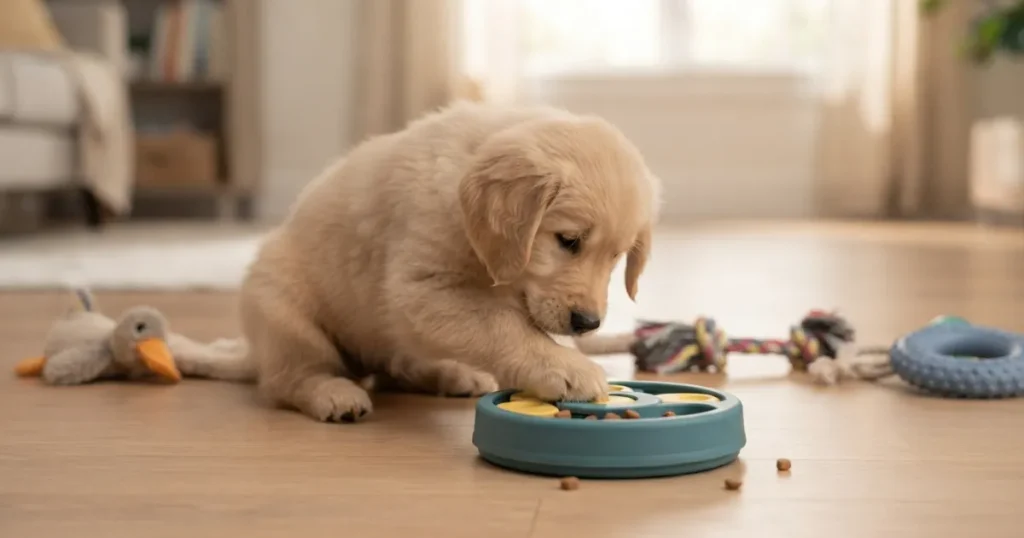
Puzzle toys turn dinner into a game and are one of the best cures for puppy boredom.
Treat-dispensing toys
- Balls and cubes that drop kibble as they roll keep a puppy working and thinking.
- Start on the easiest setting, then raise the difficulty as your puppy learns.
Snuffle and foraging toys
- Snuffle mats let a puppy sniff out hidden food, a calming, natural activity that supports your puppy’s mental development.
- A rolled towel with kibble tucked inside is a free version to try first.
Tug and rope toys
- Tightly woven rope suits gentle tug and light chewing.
- Watch for loose threads, and retire the toy once it frays.
- Keep tug friendly, with a clear release cue, so it never gets too rough.
The best puppy toys for puppies of every stage
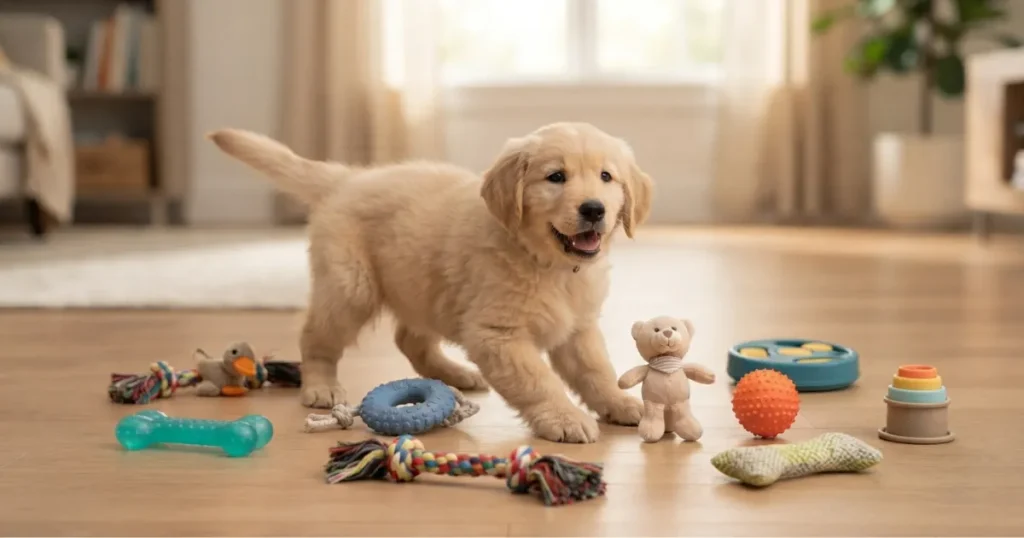
The best puppy toys for puppies change as they grow. Match the toy to the stage, and size up as your puppy does.
| Age | Toy focus | Good picks |
| 8 to 12 weeks | Soft and gentle | Plush, soft chew, light fetch |
| 3 to 6 months | Teething relief | Freezable teethers, rubber chews |
| 6 months and up | Durability and brains | Tough chews, puzzles, fetch |
8 to 12 weeks
Start soft and small. A new puppy needs lightweight, gentle toys for a tiny mouth, as it settles in during the 8 weeks old puppy stage. Comfort matters as much as play in these first weeks away from the litter. Introduce one toy at a time so a young puppy is not overwhelmed.
3 to 6 months
Teething takes over, so cold, soothing toys move to the front. Keep a few freezable teethers rotating through the worst weeks, and swap in a room-temperature toy between cold sessions. Softer chews still suit a sore, gummy mouth better than hard ones.
6 months and up
Adult teeth and stronger jaws arrive, so step up to tougher chews and harder puzzles. For the most determined chewers, see the toughest chew toys. Toy needs keep shifting across each puppy growth stage.
Our best puppy toys review method
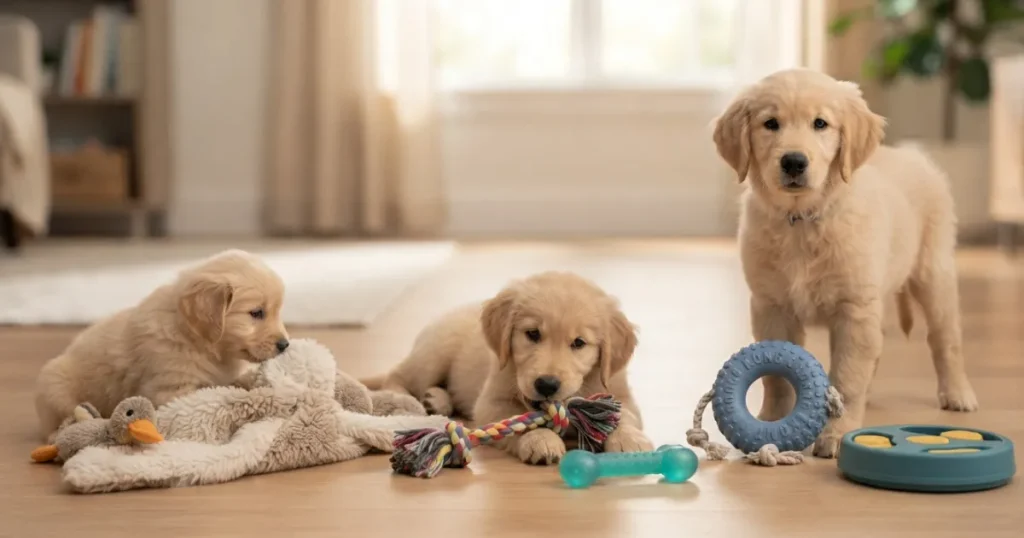
Our best puppy toys review is built on what actually keeps a puppy safe and busy, not on brand names. The same checks work whether a toy is a bargain or a premium buy.
The five things we check
- Safety. Non-toxic materials, no small parts, and a size too big to swallow.
- Durability. It should survive real puppy chewing without shedding pieces.
- Right size. Matched to a puppy’s mouth, with room to size up.
- Engagement. Does it actually hold a puppy’s interest for more than a minute?
- Value. A tough toy that lasts beats a cheap one replaced weekly.
Every category pick above earns its place against these five checks. That is what separates the best puppy toys from the ones that end up ignored in a basket.
Puppy toys and safety
Safety is where most toys succeed or fail. A quick set of rules keeps play fun and injury-free.
The size rule
- If a toy fits fully in the mouth, it is a choking risk. Bigger is safer, and size up as your puppy grows.
The hardness rule
- If a toy does not give at all under a thumbnail, it is too hard and can crack teeth.
A few more essentials:
- Skip toys with small parts, bells, or plastic eyes that can be chewed off.
- Avoid thin fabrics and cheap plastics that shred into swallowable pieces.
- Supervise a strong chewer, especially with a new toy.
- Retire any toy the moment it cracks, frays, or sheds pieces.
- Check toys weekly, since a determined puppy wears them down fast.
- When in doubt, choose the sturdier, simpler option.
Getting the most from your puppy’s toys
The best puppy toys work even better with two simple habits.
Rotate them
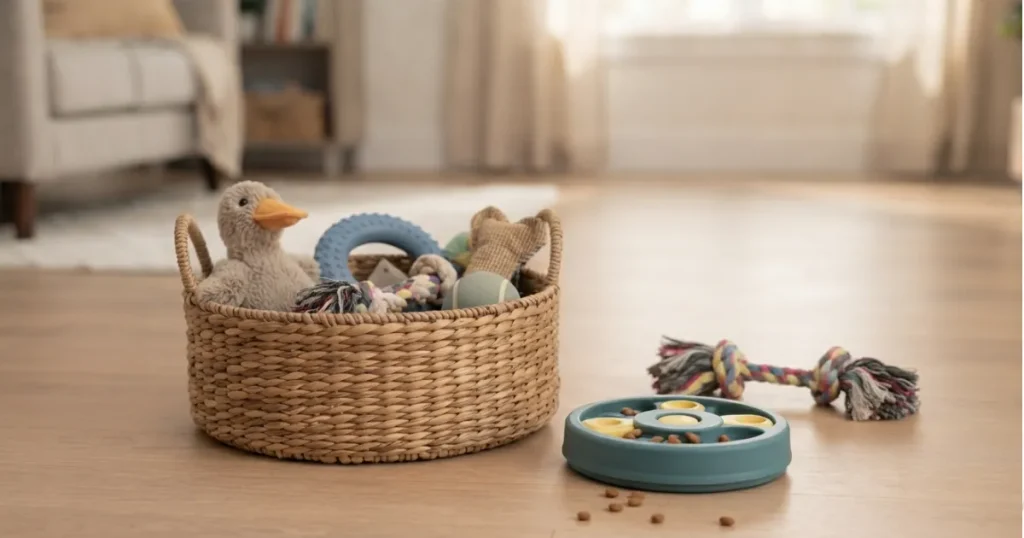
- Keep most toys put away and swap a few out every few days.
- An old toy feels brand new after a week in the cupboard, which saves money and holds a clever puppy’s interest.
- Puppies especially treat a returned toy as a thrilling new arrival.
- Store the spares out of sight, so the swap feels like a real surprise.
Introduce them right
- Offer a toy at the moment your puppy targets the wrong thing, then reward the swap.
- Freeze a chew or stuff a puzzle to make the right choice the most tempting one.
- Introduce one new toy at a time, so your puppy is not overwhelmed.
- Let a nervous puppy investigate a new toy at its own pace.
Budget versus premium puppy toys
You do not have to spend a fortune to get the best puppy toys, but a few cost rules help.
When cheap is fine
- Rope toys, plush comforters, and DIY puzzles work well at low cost.
- A frozen washcloth or a stuffed rubber toy costs almost nothing.
- A cardboard box, supervised, is a free way to let a puppy shred safely.
When it pays to spend
- Durable chews and puzzle feeders are worth paying up for, since they last.
- A tough toy that survives months beats a cheap one binned every week.
- Spend on the toys your puppy uses most, and save on the rest.
The best puppy toys balance price against how long they last and how safe they stay.
Signs a puppy toy is a keeper
Not every toy earns its place. The best puppy toys share a few clear tells:
- Your puppy chooses it over your hands and the furniture.
- It survives a week of chewing without shedding pieces.
- It stays interesting once the novelty has worn off.
- It is easy to clean and safe to leave with a supervised puppy.
- It suits your puppy’s play style, whether that is chewing, fetching, or problem-solving.
- The keepers usually reveal themselves within the first week.
If a toy fails these, retire it and put the money toward one that works.
Common puppy toy mistakes
A few habits trip up new owners. Avoid these:
- Buying too many. A huge pile overwhelms a puppy and hides the toys it actually loves.
- Leaving them all out. Without rotation, every toy quickly gets boring.
- Ignoring size. A toy that fit last month may be a choking risk now.
- Skipping supervision. Even the best toy needs watching with a strong chewer.
- Keeping damaged toys. A cracked or shredding toy is a hazard, not a bargain.
Sidestep these, and a small, well-chosen set does the whole job. The goal is a happy puppy and a tidy basket, not a full one.
Expert Insight
Owners often overbuy toys and underrotate them. A tidy starter kit of five safe, well-chosen toys, rotated through the week, beats a bin of twenty that a puppy ignores. Focus your money on durability and correct sizing, supervise strong chewers, and retire anything damaged. That approach is safer, cheaper, and far more fun for the puppy.
The 5-toy starter kit.
A chew toy, a teething toy, a plush comforter, a fetch toy, and a puzzle feeder cover almost everything a puppy needs. Add a rope for tug if you like. Keep them safe and correctly sized, rotate a small set, and supervise. That simple mix is the whole formula.
What are the best puppy toys to start with?
The best puppy toys to start with are a chew toy, a teething toy, a plush comforter, a fetch toy, and a puzzle feeder. That small starter kit covers a puppy’s core needs. Add a rope toy for tug if you like.
How many toys does a puppy need?
Not many. A handful of good toys, one from each main category, is plenty. Rotating a small set keeps a puppy far more interested than a big heap left out all at once, which is easily overwhelming.
What are the best puppy toys for puppies at 8 weeks?
The best puppy toys for puppies at 8 weeks are soft, small, and gentle, suited to a tiny mouth and baby teeth. Think plush comforters, soft chews, and lightweight fetch toys, always sized so nothing can be swallowed.
How do you run a best puppy toys review?
A useful best puppy toys review checks five things: safety, durability, correct size, how well a toy engages a puppy, and value. Brand names matter less than whether a toy is safe, tough, and genuinely interesting to a puppy.
Are puzzle toys among the best puppy toys?
Yes. Puzzle and treat-dispensing toys are some of the best puppy toys for tiring the mind, which cuts the boredom that fuels chewing and digging. Start easy and raise the difficulty as your puppy learns the game.
Are plush toys safe for puppies?
Plush toys are fine for gentle players and offer real comfort. For strong chewers, though, they can be torn open and the stuffing or squeaker swallowed, so supervise closely and switch to tougher toys if needed.
What are the safest puppy toys?
The safest puppy toys are non-toxic, one solid piece, correctly sized so they cannot be swallowed, and durable enough not to shed bits. Supervision and prompt replacement of damaged toys complete the safety picture for any puppy.
What puppy toys should I avoid?
Avoid puppy toys that are rock-hard, like antlers and bones, which crack teeth. Skip anything with small parts to chew off, and thin fabrics or cheap plastics that shred into swallowable, potentially dangerous pieces.
How do I choose the right size of toy?
Choose toys too big to fit fully in the mouth, since anything swallowable is a choking risk. Then size up as your puppy grows, rechecking the fit every few weeks, because a fast-growing puppy outgrows toys quickly.
Do toys help with training?
Yes. The best puppy toys support training by redirecting chewing and rewarding good choices. A toy swap teaches a puppy what it may chew, and a puzzle or fetch session burns the energy that makes training hard.
How often should I replace a toy?
Replace any toy the moment it is cracked, frayed, or shedding pieces, rather than on a schedule. Check toys weekly, especially chews, since a determined puppy can wear one down faster than you expect.
Are expensive puppy toys worth it?
Sometimes. A tougher, well-made toy that survives months can be better value than a cheap one replaced weekly. Judge a toy on safety, durability, and how well it holds your puppy’s interest, not on price alone.
The bottom line
The best puppy toys are not about buying the most, but about covering the essentials well. A chew, a teething toy, a plush comforter, a fetch toy, and a puzzle handle are almost everything a puppy throws at you.
Choose safe, correctly sized, durable options, rotate a small set to keep them fresh, and supervise play. Lean on the linked guides for chew toys, teething toys, and tough options for heavy chewers, and your puppy will have exactly what it needs to grow up happy, busy, and out of trouble. Start with the five-toy kit, watch what your puppy loves, and build from there. A little thought now saves money and keeps a busy puppy happily occupied for months.
What is the one toy your puppy loved above all others, and what turned out to be a waste of money? Share your best and worst buys in the comments to help other new owners. Also, let us know what your pup’s favorite toy is.