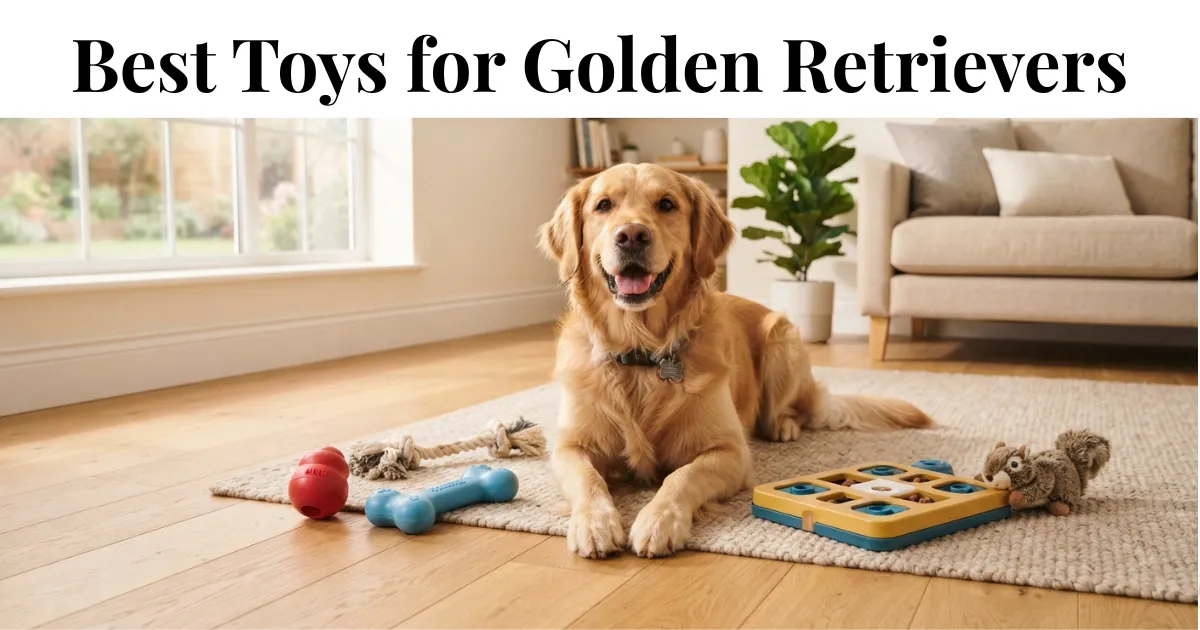
The best puppy chew toys are durable, non-toxic, and correctly sized, giving sore gums and busy jaws a safe outlet. Look for materials that flex a little rather than rock-hard chews that crack teeth, size them so they cannot be swallowed, and always supervise. The right chew saves your furniture and protects your puppy.
Puppies chew. It is how they explore the world, soothe teething gums, and burn energy, and no amount of scolding switches the instinct off.
The fix is not less chewing but better, safer targets to aim it at. This guide covers the safest, most durable puppy chew toys, what to look for, what to skip, and how to match a chew to your puppy’s age. For the full toy picture, see our best toys guide.
Key Takeaways
- Puppy chew toys give teething gums and strong jaws a safe outlet and redirect biting away from hands and furniture.
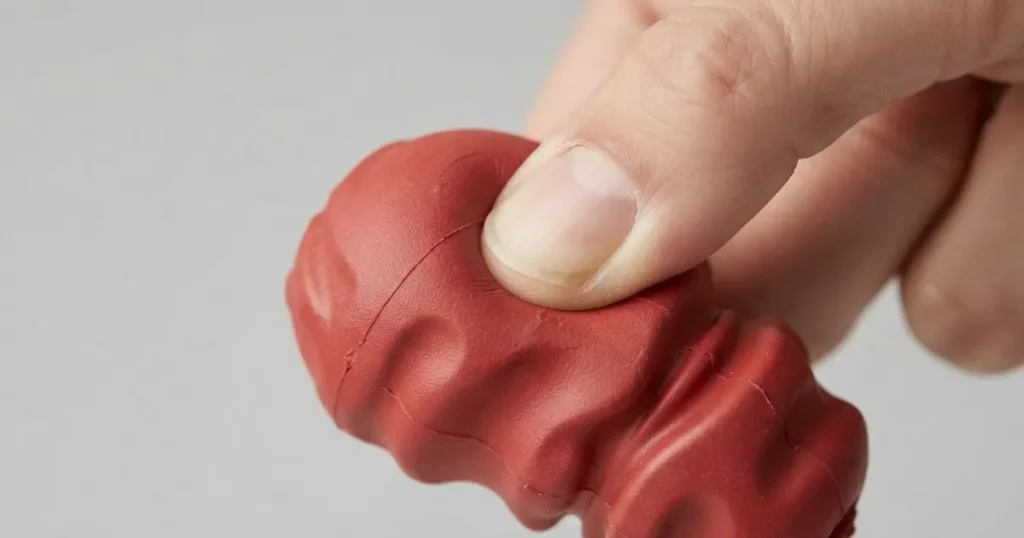
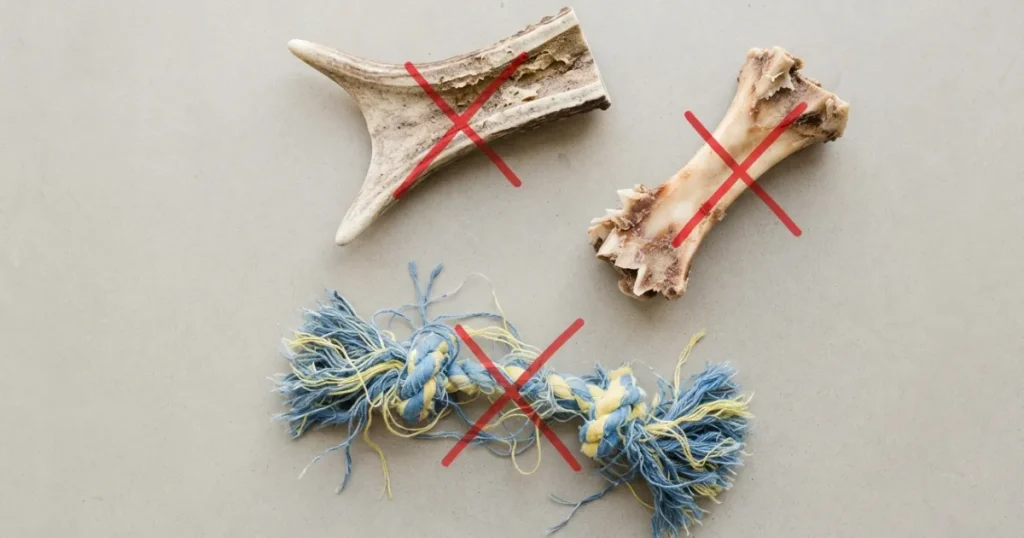
- The safest chews flex slightly under a thumbnail, while rock-hard toys like antlers and real bones can crack a puppy’s teeth.
- Size matters most, so a chew must be too big to swallow and should be sized up as your puppy grows.
- Match the material to your chewer, supervise every session, and retire any toy that cracks, splinters, or frays.
- Freezable chews soothe sore gums, and rotating a small set keeps a clever puppy interested for far longer.
Why puppy chew toys matter
Chewing is a need, not a bad habit, so the goal is to aim it somewhere safe. Good puppy chew toys do four jobs at once:
- Soothe teething. Chewing eases the ache of adult teeth pushing through, which peaks in the puppy months.
- Redirect biting. A chew gives sharp puppy teeth a target that is not your hands, shoes, or sofa.
- Support dental health. Gentle chewing helps keep new teeth clean and the gums healthy.
- Beat boredom. A busy mouth is a calm puppy, so chews cut the restlessness that fuels destruction.
- Build good habits. Teaching a puppy to chew toys, not belongings, early sets a pattern that lasts into adulthood.
For more on this stage, browse our Golden Retriever health tips and the Golden Retriever Insight blog.
What makes good chew toys for puppies
Good chew toys for puppies share a short list of qualities. Run any toy through this checklist before you buy:
- Durable but not too hard. It should survive real chewing yet still give slightly, so it never risks a cracked tooth.
- Correctly sized. Big enough that your puppy cannot fit it fully in its mouth or swallow it.
- Non-toxic materials. Natural rubber, food-grade nylon, or tightly woven cotton, with no small parts.
- Interesting texture. Ridges, nubs, or a shape that holds attention keeps a puppy chewing the toy, not the table.
- A little give. The ideal chew flexes slightly, firm enough to last but soft enough to spare young teeth.
- Easy to clean. Dishwasher-safe or wipeable toys stay hygienic through months of slobbery use.
- Made for large breeds. A Golden’s jaw is strong, so pick toys rated for large-breed or power chewers where you can.
- Holds up wet. Puppies drool and dunk toys, so materials that shrug off moisture last far longer.
A chew that ticks all five is usually a keeper. Skip anything that fails even one, especially the size and hardness tests. Those two, size and hardness, prevent the most common chew-toy injuries by far.
Safe chew toys for puppies: the rules
Safe chew toys for puppies come down to a few simple safety rules. These matter more than any brand or price:
- The thumbnail test. Press a thumbnail into the toy. If it does not give at all, it is too hard for puppy teeth.
- The size rule. If a toy can fit fully inside the mouth, it is a choking risk. Bigger is safer.
- No small parts. Avoid squeakers, bells, or plastic eyes that can be chewed off and swallowed.
- One solid piece. A chew moulded in a single piece has nothing to pull apart and swallow.
- Supervise every chew. Stay nearby, especially with a new toy or an edible chew.
- Retire worn toys. Bin any chew that is cracked, splintering, or shedding pieces.
- Watch the first sessions. New toys reveal weak points fast, so give any new chew your full attention at first.
- Check after chewing. A quick look after each session catches new cracks before they become a hazard.
| Safer choices | Risky choices |
| Flexible natural rubber | Antlers, bones, and hooves |
| Correctly sized, one-piece toys | Toys small enough to swallow |
| Solid, no small parts | Squeakers and glued-on pieces |
| Toys made for large-breed puppies | Thin plastic or fabric that shreds |
The best chew toys for puppies by type
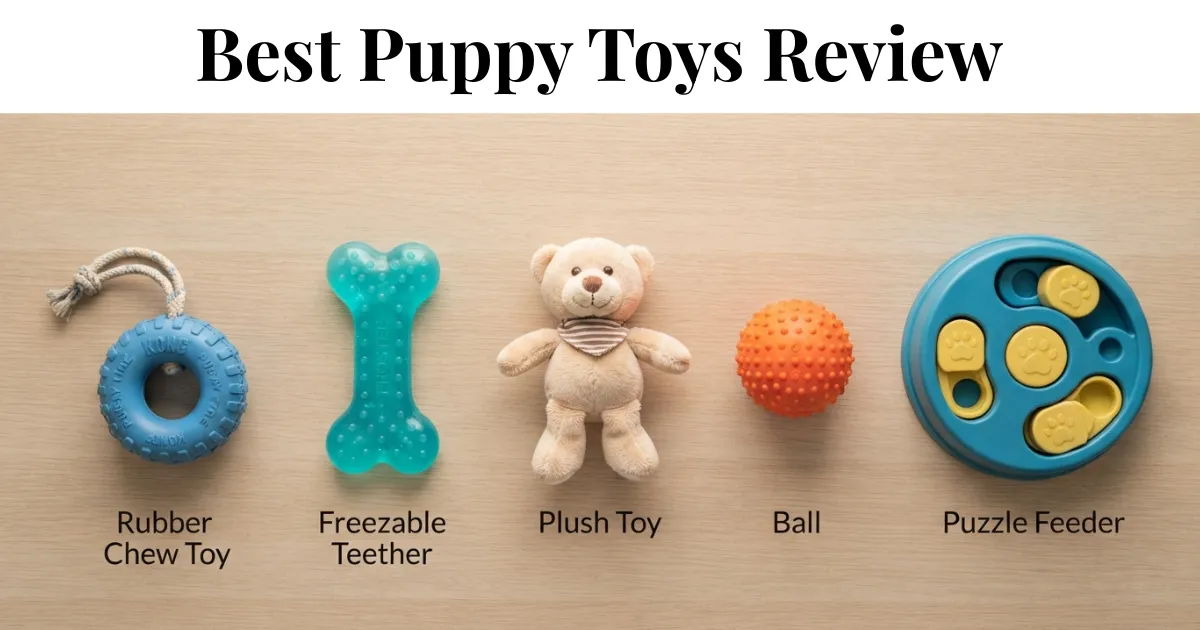
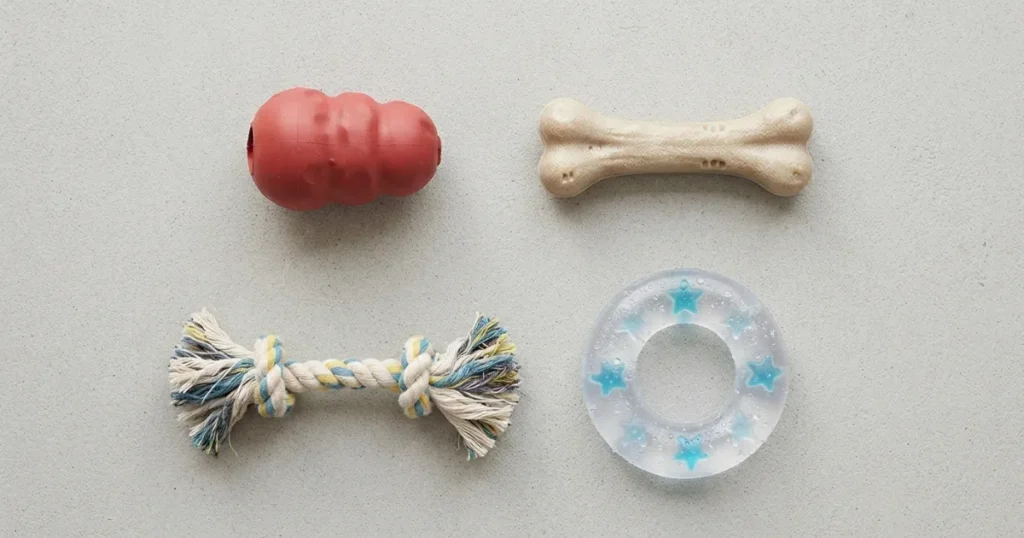
The best chew toys for puppies fall into a few clear types. Most puppies enjoy a small mix rather than five of the same kind. The table sorts them, and the notes below add detail. Start with one or two types, then expand once you see what your puppy prefers.
| Chew type | Best for | Watch out for |
| Stuffable rubber | Most puppies, stuffed with food | Size up for a strong chewer. |
| Nylon and dental chews | Persistent chewers, cleaner teeth | Can be too hard; check for sharp edges |
| Freezable teething chews | Sore-gum relief | Supervise; not for long hard-chew sessions |
| Rope chews | Gentle chewing and tug | Loose threads; not for shredders |
| Natural or edible chews | An occasional treat | Choking and blockage: watch closely. |
Stuffable rubber chews
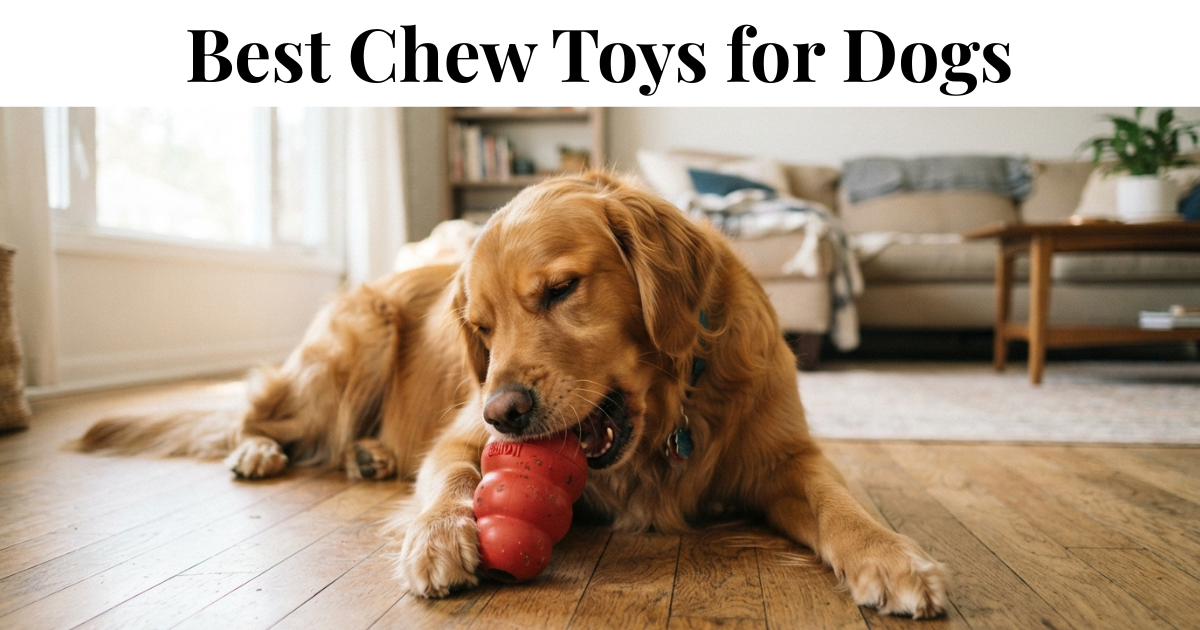
- The all-rounder for most puppies, and usually the safest first chew.
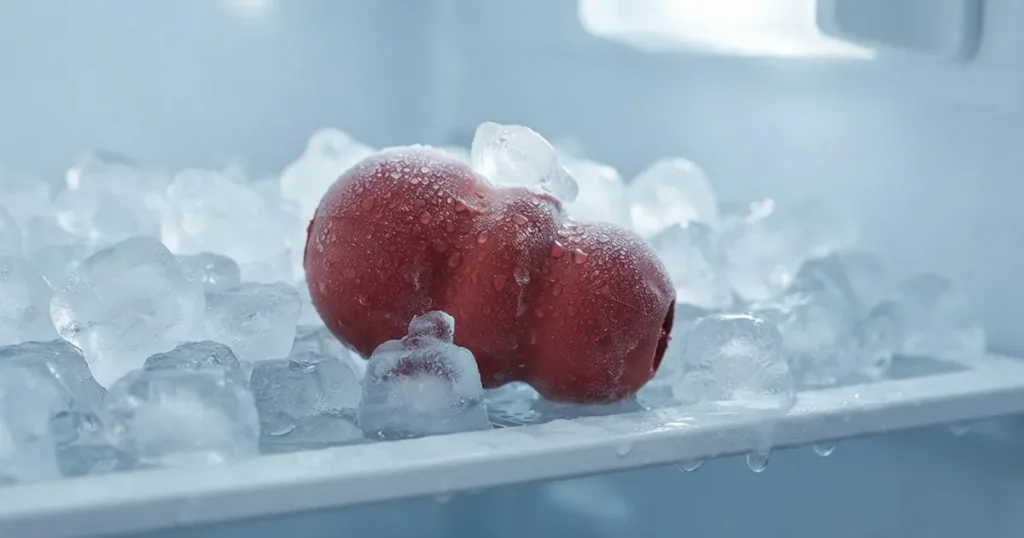
- Stuff with a little food or freeze it to stretch one toy into a long, calm activity.
- Choose the puppy or large-breed size to match your dog’s jaw.
- A wobble or treat-dispensing shape adds a puzzle element that tires the mind too.
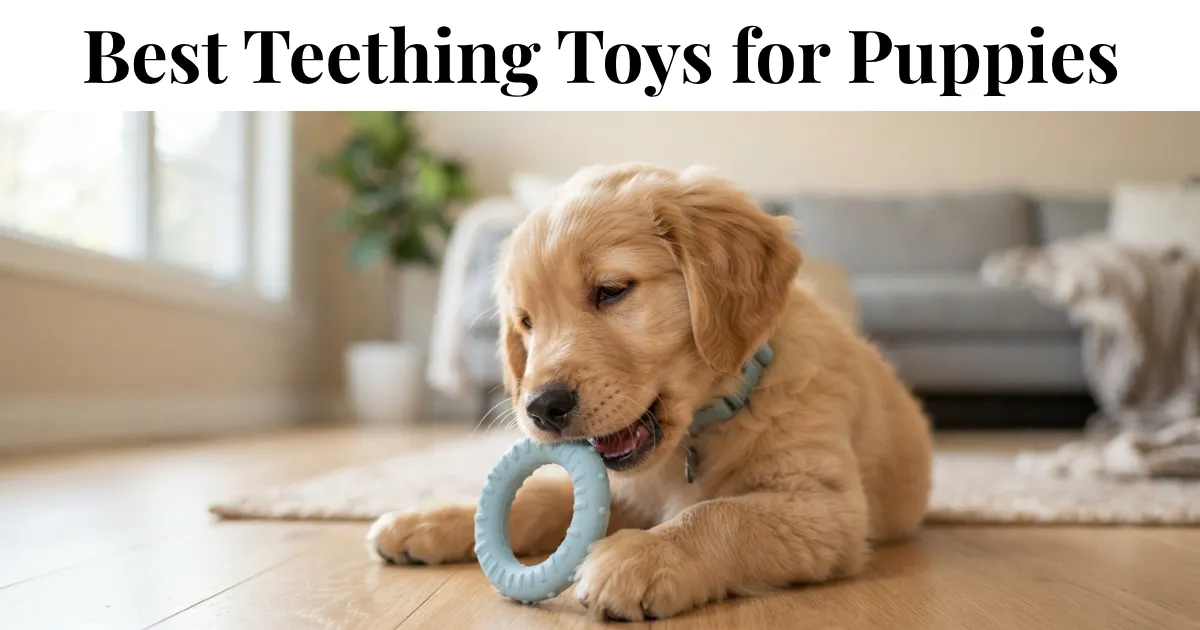
Freezable teething chews
- Cold numbs sore gums, so a chilled chew is a small miracle during teething.
- For toys chosen specifically for sore mouths, see the best teething toys.
Rope and dental chews
- Rope gives light chewers a satisfying texture, but supervise and trim any frays.
- Firm dental chews help clean teeth, as long as they pass the thumbnail test.
- Introduce nylon chews slowly, and swap them out if they develop sharp, worn edges.
Appropriate chew toys for puppies by age
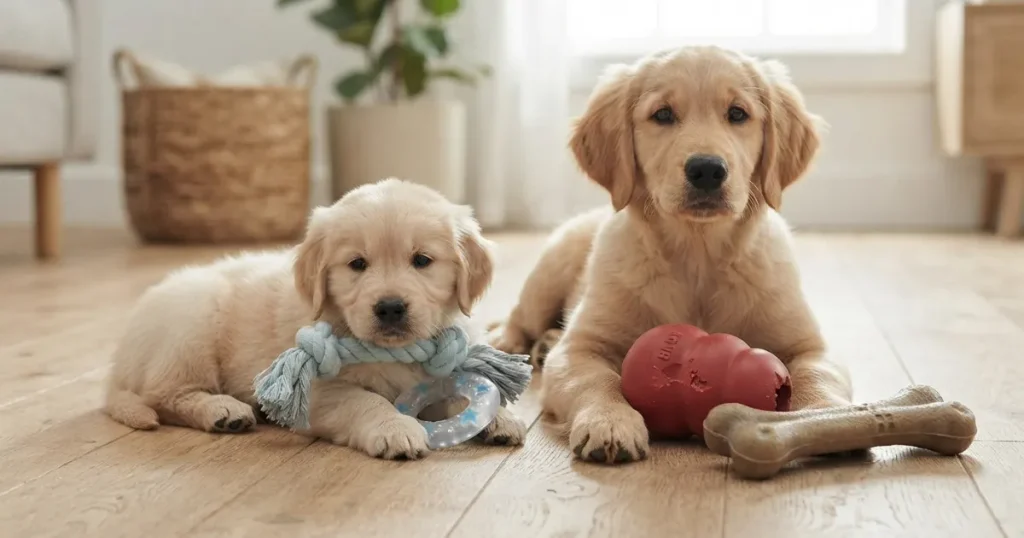
Appropriate chew toys for puppies change as your puppy grows. Match the chew to the stage:
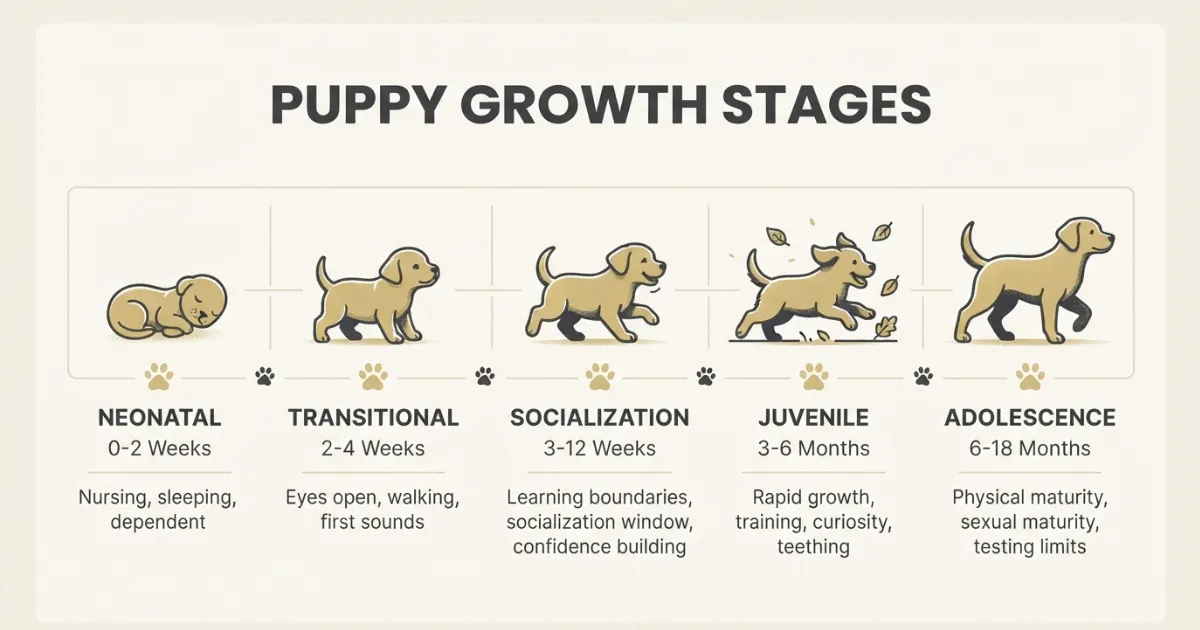
- 8 weeks to 12 weeks. Soft, lightweight chews for tiny mouths and needle-sharp baby teeth.
- Test the grip. A new puppy should be able to hold and carry the toy comfortably, not struggle with it.
- 3 to 4 months. Teething and biting peak, so keep several freezable chews rotating. This lines up with your mouthy three months old and the four months old teething peak.
- 5 to 6 months. Adult teeth arrive and jaws strengthen, so step up to tougher rubber and nylon.
- Size up as they grow. A chew that fit last month may be a choking risk now, so recheck the size often.
- Adult teeth in, around 6 months. Chewing eases, but keep offering good chews to protect those new adult teeth.
Because Goldens grow fast, sizing is a moving target. See how fast golden retriever puppies grow.
Chew toys to avoid
Some chews cause more harm than good. Steer clear of these:
- Anything rock-hard. Antlers, real bones, hooves, and very hard plastic can fracture teeth.
- Cooked bones of any kind. These splinter easily and are a serious choking and gut-injury risk.
- Toys that are too small. A chew that fits fully in the mouth is a choking hazard.
- Easily shredded items. Thin fabric and cheap plastic break into swallowable pieces that can cause a blockage.
- Unknown or cheap materials. Skip anything without clear non-toxic labeling.
- Toys with removable parts. Anything that pulls apart into small pieces is a swallowing risk.
If your puppy destroys everything, do not just buy harder. Choose tougher, safer designs instead. The toys built for power chewers.
Introducing a chew toy
A great chew only works if your puppy actually uses it. Make that easy:
- Swap and reward. Every time teeth meet skin or furniture, calmly trade in a chew and praise the swap.
- Freeze for teething. A frozen chew is far more tempting to a sore-gummed puppy.
- Rotate the set. Put most toys away and swap a few every few days, so old chews feel new again.
- Keep it positive. Never force a toy, and let your puppy settle with it in a calm spot.
- Chew when calm. Offer a chew during downtime, like crate rest, to build a soothing routine around it.
For a full lineup of toys to rotate, see our detailed guide on top puppy toys.
DIY and budget chew options
Good puppy chew toys do not have to be expensive. A few safe, low-cost ideas:
- A frozen wet washcloth. Twist it, freeze it, and offer it for teething relief, then wash and reuse.
- A stuffed rubber toy. Fill a basic rubber chew with your puppy’s own food and freeze it solid.
- A large, clean carrot. A chilled carrot is a cheap, edible chew for supervised gnawing.
- A rotated toy box. Swapping toys weekly makes the ones you own feel new, at no cost.
- A cardboard box, supervised. Fine for shredding fun, but take it away before pieces are swallowed.
Keep the same safety rules: supervise, check the size, and skip anything that shreds.
Signs a chew toy needs replacing
Even the best chew wears out. Retire a puppy chew toy at the first of these signs:
- Cracks or splits that could pinch a tongue or break away.
- Sharp or rough edges from worn nylon or hard plastic.
- Missing chunks or a toy that is shedding small pieces.
- Loose threads unraveling from a rope toy.
- Lost stuffing or a squeaker working its way loose.
- A sudden loss of interest, which can be a sign the toy is damaged or worn.
When in doubt, throw it out, since a cheap replacement is far kinder than an emergency vet trip.
Chew toys versus edible chews
It helps to know the difference between a reusable chew toy and an edible chew:
- Chew toys are non-consumable, reusable, and last for weeks or months, making them the safer everyday choice.
- Edible chews are meant to be eaten down, so they carry more choking and blockage risk.
- Use edibles sparingly and only under close supervision, in puppy-appropriate sizes.
- Never leave a puppy alone with an edible chew, since pieces can break off and be swallowed whole.
For everyday chewing, reusable toys win on both safety and value. Save edible chews for occasional, closely watched treats.
Expert Insight
The chew injuries I see most come from toys that are too hard, not too soft. A simple rule saves a lot of cracked teeth: if you would not want to be tapped on the knee with it, it is too hard for your puppy. Flexible, correctly sized, supervised chews are the safe sweet spot.
What to look for at a glance.
A good puppy chew toy is durable but not rock-hard, sized so it cannot be swallowed, and made from non-toxic material. It should give slightly under a thumbnail, stand up to a determined chewer, and wipe clean easily. Supervise every chew, and retire any toy the moment it cracks or frays.
What are the best puppy chew toys?
The best chew toys for puppies are durable but slightly flexible, non-toxic, and sized so they cannot be swallowed. Stuffable rubber chews suit most puppies, and freezable chews help with teething. Supervise every session and retire worn toys promptly.
What makes safe chew toys for puppies?
Safe chew toys for puppies flex a little under a thumbnail, are too big to swallow, and have no small parts to chew off. Non-toxic materials and close supervision complete the picture. Retire any toy that cracks or frays.
What are good chew toys for puppies made of?
Good chew toys for puppies are usually natural rubber, food-grade nylon, or tightly woven cotton rope. These are durable and non-toxic. Avoid thin plastics and cheap fabrics that shred into swallowable, potentially dangerous pieces.
How do I choose appropriate chew toys for puppies?
Choose appropriate chew toys for puppies by age and size. Young puppies need soft, small chews; teething puppies need freezable ones; older puppies with adult teeth handle tougher rubber. Always size the toy up as your puppy grows.
Are antlers and bones safe puppy chew toys?
No. Antlers, real bones, and hooves are too hard and commonly crack teeth. A safer test is the thumbnail rule: if the chew does not give at all under your nail, it is too hard for a puppy’s mouth.
When can puppies have chew toys?
Right away, in soft, puppy-sized form. From about eight weeks, gentle chews suit tiny mouths and baby teeth. As teething ramps up around three to four months, freezable chews become especially useful for soothing sore gums.
How many chew toys does a puppy need?
Just a few. A stuffable rubber chew, a freezable teething toy, and one firmer chew cover most needs. Rotating that small set keeps a puppy interested far better than a big pile of toys left out at once.
Are rope toys safe for puppies to chew?
Sturdy rope toys are fine for supervised, gentle chewing, but they are not for shredders. Trim loose threads, since swallowed strands can cause problems, and replace the toy once it starts to unravel.
How do I stop my puppy chewing furniture?
Redirect rather than punish. Keep good puppy chew toys within reach, swap one in every time your puppy targets furniture, and reward the swap. Plenty of exercise and rotation lower the boredom that fuels destructive chewing.
Can chew toys help with teething pain?
Yes. Cold is the key, so a frozen or chilled chew numbs sore gums and soothes the ache of adult teeth coming in. Keep a couple in the freezer and rotate them through the worst teething weeks.
How often should I replace a puppy chew toy?
Replace any chew as soon as it is cracked, frayed, or shedding pieces, not on a set schedule. Check toys weekly, since a determined puppy can wear one down faster than you would expect.
Are edible chews the same as puppy chew toys?
Not quite. Edible chews are treats to be eaten, while puppy chew toys are reusable and non-consumable. Edible chews carry more choking and blockage risk, so supervise them closely and choose puppy-appropriate options only.
The bottom line
The best puppy chew toys are simple to spot once you know the rules. They are durable but not rock-hard, too big to swallow, made from non-toxic materials, and matched to your puppy’s age and chewing strength.
Get those basics right, supervise every chew, and retire toys the moment they wear out. Do that, and a good chew becomes one of the most useful tools you own, protecting your puppy’s teeth, saving your furniture, and turning a natural instinct into calm, happy play. Start with one safe rubber chew and one freezable teether, add from there, and let your puppy show you what it loves. The right chew grows with your puppy, so revisit the size every few weeks.
What chew toy has actually survived your puppy’s teeth, and which ones failed fast? Share your wins and warnings in the comments to help other owners shop safely.