
A dog ear hematoma is a blood-filled swelling of the ear flap, caused when blood vessels burst inside the pinna, usually from violent head shaking or scratching. That shaking almost always traces back to an ear infection, mites, or allergies. It needs a vet, because treatment means draining the swelling and fixing the cause. Left alone, it can leave a permanently wrinkled, cauliflower ear.
A dog ear hematoma looks alarming, and it appears fast. One day the ear is normal; the next, the flap is swollen, puffy, and hanging heavy. Many owners think their dog has been stung or injured.
What has actually happened is that blood vessels inside the ear flap have burst and filled it with blood. The cause is almost always the same. The dog has been shaking its head or scratching its ear hard and often, usually because something deeper is wrong.
That is the key to understanding this condition. The swelling is the visible problem, but it is really a symptom of an irritated ear underneath.
This guide explains what a hematoma is, why it happens, how vets treat it, and how to stop it from coming back. For how this breed’s ear shape sets up the whole problem, start with the breed’s ear care essentials.
What is a dog ear hematoma?
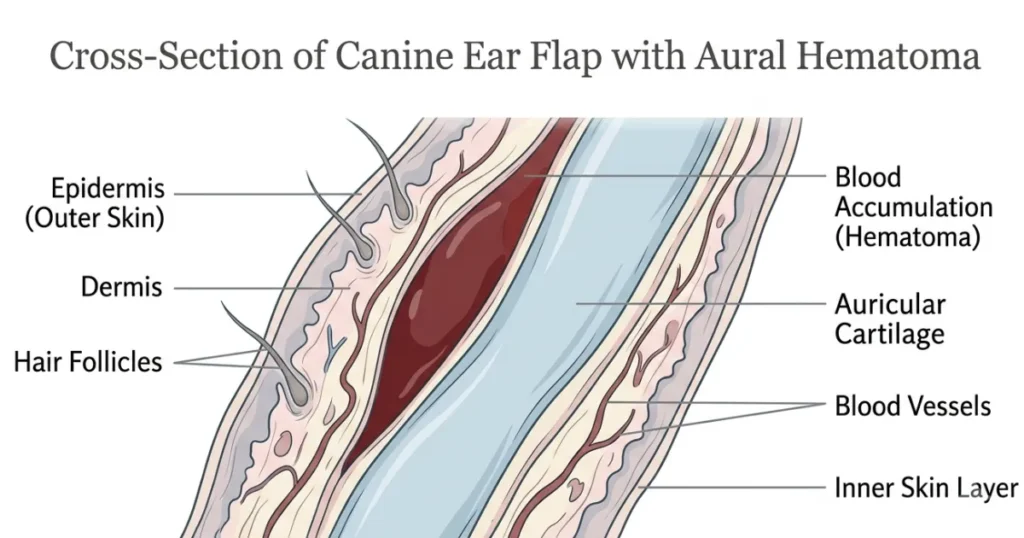
A dog ear hematoma, also called an aural hematoma, is a pocket of blood that collects inside the ear flap. The ear flap, or pinna, is made of skin on both sides of a thin layer of cartilage. When small blood vessels between those layers break, blood pools in the space and swells the flap.
The result is a soft or firm swelling that can affect part of the ear flap or the whole thing. A large one makes the ear droop and hang lower than usual under the weight of the blood.
Why floppy-eared breeds are more at risk
This is very common in dogs prone to ear infections, and especially in floppy-eared breeds rather than those with upright ears. A Golden Retriever ticks every box. Hanging ears, hairy canals, a love of water, and a tendency toward allergies all lead to the irritation that triggers head shaking. Build ear care into a wider routine using more health guides for the breed and the wider Golden Retriever site.
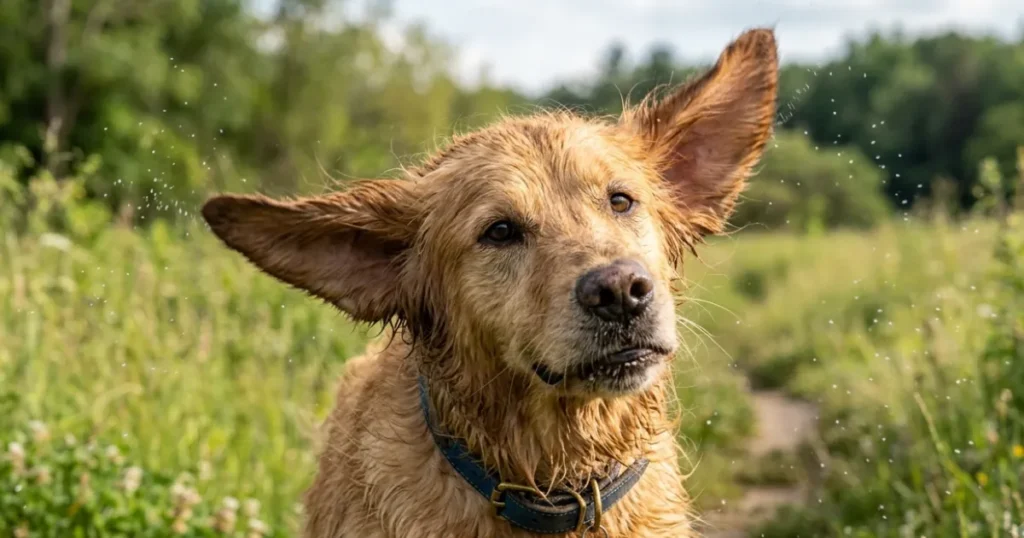
The floppy ear plays a second, more mechanical role too. When an upright-eared dog shakes its head, the ear moves relatively little. When a Golden shakes, the heavy flap whips back and forth against the side of the head with real force. That repeated impact is part of why the vessels inside the flap rupture so readily in this kind of breed. The same ear shape that traps moisture and invites infection also makes the flap itself more vulnerable to injury.
It is painful, so act promptly
The pool of blood stretches the skin and causes real discomfort. A hematoma is not usually a life-threatening emergency, but it is painful and should be seen promptly, both to relieve the pain and to catch the cause.
Swollen ear flap in a dog: the signs to know
A swollen ear flap dog owners notice is usually obvious, which makes this condition easy to spot. Here is what to look for.
- A sudden swelling of part or all of the ear flap
- A soft, squishy, or taut feel, depending on how much blood has collected
- Warmth and redness over the swollen area
- An ear that droops or hangs lower than normal from the weight
- Signs of pain, like flinching, holding the head tilted, or shaking it
- Ongoing head shaking or scratching, the behavior that caused it
The swelling itself is easy to recognize. The more useful skill is noticing the head shaking before it causes a hematoma. Persistent shaking is a red flag that the ear needs attention, and catching it early can prevent the hematoma entirely. To read what is behind the shaking, reading the signs in the wax helps.
What causes a dog ear hematoma?
A hematoma is almost never a standalone problem. It is the result of trauma to the ear flap, and that trauma nearly always comes from the dog itself.
The head shaking chain
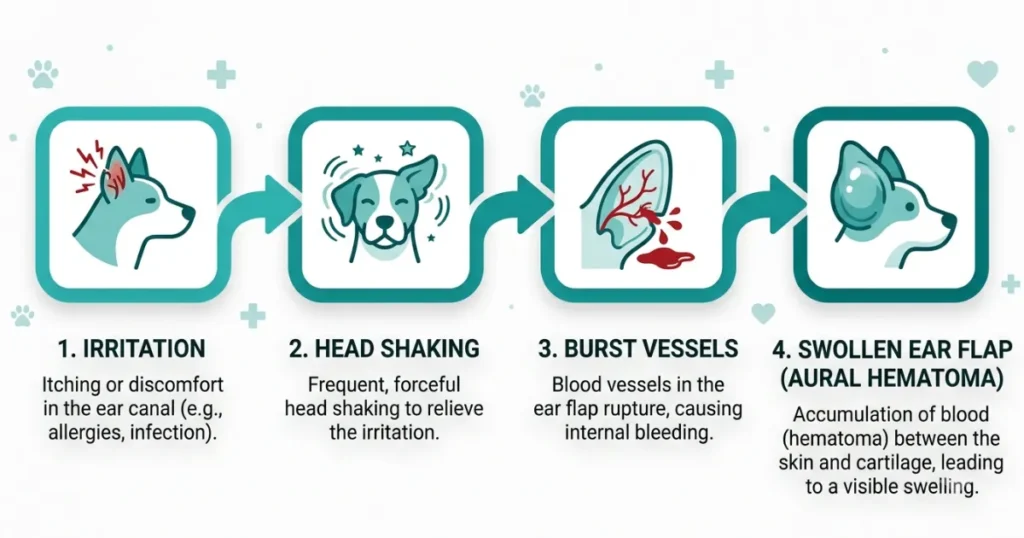
The chain of events is consistent. Something irritates the ear, the dog shakes its head or scratches hard to relieve it, and the force ruptures blood vessels in the flap. The swelling follows.
That means the real cause is whatever started the irritation. The most common triggers are all things this cluster covers.
| Underlying trigger | How it leads to a hematoma |
| Ear infection | Itching and pain drive violent head shaking. |
| Ear mites | An intense itch causes constant scratching. |
| Allergies | Chronic skin and ear irritation, ongoing shaking. |
| A foreign body | A grass seed in the ear triggers frantic shaking. |
| A direct injury | A bite or knock to the ear, less common. |
The single most common trigger is an ear infection. This is why treating the swelling without finding the cause almost guarantees it returns. What that infection looks like is covered in how ear infections are treated, and the mite version in how to recognize ear mites.
Dog ear hematoma treatment: the options
Treating one has two parts that matter equally. Drain the swelling, and treat the cause underneath. Skip the second, and it comes back.
Draining the swelling
Vets have several ways to remove the blood, and the right choice depends on the size of the hematoma and your dog.
- Needle drainage. The vet uses a needle to draw out the blood, sometimes with a steroid injected into the flap. It is simple, but the swelling often refills, so it may need repeating.
- Placing a drain. A small tube is placed in the flap to let blood drain continuously over a week or more, which stops it refilling.
- Surgery. For larger or stubborn hematomas, surgery is the most effective and lasting option. The vet drains the blood and places rows of sutures through the flap to hold the layers together and close the space where blood collected.
Steroids and pain relief may be used alongside any of these, and your vet will guide the choice. The exact medications and doses are your vet’s call, matched to your dog.
Why surgery often wins for big ones
Surgery has a real advantage for larger hematomas. It provides a lasting fix, and the odds of the same ear filling again afterward are very slim. There is some scarring, but far less than an untreated hematoma leaves. That trade-off is why vets often recommend it for a large swelling.
What happens if you leave it untreated?
It is tempting to hope a hematoma will simply go away. It sometimes does, but the result is usually not what you want.
Left alone, the body slowly reabsorbs the blood over weeks. As it does, scar tissue forms, and the flap shrinks and crinkles into a permanently wrinkled shape. This is known as cauliflower ear, and once it sets, it is usually permanent.
Beyond the appearance, an untreated hematoma stays painful while it resolves, and severe scarring can even narrow the ear canal opening and affect the ear long term. The underlying cause also goes untreated the whole time, so the infection or allergy driving it continues. Waiting rarely pays off, which is why prompt treatment is the standard advice. Reaching for a home remedy instead of a vet is a mistake here, as what is safe to use at home explains.
There is also a timing factor worth knowing. The sooner a hematoma is treated, the better the ear tends to look afterward, because there has been less time for scar tissue to form and distort the flap. A swelling addressed within a day or two usually heals with far less lasting change than one left for weeks. That is one more reason not to adopt a wait-and-see approach with a swollen ear flap.
Aural hematoma in dogs: stopping it from coming back
Preventing a repeat comes down to one thing. Stop the head shaking, which means treating and preventing whatever irritates the ear.
Fix the underlying cause
This is the heart of prevention. A hematoma treated without addressing the cause tends to return, either in the same ear or the other one. If an infection drove the shaking, it must be cleared. If allergies are the root, they need managing, which is often the real story in this breed, as the allergy behind repeat infections explains.
Keep the ears healthy day to day
Good routine care lowers the risk by preventing the irritation in the first place. Regular gentle cleaning as your vet advises, drying the ears after swimming, and weekly checks all help catch problems before they cause frantic shaking. The safe cleaning method is in how to use an ear cleaner properly.
Act early on head shaking
The simplest prevention is speed. The moment you notice persistent head shaking or ear scratching, get the ear checked rather than waiting. Treating the irritation early, before the shaking turns violent, is the surest way to prevent a hematoma from ever forming.
Expert Insight
When a swollen ear flap comes into my clinic, the swelling is the easy part. What I really focus on is the ear canal underneath, because a hematoma is almost always the ear telling me an infection or allergy has gone unmanaged. Fix the swelling and ignore the cause, and I usually see that dog again.
This Needs a Vet, Not a Wait-And-See
A hematoma is a blood-filled swelling of the ear flap. It is not an emergency in the life-threatening sense, but it is painful and needs prompt veterinary care.
Book a vet visit promptly if you see:
A sudden soft or firm swelling of the ear flap, warmth, or a flap that droops and feels heavy.
Do not:
Drain it yourself, press on it, or wait for it to go away. Untreated, it can leave a permanently crinkled ear.
The real fix:
Treat the swelling and the underlying cause driving the head shaking.
What is a dog ear hematoma?
A dog ear hematoma is a blood-filled swelling of the ear flap, caused when small blood vessels inside the pinna rupture. It usually happens from violent head shaking or scratching, most often triggered by an ear infection, mites, or allergies.
Is a dog ear hematoma an emergency?
It is not usually a life-threatening emergency, but it is painful and needs prompt veterinary care. Book a visit quickly rather than waiting, both to relieve your dog’s discomfort and to find and treat the underlying cause driving the head shaking.
What does a swollen ear flap on a dog mean?
A swollen ear flap dog owners see usually means an aural hematoma, a pocket of blood inside the flap. It follows hard head shaking or scratching, which points to an irritated ear underneath. It should be checked by a vet promptly.
What causes an aural hematoma in dogs?
An aural hematoma in dogs is caused by trauma to the ear flap, almost always from the dog shaking its head or scratching hard. The most common reason for that shaking is an ear infection, followed by mites, allergies, or a foreign body.
How do vets treat an ear hematoma?
Treatment involves draining the blood by needle, a drain, or surgery and treating the underlying cause. Surgery is the most lasting option for large hematomas. Steroids and pain relief may be used alongside, as your vet decides.
Will an ear hematoma heal on its own?
It may reabsorb over weeks, but this usually leaves a permanently wrinkled cauliflower ear and remains painful in the meantime. The underlying cause also goes untreated. For these reasons, vets recommend prompt treatment rather than waiting it out.
What is cauliflower ear in dogs?
Cauliflower ear is the crinkled, wrinkled, thickened ear flap that results from an untreated hematoma. As the body reabsorbs the blood, scar tissue distorts the flap. It is usually cosmetic but permanent, which is one reason to treat a hematoma early.
How much does hematoma surgery cost?
Costs vary widely by clinic, region, and the size of the hematoma, so ask your vet for a specific estimate. Remember that treating the underlying cause is part of the picture, and preventing repeats by managing that cause saves money over time.
Can a hematoma come back after treatment?
Yes, especially if the underlying cause is not treated. Needle drainage refills most often, while surgery has the lowest recurrence in the treated ear. The best protection against a repeat is clearing the infection or allergy driving the head shaking.
Do Golden Retrievers get ear hematomas often?
Golden Retrievers are at higher risk because their floppy, hairy, water-loving ears are prone to the infections and allergies that cause head shaking. Any dog that shakes its head hard and often can develop one, and this breed has plenty of reasons to.
Can I drain the hematoma at home?
No. Never try to drain a hematoma yourself. It is painful, risks infection, and rarely works, since the swelling refills without proper closure of the space. This is a veterinary procedure. Home attempts can cause more harm than good.
How can I prevent an ear hematoma?
Prevent hematomas by stopping the head shaking at its source. Treat ear infections, mites, and allergies promptly, keep the ears clean and dry, check them weekly, and see your vet at the first sign of persistent shaking or scratching.
How long does an ear hematoma take to heal?
With surgery, the ear typically heals over a few weeks, with sutures removed at a recheck. Needle drainage may need repeating. Healing time also depends on treating the underlying cause, since ongoing shaking slows recovery and risks a repeat.
Is an ear hematoma painful?
Yes. The pooled blood stretches the skin of the ear flap and causes real discomfort, and the underlying infection or irritation adds to it. This pain is one of the main reasons vets advise prompt treatment rather than waiting for it to resolve.
The bottom line
A dog ear hematoma is a blood-filled swelling of the ear flap that looks dramatic and needs a vet. It forms when hard head shaking or scratching ruptures blood vessels inside the pinna, and that shaking almost always comes from an ear infection, mites, or allergies underneath.
Treatment has two halves that matter equally. Drain the swelling by needle, drain, or surgery, and treat the cause driving the shaking. Skip the second half and it tends to return, or the other ear goes next. Left untreated entirely, a hematoma can leave a permanently crinkled cauliflower ear.
The real lesson is to act on the head shaking early. Catch and treat the irritated ear before the shaking turns violent, and you often prevent the hematoma from ever forming. When in doubt, a prompt vet visit is always the right call.
An ear hematoma catches many owners by surprise, appearing overnight and looking far worse than it is dangerous. Behind it, there is usually a story about an ear that had been bothering the dog for a while.
We would like to hear yours. Did your Golden develop a swollen ear flap, and what did the vet find was driving the head shaking behind it? If you chose a particular treatment, needle drainage or surgery, tell us how recovery went. Your experience could help another owner act quickly and treat the real cause.