Puppy ear care starts the day your puppy comes home, but cleaning is the smallest part of it. Handle the ears gently every day so your puppy learns to accept them, and check them weekly by looking and smelling. Only clean when you see wax or debris, using a vet-approved cleaner and a cotton ball, never a swab. Dark, crumbly debris often means mites, which need a vet.
Puppy ear care is one of the easiest things to get right and one of the easiest to overthink. New owners often worry about cleaning schedules and products when the real work is much simpler.
The most valuable thing you can do for a puppy’s ears has nothing to do with cleaning. It is handling. A puppy who learns early that having its ears touched is calm and normal becomes a dog you can check, clean, and treat easily for the rest of its life.
Cleaning matters too, but far less often than people think. A healthy puppy ear is largely self-cleaning, and over-cleaning causes more problems than it solves.
This guide covers when to start, how to handle the ears, how and when to clean them, and the red flags that mean a vet visit. For how this breed’s ears are built and why they need attention, start with how the breed’s ears work.
When to start cleaning puppy ears
Here is where most new owners get the timing wrong in both directions. Some clean far too early and too often; others wait until there is a problem. This is one of the first things worth getting right, alongside the rest of our breed health hub and more across our Golden Retriever Insights.
The honest answer to when to start cleaning puppy ears is simple. You start handling them from day one, but you only clean them when the ear actually needs it. Those are two different things.
Handling starts immediately
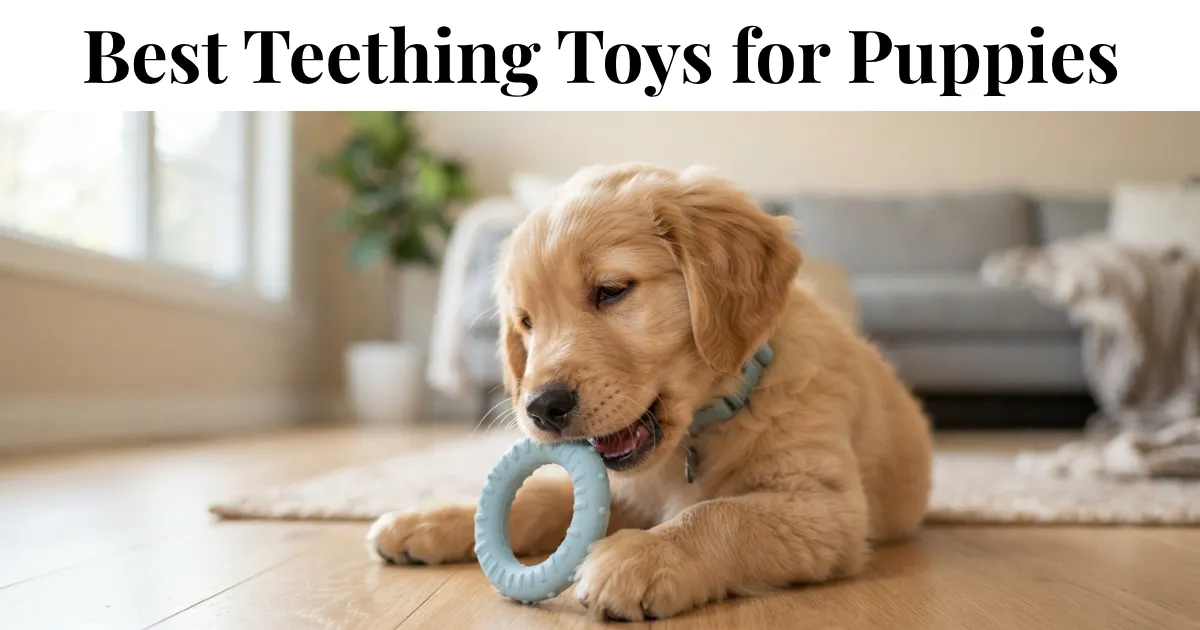
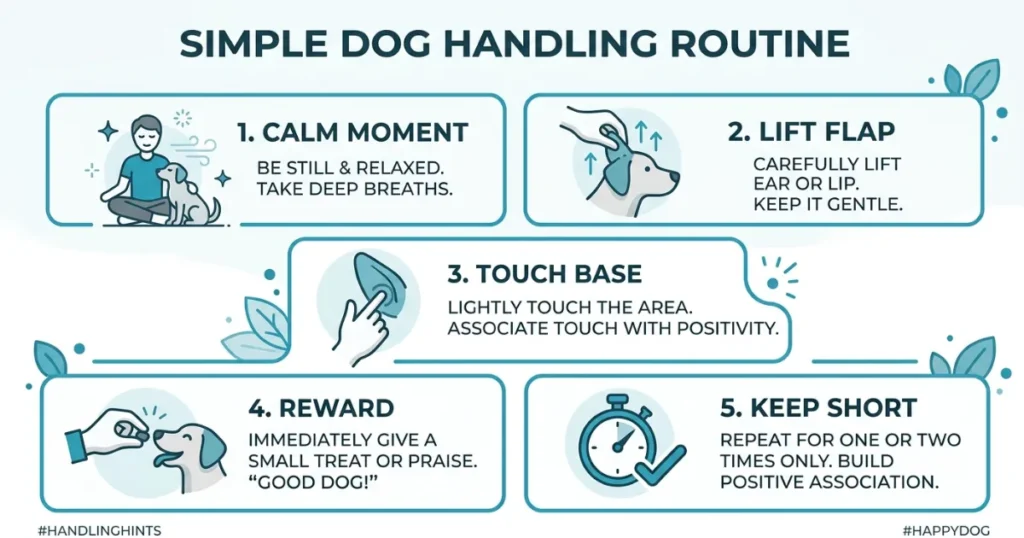
From the day your puppy comes home, make gentle ear handling part of daily life. Lift each flap, look inside, touch the base of the ear, and give a treat. This is not cleaning. It is teaching your puppy that ear handling is calm and rewarding.
Do this every day and, by the time a real clean or a vet exam is needed, your puppy sits happily for it. Skip it, and you end up wrestling a squirming dog later.
There is a real window of opportunity here. Puppies go through a socialization period in their first few months when they are unusually open to new experiences. Handling the ears gently during this window teaches the puppy, at the easiest possible age, that ear touching is nothing to fear. Wait until the dog is older and more set in its ways, and the same lesson takes far longer to stick. Early is genuinely easier.
Cleaning starts only when needed
Actual cleaning is different. A healthy puppy ear often needs no cleaning at all, because it cleans itself. You clean only when you can see wax or debris, or after a bath if water gets in.
There is no fixed schedule for a healthy puppy. Check weekly, and let what you see decide. That connects to the wider routine in our full ear cleaning guide.
How to handle a puppy’s ears the right way
Good puppy ear care is built on calm handling. Get this right, and everything else becomes easy. The goal is a puppy that sees ear touching as normal and pleasant.
The daily handling routine
- Choose a calm moment. After play or a meal, when your puppy is relaxed and a little sleepy.
- Go slowly. Lift one ear flap gently, look inside for a few seconds, and let it go.
- Touch the base. Gently massage the base of the ear, which is where a real clean happens later.
- Reward every time. A treat and calm praise teach your puppy that this is a good thing.
- Keep it short. A few seconds per ear is plenty at first. Build up slowly.
Done daily, this turns ear care into a bonding routine rather than a battle. Many puppies come to enjoy it. A puppy that flinches or pulls away should never be forced, since that teaches the opposite lesson.
How to clean puppy ears safely
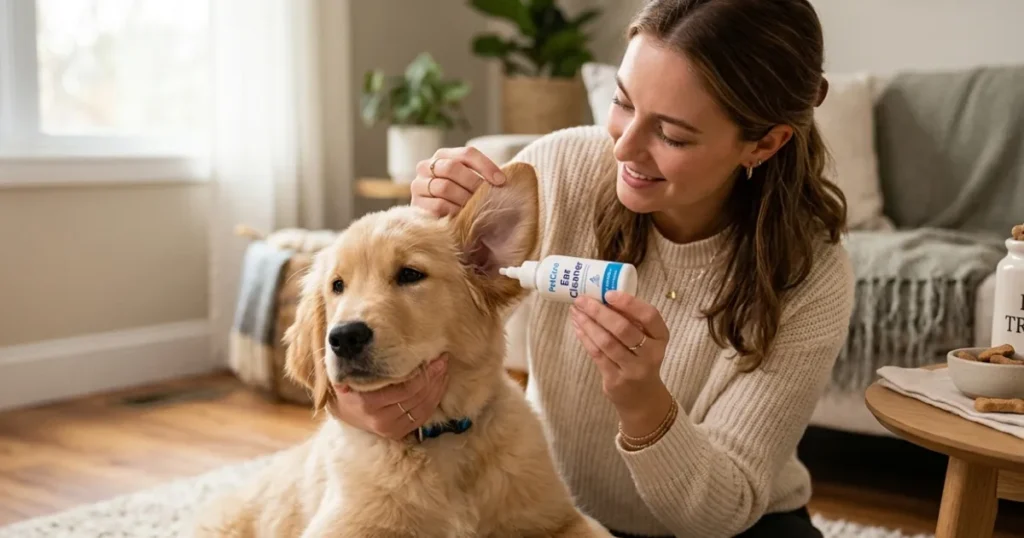
When cleaning is genuinely needed, the method is gentle and simple. Here is how to clean puppy ears without causing harm.
What you need
- A vet-approved puppy or dog ear cleaner
- Cotton balls or cotton pads
- Treats and a calm setting
Never use cotton swabs, hydrogen peroxide, or home mixtures. Cotton swabs push debris deeper and can damage the ear, and harsh liquids irritate a puppy’s sensitive canal. The safe and unsafe options are covered in the truth about home ear remedies.
The gentle method
- Settle your puppy in your lap or beside you, calm and rewarded.
- Lift the ear flap gently to open the canal.
- Apply the cleaner as directed, usually a few drops into the canal.
- Massage the base of the ear softly for a few seconds to loosen debris.
- Let your puppy shake, which brings debris up and out.
- Wipe gently with a cotton ball, only the parts you can easily see.
Never push into the canal, and never go deeper than you can see. If the ear looks red, smells strong, or seems painful, stop and see a vet rather than cleaning. To read what you are seeing, what the wax color means helps.
Golden Retriever puppy ears: what is normal
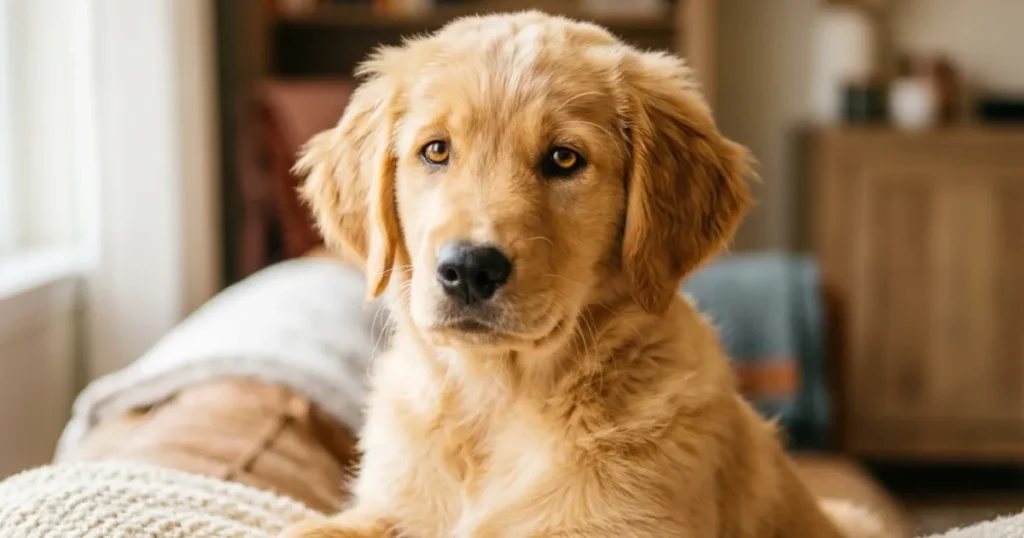
Golden Retriever puppy ears carry a little extra risk from the start, because the breed’s hanging ears and love of water arrive with the puppy. Knowing normal helps you spot trouble.
A healthy puppy ear is pale pink inside, with little or no smell and only a trace of light wax. The flap lies flat and clean, and the puppy shows no discomfort when you handle it.
Some things are normal and need no action. A little light wax, an occasional headshake, and brief scratching are all fine. What matters is a change from your puppy’s normal, which is exactly why the daily handling habit is so useful. You learn what your puppy’s ears usually look and smell like, so anything different stands out. Drying the ears after baths matters early too, as drying ears after a bath or swim explains.
It also helps to know that a puppy’s ears change as it grows. A young Golden’s ears are still developing, and the amount of hair in the canal and the level of wax can shift over the first year. This is normal. What you are watching for is not a perfectly unchanging ear, but the sudden appearance of the warning signs below, especially dark debris, a strong smell, or obvious discomfort. Those stand apart from the gradual, painless changes of a growing puppy.
Puppy ear mites and other common problems
Mites are the ear problem you are most likely to meet in a young dog. Ear mites are one of the most common parasites in puppies, and they spread easily from littermates or other pets.
Spotting puppy ear mites
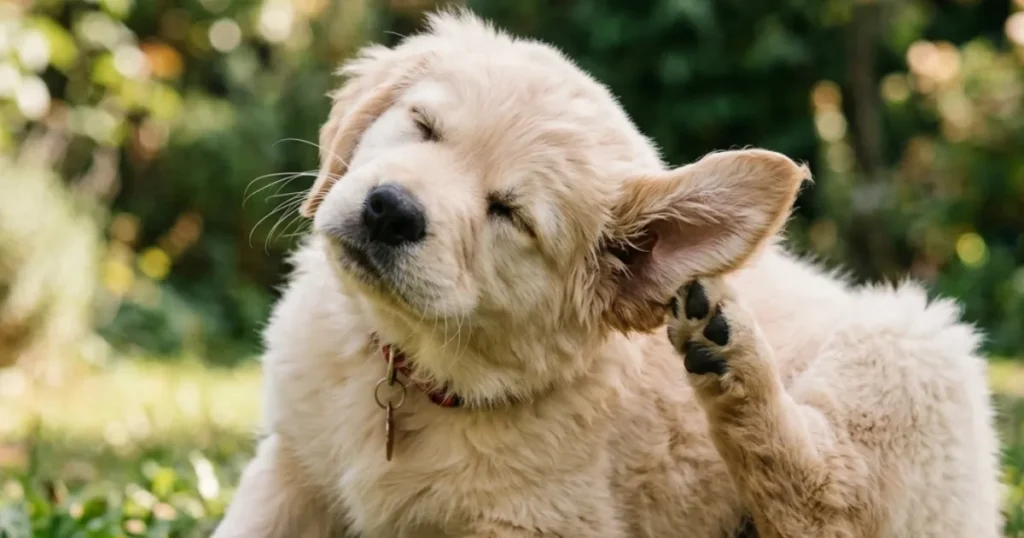
The classic signs are hard to miss once you know them. Dark, dry, crumbly debris that looks like coffee grounds, intense itching, and more head shaking than usual all point to mites. Both ears are usually affected.
Mites are contagious, so every pet in the home needs treatment, and they need a proper vet product rather than a home remedy. The full picture is in the facts on ear mites.
Other early problems
Puppies can also get ear infections, though less often than adults. Redness, a strong smell, heavy discharge, and pain point that way. An infection needs a vet, not cleaning, as when to reach for medication instead explains. Catching any of these early, while your puppy is small and cooperative, makes treatment far easier.
Red flags: when a puppy’s ears need a vet
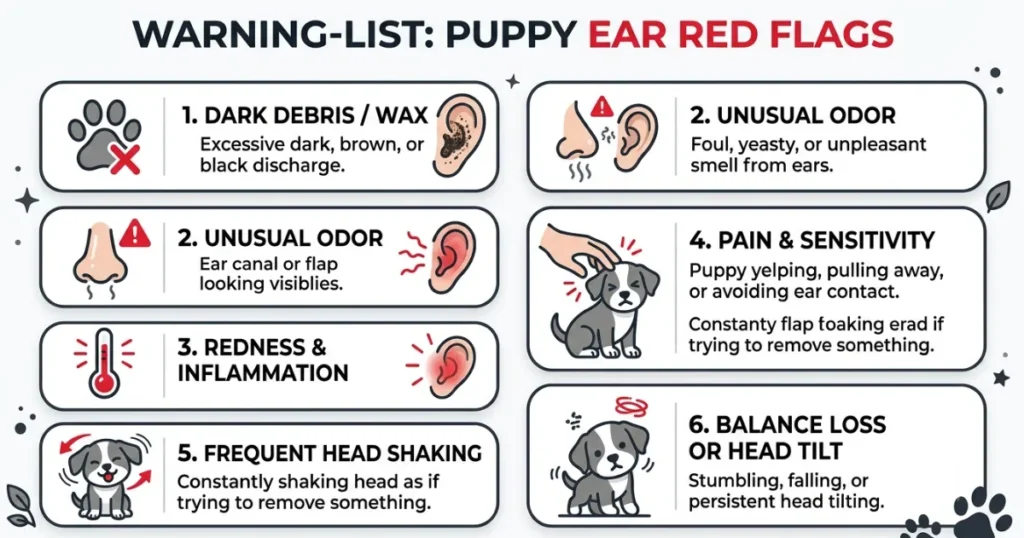
Most puppy ear care happens at home, but some signs mean a prompt vet visit. Call your vet if you see any of these.
| Sign | What it may mean |
| Dark, crumbly, coffee-ground debris | Ear mites, very common in puppies |
| A strong or foul smell | An infection developing |
| Redness or swelling in the canal | Inflammation or infection |
| Crying or flinching when you touch the ear | Pain that needs checking |
| Constant head shaking or scratching | Ongoing irritation |
| Bleeding, or a swollen ear flap | Injury or a hematoma from shaking |
| Head tilt or loss of balance | A deeper ear problem: see a vet at once. |
The theme is simple. Minor wax and the odd scratch are normal. Pain, smell, dark debris, bleeding, or balance problems are not, and they deserve professional care. When a puppy is involved, it is always safer to check early than to wait.
Building puppy ear care into daily life
The final piece is making all of this a habit rather than a chore. Good puppy ear care is not a big weekly event. It is a few seconds folded into things you already do.
Tie the ear handling to an existing routine so you never forget it. A quick look and a gentle touch after the evening meal, or during a calm cuddle before bed, works well. Pair it with a treat every time, and your puppy will start offering its ears rather than avoiding them.
The same applies to spotting problems. Because you are already handling the ears daily, you will notice a new smell, a fleck of dark debris, or a flinch on the day it appears rather than a week later. That early warning is the real payoff of consistent puppy ear care, and it is why the habit matters far more than any product on the shelf. Start it on day one, keep it gentle and brief, and it becomes second nature for both of you.
Quick Start For New Puppy Owners
- Start on day one: Handle the ears gently every day, without cleaning, so checks feel normal for life.
- Clean only when needed: A healthy puppy ear often needs no cleaning at all. Look and smell weekly.
- Never: Use cotton swabs, or push anything into the ear canal.
- See a vet promptly if you see: dark crumbly debris, a strong smell, redness, pain, or constant head shaking.
Expert Insight
The puppies I find easiest to treat are the ones whose owners handled their ears from week one. They sit calmly, let me look and swab, and the whole visit is quick. The hardest cases are not the sickest ears, but the dogs that were never taught to accept ear handling as puppies. That early habit pays off for life.
When should I start puppy ear care?
Start puppy ear care the day your puppy comes home. Begin with gentle daily handling, lifting the flap and touching the ear with a treat, so checks feel normal. Actual cleaning starts only when the ear shows visible wax or debris.
When should I start cleaning puppy ears?
The answer to when to start cleaning puppy ears is only when needed, not on a fixed schedule. Handle the ears daily from day one, but clean only when you see wax or debris. A healthy puppy ear often needs no cleaning at all.
How do I clean puppy ears safely?
To clean puppy ears, lift the flap, apply a vet-approved cleaner, massage the base gently, let your puppy shake, and wipe the visible ear with a cotton ball. Never use a cotton swab or push into the canal.
How often should I clean my puppy’s ears?
There is no fixed schedule for a healthy puppy. Check the ears weekly by looking and smelling, and clean only when you see wax or debris, or after a bath. Over-cleaning irritates the canal, so less is usually more.
Do Golden Retriever puppy ears need special care?
Golden Retriever puppy ears benefit from early attention because the breed’s hanging, hairy, water-loving ears are prone to trouble. The care is the same gentle routine as any puppy, but starting the handling habit early matters more for this breed.
Can puppies get ear mites?
Yes. Ear mites are one of the most common ear problems in puppies and spread easily from littermates and other pets. Signs include dark crumbly debris, intense itching, and head shaking. Mites need a vet product and treatment for all household pets.
What does a healthy puppy ear look like?
A healthy puppy ear is pale pink inside, nearly odorless, with only a trace of light wax. There is no redness, discharge, swelling, or smell, and your puppy shows no pain when you handle it. Learn your puppy’s normal by checking weekly.
Is it safe to use cotton swabs on a puppy’s ears?
No. Never use cotton swabs in a puppy’s ears. They push wax and debris deeper into the canal and can damage the delicate ear. Use a cotton ball on the visible part of the ear only, and never reach into the canal.
Why is my puppy shaking its head and scratching its ears?
Frequent head shaking and ear scratching in a puppy often mean irritation, most commonly from ear mites, especially with dark, crumbly debris. It can also signal an infection. If it continues for more than a day, have your vet check the ears.
Can I use home remedies on my puppy’s ears?
It is safest not to. A puppy’s ear is sensitive, and many home remedies irritate it or delay proper care. Never use hydrogen peroxide, alcohol, or vinegar in a puppy’s ear. For any real problem, see your vet rather than experimenting.
How do I get my puppy used to ear handling?
Handle the ears gently every day from the start, in a calm moment, pairing it with treats and praise. Keep sessions short and never force a frightened puppy. Over days and weeks, this teaches your puppy that ear care is normal and pleasant.
When should I take my puppy to the vet for its ears?
See your vet if you notice dark crumbly debris, a strong smell, redness, swelling, pain, bleeding, constant head shaking, or any loss of balance. These signs go beyond normal puppy wax and need professional care, especially in a young dog.
The bottom line
Puppy ear care is simpler than most new owners expect, and the most important part is not cleaning at all. It is handling the ears gently every day so your puppy learns that ear care is normal, which pays off for the rest of its life.
Clean only when the ear actually needs it, using a vet-approved cleaner and a cotton ball, never a swab. Check the ears weekly by looking and smelling, and learn your puppy’s normal so anything different stands out. Dark crumbly debris usually means mites, and pain, smell, or bleeding always mean a vet.
Start on day one, keep it gentle, and treat cleaning as an occasional need rather than a daily chore. Get the handling habit right early, and you will have an adult Golden whose ears are easy to care for and quick to check for years to come.
Bringing home a Golden puppy comes with a long list of things to learn, and ear care is one that is easy to start on the right foot.
We would like to hear from you. How did you introduce ear handling to your Golden puppy, and did starting early make check-ups and cleaning easier as they grew? If your puppy turned out to have ear mites from the litter, tell us how you spotted it and cleared it. Your experience could help a new puppy owner get it right from day one.