For most dogs, plucking dog ear hair is no longer recommended. Veterinary dermatologists have found that plucking healthy ears causes tiny tears that inflame the canal and can trigger the very infections it aims to prevent. Plucking now belongs to specific cases where a vet decides heavy hair is blocking treatment. For everyday grooming, trimming is the safer choice.
Plucking dog ear hair was routine for decades. Groomers did it as a matter of course, and owners assumed it was simply good hygiene. The thinking has changed, and the change is worth understanding.
Veterinary dermatologists now advise against plucking healthy ears. The reason is simple. Pulling hair from the canal creates tiny wounds in the delicate lining, and those wounds inflame the ear and open the door to infection. The practice meant to prevent problems can cause them.
This does not mean hair in the ear never matters. It does, especially in a breed like this one. It means the answer is more careful than plucking everything on schedule.
This guide gives you a clear position, sourced from veterinary dermatology, on when to pluck, when to trim, and when to leave the ear alone. For how this breed’s ear shape makes hair and moisture such a problem, start with the guide to Golden Retriever ear anatomy.
Why hair in the ear matters at all
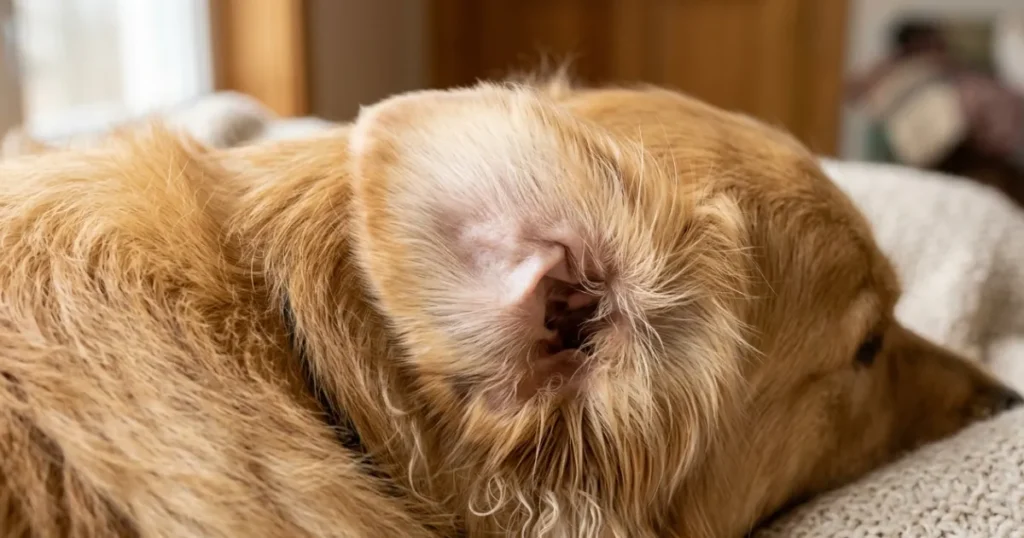
Some dogs grow hair inside the ear canal, not just around it. Golden Retrievers are one of them, along with breeds like poodles, schnauzers, and many doodles.
That hair is not harmless. It slows airflow, traps wax and moisture, and gives debris something to cling to. In a warm, closed canal, that adds up to a friendlier home for yeast and bacteria.
It helps to picture the geometry. A Golden’s ear flap already lies flat over the opening like a lid, and the canal itself bends like an L. Add a plug of hair to that closed, humid space, and air struggles to move through at all. The hair is not the root cause of ear trouble, but it makes an already vulnerable ear harder to keep dry and clean.
So the instinct to remove it is understandable. The problem is that the most common removal method, plucking, carries its own risks. The right question is not whether hair matters, but how to manage it without causing harm. You can build the answer into a wider routine using more breed health guides and the rest of our full Golden Retriever library.
Should you pluck your dog’s ear hair? The honest answer
Here is the clear position, and it is backed by veterinary dermatologists rather than tradition.
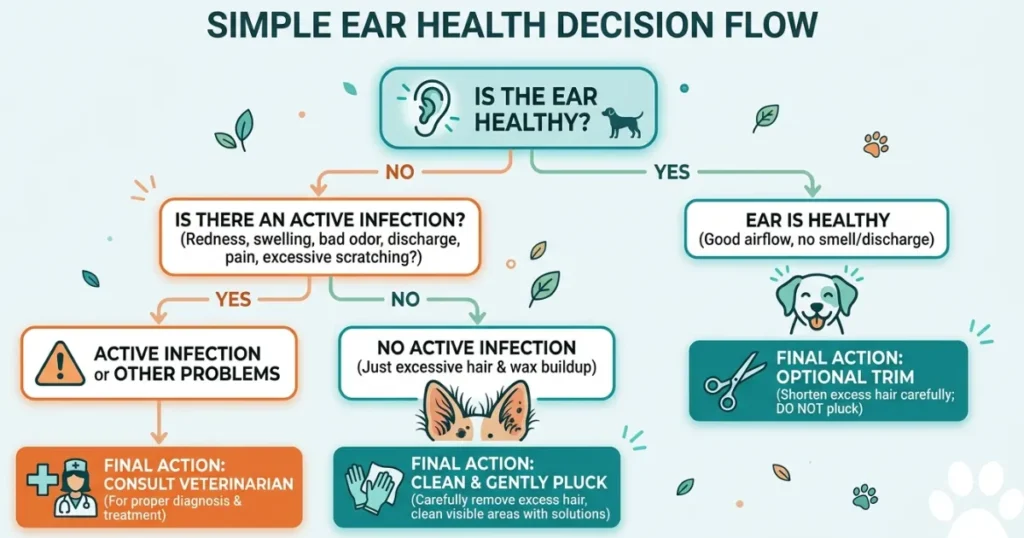
For a healthy ear with no history of infections, do not pluck.
Recent veterinary guidance is direct about this. Plucking a normal ear is not necessary, and it can cause harm.
The mechanism is the key. Pulling hair from the canal creates micro-trauma, meaning tiny tears in the lining. Those tears inflame the ear, and dirt, wax, and bacteria settle into them. The result can be otitis externa, the very ear canal inflammation that plucking was supposed to prevent. In other words, plucking a healthy ear can cause the problem it claims to solve.
This is not a fringe view. It reflects a shift across veterinary dermatology, where the guidance now treats hair removal as a medical decision rather than a default grooming step. The lining of the ear canal is delicate skin, and repeated pulling irritates it in the same way repeated scratching would. Once that irritation sets in, the canal becomes a more welcoming place for the yeast and bacteria that cause infections.
When plucking is still the right call
Plucking has not disappeared entirely. It still has a place, but a narrow one.
When a dog has an active ear infection and so much hair in the canal that medication cannot reach the skin, removing that hair helps treatment work. In that situation, a vet may pluck or clip the hair as part of care, then medicate the cleaned canal. This is a medical decision made at the clinic, not a grooming habit.
A dog with a long history of infections and heavy canal hair may also benefit, but again, that call belongs to a vet who has examined the ear. Plucking dog ear hair in that setting is a treatment step, decided case by case, not a box to tick at every grooming visit. If your Golden keeps getting infections, the deeper question is usually why, which is covered in what sits behind repeat infections.
Why groomers still do it
Plucking is still a routine step at many grooming appointments. That is tradition, not current veterinary advice.
Part of the reason it persists is that hair removal looks and feels productive. A groomer pulls a visible clump of hair from the ear, the canal looks clearer, and everyone assumes good has been done. The harm, a set of tiny tears in the lining, is invisible and only shows up later as irritation or infection. That gap between what looks helpful and what actually helps is exactly why the veterinary position has moved.
If you would rather your groomer did not pluck your dog’s ears, say so before the appointment. You are within your rights to ask for trimming only, or for the ears to be left alone. A good groomer will respect that, and many now prefer trimming themselves.
Trimming Golden Retriever ear hair: the safer default
For most dogs, trimming Golden Retriever ear hair is the better everyday choice. It gets most of the benefit without the micro-trauma.
Trimming shortens the hair rather than pulling it from the root. Nothing is torn, so the lining of the canal stays intact. That single difference is why veterinary dermatologists prefer it for routine care.
What trimming achieves
Trimming the hair around the opening and the visible part of the canal improves airflow and makes cleaning easier. It reduces the mat of hair that traps wax and moisture, which is the real goal.
It will not reach deep into the canal, and it should not try to. The deep canal is the vet’s territory, not the groomer’s or the owner’s.
How to trim safely at home
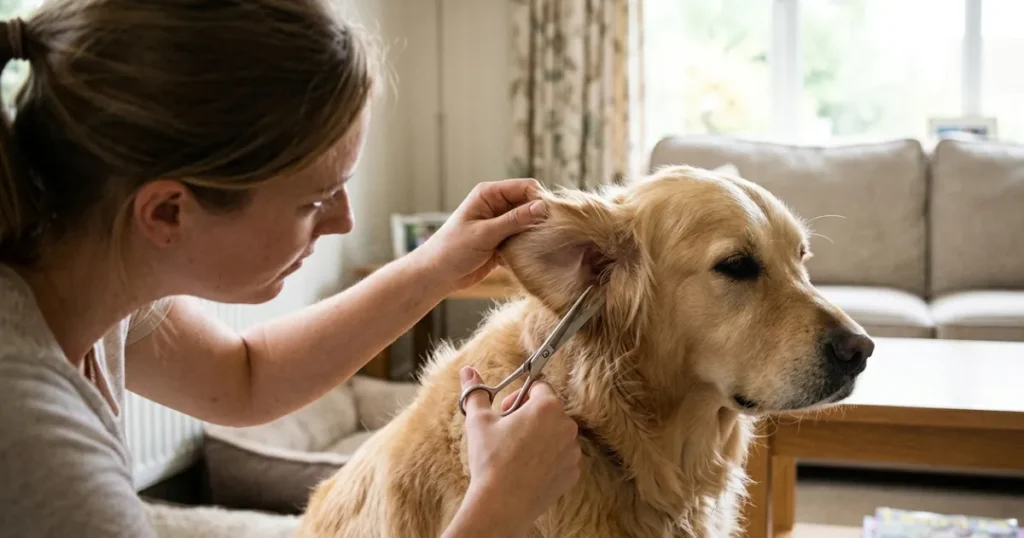
Trimming Golden Retriever ear hair at home is manageable with care. Here is the safe approach.
- Use blunt-tipped scissors. Rounded safety scissors reduce the risk of a nick if your dog moves.
- Trim only what you can see. Never push scissors into the canal.
- Work with a calm dog. Choose a quiet moment, and use treats.
- Go slowly and stop if unsure. A little hair removed safely beats a lot removed with a struggle.
- Clean gently afterward. Removing the trimmed hair and wiping the ear finishes the job, using the method in how to clean the ears properly.
If the hair is badly matted, or your dog will not sit for it, let a groomer or vet handle it rather than forcing it.
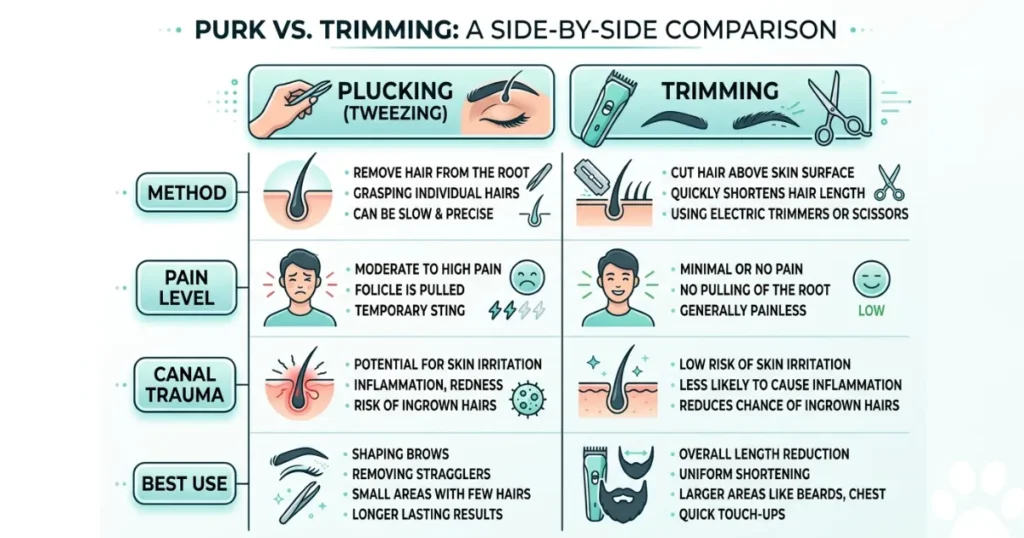
Plucking vs trimming at a glance
This table sums up the position for quick reference.
| Factor | Plucking | Trimming |
| What it does | Pulls hair from the root | Shortens hair; root stays |
| Micro-trauma to the canal | Yes, a real risk | No |
| Pain | Can be painful | Painless when done right |
| Best for | Vet-directed cases only | Routine home grooming |
| Risk of causing infection | Present in healthy ears | Very low |
| Who should do it | A vet, when truly needed | Owner or groomer, carefully |
The takeaway is straightforward. Trimming is the default for a healthy dog. Plucking is a targeted medical step, not a routine one.
What to do after grooming the ears
Whatever you do with the hair, the ear needs a little aftercare and a little watching.
Clean the ear gently to remove loosened hair and debris, then check it over the next day or two. Mild redness that fades is normal. Redness that grows, along with head shaking, odor, or discharge, is not normal and points to irritation or infection. Reading those signs is covered in when discharge means infection and reading your dog’s ear wax.
Do not try to soothe an irritated ear with kitchen remedies. Many make things worse, and the safe options are few, as set out in home remedies that help or harm. And because moisture is half the problem in this breed, drying the ears well after any bath or swim matters, which is the focus of managing ears around water.
Quick Protocol
- The short version, if your dog has healthy ears: Do not pluck. Trim the hair around the opening instead.
- Pluck only when: A vet decides that heavy hair is blocking treatment of an active infection.
- Never: Pluck a normal, healthy ear as a routine grooming step.
- The safe home option: Trimming with blunt-tipped scissors, followed by a gentle clean.
Expert Insight
I have watched this advice flip during my career. We used to pluck every hairy ear on principle. Now I pluck only when an infected, hair-choked canal needs clearing so medication can reach the skin. For every other dog, I trim and clean, and I see fewer irritated ears for it.
Should I be plucking dog ear hair at home?
For most dogs, no. Plucking dog ear hair from a healthy ear can cause tiny tears that inflame the canal and invite infection. Trim the visible hair instead, and leave plucking to a vet when an infection makes it necessary.
Is it bad to pluck a dog’s ear hair?
It can be. Plucking a normal, healthy ear causes micro-trauma that veterinary dermatologists link to inflammation and infection. It is only worthwhile when a vet decides heavy hair is blocking treatment of an active ear infection.
Is trimming Golden Retriever ear hair better than plucking?
Yes, for routine care. Trimming a Golden Retriever’s ear hair shortens it without pulling the root, so the canal lining stays intact. That avoids the micro-trauma of plucking while still improving airflow and making cleaning easier.
Do Golden Retrievers need their ear hair removed?
Not usually by plucking. Goldens grow canal hair that traps wax and moisture, so keeping it trimmed and the ears clean helps. Full removal is only needed when a vet finds hair is blocking treatment of an infection.
Does ear hair cause infections in dogs?
Hair can contribute by trapping wax and moisture and slowing airflow, which suits yeast and bacteria. It is a predisposing factor, not a direct cause. Managing it with trimming and cleaning reduces the risk without the harm of routine plucking.
How do I safely trim my Golden Retriever’s ear hair?
Use blunt-tipped scissors, trim only the hair you can see, and never push into the canal. Work with a calm dog and treats; go slowly and clean the ear gently afterward. Leave matted hair to a groomer or vet.
Why do groomers still pluck dog ears?
Plucking remains a traditional grooming step, but it is no longer standard veterinary advice for healthy ears. If you prefer, ask your groomer to trim only or skip the ears. You can request this before the appointment.
Does pulling out ear hair hurt a dog?
It can, depending on how much hair is pulled. Pulling hair from the root is uncomfortable and can cause bleeding and inflammation. Trimming, by contrast, is painless when done correctly, which is one reason vets prefer it for routine care.
When is dog ear hair removal actually necessary?
Only when a dog has an active ear infection and so much canal hair that medication cannot reach the skin. In that case a vet removes the hair as part of treatment. It is a medical decision, not a grooming routine.
Can I use tweezers to pluck my dog’s ear hair?
It is better not to pluck at home at all. If a vet does remove hair, they use blunt hemostats, not tweezers, which are fiddly and easy to slip. For home care, stick to trimming visible hair with blunt scissors.
Will trimming ear hair help my Golden’s recurring infections?
It may help a little by improving airflow, but recurring infections usually have a deeper cause, most often allergies. Trimming and cleaning support treatment, but the underlying cause needs a vet, not just hair removal.
What happens if I pluck my dog’s ears too much?
Repeated plucking of a healthy ear can cause chronic micro-trauma and inflammation, which veterinary dermatologists link to ongoing otitis externa. The ear can end up worse than if you had left it alone. Trimming avoids this entirely.
The bottom line
Plucking dog ear hair has moved from routine advice to a targeted medical step, and the evidence behind that shift is solid. Pulling hair from a healthy canal causes micro-trauma that inflames the ear and can trigger the infections it was meant to prevent.
For the vast majority of dogs, the answer is to trim, not pluck. Trimming the visible hair improves airflow and makes cleaning easier without tearing the lining of the ear. Plucking belongs to the clinic, reserved for infected, hair-choked canals where a vet decides it is needed.
If your Golden has healthy ears, keep the hair trimmed, keep the ears clean and dry, and leave the plucking behind for good. If infections keep coming, the answer is a vet visit to find the cause, not a harder tug at the hair.
Plucking dog ear hair is one of those grooming topics where the advice has genuinely changed, and a lot of owners are still working from the old rules.
We would like to hear where you land. Did your groomer pluck your Golden’s ears as standard, and did you ever notice irritation afterward? If you switched from plucking to trimming, tell us whether it made a difference to your dog’s ears. Your experience helps other owners feel confident about changing a long-held habit.