
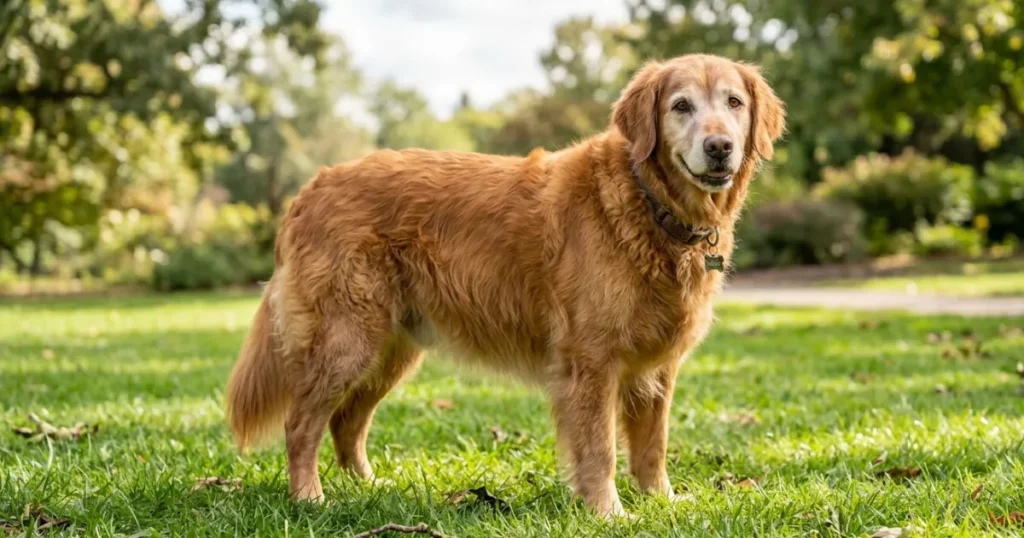
How old is 10 in dog years? For a large breed like a Golden Retriever, a dog at 10 years is roughly 66 to 72 in human years and about 68 by the UCSD epigenetic formula. Reaching 10 dog years is a milestone, since it sits right at the breed’s 10 to 12 years average lifespan. A 10 years old golden is a late senior, and care should center on screening, comfort, and quality of life.
When a Golden hits 10 years, owners feel the weight of the number, and they’re right to. This isn’t middle age. A dog at 10 years is a senior who’s reached the breed’s average lifespan, which makes how old 10 is in dog years more than trivia. It’s a cue to change how you care for your dog.
In my practice, the 10 years visit is where I shift the whole conversation. Less “prevent and screen for the future,” more “catch problems early and protect comfort now.” For the exact human-year figure at any age, the pillar’s dog years to human years guide has the calculator. This page is about what senior dog age actually means.
How old is 10 in dog years?
How old is 10 in dog years for a golden? Roughly 66 to 72 human years, depending on the method. The size-based life-stage chart puts a large breed near 72, while the UCSD epigenetic formula lands at about 68. Either way, a dog at 10 years is comfortably into human retirement age.
The range exists because dog-age methods disagree, and that’s normal. What they agree on is that a 10 years old Golden is a senior, not an adult. Goldens cross into senior territory around 7 to 8, earlier than small dogs that may not be senior until 10. So by the time a Golden reaches 10 years, it’s a few years into senior life already.
For the size by size view of how 10 dog years convert, see our dog age chart in human years. And if your dog is older still, the numbers for 13 and 14 are covered in how old your Golden is at 13 in dog years.
What reaching 10 dog years really means for a Golden
Hitting 10 dog years carries real weight for this breed. The AKC puts the average Golden lifespan at 10 to 12 years, so a 10 years old has reached the start of that average window. That doesn’t mean the end is near; plenty of Goldens enjoy several more good years, but it does mean the odds and the care change.
A dog at 10 years is in the late-senior stage, with geriatric life, usually the last quarter of a lifespan, beginning around 11 for a Golden. Think of a human in their late sixties to early seventies: still active and engaged, but with more to monitor and slower recovery from setbacks.
Here’s what I tell owners at 10 years. This is the stage to stop coasting and start watching closely. The Morris Animal Foundation’s Golden Retriever Lifetime Study has found cancer to be the breed’s leading cause of death, and the earlier you catch it, the better the options. Knowing your dog is “senior,” not just “older,” is what gets screening onto the calendar.
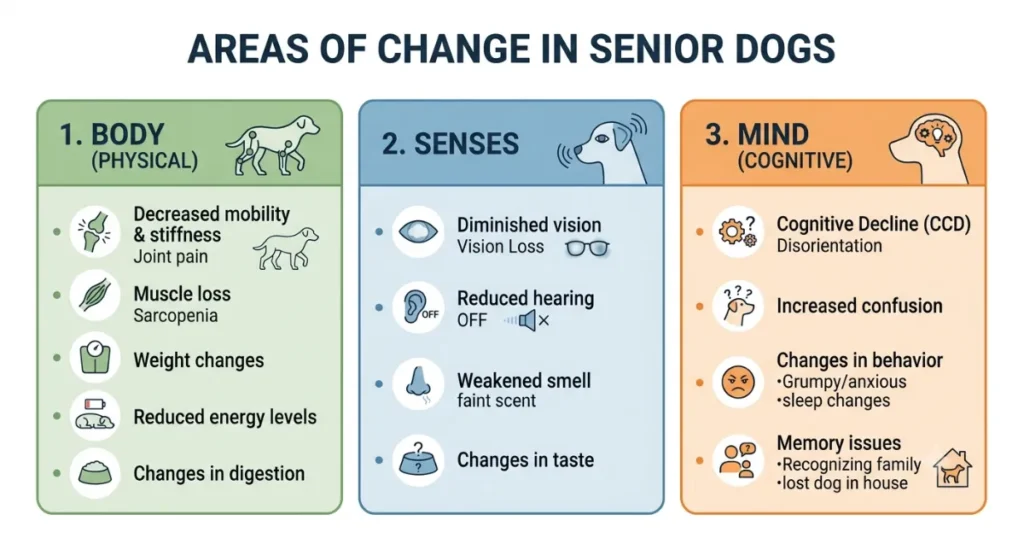
Life stage changes in a senior Golden: body, senses and mind
This is what most charts skip, so here’s what actually changes as a Golden moves through senior dog age. The shifts show up across three systems.
The body.
Muscle mass declines, so a senior golden may look leaner over the topline even at a healthy weight. Joints stiffen as osteoarthritis sets in, stamina drops, and the coat can gray and thin. Metabolism slows, so weight can creep up if food isn’t adjusted, which then strains aging joints further.
The senses.
Vision changes are common. A bluish haze called nuclear sclerosis appears in many dogs from around 7 and doesn’t harm sight, while cataracts can. Hearing often fades, which owners sometimes mistake for stubbornness, and the sense of smell can dull too.
The mind.
Canine cognitive dysfunction, the canine version of dementia, becomes more common with age. The signs to know are disorientation, altered sleep-wake cycles, house soiling in a previously trained dog, increased anxiety, and reduced interaction. Catching these early lets your vet help.
None of this means a poor quality of life. It means a golden at 10 years needs a care plan matched to these changes. The puppy end of that life cycle, for contrast, is in our puppy age chart.
Senior Golden health risks to watch at 10 and beyond
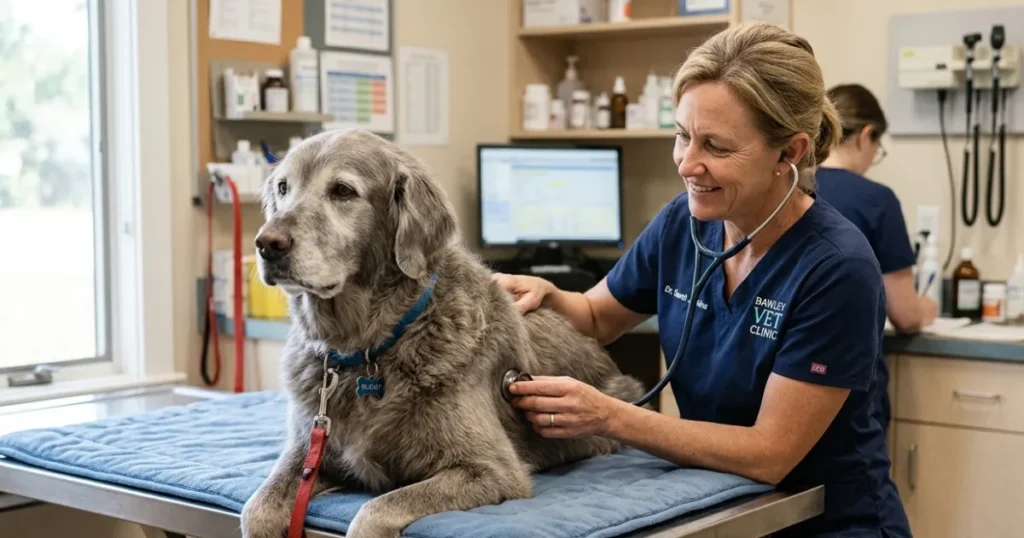
Senior dog age brings specific risks for Goldens, and knowing the red flags saves time when it counts. Cancer leads the list. Hemangiosarcoma, a fast-moving cancer often of the spleen or heart, and lymphoma are among the most common in the breed per the Golden Retriever Lifetime Study. Both can progress quickly, so early signs matter.
The most common mistake I see at this stage is an owner attributing every change to “just getting old.” Understandable, because aging is real. But slowing down, new lumps, increased drinking, or appetite shifts can be early disease, not just age, and a senior golden often hides it well.
Watch for and call your vet promptly about: Any fast-growing lump, sudden weakness or collapse, pale gums, unexplained weight loss, increased thirst or urination, or a new limp. For a dog 10 years old, I recommend twice-yearly exams with bloodwork because the gap between annual visits is long enough for the breed’s fast cancers to advance. To convert your own age into your dog’s for perspective, our human years to dog years calculator helps. Visit our website for a detailed golden retriever health guide.
What dog age charts miss about senior Goldens
Most dog age charts hand you a number for 10 years and stop, which fails a senior large breed twice. They often default to a “medium dog,” under-reading a Golden’s age, and they say nothing about what senior life-stage changes require.
The deeper miss is treating 10 as just a data point. For a Golden at the edge of its average lifespan, 10 dog years is a care threshold, not trivia. A chart that reads “60-something” without flagging twice-yearly screening, cognition changes, or cancer surveillance leaves out the part that actually protects your dog.
The fix is to read the senior number as a prompt to act, not just to know. Pair the figure with a real senior plan, and when you don’t know your dog’s exact age, estimate the stage first. Our dog age in human years hub covers estimating age from teeth and eyes, and the “How old is 3 years in dog years?” guide shows the younger end for contrast.
What changes at senior dog age (large-breed Golden):
| System | What changes at 10+ | What to do |
| Body | Muscle loss, stiff joints, slower metabolism | Lean weight, joint support, gentle exercise |
| Senses | Fading vision and hearing, nuclear sclerosis | Keep routines, watch for cataracts, and get a vet eye check |
| Mind | Possible cognitive dysfunction | Note disorientation or sleep changes; tell your vet |
| Health | Higher cancer and arthritis risk | Twice-yearly exams, bloodwork, screen lumps |
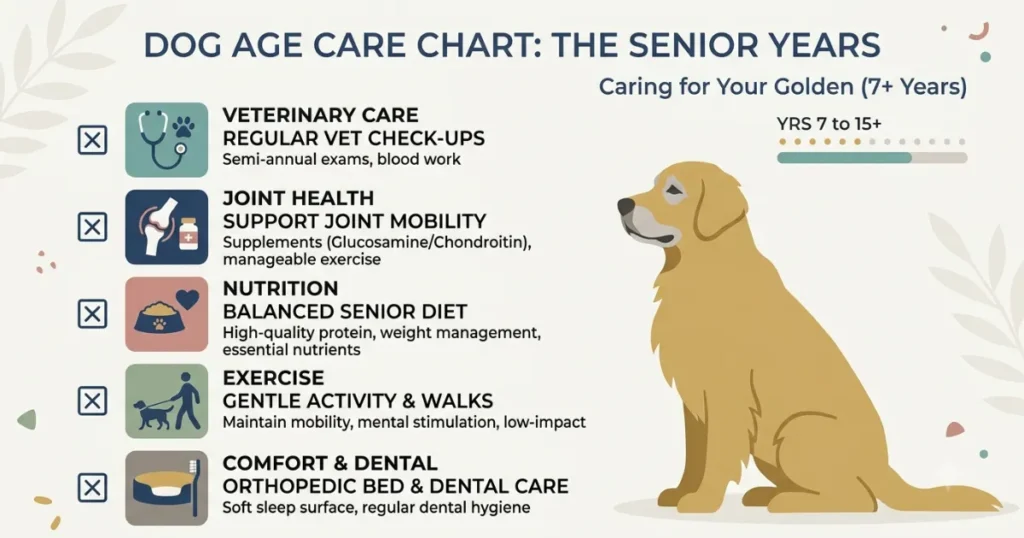
The Senior Golden Life-Stage Check
Here’s the framework I give families of senior Goldens so the number turns into care. Run it at every visit from 10 years on.
The Senior Golden Life-Stage Check:
Screen on a schedule.
Then book twice-yearly exams with bloodwork from the senior stage. Call your vet immediately for a fast-growing lump, sudden collapse, or pale gums, which can signal hemangiosarcoma.
Support the body.
Then add joint support with omega-3 fatty acids and glucosamine, keep your dog lean, and add traction and ramps at home. Call your vet for new or worsening limping.
Watch the mind.
Then note any disorientation, night restlessness, or house soiling. Call your vet about behavior changes lasting more than a day or two, since cognitive dysfunction is manageable when caught early.
This check isn’t a diagnosis. It’s how a Golden’s senior dog age becomes a plan that protects comfort, catches disease early, and makes the most of the years after 10.
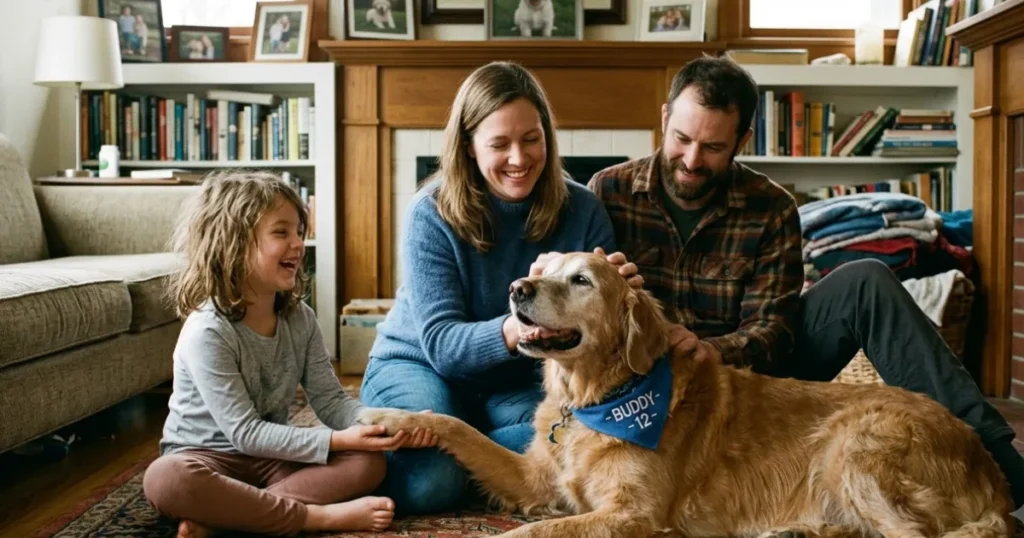
How old is 10 in dog years?
For a large breed like a Golden, a dog at 10 years is roughly 66 to 72 human years, or about 68 by the UCSD epigenetic formula. That’s a late senior, near the breed’s average lifespan.
Is 10 old for a dog?
For a Golden, yes. At 10 dog years a large breed is a late senior near its 10 to 12-years average lifespan, while small dogs reach this stage later.
Is a 10 years old Golden Retriever a senior?
Yes, and has been for a couple of years. Goldens become seniors around 7 to 8, so by 10 they’re well into senior life and due for twice-yearly exams.
What changes when my dog reaches senior age?
Body, senses, and mind shift: muscle loss and stiff joints, fading vision and hearing, and possible cognitive dysfunction, alongside higher cancer and arthritis risk.
What’s the difference between senior and geriatric?
Senior is the later stage of life; geriatrics is the last quarter of the expected lifespan. For a golden retriever averaging 10 to 12 years, geriatrics begins around 11, so 10 is late senior.
How long do Golden Retrievers live?
About 10 to 12 years per the AKC. Lean weight, exercise, and early cancer screening help some Goldens reach their teens.
How often should a senior dog see the vet?
Twice a year for a senior, per AAHA guidance. The longer gap between annual visits can let fast-moving conditions advance unnoticed.
Why do large dogs become seniors earlier than small dogs?
Larger dogs age faster after their first years. A Golden is senior by 7 to 8, while a small dog may not be senior until 10 or 11.
Should I change my senior dog’s food?
Possibly, based on weight, organ values, and activity rather than age alone. Senior diets with omega-3 fatty acids can support joints, so ask your vet first.
Is slowing down normal for a 10 years old dog?
Some slowing is normal, but don’t assume every change is just age. New lumps, weakness, or increased drinking can be early disease and deserve a vet check.
How old is a 10 years old Golden Retriever in human years?
About 66 to 72, with the epigenetic formula near 68. A 10 years old golden is a late senior at the start of the breed’s average lifespan window.
What cancers are most common in senior Golden Retrievers?
Hemangiosarcoma and lymphoma are among the most common per the Golden Retriever Lifetime Study, with osteosarcoma also seen. Early detection improves options.
What is canine cognitive dysfunction in older Goldens?
It’s an age-related decline like dementia. Signs include disorientation, altered sleep, house soiling, anxiety, and less interaction, and your vet can help manage it.
How can I help my senior Golden stay comfortable?
Keep them lean, add joint support and home traction, maintain gentle daily exercise, and keep routines steady. Twice-yearly vet visits catch problems early.
When should I call the vet about my senior Golden?
Call immediately for sudden collapse, pale gums, a fast-growing lump, or trouble breathing. Monitor at home for 24 hours for mild, gradual stiffness, then book a senior exam.
The bottom line on senior dog age and 10 dog years
How old is 10 in dog years? For a Golden, about 66 to 72 in human terms, a late senior right at the breed’s 10 to 12 years average lifespan. Reaching 10 dog years means the care shifts: twice-yearly exams, cancer-aware screening, joint and cognition support, and a close eye on the body, senses, and mind.
The one move that matters most now is to treat your dog’s senior age as a prompt to act, not just a number to know, because the years after 10 are where attentive care gives back the most.
Has your Golden reached 10 years or beyond? Tell me in the comments what changed first, the gray muzzle, the stiffer mornings, the cloudy eyes, and what’s helped most. Senior-Golden stories give the next family a real map for these years.