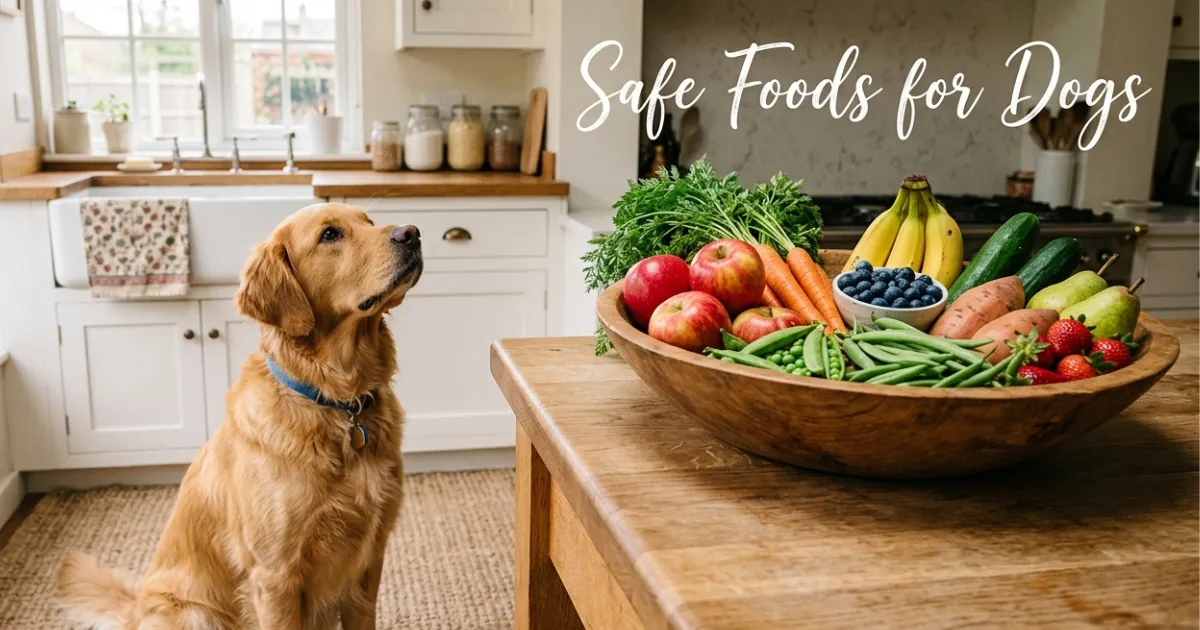
Can Dogs Eat Peas and Carrots? Yes dogs can eat peas and carrots together. Both vegetables are non-toxic, and the combination is safe for Golden Retrievers, whether served raw, steamed, or frozen, in appropriate amounts. Peas and carrots together appear in commercial dog food formulations for good reason: they deliver complementary nutrients at a low caloric cost, which suits this breed’s tendency toward weight gain and its specific health predispositions.
Most Golden Retriever owners asking this question already suspect the answer is yes. What they are actually trying to work out is whether the combination changes anything, how much to feed, and whether their individual dog at its current life stage and weight can have both daily. The answer to all three questions depends on preparation, serving size, and one breed-specific consideration that no generic article on this topic addresses.
Golden Retrievers carry a documented cancer risk of approximately 60% across their lifetime, according to the Morris Animal Foundation Golden Retriever Lifetime Study. Peas and carrots both contain meaningful antioxidant compounds. Carrots contribute beta-carotene, a precursor to vitamin A that supports immune and cellular function. Peas supply vitamin K, folate, and a range of B vitamins. Together, these two vegetables form one of the most nutritionally dense low-calorie treat combinations available for a breed where dietary antioxidant support is genuinely relevant rather than incidental.
What Happens Nutritionally When Dogs Eat Peas and Carrots Together
Dogs eat peas and carrots together without any negative interaction between the two. No compound in peas interferes with compounds in carrots, and no competitive absorption issue that makes the combination less effective than each vegetable separately. The nutritional effect is simply additive.
| Nutrient | Carrots (per 100g raw) | Peas (per 100g raw) | Combined Benefit for Goldens |
| Beta-carotene | 8,285 mcg | 449 mcg | Strong vitamin A precursor support |
| Dietary fibre | 2.8g | 5.7g | Combined satiety and gut motility support |
| Vitamin K | 13.2 mcg | 24.8 mcg | Bone metabolism and blood clotting |
| Vitamin C | 5.9 mg | 40 mg | Antioxidant support |
| Protein | 0.9g | 5.4g | Peas contribute meaningful plant protein |
| Calories | 41 kcal | 81 kcal | Low combined load per 100g mixed serving |
Source: USDA FoodData Central. Values are for raw, unseasoned vegetables. Cooking reduces vitamin C slightly but preserves most other nutrients.
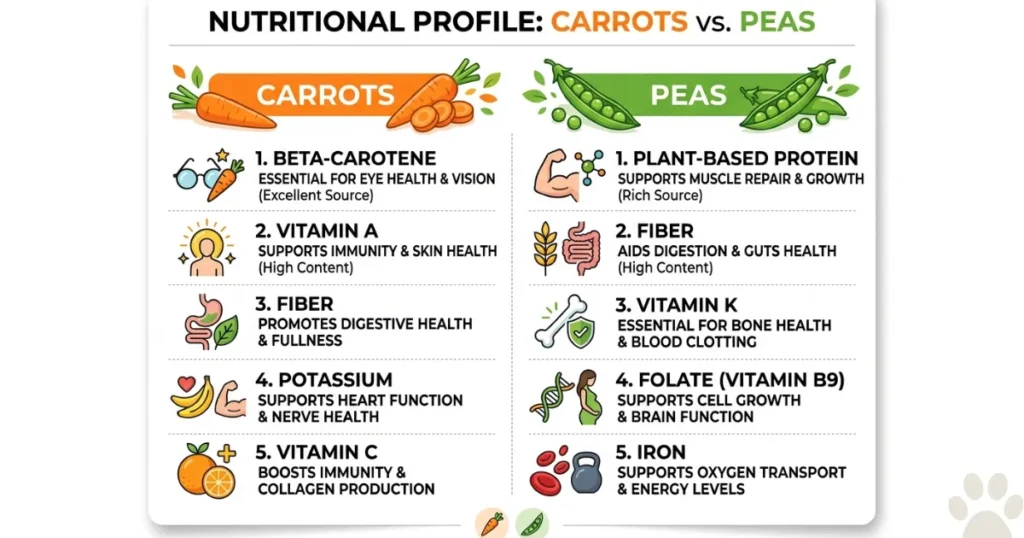
The higher fibre content of peas combined with the beta-carotene density of carrots makes this pairing particularly useful for Golden Retrievers on calorie-managed diets. The fibre from the combination creates satiety at a caloric cost that is well below what commercial treats carry. For a 65-pound Golden Retriever on a 1,400-calorie daily diet, a tablespoon of peas and two baby carrots together adds roughly 20 to 25 calories, sitting comfortably within the 10% daily treat budget.
Can Dogs Have Peas and Carrots Every Day?
Can dogs have peas and carrots as a daily part of their treat rotation? Yes, for most healthy adult Golden Retrievers, with one preparation constraint. Peas contain purines, and carrots contain natural sugars. Neither is a meaningful concern in daily treat quantities for a healthy dog. But the combination of both vegetables daily at high volumes, rather than as a controlled treat serving, can push total legume intake up in a way that matters for one specific group of Golden owners.
If your Golden’s primary kibble is grain-free and already contains peas or lentils in the first five ingredients, adding daily pea treats on top increases the total legume load in your dog’s diet. As covered in our complete peas guide for Golden Retrievers, the FDA’s dilated cardiomyopathy investigation identified Golden Retrievers as the most-reported breed in cases linked to legume-heavy diets. Treat-volume peas do not carry this risk. But Golden owners feeding grain-free kibble should be aware of the cumulative legume picture rather than treating pea snacks as entirely separate from their dog’s primary diet formulation.
For Goldens on a standard grain-inclusive diet, daily peas and carrots at the serving sizes below carry no meaningful concern.
The Combination of Peas and Carrots as Dog Food
Every article about whether dogs can eat peas and carrots treats the question as two separate food safety checks stacked together. Safe? Yes. Done.
What none of them address is the specific value of this combination for Golden Retrievers given the breed’s dual vulnerability to obesity and cancer. These are not disconnected risks. Approximately 56% of dogs in the United States are classified as overweight or obese, according to the Association for Pet Obesity Prevention’s 2022 survey. Overweight Golden Retrievers carry compounded cancer risk because adipose tissue produces inflammatory cytokines that create an environment more favourable to tumour development. Keeping a Golden lean is not only a weight management goal. It is a cancer risk reduction strategy.
Peas and carrots together form the most calorie-efficient, nutrient-dense daily treat pairing available for this breed. Nothing in a commercial treat packet matches their combined nutritional profile at 20 to 25 calories per serving. I have used this combination deliberately as a primary treat strategy for Goldens on weight management plans, not because it is a clever trick, but because the fibre from peas and the water content of carrots both drive satiety that reduces the begging and food-seeking behaviour that owners find difficult to manage without reaching for higher-calorie options.
Expert Insight
For Golden Retrievers, the peas and carrots combination is not just two safe vegetables served together. It is a functional dietary tool. The soluble fibre from peas slows gastric emptying, reducing post-meal hunger. The crunchy texture of raw carrots provides mild dental abrasion and a chewing experience that satisfies the oral fixation this breed commonly exhibits. Together, they address three of the most common dietary management challenges in Goldens: excess caloric treat intake, food-motivated begging, and inadequate dental hygiene.
Preparation Rules for Peas and Carrots for Golden Retrievers
Preparation is where this combination either works well or creates avoidable problems. The rules differ slightly for each vegetable and for each life stage.
For Adult Golden Retrievers
Raw baby carrots are safe whole. Large carrots must be cut into rounds no thicker than one centimetre. Golden Retrievers eat fast, and a large carrot chunk swallowed whole is a choking and oesophageal obstruction risk for a breed of this size. Baby carrots avoid that risk because of their smaller dimensions. For the full explanation of why carrot preparation matters more for large breeds than small ones, see our carrot feeding guide for Golden Retrievers.
Fresh or frozen peas served alongside carrots require no additional preparation. Remove any pods from garden peas before serving. Snow peas and sugar snap peas are safe with their pods intact.
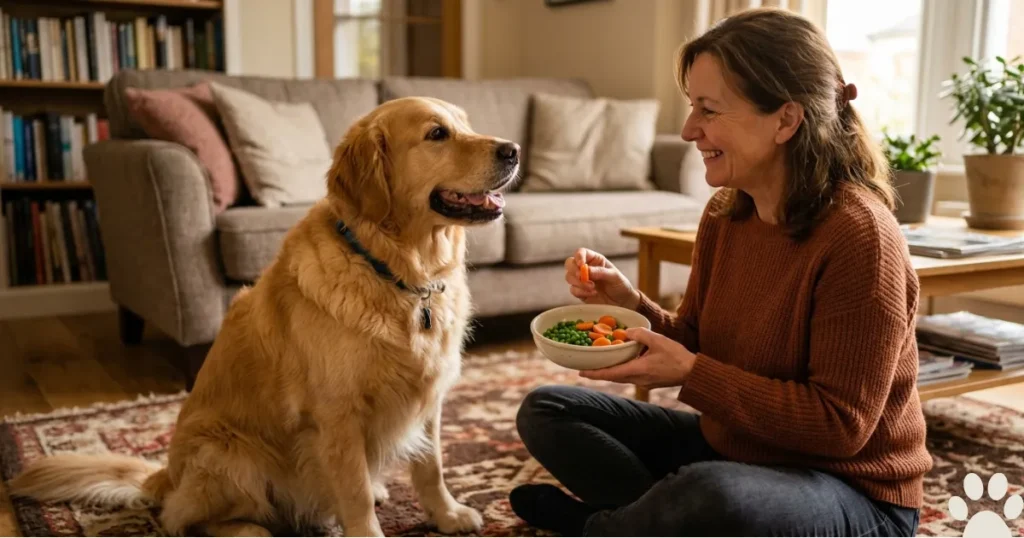
Never mix peas or carrots with any seasoning, sauce, butter, or salt. Plain means plain. A bowl of frozen peas and baby carrots straight from the fridge requires zero preparation beyond washing, which makes this one of the most practical daily treat options available.
For Golden Retriever Puppies
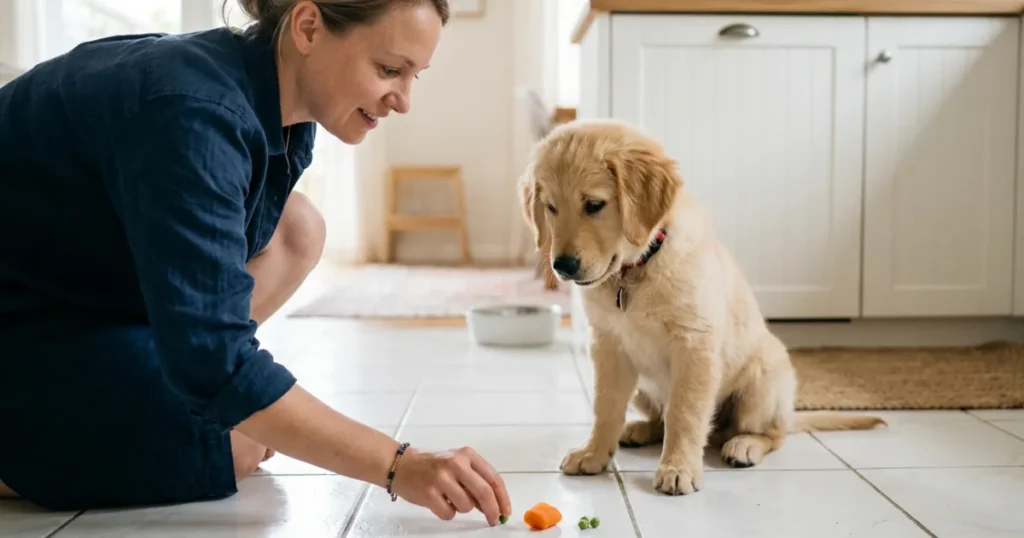
Puppies under 4 months should not have peas or carrots. Between 4 and 6 months, introduce each vegetable separately before combining them, so that any digestive reaction can be attributed to one dog food rather than two. Start with steamed carrots at fingernail-sized pieces and watch stools for 24 hours. Then, introduce thawed frozen peas at five to ten peas per session before combining both.
For Senior Golden Retrievers Over 8 Years
Switch both vegetables to lightly steam for senior Goldens. Senior dogs have reduced gut motility and enzyme production, making raw, dense vegetables harder to break down. Steamed peas and steamed carrot rounds provide the same nutritional value with significantly less digestive burden for an older dog.
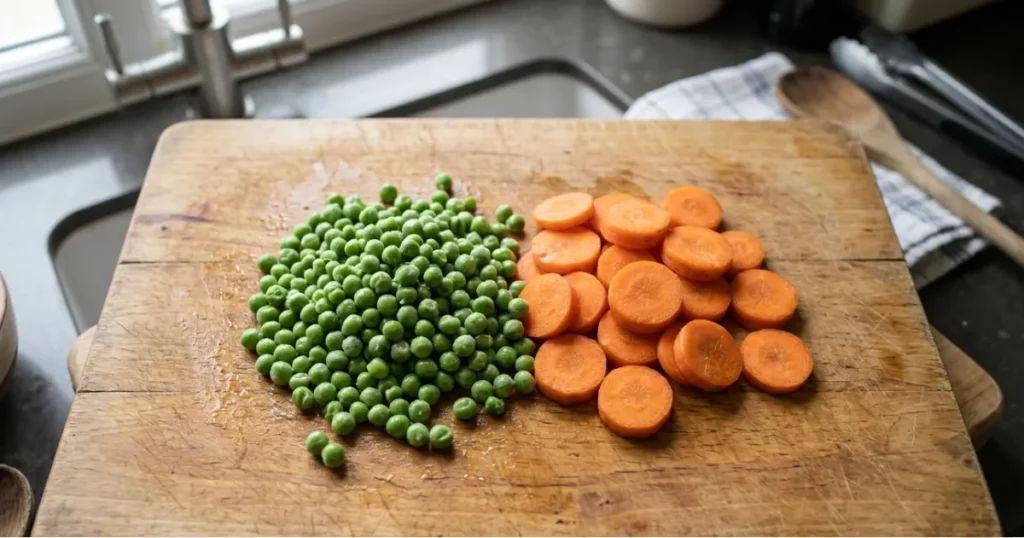
Serving Size Guide for Peas and Carrots Combined
These servings apply to healthy adult Golden Retrievers with no underlying health conditions. All amounts are for the combination together, not each vegetable separately.
For a 55-pound Golden Retriever
Two tablespoons of peas and two baby carrots per day, within the 10% daily caloric treat budget.
For a 65 to 75-pound adult Golden
Three tablespoons of peas and two to three baby carrots per day. Total combined calories from this serving sit at approximately 30 to 40 calories.
For a 75 to 90-pound Golden
On a calorie-restricted diet, substitute plain green beans for some or all of the peas in this pairing. Green beans carry less starch and are lower in calories than peas, making them the leaner half of a carrot combination for an overweight Golden. Our full guide to safe vegetables for Golden Retrievers covers comparable vegetable combinations and their relative caloric loads.
Never feed more than the combined serving above in a single sitting. Larger amounts drive the gut fermentation and digestive disruption that makes vegetable treats uncomfortable rather than beneficial.
Decision Framework: Peas and Carrots for Your Golden Retriever
If your Golden is under 4 months old, skip both vegetables entirely.
If your puppy is between 4 and 6 months old, introduce carrots first, one vegetable at a time, before adding peas. Use steamed pieces only. Watch for loose stools before increasing volume or combining both.
If your adult Golden weighs between 55 and 75 pounds and is at a healthy body condition score, raw baby carrots and plain fresh or frozen peas together are an appropriate daily treat. No preparation beyond washing is needed for this combination.
If your adult Golden is overweight or above 75 pounds on a calorie-restricted diet, replace some or all of the peas with plain green beans to reduce the starch and caloric contribution of the vegetable treat budget while keeping carrot rounds as the primary component.
If your Golden’s primary kibble is grain-free with peas or lentils in the top five ingredients, limit pea treats to two to three times per week rather than daily, and consider raising the grain-free diet question with your veterinarian, given the breed’s documented DCM risk profile.
If your Golden is a senior over 8 years old, serve both steamed and chopped vegetables. Reduce to one to two tablespoons of peas and one medium carrot per day, and monitor for gas or loose stools, as older dogs process legume fibre more slowly.
Warning: What to Avoid with Peas and Carrots for Golden Retrievers
PROBLEMATIC – Monitor for 24 to 48 hours:
A Golden who eats a large quantity of peas and carrots together at once may experience loose stools, gas, and mild bloating from the combined fibre load. These symptoms resolve within 24 hours in most cases. Reduce the serving size and reintroduce more gradually.
UNSUITABLE – Avoid, not toxic:
Canned peas and carrots with sodium are unsuitable regardless of how convenient they are. Most canned mixed vegetable products contain 300 milligrams of sodium or more per half-cup serving, which is excessive for any dog. Frozen mixed vegetables with sauce, butter, or seasoning carry the same problem. Always check ingredient labels.
Frozen peas and carrot medleys marketed for humans often contain added salt or minor seasoning. Read the label. If any ingredient beyond vegetables and water appears, do not feed the product.
When to Call the Vet
| URGENT — Call immediately | MONITOR — Watch 24 to 48 hours |
| Signs of choking after carrot feeding: pawing at mouth, neck extending, respiratory distress | Loose stools after the first introduction of the combination |
| Suspected oesophageal obstruction: repeated retching without producing vomit | Mild gas or bloating in the hours after a larger serving |
| Allergic reaction: facial swelling, hives, sudden lethargy | Soft stools persisting for more than 24 hours |
| Vomiting blood after eating a large carrot piece | Reduced appetite at the next meal |
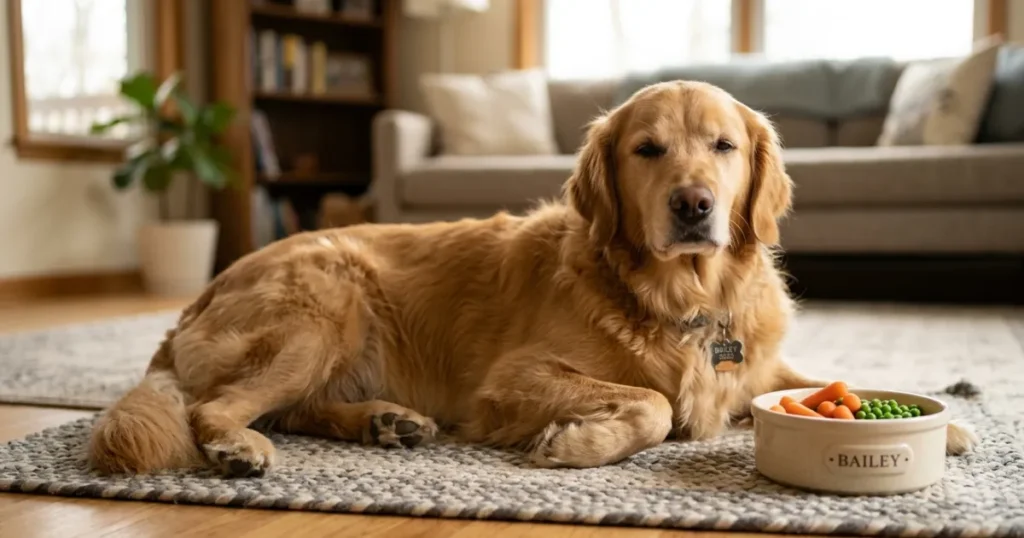
Can dogs eat peas and carrots from a frozen bag?
Yes, as long as the label shows no added salt, seasoning, or sauce. Plain frozen peas and carrots thawed to room temperature are safe and convenient. Most plain frozen vegetable bags contain only the vegetables and water. Read the ingredient list before feeding any packaged product.
Can dogs eat peas and carrots every day without problems?
Yes, for most healthy adult Golden Retrievers at appropriate serving sizes. Two to three tablespoons of peas and two baby carrots per day sit well within the 10% daily caloric treat budget. Goldens on grain-free kibble should factor daily peas into the total legume intake picture, given the breed’s DCM risk profile.
Can dogs have peas and carrots cooked with butter or seasoning?
No. Butter, salt, garlic, and onion are all unsuitable or toxic for dogs. Peas and carrots served from a human meal prepared with any of these additions should not be given to a Golden Retriever. Only plain, unseasoned, freshly cooked or raw vegetables are appropriate.
Can dogs have peas and carrots as a meal replacement?
No. Peas and carrots are treat supplements, not nutritionally complete meals. They lack the protein, fat, and micronutrient profile a Golden Retriever needs from a balanced primary diet. They should stay within the 10% daily treat caloric budget alongside a complete formulated dog food.
How many peas and carrots can a dog eat safely in one sitting?
For a 65-pound adult Golden Retriever, two to three tablespoons of peas and two to three baby carrots per sitting is a safe single serving. More than this at once increases gut fermentation from the combined fibre load and raises the risk of loose stools or gas.
Are peas and carrots good for dogs with sensitive stomachs?
Yes, when introduced gradually. Steam both vegetables lightly for dogs with known digestive sensitivity, and introduce one at a time before combining. Start with a teaspoon of each and observe stool consistency for 24 hours before increasing the serving. Raw versions carry more fibre resistance and are better tolerated once the dog’s digestion has adjusted.
Is it safe to give my Golden Retriever peas and carrots every day?
Yes, at the serving sizes matched to your dog’s weight, plain and unseasoned. Monitor stool consistency in the first week of daily feeding. If loose stools appear, reduce the daily amount and reintroduce more gradually. Goldens on grain-free diets should limit daily pea additions and raise the diet formulation question with their vet.
Do peas and carrots help Golden Retrievers lose weight?
Peas and carrots support weight management primarily by replacing higher-calorie commercial treats. At 20 to 25 combined calories per typical serving, this pairing allows multiple daily treat rewards without meaningfully affecting caloric balance. For Golden Retrievers on veterinary weight loss plans, replace some peas with plain green beans to lower the caloric contribution further.
Are peas and carrots good for dogs with joint problems?
The antioxidant and anti-inflammatory compounds in both vegetables provide general systemic support rather than targeted joint therapy. Carrots contribute beta-carotene and manganese, which support connective tissue health. Peas supply vitamin K, which supports bone metabolism. Neither replaces veterinary joint supplements for a Golden with confirmed hip dysplasia or arthritis, but both are sensible additions to the diet of a working or active dog.
What happens if my Golden Retriever eats a whole bag of frozen peas and carrots?
A full bag of plain frozen peas and carrots will almost certainly cause significant gas, bloating, and loose stools from the concentrated fibre load. Ensure access to water and monitor stool output. Contact your vet if vomiting persists beyond 12 hours, if the dog becomes lethargic, or if the abdomen appears visibly distended and firm, as the last symptom can indicate bloat rather than simple digestive upset.
Are peas and carrots safe for Golden Retriever puppies?
Safe from around 4 months with careful introduction. Introduce each vegetable separately first, starting with steamed carrot pieces, then plain peas, before combining both. Do not serve raw vegetables to puppies under 6 months. Keep servings to a teaspoon of each per session and watch for loose stools for 24 hours after each introduction.
Do carrots and peas together benefit Golden Retriever coat health?
Carrots contribute beta-carotene, which the body converts to vitamin A, a nutrient that supports skin barrier function and coat quality. Peas add B vitamins, including folate, which support cellular regeneration. Together, they deliver a nutrient pairing that complements the coat health that owners of this breed already prioritise through grooming. They are not a substitute for dietary fat sources, which drive the bulk of coat condition in Golden Retrievers.
Can my Golden Retriever eat peas and carrots with their kibble at mealtimes?
Yes. Mixing a small amount of plain peas and diced carrots into kibble is a practical way to add variety and increase meal volume without significantly adding calories. Keep the vegetable addition within the 10% daily treat guideline. This approach works particularly well for Goldens on reduced portions who finish meals quickly and continue seeking food.
Are frozen peas and carrots better than fresh for Golden Retrievers?
Frozen plain vegetables are nutritionally comparable to fresh. Frozen peas retain most of their vitamin content because they are typically blanched and frozen at peak ripeness. Frozen carrots are similarly preserved. For convenience, frozen is equally valid. Just confirm that no salt or seasoning is added to the product before feeding.
My Golden Retriever ignores peas but loves carrots. Is that enough?
Yes. Carrots alone as a daily treat are safe and nutritionally useful for Golden Retrievers. Peas add protein and additional vitamins that carrots do not carry in the same quantities, but this is not a gap that requires filling if your dog refuses them. Try thawed frozen peas mixed into food rather than served whole before concluding your Golden has no interest.
Can Dogs Eat Peas and Carrots
Yes, dogs can safely eat peas and carrots together. Both vegetables are non-toxic, and the combination is safe whether served raw, steamed, or frozen, in appropriate amounts. They are nutrient-rich, low-calorie snacks rich in vitamins A, C, and K and nd fiber. Served plain, steamed, boiled, or raw without salt, butter, or other seasonings. Cut carrots into bite-sized pieces to prevent choking, and feed them in small servings. They deliver complementary nutrients at a low caloric cost, which suits this breed’s tendency toward weight gain and its specific health predispositions.
Can Dogs Have Peas and Carrots
Yes, dogs can safely eat peas and carrots together. Both vegetables are non-toxic, and the combination is safe whether served raw, steamed, or frozen, in appropriate amounts. They are nutrient-rich, low-calorie snacks rich in vitamins A, C, and K and nd fiber. Served plain, steamed, boiled, or raw without salt, butter, or other seasonings. Cut carrots into bite-sized pieces to prevent choking, and feed them in small servings. They deliver complementary nutrients at a low caloric cost, which suits this breed’s tendency toward weight gain and its specific health predispositions.
Conclusion
Dogs can eat peas and carrots together safely, and Golden Retrievers benefit from this combination as one of the most practical and nutritionally sound daily treat pairings available for the breed. The combined caloric load is low, the fibre drives satiety, and the antioxidant content supports immune function that matters specifically for a breed with a 60% lifetime cancer incidence. Serve plain, prepare by cutting large carrots into rounds, and keep daily amounts within the serving sizes matched to your Golden’s weight. For Goldens on grain-free kibble, factor daily pea treats into the total legume picture.
Goldens vary in how they respond to peas and carrots as a combination, and I would like to know how yours handles it.
- Does your Golden take frozen peas as training rewards, or does the carrot always win?
- And for those managing a Golden on a weight loss plan, has replacing commercial treats with peas and carrots made a visible difference to your dog’s hunger behaviour between meals?
Share your experience in the comments. Real-world feedback from Golden owners managing this breed’s specific weight and health challenges helps Owners.