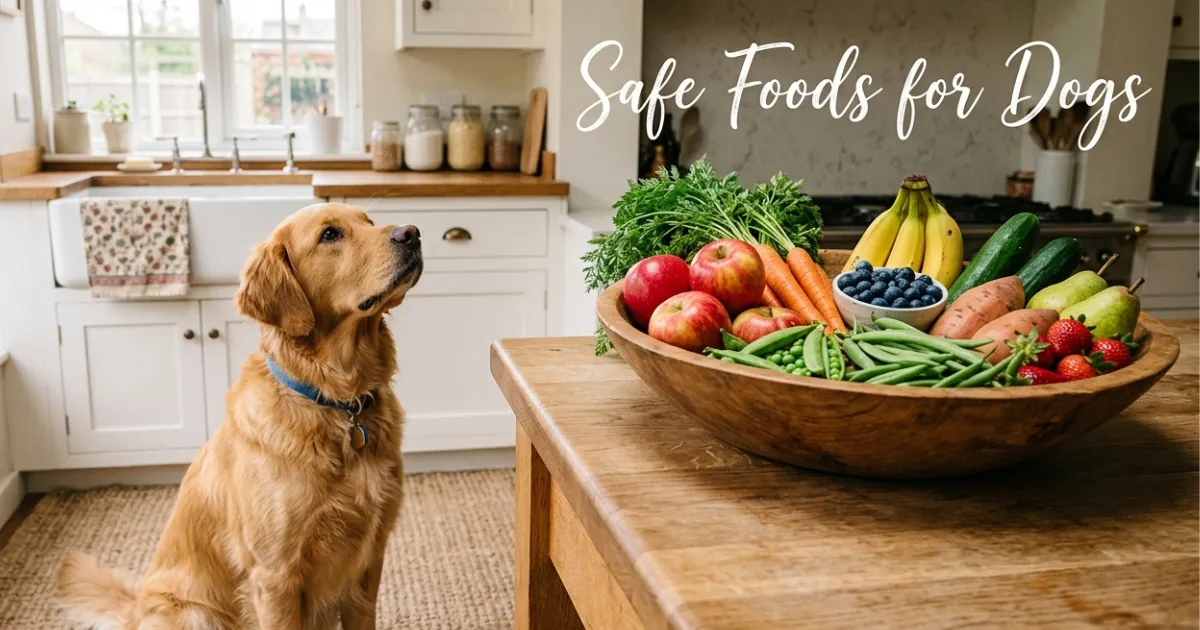
Can Dogs Have Green Beans? Yes, dogs can have green beans. They are non-toxic, low in calories, and safe in all common forms: raw, steamed, frozen, and lightly cooked, as long as they are plain with no added salt, butter, or seasoning. For Golden Retrievers specifically, green beans are among the most valuable vegetables because they address this breed’s most persistent health challenge directly.
Golden Retrievers are one of the most obesity-prone breeds in the United States. According to the Association for Pet Obesity Prevention’s 2022 survey, over 55% of dogs in the United States are classified as overweight or obese. Golden Retrievers are consistently overrepresented in that figure due to their food motivation, lower baseline energy expenditure compared to working breeds, and a genetic predisposition to hypothyroidism that slows metabolism in a meaningful proportion of the breed. Green beans address a specific problem in a Golden Retriever’s dietary management because they are dense and filling, with only 31 calories per 100 grams. A Golden who receives green beans in place of commercial treats gets satiety without caloric consequence.
I recommend green beans to more Golden Retriever owners than any other vegetable treat, and I do so for a practical reason. Goldens beg persistently. Managing a Golden’s calorie intake while responding to constant food-seeking behaviour is one of the real day to day challenges of owning this breed. Green beans give you something to hand over that satisfies the dog without compromising a weight management plan.
Are Green Beans Safe for Dogs in Every Preparation?
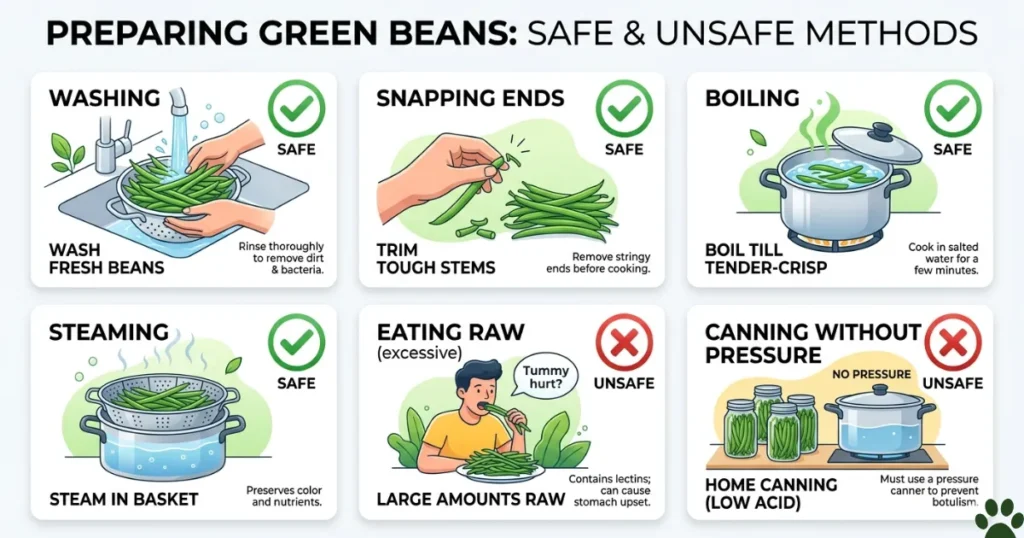
Are green beans safe for dogs across all forms? Yes, with preparation dictating the risk rather than the vegetable itself. The table below outlines the most common forms, their safety status, and what specifically makes each suitable or unsuitable for Golden Retrievers.
| Preparation | Safe for Dogs | Notes for Golden Retrievers |
| Raw, fresh | Yes | Retain full vitamin C and folate; crunchy texture aids dental health |
| Steamed, plain | Yes | Easier to digest; preferred for puppies and seniors |
| Frozen, plain | Yes | Firm texture, convenient for training; cool treat in warm weather |
| Boiled, plain | Yes | Some folate and vitamin C lost; fine for all life stages |
| Canned, no salt | Yes, rinse first | Rinse under water to reduce residual sodium before feeding |
| Canned, salted | No | Sodium load is dangerous even in small amounts; never feed |
| Cooked with onion or garlic | No | Both are toxic to dogs; thiosulfate causes hemolytic anemia |
| Seasoned or buttered | No | Garlic powder, onion powder, and salt in human preparations make them toxic |
| Dehydrated, plain | Yes, in small amounts | Very concentrated; feed no more than a quarter of the fresh-weight equivalent |
Notes: “Plain” means the only ingredient is green beans. No mixed vegetable blends, no sauce, no flavouring. Read the ingredient label on any frozen or canned product before feeding it to your pet.
For a full comparison of safe and unsafe vegetables for Golden Retrievers, including how green beans rank against carrots and peas across caloric density and nutrient profile, see our dog safe vegetables guide.
Can Dogs Have Green Beans as a Daily Treat?
Dogs can have green beans daily, and for Golden Retrievers in particular, this is one of the most defensible daily treat choices available. At 31 calories per 100 grams, a generous daily serving of green beans for a large Golden barely registers in the caloric budget.
Serving Sizes by Weight
For a 55-pound Golden Retriever, a small handful of roughly 12 to 15 green beans, cut into one-inch pieces, stays well within the 10% daily caloric treat guideline. That serving represents approximately 25 to 30 calories, which is less than most commercial dog biscuits at a fraction of the cost.
For a 65 to 75-pound adult Golden Retriever, increase the serving to 15 to 20 pieces. A 65-pound Golden eating approximately 1,400 calories per day has a treat budget of 140 calories. Even a generous daily serving of green beans (50 grams) delivers only 15 calories.
For a 75 to 90-pound Golden Retriever on a calorie-restricted diet, green beans become the anchor of the daily treat strategy. At this weight, commercial treats often consume the entire treat budget in two or three pieces. Green beans allow for more treat interactions, which matters for a food-motivated breed whose quality of life is partly tied to receiving food rewards.
All sizes above apply only to plain green beans. One-inch pieces reduce the risk of a whole bean being swallowed without chewing, which matters less for green beans than for carrots but remains the preparation standard I recommend for large, fast-eating Goldens.
Are Green Beans Ok for Dogs? The Green Bean Diet Question
Are green beans ok for dogs as a meal replacement? No. This is the most important clarification for any Golden Retriever owner who has encountered the “green bean diet” online.
The green bean diet works by gradually increasing the percentage of a dog’s kibble replaced with green beans until the ratio reaches 50% kibble and 50% green beans by volume, then gradually restoring regular food once the target weight is achieved. The logic sounds reasonable: reduce calories, increase satiety, and create a caloric deficit. In practice, it carries specific risks that generic articles gloss over, and one risk that no competitor article addresses: the interaction between the green bean diet and undiagnosed hypothyroidism in Golden Retrievers.
Golden Retrievers have one of the highest rates of hypothyroidism of any dog breed. Hypothyroidism slows the metabolic rate by reducing thyroid hormone output, thereby decreasing the number of calories the body burns at rest. A Golden who is gaining weight despite reasonable food intake, or failing to lose weight despite caloric restriction, may have hypothyroidism rather than simple overfeeding as the primary cause. Replacing kibble with green beans in this dog creates a nutritional deficit without addressing the underlying metabolic condition. The dog loses some weight initially, then regains it rapidly when regular food returns, because the metabolism has not changed. Worse, the caloric restriction may mask the hypothyroid symptoms long enough to delay a diagnosis.
PetMD veterinarian Ken Tudor identifies the risk of nutritional imbalance directly, noting that weight-loss patients still require appropriate amino acids, fats, vitamins, and minerals for their current body weight, which green beans cannot provide in high volumes.
Green beans as occasional treats are not the green bean diet. They are among the best daily treat options available. The risk is replacing a meaningful percentage of a complete diet with them without veterinary guidance.
Expert Insight
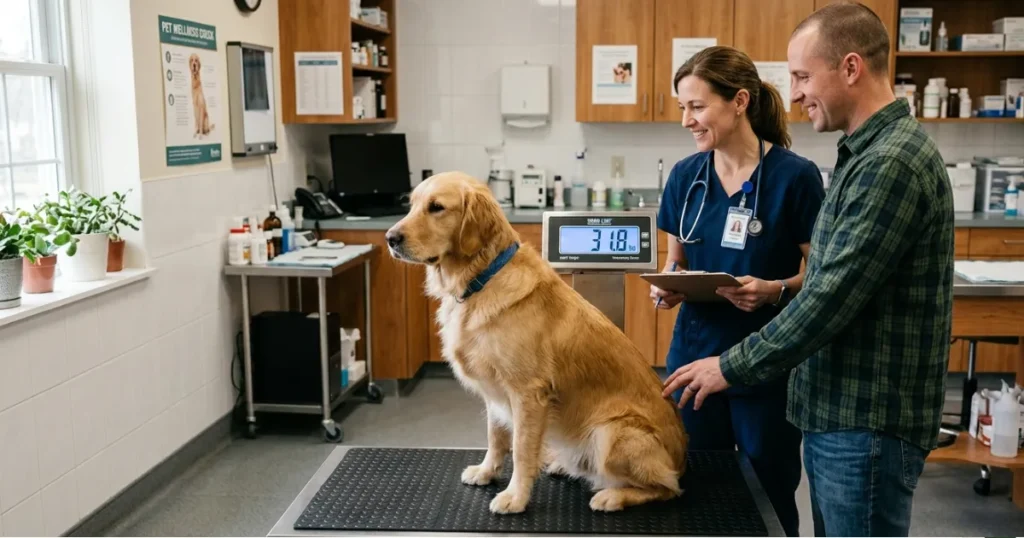
In Golden Retrievers presenting with unexplained weight gain or resistance to weight loss, the first clinical step is ruling out hypothyroidism before any calorie-restriction protocol is implemented. This breed’s elevated prevalence of thyroid disease means a dietary intervention that works in most breeds may produce poor results, rapid regain, and delayed diagnosis in a Golden whose weight issue is hormonal rather than caloric in origin.
Are Green Beans Safe for Dogs with Specific Health Conditions?
Are green beans safe for dogs with health conditions? In most cases, yes, but with relevant considerations for the three most common conditions in Golden Retrievers.
Hypothyroidism
Green beans are safe and beneficial for Golden Retrievers with confirmed hypothyroidism being managed with medication. Once thyroid hormone levels are stabilised through treatment, the metabolic rate normalises, and caloric management becomes more predictable. Green beans work well as part of a weight-loss treat strategy for hypothyroid Goldens under veterinary supervision, precisely because they add no meaningful calories and are highly satiating.
Joint Disease and Hip Dysplasia
Green beans benefit Golden Retrievers with hip dysplasia and arthritis indirectly by supporting weight management. Every pound of excess body weight adds roughly four to five pounds of force per step on a dog’s hip joints, according to orthopaedic research cited by the American Kennel Club. For a breed in which 70% of dogs show radiographic evidence of hip dysplasia by age 2, according to the Orthopedic Foundation for Animals, reducing treat-driven caloric excess through green bean substitution has a direct mechanical benefit on joint load. Green beans contain vitamin K, which supports bone metabolism, and vitamin C, an antioxidant relevant to connective tissue health.
Diabetes
Green beans are among the safest treats for diabetic Golden Retrievers because they are very low in natural sugars and have a negligible effect on blood glucose. The fibre content slows gastric emptying slightly, which supports more stable post-meal glucose levels. Confirm all treat choices with your veterinary team if your Golden is on an insulin management protocol, as any dietary change can affect glucose control.
What I Actually Recommend for Green Beans and Golden Retrievers
I use green beans in three specific ways with Golden Retrievers, and each serves a distinct purpose.
First, as a primary treat replacement for overweight Goldens. If a Golden is above ideal body condition score and the owner is trying to reduce total daily caloric intake, I recommend replacing all commercial treats with plain, fresh or frozen green beans cut into 1-inch pieces. The caloric reduction is immediate and significant. A Golden receiving four commercial biscuits per day at 25 calories each loses 100 treat calories per day. Replacing those with four green bean servings of equal piece count reduces treat calories to under 15 per day. Over a month, that is a meaningful deficit.
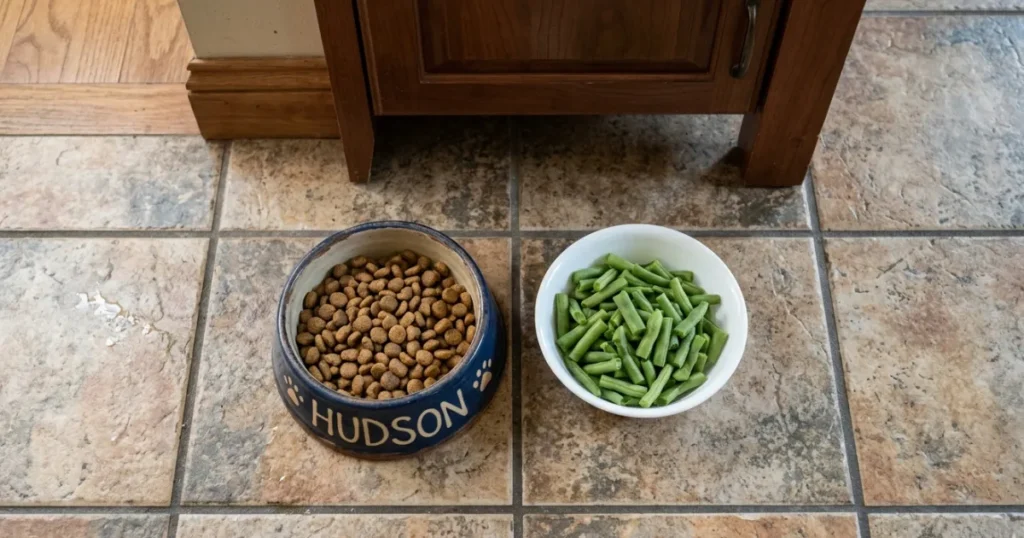
Second, it is a meal volume extender for Goldens on reduced-calorie kibble rations. A Golden Retriever eating less kibble than it is used to will seek additional food aggressively. Mixing 1 to 2 tablespoons of plain cooked or raw, chopped green beans into the kibble meal adds volume and fibre, which slows the eating pace slightly and extends the feeling of fullness. This does not replace a veterinary weight management plan, but it reduces the food-seeking behaviour that makes caloric restriction difficult to sustain for food-motivated breeds.
Third, as a between-meal settling tool for anxious or restless Goldens. Some Goldens become food-oriented in the late afternoon, a time when boredom and hunger intersect. A small handful of green beans, given consistently at that time, becomes a predictable, low-calorie ritual that satisfies the behaviour without adding caloric burden to the day.
For how green beans compare to carrots and peas as daily treat options for this breed, see our carrot feeding guide for Golden Retrievers and our peas guide for Golden Retrievers.
Decision Framework for Feeding Green Beans to Your Golden
If your Golden Retriever is under 3 months old, skip green beans. The digestive system is not yet ready for the fibre load of raw or even steamed legumes.
If your puppy is between 3 and 6 months old, introduce two to three small steamed pieces and observe stool consistency for 24 hours. Raw beans are too fibrous for a developing gut at this stage.
If your adult Golden weighs between 55 and 75 pounds and is at a healthy body condition score, raw or frozen green beans cut into one-inch pieces make an excellent daily treat. There is no health reason to avoid them at this weight and body condition.
If your adult Golden is overweight or weighs more than 75 pounds, green beans are your primary treat tool. Replace commercial treats with plain green beans entirely and count the caloric difference toward a weekly deficit that aligns with your vet’s weight management target.
If your Golden is gaining weight despite normal food intake and exercise, have your vet run a thyroid panel before making any dietary changes. Do not start the green bean diet or any caloric restriction protocol in a Golden with unexplained weight gain until hypothyroidism has been ruled out.
If your Golden is over 8 years old, use lightly steamed green beans. Senior Goldens have reduced gut motility and a lower tolerance for large amounts of high-fibre raw plant material. Steamed beans are easier to break down and less likely to cause gas or digestive discomfort.
Warning: When Green Beans Are Not Safe for Dogs
TOXIC – Call your vet immediately:
Green beans cooked with onion, garlic, shallots, or leeks in any form are toxic to dogs. The allium family contains organosulfoxides that are metabolised into compounds that oxidise red blood cell haemoglobin, causing Heinz body haemolytic anaemia. This condition can develop 24 to 72 hours after ingestion. If your Golden ate green beans from a human recipe that included these ingredients, contact the ASPCA Animal Poison Control at (888) 426-4435 immediately without waiting for symptoms.
PROBLEMATIC – Monitor for 24 to 48 hours:
Canned green beans with high sodium can cause signs of sodium toxicity at sufficient intake, including excessive thirst, urination, and in severe cases, neurological symptoms. If your Golden ate a full can of salted green beans, monitor closely and contact your vet if tremors, swelling, or behavioural changes appear.
Large volumes of raw green beans at once can cause gas and loose stools due to the concentrated fibre load. These resolve within 24 hours with reduced serving. Monitor and reduce portions.
UNSUITABLE – Avoid, not toxic in small amounts:
Dehydrated green beans in large quantities are unsuitable because dehydration concentrates fibre and all other compounds. Feed dehydrated green beans at no more than 1/4 of the fresh-weight equivalent.
When to Call the Vet
| URGENT — Call immediately | MONITOR — Watch 24 to 48 hours |
| Ingestion of green beans cooked with onion, garlic, or leeks | Loose stools after first green bean introduction |
| Signs of sodium toxicity after canned salted green beans: tremors, extreme thirst, facial swelling | Mild gas or bloating after a large raw serving |
| Allergic reaction: facial swelling, hives, vomiting immediately after eating | Reduced appetite at the next meal |
| Unexplained weight gain not responding to dietary change despite normal intake | Soft stools persisting beyond 24 hours |
The last row in the urgent column is not a green-bean-specific emergency. It is included because Golden Retriever owners who are managing a dog’s weight with green bean feeding and not seeing expected results should consider a thyroid screening rather than simply increasing dietary restriction.
Can dogs have green beans every day without any health risk?
Yes, dogs can have green beans daily in appropriate amounts. Plain fresh, frozen, or steamed green beans make a safe daily treat within the 10% caloric guideline. For a 65-pound Golden Retriever, 15 to 20 one-inch pieces per day falls well within that budget at roughly 15 calories.
Can dogs have green beans raw, or do they need to be cooked first?
Dogs can have green beans raw without any safety concerns. Raw green beans retain the highest levels of vitamin C and folate compared to cooked varieties. For Golden Retrievers, cut raw beans into one-inch pieces before serving. This is the preparation I use most often because it requires no cooking and preserves the full nutrient profile.
Are green beans safe for dogs with kidney disease?
Green beans are generally safe for dogs with kidney disease in moderate amounts, as they are low in phosphorus and purines compared to other vegetables. However, dietary management for dogs with kidney disease requires veterinary oversight. Confirm any treat choice, including green beans, with your vet if your Golden has a confirmed kidney diagnosis.
Are green beans ok for dogs on a prescription diet?
Dogs on prescription diets should not receive any food outside that diet without veterinary approval. This includes green beans. Prescription diets are formulated to specific nutritional ratios, and adding any additional food changes those ratios. Always confirm with your vet before introducing any treat to a dog on a prescription diet.
How many green beans can a dog eat in one sitting without getting sick?
For most healthy medium to large-sized dogs, 20 to 30 one-inch pieces per sitting is a safe single serving. More than this at once increases the fibre load and raises the risk of gas and loose stools. For a Golden Retriever, spreading green bean servings throughout the day in smaller amounts produces better digestive outcomes than a single large serving.
Are green beans safe for dogs who are diabetic?
Yes. Green beans are among the safest treats for diabetic dogs because they are very low in natural sugars and have a minimal effect on blood glucose. They are filling, which reduces post-meal food-seeking behaviour. Confirm their use with your veterinary team if your dog is on an active insulin management protocol.
Is it safe to give my Golden Retriever canned green beans?
Canned green beans with no added sodium are safe after rinsing. Most canned green beans contain significant added salt. Rinse thoroughly under cold running water before feeding and check the label for any seasonings or additives. Fresh or frozen plain green beans are always preferable over canned.
Do green beans help Golden Retrievers lose weight safely?
Green beans support weight management in Golden Retrievers by replacing higher-calorie commercial treats at a fraction of the caloric cost. They do not cause weight loss on their own. Effective weight reduction in Goldens requires a combination of appropriate meal portions, regular exercise, and veterinary guidance, with green beans as a useful low-calorie treat component rather than a dietary cornerstone.
Are green beans ok for Golden Retriever puppies under six months?
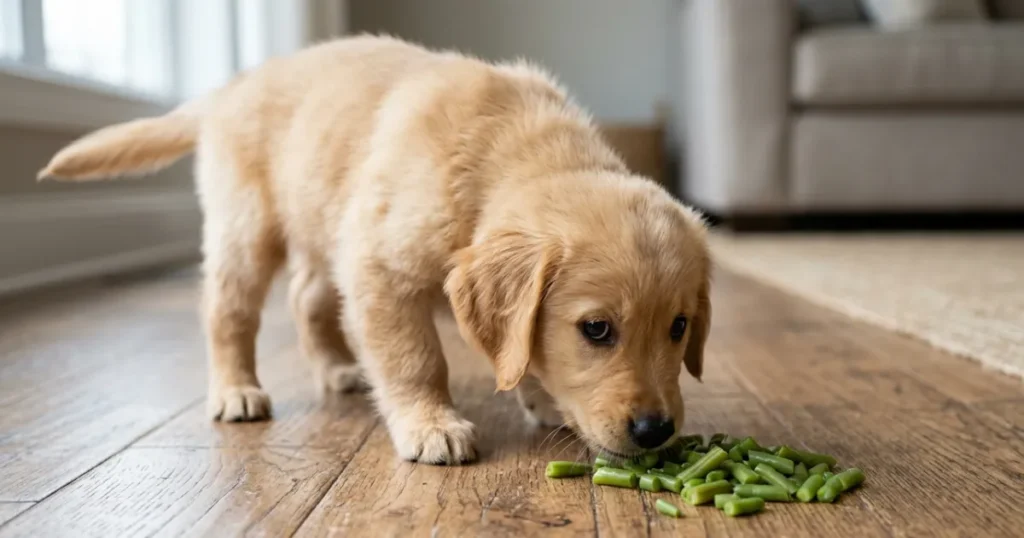
Small pieces of steamed green beans are safe for Golden Retriever puppies from around 10 to 12 weeks old. Raw beans are too fibrous for a developing gut at this stage. Start with two to three pieces and observe stool consistency for 24 hours. Skip green beans entirely before 10 weeks when the digestive system is still establishing its microbiome around primary nutrition.
What happens if my Golden Retriever eats a whole bag of green beans?
A whole bag of green beans can cause significant gas, bloating, and loose stools due to the concentrated fibre load. In most cases, these symptoms resolve within 24 hours. Ensure access to water, monitor stool output, and reduce the next day’s serving. Contact your vet if vomiting persists beyond 12 hours or if the abdomen becomes visibly distended and hard, which could indicate bloat.
Are green beans safe for senior Golden Retrievers over nine years old?
Yes, with the preparation adjusted to lightly steamed rather than raw. Senior Golden Retrievers have reduced gut motility and lower enzyme production, which makes the dense fibre in raw green beans harder to process. Steamed green beans provide the same nutritional and caloric benefits in a form that is significantly easier on an aging digestive system.
Do green beans help with Golden Retriever hip dysplasia?
Green beans indirectly support weight management. Excess body weight increases the mechanical load on already compromised hip joints. Reducing treat-driven caloric intake by substituting green beans supports a lower body condition score, thereby directly reducing joint stress. Green beans contain vitamin K, which supports bone metabolism, but they are not a treatment for hip dysplasia.
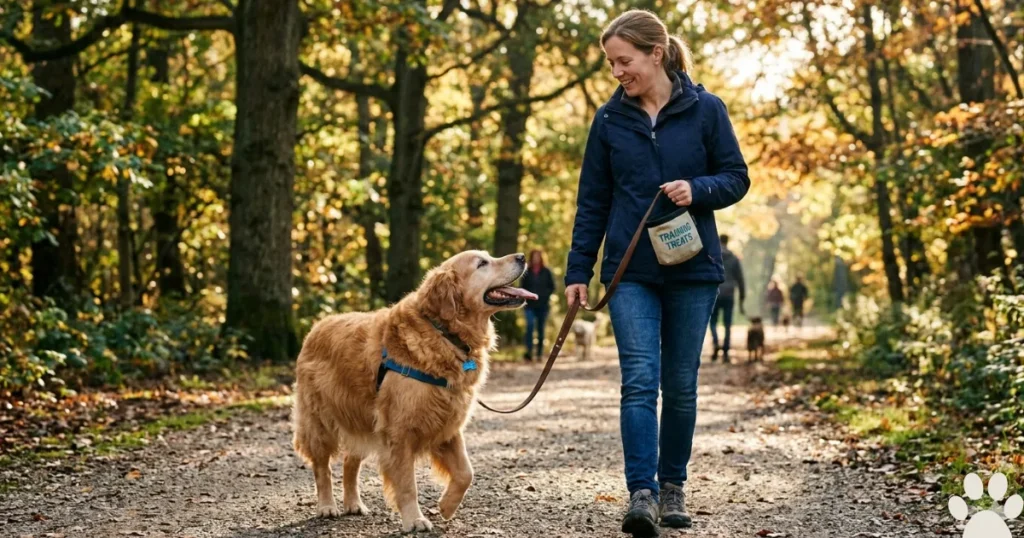
Can I use green beans as training treats for my Golden Retriever?
Yes. Cut raw or lightly steamed green beans into half-inch to one-inch pieces for training use. They are firm enough to carry without crumbling, low enough in calories for repeated reward use, and most Goldens accept them readily. For high-drive training sessions requiring maximum motivation, higher-value treats work better. Green beans are well suited to low-repetition reinforcement and routine reward interactions.
Are string beans and green beans the same thing for dogs?
Yes, string beans and green beans refer to the same vegetable. Both terms describe the common French bean or snap bean, and both are safe for dogs in plain preparation. The string along the seam of older bean varieties can be slightly tough, but it is not harmful if swallowed. Remove it if your Golden is a senior or tends to gulp food without chewing.
My Golden Retriever has gained weight despite a normal diet. Should I add green beans?
Before adding green beans or reducing food, have your vet run a full thyroid panel. Golden Retrievers have a significantly elevated rate of hypothyroidism, which slows metabolic rate and causes weight gain that does not respond predictably to caloric restriction. Adding green beans as treats is safe, but implementing a full caloric reduction strategy without addressing the underlying hormonal cause produces poor results and rapid regain in hypothyroid Goldens.
Conclusion
Dogs can safely have green beans, and for Golden Retrievers, they are the single most practical daily treat for weight management: filling, low-calorie, and available in every kitchen. The key rules are plain preparation, one-inch pieces, and staying within the 10% treat budget. Do not use the green bean diet as a standalone weight-loss strategy without veterinary guidance.
If your Golden is gaining weight despite normal intake, rule out hypothyroidism before restricting calories. One to two handfuls of plain green beans per day is a sustainable habit that works with this breed rather than against it. Golden Retrievers and food management have a complicated relationship that plays out differently in every household.
I’d love to hear how green beans have worked for your specific Golden.
- Have you used them to replace commercial treats, and did you notice a change in weight or food-seeking behaviour over time?
- If your Golden has been diagnosed with hypothyroidism, did your vet recommend any dietary changes beyond medication that included vegetable treats?
Share the details in the comments. Real owner experience with this breed’s metabolic challenges gives other Golden owners practical guidance.