A golden retriever growth chart maps your puppy’s weight and height against healthy monthly averages. Goldens run from around one pound at birth to 55 to 75 pounds full grown. Males finish larger than females. Treat the chart as a guide, not a rule, because genetics, diet, and build all shift where a healthy dog lands.growth ch
If you have weighed your puppy three times this week, you are in good company. Goldens grow fast, and the numbers swing enough between littermates to make any new owner nervous.
That is exactly what this hub is for. Below you will find a full golden retriever growth chart by month for males and females, the milestones at each stage, a simple way to predict adult size, and clear signs it is time to call your vet. Ranges come from the AKC and Golden Retriever Club of America breed standards and current veterinary data.
Think of it like the height chart at a pediatrician’s office, where most healthy puppies fall inside a band rather than on one exact line. For the behavior side of each stage, start with how puppies develop stage by stage.
How to read a golden retriever growth chart
Averages hide a wide healthy range
Every golden retriever growth chart shows averages, and averages cover a wide healthy range. A puppy at the top of the band is not automatically overweight, and one at the bottom is not automatically too small. That is the first rule for using any golden retriever growth chart well.
Judge body condition, not the scale
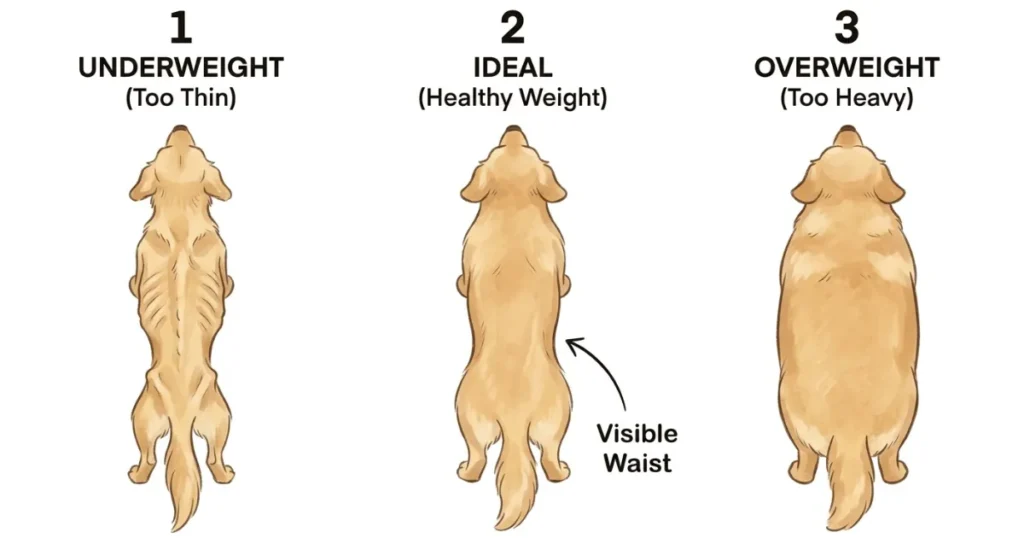
Body condition tells you more than the number. You should feel your Golden’s ribs under a thin layer of fat without pressing hard. From above, you want a visible waist, and from the side, a gentle tuck at the belly.
A golden retriever growth chart and a scale both matter less than what your hands tell you. This guide is one hub in a wider set of our Golden Retriever breed guides. You can also browse the rest of our Golden Retriever insights for stage-by-stage detail.
Slightly lean is safer for large breeds
For a large breed like the Golden, slightly under the average is safer than over. Faster growth and extra weight raise the risk of orthopedic problems while the joints are still forming. Aim to keep your golden retriever growth chart readings toward the middle of the band, not the top.
Growth comes in spurts, not a straight line
Growth on any golden retriever growth chart is not a smooth line. It arrives in spurts and plateaus, so a puppy can look leggy one week and rounder the next. A single reading tells you little, while the trend across several weeks tells you almost everything.
Lay each weight over the growth chart for your dog’s sex and watch the direction of travel. A steady growth rate that hugs the band beats a fast growth rate that races above it. Note the growth stage you are in, and act only when the trend flattens for weeks or climbs far past the range.
How to weigh your puppy at home
For a small puppy, weigh yourself holding the pup, then weigh yourself alone and subtract the difference. Larger puppies can step onto a flat pet or luggage scale. Weigh at the same time of day, ideally before a meal, and log each number so the trend on the growth chart stays honest.
When to call your vet about growth
Call your vet if your puppy stops gaining for two weeks or more, loses weight, or sits far outside the range with poor body condition. A sudden change matters more than the exact number. Most size worries turn out to be normal variation, but a quick visit can rule out parasites, illness, or a feeding problem.
Golden retriever growth chart: month-by-month weight
Here is the core golden retriever growth chart. Weights are healthy averages, with males on the higher end and females on the lower end. Pair every number with a body condition check.
| Age | Male weight | Female weight | Share of adult weight |
| Birth | ~14 to 16 oz | ~14 to 16 oz | ~1% |
| 6 weeks | 5 to 9 lb | 4 to 8 lb | ~10% |
| 8 weeks | 10 to 15 lb | 8 to 13 lb | ~15% |
| 3 months | 20 to 26 lb | 17 to 22 lb | ~30% |
| 4 months | 28 to 36 lb | 25 to 31 lb | ~50% |
| 5 months | 35 to 43 lb | 30 to 37 lb | ~60% |
| 6 months | 40 to 50 lb | 35 to 43 lb | ~65% |
| 7 months | 45 to 55 lb | 40 to 48 lb | ~75% |
| 8 months | 50 to 60 lb | 42 to 52 lb | ~80% |
| 10 months | 58 to 68 lb | 48 to 58 lb | ~90% |
| 12 months | 62 to 72 lb | 52 to 62 lb | ~95% |
| 18 to 24 months | 65 to 75 lb | 55 to 65 lb | 100% |
These golden retriever growth chart figures are checkpoints, not targets. The steepest climb happens between 8 weeks and 4 months, when a golden retriever pup can seem to change shape overnight. Growth slows after 6 months, and the last stretch is about muscle and chest depth more than the scale.

Golden retriever growth milestones at a glance
A golden retriever growth chart is easier to use next to the milestones that land at each growth stage. The table lines up the physical growth stage with what your dog is doing, so the weights have context.
| Stage | Age | What is happening |
| Neonatal | 0 to 2 weeks | Eyes and ears closed, then opening, rapid daily weight gain |
| Transitional | 2 to 4 weeks | Walking, first teeth, and litter play begin. |
| Socialization | 4 weeks to 4 months | Fastest growth, vaccinations, leaves the litter near 8 weeks |
| Juvenile | 4 to 6 months | Growth slows, adult teeth arrive, height building |
| Adolescence | 6 to 18 months | Filling out, testing behavior, and height finishes near 14 months |
| Adult | 18 to 24 months | Full weight and chest depth, skeletal maturity |
Read the chart and the milestones together, and most size worries dissolve. A puppy on the lighter side of the golden retriever growth chart who is playful and hitting each growth stage on time is an individual, not a problem.
The newborn golden retriever pup: birth to 8 weeks
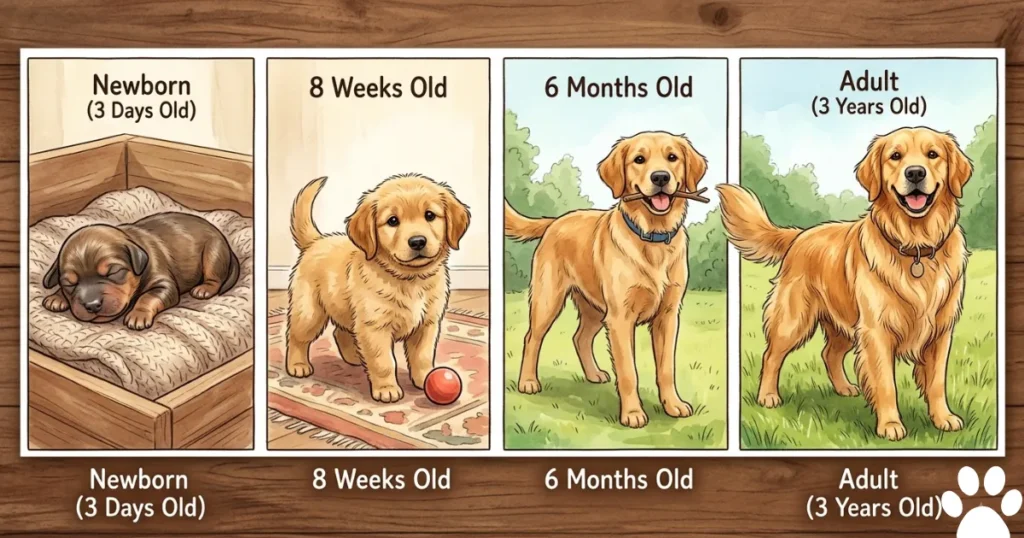
A newborn golden retriever pup weighs only about 14 to 16 ounces, close to one percent of the mother’s pre-pregnancy weight. Healthy neonates gain roughly 5 to 10 percent of their body weight each day early on, so daily weighing is normal at this stage.
Eyes and ears open in the first two weeks, baby teeth arrive, and the puppy shifts from crawling to walking. Most Goldens leave the litter near 8 weeks, weighing about 10 pounds. Larger litters often produce smaller puppies who catch up later.
For weekly detail on this window, see your newborn Golden Retriever week by week. For the first weeks at home, read what to expect from an 8 week old Golden Retriever.
Growth stages from puppy to adult
3 to 4 months: the fastest growth
The socialization and rapid-growth phase covers the 3 month old stage and the 4 month old milestone. By four months, your golden reaches roughly half of adult weight.
5 to 6 months: adolescence begins
Adolescence starts around the 5 month old stage and the 6 month old stage. Growth slows here, and behavior can get tested as hormones shift.
The one-year mark and beyond
By your golden age at one year old, most of the height is done, and the body is still broadening. For the behavioral map alongside these weights, see the developmental phases of puppyhood.
How big will my golden retriever get?
The four-month doubling rule
For a large breed, weight at 4 months is roughly half of adult weight. Double it for a rough estimate. A 30-pound male at four months will likely mature near 55 to 65 pounds. It is the handiest shortcut a golden retriever growth chart gives you.
Genetics beats any formula
None of this is exact, and that is the honest limit of any golden retriever growth chart. Two puppies can follow the same growth chart curve and finish 15 pounds apart, both perfectly healthy. Ask your breeder about earlier litters from the same parents, because that history beats any formula.
Male versus female size
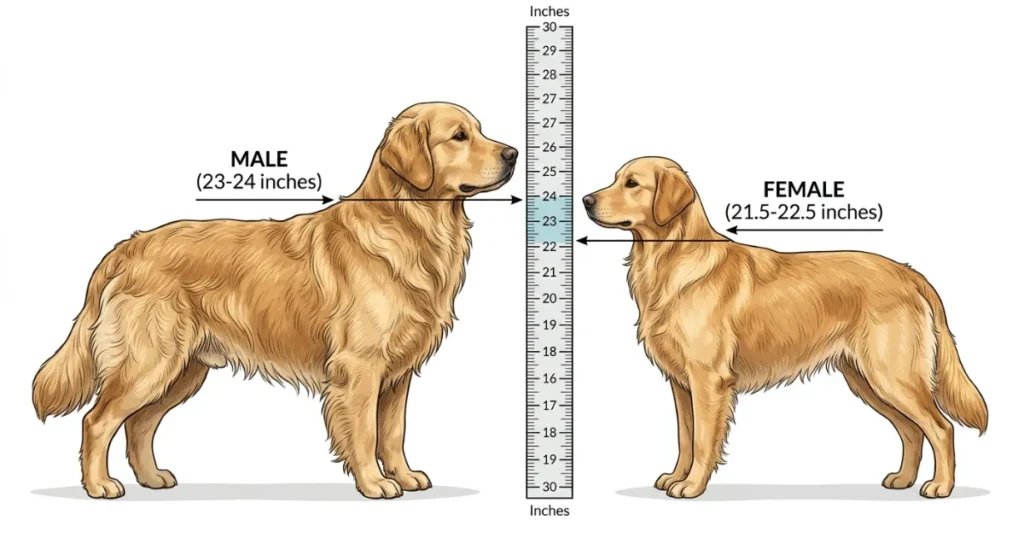
Males typically finish 10 to 20 pounds heavier and 1 to 2 inches taller than females. Females mature sooner, so they sometimes weigh the same as males near the one-year mark, or even a little more.
When do golden retrievers stop growing?
When do golden retrievers stop growing is really two questions, because height and weight finish on different timelines. In truth, a golden retriever growth chart has two finish lines.
Height finishes first, by 12 to 14 months
Most Goldens reach adult height by 12 to 14 months, when the growth plates in the long bones close. At that point the frame stops getting taller, even though the dog is far from done.
Weight and shape take until two years
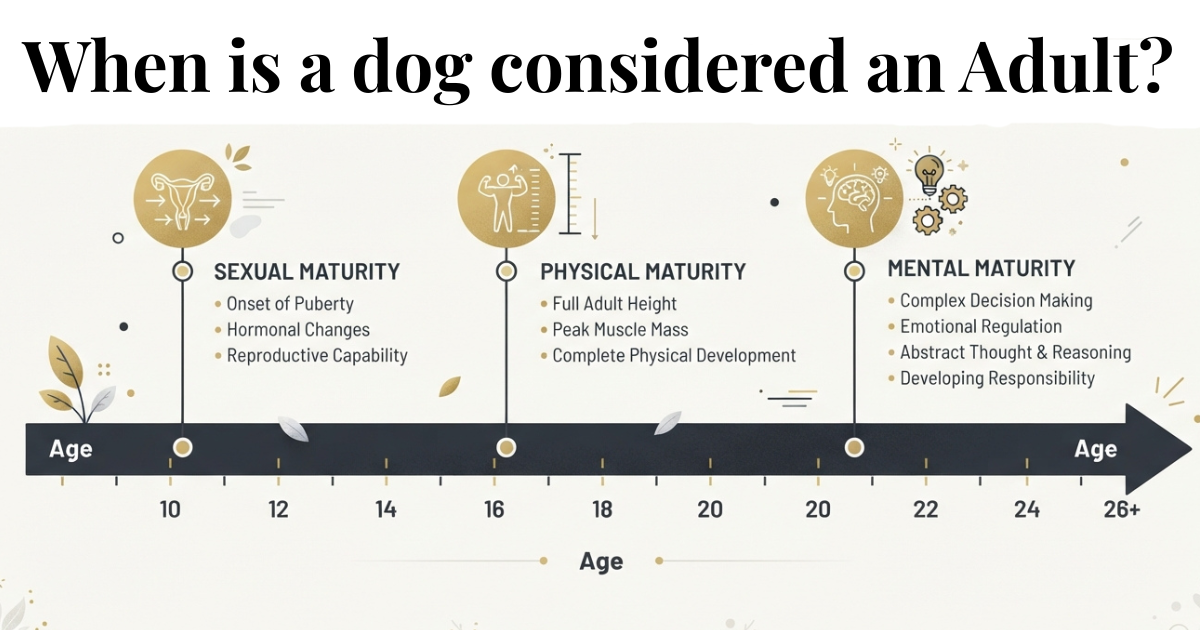
Weight and shape take longer. Your dog keeps adding muscle and chest width until roughly 18 to 24 months, so a lanky one-year-old is normal. That is the point most people mean by a mature adult, and you can read more about when a dog is considered an adult.
Feeding and exercise for healthy growth
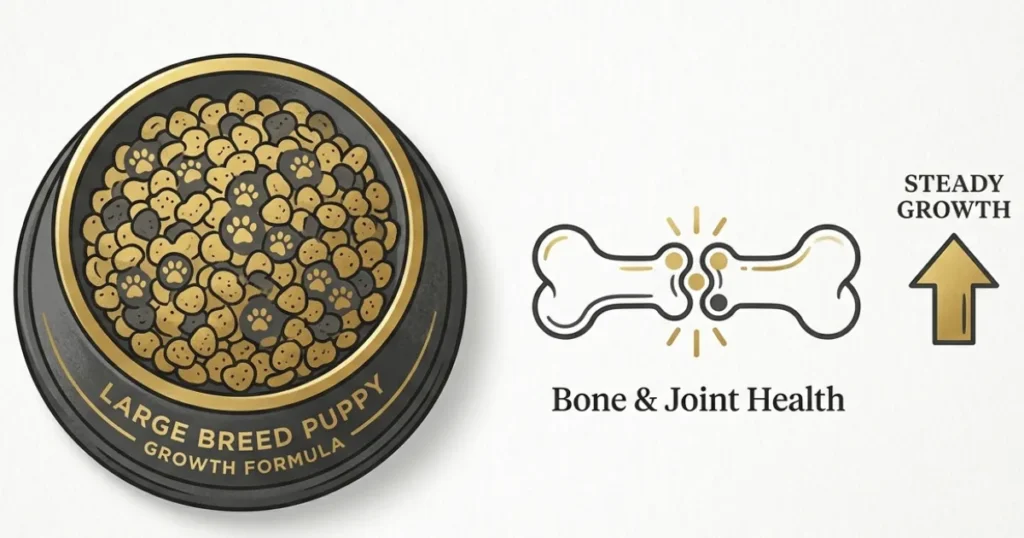
Feed a large-breed puppy formula
Feed a food built for large-breed puppies. These are calorie and calcium controlled to slow growth to a steady pace. Growing too fast is a known risk factor for hip and elbow problems in the breed. Let your vet set the amount for your dog.
Protect the closing growth plates
Keep exercise low impact until about 12 to 14 months. Avoid repeated jumping, long runs on hard surfaces, and forced stair work while the skeleton is still soft. The goal is a moderate growth rate, not a race.
Time neutering with your vet
Several studies in Goldens, including work from UC Davis, link early neutering before skeletal maturity to a higher rate of joint disorders. Many vets now suggest waiting until 12 to 18 months or longer. Discuss the timing with your own vet, since the right call depends on the dog.
None of this shows up as a number on the golden retriever growth chart, yet it does more for your dog’s future than any single weigh-in. Steady, slightly lean growth, gentle early exercise, and sensible neuter timing protect the joints while the frame is forming.
Expert Insight
A dog that tracks slightly below the average line but holds excellent body condition, moves well, and has bright energy is usually a healthy dog, not a small one. The most common growth mistake I see is not underfeeding. It is pushing a large-breed puppy to grow faster and heavier than the breed intends.
Quick reference.
Adult male Golden Retrievers reach about 65 to 75 pounds and stand 23 to 24 inches tall. Adult females reach about 55 to 65 pounds and 21.5 to 22.5 inches. Most Goldens hit full height by 12 to 14 months, then keep filling out to full weight by 18 to 24 months. Read body condition, not just the number on the scale.
What is a golden retriever growth chart, and how accurate is it?
A golden retriever growth chart lists healthy average weights and heights by age. It is a useful checkpoint, not a diagnosis. Accuracy depends on genetics, diet, and build, so pair every reading with a hands-on body condition check.
How much should a Golden Retriever weigh at 8 weeks?
Most eight-week-old Goldens weigh around 10 pounds, with a healthy range of roughly 8 to 15 pounds. Males sit slightly heavier than females. Littermates vary, and smaller puppies from big litters usually catch up within a few weeks.
How big will my Golden Retriever get?
Adult males usually reach 65 to 75 pounds and 23 to 24 inches tall. Females reach 55 to 65 pounds and 21.5 to 22.5 inches. Double your puppy’s four-month weight for a rough adult estimate.
When do golden retrievers stop growing?
Goldens reach adult height by about 12 to 14 months, when the growth plates close. They keep filling out with muscle and chest depth until 18 to 24 months, so full maturity lands closer to two years of age.
Is my golden retriever pup underweight or overweight?
Check the ribs on your golden retriever pup. You should feel them under a thin fat layer without pressing hard and see a waist from above. Buried ribs mean too heavy, sharp ribs mean too lean. Ask your vet if unsure.
Do male and female Golden Retrievers grow at different rates?
Yes. Both follow the same curve, but males finish 10 to 20 pounds heavier and 1 to 2 inches taller. Females mature a little sooner, which is why they sometimes weigh the same as males near one year.
Why is my Golden Retriever smaller than the chart says?
Charts show averages, and healthy dogs spread across a wide band. Smaller parents, a big litter, recent illness, or simply an individual build can all explain it. If energy and body condition are good, size alone is rarely a worry.
What should a 6 month old Golden Retriever weigh?
A six-month-old male usually weighs about 40 to 50 pounds. A female usually weighs about 35 to 43 pounds, roughly 65 percent of adult weight. Growth has clearly slowed by now compared with the early months.
Does neutering affect my Golden Retriever’s growth?
It can. Neutering before the growth plates close may leave a dog slightly taller and is linked in Goldens to higher joint-disorder rates. Many vets suggest waiting until 12 to 18 months. Discuss timing with your vet.
How do I predict my Golden Retriever’s adult weight?
For large breeds, weight at 4 months is roughly half of adult weight, so doubling it gives a fair estimate. The size of the parents is an even better predictor, since genetics drives final size more than anything.
What food supports healthy Golden Retriever growth?
A large-breed puppy formula is best, because it is calorie and calcium controlled to keep growth steady. Growing too fast raises orthopedic risk in the breed. Let your vet set the daily amount for your dog.
Can a Golden Retriever grow too fast?
Yes, and it is a real concern for the breed. Overfeeding and calorie-dense adult food can push growth faster than the joints can handle, raising the risk of hip and elbow disease. Steady and slightly lean is the goal.
How often should I weigh my Golden Retriever puppy?
Weekly is plenty for a growing puppy, and daily makes sense only for fragile newborns. Track the trend rather than one reading, and bring the numbers to vet visits so growth can be reviewed over time.
Are English Golden Retrievers bigger than American ones?
Not meaningfully. Type affects coat color and build more than final size, and all lines fall within the same breed-standard ranges. Genetics within a line matters far more than the English or American label.
When is a Golden Retriever considered an adult?
Physically, around 18 to 24 months, once height and filling out are complete. Behaviorally, many Goldens stay puppy-like well past their first birthday. Full skeletal and mental maturity lands near two years.
The bottom line
A golden retriever growth chart is a reassurance tool, not a report card. Your puppy should track roughly along the male or female line for their age. A dog that sits a little above or below, with good body condition and energy, is almost always right where it should be.
The two numbers to remember are the finish lines. Height is done by about 12 to 14 months, and full weight and shape arrive between 18 and 24 months. Everything between is spurts and plateaus that can look uneven and still be perfectly normal.
Feed for steady growth, keep early exercise gentle, weigh weekly, and let the trend guide you. When a reading falls well outside the range, your vet turns worry into a clear answer. Kept in perspective, a golden retriever growth chart makes a stressful guessing game into a calm weekly habit.
Where is your Golden landing on the chart right now, and which stage surprised you most? Share your puppy’s age and weight in the comments so other owners can see how wide the healthy range really is.