A golden retriever newborn weighs about 14 to 16 ounces at birth and roughly doubles that in the first week. Newborns are blind, deaf, and unable to keep themselves warm, so they depend fully on their mother. Eyes open near two weeks, and most puppies are ready for new homes at eight weeks.
The first days with a litter are equal parts wonder and worry. A golden retriever newborn is tiny, helpless, and changes almost by the hour, which leaves many owners unsure what is normal and what needs a vet.
This guide walks you through it. You will see what a healthy newborn looks like, a week by week map from birth to eight weeks, the core care tasks, and the warning signs that matter most. For where these first weeks sit on the bigger timeline, see the complete month by month growth guide.
What a baby golden retriever looks like
Size and weight at birth
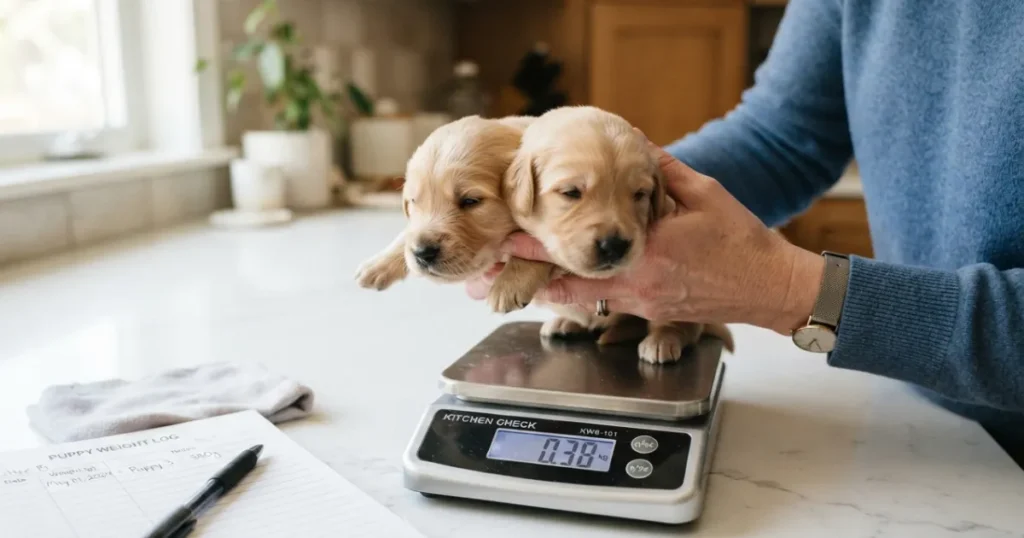
A baby golden retriever is about the size of your palm, weighing roughly 14 to 16 ounces. That is close to one percent of the mother’s weight. Birth weight usually doubles within the first week, so daily gains come fast. A small digital kitchen scale that reads in grams or ounces is the most useful tool you can buy for a new litter.
A small dip in the first 24 hours is common and not a worry on its own. After that, every puppy should gain steadily each day.
Litter size shifts these numbers. A large litter of ten or more often produces smaller individuals, while a small litter tends to have chunkier puppies. A runt, the smallest of the litter, can still thrive with extra attention, so birth size alone rarely predicts the adult dog. What matters is that every golden retriever newborn keeps gaining.
Coat, eyes, and features
A newborn’s coat is short, soft, and often paler than the adult color it will become. The eyes and ears are sealed shut, so the puppy cannot see or hear yet.
A baby golden retriever also cannot regulate its own body temperature or eliminate waste without help from the mother. That total dependence is why warmth and nursing matter so much. To see how this stage fits the breed overall, browse our wider Golden Retriever breed library and more across our Golden Retriever Insights.
How to spot a healthy newborn
The umbilical stump dries and drops off within a few days, and a content newborn stays quiet and warm against its littermates. A healthy golden retriever newborn nurses eagerly, feels warm to the touch, and gains weight daily. Persistent crying, a cold body, or pale gums are the signs that something is wrong.

Newborn golden retriever puppy week by week
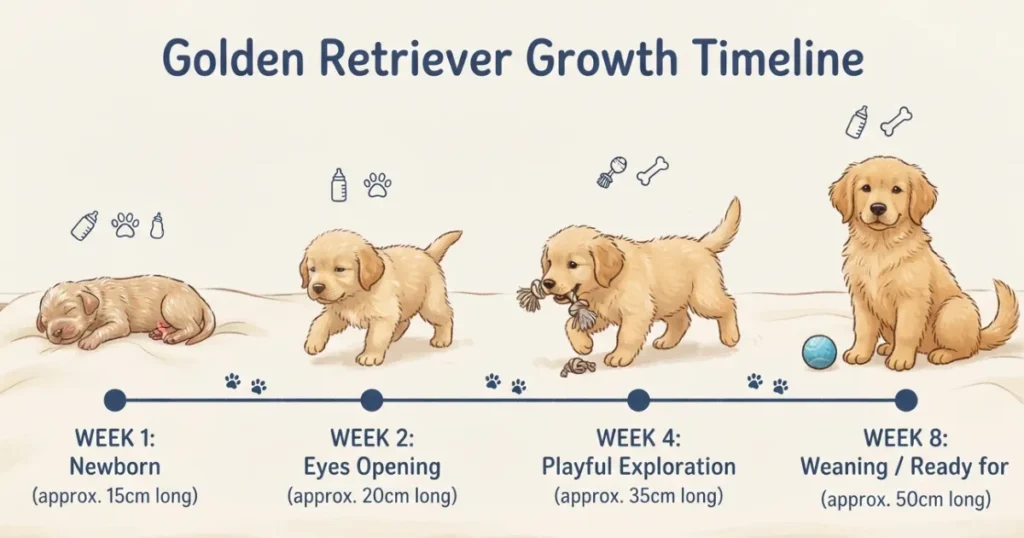
A newborn golden retriever puppy moves through clear, predictable stages in the first eight weeks, and each week brings a visible leap. The table gives the quick view, and the sections below add the detail behind each line.
| Week | What is happening | Weight guide |
| Week 1 | Sleeps ~90% of the time, nurses often, birth weight doubles | ~1 to 1.8 lb |
| Week 2 | Eyes open (10 to 14 days), first deworming, still crawling | ~1.8 to 2.8 lb |
| Week 3 | Ears working, first teeth, standing and wobbling | ~2.8 to 4 lb |
| Week 4 | Walking, weaning begins, and litter play starts | ~4 to 6 lb |
| Weeks 5 to 6 | Solid food, active play, first vaccinations near week 6 | ~6 to 9 lb |
| Weeks 7 to 8 | Fully weaned, socializing, ready for new homes | ~9 to 12 lb |
Week 1 to 2: the neonatal stage
In the neonatal stage, a newborn golden retriever puppy does two things, sleep and nurse, for about 90 percent of the day, and all of its energy goes into growing. Eyes open gradually between 10 and 14 days, starting as slits, and should never be forced open. Hearing follows soon after, so the once-silent box slowly fills with squeaks and yips.
Ears begin working near two weeks, and the first deworming usually happens around this point under your vet’s guidance. For the wider stage map, see the full puppy growth stages guide.
Week 3 to 4: the transitional stage
Now the puppy wakes up to the world. Baby teeth arrive, the puppy shifts from crawling to standing and walking, and weaning onto soft food begins around week four. Tails start to wag, and the litter begins to play, which is the first real practice at being a dog.
This is also when gentle daily handling should start, since early, positive touch shapes temperament. The behavioral side of this window is covered in each puppy’s developmental phase.
Week 5 to 8: socialization begins
Play, exploration, and litter squabbles teach vital lessons now, including bite inhibition and how to read other dogs. Puppies move fully onto solid food, and the first vaccinations usually begin near six to eight weeks. Every gentle new sight, sound, and person in this window pays off later in a calmer adult dog.
Most Goldens are ready to leave for new homes at eight weeks, weighing close to 10 pounds. For the first days in a new home, read the 8 weeks old stage.
Feeding a golden retriever newborn
For the first weeks, the mother’s milk supplies everything a golden retriever newborn needs. Your job is mostly to watch, weigh, and step in only when something is off.
When the mother feeds the litter
A healthy dam nurses the litter every one to two hours and keeps the puppies clean and warm. Let her set the rhythm. Puppies that feed well settle quickly and sleep, while one that roots around and cries may be missing its turn.
When to supplement
If your golden retriever newborn is not gaining, or the litter is too large for the milk supply, your vet may suggest supplemental feeding. This uses a proper puppy milk replacer, never cow’s milk, with the amount matched to the puppy by your vet. A newborn golden retriever puppy that cannot latch at all needs same-day veterinary help.
Weaning onto solid food
Weaning starts around week four with a soft, moistened gruel. Most puppies are fully onto solid food by seven to eight weeks, right as they get ready for new homes. Offer the gruel in a shallow dish and expect a messy, enthusiastic start.
How to care for a golden retriever newborn
Newborn care comes down to four daily jobs. Get these right and most litters do well.
Keep the litter warm
Newborns cannot make their own heat, and a chilled puppy quickly stops feeding. Keep the whelping area near 85 to 90°F in the first week, then ease it down toward 80°F by the second week.
Use a safe heat source the puppies can crawl away from, and never let the box get draughty or damp. A puppy that gets chilled will stop digesting its milk, so warmth here is not a comfort, it is survival.
Make sure every puppy nurses
Colostrum, the first milk, is packed with antibodies and is most valuable in the first 12 to 24 hours. Watch that each puppy latches and feeds, not just the pushiest ones. The quietest puppy in the box is often the one that needs the closest eye.
Gently guide a smaller puppy to a productive teat if the bigger ones crowd it out. If a puppy cannot nurse at all, call your vet quickly, because the right feeding plan and amount depend on the puppy.
Weigh every puppy daily
A kitchen scale is your best early-warning tool. Weigh at the same time each day and write the numbers down.
Steady daily gains mean things are on track. A flat or falling weight is the first sign of trouble and a reason to act. A golden retriever newborn should never lose weight two days running, so a stall is your cue to check warmth, nursing, and the mother’s milk before it becomes an emergency.
Handle gently from week three
Once eyes are open, short, calm handling helps socialization. Pick each puppy up briefly, then settle it back with the litter.
Keep sessions gentle and brief, and let the mother stay close so she does not feel stressed.

Caring for the mother after whelping
A thriving litter depends on a healthy, well-fed mother, so her care matters as much as the puppies’. A golden retriever newborn cannot outgrow a struggling dam.
Feeding and hydration
A nursing mother needs far more calories than usual, often a high-quality puppy food to meet the demand, plus constant access to fresh water. Ask your vet how much to increase her food as the litter grows.
Watching her health
Watch for signs of trouble such as a foul discharge, a hard or hot mammary gland, or a drop in appetite. These can signal infections that need prompt care. A calm mother who eats well is usually a good sign for the whole litter.
Warning signs and fading puppy syndrome
Signs of a healthy versus a struggling newborn
Most problems show up first as a change in feeding, warmth, or weight. The table below sorts the reassuring signs from the ones that need a call.
| Healthy newborn | Needs a vet call |
| Gains weight every day | Flat or falling weight |
| Warm and nurses eagerly | Cold, limp, or refusing to nurse |
| Sleeps quietly, rounded belly | Cries constantly or lies apart from the litter |
| Pink, moist gums | Pale or bluish gums |
When to call your vet
Fading puppy syndrome describes newborns that decline in the first weeks, and neonatal loss runs an estimated 20 to 30 percent in the first three weeks even in well-run litters. Warning signs include a cold body, weakness, constant crying, and no weight gain.
This is an emergency, not a wait-and-see. Warm the puppy slowly against your skin, keep trying to feed, and call your vet right away. Fast, calm action in the first hour is often what makes the difference for a fading newborn.
First vet checks for the litter
Even a healthy golden retriever newborn benefits from early veterinary oversight in the first weeks.
Deworming and first vaccines
A first deworming usually happens around two weeks under your vet’s guidance, since puppies can pick up parasites from the mother. First vaccinations typically begin near six to eight weeks, on a schedule your vet sets for your region.
The immunity gap
Between about four and twelve weeks, puppies pass through an immunity gap. The antibodies from colostrum are fading, but the puppy’s own defenses are not fully built. This is why puppies should not visit public places or meet unknown dogs before their vaccine course is underway. Safe socialization at home, with familiar people and clean surfaces, is fine and encouraged.

From newborn to eight weeks and beyond
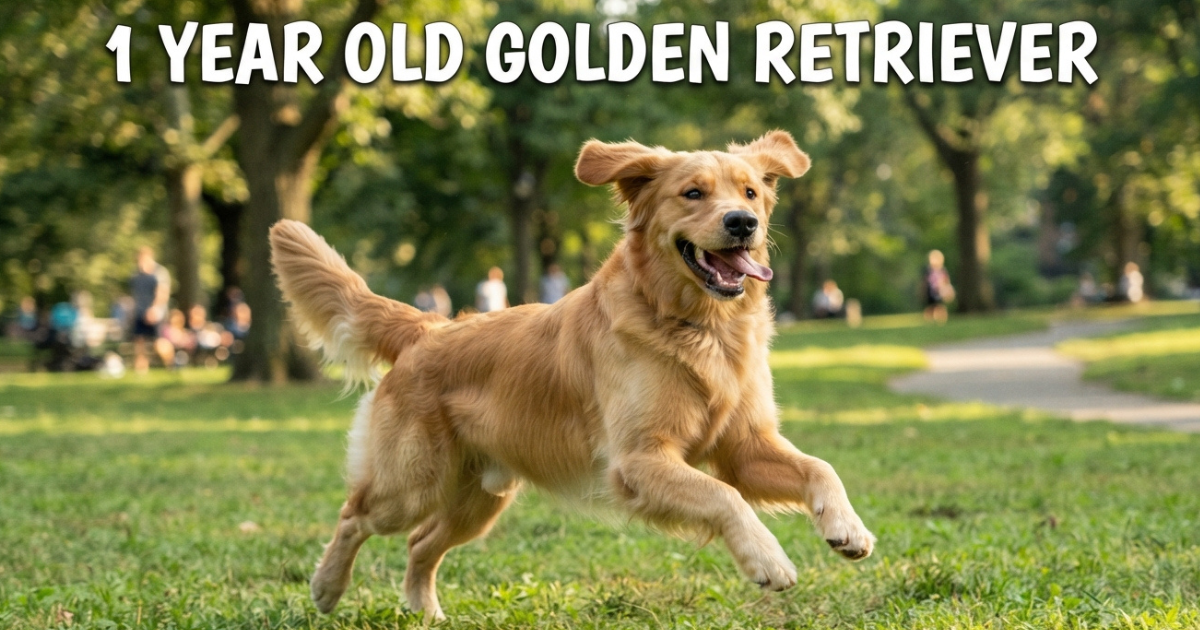
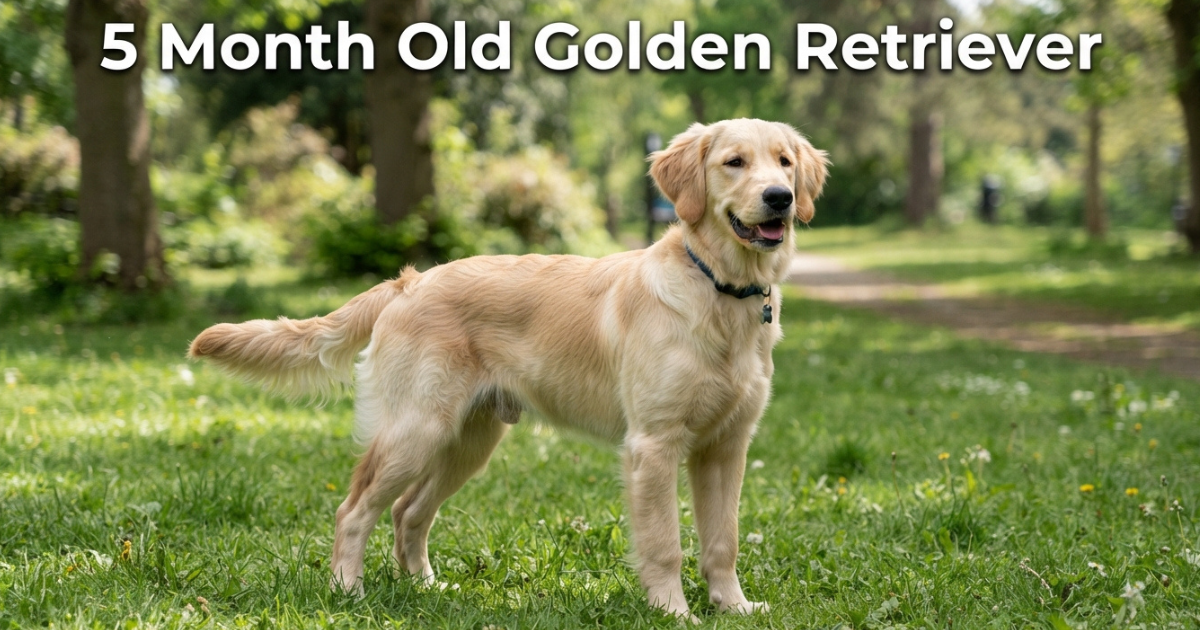
Once the newborn stage ends, growth speeds up. Your puppy will move through your Golden at 3 months and the six month milestone, then toward the one year old stage.
Each stage has its own page, but they all start here, with a well-fed, well-warmed, steadily growing newborn. The habits you build now, daily weighing, close observation, and quick action when something looks off, are the same ones that will serve you through every stage that follows.
Expert Insight
The single most useful habit for any new litter is the daily weigh-in. I have seen owners catch a fading puppy a full day early simply because the scale flagged a stall before anything looked wrong to the eye.
Newborn essentials.
Keep the litter warm, about 85 to 90°F in week one. Make sure every puppy nurses within the first hours for colostrum. Weigh each one daily, because a steady gain is the best sign of health. Call your vet fast if a puppy is cold, limp, crying nonstop, or not gaining.
How much does a golden retriever newborn weigh?
A golden retriever newborn weighs about 14 to 16 ounces at birth, roughly one percent of the mother’s weight. That figure usually doubles within the first week, so healthy daily weight gain is the number to watch.
When do newborn golden retriever puppies open their eyes?
A newborn golden retriever puppy opens its eyes gradually between 10 and 14 days, starting as slits. Never force them open, since that can cause damage. Vision stays blurry until around eight weeks of age.
What does a baby golden retriever look like at birth?
A baby golden retriever is palm-sized, with a soft coat that is often paler than its adult color. The eyes and ears are sealed shut, and the puppy cannot yet see, hear, or keep itself warm.
How do I keep newborn puppies warm?
Keep the whelping area near 85 to 90°F in the first week, then lower it toward 80°F by week two. Use a heat source the puppies can crawl away from, and keep the box free of drafts.
How often should newborn puppies nurse?
Newborns nurse very frequently, roughly every one to two hours around the clock in the first days. The mother sets the schedule. Make sure quieter puppies get their turn and are not pushed off the milk.
When can a golden retriever newborn leave its mother?
A golden retriever newborn should stay with its mother and litter until about eight weeks. That time teaches bite inhibition and social skills, and it lets the puppy finish weaning and start its first vaccinations.
How do I know if a newborn puppy is healthy?
A healthy newborn gains weight daily, feels warm, nurses eagerly, and sleeps quietly with a rounded belly. Pink, moist gums are a good sign. Constant crying, cold skin, or a flat weight means call your vet.
What is fading puppy syndrome?
Fading puppy syndrome is the decline and loss of newborns in the first weeks, often from chilling, low blood sugar, or infection. Signs include weakness, a cold body, and no weight gain. It needs urgent veterinary help.
When do newborn puppies start walking and eating solid food?
Puppies begin standing and walking around three to four weeks, as their legs strengthen. Weaning onto soft, moistened food usually starts near week four, and most are fully on solid food by seven to eight weeks.
Should I handle newborn puppies?
Yes, gently and briefly, once their eyes are open around week three. Short, calm handling supports healthy socialization. Keep sessions short, and let the mother stay close so she does not become stressed by the disruption.
When do newborn puppies get dewormed and vaccinated?
A first deworming usually happens around two weeks of age under your vet’s guidance. First vaccinations typically begin near six to eight weeks. Follow your own vet’s schedule, since timing can vary by litter and region.
Why is a baby golden retriever so pale at birth?
A baby golden retriever is born with a soft, light coat that darkens as it matures. Checking the color at the ear tips often hints at the richer adult shade the coat will settle into.
The bottom line
A golden retriever newborn is fragile, fast-changing, and almost entirely in the mother’s care, which is exactly why the basics matter so much. Warmth, colostrum in the first day, and a daily weigh-in do more to keep a litter healthy than anything else.
Watch the trend rather than any single moment. Steady daily gains, eager nursing, and quiet sleep are the signs of a thriving newborn. A cold, limp, or non-gaining puppy is an emergency that needs your vet, not time. Get the first eight weeks right with your golden retriever newborn, and you set the whole life that follows on a strong footing.
Are you raising your first litter or waiting on a newborn to come home? Share the stage you are at in the comments, and tell us which part of newborn care you found most surprising.