A good puppy schedule for an 8 week old runs on one simple loop all day: wake, potty, eat or play, potty again, then nap in the crate. Expect three to four meals, a potty trip every one to two hours, and 18 to 20 hours of sleep. Consistency is what makes it work.
The first days with a new puppy can feel like pure chaos. A simple schedule is what turns that chaos into a calm, predictable daily rhythm.
It also does the heavy lifting for house-training and settled, restful sleep. This guide gives you a sample puppy schedule for an 8 week old, plus the feeding, potty, nap, and overnight timings behind it. For what to teach at each age, see the full training schedule by age.
Key Takeaways
- A puppy schedule for an 8 week old runs on one loop: wake, potty, eat or play, potty, then nap.
- Feed three to four small meals a day, and offer a potty trip every one to two hours plus after every meal, nap, and play.
- Protect 18 to 20 hours of sleep, since an overtired puppy gets nippy and wild rather than calmer.
- Use the crate as the default nap spot and for one or two calm, boring overnight potty trips.
- Keep the same times each day, because consistency is what turns a schedule into house-training and calm.
Why a puppy schedule matters
A puppy schedule is not about being rigid. It is about giving a young puppy the predictability it needs to feel safe and learn fast. Puppies, much like small children, relax when they know what happens next.
The payoff is big:
- Faster house-training. Regular meals mean regular, predictable potty times.
- Better sleep. Built-in naps stop the overtired meltdowns.
- A calmer puppy. Knowing what comes next lowers stress and biting.
- Less chaos for you. The day stops being a guessing game.
- Easier bonding. A predictable routine helps a nervous new puppy trust you faster.
A puppy schedule is really just a kind, consistent rhythm your puppy can rely on.
You can explore more in our Golden Retriever breed articles, part of our Golden Retriever Insight site.
What an 8 week old puppy needs each day
Before the timetable, here is what a puppy schedule has to fit in each day.
Sleep: 18 to 20 hours
Puppies this age sleep a lot, in short bursts after roughly 45 to 60 minutes awake. Watch for the tired signs, since an overtired puppy turns wild and bitey rather than winding down. When in doubt, offer a nap, not more play.
The signs of a tired puppy include frantic zoomies, extra biting, and clumsy stumbling. Build a nap into the schedule after each awake window, before the meltdown arrives. Most puppies manage only 45 to 60 minutes awake before they need to rest again.
Food: three to four meals
Feed three to four small, evenly spaced meals a day at fixed times. Regular meals are the engine of the whole schedule, because a puppy usually needs to potty within 10 to 20 minutes of eating. Pick up the bowl between meals rather than leaving food down, which keeps both appetite and potty timing predictable.
Potty: every one to two hours
Take your puppy out every one to two hours while awake, and always after these triggers:
- On waking from any nap
- Within 15 minutes of every meal or drink
- After play, training, or excitement
- The moment you see circling or sniffing
Expect 10 to 15 trips a day at first. It drops fast as bladder control grows.
Reward every success outside the second it happens, and never punish an accident inside. Clean it up calmly and watch more closely for the next signal.
Play, training, and socialization
Keep play and training in short, five-minute bursts between naps. Safe socialization matters now too, covered in how puppy socialization works, and you can read about the stage itself in the 8 week old milestone. Keep it safe before vaccinations are complete: your own yard, carried outings, and calm visits with healthy, vaccinated dogs. Avoid dog parks and busy pavements until your vet gives the all clear.
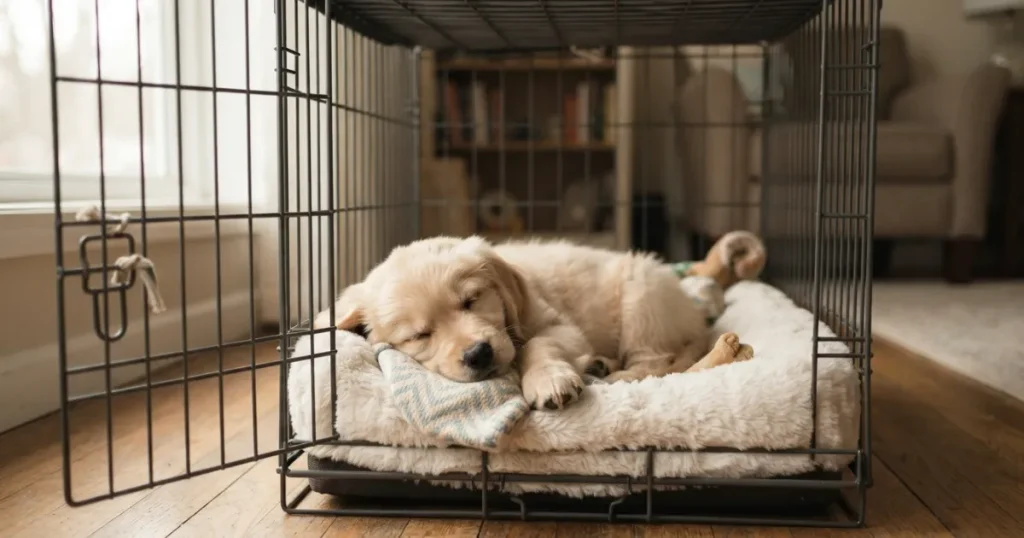
A sample 8 week old puppy schedule
Here is a realistic 8 week old puppy schedule for a full day. Treat the times as a frame, since the pattern matters far more than the clock. Shift every slot to suit your household, and the puppy schedule still works.
| Time | Activity |
| 6:30 am | Wake up straight outside to potty. |
| 6:45 am | Breakfast, then potty again. |
| 7:15 am | Short play and a little training. |
| 7:45 am | Nap in the crate. |
| 9:30 am | Wake, potty, play, potty. |
| 10:15 am | Nap. |
| 12:00 pm | Wake, potty, lunch, potty. |
| 12:45 pm | Calm play and gentle socialization. |
| 1:30 pm | Nap. |
| 3:30 pm | Wake, potty, play, and training. |
| 4:15 pm | Nap. |
| 5:30 pm | Wake, potty, dinner, potty. |
| 7:30 pm | Nap, then a calm evening. |
| 10:30 pm | Last potty, into the crate for the night. |
| ~2:30 am | One quiet overnight potty trip. |
Morning and midday
Notice the rhythm. Every wake starts with a potty trip within ten minutes, and every meal is followed by another. Sleep brackets the whole loop. Once you internalize this puppy schedule loop, you stop guessing, and the accidents nearly vanish.
Evening and overnight
Wind the evening down with calm activity, not wild play. A chew or a gentle cuddle beats a rowdy game right before bed. Keep the overnight trip boring, with no lights, no talk, and no play, so your puppy learns that night is for sleeping.
The overnight potty trip
Expect one or two wake-ups in the first weeks. Carry your puppy out, let it go, and settle it straight back down. Set an alarm at first rather than waiting for crying, and the wake-ups shrink on their own. Most puppies drop the overnight trip within a few weeks as their bladder grows.
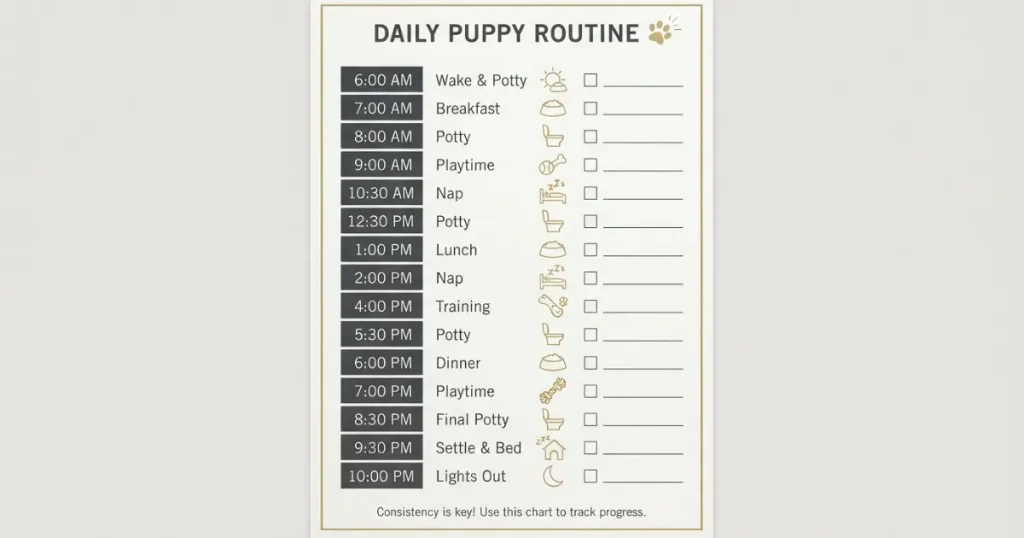
Building your puppy schedule
You can adjust the sample to your life. These three sub-schedules are the pieces that matter most. Get these three right, and the rest of the puppy schedule falls into place.
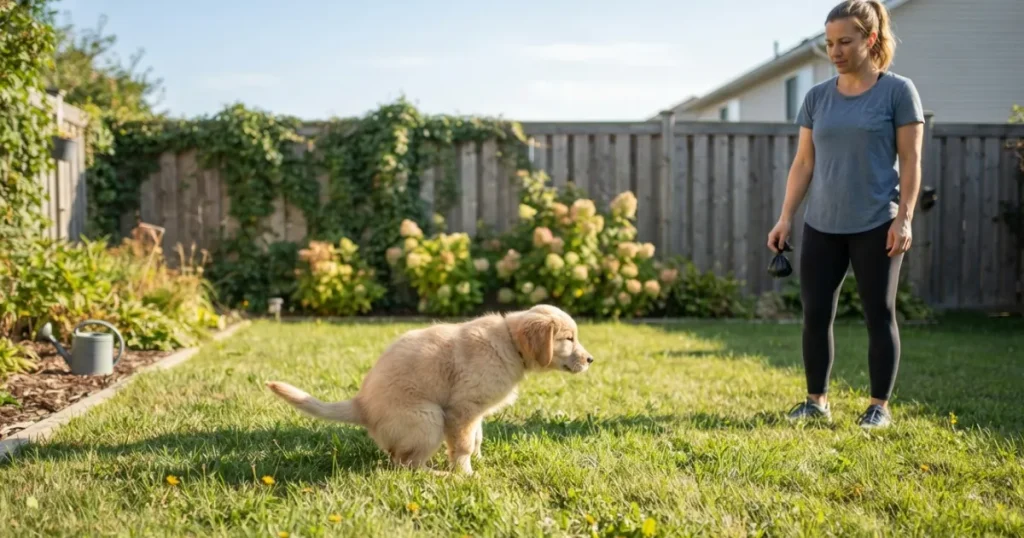
The potty schedule
- Base rule: out every one to two hours while awake.
- Always out after waking, eating, drinking, and playing.
- Overnight, a puppy can hold roughly its age in months plus one hour.
- Watch for the pre-potty tell: sudden sniffing, circling, or wandering off.
- Head to the same spot each time, since the scent cue speeds up learning.
The feeding schedule
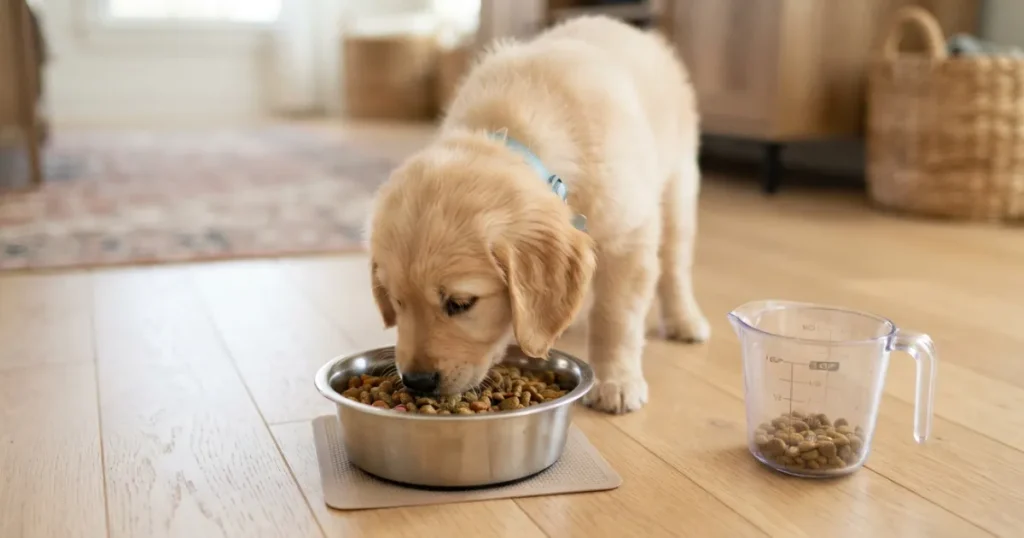
- Three to four measured meals at the same times daily.
- Pick up the bowl between meals rather than free-feeding.
- Fresh water available, lifted an hour or so before bed.
- Use part of a meal as training rewards, folding learning into the puppy schedule.
The nap and crate schedule
- Use the crate as the default nap spot, day and night.
- Keep the crate calm and positive, never a place for punishment.
- Aim for a nap after every 45 to 60 minutes awake.
- A safe chew helps a puppy settle, so keep safe puppy chew toys nearby.
The bedtime wind-down
End the day with calm, not chaos. A last potty trip, a quiet cuddle, and lights out at a consistent time tell your puppy the day is done. A predictable wind-down is the part of the puppy schedule that protects everyone’s sleep.
Your puppy schedule 8 weeks in and beyond
A puppy schedule 8 weeks in is only the start. As your puppy grows, the routine loosens on its own.
Expect these shifts:
- Fewer meals. Four drops to three around three to four months, seen at the three month old milestone.
- Longer stretches. Bladder control grows, so potty gaps widen.
- Longer awake windows. Naps consolidate and play sessions lengthen.
- Fewer overnight trips. The night stretch grows until your puppy sleeps through.
- More training. Short sessions can grow as focus improves.
For the bigger picture of how your puppy develops, see how your puppy will grow. The core loop never really changes, though. Even an adult dog thrives on a predictable puppy schedule, grown into a daily rhythm.
Common schedule mistakes
A few slip-ups trip up new owners:
- Skipping naps, which leaves a wired, bitey puppy.
- Free-feeding, which makes potty timing unpredictable.
- Missing the after-nap potty, the most common accident trigger.
- Making the night exciting, which teaches your puppy to wake for company.
- Expecting perfection, when accidents are a normal part of learning.
- Chasing the clock instead of the loop, which leads to missed potty trips.
- Punishing accidents, which teaches fear of you, not where to go.
Tips to make the schedule stick
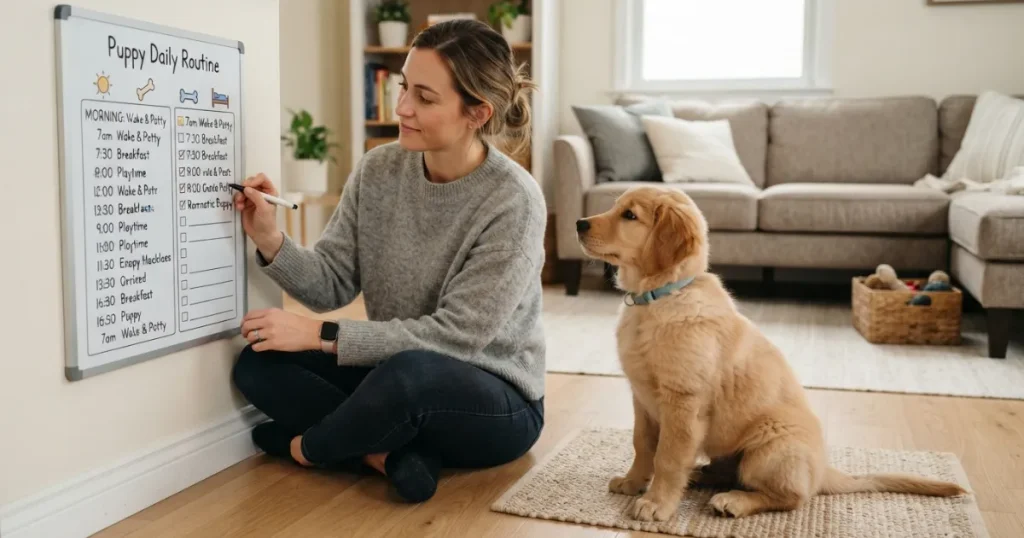
- Post it up. A printed routine on the fridge keeps everyone aligned.
- Set alarms for the first couple of weeks, day and night.
- Share the load. If you work, arrange a midday potty and meal, since an 8 week old cannot hold a full workday.
- Stay consistent. Same times, same spots, same words, every day.
- Track it. Jot potty times for a week to spot your puppy’s natural rhythm.
- Be patient. Most puppies settle into the routine within a week or two.
- Forgive off days. A missed nap or a travel day will not undo good habits.
Before this stage, your puppy lived a very different rhythm, covered in the newborn weeks before home.
Adjusting the schedule to your life
A puppy schedule has to fit your real life, not a perfect one. The loop stays the same, whoever runs it.
If you work
- Arrange a midday potty trip and meal, since an 8 week old cannot hold a full workday.
- A partner, neighbor, or walker keeps the loop intact while you are out.
- A pen-plus-crate setup with a pad zone is a stopgap, not a full-day fix.
- Keep coverage consistent, since the puppy does not mind who runs the loop.
If your days vary
- Keep the order of the loop even when the exact times shift.
- Anchor the day around fixed meal times and build the rest around them.
- Prep meals and potty gear the night before, so a busy morning never breaks the loop.
Whoever runs the puppy schedule, the pattern is what your puppy actually learns.
Expert Insight
The single most useful thing a new owner can internalize is the loop: wake, potty, eat or play, potty, nap. Owners who chase the clock get frustrated, while owners who follow the loop rarely have accidents. And when a puppy seems hyper and bitey, it is almost never a need for more exercise. It is a need for the next nap.
The daily loop.
Every cycle follows the same pattern: wake, go straight outside to potty, then eat or play, go potty again, and go back to the crate for a nap. Feed three to four meals, offer a potty trip every one to two hours, and protect 18 to 20 hours of sleep. Keep the rhythm, and the day runs itself.
What is a good puppy schedule for an 8 week old?
A good puppy schedule follows one loop all day: wake, potty, eat or play, potty again, then nap in the crate. Add three to four meals, a potty trip every one to two hours, and 18 to 20 hours of sleep.
How do I set up an 8 week old puppy schedule?
Set up an 8 week old puppy schedule around fixed meal times, then build potty trips and naps around them. Take your puppy out after every wake, meal, and play, and use the crate as the default nap spot.
How does the puppy schedule 8 weeks in change over time?
A puppy schedule 8 weeks in loosens as your puppy grows. Meals drop from four to three around three to four months, potty gaps widen with bladder control, awake windows lengthen, and training sessions can slowly grow.
How often should an 8 week old puppy potty?
Take an 8 week old puppy out every one to two hours while awake, and always after waking, eating, drinking, and playing. Expect 10 to 15 trips a day at first. The number drops quickly as bladder control develops.
How many times a day should I feed an 8 week old puppy?
Feed an 8 week old puppy three to four small meals a day at fixed times. Regular meals make potty timing predictable, since puppies usually need to go within 10 to 20 minutes of eating. Pick up the bowl between meals.
How much sleep does an 8 week old puppy need?
About 18 to 20 hours a day, in naps after every 45 to 60 minutes awake. An overtired puppy becomes nippy and wild, which owners often misread as energy. If your puppy seems frantic, the fix is usually a nap.
Should an 8 week old puppy sleep in a crate?
Yes. The crate is the ideal default nap spot and overnight bed. It supports house training and gives your puppy a calm, safe den. Keep it positive, place it near your bed at first, and never use it as punishment.
How often does an 8 week old puppy wake at night?
Expect one or two overnight potty trips in the first weeks. Keep them boring, with no lights, talk, or play. Set an alarm rather than waiting for crying, and the wake-ups fade as bladder control grows.
Why is my puppy hyper and biting on the schedule?
Almost always because it is overtired, not under-exercised. An 8 week old that is wild and mouthy usually needs its next nap. Enforce crate rest after 45 to 60 minutes awake, and the frantic biting settles.
Can I leave an 8 week old puppy alone during the day?
Only briefly. An 8 week old cannot hold its bladder for a full workday, so arrange a midday potty break and meal if you work. A short 30 to 60 minute stint in a crate or pen is fine.
Does the puppy schedule need to follow exact times?
No. The times are a frame, and the loop matters more than the clock. Keep the order: wake, potty, eat or play, potty, nap, and shift the exact times to fit your day. Consistency of pattern beats precision.
When can my puppy go longer between potty breaks?
As bladder control grows, roughly its age in months plus an hour overnight. Daytime gaps stretch from one to two hours toward three or four over the coming months, so the schedule naturally relaxes as your puppy matures.
The bottom line
A puppy schedule turns the overwhelming first weeks into a simple, repeatable loop: wake, potty, eat or play, potty, then nap. Build the day around three to four fixed meals, frequent potty trips, and plenty of protected sleep.
Keep the pattern consistent, use the crate for naps and nights, and remember that a wild puppy usually needs rest, not more play. Follow the loop rather than the clock, lean on the sample schedule as your starting frame, and house-training and calm will follow far faster than you expect. A steady puppy schedule is the kindest, simplest gift you can give a brand new puppy, and it pays you back in a calmer home and a house-trained dog.
What does your puppy’s daily schedule look like, and which part was hardest to get into a rhythm? Share your routine and best tips in the comments to help other new owners.