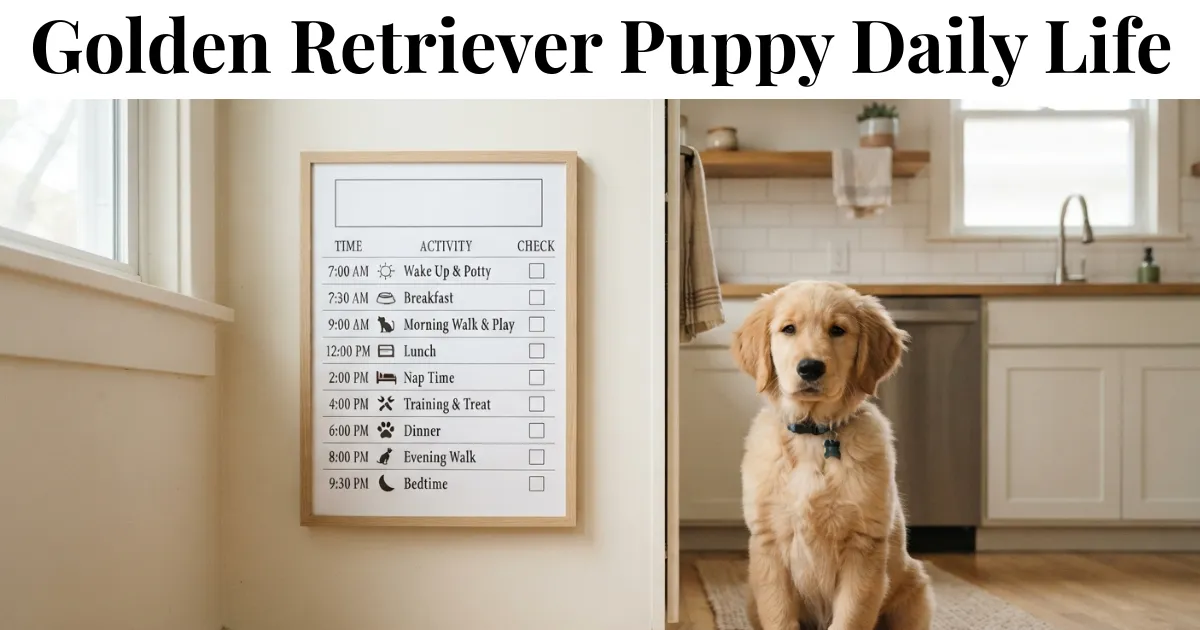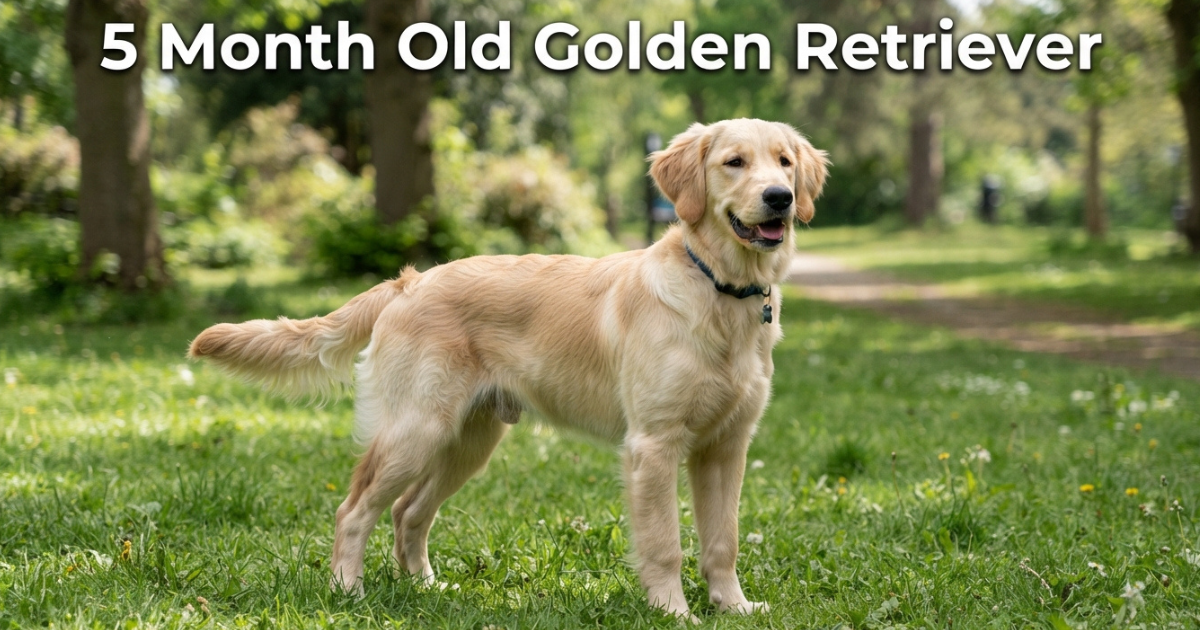
A golden retriever puppy training schedule starts the day your puppy comes home, around 8 weeks, and builds by age. Teach name, potty, and crate first, then socialization and basic cues before 16 weeks, then manners and impulse control by 6 months, then proofing through adolescence. Keep sessions short, positive, and consistent.
Training a puppy is not one big project. It is really a series of small, age-appropriate steps done in the right order.
Get the order right, and the whole first year feels manageable. This guide lays out a puppy training schedule by age, what to teach at each stage, and how to make it stick. For how it maps to your puppy’s development, see our growth and life stage guide.
Key Takeaways
- A puppy training schedule works best by age, starting the day your puppy comes home at about 8 weeks.
- The window before 16 weeks is the most important, so prioritize socialization and gentle basics then.
- Teach one thing at a time with short, positive, reward-based sessions, a few minutes several times a day.
- Expect a teenage phase around 6 months, when you prove cues under distraction rather than teaching new ones.
- Consistency across the household matters more than perfection, and training continues past the first birthday.
How to use this puppy training schedule
Think of this puppy training schedule as a map, not a deadline. Every puppy moves at its own pace, so track progress rather than the calendar. Some puppies race through a stage while others linger, and both are perfectly normal. Used this way, a puppy training schedule removes the guesswork, since you always know what to work on next and what can wait.
Goldens make it easier than most. They are smart, food-motivated, and eager to please, which is exactly what reward-based training runs on. That is why a puppy training schedule tends to move quickly with this breed, as long as you stay consistent.
You can browse the wider breed content in our breed content library, part of our Golden Retriever website.
Training principles that never change
- Start early. You can begin the day your puppy comes home, around 8 weeks.
- Reward what you like. Positive reinforcement builds faster, happier learning than corrections.
- Keep it short. A few minutes, several times a day, beats one long session.
- One thing at a time. Teach a single cue until it is solid before adding the next.
- End on a win. Stop while your puppy is still keen, always on a success.
- Make it fun. A puppy that enjoys training learns faster and offers behavior willingly.
The puppy training schedule by age
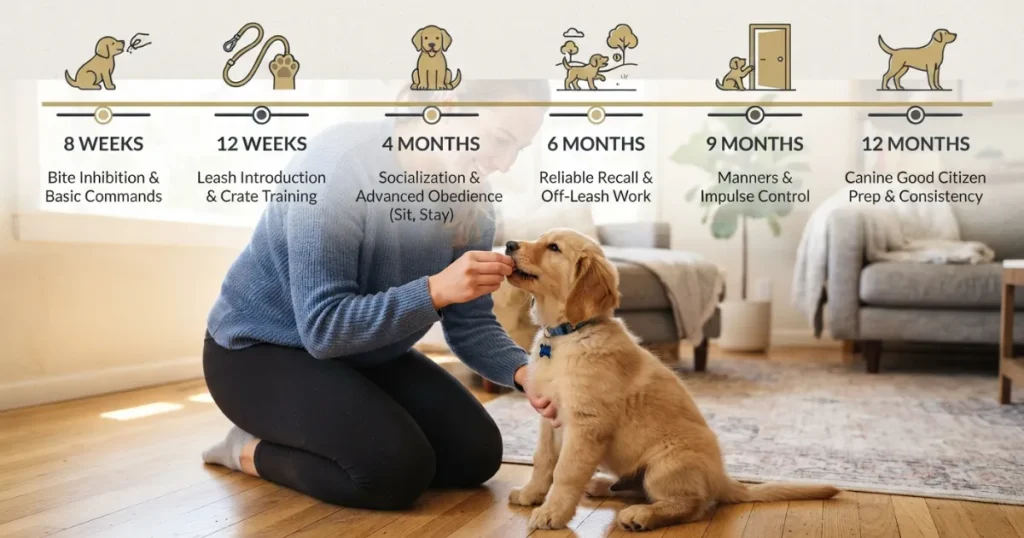
Here is the puppy training schedule by age, stage by stage. Each builds on the one before, so do not rush ahead. Every stage of the puppy training schedule lays the foundation for the next.
| Age | Training focus |
| 8 to 10 weeks | Name, potty, crate, handling, trust |
| 10 to 16 weeks | Socialization, sit, down, come, bite inhibition |
| 4 to 6 months | Loose leash, impulse control, proofing basics |
| 6 to 12 months | Proofing cues under distraction |
| 12 months and up | Reliability and maintenance |
8 to 10 weeks: foundation and trust
The first weeks are about trust and routine, not drills. Focus on:
- Name recognition. Say the name, and reward the look.
- Potty routine. Frequent trips out, rewarded every success.
- Crate comfort. A positive, calm den, never a punishment.
- Gentle handling. Touch ears, paws, and mouth so the vet is easy later.
- Short and sweet. Sessions of a minute or two are plenty for a new puppy.
A basic sit is a nice bonus, but trust comes first. Bonding now makes every later lesson easier. For the full day-by-day plan, see our detailed 8 week schedule, and for the stage itself, your new 8 week old puppy.
Mind the first fear period
Around 8 to 11 weeks, puppies hit a first fear period, so keep every experience gentle and positive. A scare now can stick, as explained in puppy fear periods and socialization.
10 to 16 weeks: socialization and basic cues
This is the most important stretch of the whole schedule. The socialization window closes around 16 weeks, so exposure comes first.
- Socialize hard, safely. New people, sounds, and surfaces kept calm and positive.
- Teach the basics. Sit, down, and come indoors with tiny rewards.
- Build bite inhibition. Redirect nipping to a toy every time.
- Introduce the leash. Short, happy sessions in the house first.
Because vaccinations are not complete, socialize creatively by carrying your puppy and inviting healthy dogs over. This is the busiest part of any puppy training schedule, so pack in safe, positive experiences.
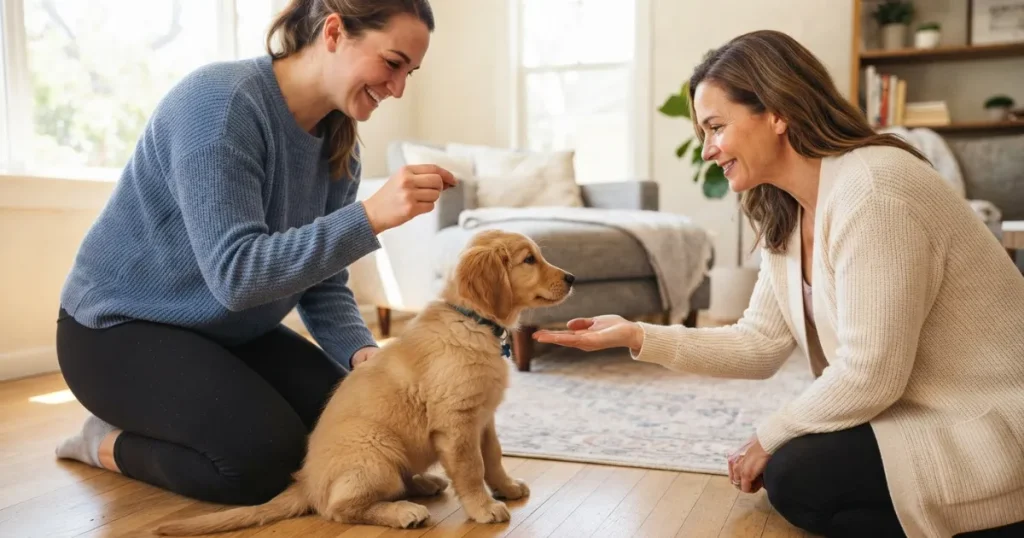
4 to 6 months: manners and impulse control
Now you polish the basics and add self-control. Teething also peaks, so redirection matters.
- Loose-leash walking. Reward walking near you; stop when the lead tightens.
- Impulse control. Add leave it and drop it.
- Proof the basics. Practice sit and down in slightly busier settings.
- Redirect chewing. Keep good chews handy, covered in the right puppy toys.
- Keep socializing. Exposure does not stop at 16 weeks; it just gets easier to manage.
6 to 12 months: adolescence and proofing
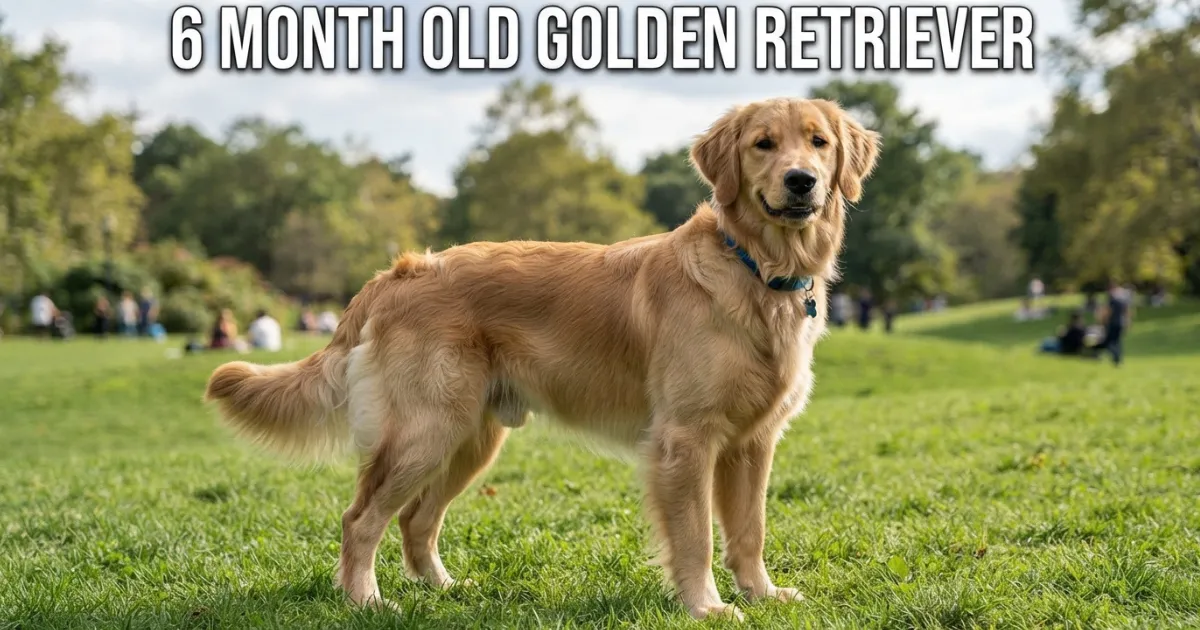
Welcome to the teenage phase. Around 6 months, many puppies test boundaries and develop selective hearing, seen at the adolescent stage at six months.
The job now is not new tricks. It is making known cues reliable everywhere. Most of the puppy training schedule from here is repetition in new places, not new skills.
Proof with the three Ds
Trainers build reliability with three variables:
- Distance. How far you can be and still get the behavior.
- Duration. How long your puppy holds it.
- Distraction. What is going on around them.
The golden rule is to raise only one D at a time. Push too many at once and the cue falls apart. Work each cue in easy settings first, then slowly turn up a single D. Stay consistent through the wobbles, which last toward your Golden at twelve months.
12 months and up: reliability and maintenance
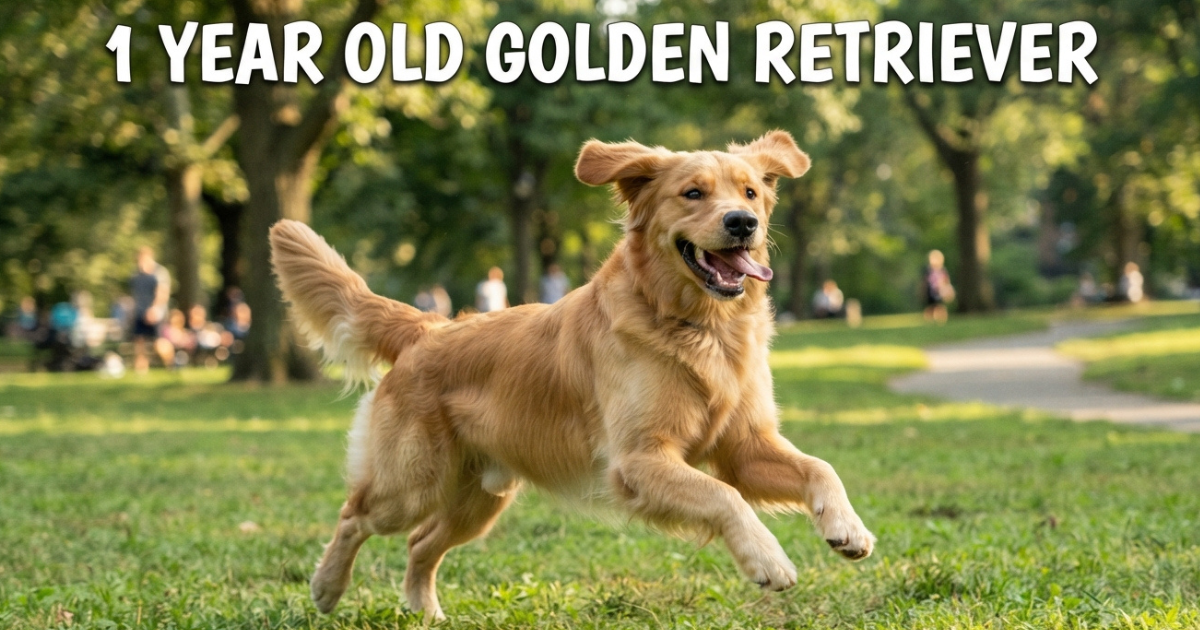
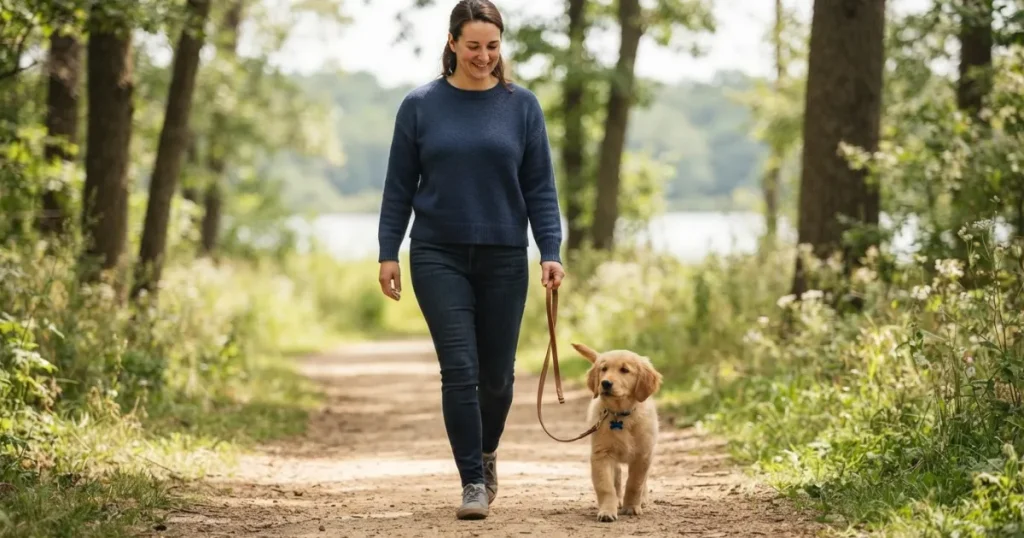
Training does not stop at a year. Keep proofing cues, add advanced skills, and practice little and often.
Reliable off-leash behavior can take 12 to 18 months, so patience pays. A well-trained adult is simply a puppy whose owner kept going. Keep a short training habit for life, and your dog stays sharp and engaged.
Puppy obedience training basics
Whatever the age, puppy obedience training rests on a short core set of cues:
- Sit and down. The everyday manners cues.
- Stay and place. Calm and settle on cue.
- Come. The most important cue you will ever teach.
- Leave it and drop it. Safety cues that prevent trouble.
- Loose-leash walking. Pleasant walks for both of you.
Master this short list, and most of the puppy obedience training is done. Everything else builds on it.
The simple method
Most cues follow the same four steps:
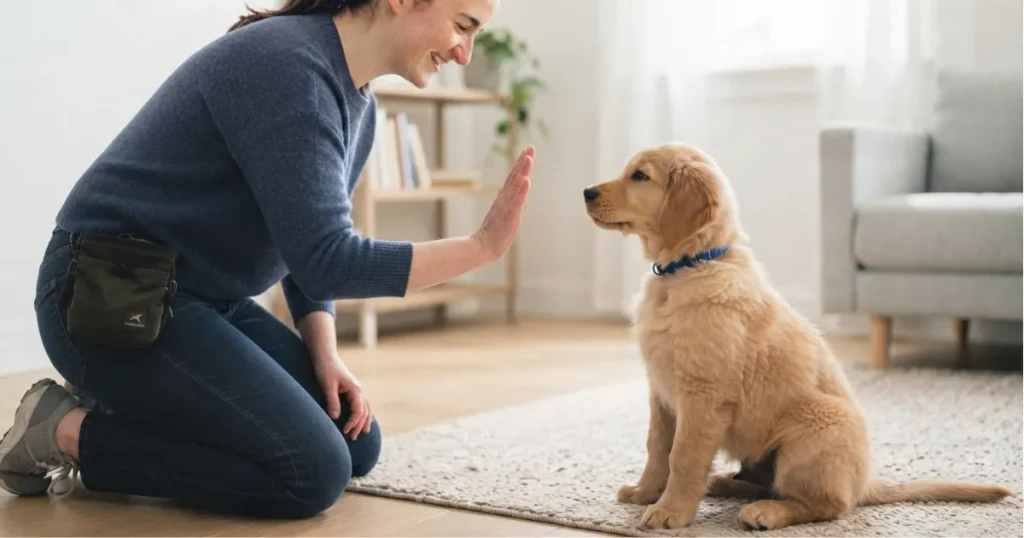
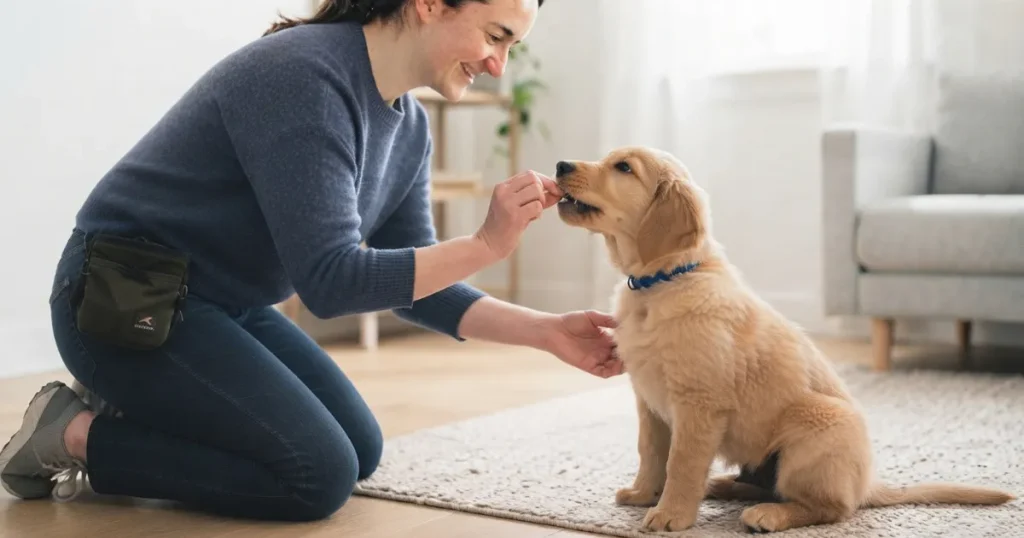
- Lure the behavior with a treat.
- Mark the moment it happens with a word or clicker.
- Reward immediately.
- Release with a cue that says the job is done.
Repeat in tiny sessions until the cue is solid, then add difficulty a little at a time.
Training methods that work
Positive reinforcement
Reward-based training is faster, kinder, and sticks better than punishment. It also protects the bond a Golden thrives on, and it keeps your puppy eager to try.
Short, frequent sessions
Young puppies focus for only a few minutes, so aim for five to ten minutes at a time, several times a day. Mealtimes are a perfect training slot, since your puppy is already hungry and paying attention.
Consistency across the household
Everyone must use the same cue words and rules. A puppy cannot learn “off” from one person and “down” from another for the same behavior. Agree on the words as a family before you start.
Common puppy training mistakes
A few habits slow progress. Avoid these:
- Skipping socialization before 16 weeks, the one window you cannot redo.
- Sessions that run too long, which tire a puppy and sour training.
- Inconsistent cues and rules between family members.
- Punishing accidents, which teaches fear, not learning.
- Comparing your puppy to others, when every dog learns at its own speed.
- Quitting during adolescence, exactly when consistency matters most.
- Rushing the schedule, pushing advanced skills before the basics are solid.
Where to go from here
This pillar is your map, and the guides linked above go deeper on each piece:
- The day-by-day routine lives in the 8 week schedule guide.
- The behavior and fear periods behind the schedule sit in the developmental-phases guide.
- The chew and enrichment toys that support training are in the puppy toys guide.
What to do if you fall behind
Life happens, and a puppy training schedule is a guide, not a test. If you fall behind, do not panic.
- Pick up where you are, not where the calendar says you should be.
- Prioritize socialization if your puppy is still under 16 weeks.
- Go back a step if a cue has fallen apart, and rebuild it.
- Keep it positive, so catching up never feels like pressure.
- Ask for help from a certified trainer if a problem behavior sticks around.
A slightly behind but happy puppy beats a rushed, stressed one every time. The puppy training schedule is there to guide you, not to judge you.
Expert Insight
The single biggest predictor of a well-trained adult is not talent; it is whether the owner socialized hard before 16 weeks and then stayed consistent through adolescence. Most owners do great early, then ease off at 6 months just as the testing starts. Keep the sessions short and the rules steady, and the teenage phase passes without drama.
The schedule at a glance.
Start at 8 weeks with name, potty, and crate. Add socialization and sit, down, and come by 16 weeks. Build loose-leash walking and impulse control by 6 months. Then proof every cue through adolescence. Keep each session short, positive, and consistent, and train a little every day.
When should I start a puppy training schedule?
Start a puppy training schedule the day your puppy comes home, usually around 8 weeks. Begin with name, potty, crate, and gentle handling. Early training is about trust and routine, not formal drills or long sessions.
What is the best puppy training schedule by age?
The best puppy training schedule by age starts with foundations at 8 to 10 weeks, socialization and basic cues by 16 weeks, manners and impulse control by 6 months, and proofing through adolescence. Track your puppy’s pace over the calendar.
What should I teach an 8 week old puppy first?
At 8 weeks, focus on name recognition, a potty routine, positive crate time, and gentle handling of ears, paws, and mouth. A basic sit is a bonus, but trust and socialization matter far more than commands at this age.
Why is the window before 16 weeks so important?
The critical socialization window closes around 16 weeks. What a puppy meets calmly before then shapes its adult confidence. It is the one part of the puppy training schedule you cannot redo later, so prioritize safe socialization now.
What does puppy obedience training start with?
Puppy obedience training starts with a short core set: sit, down, come, and leave it, taught with lures and rewards. Come is the most important. Keep sessions short and upbeat, and proof each cue before adding distractions.
How long should puppy training sessions be?
Keep them short, about five to ten minutes for a young puppy, several times a day. Attention spans are tiny early on. Training at mealtimes works well and always ends in a success while your puppy is still keen.
What are the three Ds in puppy training?
The three Ds are distance, duration, and distraction. They are how you make a known cue reliable. The golden rule is to increase only one D at a time, since pushing several at once usually makes the behavior fall apart.
Why does my puppy ignore commands at 6 months?
Around 6 months, puppies enter a teenage phase and test boundaries with selective hearing. It is normal. Do not teach new tricks, prove the ones they know, keep sessions short and rewarding, and stay consistent until it passes.
Can I train my puppy before vaccinations are complete?
Yes. You can train and socialize safely indoors and by carrying your puppy in busier places or inviting healthy, vaccinated dogs over. Avoid dog parks and unknown dogs until your vet confirms the vaccine course is complete.
What are the most important cues to teach a puppy?
Come is the most important for safety, followed by leave it and drop it. Sit, down, stay, and loose-leash walking cover daily manners. Master this short list well before moving on to advanced or trick training.
Is positive reinforcement better than punishment?
Yes. Reward-based training is faster, kinder, and more reliable, and it protects the trusting bond a golden thrives on. Punishment tends to create fear and confusion, which slows learning and can worsen behavior over time.
How do I keep training consistent in a busy household?
Agree on the same cue words and rules for everyone, and write them down if needed. A puppy cannot learn if one person allows the sofa and another does not, so consistency across the family is essential.
When is a puppy fully trained?
Basic obedience takes four to six months of steady work, and most puppies are house-trained by six months. Reliable off-leash behavior can take 12 to 18 months, and training is really an ongoing part of life.
Should I use treats forever in puppy training?
Treats are ideal for teaching, and then you fade them gradually to praise, play, and life rewards once a cue is solid. Keep occasional treats to keep responses sharp, especially for important cues like come.
What is the most common puppy training mistake?
The most common mistake is easing off during adolescence, just as a puppy starts testing limits. The second is skipping early socialization. Stay consistent through the teenage phase and socialize hard before 16 weeks.
The bottom line
A puppy training schedule turns an overwhelming first year into a clear sequence. Foundations and trust first, then heavy socialization and basic cues before 16 weeks, then manners and impulse control, then patient proofing through the teenage months.
The method stays the same throughout: short, positive, consistent sessions, one skill at a time. Follow the puppy training schedule at your dog’s pace, and the milestones take care of themselves.
Socialize hard early, do not quit during adolescence, and lean on the guides linked here for the day-by-day detail on each stage. Do that, and the smart, eager Golden in front of you grows into the calm, well-mannered adult you pictured. A good puppy training schedule is less about talent and more about showing up a few minutes a day.
Where is your puppy on this schedule, and which stage has been the trickiest so far? Share your wins and sticking points in the comments to help other owners.