
The main treatments for arthritis in golden retrievers are weight management, vet-prescribed pain medication such as NSAIDs, joint supplements, physical therapy including hydrotherapy, and surgery in advanced cases. Most dogs do best with several combined. Arthritis cannot be cured, but treatment can keep a Golden comfortable and mobile for years.
Treatments for arthritis in golden retrievers work best in layers, not alone. There is no single injection, tablet, or surgery that fixes this disease. What works is combining a few things that each do a different job, which vets call multimodal management.
This guide lays out every option in order, from the ones you should start with to the ones reserved for advanced cases. If you are still trying to work out whether your dog has arthritis at all, start with our guide to arthritis in golden retrievers, which covers the signs and symptoms in detail.
What Golden Retriever Arthritis Treatment Can and Cannot Do
Setting expectations properly makes every decision that follows easier.
What treatment can do:
- Control pain so your dog moves comfortably
- Slow how quickly the joint damage worsens
- Restore activity your dog had given up
- Improve quality of life for years
What treatment cannot do:
- Cure arthritis or reverse existing joint damage
- Rebuild worn cartilage
- Work as a one-time fix
Arthritis is permanent, so treatment is about management rather than repair. That sounds discouraging until you see it in practice. A well-managed arthritic Golden can walk, swim, and play happily well into its senior years. An untreated one shrinks its world a little more each month.
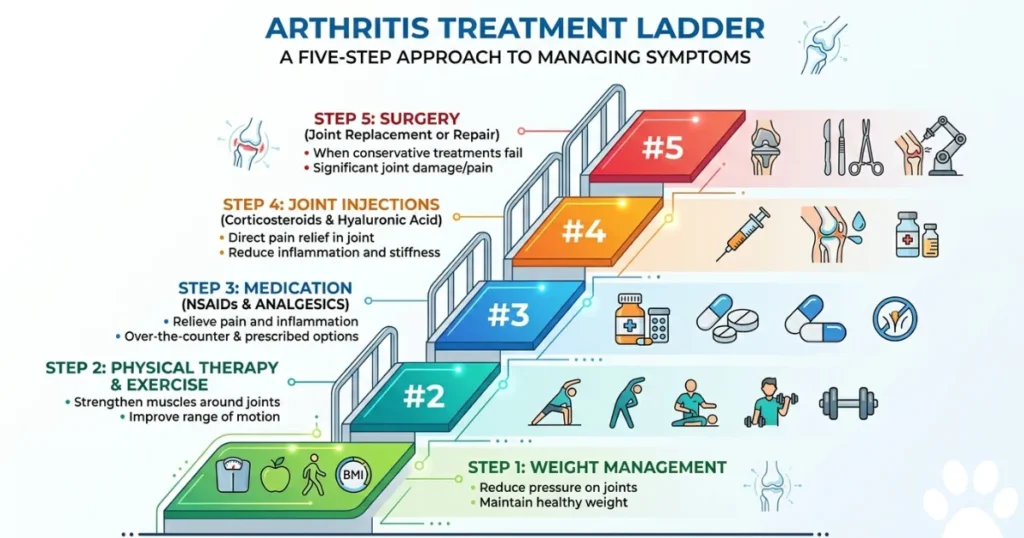
The Arthritis Treatment Ladder for Golden Retrievers
Here is the part missing from most articles. Treatments are not a menu where every option is equal. There is a sensible order, and starting at the bottom saves both money and disappointment.
| Tier | Treatment | When it is used |
| 1. Foundation | Weight management | Always first. The most effective non-drug step there is |
| 1. Foundation | Controlled, gentle exercise | Always. Maintains muscle that supports the joint |
| 2. Support | Joint supplements | Early and ongoing, alongside the foundation |
| 2. Support | Home modifications | Ramps, rugs, orthopedic bedding, warmth |
| 3. Medical | Vet-prescribed pain medication | When pain affects daily comfort or movement |
| 3. Medical | Physical therapy and hydrotherapy | To rebuild strength and mobility, often alongside medication |
| 4. Advanced | Injections and newer therapies | When standard treatment is not enough |
| 5. Last resort | Surgery | Severe cases, or dysplastic joints failing early |
The rule I give owners is simple. Do not skip a tier. I regularly meet owners considering expensive advanced therapies for a dog that is still overweight and getting no structured exercise. Fix the foundation first, because it multiplies the benefit of everything above it.
Pain Relief and Medication for Arthritis in Golden Retrievers
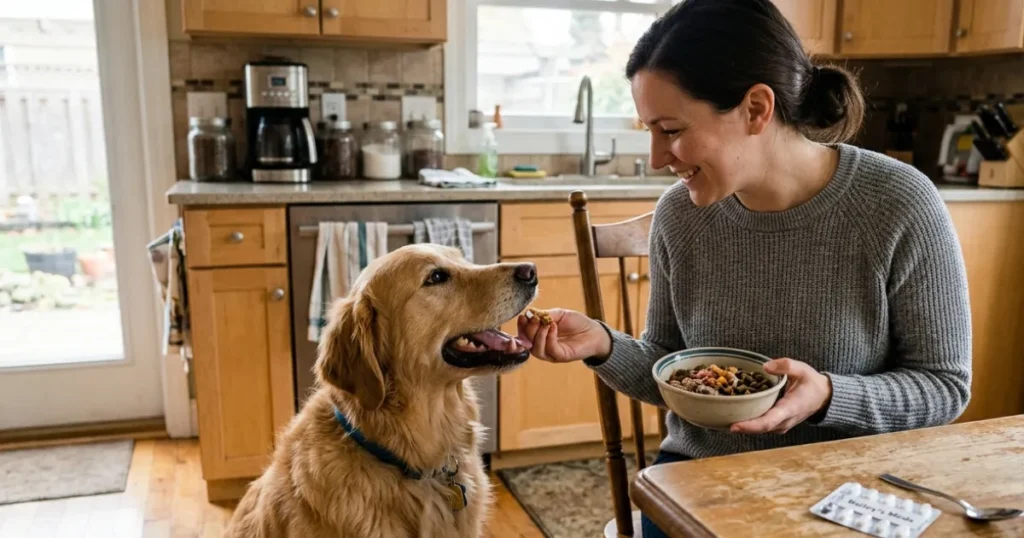
Medication is the backbone of golden retriever arthritis pain relief once discomfort becomes real. It should always be prescribed and monitored by your vet.
Pain Relief and Medication
Anti-inflammatory drugs (NSAIDs)
They are the most common prescription for canine arthritis. Veterinary NSAIDs reduce both inflammation and pain, and for many dogs they are the difference between struggling and moving normally. They require veterinary monitoring, usually including blood tests, because long-term use can affect the kidneys, liver, and stomach in some dogs.
Other prescription options
They may be added when NSAIDs alone are not enough. Vets can layer additional pain-modifying medications, and newer injectable treatments for canine osteoarthritis pain have become available in recent years. Your vet will choose based on your dog’s health, age, and other medications.
What monitoring actually involves
Owners often worry about keeping a dog on medication for years. Here is what responsible long-term use looks like in practice.
- Baseline blood work before starting, so your vet knows your dog’s normal kidney and liver values.
- Repeat testing at intervals your vet sets, often every six to twelve months.
- The lowest effective dose, adjusted over time rather than fixed forever.
- Watching for side effects at home, mainly vomiting, diarrhea, reduced appetite, or lethargy.
If you notice any of those signs, stop the medication and call your vet rather than pushing through. Most dogs tolerate these drugs well for years when monitored properly, and the alternative, leaving real pain untreated, carries its own serious cost to your dog’s quality of life.
The warning that matters most
Never give your dog human painkillers. Ibuprofen, naproxen, and paracetamol are genuinely dangerous to dogs. They can cause stomach ulcers, kidney failure, liver damage, and death, sometimes from a single dose in a sensitive animal.
I understand the impulse. Your dog is sore, the cupboard is right there, and the tablets are harmless to you. But dogs process these drugs completely differently. If your Golden needs pain relief tonight, call your vet or an emergency clinic instead.
Supplements
They sit alongside medication rather than replacing it. Ingredients like omega-3 fatty acids and glucosamine support the joint over the long term, and we cover which ones have real evidence in our guide to the best supplements for golden retriever arthritis.
Physical Therapy and At-Home Treatments That Work
Not every effective treatment comes from a pharmacy. These options build the muscle and mobility that medication alone cannot.
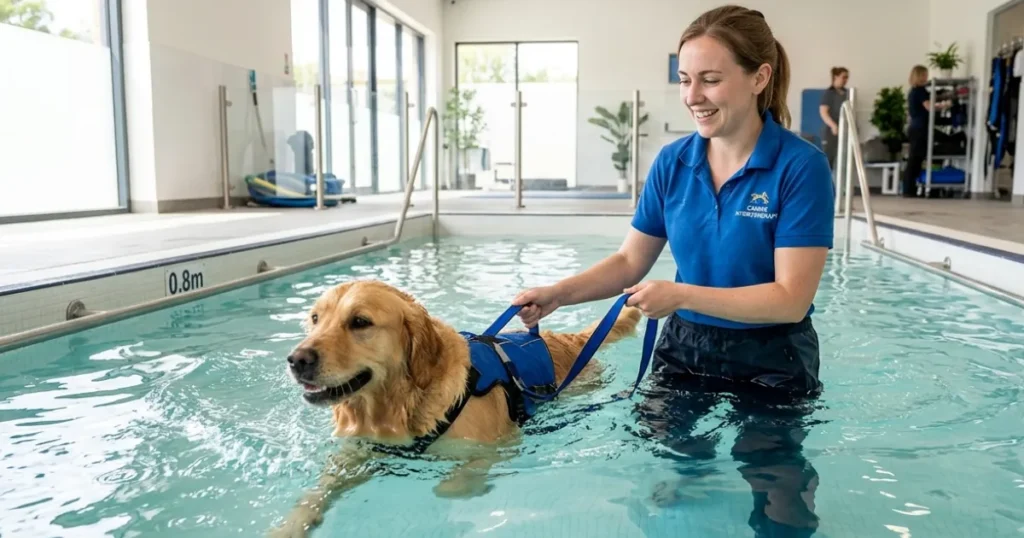
Hydrotherapy and swimming.
This is the ideal exercise for an arthritic Golden and one of the most underused treatments for arthritis in Golden Retrievers. Water supports the body weight while the dog works its muscles, so joints get strength without impact. Most Goldens love water anyway, which makes compliance easy. Sessions usually take place in a heated pool or on an underwater treadmill at a rehab facility, and the warmth itself helps stiff joints relax.
Veterinary physical rehabilitation.
Qualified canine rehab professionals use targeted exercises, massage, and equipment to rebuild strength and range of motion. For a dog that has been limping for months, this can recover function that rest alone never could.
Controlled daily exercise.
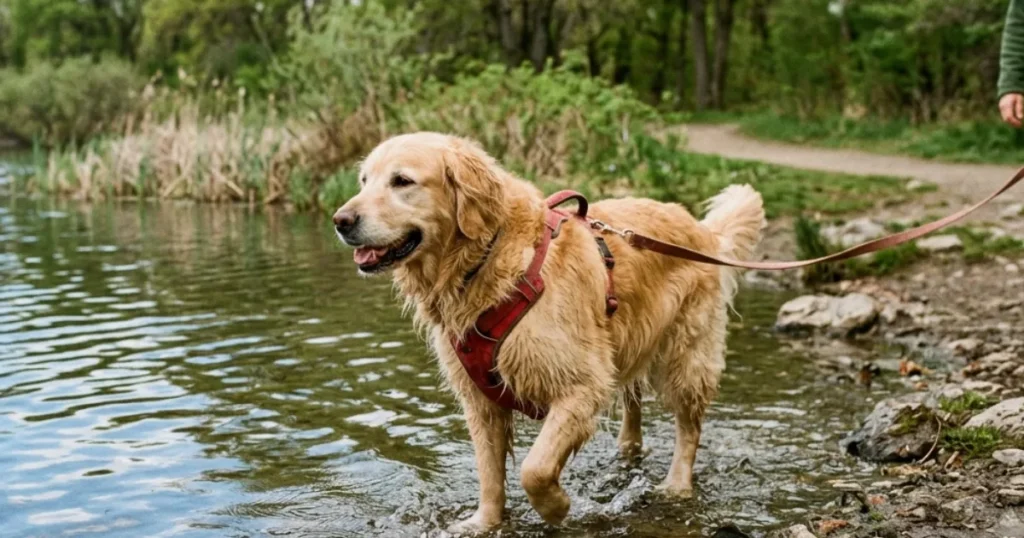
Several short walks beat one long one. The aim is steady, low-impact movement that keeps joints mobile without flaring them up. Avoid jumping, hard running, and rough play on slippery ground.
Home changes.
These are small but genuinely therapeutic:
- Rugs or runners over slippery floors, so your dog stops slipping and bracing
- A ramp for the car and furniture, removing jarring jumps
- Orthopedic bedding that cushions sore joints
- Warmth in cold weather, since stiffness worsens with cold
Weight management above all.
If your Golden is overweight, this is the most powerful treatment available to you, and it costs nothing. Every extra pound presses through a damaged joint at every step. Many dogs need noticeably less medication once they slim down.
When Surgery Becomes an Option
Surgery is a last resort, not a starting point, but it can transform life for the right dog.
When vets start discussing it
- Pain that remains poorly controlled despite full medical management
- Severe joint damage, often from hip or elbow dysplasia
- A young dog whose dysplastic joint is failing early
- Mobility loss that is seriously affecting quality of life
The main procedures include total hip replacement, which replaces the damaged joint and can restore excellent function, and femoral head ostectomy, which removes the painful joint surface and lets the body form a false joint. Which is appropriate depends on your dog’s size, age, and the joint involved.
Because dysplasia is behind so much surgical arthritis in this breed, it is worth understanding the root cause. Our guide to hip dysplasia in dogs covers it fully, and if you have a younger dog, how to prevent hip dysplasia explains how to lower the risk before damage sets in.
Surgery is a serious commitment involving cost, anesthesia, and weeks of restricted recovery. For the right dog it is worth every bit of it. For many others, good medical management works well without it.
What recovery asks of you
If you do go ahead, understand that the surgery is only half the job. Recovery typically means weeks of strictly limited activity, short lead-only toilet breaks, and a course of guided rehabilitation exercises. Skipping that rehab is one of the most common reasons a technically successful operation gives a disappointing result.
Ask your vet three questions before deciding: What function can we realistically expect afterwards? How long is the restricted period? And what rehab will my dog need? The answers make the decision far clearer than the price alone.

The Foundation First Rule for Choosing Treatments
Owners often ask which treatment to pick. This is the rule I give them, and it prevents most wasted money and disappointment.
| Ask yourself | If the answer is no | Then do this first |
| Is my dog at a lean, healthy weight? | No | Start weight loss with your vet. Nothing else works as well |
| Is my dog getting daily gentle exercise? | No | Build a routine of short, low-impact walks or swimming |
| Have I made the home easier on joints? | No | Add rugs, a ramp, and orthopedic bedding this week |
| Is my dog on a quality joint supplement? | No | Discuss starting one with your vet |
| Is my dog still in visible pain? | Yes | Ask your vet about prescription pain relief and rehab |
| Is pain still poorly controlled on full treatment? | Yes | Ask about advanced options, including referral for surgery |
Work down this list in order. Most Goldens improve substantially before reaching the bottom rows, and the dogs that do need advanced care get better results when the foundation is already in place.
Expert Insight
The most effective arthritis treatment I prescribe is not a drug. It is a weight loss plan. I have watched Goldens go from barely managing stairs to trotting into the clinic after losing a few kilos, on the same medication as before. Owners are often disappointed when I lead with weight rather than a prescription. They rarely stay disappointed.
Safety Warning
Never give your dog human painkillers.
Ibuprofen, naproxen, and paracetamol are toxic to dogs and can cause stomach ulcers, kidney failure, and death. Only give pain medication prescribed by your vet for your dog. If your Golden is in pain, call your vet rather than reaching for the medicine cabinet.
What are the best treatments for arthritis in golden retrievers?
The best results come from combining weight management, gentle exercise, joint supplements, and vet-prescribed pain relief. Physical therapy and surgery are added when needed for advanced cases.
What is the most effective golden retriever arthritis treatment?
Weight management is the most effective non-drug treatment, followed by vet-prescribed anti-inflammatory medication for pain. Most dogs do best with several treatments layered together rather than one alone.
How can I give my golden retriever arthritis pain relief safely?
Only with medication prescribed by your vet. Never give human painkillers like ibuprofen or paracetamol, which are toxic to dogs and can cause kidney failure or death.
Can arthritis in golden retrievers be cured?
No. Arthritis is permanent and progressive. Treatment controls pain, slows the damage, and restores mobility, allowing most dogs to stay comfortable and active for years.
Are long-term arthritis medications safe for dogs?
Veterinary NSAIDs are widely used long-term with monitoring. Your vet will run periodic blood tests to check kidney and liver function and adjust the plan if needed.
Does hydrotherapy help dogs with arthritis?
Yes. Water supports the dog’s weight while the muscles work, building strength without joint impact. It suits Goldens especially well, since most already love swimming.
How much exercise should an arthritic golden retriever get?
Several short, gentle walks daily rather than one long outing. Consistent low-impact movement maintains muscle and mobility. Avoid jumping, hard running, and slippery surfaces.
Is surgery worth it for a dog with arthritis?
For severe cases with poorly controlled pain, especially from hip dysplasia, surgery can dramatically restore function. It involves real cost and a long recovery, so discuss it carefully with your vet.
What can I do at home to help my golden retriever with arthritis?
Keep your dog lean, add rugs for traction, use a ramp, provide orthopedic bedding, keep your dog warm, and maintain gentle daily exercise. These make a genuine difference.
Do joint injections work for dogs with arthritis?
Injectable treatments for canine osteoarthritis pain are available and help some dogs when standard treatment is not enough. Your vet can advise whether your dog is a suitable candidate.
Can I give my dog aspirin for arthritis?
Not without veterinary direction. Aspirin can cause stomach ulcers and bleeding in dogs and may interfere with safer prescription options. Always ask your vet first.
How quickly do arthritis treatments work in dogs?
Prescription pain relief often helps within days. Supplements take 6 to 8 weeks. Weight loss and physical therapy show gradual gains over weeks to months.
Why do golden retrievers need arthritis treatment so often?
Goldens are large and have high rates of inherited hip and elbow dysplasia, which wears joints early. This makes osteoarthritis one of the breed’s most common problems.
Will my golden retriever need treatment for life?
Usually yes, in some form. Arthritis is progressive, so management continues lifelong, though the specific treatments are adjusted as your dog’s needs change.
When should I take my arthritic golden retriever to the vet urgently?
Go promptly if your dog suddenly cannot bear weight, cries out in pain, or a joint is hot and swollen. Also call if your dog reacts badly to medication.
The Bottom Line on Treatments for Arthritis in Golden Retrievers
The most effective treatments for arthritis in golden retrievers are the ones used together and in the right order. Start with the foundation, a lean body weight and gentle daily exercise, because nothing else works as well or costs as little. Add joint supplements and home changes. Bring in vet-prescribed pain relief and physical therapy when discomfort is real, and consider advanced options or surgery only when standard treatment falls short.
Above all, never reach for human painkillers. They are toxic to dogs and can be fatal. Work through the ladder with your vet, and a well-managed golden retriever arthritis treatment plan can keep your dog moving comfortably for many good years.
Which dog arthritis treatment has made the biggest difference for your Golden, and how long did it take to see the change? If weight loss or hydrotherapy worked better than you expected, share your story so other owners know what is possible.