
The best canine arthritis supplements are omega-3 fatty acids (EPA and DHA from fish oil), which have the strongest scientific support, followed by glucosamine and chondroitin, green-lipped mussel, and undenatured type II collagen. Supplements ease stiffness and support cartilage but cannot cure arthritis. Most take 6 to 8 weeks to show a clear effect.
Canine arthritis supplements are one of the most common things owners ask me about and one of the most confusing aisles in any pet store. Dozens of products promise the same thing, prices swing wildly, and the labels all sound convincing.
Here is the honest picture. Some ingredients have real evidence behind them. Others are popular mostly because they have always been popular. This guide ranks the best supplements for canine arthritis by how well they are actually supported, then shows you how to choose, dose, and judge a product. Supplements are one part of managing the disease, and they work best alongside the weight and exercise habits in our guide to arthritis in golden retrievers.
Do Supplements for Arthritis in Dogs Actually Work?
Yes, but you need the right expectation. Joint supplements are not painkillers, and they are not a cure. Arthritis is permanent joint damage, and nothing you buy off a shelf will reverse it.
What good supplements for arthritis in dogs can do:
- Reduce inflammation in and around the joint
- Support the cartilage that remains
- Improve comfort and willingness to move
- Reduce how much pain medication some dogs need, when your vet agrees
What they cannot do:
- Rebuild worn cartilage
- Replace prescription pain relief in a dog that is genuinely hurting
- Work overnight
Think of supplements as long-term joint support rather than treatment for a bad day. In my experience, the owners who are happiest with them started early, chose a quality product, and stuck with it for months rather than weeks.
The habit that beats every supplement
Here is something no supplement label will tell you. If your dog is carrying extra weight, trimming that weight will do more for its joints than any product on the shelf.
Every extra pound presses down on an already damaged joint with every single step. Owners often spend heavily on premium chews while the dog stays 10 pounds overweight and then wonder why nothing seems to help. Supplements work best on a lean dog, because you are supporting joints that are not being overloaded in the first place.
So use supplements, absolutely. Just do not let them become a substitute for the free thing that works better. Visit our website for a golden retriever health guide and tips.
The Evidence Tiers: Best Supplements for Canine Arthritis
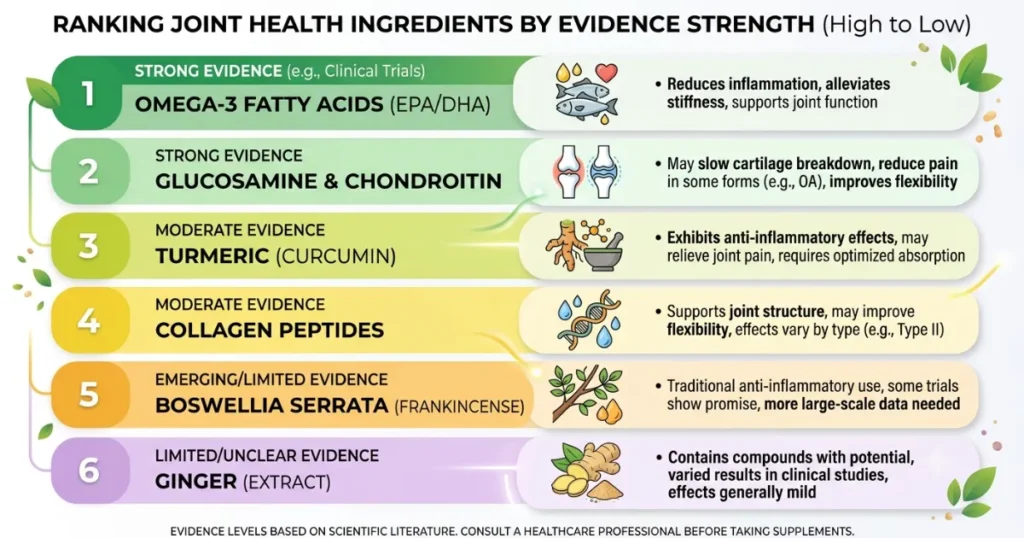
Not all joint ingredients are equal. This table ranks the common ones by how strong the evidence behind them actually is, which is the part product labels never tell you.
| Tier | Ingredient | What the evidence shows |
| Strongest | Omega-3 fatty acids (EPA and DHA) | The best supported joint supplement. Reduces inflammation and has shown real improvement in arthritic dogs |
| Promising | Green-lipped mussel | A natural source of omega-3s with encouraging results for joint comfort |
| Promising | Undenatured type II collagen (UC-II) | Growing evidence for improved mobility, often used alongside other ingredients |
| Mixed but low risk | Glucosamine and chondroitin | The classic pairing. Studies are inconsistent, but risk is very low and many dogs seem to benefit |
| Weaker | MSM | Often included in blends. Limited standalone evidence in dogs |
| Weaker | Turmeric and curcumin | Anti-inflammatory in theory, but poorly absorbed by dogs without special formulation |
The one to start with
If you only add one thing, make it a quality fish oil with EPA and DHA. Omega-3s carry the strongest scientific support of any joint supplement, and they help skin and coat at the same time. This is where I start almost every arthritic golden retriever.
Why glucosamine is still worth considering
Glucosamine and chondroitin get criticized because the research is inconsistent. Fair enough. But the risk profile is very low, the cost is modest, and plenty of owners and vets observe improvement in individual dogs. Trying it for a couple of months is reasonable. Expecting a miracle is not.
What green-lipped mussel and collagen bring
Two newer ingredients deserve a mention because they are showing up in more veterinary-stocked products.
Green-lipped mussel
It is a shellfish from New Zealand that naturally contains omega-3s along with other joint-supporting compounds. It is often used as a whole-food alternative to fish oil, and early research on joint comfort is encouraging.
Undenatured type II collagen
Usually labeled UC-II, it works differently from the others. Rather than supplying cartilage building blocks, it appears to help calm the immune response that drives joint inflammation. It is typically given in very small doses and is often combined with glucosamine in premium formulas.
Neither is a replacement for omega-3s. Both are reasonable additions if your dog needs more support than a basic formula provides.
Choosing a Supplement for a Large Breed Like a Golden
Big dogs are not small dogs with more body. Their joints carry far more load, so a few extra rules apply when you pick a product.
Match the dose to body weight.
A 70-pound Golden needs a very different amount than a 15-pound terrier. Dosing on any quality product is weight-based, so buy the size band that matches your dog and follow the label, then confirm with your vet.
Watch the calories.
Many chews are surprisingly high in sugar and calories. In an arthritic dog, extra weight is the enemy, so a treat-like supplement that quietly adds pounds works against you.
Look for a combined formula.
For large breeds, a product pairing glucosamine and chondroitin, often with green-lipped mussel or collagen, is a practical way to layer ingredients without giving four separate products.
Start earlier than you think.
Joint supplements do the most good before arthritis is advanced. In an at-risk breed, many vets suggest starting in middle age rather than waiting for a limp. If you have a puppy or young dog, protecting the joints early matters even more, which we cover in our guide on how to prevent hip dysplasia.
Chews, powders, liquids or capsules?
The form you choose matters mostly for whether your dog will actually take it every day, since consistency is what makes supplements work.
- Soft chews are the easiest to give and the most popular. Watch the calorie count since they are treats.
- Powders mix into food and suit fussy dogs well. They are often the best value per dose for a large breed.
- Liquids, especially fish oils, are easy to dose by weight and absorb well. Keep them refrigerated so they do not go rancid.
- Capsules and tablets work if your dog takes pills easily, though many Goldens simply eat around them.
There is no medically superior form. The best one is whichever your dog will happily take every day for years.

Quality and Safety: What Nobody Tells You about the Supplement Aisle
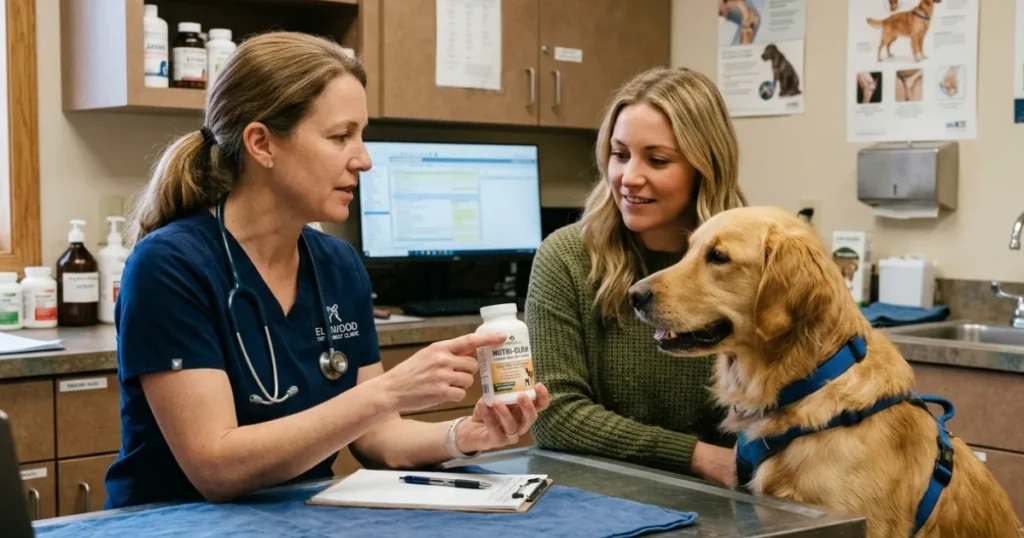
Here is the part that genuinely worries me, and most articles skip it. Pet supplements are not regulated as strictly as medications. That means what is on the label is not guaranteed to be what is in the tub.
How to protect your dog:
- Look for the NASC seal. The National Animal Supplement Council quality seal signals that a company follows quality standards and independent auditing.
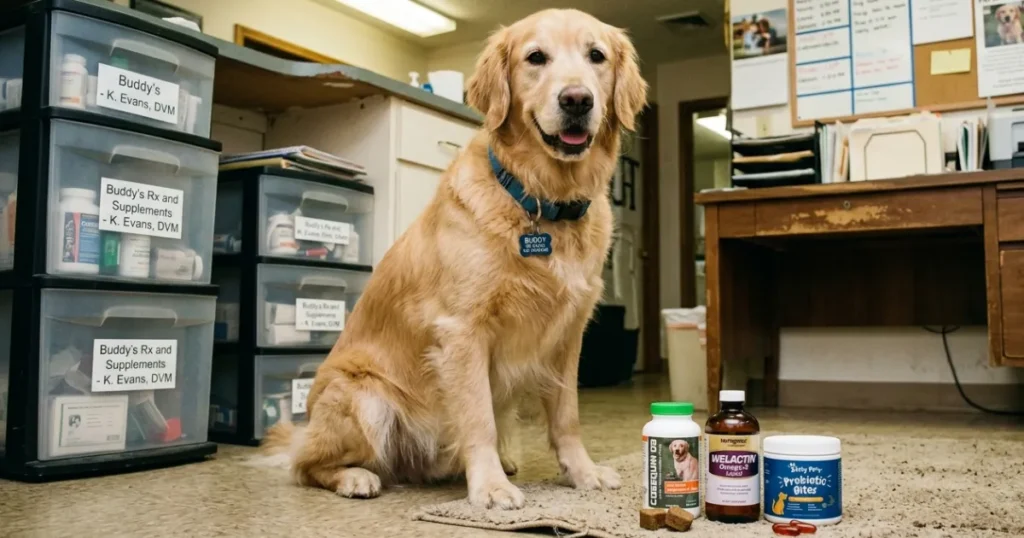
- Prefer brands with veterinary trust. Names like Nutramax, which makes Dasuquin and Cosequin, are widely stocked in veterinary clinics because vets have long experience with them. Antinol, Movoflex, and Welactin are other examples you will see recommended. These are market examples, not endorsements, and your vet’s preference should carry more weight than any list.
- Avoid human products unless your vet approves. Human joint pills can contain dosages or additives unsuited to dogs. Xylitol, found in some human supplements, is toxic to dogs.
- Tell your vet everything you give. Fish oil in high doses can affect blood clotting, and supplements can interact with prescription medication.
Side effects are usually mild, most often loose stool or an upset stomach, and often solved by giving the supplement with food or lowering the dose. If your dog reacts badly, stop and call your vet.
How Long Do Canine Arthritis Supplements Take to Work?
Patience is the part owners struggle with most, so here are realistic timelines for supplements for arthritis in dogs.
- Weeks 1 to 2: Usually nothing visible. This is normal.
- Weeks 3 to 6: Early signs of easier movement in some dogs, often first noticed as a smoother rise in the morning.
- Weeks 6 to 8: The fair point to judge. Most quality products need this long to show their real effect.
- Ongoing: Benefits fade if you stop, so treat supplements as a long-term routine, not a short course.
The most common mistake I see is owners giving up at three weeks and calling the product useless. Give it a proper trial before you judge it.
Do not use supplements alone if your dog is in real pain. If your Golden is limping badly, crying out, or struggling to rise, it needs veterinary pain relief, not just a joint chew. The full range of medical options is covered in our guide to treatments for arthritis in golden retrievers.

The Start, Stack, Score Supplement Protocol
Here is the simple routine I give owners so supplements are used properly instead of hopefully.
| Step | What you do | Watch for | Then |
| Start | Begin one product at a time, at the weight-based dose, with food | Loose stool or upset stomach | Give with meals or lower the dose. Call your vet if it persists |
| Stack | After 2 weeks, add a second ingredient if your vet agrees, such as omega-3s plus a joint formula | No change by week 8 | Reassess the product with your vet rather than adding more |
| Score | Rate your dog monthly on rising, walking, stairs, and play, using the same simple scale | Scores dropping despite supplements | Book a vet visit. Your dog may need prescription support |
Scoring matters more than it sounds. Arthritis changes slowly, so memory is a poor judge. A quick monthly note on how easily your dog rises and how far it walks tells you far more than a vague sense that the chews “seem to help.”
Expert Insight
The question I get is always, “Which supplement is best?” The better question is, “Am I giving a quality product, at the right dose, for long enough to tell?. I have seen more supplements fail from a three-week trial and a bargain-bin tub than from the ingredient itself being wrong.
Quick Protocol Box
The 3-step version:
- Start with omega-3s. Fish oil with EPA and DHA has the strongest evidence of any joint supplement.
- Add a joint formula. Glucosamine and chondroitin, or green-lipped mussel, layered on top.
- Give it 6 to 8 weeks. Supplements work slowly. Judge results on movement, not on days. Always confirm the plan and the dose with your vet, especially if your dog takes other medication.
What are the best supplements for canine arthritis?
Omega-3 fatty acids from fish oil have the strongest evidence, followed by green-lipped mussel, undenatured type II collagen, and the classic glucosamine and chondroitin pairing.
Do canine arthritis supplements really work?
They help many dogs, but they support joints rather than cure arthritis. Omega-3s have the best evidence. Expect gradual improvement in comfort and movement, not a dramatic fix.
Which supplements for arthritis in dogs should I start first?
Start with a quality fish oil providing EPA and DHA. It has the strongest support of any joint supplement, and it benefits skin and coat at the same time.
Does glucosamine actually help dogs?
The evidence is mixed. Some dogs clearly improve and the risk is very low, so a two-month trial is reasonable. It works best combined with chondroitin and started early.
How long do joint supplements take to work in dogs?
Usually 6 to 8 weeks. Little changes in the first two weeks. Judge the product at the eight-week mark rather than giving up early.
Can I give my dog human glucosamine?
Only with veterinary approval. Human products may have unsuitable doses or additives, and some contain xylitol, which is toxic to dogs. Dog-specific formulas are safer.
Are joint supplements safe for dogs long term?
Generally yes, and most are well tolerated. Mild stomach upset is the usual side effect. Tell your vet what you give, since high-dose fish oil can affect blood clotting.
How do I know if a dog supplement is good quality?
Look for the NASC quality seal, a clear ingredient list with amounts, and brands your vet knows. Pet supplements are loosely regulated, so brand reputation matters.
How much glucosamine does a large dog need?
Dosing is based on body weight, so follow the product’s weight band and confirm with your vet. Large dogs need considerably more than small breeds.
When should I start giving my dog joint supplements?
Earlier is better in large, at-risk breeds. Many vets suggest starting in middle age rather than waiting for a limp, since supplements help most before damage advances.
Can supplements replace arthritis medication for dogs?
No. Supplements support joints but do not control significant pain. A dog that is limping badly or struggling to rise needs veterinary pain relief alongside them.
Do golden retrievers need joint supplements more than other breeds?
As a large breed prone to hip and elbow dysplasia, Goldens are strong candidates for early joint support. Discuss timing with your vet based on your dog’s risk.
Can puppies take joint supplements?
Ask your vet first. For at-risk large-breed puppies, correct growth, lean weight, and joint-safe exercise matter far more than any supplement in the first year.
Are expensive dog joint supplements better?
Not automatically, but very cheap products carry more quality risk in a loosely regulated market. Look for the NASC seal and clear dosing rather than price alone.
Can I give my dog several joint supplements together?
Often yes, and many vets combine omega-3s with a glucosamine formula. Check with your vet first to avoid duplicate ingredients or excessive doses.
When should I call the vet instead of buying a supplement?
Call if your dog suddenly cannot bear weight, cries out in pain, or a joint is hot and swollen. Those signs need veterinary care, not a supplement.
The Bottom Line on Canine Arthritis Supplements
The best canine arthritis supplements are the ones backed by evidence, given at the right dose, and used long enough to work. Start with omega-3 fatty acids, since they carry the strongest support. Consider adding glucosamine and chondroitin, green-lipped mussel, or collagen on top. Choose a product carrying the NASC seal, match the dose to your dog’s weight, and give it a full 6 to 8 weeks before judging it.
Most of all, keep your expectations honest. Supplements support aching joints; they do not repair them, and they work best alongside lean body weight, gentle daily exercise, and veterinary care. Used that way, they are a genuinely worthwhile part of managing your dog’s arthritis.
Which joint supplement have you tried for your Golden, and how long did it take before you noticed a difference? If one worked far better than another, share what you saw. Your experience helps other owners avoid wasting months on the wrong product.