
A dog seizures in older dogs is different from one in a young dog. It rarely means inherited epilepsy and usually points to a findable cause, so it deserves a prompt vet visit. A seizure over 5 minutes, or two in 24 hours, means the emergency vet now.
Seizures in older dogs are not the same as seizures in young dogs. A first seizure in a senior or elderly dog rarely means idiopathic epilepsy, the inherited condition that begins in young adulthood. Far more often, an older dog’s seizure is a signal that something specific has changed inside the body, such as a brain tumor, organ disease, or low blood sugar. Any new seizure in an older dog deserves a prompt veterinary workup to find and treat the cause.
When an owner brings in a senior Golden that just had its first fit, my first thought isn’t epilepsy. It’s to find the cause, because in older dogs the cause is usually findable, and it shapes everything that follows. Veterinary neurologists are clear on this. A new seizure in a dog over five or six years old means a brain tumor must be considered and ruled out.
That sounds frightening, but catching it early is exactly what gives you options. The goal here isn’t to scare you. It’s to point you toward the right next step. For the deep dive into the specific causes, see our guide to what causes fits in older dogs, and for the wider picture, see our overview of seizures in dogs.
Why Dog Seizures in Older Dogs Are Different
The single most useful thing to understand is this. Old dogs don’t seize because they’re old. They seize because something changed, and age tells us where to look.
In young dogs, the most common cause of recurrent seizures is idiopathic epilepsy, an inherited condition with no underlying disease behind it. It typically shows up between one and six years of age. A senior dog having its first seizure is a different story, because that inherited epilepsy almost never debuts late in life. When an old dog seizes for the first time, the odds shift heavily toward an acquired cause that wasn’t there before.
That shift changes the whole approach. With a young epileptic dog, the plan is to control seizures. With an older dog, the plan is first to find what’s driving them, because the cause determines both the treatment and the outlook. A seizure is a symptom here, not the diagnosis.
This is also why “it’s just old age” is the one explanation to reject. Aging itself doesn’t cause seizures. Treating a senior dog’s first fit as a normal part of getting old can delay finding a problem that’s genuinely treatable. To match what you saw against a true seizure, compare it with what a dog seizure looks like.
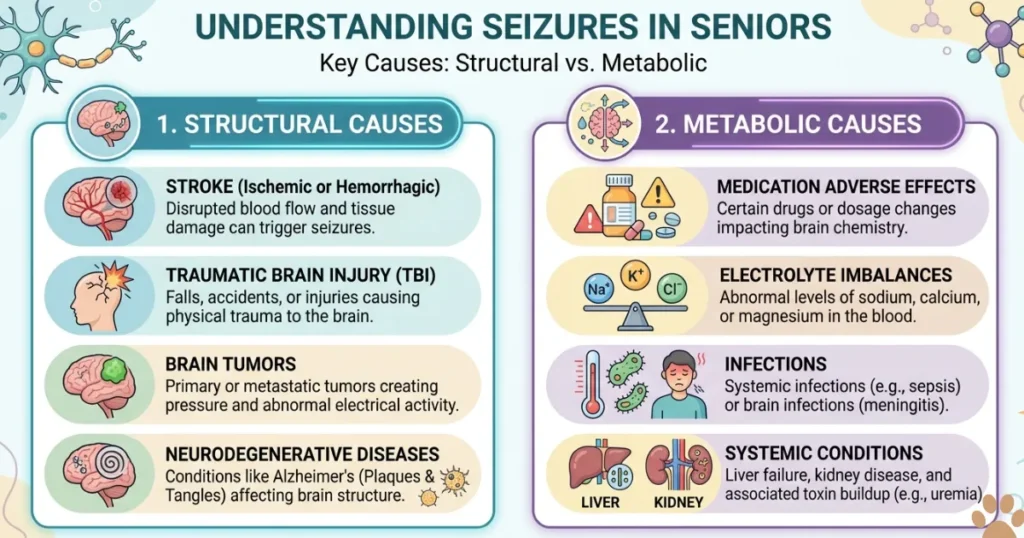
What New Seizures in a Senior Dog Usually Mean
In an older dog, the likely causes sort into two broad groups: structural problems inside the brain and metabolic problems elsewhere in the body. Knowing which is which guides the workup.
| What it could be | Type | Clues that point to it | What confirms it |
| Brain tumor | Structural | New seizures after 5–6 yrs, behavior or vision changes | Imaging (MRI or CT) |
| Stroke or vascular event | Structural | Sudden onset with balance or coordination loss | Imaging |
| Liver or kidney disease | Metabolic | Other illness signs, poor appetite, weight loss | Bloodwork |
| Low blood sugar, including insulinoma | Metabolic | Weakness around mealtimes, collapse | Bloodwork |
| Epilepsy of unknown cause | Functional | No other cause found, recurrent seizures | Diagnosis of exclusion |
Brain tumors deserve their own honest section below, but the metabolic causes matter just as much and are often more fixable. Older dogs are more prone to liver and kidney disease, and as those organs struggle, toxins build up and can trigger seizures. Low blood sugar is another senior culprit, sometimes from an insulin-secreting tumor called an insulinoma.
The reassuring part is that many of these are treatable once identified, which is the whole reason a workup matters so much. For the complete cause by cause breakdown, our full guide to fits in older dogs goes deeper than this overview can.
The Brain Tumor Question and Why Not to Panic.
Most owners researching senior seizures are really asking one terrified question. Is it a brain tumor? Here’s the honest, two-sided answer.
The serious side is real. Brain tumors are the most common cause of new neurological signs in older dogs, and seizures are often the very first sign. That’s why veterinary neurologists at North Carolina State and elsewhere treat any new seizure in a dog over five or six as a reason to rule out a tumor with imaging. Ignoring that possibility is a costly mistake.
The reassuring side is just as true. A new senior seizure does not mean a tumor is certain. MSPCA-Angell’s neurologists caution specifically against assuming every senior dog’s new symptom must be a tumor, because plenty of other causes, including metabolic disease, stroke, and epilepsy of unknown cause, look the same at first. And even when it is a tumor, options exist. Surgery, radiation, and medication can often buy good-quality time, and steroids alone can ease symptoms.
It also helps to know how brain tumors usually behave. They tend to progress gradually rather than overnight, and MSPCA-Angell reports the average time from a dog’s first new seizures or behavior changes to a clearly abnormal neurological exam is around 78 days. That gradual window is part of why early imaging matters, since catching a tumor while your dog still feels well opens more treatment doors than waiting until other signs appear.
So the right stance is neither panic nor denial. It’s getting the workup that tells you which road you’re on, because a treatable metabolic problem and a brain tumor need completely different plans. For more, browse our Golden Retriever health guides.
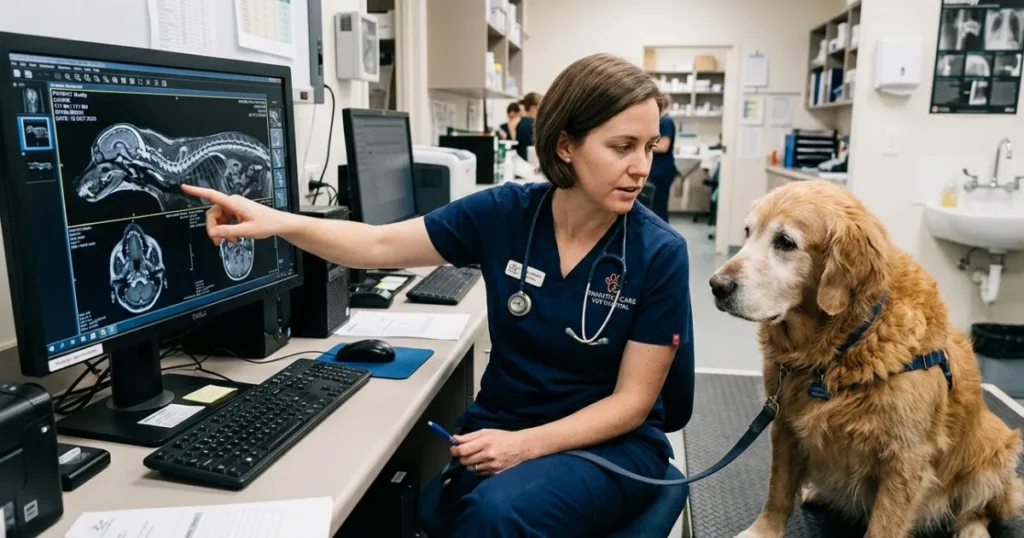
Senior Golden Retrievers: The Breed Angle.
For Goldens, two breed facts collide in old age, and both are worth knowing honestly. Golden Retrievers are predisposed to idiopathic epilepsy, but that’s a young-dog condition, so it’s not usually the answer for a senior Golden’s first seizure. The more relevant fact in old age is that Goldens are a high-cancer breed and are among those predisposed to brain tumors like meningioma.
That combination means a senior Golden with new seizures genuinely warrants ruling out a tumor, more so than in many breeds. It isn’t fearmongering. It’s matching the workup to the breed’s real risks. Our guide to canine epilepsy covers the epilepsy side, and you can read more across our Golden Retriever guides.
The flip side keeps it balanced. If your senior Golden’s seizures trace to a treatable metabolic problem or to well-controlled epilepsy of unknown cause, the outlook can be good. The breed raises the stakes on getting a diagnosis, but a diagnosis is exactly what opens the door to treatment. The signs of the seizure itself look the same as in any dog. What changes is how hard your vet will look for a cause.
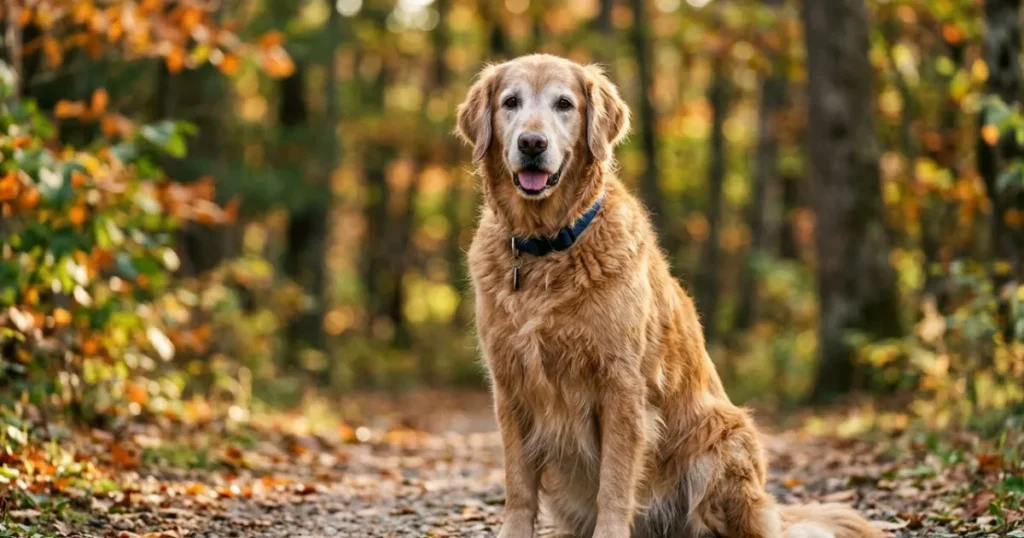
The OLD Check: How to Respond to a Senior Dog Seizure.
When your older dog seizes, your job in the moment is the same as for any dog. Keep your dog safe, time the seizure, and follow how to handle a seizure right now. Once it’s over, a simple framework keeps you from making the two classic mistakes.
The OLD check.
O — Organ check.
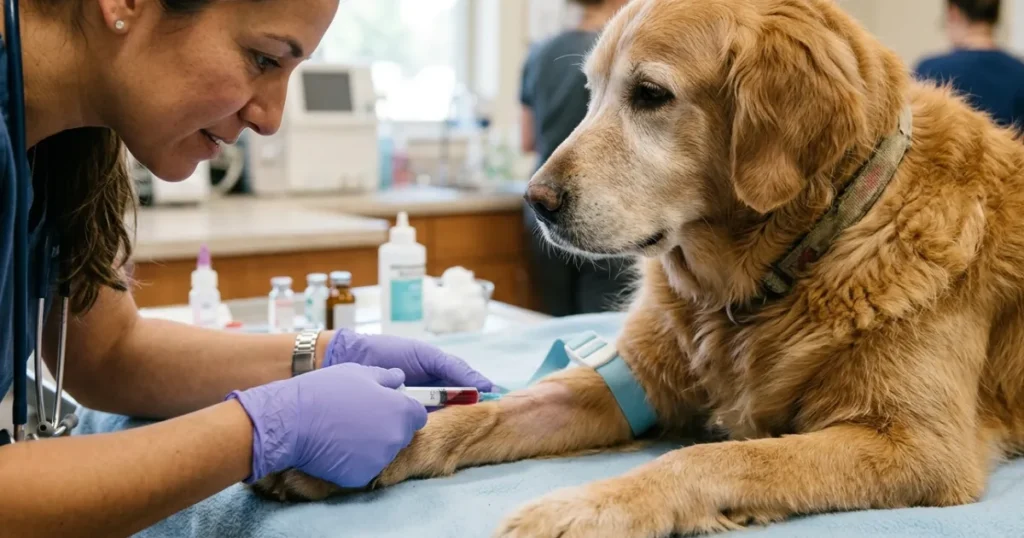
Senior seizures often start with failing organs or low blood sugar, so bloodwork comes first. It’s quick, affordable, and rules in or out a whole category of treatable causes.
L — Lesion check.
A new seizure after age 5 or 6 means a structural problem like a tumor or stroke must be ruled out, usually with MRI or CT imaging.
D — Don’t dismiss it as age.
Old dogs don’t seize because they’re old. They seize because something changed, so resist the urge to wait and see.
Practically, the path is bloodwork first, then imaging if the bloodwork is clean and seizures continue. Treat any seizure over 5 minutes, or two within 24 hours, as an emergency, since clusters and prolonged seizures are dangerous at any age. Keep a log of every episode with the date, length, and what you saw, and film one if you can. That record is genuinely what helps your vet narrow the cause fastest.
Expert Insight
“With a senior dog, I’m not chasing the seizure; I’m chasing the reason for it. The owners who push for bloodwork and imaging early are the ones who get answers while there’s still time to act on them. ‘Wait and see’ is the only wrong move.”
Old Dog Seizures When to Put Down
For some senior dogs, the hardest question eventually arrives, and it deserves an honest, gentle answer. There’s no number of seizures that decides it. The decision rests on quality of life and the cause, weighed with your vet over time.
When a senior dog’s seizures come from a treatable problem and respond to care, letting go may be far off or never necessary. When they come from an advanced brain tumor or failing organs, or when they can’t be controlled despite good treatment, the kind question becomes whether more time means more good days or more suffering. The prognosis genuinely depends on the cause, which is one more reason a diagnosis matters so much.
The clearest signal isn’t the seizures themselves but the life around them. If your senior dog still greets you, eats with interest, and has more good days than hard ones, that’s a dog whose quality of life is holding, even with the occasional fit. When those everyday joys fade and can’t be coaxed back, that’s the change that matters most, far more than any seizure count.
If you’re at that crossroads, you’re not failing your dog by asking. Our compassionate guide to old dog seizures and when to consider putting your dog down walks through the quality of life tools and the decision itself so you don’t have to weigh it alone. Whatever you choose, choosing comfort for a dog who’s suffering is an act of love.

What does it mean when an older dog has seizures?
In an older dog, a new seizure rarely means inherited epilepsy, which starts young. It usually signals an acquired cause like a brain tumor, organ disease, or low blood sugar.
Why do senior dogs suddenly start having seizures?
Senior dogs usually seize because something specific changed, such as a brain tumor, liver or kidney disease, low blood sugar, or a stroke. Old age itself doesn’t cause seizures, so a cause is almost always worth finding.
Are seizures in elderly dogs a sign of a brain tumor?
Sometimes, but not always. Brain tumors are the most common cause of new neurological signs in older dogs, so they must be ruled out. But metabolic disease, stroke, and epilepsy can look identical at first.
How long can an old dog live with seizures?
It depends on the cause. A treatable metabolic problem or controlled epilepsy can mean years of good life, while an advanced brain tumor often means months. A diagnosis is what makes the outlook clear.
Is it safe to treat seizures in an old dog?
Yes. Senior dogs can usually take seizure medication safely with monitoring, and treating the underlying cause is often what helps most. Your vet adjusts the plan to your dog’s organ function and health.
What happens if an old dog’s seizures aren’t treated?
Untreated seizures can worsen, cluster, or progress to dangerous status epilepticus, and the underlying cause keeps advancing. Finding and treating the cause early gives your dog the best chance at comfort and time.
How to help an older dog having a seizure?
Clear hazards, cushion the head, don’t touch the mouth, keep your dog from stairs, and time the seizure. Get to the vet immediately if it lasts over 5 minutes.
When should I worry about my senior dog’s seizures?
Worry enough to book a prompt visit after any first senior seizure. Go now if a seizure lasts over 5 minutes, repeats within 24 hours, or comes with weakness, collapse, or behavior changes.
When should I put my old dog down for seizures?
There’s no fixed point. It becomes the kind choice when seizures are uncontrollable, the cause is terminal, or quality of life is poor. Decide this gradually with your vet, not from a seizure count.
Can old age alone cause seizures in dogs?
No. Aging itself doesn’t trigger seizures. A senior dog’s seizure reflects a specific change, so “just old age” should never be the final answer without a workup.
Can Golden Retrievers get seizures in old age?
Yes. A senior Golden can develop seizures, usually from an acquired cause rather than epilepsy. Because Goldens are a high-cancer breed predisposed to brain tumors, ruling out a tumor is especially important in older Goldens.
Why do older Golden Retrievers have seizures?
In older Goldens, seizures most often come from an acquired problem such as a brain tumor, organ disease, or low blood sugar. The breed’s elevated cancer risk makes a tumor especially important to rule out.
Do Golden Retrievers need an MRI after a senior seizure?
Often yes. After bloodwork, vets frequently recommend MRI or CT imaging for a senior Golden with new seizures, since the breed’s brain-tumor risk makes ruling out a structural cause worthwhile.
Can a Golden Retriever recover from a brain tumor causing seizures?
Full recovery is uncommon, but treatment can help. Surgery, radiation, steroids, or medication can ease seizures and buy good-quality time. Your vet and a neurologist can outline realistic options for your dog.
When is an older dog’s seizure an emergency?
Go to the vet immediately if a seizure lasts over 5 minutes, your dog has two or more in 24 hours, or doesn’t recover between them. Any first seizure in a senior dog also needs prompt evaluation.
Conclusion.
If your older dog has had a seizure, the key thing to know is that it rarely means old age or inherited epilepsy. In a senior dog, a new seizure usually signals a specific, findable cause, from a treatable metabolic problem to a brain tumor that needs ruling out.
Run the old check, push for bloodwork, then imaging, and treat a long or repeated seizure as an emergency. For Goldens, the breed’s cancer risk makes a diagnosis matter even more, since the cause sets treatment and outlook. Acting early gives your dog the best shot at comfort and time.
Has your senior Golden developed seizures late in life, and what did it uncover? Share the cause and how your dog is now. Your experience could steady another owner facing their old dog’s first fit.