
A first fit in an older dog usually has an underlying cause and is not “just old age.” Unlike young dogs, senior dogs more often have an acquired problem, such as a tumor or organ disease. Any new fit in a senior dog deserves a prompt veterinary workup.
What causes fits in older dogs is usually an acquired condition rather than epilepsy. The top causes are brain tumors, metabolic disease (liver, kidney, or low blood sugar), strokes, and inflammation. Because young dogs more often have idiopathic epilepsy, a first fit in a senior dog warrants bloodwork and often brain imaging.
When a senior dog suddenly starts seizing, owners assume the worst or assume nothing. The truth is in between. What causes fits in older dogs is rarely the inherited epilepsy seen in young dogs, and it’s rarely “just aging” either. In a senior, a new fit usually points to a specific, findable cause.
According to Cornell’s canine health center, dogs over six years old when they have their first seizure are more likely to have a metabolic disorder or a structural brain lesion, like a tumor or a stroke. That single fact reshapes the entire approach for an older dog.
This page covers the senior angle. For the general picture across all ages, see what causes seizures in dogs, which is also the page to read for the broad term what causes fits in dogs.
What Causes Fits in Older Dogs? Why Age Flips the Answer
What causes fits in older dogs differs sharply from young dogs because age flips the most likely diagnosis from inherited epilepsy to acquired disease. The dog’s age is the first clue your vet uses.
When an older dog has new-onset seizures, the top differentials are metabolic diseases and tumors, in contrast to younger dogs, who are more likely to have idiopathic epilepsy where no cause is found. So the same fit means something different at 10 than it does at 2.
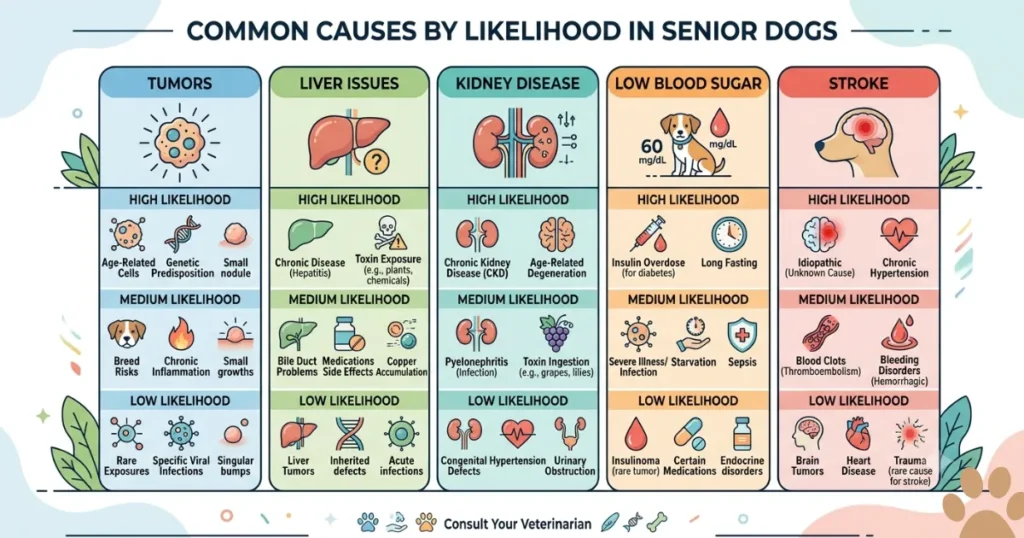
The clinical logic is simple. In senior pets over seven years of age, the higher prevalence of intracranial neoplasia makes one question critical: are there signs of reactive or structural brain disease? That’s why a vet won’t just label a senior’s fit as epilepsy and move on. The causes table below shows the senior differentials by likelihood.
| Cause | What it is | How it shows up | How it’s found |
| Brain tumor | Growth pressing on the brain | Often progressive, worsening fits | MRI or CT |
| Liver disease | Toxins build up in the blood | Fits, plus confusion, drooling | Bloodwork |
| Kidney disease | Uremic toxins reach the brain | Fits plus thirst, weight loss | Bloodwork, urinalysis |
| Low blood sugar | Hypoglycemia, often diabetic | Sudden fits, weakness | Blood glucose |
| Stroke | Disrupted brain blood flow | Sudden onset, balance loss | MRI |
| Late-onset epilepsy | Epilepsy of unknown origin | Recurrent, no other signs | Diagnosis of exclusion |
Brain Tumors: A Top Cause of Fits in Older Dogs.
Brain tumors are among the most common causes of new fits in older dogs, and the pattern often gives them away. They tend to produce seizures that worsen over time.
Brain tumors are the most common cause of new-onset neurological symptoms in older dogs, though it’s important to keep an open mind about other diagnoses. A tumor presses on brain tissue and disrupts normal electrical activity, which triggers fits.
The tell is progression. If an older dog suddenly starts having seizures, especially if they are getting worse over time, a brain tumor might be to blame, and your vet will need imaging tests to check. Worsening frequency, new circling, head pressing, or behavior changes alongside the fits raise suspicion and point toward an MRI.
Metabolic Causes: When Organs Trigger Fits in Senior Dogs.
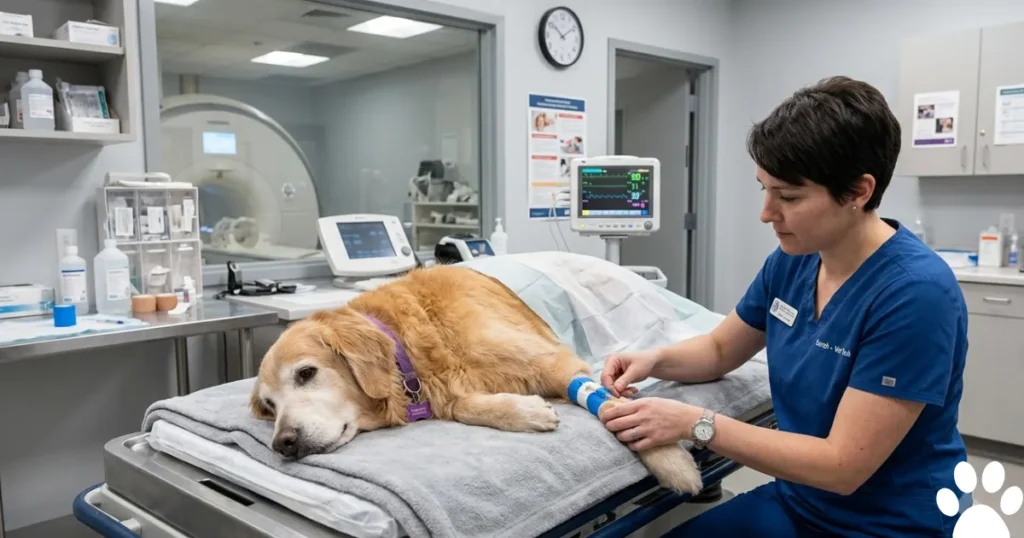
Metabolic disease is a leading and often treatable cause of fits in senior dogs because failing organs let toxins reach the brain. This is the good-news category, since many of these causes respond to treatment.
Senior dogs are more prone to kidney and liver disease, and as either organ fails, toxins build up in the bloodstream and can cause seizures when they reach the brain. A failing liver allows ammonia to accumulate, and failing kidneys let uremic toxins build, both of which can spark fits.
Blood sugar is the other big one. Conditions such as liver disease, kidney disease, and diabetes can trigger seizures, and hypoglycemia, or low blood sugar, is a common trigger in diabetic dogs. Because these causes are found on bloodwork and are often treatable, they’re the reason never to assume a senior’s fits are hopeless.
Other Causes of Seizures in Elderly Dogs.
Beyond tumors and organ disease, seizures in elderly dogs can come from strokes, brain inflammation, toxins, or late-onset epilepsy. These round out the senior differential list.
A stroke disrupts blood flow to part of the brain and can trigger sudden fits alongside balance loss. Inflammatory and infectious brain disease, such as encephalitis, is another structural cause. Toxins still matter at any age, as our guide to toxins that cause seizures details.
Epilepsy isn’t off the table either, just less likely. Some senior dogs have recurrent seizures with no other neurological signs and no findable lesion, a pattern called epilepsy of unknown cause, which falls outside standard idiopathic epilepsy criteria due to the older age of onset. Our canine epilepsy guide covers that condition in full.
Why Fits in Older Golden Retrievers Raise Extra Concern?
Fits in an older Golden Retriever carrying added weight because of the breed’s cancer profile, which raises the index of suspicion for a tumor. The concern is real, but so is the hope.
The Golden Retriever Lifetime Study, run by the Morris Animal Foundation, has documented that roughly 60% of Golden Retrievers die from cancer. Given that, a new fit in a senior Golden makes brain involvement a serious consideration, and it’s why I push for imaging in these dogs rather than assuming epilepsy.
Here’s the part owners need to hear: A tumor isn’t the only answer, and many senior fits trace to treatable metabolic causes instead. Writing off an older Golden’s fits as “just old age” is the mistake I see most, because it skips the bloodwork that might reveal a fixable problem. You can read more on the breed at our Golden Retriever breed health hub and health category.
In a representative case, the owner of an 11 years old golden assumed his new fits meant a brain tumor and the end. Bloodwork instead revealed advanced liver disease, which was managed, and the fits resolved. The lesson I share: test before you despair.
The GRI Senior Fit Workup Plan.
Use this named plan the moment your older Golden has a fit. It turns dread into a clear set of steps.
Step 1—Document.
If your senior dog has a fit, then film it, note the time, length, and any circling or behavior changes, and book a veterinary exam promptly. Don’t wait to “see if it happens again.”
Step 2—Test the body first.
If your vet agrees, then start with bloodwork, urinalysis, and a blood glucose check, since metabolic causes are common and treatable in seniors. These rule in or out the fixable problems.
Step 3—Image the brain.
If bloodwork is clean and fits continue or worsen, then ask about an MRI or CT to check for a tumor or stroke. Call your vet immediately if a fit lasts over five minutes.
Keep this by your senior dog’s bed. The order matters: body first, brain second, because it finds the treatable causes before the scary ones.

EXPERT INSIGHT: The saddest cases aren’t the tumors. They’re the senior dogs whose owners assumed it was hopeless and never ran the bloodwork that would have found a treatable liver or sugar problem. In an old dog, a new fit is a reason to investigate, not to give up.
When Fits in an Older Dog Are an Emergency.
Treat any fit over five minutes, or two fits in 24 hours, as an emergency. A first-ever fit in a senior dog also warrants a prompt, same-week exam.
| 🔴 URGENT — Call now | 🟢 PROMPT — Book a vet visit |
| A fit lasting 5 minutes or longer | A single brief first fit, full recovery |
| Two or more fits in 24 hours | Mild, infrequent fits with normal behavior between |
| Not regaining awareness afterward | A known, stable, diagnosed cause |
| Fits with circling, head pressing, or collapse | Slightly longer recovery in a very old dog |
| Sudden blindness or severe disorientation | One-off fit you’ve now logged and filmed |
To recognize a fit correctly and tell it from a look-alike, see how to tell if your dog is having a seizure and for the recovery after, dog behavior after a seizure. Treatment options live in our seizure medication overview.

What causes fits in older dogs?
Fits in older dogs are usually caused by an acquired condition, not epilepsy. The most common causes are brain tumors, liver or kidney disease, low blood sugar, and strokes. A senior dog’s first fit warrants bloodwork and often imaging.
What happens if an older dog suddenly starts having fits?
A sudden first fit in an older dog usually signals an underlying cause like a tumor or organ disease, so it needs a prompt workup. Bloodwork and imaging identify treatable problems, and some metabolic causes resolve once managed.
How long do fits in older dogs last?
Most fits in older dogs last one to two minutes, followed by a confused recovery. A fit lasting over five minutes is a life-threatening emergency. Time every episode since duration guides how urgently to act.
What causes seizures in elderly dogs?
Seizures in elderly dogs are most often caused by brain tumors, metabolic disease such as liver or kidney failure, low blood sugar, strokes, or brain inflammation. Inherited epilepsy is far less likely than in young dogs.
Why is my senior dog having seizures all of a sudden?
A senior dog having seizures all of a sudden usually has a new, identifiable cause, commonly a brain tumor or organ disease. This differs from young dogs with idiopathic epilepsy, so prompt bloodwork and imaging are important.
Can a brain tumor cause fits in older dogs?
Yes, brain tumors are among the most common causes of new fits in older dogs. Tumors press on brain tissue and disrupt electrical activity. Fits that worsen over time, with circling or behavior change, raise suspicion for a tumor.
How are seizures in older dogs diagnosed?
Vets diagnose seizures in older dogs with bloodwork, urinalysis, a blood glucose check, and a neurological exam and then MRI or CT imaging if needed. The order targets treatable metabolic causes before structural ones like tumors.
What happens if a fit old dog goes untreated?
Untreated fits in an old dog can worsen if the underlying cause progresses, and clusters or prolonged seizures risk brain injury. Many causes are treatable once identified, so a workup gives the best chance at control.
Can old age alone cause seizures in dogs?
No, old age alone does not cause seizures. A new fit in a senior dog reflects an underlying problem such as a tumor, organ disease, or stroke. Assuming it’s “just aging” can miss a treatable cause.
How long can a dog live with seizures from a brain tumor?
It varies widely by tumor type, location, and treatment, from months to longer, with options like surgery, radiation, or medication. A neurology consult after imaging gives the most accurate, individual prognosis for your dog.
Why do older Golden Retrievers get fits?
Older Golden Retrievers most often get fits from acquired causes such as brain tumors or metabolic disease, and the breed’s high cancer rate, documented by the Golden Retriever Lifetime Study, raises the concern for tumor-related seizures.
Do Golden Retrievers get brain tumors that cause seizures?
Yes, Golden Retrievers can develop intracranial tumors, such as meningiomas, that cause seizures, and the breed’s elevated cancer risk makes imaging worthwhile for a senior Golden with new fits, rather than assuming idiopathic epilepsy.
Can Golden Retrievers get fits from liver or kidney disease?
Yes, in senior Golden Retrievers, failing liver or kidneys let toxins build in the blood and reach the brain, triggering fits. These metabolic causes are found on bloodwork and are often treatable once identified.
Do Golden Retrievers get late-onset epilepsy?
Some do. Golden Retrievers can have recurrent seizures starting later in life with no findable cause, called epilepsy of unknown origin. It’s diagnosed by ruling out tumors and metabolic disease first, so testing comes before that label.
When should I take my senior Golden Retriever to the vet for a fit?
Go immediately if a fit lasts over five minutes or repeats within 24 hours. Book a prompt exam for any first fit in a senior golden retriever, since new seizures at that age usually have a treatable underlying cause.
Conclusion.
What causes fits in older dogs is almost always a specific, findable condition, most often a brain tumor, organ disease, low blood sugar, or a stroke, rather than the inherited epilepsy seen in young dogs.
Your one move today is to film the next fit and book a workup, because bloodwork and imaging find treatable causes that “it’s just old age” would miss. For a senior Golden Retriever, the breed’s cancer risk makes investigating worthwhile, but many of these causes respond well to treatment once identified.
If your older Golden started having fits, what did the workup find: a tumor, an organ problem, low blood sugar, or something else? How old was he, and did treatment help? Sharing what your vet discovered could give another worried senior dog owner the push to test rather than assume the worst.