
Consider euthanizing a dog with a brain tumor when seizures can no longer be controlled, when he loses the ability to walk, eat, or recognize you, or when pain steals his quality of life. Cluster seizures are often the deciding sign. For a Golden Retriever, the most likely tumor is a slower, treatable meningioma, which can change the timeline.
Knowing dog brain tumor when to euthanize is one of the hardest calls an owner faces, because the disease takes its toll on the mind as much as the body. The good news is that there are clear signs to watch for, and seizures usually lead the way. This guide walks you through them with honesty and care.
In my practice, the brain tumor cases that weigh on families most are the ones with seizures that grow harder to control. That is often the true deciding factor. Before you reach that point, though, there is something hopeful worth knowing for this breed.
Golden Retrievers are the most commonly reported breed for meningioma, the most common and often the most treatable brain tumor. So a Golden’s brain tumor may give you more time and more options than the grim general statistics suggest. Our guide on Golden Retriever cancer symptoms covers how the breed’s cancers behave, so you know what you are facing.
What a Brain Tumor Does, and Why Seizures Drive the Timeline
A brain tumor harms a dog not by spreading through the body like other cancers, but by taking up space in the skull, where there is none to spare. As the tumor grows, it presses on the brain and raises the pressure inside the head, which is what produces the neurological signs you see.
Seizures are the most common sign, and they often come first. In a dog older than five or six, a brand new seizure should always raise the possibility of a brain tumor. Other signs include circling in one direction, a head tilt, pressing the head against walls, disorientation, pacing, vision loss, a wobbly walk, and changes in personality, like a gentle dog turning irritable or a confident one growing anxious.
The exact signs depend on where the tumor sits. A tumor in the front of the brain tends to cause seizures and personality change, while one near the brainstem affects balance and alertness. Head pressing, when a dog pushes his head into a wall, is a particularly serious sign of raised pressure that should never be ignored.
Why do seizures drive the decision about when to euthanize a dog with a brain tumor? Because they tend to worsen over time, growing more frequent and more severe until medication can no longer hold them back. A dog can be comfortable between rare seizures, but once they begin to cluster, comfort and safety slip away fast. Understanding this pattern helps you anticipate the decision rather than being blindsided by it. The wider arc of decline is mapped in the stages of cancer leading to death.
When to Euthanize a Dog with a Brain Tumor: The Signs That Matter
So how do you know when to euthanize a dog with a brain tumor? A handful of signs carry the most weight, and most families recognize several arriving together as the end nears.
Uncontrolled seizures top the list, especially seizures that cluster or do not stop. Loss of basic function comes next, a dog who can no longer stand, walk, or eat on his own. Then there are the mental changes, like a dog who no longer recognizes you, paces in confusion, or loses interest in everything he once loved. Persistent pain that medication cannot ease, and a complete refusal to eat or drink, round out the picture.
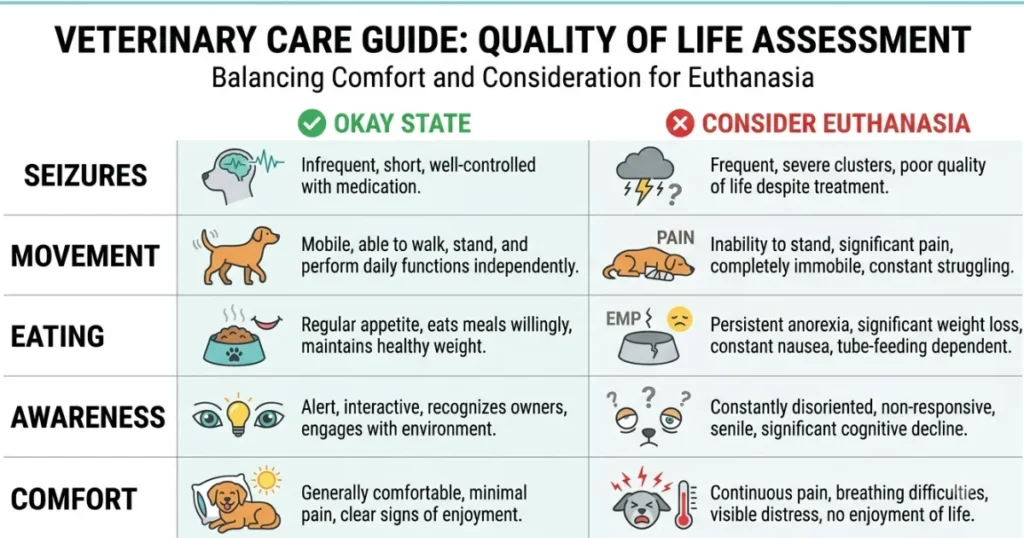
None of these has to appear alone. The brain tumor decision is usually about a pattern, several signs together, and a trend that keeps sliding downward. One caution before you decide. Several conditions can mimic a brain tumor, including inflammation of the brain, stroke like events, and some metabolic problems, and a few are treatable.
So if your dog has not had imaging, ask your vet whether an MRI and a neurology consult could change the picture before you conclude the worst. Knowing the true diagnosis spares regret. The general framework for weighing quality of life lives in our guide on knowing when it is time to say goodbye, and the table below focuses that lens on brain tumors specifically.
Brain Tumor Quality of Life: Signs It May Be Time
| Area | Still doing okay | Leaning toward euthanasia |
| Seizures | Rare, controlled by medication | Clustering will not stop |
| Movement | Walking, even if a little wobbly | Cannot stand or walk |
| Eating | Eating and drinking on his own | Refusing food and water |
| Awareness | Knows you and engages | Confused, does not recognize you |
| Comfort | Settled on medication | Pain or distress despite treatment |
The Seizure Threshold: When Brain Tumor Seizures Mean It’s Time
For most brain tumors, seizures become the line in the sand, so it helps to know exactly what crosses it. A single seizure that stops on its own and is followed by recovery is frightening but not, by itself, the end. The picture changes when seizures cluster or refuse to stop.
Cluster seizures, meaning two or more within a day, signal that the tumor is winning the fight against medication. The true emergency is status epilepticus, a seizure lasting more than about five minutes, or repeated seizures with no recovery in between. Status epilepticus can be fatal on its own, and it is a call your vet immediately situation, day or night. If your dog seizes at home, a few calm steps help.
Keep your hands away from the mouth, since a seizing dog can bite without meaning to, move furniture so he cannot hurt himself, and time the seizure on your phone. Note how long it lasts and how often seizures come, because that record guides both treatment and the decision. Your vet may prescribe an emergency medication to break a cluster at home.
When seizures reach this stage and cannot be controlled even with adjusted medication, many veterinarians and families agree the kindest path is euthanasia. A dog in uncontrolled seizures is frightened and suffering, and waiting rarely changes the outcome. This is the hardest version of knowing when to euthanize a dog with a brain tumor, and choosing peace in that moment is an act of mercy, not surrender.

Why a Golden Retriever’s Brain Tumor Is Often the Treatable Kind
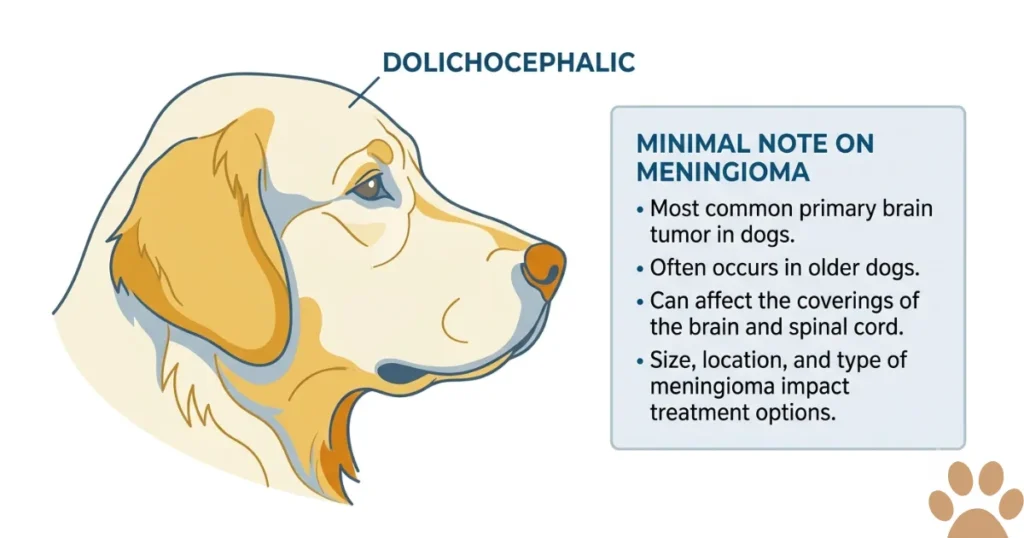
Here is the breed specific hope I want every Golden owner to hear before despair sets in. Golden Retrievers are the most commonly reported breed for meningioma, and that matters enormously. Meningiomas are the most common primary brain tumor in dogs; they tend to grow slowly, and because they sit on the surface of the brain rather than deep within it, they are often the most treatable type.
Brain tumors typically appear in middle aged to senior dogs, around nine to ten years of age, so a Golden showing new neurological signs in his senior years fits the pattern. Confirming the type takes an MRI, the imaging test of choice, ideally read by a veterinary neurologist.
Compare that to gliomas, the more invasive tumors that grow inside the brain tissue and tend to strike flat faced breeds like Boxers and Boston Terriers. A Golden’s long muzzle, a dolichocephalic head shape, is exactly the trait linked to a more favorable meningioma. So the statistics that sound hopeless for brain tumors in general are often gentler for a Golden.
What this means for the decision is real. A meningioma may respond to surgery or radiation and grant many comfortable months, even a year or more, which can move the question of when to euthanize a dog with a brain tumor much further down the road.
How Tumor Type and Treatment Change the Prognosis
The right time to say goodbye depends heavily on what kind of tumor your dog has and what treatment is chosen, so it helps to know the rough numbers. With palliative care alone, meaning steroids like prednisone to reduce brain swelling plus anti seizure drugs such as phenobarbital or levetiracetam, most dogs live around two to four months.
The medication eases symptoms but does not shrink the tumor. Those steroids come with side effects worth expecting, mainly a big increase in thirst, urination, and appetite, which are manageable but can surprise owners. Radiation, by contrast, usually means referral to a specialty center and a series of treatments under anesthesia, so cost and travel are real factors to weigh.
With radiation therapy and surgery for an accessible meningioma, survival can stretch from roughly five months to over two years, depending on the type and location. Secondary brain tumors, the kind that spread from cancer elsewhere in the body, carry the shortest outlook, often under a month, and they make up roughly half of all canine brain tumors.
These can travel from cancers like hemangiosarcoma, as explained in why a dog can bleed before dying, or spread from lung tumors and other carcinomas, including bladder cancer. Knowing your dog’s specific situation lets you plan rather than guess, which is why an MRI and a veterinary neurologist are worth the trip. Full survival ranges across cancers are gathered in how long a dog can live with cancer.

Making the Decision with Your Vet, and the Final Stage
When the signs gather, you do not have to decide alone, and you should not. Your veterinarian, and ideally a veterinary neurologist, can tell you whether seizures might still be controlled, whether treatment could still help, and what the realistic road ahead looks like. The general tools for weighing the whole picture, including quality of life scales and good day tracking, live in our guide on making the euthanasia decision.
The final stage of a brain tumor usually arrives in the last week or two, when severe neurological signs take hold, including frequent seizures, deep disorientation, and an inability to eat or move. At that point, comfort is the only goal worth having. Keep your dog safe from injury during seizures by dimming the lights and lowering the noise, and lean on your vet for sedation if distress sets in.
Whether a Golden faces this or another diagnosis, such as liver cancer, the principle holds. Ending suffering is the last kindness. For more support as you prepare, our Golden Retriever health library is here for you. Choosing peace for a dog whose mind is slipping away is not giving up. It is love at its most selfless.

Expert Insight
The Goldens I have helped through brain tumors taught me something hopeful. Because this breed tends toward the treatable meningioma, families often get good, comfortable months they did not expect. So do not let the word “tumor” steal the time you still have. Watch the seizures, and let those, not fear, guide the timing.
Call your vet now vs discuss with your vet soon
| Emergency, call your vet now | Decline to discuss with your vet soon |
| A seizure lasting more than five minutes | Seizures becoming more frequent |
| Repeated seizures without recovery between | New circling, head tilt, or confusion |
| Sudden collapse or unresponsiveness | Personality or appetite changes |
| Aggression or vocalizing in pain | A wobbly walk or vision trouble |
| Cannot breathe normally | Sleeping more, withdrawing from family |
When do you euthanize a dog with a brain tumor?
Euthanize a dog with a brain tumor when seizures can no longer be controlled, when he cannot walk or eat, or when he stops recognizing you. Uncontrolled cluster seizures are often the clearest sign it is time.
Dog brain tumor, when to euthanize?
Consider euthanasia when your dog’s brain tumor causes uncontrolled seizures, severe confusion, loss of mobility, or pain that medication cannot ease. There is no perfect date, but a steady decline in quality of life signals the time is near.
What are the final stages of a brain tumor in dogs?
The final stages bring frequent or clustering seizures, deep disorientation, an inability to stand or eat, and loss of awareness. These severe signs often appear in the last one to two weeks.
How long can a dog live with a brain tumor?
It depends on type and treatment. Palliative care with steroids gives roughly two to four months; radiation or surgery can extend survival beyond a year, and secondary tumors often allow under a month.
Are seizures a reason to euthanize a dog with a brain tumor?
Uncontrolled seizures are one of the strongest reasons. A single controlled seizure is not the end, but clustering seizures or status epilepticus that medication cannot stop usually means it is time.
What happens if a dog’s brain tumor seizures cannot be controlled?
When seizures cluster or will not stop, the dog is frightened and suffering, and the tumor has outpaced medication. This is often the deciding point. Status epilepticus is an emergency needing immediate care.
Is it safe to treat a dog’s brain tumor at home?
Comfort care at home, including prescribed steroids and anti seizure drugs, is appropriate alongside vet guidance. But a brain tumor cannot be managed at home alone, and uncontrolled seizures need urgent care.
Do Golden Retrievers get brain tumors?
Yes. Golden Retrievers are the most commonly reported breed for meningioma, the most common primary brain tumor in dogs. The reassuring part is that meningiomas tend to be slower growing and more treatable.
Why do Golden Retrievers get meningiomas?
Golden Retrievers have a long muzzle, a dolichocephalic head shape linked to meningioma, while flat faced breeds tend toward gliomas. The genetic reasons are still studied, but the pattern is well documented.
Can Golden Retrievers survive a brain tumor?
Often they live well for a time. Because Goldens usually develop the more treatable meningioma, surgery or radiation can grant many comfortable months. A cure is rare, but good quality time is realistic.
Is a dog with a brain tumor in pain?
Not always in obvious pain, but rising pressure in the skull can cause headaches and distress. Signs include head pressing, restlessness, and vocalizing. Steroids reduce swelling and ease much of it.
When should I take my dog with a brain tumor to the emergency vet?
Go immediately for a seizure lasting over five minutes, repeated seizures without recovery, sudden collapse, aggression, or vocalizing in pain. These are emergencies. Do not wait for a regular appointment.
Does a brain tumor in dogs cause behavior changes?
Yes. Personality and behavior changes are common, including new aggression, anxiety, confusion, circling, or withdrawal. In a dog over five, a sudden behavior change with seizures should prompt a vet visit.
What is the difference between a meningioma and a glioma in dogs?
A meningioma grows on the surface of the brain, tends to be slower and more treatable, and is common in Goldens. A glioma grows inside brain tissue, is more aggressive, and is common in Boxers.
When should I consider euthanasia for my dog’s brain tumor?
Consider euthanasia when seizures are uncontrolled, when your dog cannot walk, eat, or recognize you, or when distress persists despite treatment. Track good days against bad, and let a clear downward trend, not fear, guide the timing.
Conclusion
Knowing when to euthanize a dog with a brain tumor comes down to a few honest signs, uncontrolled or clustering seizures, the loss of the ability to walk, eat, or recognize you, and pain that medication can no longer ease. There is no perfect day, but when seizures break free of control, that is usually the moment.
For a Golden, take heart that the most likely tumor, a meningioma, is often slow and treatable, buying real time. Lean on your vet, watch the trend, and know that choosing peace for a fading mind is the kindest gift you can give.
If you have faced a brain tumor diagnosis with a dog you loved, what sign told you it was time, and what gave you peace with the decision? Your story, shared below, could steady another owner walking this road right now. What do you wish you had known at the start?