
The stages of dog cancer leading to death usually move through three phases. A stable phase where comfort care still works, a decline phase of fading appetite and energy, and a final phase of labored breathing, weakness, and withdrawal in the last days or hours. In Golden Retrievers, hemangiosarcoma can compress these stages into a single sudden collapse.
The stages of dog cancer leading to death are rarely a tidy timeline. For most dogs the decline comes in waves, good days folded between harder ones, until the harder ones win out. Knowing the shape of that path lets you offer comfort rather than be blindsided by it.
In my practice, the question I hear most from golden owners is not “how long,” but “how will I know.” Here’s the honest answer. The signs a dog is dying of cancer follow recognizable patterns, and you can learn to read them.
One detail matters especially for this breed. Because roughly 60 percent of Golden Retrievers die of cancer, and their most common cancer bleeds internally, some Goldens skip the slow decline entirely and crash without warning. Understanding both paths, the gradual and the sudden, is how you stay ready for whichever one your dog takes.
What “Stages of Dog Cancer Leading to Death” Actually Means
Here’s a confusion worth clearing up first. When owners search for the stages of dog cancer leading to death, they’re usually picturing a decline toward the end of life. Veterinarians, though, use “staging” for something different. Cancer staging uses the TNM system, which describes the tumor size, whether it has reached the lymph nodes, and whether it has spread to distant organs. That tells your vet how advanced the disease was at diagnosis. It does not tell you your dog is dying today.
This distinction matters more than it sounds. A dog can carry a stage four label and still have good months ahead with the right care. Another with an earlier stage on paper can decline fast. As one veterinary source puts it, the stage on paper does not by itself mean a dog is dying. The decisions that matter come from how your dog is actually feeling, not the number in the chart.
It also helps to know that stage and grade are different things. Stage describes how far the cancer has spread, while grade describes how aggressive the cells look under a microscope. A low stage with a high grade can still move fast, one more reason the chart alone never tells the whole story.
So when this article talks about stages, it means the phases of the end of life journey, the observable decline you watch at home. That is the map worried owners need and the one our pillar on golden retriever cancer symptoms feeds into once symptoms turn terminal.
The Three Phases of Decline in a Dog Dying of Cancer
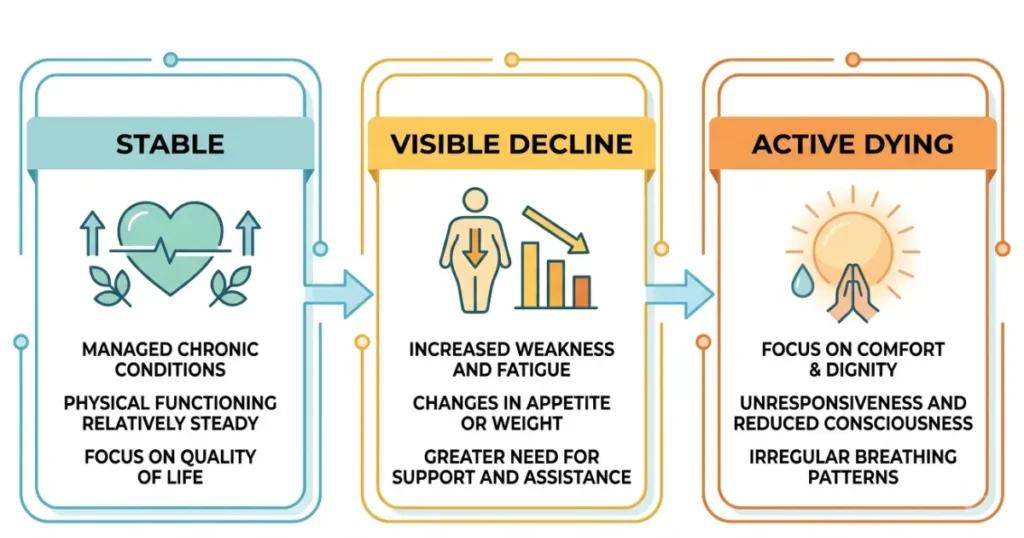
Across most terminal cancers, the decline moves through three phases. I call it the Three Phase Decline, and naming it helps owners locate where their dog is right now.
Phase one is the stable phase.
The cancer is present and perhaps progressing, but your dog still eats, greets you, and enjoys parts of the day. Pain control and anti-nausea medication like maropitant keep quality of life high. Many dogs hold here for weeks or even months.
Phase two is the visible decline.
Appetite drops and returns, then drops further. Energy fades, walks shorten, and your dog sleeps more. You start counting more bad days than good. This is the window to tighten pain control with medications such as gabapentin and to start tracking trends rather than single moments, because watching overall patterns gives a truer picture than any one good afternoon.
Practical comfort steps matter in this phase too. Warmed, strong-smelling food; an appetite stimulant or anti-nausea support; easy access to water; and soft bedding near the family all help. If your dog keeps eating yet still wastes away, that is cancer cachexia, a metabolic wasting the tumor drives, and it usually signals the disease is advancing.
Phase three is active dying
Usually the last days or hours. Your dog stops eating and drinking, may be unable to rise, and breathing changes. Comfort, presence, and a plan matter most here. For realistic survival ranges within each phase, our guide on how long a dog can live with cancer breaks it down by type.
Signs a Dog Is Dying of Cancer in the Final Days and Hours
The signs a dog is dying of cancer become unmistakable in the final stretch, and knowing them spares you a lot of second guessing. In the last days, most dogs lose interest in food and water entirely. Many cannot rise on their own, and some become incontinent without seeming aware of it.
Breathing tells you a great deal. As death nears, breathing patterns falter, sometimes with a rattle in the chest as fluid collects, and the gaps between breaths stretch out. Body temperature drops, so the paws, ears, and legs feel cool to the touch. The gums may turn pale. Some dogs withdraw to a quiet corner away from the family, while others want to stay close.
I want to be honest about one thing owners are rarely told. A natural death from cancer is not always a peaceful one. The stages of natural dying can be hard to watch, which is exactly why humane euthanasia exists: to offer a calm and pain free ending when the body is shutting down. If you see labored breathing, collapse, uncontrolled bleeding, or pain that medication no longer touches, call your vet immediately. Those are not “wait until morning” signs.
Before that night comes, it helps to prepare while you are calm. Keep your nearest emergency clinic’s number within reach, ask your vet about an in home hospice or euthanasia service, and decide in advance who will want to be there. A plan made early spares you from scrambling during a crisis.
Why the Stages Look Different in a Golden Retriever
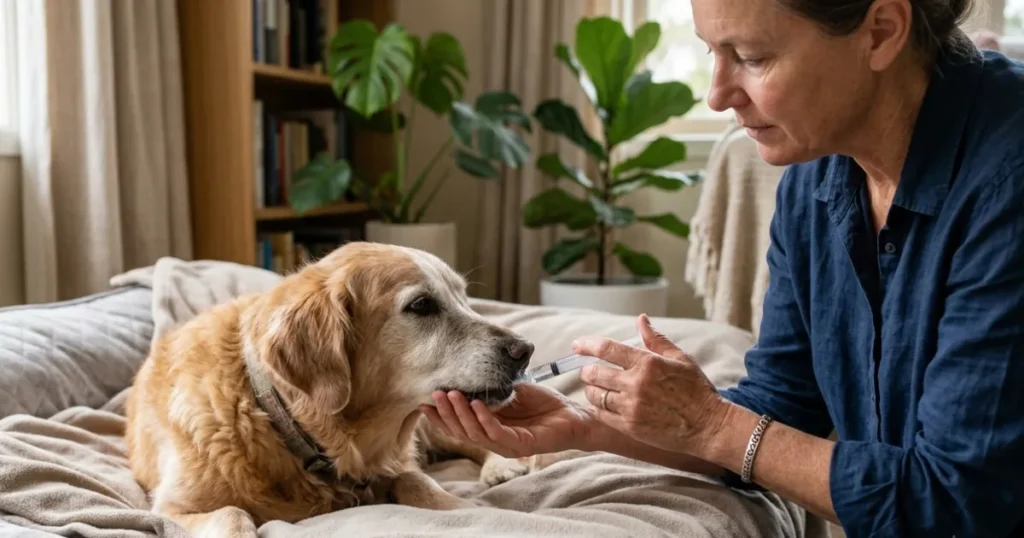
Golden Retrievers deserve a specific warning here, because the standard three phase decline does not always apply to them. The breed’s most common cancer is hemangiosarcoma, and the AKC reports that four cancers drive more than half of Golden deaths, with hemangiosarcoma and osteosarcoma leading. Hemangiosarcoma grows silently in the spleen, heart, or liver and often gives no slow decline at all.
What that means in practice is sobering. A Golden can seem completely well in the morning and collapse by evening from sudden internal bleeding. The first stage an owner sees can also be the last. The warning signs are pale gums, sudden weakness, an inability to stand, and rapid breathing.
A necropsy study of 652 Goldens found 65 percent died of cancer, with hemangiosarcoma the single most common diagnosis, so this is not a rare exception in the breed. Some vets recommend extra screening, such as a periodic abdominal ultrasound, for at risk breeds like Goldens after age 5, precisely because hemangiosarcoma stays hidden until it ruptures. We cover this pattern in depth in why a dog can bleed internally before dying.
So Goldens really face two possible paths to death from cancer, and it helps to know which one you might be preparing for.
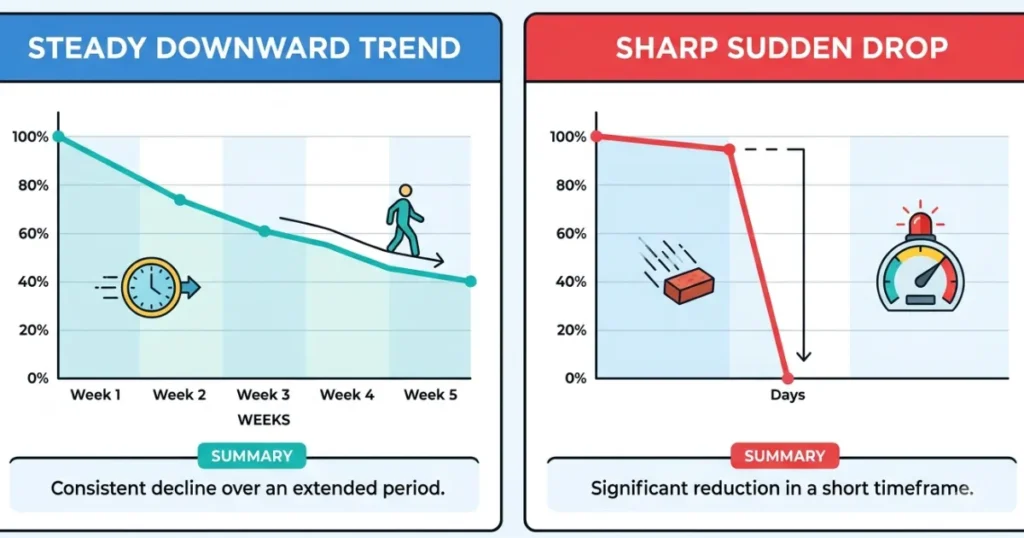
Slow Decline vs Sudden Crisis: Two Ways Cancer Ends
| Pattern | What it looks like | Cancers that tend to follow it | What it asks of you |
| Slow decline | Gradual weight loss, fading energy, more bad days over weeks | Lymphoma, many carcinomas, oral melanoma | Track trends and plan a calm goodbye |
| Sudden crisis | Fine in the morning, collapsed by evening from internal bleeding | Hemangiosarcoma, ruptured liver tumors | Keep an emergency plan ready now |
If your Golden has a splenic or cardiac mass on imaging, treat the sudden crisis column as your reality and keep an emergency plan ready even on the good days.
How Different Cancers Reach the End: What to Expect by Type
Cancer does not end the same way for every dog, and the type shapes the final stage. Knowing the pattern for your dog’s diagnosis removes a lot of fear of the unknown.
Lymphoma, one of the most common, tends to end with a slow systemic decline, lethargy, vomiting, diarrhea, weight loss, and a fading appetite as organs are affected. Liver cancer often brings jaundice, a yellow tint to the gums and the whites of the eyes, along with vomiting and a risk of bleeding into the abdomen.
For that specific course, see the timing decisions with liver cancer. Lung cancer centers on breathing, with coughing and labored effort as the lungs lose capacity, which we follow in making the call on lung cancer. Bladder tumors cause straining, accidents, and blood in the urine, traced through to the final stages of bladder cancer in dogs. Brain tumors show neurological signs, seizures, circling, disorientation, and personality changes, which we address in the timing for a dog with a brain tumor.
Knowing your dog’s specific cancer also lets your vet predict the likely final signs, so you can stock the right comfort medications ahead of time, whether that is anti-nausea support for lymphoma or extra pain control for bone cancer. Whatever the type, the underlying message holds. Once the final stage signs appear and comfort slips, the focus shifts from fighting the cancer to protecting the time that is left.
When It’s Time: Tracking Good Days and Bad Days
You don’t have to guess at the right moment, and you shouldn’t try to hold the whole picture in your head. The most useful tool I give families is a simple daily log. Mark each day as good or bad on a calendar, then watch the ratio over a week or two.
For a structured version, the HHHHHMM Quality of Life Scale, developed by veterinary oncologist Dr. Alice Villalobos, scores seven areas: hurt, hunger, hydration, hygiene, happiness, mobility, and whether good days still outnumber bad. A consistently low total is data, not failure, and it gives your vet something concrete to work from.
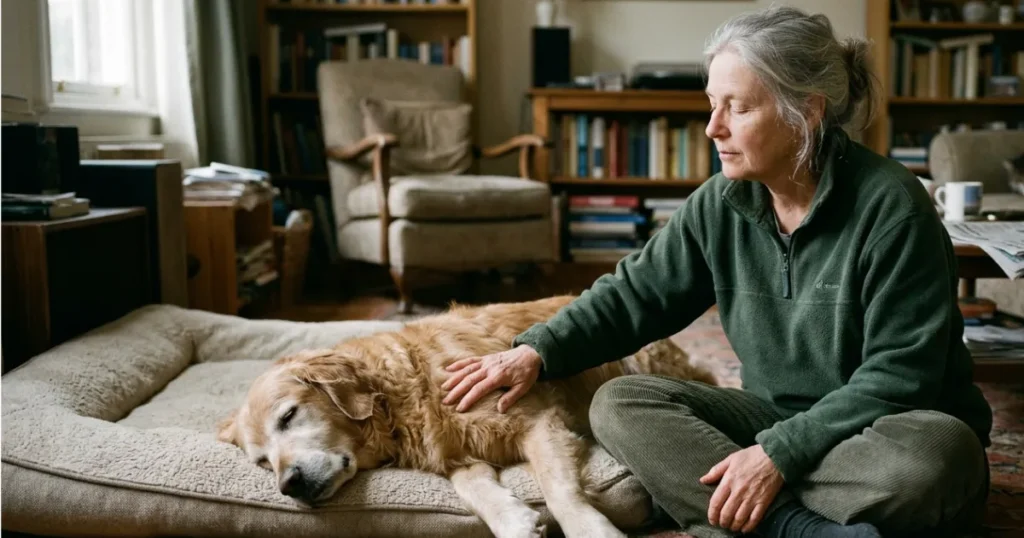
Here’s the principle I share gently with every family. With a terminal diagnosis, choosing a little early is kinder than waiting too long. The goal is to prevent suffering, not to squeeze out every last day. When the bad days outnumber the good and comfort is slipping, it’s time to talk with your vet about knowing when to consider euthanasia. You can lean on our Golden Retriever health library as you prepare. This is the hardest love there is, and doing it on time is the final gift.

Expert Insight
The families who struggle most waited for a dramatic sign that never came. With cancer, the end is usually quiet. A dog who stops meeting you at the door, then stops eating, then stops trying to rise. Trust that pattern. You rarely get a clearer signal than your dog slowly leaving the room.
Call your vet now vs keep monitoring
| Death may be near; call your vet now | Declining but comfort is still possible |
| Labored or irregular breathing, pale or blue gums | Eating less but still taking favorite foods |
| Collapse or inability to rise at all | Sleeping more, slower and shorter on walks |
| Uncontrolled bleeding, or a hard, swollen belly | Good days still mixed in with the bad |
| A seizure that will not stop | Mild nausea controlled by medication |
| Crying or panting that pain medicine no longer eases | Needs help up but then settles comfortably |
What are the stages of dog cancer leading to death?
The stages of dog cancer leading to death generally include a stable phase, a visible decline phase, and a final active dying phase. Most dogs move through these over weeks, though aggressive cancers can compress them into days.
How can you tell what stage a dying dog’s cancer is in?
Look at function, not paperwork. A dog still eating and engaging is in an earlier phase. Refusal of food, inability to rise, and changed breathing signal the final stage.
What are the signs a dog is dying of cancer?
The signs a dog is dying of cancer include refusing food and water, extreme weakness, inability to rise, labored or irregular breathing, cool paws and ears, pale gums, incontinence, and withdrawal from the family.
How long does the final stage of cancer last in dogs?
The final active dying stage usually lasts hours to a few days once a dog stops eating and cannot rise. The earlier decline phase can stretch over weeks, depending on the cancer type.
Is a dog in pain while dying of cancer?
Some are, some are not. Pain depends on the cancer type, with bone cancer notably painful. Watch for panting at rest, restlessness, or guarding, since dogs hide pain well.
Do dogs know when they are dying?
Dogs do not grasp death the way people do, but many withdraw or seek quiet as they decline. They respond to comfort and your calm presence more than to any understanding.
Is it safe to let my dog die naturally at home?
Sometimes, but not always. A natural death from cancer can be distressing and is rarely guaranteed to be peaceful. Many vets recommend humane euthanasia to prevent suffering as the body shuts down.
What happens if I wait too long to euthanize my dog?
Waiting too long risks days of avoidable suffering, from breathing distress to pain or crisis. Most vets advise that with a terminal diagnosis, choosing early is kinder than too late.
When should I use a quality of life scale for my dog?
Use a quality of life scale once your dog has a terminal diagnosis or visible decline. The HHHHHMM scale by Dr. Alice Villalobos scores seven areas to help you track trends objectively.
Can a dog die suddenly from cancer?
Yes. Some cancers, especially hemangiosarcoma, cause sudden internal bleeding that takes a dog from seemingly well to collapse within hours. Pale gums and sudden weakness are emergencies, so keep a plan ready.
How does a Golden Retriever’s cancer usually progress to death?
Golden Retriever cancer often follows one of two paths. Lymphoma brings a slower systemic decline, while hemangiosarcoma can cause a sudden fatal bleed, the pattern the Golden Retriever Lifetime Study works to explain.
Why do Golden Retrievers sometimes die suddenly from cancer?
Golden Retrievers die suddenly most often from hemangiosarcoma, a blood vessel cancer common in the breed. It grows hidden in the spleen or heart, then ruptures, causing rapid internal bleeding, collapse, and pale gums.
Do Golden Retrievers with lymphoma decline slowly?
Often yes. Golden Retrievers with lymphoma usually decline gradually, with swollen lymph nodes, lethargy, and weight loss. Prednisone and chemotherapy can extend comfortable time, and the AKC lists lymphoma among the breed’s top cancers.
When should I call the vet for my dying Golden Retriever?
Call immediately if your Golden Retriever has labored breathing, collapses, has uncontrolled bleeding, has a seizure, or has pain medication that no longer eases it. Call within a day for food refusal beyond 24 hours or a clear comfort drop.
When should I rush my dog to the vet in the final stages?
Go immediately for labored or irregular breathing, pale or blue gums, collapse, uncontrolled bleeding, or a nonstop seizure. These signal a crisis or active dying, and your vet can give urgent comfort.
Conclusion
The stages of dog cancer leading to death follow a recognizable path, a stable phase, a visible decline, then active dying, though no two dogs travel it at the same pace. Watch for the signs a dog is dying of cancer in the last days, like refusing food and water, being unable to rise, changed breathing, and cool extremities.
For Goldens, stay alert to the sudden crisis hemangiosarcoma can bring. The kindest gift is comfort over cure, choosing the moment a little early, with love.
If you’ve walked this road, what was the sign that told you it was time? For some, it was a refused favorite meal; for others, a morning their dog couldn’t stand. Shared below, your experience may be the reassurance another owner needs tonight. What did that moment look like for you?