Consider putting your dog down when cancer causes suffering you cannot control, when bad days clearly outnumber good ones, and when his joys are gone. There is no perfect date, and with a terminal diagnosis, a little too early is kinder than too late. A quality of life scale and your vet help you find that line.
My dog has cancer when do I put him down? It may be the heaviest question you’ve typed ever, and asking it does not make you a bad owner. It makes you a loving one. No calendar date hands you the answer, but there are clear signs and a way to read them.
In my practice, I tell families the goal is not to find the perfect day. It is to prevent suffering, which usually means choosing a little sooner than your heart wants to. The decision rests on quality of life, and that assessment is the same for a Golden Retriever as for any dog. What is a little different for Goldens is their temperament.
This is a breed that hides pain and keeps wagging to please you, which can make a struggling dog look better than he feels. Reading past that brave face is the real work. Our Golden Retriever cancer symptoms cover how these cancers behave, so you know what you are weighing.
There Is No Perfect Date: Watch Quality of Life, Not the Calendar
The first thing to let go of is the search for a perfect moment. Owners often wait for an unmistakable sign, a dog who cannot get up or stops eating entirely, and many dogs never give that single dramatic cue. The decline is a slope, not a cliff. Be aware too that comfort medications can create good days that flatter the picture. A short course of steroids, for example, can lift appetite and energy for a week or two, which is a real gift, but it does not mean the cancer has retreated. Judge the trend across that window rather than the best single day inside it.
So instead of a date, track a pattern. The principle veterinarians lean on is simple. When the bad days clearly and consistently outnumber the good ones, quality of life has shifted, and it is time to talk seriously about saying goodbye. One good afternoon does not undo a week of suffering.
I give families a method I call the Good Day Ledger. Each evening, mark the day good or bad based on whether your dog ate, moved, or engaged with something he loves. After two weeks, you will see the trend in black and white, which is far more honest than memory under stress. With a terminal cancer diagnosis, the guiding rule is that a little too early is kinder than too late. You are not ending a good life. You are preventing a hard ending. The broader arc of how cancer progresses is mapped in the stages of cancer leading to death.

The HHHHHMM Quality of Life Scale, Explained
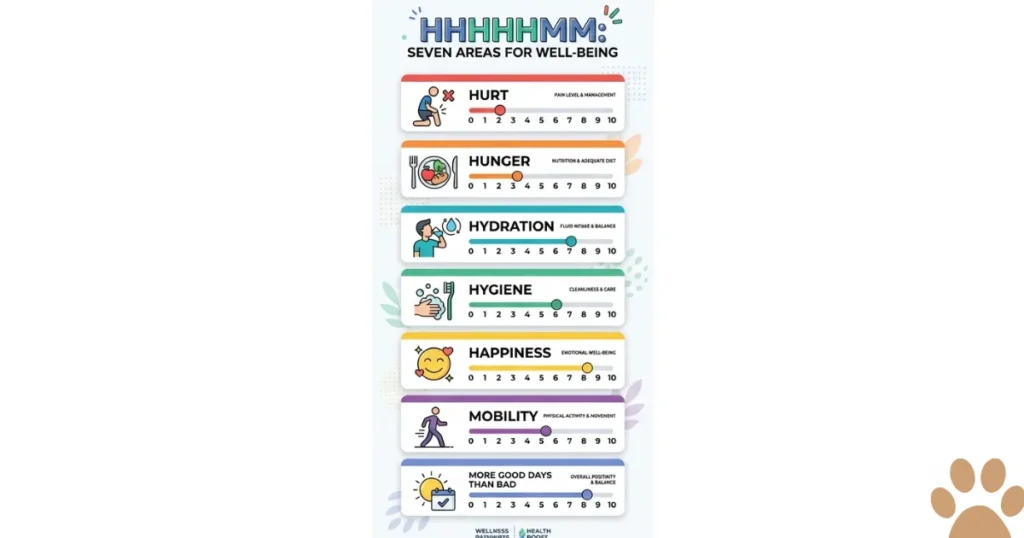
To turn a gut feeling into something you and your vet can act on, use a quality of life scale. The most widely used is the HHHHHMM scale, developed by veterinary oncologist Dr. Alice Villalobos. It scores seven areas from zero to ten, for a total out of seventy.
The seven areas are hurt, hunger, hydration, hygiene, happiness, mobility, and more good days than bad. A total above thirty-five generally suggests an acceptable quality of life for continued hospice care, while a score that keeps falling below that line is a signal to talk with your vet about euthanasia. The number is not a verdict. It is a mirror that shows what love sometimes softens. Scoring is simple. Rate each area from zero to ten, where ten is best, then add them up and repeat the exercise every few days so you can see movement. One detail matters more than the total, though.
A single area in free fall, most often uncontrolled pain or a complete refusal to eat, can outweigh a decent overall score. If one domain has collapsed, do not let a comfortable total talk you out of what you are seeing. Other tools exist too, including scales from Ohio State and from hospice services, but the HHHHHMM scale is the most widely used starting point. Here is how each area tends to look for a golden, using a quick reference you can revisit week to week.
Quality of Life Check for a Golden with Cancer
| HHHHHMM area | What to look for | Leaning toward goodbye when |
| Hurt | Pain controlled on medication | Panting, restless, or vocalizing at rest |
| Hunger | Eating meals willingly | Needs daily coaxing or hand feeding |
| Hydration | Drinking on his own | Needs fluids under the skin to stay hydrated |
| Hygiene | Able to stay clean | Soiling himself, unable to move away |
| Happiness | Joy in people, food, play | No interest in greeting you or favorites |
| Mobility | Rising and walking | Cannot stand or needs lifting to move |
| More good than bad | Trend over two weeks | Bad days clearly outnumber good ones |
The Signs That Often Mean It’s Time
Beyond the scale, certain signs carry extra weight, and most families recognize several at once when the time is near.
Pain you cannot control is the clearest. When pain medication, including drugs like gabapentin, no longer keeps your dog comfortable, comfort care has reached its limit. A complete and lasting refusal to eat is another, especially when even favorite foods and appetite support fail. So is the loss of mobility, a dog who can no longer stand, walk, or toilet without help, which steals dignity and is physically hard to manage in a large breed.
Labored breathing, repeated seizures, and uncontrolled bleeding are urgent, often emergency, signs. So is the quiet one owners feel before they can name it, the loss of joy. When a dog no longer greets you, seeks affection, or takes pleasure in anything, the spark that defined him has dimmed. A few quieter signs round out the picture. Many dogs near the end seek solitude, hiding in a closet or under a bed, while others cling unusually close.
Ongoing nausea, persistent weight loss despite eating, and the steady wasting of cancer cachexia all signal that the disease is winning. Incontinence deserves special weight, not because it is messy, but because a clean, proud dog who can no longer keep himself clean often feels that loss of dignity keenly. The exact signs vary by cancer type, which is why type specific guides for a brain tumor, lung cancer, liver cancer, and bladder cancer each map their own final stages.
What Golden Owners Get Wrong About “He Still Seems Happy”
Here is the trap I see most with Goldens, and it is worth naming plainly. This breed is stoic and deeply people pleasing. A Golden will wag, greet you at the door, and accept a treat even when he feels awful, because connection and food are wired deep in the breed. Owners read those moments as proof of quality of life, and understandably so.
The honest correction is that quality of life criteria are the same for a Golden as for any dog. What differs is how well Goldens mask declines. The famous reassurance, “He still eats his treats,” is exactly the signal that can mislead a Golden owner, because a food-motivated dog may take a treat long after he has stopped enjoying much else. It helps to flip the question. Rather than asking whether your Golden still does anything he enjoys, ask what he still enjoys and whether he can still actually do it.
A dog who loved walks but can no longer manage the yard or who loved swimming but now only watches has lost more than the tally of good moments suggests. If you are unsure, ask your vet for a frank, outside read. Loving eyes are the least objective ones in the room.
This is why an objective tool matters more, not less, for this breed. Score the scale honestly, count the good and bad days, and weigh the whole picture rather than the brave moments.
Caregiver Fatigue and Planning for a Sudden Crisis
Two practical truths rarely make it into these articles, and both deserve room. The first is caregiver fatigue. Your ability to care for your dog, physically and emotionally, is a legitimate part of this decision, not a selfish afterthought. When daily care becomes constant crisis management, lifting a large golden, cleaning accidents, and medicating around the clock, both of you suffer. Acknowledging your limits is part of loving him well. The same honesty applies to time and money.
Round the clock nursing, repeated vet visits, and the cost of advanced care are real constraints, and weighing them does not make you a lesser owner. Bring the whole family into the conversation early, so no one is blindsided and the decision is shared rather than carried alone. Children especially benefit from gentle, honest preparation.
The second is planning. The right time can arrive calmly over weeks, or it can arrive in a single frightening hour. Goldens are prone to hemangiosarcoma, which can rupture and bleed suddenly, turning a quiet evening into an emergency, as we explain in “Why a dog can bleed before dying“. Slower cancers like lymphoma usually allow a planned, scheduled goodbye, while survival ranges for each are covered in how long a dog can live with cancer.
Make a plan now. Know your emergency vet, decide whether you want a home or clinic goodbye, and talk it through with your family before the moment comes. A plan made in calm spares you a decision made in panic.
What the Day Itself Looks Like, and the Grief After
Knowing what happens can ease a fear that often goes unspoken. Euthanasia is gentle. Your vet first gives a sedative so your dog drifts into a deep, painless sleep, and then a final injection stops the heart quietly, usually within seconds. There is no struggle and no fear. You can choose a clinic or, for many families, a peaceful goodbye at home surrounded by familiar smells and the people he loved.
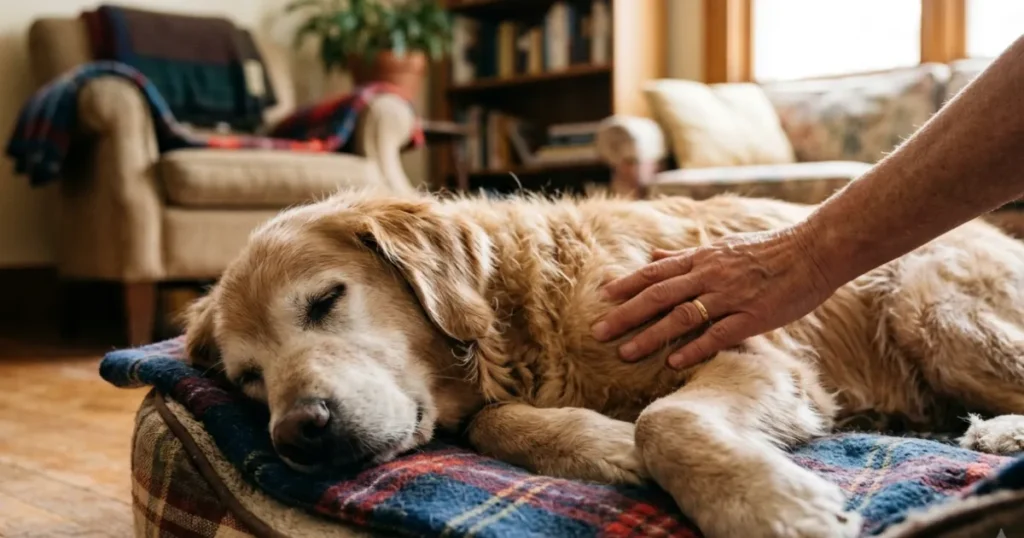
You can be there or not. Both choices are valid, and a good vet will never judge you for either. Many owners find that being present, with a hand resting on their dog, brings them peace later on.
Afterward, grief can hit harder than expected, and it deserves the same compassion you would give any loss. Anticipatory grief, the mourning that starts before the goodbye, is normal too. Be gentle with yourself. If you need support as you prepare or after, our Golden Retriever health library and your veterinary team are there to help. Choosing to end suffering is not failing your dog. It is the last, hardest act of love you can give.
Expert Insight
The regret I hear most is never that a family acted too soon. It is “I wish we hadn’t made him wait.” Goldens are so good at putting on a brave face that owners hold on a few days too long, hoping. If you are asking the question at all, you are already paying close attention. Trust that.
Leaning toward goodbye vs still good quality of life
| Signs it may be time | Signs there is still good time |
| Pain that medication no longer controls | Comfortable and settled on current medication |
| Refusing even favorite foods and treats | Still eating meals or favorites with interest |
| Cannot stand, walk, or toilet without help | Moving, even slowly, and toileting on his own |
| Bad days clearly outnumber good ones | Good days still outnumber the hard ones |
| No joy in people, play, or affection | Still greets you and enjoys small pleasures |
How do I know when to put my dog with cancer down?
Consider it when suffering outweighs joy, when bad days outnumber good ones, and when pain can no longer be controlled. A quality of life scale and your vet turn that feeling into an honest decision.
My dog has cancer when do I put him down?
Put him down when cancer causes suffering you cannot control, and his good days are mostly gone. There is no perfect date, but with a terminal diagnosis, a little too early is kinder than waiting too long.
What is the HHHHHMM quality of life scale?
The HHHHHMM scale by Dr. Alice Villalobos scores seven areas: hurt, hunger, hydration, hygiene, happiness, mobility, and more good days than bad, from zero to ten. A falling total below 35 of 70 signals it may be time.
How long can a dog live with cancer before euthanasia?
It varies hugely by cancer type, from weeks with aggressive cancers to over a year with treatable ones. Quality of life, not the calendar, should guide timing.
Is it better to euthanize a dog too early or too late?
Most vets agree a little too early is kinder than too late. The goal is to prevent suffering, not extend life at any cost. Waiting for an unmistakable sign often means waiting past comfort.
Do dogs know when they are being put to sleep?
Dogs do not understand death as people do. With sedation first, they simply feel sleepy and calm. They sense your presence and tone, so staying gentle and close matters most.
Does euthanasia hurt a dog?
No. Your vet gives a sedative so your dog falls into a painless sleep, then a final injection that stops the heart quietly within seconds. There is no struggle, only a peaceful passing.
Is it safe to wait and let my dog die naturally?
It can be, but a natural death from cancer is not guaranteed to be peaceful and can involve pain or a frightening crisis. Many vets recommend planned euthanasia for a calmer ending.
What happens if I wait too long to euthanize my dog?
Waiting too long risks days of avoidable suffering or a frightening emergency, like sudden bleeding or breathing distress. It can also rob you of a calm, planned goodbye.
When should I euthanize a Golden Retriever with cancer?
Euthanize a Golden Retriever when quality of life has clearly declined, pain is unmanageable, or joy is gone. Because Goldens hide discomfort well, score them honestly on a quality of life scale rather than trusting a brave face.
Do Golden Retrievers hide pain from cancer?
Yes. Golden Retrievers are stoic and people pleasing, so they often mask pain, keep wagging, and accept food even when feeling poorly. This makes objective scoring especially important.
Why do Golden Retrievers keep eating when they are dying?
Golden Retrievers are strongly food motivated, so they may take treats long after losing interest in everything else. A Golden still eating is not proof of good quality of life, which is why owners should weigh the whole picture.
Can Golden Retrievers recover from cancer instead of euthanasia?
Some can. Cancers like lymphoma often respond well and grant comfortable extra time, while hemangiosarcoma carries a poor outlook. An oncologist can tell you whether recovery or comfort care is realistic.
How much does dog euthanasia cost?
Costs vary widely by region and setting. In clinic euthanasia often ranges from roughly fifty to three hundred dollars, while in home services cost more. Ask your vet for exact local pricing.
When should I call the vet about my dog’s quality of life?
Call your vet whenever you notice a clear decline, uncontrolled pain, refusal to eat, or loss of joy. You need not wait for a crisis. An early conversation gives you options.
Conclusion
My dog has cancer when do I put him down? It has no perfect answer, but it has an honest one. When suffering outweighs joy and the bad days outnumber the good, a peaceful goodbye is the kindest gift. Lean on a quality of life scale, count the days rather than the moments, and remember, Goldens hide how they feel, so score past the brave face.
A little too early spares a hard ending. Talk with your vet, make a plan, and know that ending suffering is not giving up. It is love finishing what it started.
If you have faced this decision with a dog you loved, what helped you know it was time, and what would you tell someone sitting where you once sat? Your words, shared below, may be the comfort another owner needs tonight. What do you wish you had known before that day?