
The final stages of bladder cancer in dogs show worsening urinary signs such as straining, frequent small or bloody urinations, house accidents, and eventually an inability to pass urine at all. This urinary obstruction is a life threatening emergency. Most of these cancers are transitional cell carcinoma, kept comfortable with medication until obstruction or pain makes it time.
The final stages of bladder cancer symptoms in dogs almost always center on one thing: the simple act of urinating becomes harder and harder. What started as a few bloody puddles turns into constant straining, accidents, and discomfort. Knowing what comes next helps you protect your dog from the outcome you most want to avoid, a painful crisis.
In my practice, the bladder cancer cases that go best are the ones where owners understand the emergency to watch for. Almost all canine bladder cancer is transitional cell carcinoma, a tumor that tends to grow right at the neck of the bladder where urine exits. As it advances, it can block that flow entirely.
For a Golden owner, there’s honest good news up front. Bladder cancer is far less common in Goldens than in breeds like Scottish Terriers and less common than the cancers Goldens are truly prone to.
What the Final Stages of Bladder Cancer Look Like in Dogs
By the time bladder cancer reaches its final stages, the symptoms are hard to miss, because they disrupt something your dog does many times a day. The earlier signs, occasional blood in the urine and mild straining, give way to near-constant difficulty.
You’ll often see your dog posturing to urinate again and again, producing only a few drops or nothing. Blood becomes more obvious, turning the urine pink or deep red. Accidents in the house grow frequent as the bladder loses its ability to hold or empty normally. Many dogs leak urine while resting without seeming aware of it.
Pain and restlessness creep in. Dogs in the final stages often cannot settle, pacing or shifting because the urge to urinate never fully resolves. Some lose their appetite and drop weight. If the cancer has spread, and transitional cell carcinoma reaches the lymph nodes, lungs, or bones in more than half of dogs late in the disease, you may also see coughing, lameness, or labored breathing.
Male dogs can show added signs when the tumor reaches the prostate, which happens in roughly a third of male cases. You may also notice a hunched, tense posture, a foul-smelling discharge, or urine dribbling without control. None of these stay subtle once they take hold.
The thread running through all of it is the urinary tract slowly failing. That is why the single most important sign to understand is a complete inability to pass urine, which we cover next.
The Urinary Obstruction Emergency: The Sign You Cannot Miss
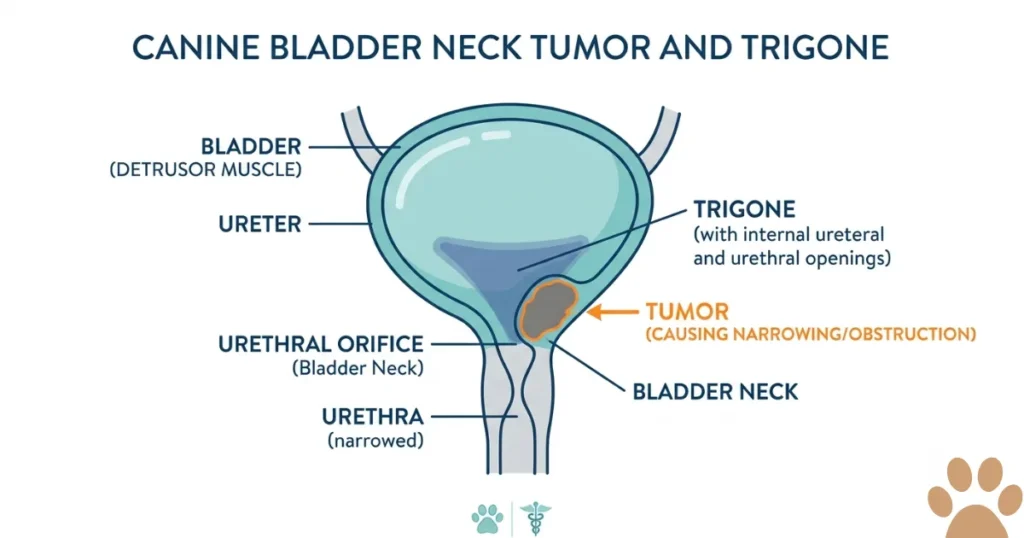
Of every symptom in the final stages of bladder cancer, one is a true emergency, and it is the one owners most often miss until it is severe. Because transitional cell carcinoma usually grows at the trigone, the neck of the bladder where the urethra begins, it can block the exit completely. When that happens, your dog cannot urinate at all.
A dog who strains repeatedly and produces nothing is not constipated and is not simply uncomfortable. The bladder fills with nowhere to drain, pressure backs up toward the kidneys, and within a day or two this becomes life threatening. Toxins that urine normally clears build up in the blood.
Here is the rule I give every owner of a dog with bladder cancer. If your dog is straining and passing no urine, treat it as an emergency and reach a vet immediately, day or night. Do not wait until morning. A vet can relieve the obstruction by passing a catheter or placing a stent, which buys time to be comfortable even when a cure is off the table. It helps to know that a partial blockage can quickly tip into a complete one, so a dog who is merely struggling today can be fully obstructed tomorrow.
Depending on the case, your vet may pass a urinary catheter, place a stent to hold the urethra open, or surgically create a temporary drainage tube. This is also the moment many families face the hardest decision, which is why having a plan ready before this night arrives matters so much.
Where Bladder Cancer Fits in a Golden Retriever’s Cancer Risk
Here is where Golden owners deserve straight talk rather than generic dog advice. Bladder cancer is not one of the cancers Golden Retrievers are especially prone to. The breeds at highest risk for transitional cell carcinoma are Scottish Terriers, who carry a dramatically elevated risk, along with West Highland White Terriers, Shetland Sheepdogs, and Beagles. Goldens do not sit on that high risk list.
For a Golden, the far more likely cancers are hemangiosarcoma and lymphoma, which is why our pillar on Golden Retriever cancer symptoms focuses there. Less common, though, does not mean impossible. Goldens still develop bladder cancer, almost always as seniors, since transitional cell carcinoma typically appears at 9 to 11 years of age.
A few risk factors apply to Goldens as much as any breed, and they are worth knowing because some are avoidable. Exposure to certain lawn herbicides and pesticides has been linked to bladder cancer in dogs. Older spayed females sit at slightly higher risk. So while a Golden owner can take real comfort that this cancer is uncommon in the breed, a senior Golden with persistent urinary signs still deserves a careful workup rather than a brush off.
The reason breed risk concentrates this way is genetic, the same reason the Golden Retriever Lifetime Study by the Morris Animal Foundation follows this breed for its own signature cancers rather than for bladder tumors. Environmental risk, by contrast, is shared across all breeds, so limiting a Golden’s exposure to treated lawns is sensible whatever the odds.

Why Final Stage Bladder Cancer Is So Often Caught Late
The cruelest feature of bladder cancer is how easily its early signs hide as something minor, which is why so many dogs are not diagnosed until the disease is advanced. Blood in the urine, straining, and frequent small urinations are also the classic signs of a simple urinary tract infection. Most dogs with these signs do have an infection, so a course of antibiotics is a reasonable first step.
The problem comes when the signs keep returning. A urinary issue that comes back again and again after antibiotics, especially in a senior dog, is the pattern that should raise suspicion of a tumor rather than a recurring infection. This is the correction competitors rarely make clear.
If your vet suspects a bladder tumor, a urine based test that looks for a mutation in the BRAF gene, marketed as the CADET BRAF test, can detect most transitional cell carcinomas without invasive sampling. An abdominal ultrasound shows the tumor directly.
This pattern is worth catching early for another reason. More than ninety percent of these canine tumors are intermediate to high grade, meaning they tend to be aggressive, so the sooner the right diagnosis replaces another antibiotic refill, the sooner treatment can slow the tumor and protect comfort.
UTI vs Final Stage Bladder Cancer: Telling Them Apart
| Feature | Simple UTI | Bladder cancer (TCC) |
| Response to antibiotics | Clears and stays gone | Improves briefly, then returns |
| Typical age | Any age | Usually senior, 9 to 11 years |
| Blood in urine | Often, resolves with treatment | Persistent or worsening |
| Straining | Resolves | Progresses toward obstruction |
| Overall course | Days | Weeks to months, worsening |
If the pattern in the right column sounds familiar, ask your vet about imaging and a BRAF test rather than another round of antibiotics.

How Long Dogs Live in the Final Stages, and What Comfort Looks Like
Once bladder cancer reaches the final stages, the honest timeline is usually short, though comfort care can still mean good weeks. With anti-inflammatory medication such as piroxicam alone, the median survival from diagnosis runs around six months. Adding chemotherapy such as mitoxantrone can extend that toward a year, though it is shorter when the tumor involves the urethra or prostate. By the final stages, you are typically measuring time in weeks.
Comfort, not cure, is the goal now. Piroxicam does double duty, easing inflammation and slowing tumor growth while controlling pain. Your vet may add stronger pain relief, anti-nausea support, and a plan to keep your dog clean and dry as incontinence sets in. Easy access to frequent potty breaks reduces both accidents and stress.
A few practical measures help at home. Washable bedding and a belly band keep a leaking dog comfortable; subcutaneous fluids can support hydration if your vet advises them, and watching for any day with no urine output lets you act before a full blockage. Anti-inflammatory drugs like piroxicam also need monitoring, since they can affect the stomach and kidneys.
For a fuller picture of survival across cancer types, see how long a dog can live with cancer, and for the broader arc, the stages of cancer leading to death map what to expect. Bleeding can also appear near the end in various cancers, explaining why a dog can bleed before dying. Whatever the number, the focus shifts to protecting the comfortable time that remains.
Making the Decision: The Comfort and Flow Check
The decision owners dread does not have to be a guess. With bladder cancer, two things tend to define when it’s time, and naming them helps. I call it the Comfort and Flow check.
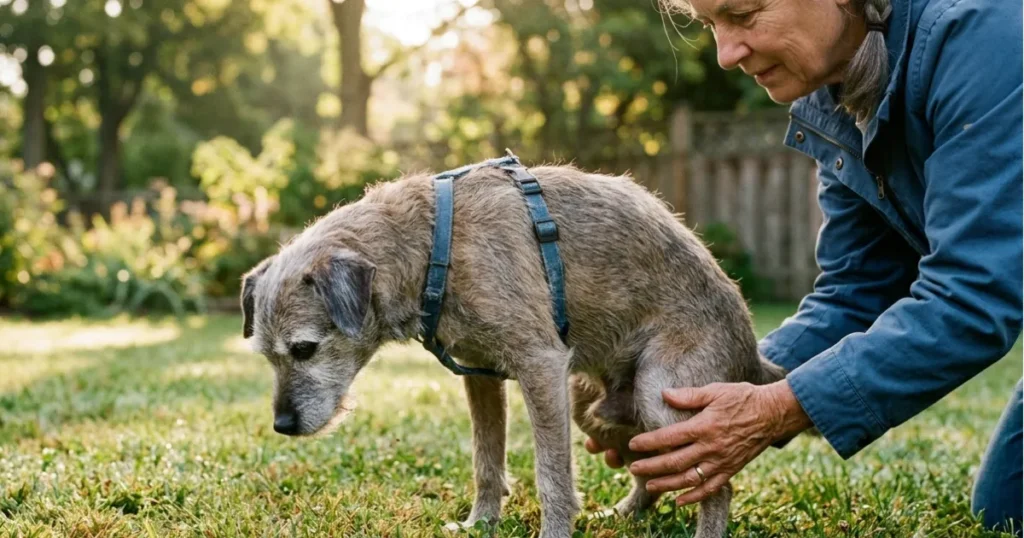
Comfort comes first. Track good days against bad ones, watch whether pain medication still works, and notice whether your dog can rest or is pacing constantly from the urge to urinate. When comfort can no longer be held even with medication, that is your signal.
Flow comes second, and this one is specific to bladder cancer. The moment your dog cannot reliably pass urine, the disease has crossed a threshold that medication cannot fix for long. A blocked dog who cannot be kept comfortable is in a different place from one still urinating, even with difficulty.
When either falls apart, it’s time to talk with your vet about knowing when to consider euthanasia. The same timing question arises with other cancers in their own way, whether a dog faces a brain tumor, lung cancer, or liver cancer. You can lean on our Golden Retriever health library as you prepare.

Expert Insight
The bladder cancer patients I remember most are the ones whose owners caught the pattern, a urinary problem that kept coming back, and pushed for imaging instead of a third round of antibiotics. That instinct buys time. And near the end, the kindest thing you can do is watch the flow. A dog who cannot urinate is telling you the moment has come.
Emergency now vs manageable for now
| Go to the vet immediately | Book a prompt exam, not an emergency |
| Straining repeatedly and passing no urine at all | Passing small amounts more often than usual |
| A hard, swollen, painful lower belly | Occasional blood tinting the urine |
| Collapse or severe, unrelenting restlessness | Mild straining that still produces urine |
| Vomiting with no urine output for hours | Needing more frequent potty breaks |
| Pain that medication no longer eases | An accident in the house now and then |
What are the final stages of bladder cancer in dogs?
The final stages of bladder cancer in dogs involve severe urinary difficulty, frequent bloody urination, accidents, pain, and often a complete inability to pass urine. This obstruction is a life threatening emergency that needs immediate veterinary care.
What are the symptoms of end stage bladder cancer in dogs?
End stage symptoms include constant straining, blood in the urine, accidents, restlessness from discomfort, appetite and weight loss, and signs of spread like coughing or lameness if the tumor has reached the lungs.
How long do dogs live in the final stages of bladder cancer?
Survival in the final stages is usually weeks. From diagnosis, median survival is about six months with anti-inflammatory medication, extending toward a year with chemotherapy, but it is shorter once obstruction develops.
Is bladder cancer painful for dogs in the final stages?
Yes, it often is. The constant urge to urinate, inflammation, and obstruction cause real discomfort. Watch for pacing and an inability to settle. Pain control and medication like piroxicam keep most dogs comfortable for a time.
Can a dog with bladder cancer suddenly stop urinating?
Yes. Transitional cell carcinoma often grows at the bladder neck and can block urine flow completely. A dog straining with no output is an emergency, since pressure backs up toward the kidneys fast.
What happens if a dog with bladder cancer cannot pee?
If a dog cannot pee, the bladder overfills, kidneys fail, and toxins build in the blood, which is fatal within a day or two if untreated. Reach an emergency vet immediately for catheterization or a stent.
Do Golden Retrievers get bladder cancer?
Golden Retrievers can get bladder cancer, but it is uncommon. The highest risk breeds are Scottish Terriers, Westies, Shelties, and Beagles. For Goldens, hemangiosarcoma and lymphoma are far more likely.
Why do Golden Retrievers rarely get bladder cancer?
Golden Retrievers rarely get bladder cancer because transitional cell carcinoma has a strong breed component concentrated in terriers, especially Scottish Terriers. Goldens are genetically predisposed to other cancers instead, mainly hemangiosarcoma, lymphoma, and osteosarcoma.
Is it safe to manage a dog’s bladder cancer at home?
Comfort care at home is appropriate alongside veterinary treatment, but bladder cancer cannot be managed at home alone. The obstruction risk makes a vet essential, since a blocked dog needs urgent in-clinic care.
How is bladder cancer in dogs diagnosed?
Bladder cancer is diagnosed with abdominal ultrasound, urine cytology, and the CADET BRAF urine test, which detects a BRAF mutation in most cases. A biopsy can confirm it if needed.
Can Golden Retrievers be screened for bladder cancer?
Routine bladder cancer screening is not standard for Golden Retrievers because their risk is low. Screening such as the CADET BRAF test targets high risk breeds. A senior Golden with recurring urinary signs should still be tested.
When should I euthanize a dog with bladder cancer?
Consider euthanasia when pain can no longer be controlled or when your dog cannot reliably pass urine. A blocked, uncomfortable dog has crossed a threshold medication cannot fix. Track good days against bad with your vet.
Does bladder cancer in dogs spread to other organs?
Yes. Transitional cell carcinoma spreads to regional lymph nodes, lungs, and bones, with metastasis in more than half of dogs late on. Most dogs, though, decline from the local bladder tumor first.
What is transitional cell carcinoma in dogs?
Transitional cell carcinoma, also called urothelial carcinoma, is the most common bladder cancer in dogs. It arises from cells lining the urinary tract, usually at the bladder neck, and tends to be invasive.
When should I rush my dog with bladder cancer to the vet?
Go immediately if your dog strains repeatedly and passes no urine, collapses, or shows severe pain. A urinary obstruction is life threatening within a day or two. Never wait until morning for a dog who cannot urinate.
Conclusion
The final stages of bladder cancer symptoms in dogs revolve around the failing urinary tract, worsening straining, blood, accidents, and the emergency you must never ignore, a dog who cannot pass urine at all.
Almost all of these cancers are transitional cell carcinoma, and while comfort care with piroxicam can preserve good weeks, the timeline in the final stages is usually short. For golden owners, this cancer is uncommon in the breed, but never dismiss persistent urinary signs in a senior golden. Watch comfort, watch the flow, and lean on your vet to choose the right moment with love.
If your dog has faced bladder cancer, what was the sign that made you push past a UTI diagnosis and ask for more testing? Your story, shared below, might be the nudge that helps another owner catch it sooner. What did those early weeks look like for you?