A 1 year old golden retriever has a nearly adult body and a puppy brain. It is close to full weight; height is essentially done, but emotional maturity is still one to two years away. Now is the time to switch to adult foods, increase exercise as the growth plates close, and keep training consistently throughout the teenage years.
Happy first birthday. Your Golden has come a long way from the palm-sized bundle that came home, and it probably looks like a proper dog now.
Here is the twist that catches many owners out. The body may be grown, but the brain has not caught up. This guide covers what a 1 year old golden retriever is really like. You will find its weight, the famous question of when they calm down, the switch to adult food, and how exercise finally opens up. For the full picture of how it got here, see our growth chart by age.
What to expect from a 1 year old golden retriever
Adult body, puppy brain
The defining truth of this age is simple. Your Golden has an adult-sized body paired with puppy-level impulse control, a mismatch that trainers sometimes call the teenage window. It runs, roughly, from 8 to 24 months.
That means a big, strong dog that still wants to jump, mouth, and race around like a youngster. None of it is a fault; it is a stage, and it is a very normal one for the breed. In fact, a 1 year old golden retriever often surprises new owners with just how much energy that grown body holds. The size fools you into expecting calm, and the dog has other ideas.
Are they fully grown?
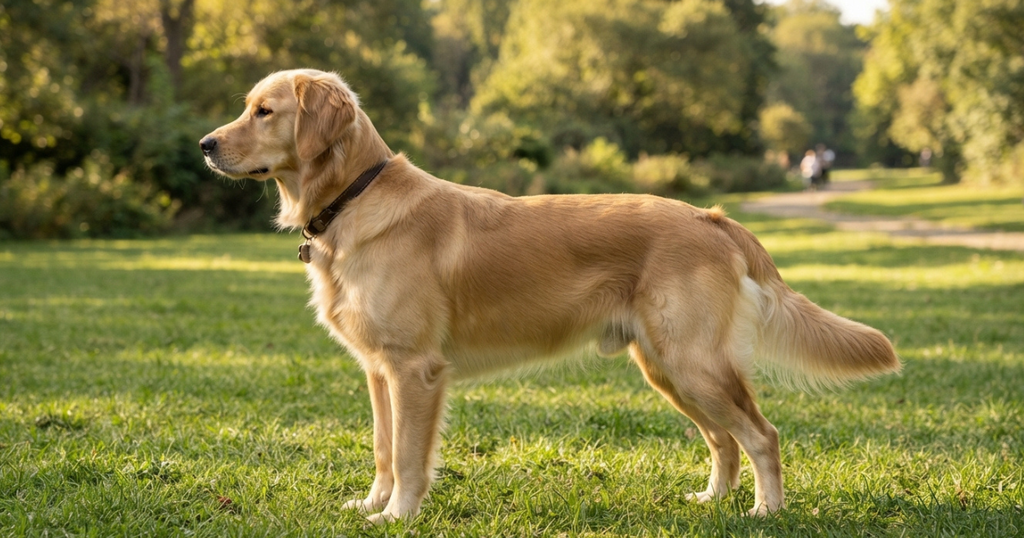
Mostly, in height. Most Goldens reach close to their adult height by around a year, then keep filling out with muscle and chest depth for another full year. So a 1 year old golden retriever often looks tall and a little narrow, not yet the broad, solid adult it will become. Paws and head can still look slightly oversized, a lingering hint that the frame has more filling out to do.
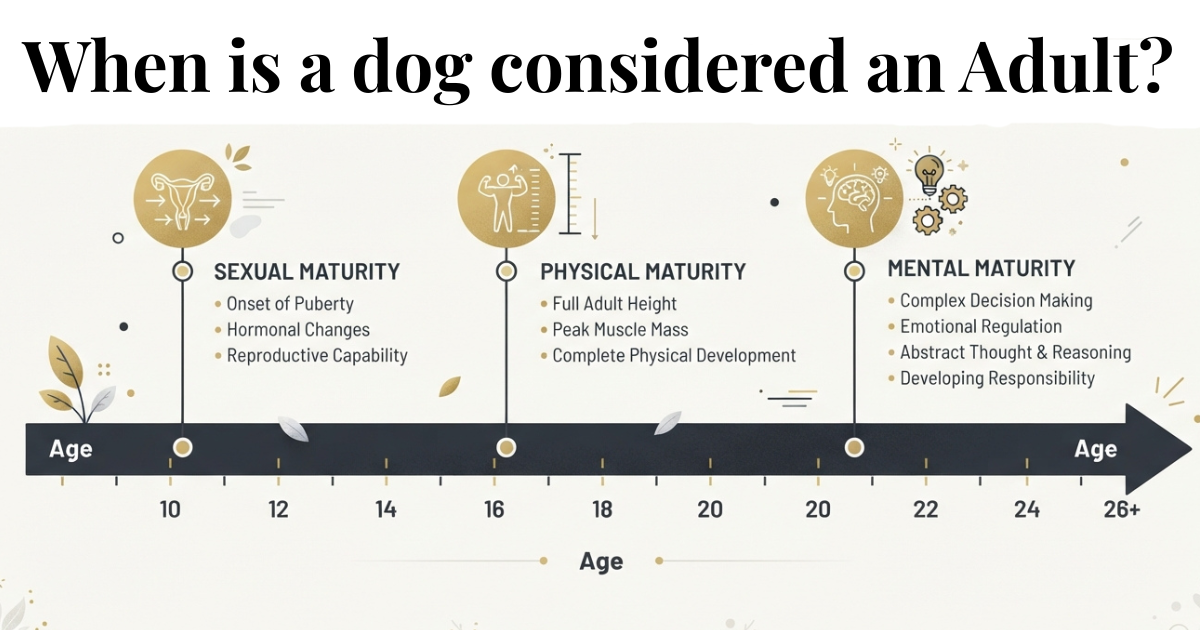
For where this sits against true maturity, see when a dog counts as an adult. For how it fits the breed, browse our breed guide collection and our Golden Retriever guides.
1 year old golden retriever weight
Where the weight lands at one year
The typical 1 year old golden retriever weight sits close to adult size, around 90 to 95 percent of the total. Males usually run about 62 to 72 pounds and females about 55 to 62 pounds, with plenty of healthy variation on either side.
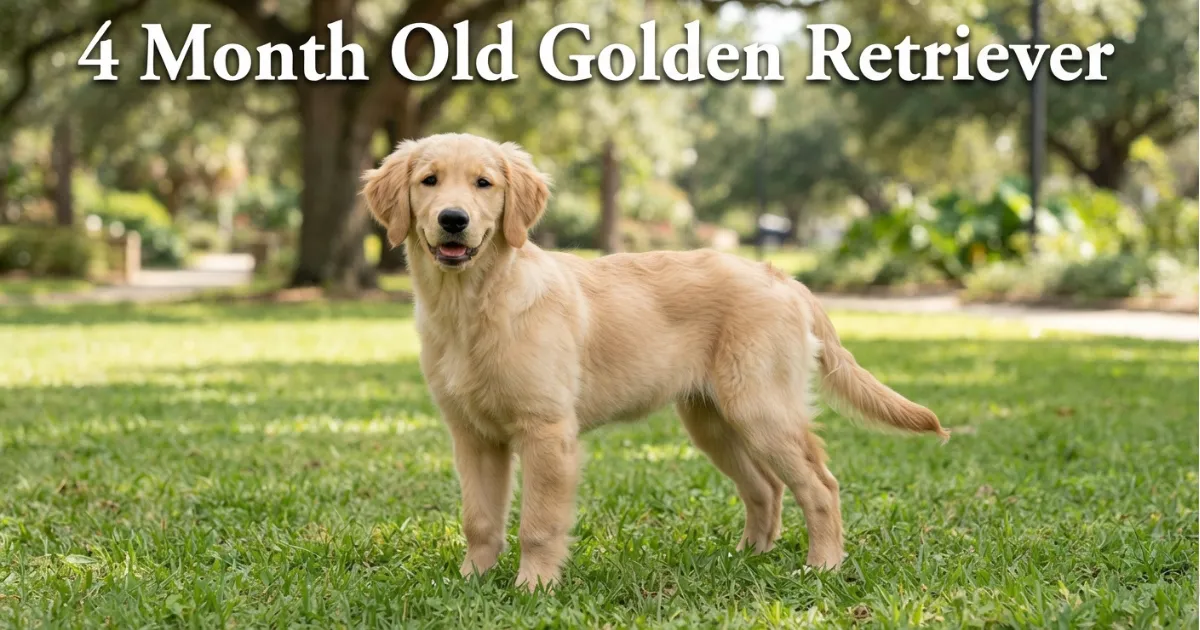
The final adult numbers are roughly 65 to 75 pounds for males and 55 to 65 pounds for females. If you doubled the weight you saw back at your Golden at four months, you probably landed close to where your dog is now. A 1 year old golden retriever from bigger lines lands at the top of the range, and one from finer lines settles lower, both perfectly healthy.
Still filling out to two years
Height is essentially done, but the body keeps maturing. Males in particular often look noticeably more solid at two years than at one, as the chest broadens and muscle develops. So do not judge the final look yet. The 1 year old golden retriever in front of you is a preview, not the finished portrait.
The table shows how a one-year-old compares with the finished adult.
| Feature | At 1 year | Full adult, around 2 years |
| Height | Essentially final | Final |
| Weight | ~90 to 95% of adults | 100% (65 to 75 lb M, 55 to 65 lb F) |
| Body shape | Lean, still narrow-chested | Filled out, broad chest |
| Coat | Adult coat in, feathering developing | Full feathering |
| Behavior | Teenager, high energy | Calmer, mature |
1 year old golden retriever behavior
The teenage window continues
Behavior at this age is pure adolescent. Expect boundary testing, patchy recall, bursts of wild energy, and a dog that seems to hear you only when it suits. Females often mature a little sooner than males.
This is exactly why consistency matters so much right now. For the behavior timeline that leads here, see the puppy behavior stages, and know that a 1 year old golden retriever is still very much a work in progress. The energy can feel relentless, but it also makes a 1 year old golden retriever a rewarding age to train, since a keen, food-driven teenager learns fast.
When do golden retrievers calm down?
This is the question every owner asks, so here is the honest answer. Most Goldens calm down noticeably between 18 and 24 months, and full emotional maturity usually arrives between two and three years.
Some never fully lose their playful streak, which is part of the breed’s charm. Consistent training and plenty of exercise do not rush maturity, but they make the wait far more pleasant for everyone. It also helps to reset your expectations. Once you accept that calm is a two-year project rather than a one-year one, the antics stop feeling like a problem to fix.
The switch to adult food
When and how to transition
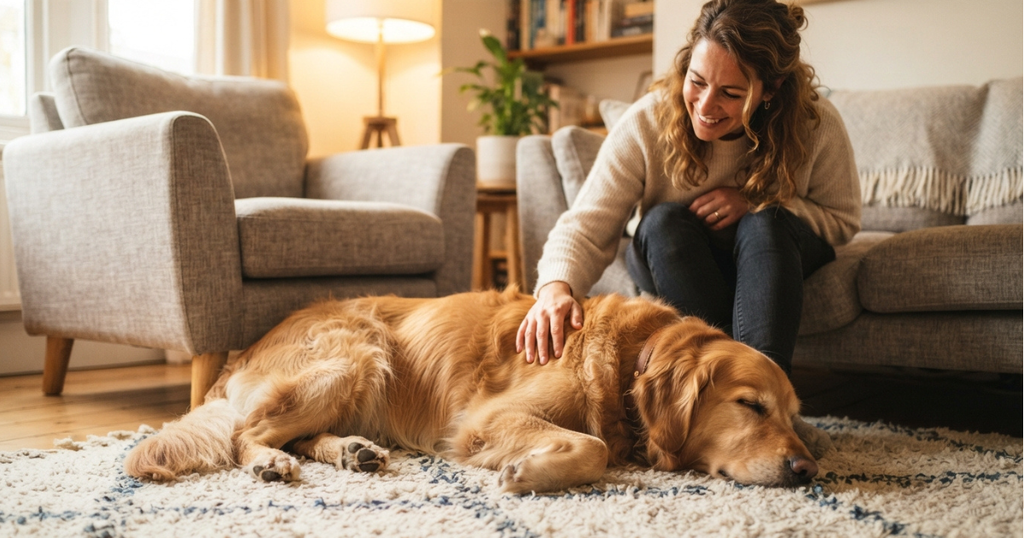
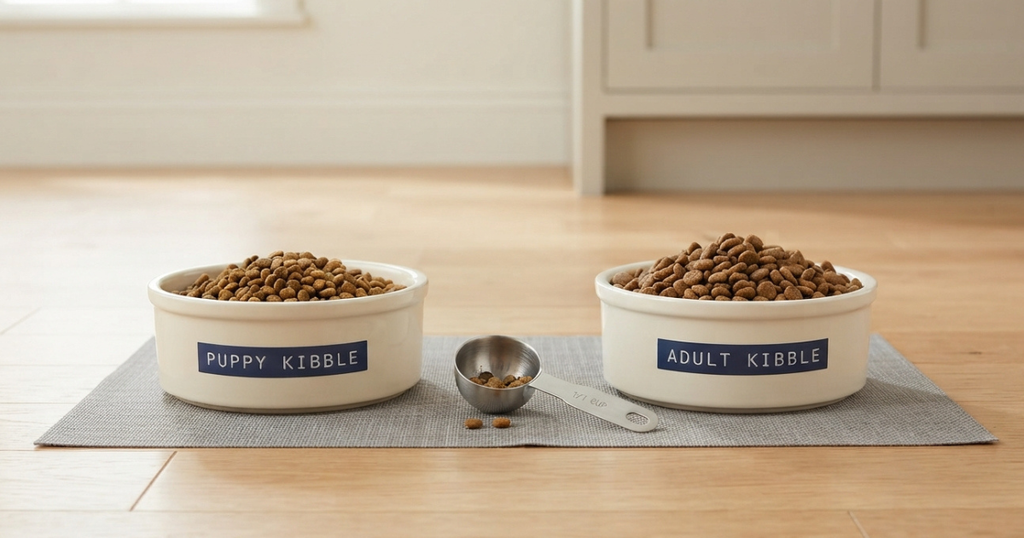
At around 12 to 15 months, once growth is nearly complete, it is time to switch from large-breed puppy food to adult food. Puppy formula is calorie-dense for rapid growth, and staying on it too long can add unwanted weight and joint stress.
Make the change gradually over about a week, mixing more of the new food into the old each day. Your vet can confirm the right timing for your individual dog. There is no rush to switch a 1 year old golden retriever on the exact birthday, since the move is about matching food to a slowing growth rate. A few weeks either way makes little difference.
Watching weight in adulthood
Goldens are famously food-motivated and gain weight easily, so this is where lifelong weight management begins. Feed measured meals twice a day rather than free-feeding, and adjust portions by body condition.
You should still feel the ribs easily and see a clear waist from above. Because obesity is common in the breed and hard on the joints, a lean 1 year old golden retriever is a gift to its future self. Set a target weight with your vet, and weigh in at each visit to stay honest.
Exercise can finally increase
More activity as the growth plates close
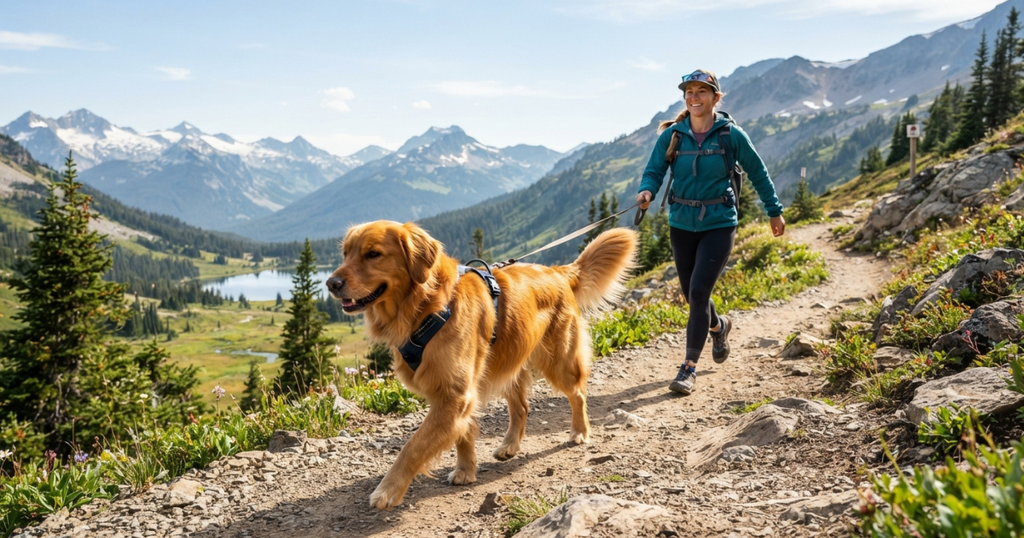
Here is the reward for a careful first year. The growth plates close around 12 to 18 months, so the strict puppy exercise limits begin to lift. From here you can gradually build up to longer, more varied activity.
Ease into it rather than jumping straight to marathon hikes. Once your vet confirms the plates have closed, an adult Golden happily handles a good hour or more of daily activity, from long walks to swimming to fetch. Build the distance and intensity over several weeks rather than all at once, the way a person eases back into running.
Mind and body together
A tired Golden is a well-behaved Golden, and mental work counts. A short puzzle or training session can take the edge off as effectively as extra walking on a busy day.
This combination matters through adolescence, since a big share of teenage misbehavior is simply an under-exercised, under-stimulated young dog with energy to spare.
Training your young adult
Consistency through adolescence
The temptation at a year is to ease off training because the dog looks grown. Resist it. Adolescence is precisely when the rules get tested, so short, frequent, rewarding sessions keep the good habits sticking.
Keep proofing recall on a long line in new places, and reward the behavior you want to see more of. The work you put in through this stretch is what shapes the calm adult on the other side. Think of every short session now as a small deposit. A 1 year old golden retriever pays it back as a steady, reliable adult a year or two down the line.
Building on the basics
A one-year-old can learn far more than the basics, so this is a great time for longer routines, tidy leash manners, and fun tricks. Training also burns mental energy and strengthens your bond.
Stay patient on the days it feels like your dog has forgotten everything. It has not; it is testing, and steady repetition wins every time. Every calm win you bank now compounds into an easier adolescence.
Adult health and wellness at one year
The shift to adult vet care
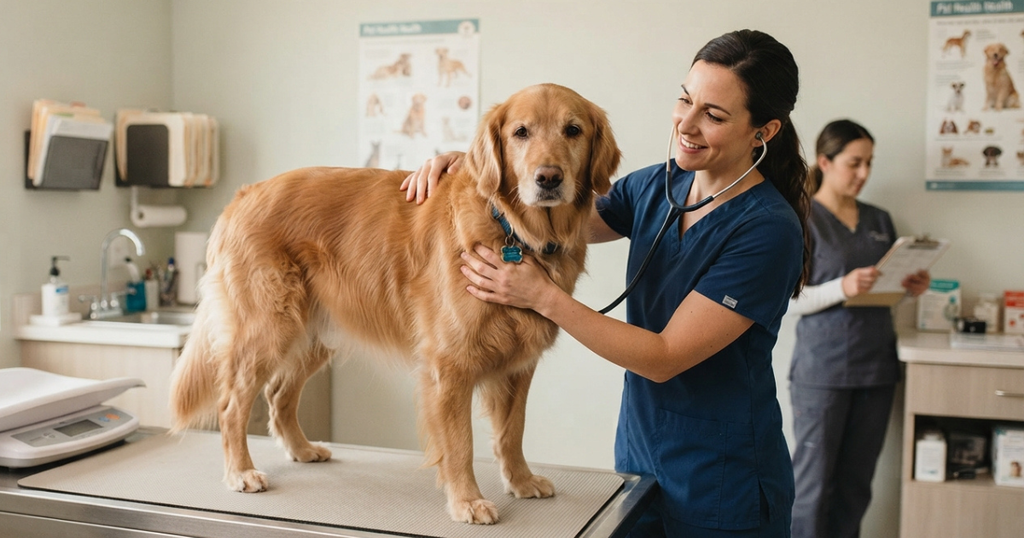
Puppy vaccinations and frequent visits give way to an adult routine now, usually an annual wellness check with booster vaccines as your vet advises. It is also the common point to have finished, or to finalize, spay or neuter timing.
Keep up parasite prevention for heartworm, fleas, and ticks suited to your area. An annual weigh-in helps catch creeping weight before it becomes a problem. Bring any breeder health records to this visit so your vet has the full history in one place.
Dental, grooming, and weight
Adult teeth are fully in, so regular tooth brushing and dental care pay off for years. The adult coat and feathering are developing, so settle into a steady brushing routine to manage the breed’s heavy shedding.
Above all, keep your dog lean. Weight control is the single most powerful thing you can do for a Golden’s long-term joint health and comfort.
From puppy to one year: the full circle
It is worth pausing to appreciate the journey. Your dog went from a 14-ounce newborn, covered in the newborn weeks where it all began, to a near-adult of 60-plus pounds in a single year.
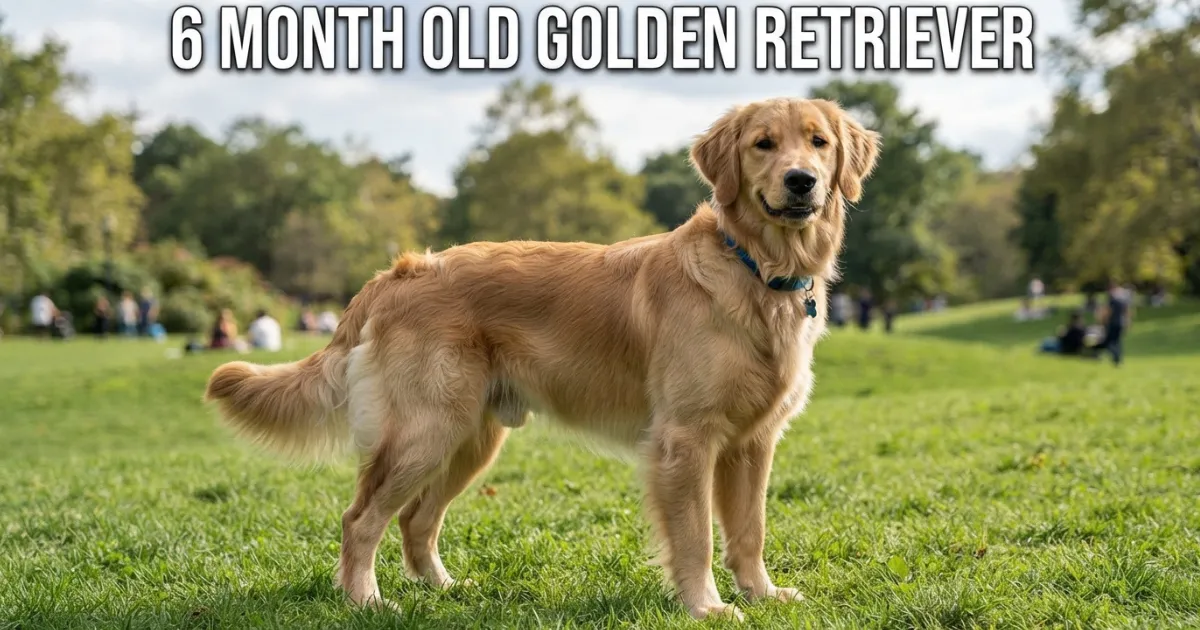
That whole arc, spurt by spurt and stage by stage, is mapped in the whole puppy growth journey and the half year turning point in your Golden at six months. The body is nearly done. The best of the companionship is just beginning.
Expert Insight
The mistake I see most at a year is owners assuming an adult-looking dog is a finished dog, then easing off both training and joint care too soon. The body may look done, but the brain and the joints are not. Keep training consistent, transition food thoughtfully, build exercise gradually, and keep the dog lean. That is the whole recipe for the next decade.
The first-birthday shift.
Your Golden now looks grown but still acts like a teenager. Around now, three things change: it is time to move from puppy food to adult food, the strict exercise limits of puppyhood begin to lift, and you settle in for a long teenage stretch. Real calm usually arrives closer to two years, not one.
What is the average 1 year old golden retriever weight?
The average 1 year old golden retriever weighs about 90 to 95 percent of adult size. Males run about 62 to 72 pounds and females 55 to 62, with the finished adult near 65 to 75 pounds and 55 to 65 pounds.
Is a 1 year old golden retriever fully grown?
In height, mostly yes. Most Goldens reach near-adult height by a year, then keep filling out with muscle and chest depth until about 18 to 24 months. So a one-year-old often looks tall and lean rather than fully solid.
When do golden retrievers calm down?
Most calm down noticeably between 18 and 24 months, with full emotional maturity usually between two and three years. Some keep a playful streak for life. Consistent training and good exercise make the teenage stretch much easier.
Why does my 1 year old golden retriever behavior seem so wild?
A 1 year old golden retriever behavior pattern is classic teenager, an adult body with puppy impulse control. Boundary testing and patchy recall are normal for the age. Short, consistent training and plenty of exercise are the answer, not frustration.
Should I switch my golden retriever to adult food at one year?
Yes, usually around 12 to 15 months. Move from large-breed puppy food to adult food gradually over about a week, since puppy formula is calorie-dense and can add weight if fed too long. Confirm the timing with your vet.
How much exercise does a 1 year old golden retriever need?
More than a puppy, but ease into it. As the growth plates close around 12 to 18 months, you can build toward an hour or more of daily activity. Confirm with your vet before high-impact exercise like long runs.
Are the growth plates closed at one year?
Often closing, not always fully closed. In Goldens the plates typically finish closing between 12 and 18 months. Until your vet confirms it, keep easing up on high-impact activity rather than jumping straight into hard running or jumping.
Do golden retrievers still grow after one year?
Height is essentially done by a year, but the body keeps maturing. Most Goldens add muscle and chest width until 18 to 24 months, so a dog often looks noticeably more solid at two than at its first birthday.
How much should I feed a 1 year old golden retriever?
Feed measured adult-food meals twice a day, adjusted by body condition rather than a fixed cup number. Goldens gain weight easily, so keep your dog lean. Your vet can set a target weight and portion for your individual dog.
Is my 1 year old golden retriever behavior a training failure?
No. Wild, testing behavior at a year is developmental, not a sign you failed. Adolescence simply peaks now. Keeping training short, frequent, and rewarding, and staying consistent, is what carries a 1 year old golden retriever behavior toward calm.
How often should a 1 year old golden retriever see the vet?
Usually once a year for a wellness check and any booster vaccines, unless a problem arises. This is also the point to finalize spay or neuter timing and to start tracking weight to prevent creeping obesity.
Will my golden retriever calm down after being neutered?
Spaying or neutering can reduce some hormone-driven behaviors, but it does not fast-forward maturity. A young Golden still needs to grow up, which happens with time and training. Real calm comes with age, closer to two or three years.
The bottom line
A 1 year old golden retriever is a near-adult body wrapped around a teenage brain. That is exactly why a dog that looks grown still acts like a puppy. That gap is normal, and it closes with time, not pressure. The dog is doing exactly what the breed is meant to do, on exactly the schedule it is meant to follow.
The first birthday is a turning point of practical changes. Move to adult food around now, let exercise expand gradually as the growth plates close, keep your dog lean, and hold training steady through the long teenage stretch. Real calm usually arrives between 18 months and three years, and it is worth the wait. The hardest growing is behind you, and the best years of companionship are just ahead.
Is your Golden acting like a giant puppy at a year, and have you spotted the first signs of calm yet? Share your 1 year old golden retriever’s weight and your best teenage-stage tip in the comments for other owners.