

The signs a boxer dog is dying include extreme lethargy, loss of appetite and thirst, labored breathing, incontinence, withdrawal, and a body that grows cold. In boxers, these often follow cancer, the breed’s leading killer. When several gather and comfort fades, the end is usually near, and gentle home care with your vet matters most.
Recognizing the signs a boxer dog is dying is one of the hardest things an owner ever has to do, but knowing what to watch for lets you give your loyal companion comfort and dignity at the end. This guide walks through those signs with honesty and compassion.
Boxers are a heartbreakingly cancer prone breed. A twenty year study found that around forty four percent of Boxers die of cancer, the leading health concern in the breed, so many Boxers reach the end through mast cell tumors, brain tumors, lymphoma, or hemangiosarcoma. Because of that, this guide covers the general signs a boxer dog is dying, the cancers boxers face, how long a dog can live with each, and the at home comfort care that eases their final days. The universal dying process is the same for every dog, yet knowing your boxer’s likely path helps you prepare.
Contents
- 1 Top 7 Signs a Boxer Dog Is Dying
- 2 Why Boxers Face Cancer So Often, and the Types to Know
- 3 Boxer Cancer Types and How Long a Dog Can Live With Them
- 4 At Home Comfort Care for a Dying Boxer
- 5 When It May Be Time: Quality of Life and the Kindest Choice
- 6 The Final Days and Saying Goodbye
- 7 Expert Insight
- 7.1 Signs the end may be near vs signs there may still be good time
- 7.2 What are the signs a boxer dog is dying?
- 7.3 How do I know my boxer is close to death?
- 7.4 What cancers do Boxers die from most?
- 7.5 How long can a boxer live with mast cell cancer?
- 7.6 How long can a boxer live with a brain tumor?
- 7.7 How long can a boxer live with lymphoma?
- 7.8 How long can a boxer live with hemangiosarcoma?
- 7.9 Are Boxers more likely to get cancer?
- 7.10 Is it safe to give my dying boxer human pain medication?
- 7.11 What happens if a boxer’s cancer spreads?
- 7.12 How to comfort a dying boxer at home?
- 7.13 When should I consider euthanasia for my boxer?
- 7.14 How much does it cost to treat boxer cancer?
- 7.15 Is it safe to let my boxer die naturally at home?
- 7.16 When should I take my dying boxer to the vet?
- 8 Conclusion
Top 7 Signs a Boxer Dog Is Dying
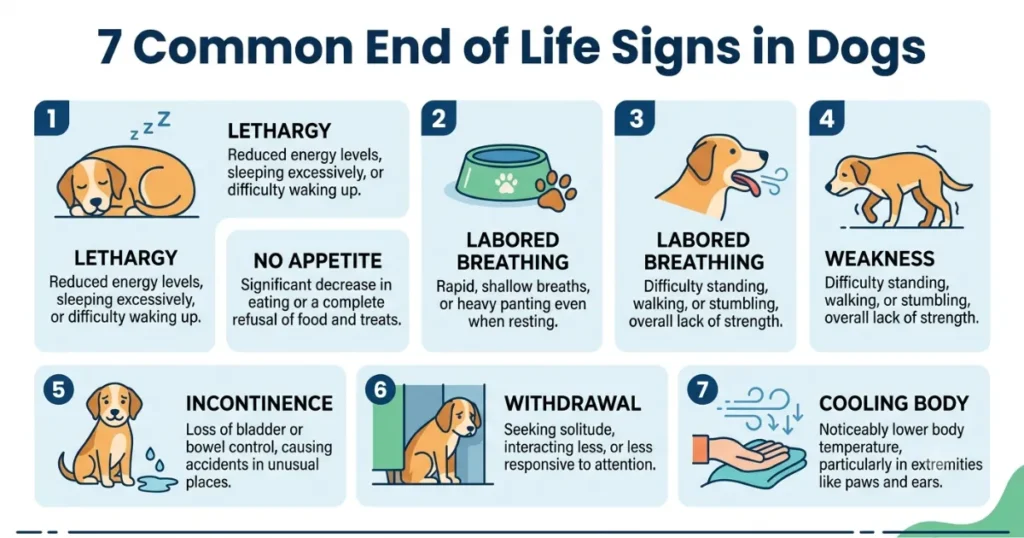
As the end approaches, a dying Boxer usually shows a cluster of signs rather than a single one. These seven are the most telling.
- The first is extreme lethargy, a Boxer who once bounced with energy now sleeping almost constantly and struggling to rise.
- Second is loss of appetite and thirst, refusing even favorite foods and water.
- Third is labored or irregular breathing, sometimes with long pauses between breaths.
- Fourth is loss of mobility, a dog too weak to stand, walk, or hold himself up.
- Fifth is incontinence, losing control of the bladder and bowels as the body shuts down.
- Sixth is withdrawal, seeking solitude in a quiet corner or, in some Boxers, clinging unusually close for comfort.
- Seventh is a drop in body temperature, with cool ears, paws, and gums as circulation fades. You may also notice restlessness, disorientation, or a glazed look in the eyes.
One thing to know about Boxers is that they are a stoic, people pleasing breed that often hides illness until it is advanced. That means the signs a boxer dog is dying can seem to appear suddenly, when in truth the disease has been progressing quietly for some time.
Watching your dog closely as he ages, and acting on subtle changes, gives you the best chance to keep him comfortable. These signs a boxer dog is dying mirror the universal end of life process, which we describe in detail in the stages of cancer leading to death. When several appear together, the time is usually short.
Why Boxers Face Cancer So Often, and the Types to Know
To understand why so many Boxers reach the end through cancer, it helps to know how prone the breed is. Cancer is the number one health issue in Boxers. A twenty year University of Georgia study found that about forty four percent of Boxers died of cancer, and the UK Kennel Club estimates that nearly thirty nine percent develop it during their lives. Understanding boxer dog cancer starts with genetics, since the breed carries inherited mutations that raise its risk, which is why cancer often runs in Boxer lines and strikes even well cared for dogs.
Boxers also hold a grim distinction; they develop brain tumors and mast cell tumors more often than any other purebred breed. Their flat faced, brachycephalic build is linked to aggressive brain tumors called gliomas, while their genetics strongly predispose them to mast cell tumors of the skin.
Lymphoma and hemangiosarcoma round out the breed’s most common cancers, and skin cancer appears more often in white coated Boxers exposed to sun. Most of these cancers appear in middle aged to senior Boxers, with brain tumors in particular usually developing after about eight years of age.
This cancer burden is something Boxers share with other high risk breeds. Golden Retrievers, for example, are also among the most cancer prone dogs, and the two breeds even overlap on mast cell tumors, as our pillar on Golden Retriever cancer symptoms explains. The cancer types behave similarly across breeds, so understanding them helps any owner recognize what is happening.
Boxer Cancer Types and How Long a Dog Can Live With Them
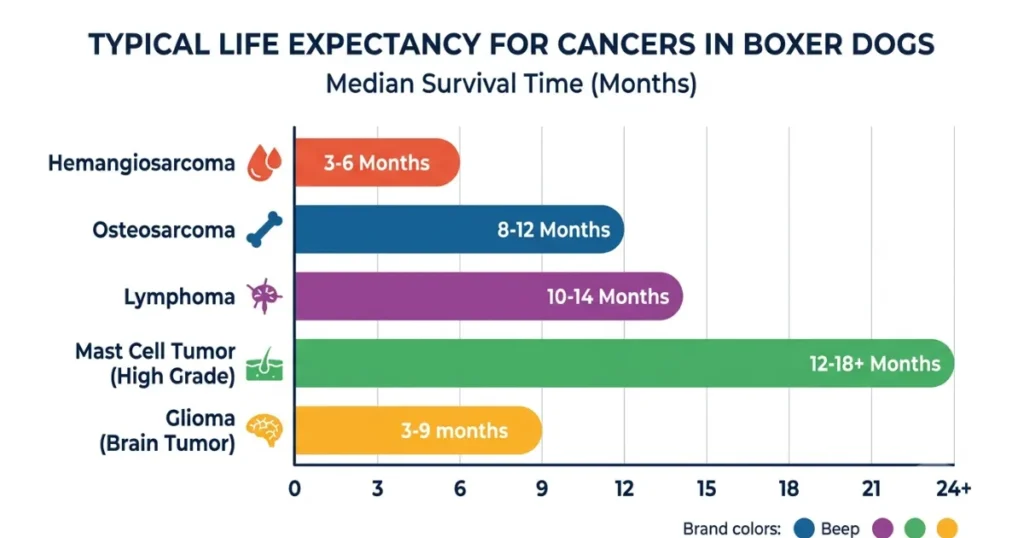
Because the timeline of dying differs by cancer, here is how long a Boxer can typically live with each of the breed’s common cancers and how each tends to end. These are averages, and individual dogs vary widely. With boxer dog cancer, two factors shift these numbers most: how early the tumor is caught and whether it has spread. A mast cell tumor found and removed while small behaves very differently from one discovered after it has reached the organs.
Mast cell tumors are the most common. A low grade mast cell tumor fully removed by surgery can mean a normal lifespan, while a high grade one, or one that spreads to the liver and spleen, may allow only two to three months and end with vomiting, ulcers, and collapse. Brain tumors in Boxers are often aggressive gliomas, giving roughly two to four months with palliative care, and they end with worsening seizures, as our guide on a dog brain tumor and when to euthanize explains.
Lymphoma treated with chemotherapy averages around a year and usually keeps a dog feeling well, while hemangiosarcoma is often the most sudden of all, ending in internal bleeding, as described in why a dog can bleed before dying.
Boxer Cancer Life Expectancy by Type
| Cancer type | Typical life expectancy | How it often ends |
| Mast cell tumor, low grade removed | Often a normal lifespan | Usually cured |
| Mast cell tumor, high grade or spread | 2 to 3 months | Vomiting, ulcers, collapse |
| Brain tumor, glioma | 2 to 4 months with palliative care | Worsening seizures |
| Lymphoma | 12 to 14 months with chemo | Weakness, organ failure |
| Hemangiosarcoma | Weeks to a few months | Sudden internal bleeding |
For a fuller breakdown of survival across cancers, see our guide on how long a dog can live with cancer. Because mast cell tumors often spread to the liver, the end stages can resemble those of liver cancer, too.
At Home Comfort Care for a Dying Boxer
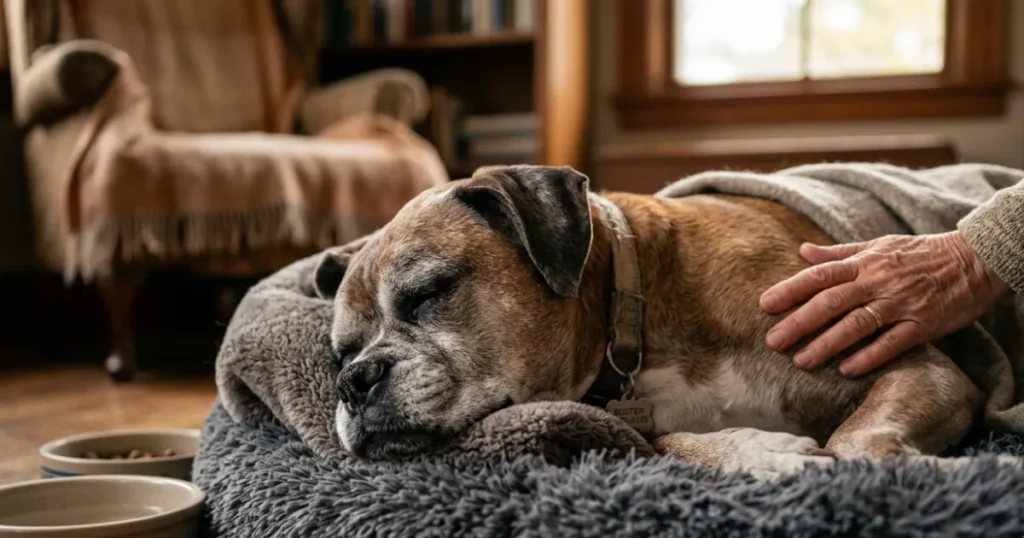
When a cure is no longer possible, home hospice care becomes the goal, keeping your Boxer comfortable and loved. Several simple measures make a real difference in these final days.
Manage pain only with the medications your vet prescribes, and never give human painkillers, which are toxic to dogs. Keep fresh water within easy reach, and offer small amounts of soft, warm, strong-smelling food to tempt a fading appetite, hand-feeding if needed. Provide thick, soft bedding to cushion bony pressure points and help your boxer shift position regularly to prevent sores.
For a large dog who can no longer rise, a towel sling under the belly makes gentle bathroom trips possible. Small comforts matter more than you might expect. Gentle grooming, a soft massage, and keeping familiar blankets and toys nearby all soothe a frightened dog. Hold to gentle pieces of your normal routine, since predictability is calming, and keep visitors and noise to a minimum so your Boxer can rest.
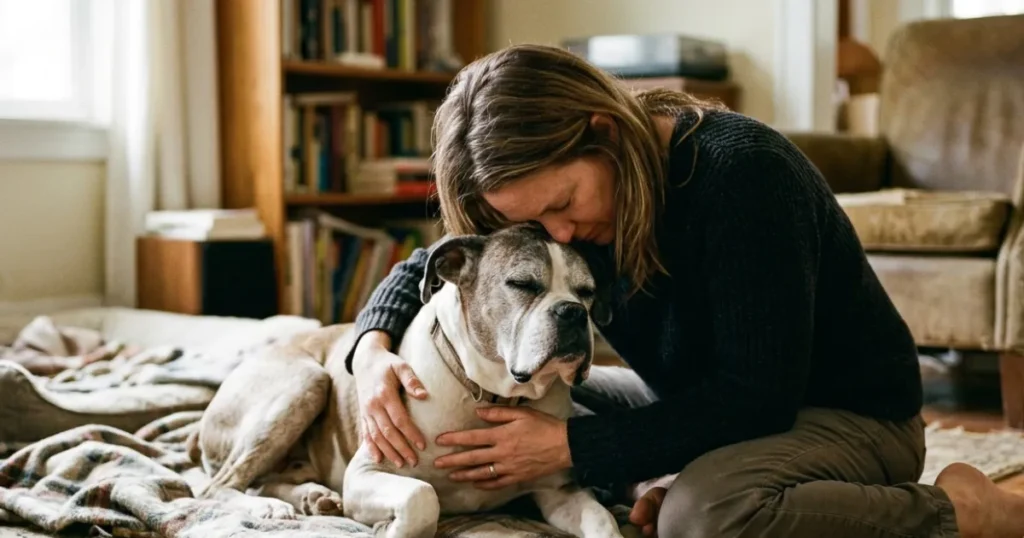
Keep the space warm, quiet, and calm, since dying dogs feel cold and are easily overwhelmed. Manage incontinence with washable pads and gentle cleaning to protect the skin and your dog’s dignity. Above all, stay close and speak softly, because your presence is the greatest comfort of all. Understanding the likely cancer prognosis helps you plan this care, and your vet can add anti-nausea medication, appetite stimulants, and sedation if distress appears.
When It May Be Time: Quality of Life and the Kindest Choice
Home care can ease suffering, but it cannot stop the disease, and there comes a point where letting go is the greatest kindness. Watching for that point is part of loving your Boxer well.
Ask yourself whether the good days still outnumber the bad, whether your dog can still eat, move, and find any joy, and whether pain is truly controlled. Veterinarians often use a quality of life scale that scores comfort, appetite, mobility, and the balance of good days against bad, which turns a vague fear into something you can measure week to week. The principle most vets share is that a little too early is kinder than a day too late, because it spares your Boxer a frightening final crisis.
Caring for a dying dog is exhausting too, and your own limits are a fair part of this decision, not a selfish one. You do not have to carry it alone. When suffering outweighs comfort, when your boxer no longer recognizes you or takes pleasure in anything, and when the signs a boxer dog is dying gather without relief, euthanasia spares a hard ending. Choosing it is not giving up, it is protecting your dog from pain you can no longer ease.
This decision is deeply personal, and your vet is your best partner in making it. Our full guide on knowing when it is time to say goodbye walks through quality of life scales and the euthanasia process so you can face the moment with clarity and peace rather than panic.
The Final Days and Saying Goodbye
In the final days, a dying Boxer’s body winds down in recognizable ways. Breathing may grow shallow, slow, or irregular, and if cancer has reached the lungs it becomes labored, a pattern covered in our guide on lung cancer and when to put a dog down. Appetite disappears, the body cools, and your Boxer sleeps more and more deeply.
Some dogs grow restless before finally settling, and some lose bladder control entirely, which can also happen with advanced bladder cancer. Through all of it, your calm presence is what your dog needs most. Speak gently, keep the room peaceful, and let your Boxer feel your love in every touch.
When the end comes, grief is natural and deserves care, so be gentle with yourself. If you need support as you prepare or afterward, our Golden Retriever health library and your veterinary team are here for you. Saying goodbye to a boxer who gave you years of devotion is heartbreaking, but easing his final passage is the last and greatest gift of love you can give.
Expert Insight
In my years treating Boxers, the kindest thing I can tell owners is that you usually sense your dog is dying before the textbook signs confirm it. Boxers are so bonded to their people that a fading spark in the eyes speaks louder than any single symptom. Trust that bond. When his joy is gone and comfort fails, letting go is love.
Signs the end may be near vs signs there may still be good time
| Signs the end may be near | Signs there may still be good time |
| Refusing all food and water | Still eating, even if less |
| Cannot stand or walk | Getting up, even slowly |
| Labored or irregular breathing | Breathing easily at rest |
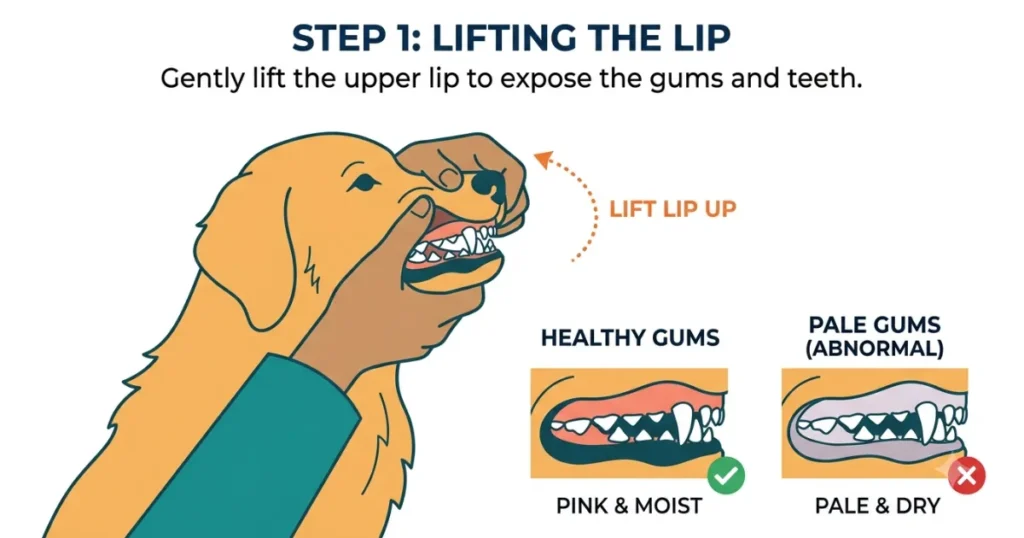
| Cold body, pale gums | Warm body, pink gums |
| No interest in you or surroundings | Still greets you and seeks affection |
What are the signs a boxer dog is dying?
The signs a boxer dog is dying include extreme lethargy, refusal to eat or drink, labored breathing, loss of mobility, incontinence, withdrawal, and a cooling body. When several appear together, the end is usually near.
How do I know my boxer is close to death?
You will usually see a cluster of signs, deep sleep and weakness, no interest in food or water, irregular breathing, and a cool body. A glazed look and withdrawal often mean the time is very close.
What cancers do Boxers die from most?
Boxers most often die from mast cell tumors, brain tumors, lymphoma, and hemangiosarcoma. The breed develops brain and mast cell tumors more than any other purebred, and around forty four percent of Boxers die of cancer overall.
How long can a boxer live with mast cell cancer?
It depends on the grade. A low grade mast cell tumor fully removed by surgery can mean a normal lifespan, while a high grade one, or one that has spread to the liver or spleen, may allow only two to three months.
How long can a boxer live with a brain tumor?
Boxer brain tumors are often aggressive gliomas. With palliative care using steroids and anti seizure medication, most dogs live around two to four months. Radiation may extend that, but seizures usually drive the final decision.
How long can a boxer live with lymphoma?
With chemotherapy, a Boxer with lymphoma averages twelve to fourteen months and usually feels well. Without treatment, lymphoma progresses quickly, often allowing only one to two months.
How long can a boxer live with hemangiosarcoma?
Hemangiosarcoma carries one of the shortest outlooks. After an internal bleed without surgery, often only days to weeks. With surgery and chemotherapy, most live two to seven months, rarely beyond a year.
Are Boxers more likely to get cancer?
Yes. Boxers are among the most cancer prone breeds, with a twenty year study finding around forty four percent died of cancer. They develop brain and mast cell tumors more than any other purebred.
Is it safe to give my dying boxer human pain medication?
No. Human painkillers like ibuprofen and acetaminophen are toxic to dogs and can be fatal. Only give pain relief prescribed by your vet, who can keep a dying Boxer genuinely comfortable with safe medications.
What happens if a boxer’s cancer spreads?
When cancer spreads, it affects new organs, and the outlook shortens. Mast cell tumors often spread to the liver and spleen, causing vomiting and weakness, while others reach the lungs or brain, bringing breathing trouble or seizures.
How to comfort a dying boxer at home?
Keep him warm, quiet, and close to you; offer soft, warm food and easy access to water; provide thick bedding; manage incontinence gently; and give only vet-prescribed pain relief. Your calm presence is the greatest comfort of all.
When should I consider euthanasia for my boxer?
Consider euthanasia when suffering outweighs comfort, when pain cannot be controlled, and when your Boxer no longer eats, moves, or finds joy. Tracking good days against bad and consulting your vet helps you choose the right moment.
How much does it cost to treat boxer cancer?
Costs vary widely by cancer type and region, from a few hundred dollars for palliative care to several thousand for surgery, chemotherapy, or radiation. Your vet can outline realistic options for your Boxer’s diagnosis.
Is it safe to let my boxer die naturally at home?
A natural death is not guaranteed to be peaceful and can involve pain or distress. Many vets recommend planned euthanasia for a calm, comfortable passing, though hospice care with veterinary support is a valid choice for some families.
When should I take my dying boxer to the vet?
Take him in promptly for uncontrolled pain, labored breathing, collapse, or seizures, or whenever you are unsure. Even at the end, a vet can ease suffering and help you decide the kindest next step.
Conclusion
The signs a boxer dog is dying, extreme lethargy, refusal to eat or drink, labored breathing, incontinence, withdrawal, and a cooling body, tend to arrive together as the end nears. Because boxers are so cancer prone, that end often comes through mast cell tumors, brain tumors, lymphoma, or hemangiosarcoma.
Whatever the cause, your job shifts from cure to comfort, keeping your boxer warm, fed, pain free, and loved. Lean on your vet, watch your dog’s quality of life, and know that when suffering outweighs joy, a peaceful goodbye is the final act of devotion.
If you have walked this road with a boxer you loved, what signs told you the end was near, and what brought your dog the most comfort in those final days? Your story, shared below, could steady another Boxer owner facing this right now. What do you wish you had known sooner?

Dr. Nabeel A.
Dr. Nabeel Akram is a Doctor of Veterinary Medicine with more than five years of hands-on experience in animal health, canine nutrition, and preventive care. He is a registered veterinarian with the Pakistan Veterinary Medical Council (PVMC), the statutory body regulating veterinary practice in Pakistan. As the founder of Golden Retriever Insight, Dr. Akram writes and medically reviews every health, nutrition, and grooming guide published on the site. His clinical interests include canine oncology, epilepsy management, and breed-specific nutrition for large breeds — the core topics this site covers. Every article is checked against current veterinary literature and sources such as the Merck Veterinary Manual, AVMA guidance, and peer-reviewed research.
Links will be automatically removed from comments.