Can dogs eat cabbage? Yes, dogs can eat cabbage. All varieties, including green, red, and savoy, are non-toxic and safe in small amounts. For Golden Retriever owners specifically, cabbage is an acceptable occasional vegetable treat, but it carries two breed-relevant risks that most generic articles summarise in a single dismissive sentence. Those risks are gas-driven bloat and thyroid suppression, and for Goldens, both deserve a proper explanation rather than a wave of the hand.
Golden Retrievers are deep-chested dogs. That anatomy places them in a higher-risk category for gastric dilatation-volvulus, commonly called GDV or bloat, in which a gas-distended stomach rotates on its axis and cuts off its blood supply. GDV is a life-threatening emergency. Cabbage is one of the most reliably gas-producing foods you can give a dog, because the fermentation of its glucosinolate compounds in the gut produces significant hydrogen sulphide and other gases. For most small breeds, this means flatulence. For a Golden Retriever, it means elevated GDV risk with repeated or large-volume feeding.
Cabbage contains glucosinolates, compounds that convert to thiocyanate during digestion. Thiocyanate blocks iodine absorption in the thyroid gland, suppressing thyroid hormone production over time if exposure is sustained. Golden Retrievers are among the breeds with the highest recorded prevalence of hypothyroidism. Feeding cabbage daily or in large amounts to a Golden already predisposed to thyroid dysfunction is adding a dietary thiocyanate load to a gland that may already be under pressure, according to guidance from VCA Animal Hospitals.
Can Dogs Have Cabbage Raw or Does Cooking Change the Risk?
Dogs can have cabbage raw, but cooked cabbage is significantly safer for Golden Retrievers and should be the default preparation for this breed. The distinction matters because cooking changes the chemistry of the two compounds that create the breed-specific risks described above.
What Cooking Does to Glucosinolates and Thiocyanate
Raw cabbage retains its full glucosinolate load. When a dog chews and digests raw cabbage, the gut converts those glucosinolates into thiocyanate through enzymatic action. Steaming or boiling cabbage reduces its glucosinolate content by 30 to 60 percent, according to food chemistry research, which proportionally reduces the thiocyanate produced during digestion. For a Golden Retriever with any thyroid history or any dog fed cabbage more than occasionally, lightly steamed cabbage is the safer preparation.
What Cooking Does to Gas Production
Raw cabbage also ferments more aggressively in the canine gut than cooked cabbage does. The intact cell walls of raw cruciferous vegetables are more resistant to digestion, leaving more substrate for bacterial fermentation in the large intestine. More fermentation means more gas. For a deep-chested Golden Retriever, that is a meaningful practical difference. Lightly steamed or boiled plain cabbage produces substantially less gas than raw cabbage in the same serving volume.
The Right Cooking Method
Steaming preserves more nutrients than boiling while still reducing glucosinolates and softening the fibrous cell walls that make raw cabbage hard to digest. No butter, no salt, no garlic, no onion powder, no mixed seasonings of any kind. All of those additions either harm a Golden Retriever directly or remove the health benefits of feeding a plain vegetable in the first place.
Why Cabbage and Golden Retrievers Require a Separate Conversation
Most articles about whether dogs can have cabbage mention bloat and hypothyroidism risks in a single sentence and then move to the next topic. For Golden Retrievers, both risks deserve specific attention.
Golden Retrievers carry a documented predisposition to hypothyroidism that is significantly higher than the general dog population. A 2014 study published in the Journal of Veterinary Internal Medicine identified Golden Retrievers as one of the top breeds for autoimmune thyroiditis, a primary driver of hypothyroidism in dogs. The American Kennel Club Canine Health Foundation has funded research specifically on thyroid disease in this breed. The existing thyroid vulnerability in many Goldens means that repeated dietary exposure to thiocyanate from raw cabbage is not a theoretical concern. It is a real dietary variable for a breed where subclinical hypothyroidism is common and often diagnosed late.
The GDV risk is the second half of this conversation. Golden Retrievers are large, deep-chested dogs. While they are not as disproportionately chest-narrow as Great Danes or Irish Wolfhounds, the anatomy of a large Golden places the stomach in a position where gas accumulation, combined with a heavy meal or vigorous activity after eating, can initiate the rotation that causes GDV. Gas-producing foods do not cause GDV on their own, but they are a contributing factor that increases the gas load the stomach must manage. Feeding large amounts of raw or lightly cooked cabbage to a Golden immediately before or after exercise is a practice that offers no benefit and poses a real, avoidable risk.
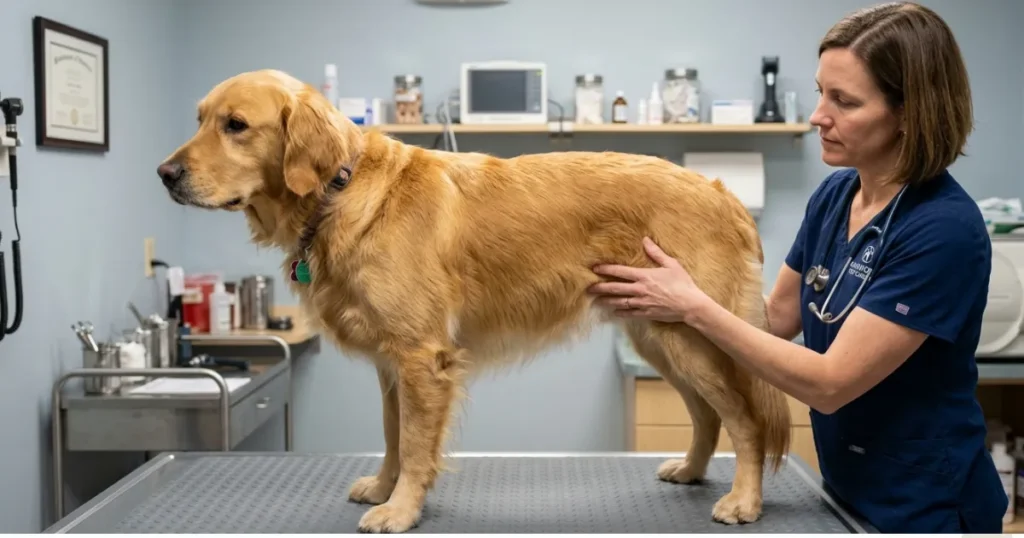
Expert Insight
Golden Retrievers carry both an elevated hypothyroidism predisposition and the deep-chested anatomy that places them at above average risk for GDV. Most generic vegetable guides ignore both of these when discussing cabbage. For this breed, the conversation is not whether cabbage is safe in principle. The conversation is frequency, preparation method, and timing relative to meals and exercise, because those three variables determine whether cabbage becomes a useful dietary addition or a preventable risk.
Cabbage Varieties: What Golden Retriever Owners Can Use
All common cabbage varieties are safe for Golden Retrievers when served plain and appropriately prepared. The differences between varieties are nutritional rather than safety-based.
| Cabbage Variety | Safe for Goldens | Key Nutrient Distinction | Preparation |
| Green cabbage | Yes | Vitamins K and C, highest fibre | Lightly steamed, chopped small |
| Red or purple cabbage | Yes | Higher anthocyanin content, antioxidants | Lightly steamed, chopped small |
| Savoy cabbage | Yes | Softer leaves, easier to digest than green | Raw or steamed, chopped |
| Napa or Chinese cabbage | Yes | Milder flavour, lower fibre than green | Raw or lightly steamed |
| Coleslaw (store-bought) | No | Contains mayo, salt, sugar, sometimes onion or garlic | Never feed |
| Fermented/sauerkraut | No | High sodium from the fermentation process | Never feed |
Notes: All safe varieties must be served plain with no seasoning, sauce, or dressing. Savoy cabbage has the softest leaf structure of the common varieties. It is the easiest for a Golden Retriever’s digestive system to handle, which makes it a sensible starting choice for first-time cabbage feeding.
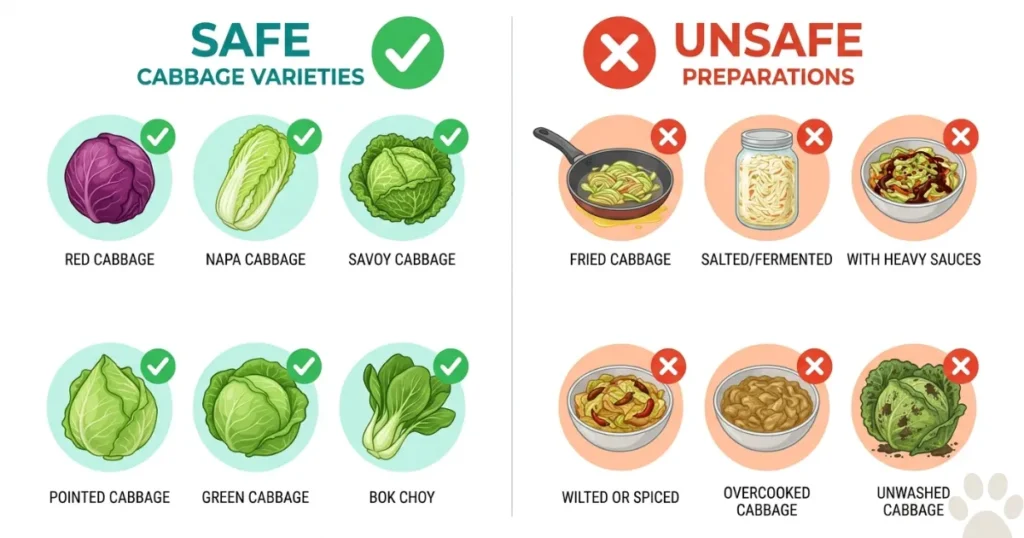
For the full comparison of safe and unsafe vegetables across this breed’s dietary needs, see our dog safe vegetables guide.
Serving Size: How Much Cabbage Can a Golden Retriever Have?
Serving sizes for cabbage must account for its gas-producing properties, glucosinolate content and caloric contribution. The general 10% daily treat rule applies, but cabbage has additional constraints that lower the effective safe ceiling below what the caloric budget alone would suggest.
For a 55-pound Golden Retriever
One to two tablespoons of lightly steamed, plain cabbage, two to three times per week. Not daily. The gas-producing fermentation compounds need time to clear between servings, and daily feeding at even these small volumes accumulates both thiocyanate exposure and gut irritation over time.
For a 65 to 75-pound Adult Golden Retriever
Two to three tablespoons of lightly steamed plain cabbage, two to three times per week. Chop into pieces no larger than half a centimetre square to reduce the choking risk posed by the dense, fibrous leaf structure. Cabbage leaves are denser than most owners expect, even after cooking, and a Golden who eats fast can swallow a poorly cut piece whole.
For a 75 to 90-pound Golden Retriever
The upper weight range in Goldens often correlates with an overweight body condition. For these dogs, cabbage is one of the lowest calorie vegetable options available. Green cabbage contains approximately 25 calories per 100 grams. Small amounts of steamed cabbage, mixed into a meal, add volume and fiber without a meaningful caloric contribution. Keep the serving to a maximum of three tablespoons per session and no more than three times per week.
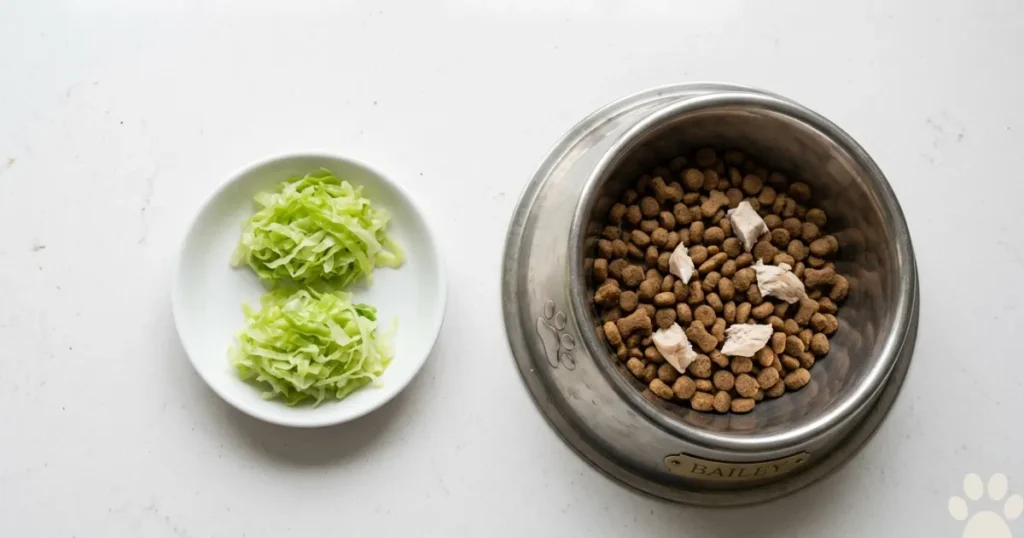
Never feed cabbage within one hour before or after a main meal for a Golden Retriever. Adding cabbage to an already full stomach increases gas production, which can increase the risk of bloat in this breed.
Decision Framework: When and How Golden Retriever Owners Should Feed Cabbage
If your Golden Retriever is under 4 months old, skip cabbage entirely. Cruciferous vegetables carry more digestive disruption risk in puppies than the nutritional benefit justifies at this stage.
If your puppy is between 4 and 8 months old, one teaspoon of plain, lightly steamed cabbage, introduced once and observed for 24 hours, is the maximum appropriate starting amount. Watch for loose stools, gas, or any sign of abdominal distension before continuing.
If your adult Golden weighs between 55 and 75 pounds and has no history of thyroid disease, plain steamed cabbage two to three times per week at the serving sizes listed above is appropriate. Raw cabbage is acceptable occasionally in small amounts, but should not be the primary preparation method.
If your Golden has been diagnosed with hypothyroidism or is on thyroid medication, remove cabbage from the diet entirely. The thiocyanate load from regular cabbage feeding is a direct dietary interference with thyroid hormone production that your vet’s treatment protocol cannot account for unless they know your dog is eating it.
If your Golden Retriever has a history of bloat, gas-related distension, or GDV, do not feed cabbage. The risk of gas-producing fermentation in a dog with a documented bloat history is not a trade-off worth making for the nutritional benefit of a vegetable, given many safer substitutes. Green beans and Carrots provide comparable low-calorie, high-fiber dietary contributions without the gas load. Both are covered in our carrot feeding guide for Golden Retrievers and our Peas guide.
Suppose your adult Golden is over 8 years old, stick to steam and finely chopped cabbage in small amounts. Senior Goldens have reduced gut motility, which means gas produced in the colon clears more slowly. A slower transit time means more gas accumulation from the same serving than a younger dog would process without issue.

Warning: What to Avoid with Cabbage for Golden Retrievers
PROBLEMATIC – Monitor for 24 to 48 hours
A Golden Retriever who eats a larger than appropriate amount of raw or cooked plain cabbage may experience gas, bloating, abdominal discomfort, and loose stools. Monitor for visible abdominal distension, repeated unproductive retching, or restlessness, as these indicate a shift from a digestive problem to a potential GDV emergency. If the abdomen looks swollen and the dog cannot settle or retches repeatedly without producing vomit, that is urgent, not a wait and see situation.
UNSUITABLE – Avoid, not toxic
Coleslaw and any cabbage preparation containing mayo, salt, vinegar, sugar, or seasoning is unsuitable for Golden Retrievers. Sauerkraut contains extremely high levels of sodium from the fermentation brine and should never be fed. Any cabbage dish cooked with onion or garlic is outright toxic due to the thiosulfate content of the allium family, regardless of how small the proportion of onion or garlic.
When to Call the Vet
| URGENT — Call immediately | MONITOR — Watch 24 to 48 hours |
| Distended, hard, or visibly bloated abdomen after eating cabbage | Loose stools or mild gas in the 12 hours after feeding |
| Repeated retching without producing vomit | Reduced appetite at the next meal |
| Dog cannot get comfortable, pacing, or whimpering when the abdomen is touched | Soft stools persisting beyond 24 hours |
| Pale gums, rapid breathing, or sudden collapse | Orange or unusually dark stools |
The urgent column above is not an overreaction. GDV in Golden Retrievers can progress from the first visible distension to a surgical emergency within hours. Never wait overnight to see if abdominal bloating resolves on its own in a large-breed dog.

Can dogs have cabbage every day?
No. Daily cabbage feeding accumulates thiocyanate, a compound that suppresses thyroid hormone production over time. It also sustains daily gut fermentation, which increases the gas load. Two to three times per week, with small serving sizes, is the safe upper limit for most healthy adult dogs, including Golden Retrievers.
Can dogs have cabbage raw, or does it need to be cooked?
Dogs can eat raw cabbage in small amounts, but cooked cabbage is safer for Golden Retrievers. Cooking reduces glucosinolates by 30 to 60 percent, lowering both the thiocyanate risk and the gas-producing fermentation load. Lightly steamed and chopped is the recommended preparation for this breed specifically.
How much cabbage can a dog eat safely?
For a medium to large-sized dog, two to three tablespoons of plain, lightly steamed cabbage, fed two to three times per week, is a safe amount. More than this at one sitting increases gas, digestive discomfort, and thiocyanate exposure. Always introduce any new vegetable gradually and watch stool consistency for 24 hours.
Can dogs eat coleslaw from the fridge?
No. Store-bought coleslaw may contain mayonnaise, salt, sugar, and often garlic or onion powder. Even homemade coleslaw typically includes vinegar and seasoning. Onion and garlic in any amount are toxic to dogs, causing red blood cell damage and hemolytic anemia. Only plain cabbage with no additions is safe.
Is cabbage good for dogs who need to lose weight?
Yes. Plain cabbage has approximately 25 calories per 100 grams, making it one of the lowest-calorie vegetable options available. Mixed into a weight-restricted Golden Retriever’s meal in small amounts, it adds bulk and fiber without a meaningful caloric contribution. Steamed is preferable to raw for dogs with digestive sensitivity.
What happens if my dog eats a large amount of cabbage?
A dog who eats a large amount of plain, raw, or cooked cabbage is likely to experience significant gas, bloating, and loose stools. Watch for visible abdominal distension, repeated unproductive retching, or restlessness. If the abdomen appears swollen and hard, or if the dog cannot settle, call your vet immediately. These symptoms can indicate GDV, which is a surgical emergency in large-breed dogs.
Can puppies eat cabbage?
Puppies over 4 months can have a very small amount of plain, lightly steamed cabbage as a one-time introduction. One teaspoon is sufficient for a first serving. Puppies under 4 months should not have cabbage. Their digestive systems are not equipped to handle cruciferous fiber, and the thiocyanate load from even small amounts poses a greater relative risk to a developing thyroid.
Is purple or red cabbage safer for dogs than green?
Both are equally safe in the same preparation and serving sizes. Red and purple cabbage contain higher levels of anthocyanins, which are antioxidant pigment compounds, making them marginally more nutritionally dense. The gas-producing and thiocyanate risks are equivalent across all common cabbage varieties.
Is it safe to give my Golden Retriever cabbage every week?
Two to three small servings per week of plain steamed cabbage are safe for most healthy adult Golden Retrievers with no thyroid or bloat history. Weekly feeding within those parameters does not accumulate enough thiocyanate to pose a meaningful thyroid risk and stays within a volume that most Goldens digest without excessive gas.
Are Golden Retrievers at higher risk from cabbage than other breeds?
Yes, in two specific ways. Golden Retrievers are among the breeds with the highest prevalence of hypothyroidism, making them more sensitive to sustained dietary exposure to thiocyanate from raw cabbage. They are also deep-chested, large-breed dogs with elevated GDV risk, which makes repeated large-volume feeding of gas-producing vegetables a greater concern than it would be for a small or medium breed.
Does cooking cabbage remove all the risks for Golden Retrievers?
Cooking reduces, but does not eliminate, the glucosinolate- and gas-producing properties of cabbage. It removes most of the precursor compounds for thiocyanate and significantly reduces fermentation-driven gas production. For a healthy Golden Retriever without thyroid or bloat history, lightly steamed cabbage at appropriate servings is safe. For Goldens with either of those conditions, cooking does not make cabbage appropriate.
Can my Golden Retriever eat sauerkraut?
No. Sauerkraut undergoes a sodium-rich fermentation process, resulting in extremely high salt content per serving. The sodium load in a standard serving of sauerkraut far exceeds the daily sodium guideline for a dog of any size. High sodium intake in Golden Retrievers contributes to blood pressure issues and kidney strain. Plain steamed cabbage is the only acceptable preparation.
My Golden ate the whole cabbage from the counter. What do I do?
A single large cabbage ingestion is unlikely to cause acute toxicity but will almost certainly cause significant digestive upset. Monitor for gas, bloating, loose stools, and abdominal distension over the next 12 to 24 hours. If the abdomen becomes visibly swollen, your Golden retches repeatedly without vomiting, or cannot settle and is clearly in distress, call your vet immediately. GDV risk following a large gas-producing food intake is genuine for this breed.
Are there better vegetable alternatives to cabbage for Golden Retrievers?
Yes. Green beans and carrots deliver comparable low-calorie, high-fiber dietary contributions without the gas-producing fermentation load that makes cabbage a specific concern for deep-chested breeds. Both are also lower in compounds that affect thyroid function. For Golden Retrievers with hypothyroidism or a history of bloat, substituting green beans or carrots entirely is a straightforward, lower-risk option.
Can Golden Retrievers eat cabbage if they have hypothyroidism?
No. Golden Retrievers diagnosed with hypothyroidism should not eat cabbage. The thiocyanate produced from glucosinolates in cabbage directly interferes with iodine absorption at the thyroid gland, suppressing hormone production. For a Golden already managing reduced thyroid output, adding a regular dietary source of thyroid-suppressing compounds works against the treatment your vet has prescribed. Remove all cruciferous vegetables from the diet and confirm acceptable alternatives with your veterinarian.
Can dogs eat cabbage?
Yes, dogs can eat cabbage. But in moderation. It is a nutrient-rich, low-calorie vegetable packed with fiber, antioxidants, and vitamins C and K. It is a gas-producing vegetable that can cause bloating. Also, healthy for the immune and digestive systems. It should be served plain or cooked (boiled/steamed) in small amounts to avoid digestive upset or thyroid issues in dogs.
Conclusion
Dogs can have cabbage safely in small, infrequent, plainly prepared amounts. For Golden Retriever owners, the practical rule is simple: lightly steam, chop small, 2 to 3 tablespoons, no more than 3 times per week, and never on top of a full meal. Dogs with hypothyroidism or a history of bloat should not have cabbage. Those are not overly cautious restrictions. They reflect two real breed-specific vulnerabilities that this dog’s anatomy and thyroid predisposition create. Carrots and green beans accomplish everything cabbage does for a Golden’s diet without either of those risks.
Goldens vary considerably in how they respond to cruciferous vegetables, and I’d genuinely like to know where yours sits.
- Can dogs eat cabbage?
- Has your Golden shown any gas or digestive sensitivity to cabbage compared to other vegetables you’ve tried?
- And for those of you who have a Golden with a diagnosed thyroid condition, have you had a specific conversation with your vet about which vegetables to avoid entirely?
That kind of first-hand experience from Golden owners managing real health conditions is exactly what helps other owners in the same position make better dietary decisions for their dogs.