
During a true generalized seizure, your dog is unconscious and cannot respond to you or be interrupted. If your dog stays aware, tracks you, or can be snapped out of it, you’re probably looking at a look-alike, not a seizure. Film the episode either way.
To tell if your dog is having a seizure, check four things: consciousness, interruptibility, trigger, and recovery. A true seizure means the dog is unaware and unresponsive, can’t be interrupted, often starts at rest, and is followed by confusion. If your dog stays conscious, it’s likely a look-alike.
Most owners ask what a seizure looks like. The sharper question is how to tell if your dog is having a seizure versus something that only resembles one, because the wrong call sends you down the wrong path at the vet. The deciding factor is rarely the shaking. It’s whether your dog was conscious.
The key difference between movement disorders and seizures is that the dog is responsive during a movement disorder, while movement disorders involve no loss of consciousness. That single distinction settles a surprising number of cases.
This page is the diagnostic companion to our descriptive guide on what a dog seizure looks like. For the full picture, start with our pillar on seizures in dogs.
How to Tell If Your Dog Is Having a Seizure: The One Question First
The fastest way to tell if your dog is having a seizure is to ask whether he was conscious and responsive during the episode. A true generalized seizure switches awareness off.
During a generalized seizure, your dog isn’t aware of you, can’t track your voice, and can’t be interrupted by calling or touching. That loss of contact is the hallmark. By contrast, the conditions that mimic seizures usually leave the dog awake and aware, even while the body moves abnormally.
Here’s why this matters more than the shaking itself. Many owners fixate on twitching limbs, but twitching happens in dreams, tremors, and faints too. Paroxysmal dyskinesias are episodes of abnormal involuntary movement that are distinguished from seizures by the presence of normal consciousness. Check awareness first, then everything else gets easier.
How to Know If Your Dog Is Having a Seizure: The Four Signs
To know if your dog is having a seizure, look for four signs together. One sign alone isn’t enough:
- Loss of awareness
- Rhythmic convulsing
- Jaw and mouth involvement
- Confused recovery.
A true tonic-clonic seizure combines an unresponsive dog, repetitive rhythmic limb paddling rather than a single jerk, jaw chomping or foaming at the mouth, and often loss of bladder or bowel control. Afterward comes the giveaway. The dog enters a postictal phase of confusion, pacing, or temporary blindness, which our guide to dog behavior after a seizure covers in full.
The recovery is diagnostic on its own. A seizure leaves a dog disoriented for minutes to hours, while most mimics resolve cleanly with the dog instantly normal. If your dog bounces back in seconds with no fog, reconsider whether it was a seizure at all.
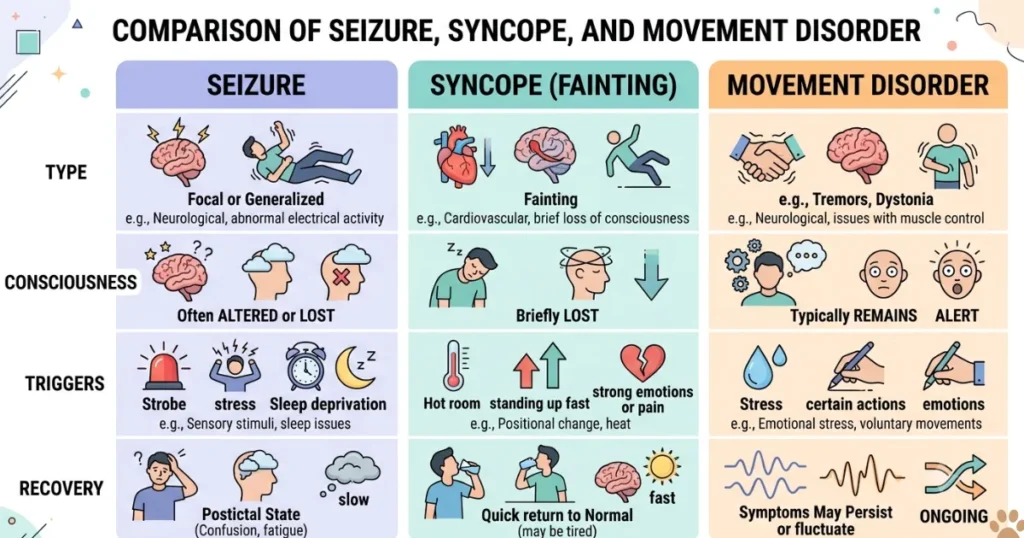
Seizure or Fainting? How to Tell a Seizure from Syncope
To tell a seizure from syncope (fainting), check the trigger and the recovery, because these two episodes look almost identical but behave differently. Syncope is a circulation problem, not a brain one.
Syncope episodes are often preceded by excitement, exercise, or coughing; last only a few seconds; and the dog recovers rapidly and acts like nothing happened, whereas seizures are typically not preceded by exertion and may have a pre-ictal aura. So a collapse during a coughing fit or a burst of excitement points to fainting.
The movement quality differs too. Syncopal dogs typically do not show the chewing jaw motions or increased salivation seen with seizures, and their episodes end within seconds to minutes with rapid recovery and no postictal period. Because the workups differ completely, telling these apart changes your dog’s entire treatment path. Visit here for vet-explained dog health.

Things That Look Like Seizures in Dogs But Aren’t.
Several conditions look like seizures in dogs but aren’t, and most share one tell: the dog stays conscious. Knowing the list keeps you from assuming the worst.
Movement disorders, or paroxysmal dyskinesias, cause involuntary movements while the dog is fully aware, and they are often triggered by stress or sudden movement. Idiopathic head tremors are another. These head-bobbing tremors occur at rest and stop when the dog resumes activity. Cataplexy from narcolepsy is a third. Cataplexy causes attacks of flaccid paralysis without loss of consciousness, lasting up to 20 minutes with a sudden return to normal.
A few more round out the list. Vestibular episodes bring a head tilt, stumbling, and flicking eyes but no convulsions. Reverse sneezing and choking are respiratory, not neurological. One exception runs the other way: fly-biting and jaw chomping at nothing can actually be a focal seizure, which our guide to focal seizures explains.

How to Tell a Seizure in a Golden Retriever from a Look-Alike.
In a Golden Retriever, telling a seizure from a look-alike leans on the breed’s classic seizure pattern and its age. The presentation is fairly predictable, which helps.
A genetic study of idiopathic epilepsy in the Golden Retriever found most affected dogs showed generalized grand-mal seizures, with onset within one to three years. So a young adult Golden collapsing into a full, unresponsive convulsion fits a true seizure well. A golden that stays alert through an episode points elsewhere.
Age shifts the suspects. In an older Golden that collapses during exertion or excitement, cardiac syncope climbs the list and warrants a heart workup, not just a seizure assumption. Whatever the cause, our guide to what causes seizures in dogs and the related canine epilepsy overview covers the next steps.
In a representative case, an owner brought in a 9 years old Golden for “seizures” that struck during walks and resolved in seconds with no confusion. A heart murmur and Holter monitor revealed syncope, not epilepsy.
The lesson I share: Exertion plus instant recovery means check the heart first.
The GRI 4-Question Seizure Test.
Run these four questions in order the moment your golden has an episode. Together, they separate a seizure from nearly every mimic.
Question 1—Was he conscious?
If your dog stayed aware, tracked you, or could be interrupted, then it likely wasn’t a generalized seizure. If he were unresponsive, keep going.
Question 2—What was the movement?
If you saw rhythmic paddling, jaw chomping, and drooling, then a seizure is likely. A single stiffening or one or two jerks leans toward fainting.
Question 3—What triggered it?
If it happened at rest, then a seizure is more likely. If it followed exercise, excitement, or coughing, then suspect syncope.
Question 4—How did he recover?
If he was confused, blind, or disoriented afterward, then that postictal fog confirms a seizure. Instant recovery points to a mimic.
Save this on your phone. Four answers tell you and your vet far more than “he had a seizure” ever could.

EXPERT INSIGHT
The owners who get the right diagnosis fastest are the ones who can answer one question: Was the dog awake? I’ve seen faints treated as epilepsy for months because nobody checked consciousness. A ten-second video answers it, so film first and panic second.
When to Call the Vet and What to Film.
Call your vet after any first episode, and film it if you safely can, because video is the single best diagnostic tool. What you capture decides the workup.
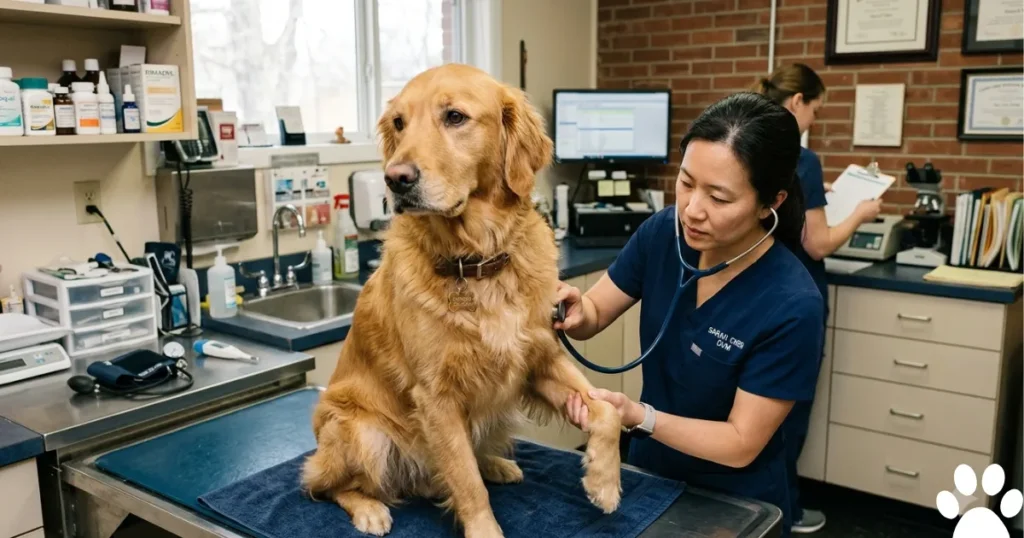
Videos of your dog’s episodes can be very useful in determining whether a dog is having seizures or syncope. Aim the camera at the whole body, get the eyes and jaw if possible, and note the time, the trigger, and how long recovery took.
Treat any seizure over five minutes, or two episodes in 24 hours, as an emergency and call immediately. For a single brief episode with full recovery, book a prompt exam and bring the video. If a true seizure is confirmed, our overview of seizure medications and rescue medication explains treatment.
How to tell if your dog is having a seizure?
Check consciousness first. During a true seizure, your dog is unaware and can’t be interrupted, with rhythmic convulsing, jaw chomping, and a confused recovery. If he stays aware, it’s likely a look-alike, not a seizure.
How to tell if your dog is having a seizure or just dreaming?
Call his name without touching him. A dreaming dog wakes and acts normal, while a seizing dog stays rigid and unresponsive. Dream twitches are soft and brief; seizures are violent and leave a confused recovery.
How to know if your dog is having a seizure?
You know it’s a seizure when four signs appear together: lost awareness, rhythmic paddling, jaw chomping or foaming, and a confused postictal recovery. A single jerk or a fully conscious dog points to something else.
How do I tell a seizure from fainting in my dog?
Check the trigger and recovery. Fainting follows exertion, excitement, or coughing, lasts seconds, and ends with instant recovery. Seizures usually start at rest, involve jaw chomping, and leave minutes to hours of confusion.
What looks like a seizure in dogs but isn’t?
Movement disorders, head tremors, cataplexy, vestibular episodes, syncope, reverse sneezing, and choking can all mimic seizures. Most leave the dog conscious and responsive, which is the key clue that it isn’t a true seizure.
Is my dog having a seizure or a movement disorder?
Check awareness. A movement disorder leaves your dog fully conscious and responsive during the abnormal movement, often triggered by stress or excitement. A seizure switches awareness off and ends in a disoriented recovery.
Is a dog conscious during a seizure?
No, during a generalized seizure a dog is unconscious and unaware of you, which is why it can’t be interrupted. Retained awareness during an episode is a strong sign it isn’t a generalized seizure.
How long does a dog seizure last compared to fainting?
A seizure usually lasts one to two minutes with a long, confused recovery. A faint lasts only a few seconds with instant, complete recovery. The recovery difference is often the clearest tell between them.
Should I film my dog’s seizure?
Yes, video is the single most useful diagnostic tool. Capture the whole body, the eyes, and the jaw if safe, and note the trigger and recovery time. It helps your vet separate a seizure from a look-alike.
Can a dog be aware during a seizure?
During a focal seizure, a dog may stay partly aware, but during a generalized seizure, awareness is lost. If your dog is clearly conscious and responsive throughout, a movement disorder or faint is more likely.
How can I tell if my Golden Retriever is having a seizure?
Watch for an unresponsive Golden Retriever with rhythmic paddling, jaw chomping, and a confused recovery, which fits the breed’s classic generalized grand-mal pattern. A fully alert Golden during the episode points to a look-alike instead.
Do Golden Retrievers faint or have seizures more often?
Golden Retrievers are predisposed to idiopathic epilepsy, so seizures are common, especially in young adults. However, older Goldens that collapse during exertion may be experiencing cardiac syncope, which warrants a heart workup rather than a seizure assumption.
Can Golden Retrievers collapse from exercise instead of a seizure?
Yes, a Golden Retriever collapsing during or right after intense exercise may have exercise-induced collapse or cardiac syncope, not a seizure. The exertion trigger and rapid recovery help distinguish these from idiopathic epilepsy.
Why do Golden Retrievers usually have generalized seizures?
Golden Retrievers carry a genetic predisposition to idiopathic epilepsy that, in breed studies, most often produces generalized grand-mal seizures with onset in early adulthood, rather than the subtle focal seizures seen in some other breeds.
When should I take my Golden Retriever to the vet for a seizure-like episode?
Go immediately if an episode lasts over five minutes or repeats within 24 hours. For a single brief episode, book a prompt exam and bring a video, since footage helps your vet tell a seizure from a look-alike.
Conclusion.
Knowing how to tell if your dog is having a seizure comes down to four questions: was he conscious, how did he move, what triggered it, and how did he recover? A true seizure means lost awareness and a confused recovery, while most look-alikes leave your dog alert and bounce back instantly.
Your one move today is to keep your phone ready, because a short video answering those four questions tells your vet more than any description. For your Golden, a full, unresponsive convulsion fits the breed, but exertion-triggered collapse deserves a heart check.
Has your Golden ever had an episode that turned out not to be a seizure? What was it, syncope, a tremor, a movement disorder, and what finally gave it away? If you filmed it, did the video change the diagnosis? Your experience could help another owner ask the right question instead of assuming the worst.