
Seizure meds for dogs fall into three categories: daily threshold-raising medications, rescue medications for active seizures, and second-line add-on medications when primary therapy gives incomplete control. For Golden Retrievers, the right choice depends on seizure type, age, liver function, and a breed-specific metabolic sensitivity most guides skip.
In my practice, the prescription that controls seizures well in a Labrador at equivalent weight is not automatically right for a Golden. The breed’s moderate hepatic sensitivity changes phenobarbital monitoring, and the familial epilepsy genetics in Goldens make Keppra canine protocols worth discussing earlier than most guides suggest.
The Three Seizure Meds for Dogs Vets Actually Prescribe
Not every seizure medication in dogs carries the same risks or fits every dog equally. Here is how I think about the three main options and why the choice matters specifically for Golden Retrievers.
Phenobarbital: First Line, Most Studied, Most Monitored
Phenobarbital is the most commonly prescribed of all seizure meds for dogs health. It enhances gamma-aminobutyric acid activity in the brain, increasing inhibitory signaling and raising the neuronal threshold for seizure onset. For a 65 lb golden retriever, the starting dose sits at 2.5 mg per kg twice daily, titrated over two to four weeks against serum-level monitoring.
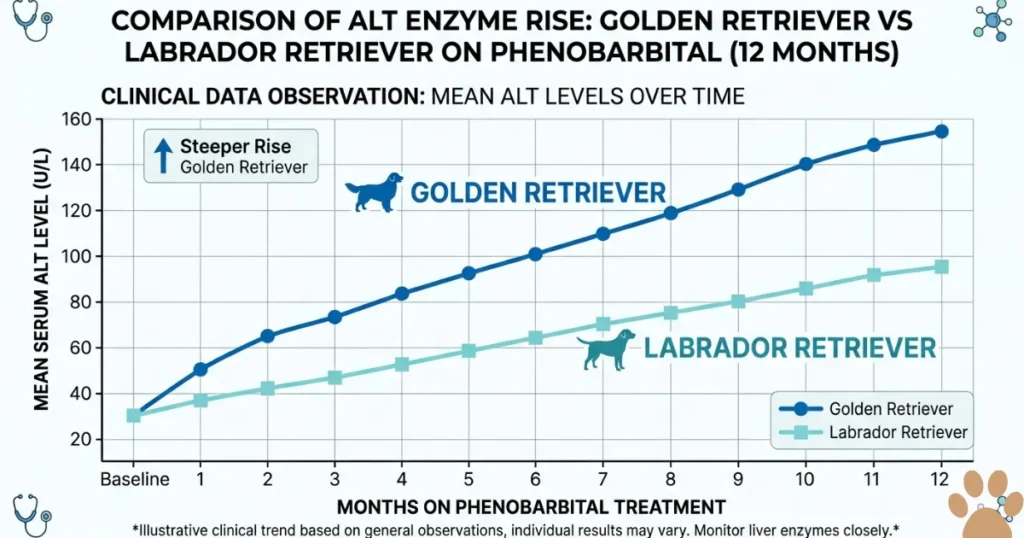
The monitoring schedule is non-negotiable. Phenobarbital is metabolized by the liver, and sustained use can cause hepatotoxicity. According to the Merck Veterinary Manual, serum phenobarbital levels and a liver enzyme panel covering ALT, ALP, and GGT should be checked two weeks after starting and every six months thereafter. In Golden Retrievers, ALT elevation appears earlier than in Labradors at the same dose per kilogram, a breed-specific difference that changes my monitoring interval for any Golden showing an upward trend within the first year.
Levetiracetam: Cleaner Liver Profile, Precise Timing Required
Levetiracetam, sold as Keppra, is increasingly a first-line option for Goldens with idiopathic epilepsy. It binds synaptic vesicle protein SV2A to modulate neurotransmitter release and carries significantly lower hepatotoxicity risk. For Goldens showing early ALT elevation on phenobarbital, Keppra canine protocols become the first adjustment conversation.
Potassium Bromide: Effective but with a Retriever Specific Caution
Potassium bromide enhances chloride ion influx into neurons and works as a second-line agent when primary control is incomplete, taking three to four months to reach therapeutic serum levels. Bromide-induced pancreatitis occurs at a higher rate in retrievers on long-term potassium bromide therapy than in other breeds. I prescribe it less often in Goldens and include lipase and amylase on every panel.
GRI Seizure Medication Comparison Table for Golden Retrievers
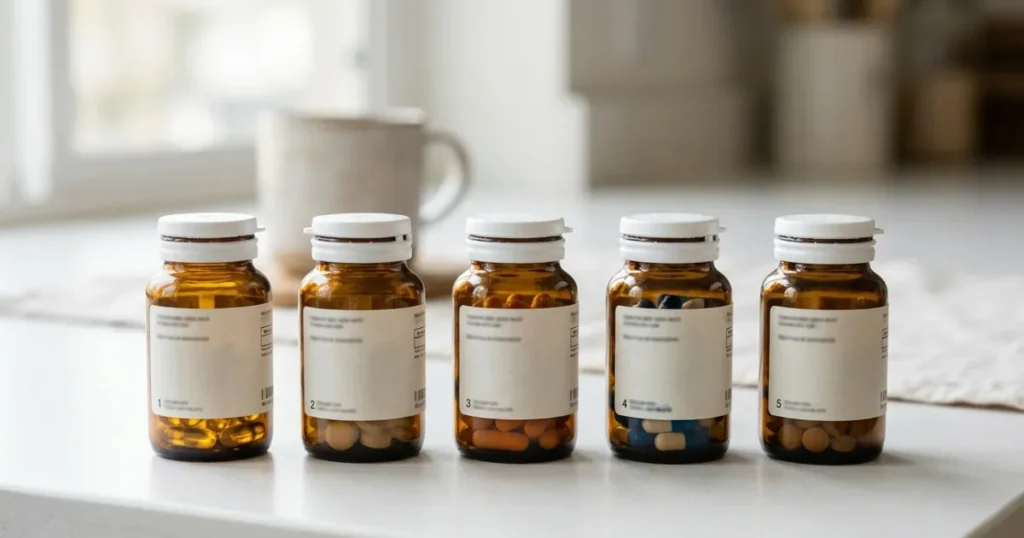
| Medication | Mechanism | Dose for 65 lb Golden | Liver Risk | GR-Specific Caution | Monitoring |
| Phenobarbital | GABA enhancement | 2.5 mg per kg twice daily | Moderate | Faster ALT elevation vs labs: thyroid suppression | Every 6 months |
| Levetiracetam IR | SV2A modulation | 20 mg per kg three times daily | Low | Dosing interval critical; sedation first 2 weeks | Every 6 to 12 months |
| Levetiracetam ER | SV2A modulation | 30 mg per kg twice daily | Low | Confirm ER versus IR at every dispensing | Every 6 to 12 months |
| Potassium bromide | Chloride ion influx | 30 to 40 mg per kg once daily | Very low | Bromide-induced pancreatitis risk in retrievers | Every 6 months, including lipase |
| Zonisamide | Sodium and calcium channel blockade | 5 to 10 mg per kg twice daily | Low | Limited GR-specific outcome data | Every 6 months |
Why Golden Retrievers Respond to Anti Seizure Meds for Dogs Differently
I’ll be direct with Golden owners who have also had Labs or other breeds: the medication protocol is not identical, and assuming it is costs real dogs real recovery time.
The Hepatic Sensitivity Problem Specific to Goldens
Golden Retrievers show elevated baseline ALT values more frequently than Labradors at equivalent ages and weights, and this tendency compounds with phenobarbital’s hepatic load. In my practice, Goldens hit the threshold for a dosing conversation at phenobarbital serum levels that a same-weight Lab tolerates without issue.
Per AAHA guidelines, monitoring for dogs on phenobarbital should not drop below six-monthly intervals. For Goldens showing any upward ALT trend in the first year, I bring that interval to every three months.
The Hypothyroidism Interaction Most Guides Ignore
Golden Retrievers develop hypothyroidism at higher rates than most breeds, and phenobarbital suppresses thyroid hormone measurably within three to six months of starting treatment. A golden retriever already at the lower end of normal thyroid function may cross into clinical hypothyroidism once therapy begins.
What I tell owners: not “watch for lethargy as a phenobarbital side effect,” but “check total T4 at the six-month panel, because in Goldens you may be managing two conditions on the same bloodwork.” Missing a developing hypothyroid state and attributing it to seizure medication is the most common blood panel oversight I see in Golden owners on long-term therapy.
Golden Retriever Seizure Medication Thresholds by Age
Puppies (8 weeks to 18 months):
The developing liver processes phenobarbital less efficiently. Levetiracetam is my first consideration for Goldens presenting with seizures before 18 months, with phenobarbital added if Keppra canine therapy gives an incomplete response.
Adults (2 to 7 years):
The standard prescribing window. Either phenobarbital or levetiracetam applies based on seizure type, frequency, and initial liver values. Combination therapy becomes the conversation when a single agent provides less than 50% seizure frequency reduction at therapeutic serum levels.
Seniors (8 years and older):
Renal function matters as much as liver function in this group. Levetiracetam is renally excreted and requires dose adjustment when creatinine or BUN rises. Senior Goldens on long-term phenobarbital get hepatic and renal panels every three months.
Keppra and Dogs: What Most Owners Get Wrong About Dosing
Here’s the thing that causes the most correctable treatment failures I see in Golden retriever owners: the difference between Keppra IR and Keppra ER.
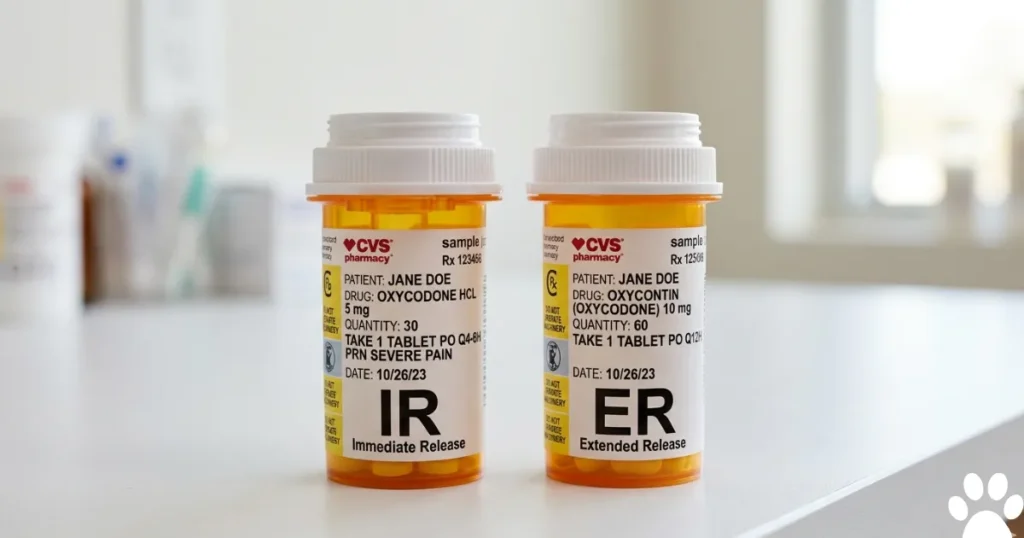
Levetiracetam comes in two formulations. Keppra IR is immediate release, requiring three times daily dosing. Keppra ER is extended release, dosed twice daily. The failure mode: an owner picks up an IR prescription, reads “Keppra,” and doses twice daily, missing an entire daily administration. Both bottles say Keppra. The difference is on the label.
In January 2025, a 3 years old male Golden weighing 70 lbs presented following two breakthrough seizures in one month. He had been well controlled on Keppra IR for six months. The owner had recently switched pharmacies, and the new dispensing used an IR formulation she dosed at her previous ER schedule. Serum levetiracetam levels were subtherapeutic. Correcting to three times daily eliminated breakthrough events within three weeks. The cost was two cluster events and a full medication review.
What the Dosing Numbers Mean for a 65 lb Golden
Keppra IR at 20 mg per kg three times daily means approximately 600 mg per dose. Keppra ER at 30 mg per kg twice daily means approximately 900 mg per dose. These are not interchangeable without recomputing the dosing interval explicitly with your vet.
Expect mild sedation and reduced appetite in the first two weeks. Both resolve in most Goldens by days 10 to 14. Sedation persisting beyond two weeks requires a vet call. Keppra and dogs compare well to phenobarbital on two points that matter for Goldens: no hepatotoxicity risk and no thyroid suppression.
The GRI Medication Decision Protocol: Managing Seizure Meds in Your Golden
This framework covers the four questions Golden owners ask most: when to start, when to adjust, what stopping means, and what a missed dose does.
When to Start
Start when a Golden meets any one criterion: two or more seizures in a six-month period, any cluster seizure event, post-ictal recovery consistently exceeding one hour, or a single seizure lasting more than five minutes. One criterion is enough. Waiting for multiple criteria to stack allows seizure frequency to rise, raising the threshold needed for control later.
When to Adjust Seizure Meds for Dogs
Adjust when breakthrough seizures exceed twice per month on a stable dose, serum phenobarbital levels fall below 20 micrograms per milliliter at the six-month check, or ALT rises above three times baseline on consecutive panels. One isolated breakthrough in three months warrants reviewing compliance, not dose escalation.
What Stopping Suddenly Does
Stopping seizure meds for dogs abruptly causes rebound seizure activity. Abrupt phenobarbital cessation in Goldens with idiopathic epilepsy can produce status epilepticus, a seizure lasting over 30 minutes with risk of permanent neurological damage, within 48 hours of the final dose. Any taper takes a minimum of four to six weeks under veterinary supervision. There is no situation where stopping seizure medication overnight is appropriate outside of a documented anaphylactic reaction.
Missed Doses
One missed Keppra IR dose: administer as soon as you remember. If within two hours of the next scheduled dose, skip it and continue normally. Do not double dose. Two or more missed doses in a week mean calling your vet—subtherapeutic serum levels increase breakthrough risk within days. Phenobarbital’s 40 to 60-hour half-life provides more buffer after a single missed dose, but consistent daily dosing still matters.

Expert Insight
“The most common management error I see isn’t wrong medication choice; it’s the IR versus ER confusion creating a hidden underdosing problem at home. Owners give the medication every day. But a Keppra IR prescription dosed twice daily instead of three times means serum trough levels drop below the therapeutic range overnight, and the dog has breakthrough events that look exactly like medication failure. Confirm the formulation type at every pharmacy fill.”
URGENCY BANNER
CALL YOUR VET IMMEDIATELY. If your Golden has two or more seizures within 24 hours, any episode lasts over 5 minutes, or you consider stopping seizure medication without veterinary guidance.
What are the best seizure meds for dogs?
The best seizure meds for dogs depend on seizure type, liver function, and breed. Phenobarbital and levetiracetam are the two primary options. For Golden Retrievers, hepatic sensitivity and the Keppra IR versus ER distinction affect long-term outcomes.
How long do dogs need seizure meds?
Dogs with idiopathic epilepsy typically stay on seizure meds for life. Stopping without a supervised taper causes rebound seizures. Some dogs with very low seizure frequency may trial a taper after two years, under close veterinary guidance only.
What are dog seizure tablets used for?
Dog seizure tablets raise the neuronal threshold for electrical discharge, reducing seizure frequency and severity. They don’t cure the underlying condition. The treatment goal is 50% or greater seizure frequency reduction on a stable dose.
Are dog seizure tablets safe for long-term use?
Phenobarbital dog seizure tablets require six-monthly liver monitoring. Levetiracetam carries lower hepatic risk and is safer long-term. Both require regular blood panels confirming therapeutic serum levels and screening for cumulative organ changes.
What are anti seizure meds for dogs?
Anti seizure meds for dogs reduce neuronal excitability to prevent seizures. The three categories are daily threshold-raising medications such as phenobarbital, rescue medications such as diazepam, and second-line add-ons such as potassium bromide.
How do anti seizure meds for dogs work in the brain?
Anti seizure meds for dogs increase inhibitory signaling or reduce excitatory activity. Phenobarbital enhances GABA activity. Levetiracetam binds to SV2A to modulate neurotransmitter release. Potassium bromide increases chloride ion influx to suppress neuronal firing.
What is Keppra canine dosing based on?
Keppra canine dosing is based on body weight and formulation. IR doses at 20 mg per kg three times daily. ER doses at 30 mg per kg twice daily. A 65 lb golden retriever receives approximately 600 mg three times daily on the IR formulation.
How effective is Keppra canine therapy for epilepsy?
Keppra canine protocols achieve 50% or greater seizure reduction in 50 to 60% of dogs as sole therapy, per the Merck Veterinary Manual. Combining levetiracetam with phenobarbital improves control in Golden Retrievers with cluster onset patterns.
Can Keppra and dogs experience sedation?
Yes. Keppra and dogs commonly show mild sedation and reduced appetite in the first two weeks, resolving by days 10 to 14. Sedation persisting beyond two weeks or non-responsiveness rather than sleepiness requires a vet call.
How do Keppra and dogs compare to phenobarbital for daily management?
Keppra offers lower hepatotoxicity risk and no thyroid suppression compared to phenobarbital. The trade-off is more frequent dosing with the IR formulation. For Golden Retrievers with moderate hepatic sensitivity, Keppra is the first choice when early ALT elevation appears.
Do Golden Retrievers need more frequent monitoring on phenobarbital than other breeds?
Yes. Golden Retrievers show ALT elevation at phenobarbital serum levels that Labradors at equivalent weight tolerate without change. Per AAHA guidelines, Goldens need six-month liver panels minimum and three-month intervals if any upward ALT trend appears.
Why do golden retrievers have a higher risk of bromide pancreatitis than Labradors?
Golden Retrievers show higher baseline pancreatitis susceptibility than Labradors, and potassium bromide increases that risk because bromide ions create an osmotic load stressing pancreatic tissue. This is why potassium bromide is prescribed less often in Goldens at equivalent seizure frequency.
What does the AAHA say about anti-seizure medication monitoring?
AAHA recommends serum phenobarbital testing and full liver enzyme panels every six months for dogs on long-term anti-seizure medication. Dogs with elevated ALT trends move to three-monthly intervals. Golden Retrievers warrant a shorter interval sooner than most breeds.
How does idiopathic epilepsy in Golden Retrievers affect medication choice?
Idiopathic epilepsy in Golden Retrievers often presents with cluster onset, meaning the first medicated seizure type is already a cluster. Per AVMA and Merck Veterinary Manual guidance, cluster onset warrants faster medication initiation and emergency diazepam prescription at the same visit.
My Golden was just prescribed Keppra; what should I watch for in the first week?
Expect mild sedation, reduced appetite, and slower response times in days one through ten. Confirm with your vet whether the prescription is IR, meaning three times daily, or ER, meaning twice daily. Call your vet if a second seizure occurs within seven days of starting treatment.
Conclusion: What You Now Know About Seizure Meds for Your Golden
Seizure meds for dogs are not interchangeable. For Golden Retrievers, three factors reshape the standard prescribing picture: moderate hepatic sensitivity that accelerates ALT elevation on phenobarbital, hypothyroidism predisposition that compounds with phenobarbital thyroid suppression, and the IR versus ER Keppra distinction that remains the single most correctable source of treatment failure I see in practice.
The GRI Medication Decision Protocol gives you clear criteria for when to start, when to adjust, and what never to do without vet supervision. The guide covers how seizure type shapes the prescribing decision, and it covers emergency triage.
Has your Golden been prescribed Keppra or phenobarbital? Share which medication, whether IR or ER, if it’s Keppra, and how your Golden responded in the first month. Your experience helps other Golden families know what to expect.