The best teething toys for puppies should be soft, freezable, and gently textured, using cold to soothe the sore gums of a puppy losing its baby teeth. Choose flexible rubber over anything hard, chill it for relief, and avoid ice cubes and human teething gels. The right toy calms the ache and saves your furniture.
Teething turns a sweet puppy into a chewing machine. It is uncomfortable for them and exhausting for you.
The good news is that the right toys make the whole phase easier. This guide covers teething toys for puppies, why cold works, how to use it safely, and what to avoid. For the wider lineup, see our complete toy guide.
Key Takeaways
- Teething toys for puppies use a cold and soft texture to soothe gums while baby teeth fall out and adult teeth come in.
- Choose soft, flexible, freezable toys, since hard chews like bones, antlers, and ice cubes can crack a puppy’s baby teeth.
- Cold works best in short sessions, roughly ten to twenty minutes, two or three times a day, with room-temperature toys in between.
- Never use human teething gels, since ingredients like benzocaine and xylitol can be dangerous or toxic to dogs.
- Teething eases by around six months, so see your vet for retained baby teeth or a double row of “shark teeth.”
Why puppies need teething toys
Teething is not misbehavior. It is a painful, natural stage, and chewing is how a puppy relieves the ache.
Teething toys for puppies give that urge a safe target. They do three key jobs:
- Soothe sore gums. A cool, soft surface calms inflamed gums as adult teeth push through.
- Protect your home. A tempting toy keeps those needle teeth off your hands, shoes, and furniture.
- Build good habits. Redirecting to a toy now teaches a lifelong habit of chewing the right things.
Used well, teething toys for puppies do double duty: they ease real pain and quietly train good chewing manners at the same time.
You can find more puppy-stage help in our puppy care guides, part of the Golden Retriever Insight home.
The puppy teething timeline
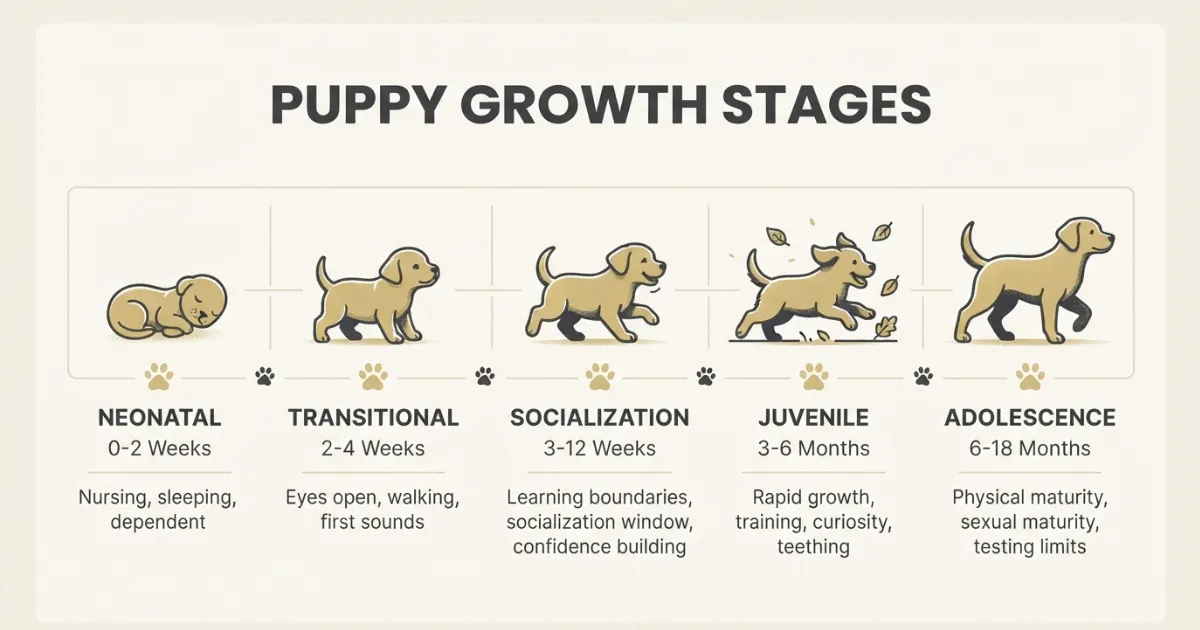
Knowing the timeline helps you plan. It runs roughly like this:
- Birth to 3 weeks. Puppies are born toothless.
- 3 to 6 weeks. Around 28 baby teeth, also called milk teeth, come in.
- 3 to 4 months. Baby teeth start falling out, and chewing ramps up hard. This lines up with the three months old puppy stage and the four months old stage.
- By about 6 months. All 42 adult teeth are usually in, and the worst is over.
Signs your puppy is teething
Watch for these common signs:
- Heavy drooling and a strong urge to chew everything
- Red, swollen, or tender gums
- Small blood spots on toys or in the water bowl
- Tiny baby teeth found on the floor
- More nipping, fussiness, or a slightly off appetite
When teething ends
Most puppies finish teething by around six months, easing toward the six months mark.
See your vet if baby teeth have not fallen out by then, or if you spot a double row of teeth, sometimes called shark teeth. Retained baby teeth may need removing.
What makes good toys for teething dogs
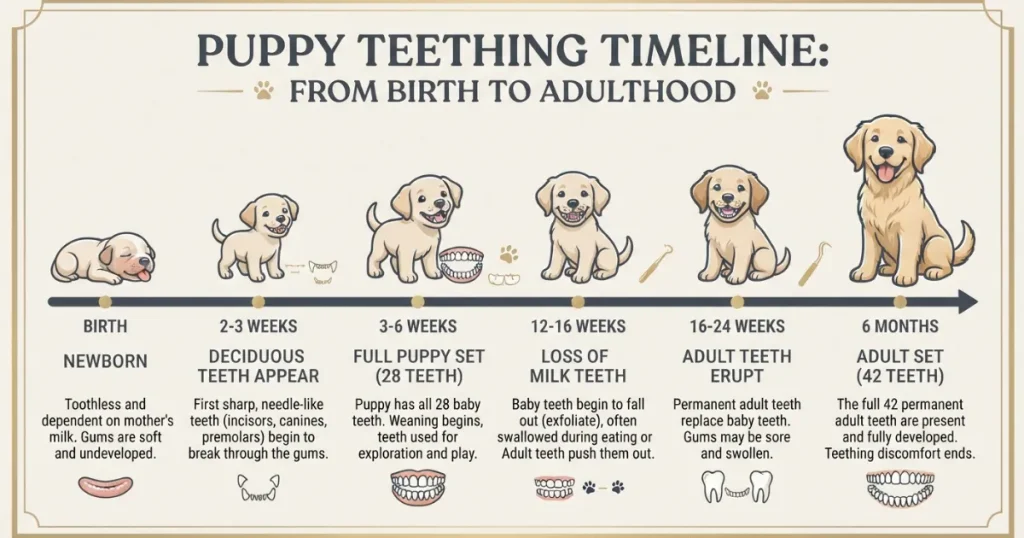
Good toys for teething dogs are gentler than everyday chews. They are built to soothe, not to survive heavy adult jaws.
Key features to look for
- Freezable. Cold is the active ingredient, so a freezer-safe toy matters most.
- Soft and flexible. It should flex easily, since hard toys can crack fragile baby teeth.
- Gently textured. Nubs and ridges massage sore gums as your puppy chews.
- Correctly sized. Big enough that it cannot be swallowed, but light for a small mouth.
- Non-toxic. Puppy-safe rubber or fabric, with no small parts to come loose.
The best teething toys for puppies tick every box above, but the first three, freezable, soft, and textured, matter most for soothing sore gums.
The cold factor
Cold is what makes a teething toy work, which is why teething toys for puppies are built for the freezer. It numbs the nerve endings, narrows blood vessels, and calms swelling, the same idea as an ice pack on a sprain.
That is why a chilled toy beats a room-temperature one during a flare-up. Cold does the soothing.
The texture factor
Texture does the rest. Soft nubs and ridges gently massage tender gums and help loosen baby teeth that are ready to fall.
A smooth toy still helps, but a nubbed one feels better on an aching mouth. The best teething toys for puppies combine both cold and texture.
Best teething toys for puppies by type
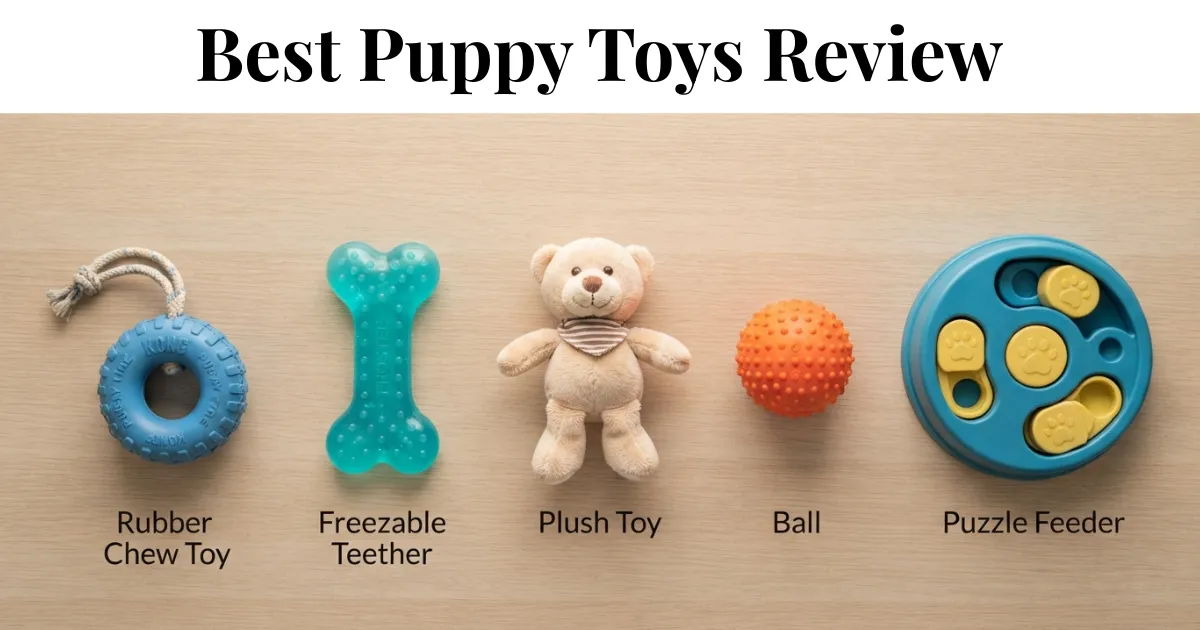
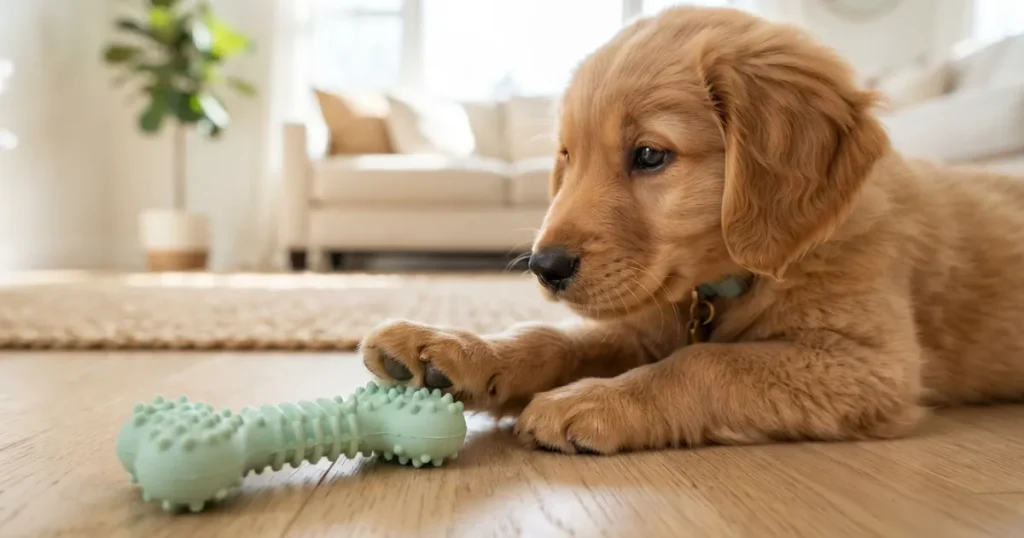
Teething toys for puppies come in a few clear styles. Most puppies like a small mix, and the table sorts them.
| Teething toy type | Best for | Why it helps |
| Freezable rubber teethers | Most teething puppies | Cold numbs sore gums |
| Textured nubbed toys | Gum massage | Ridges soothe and clean |
| Soft plush teethers | Gentle young chewers | Comfort for tender mouths |
| Chilled edible chews | Short supervised relief | Cold plus a tasty reward |
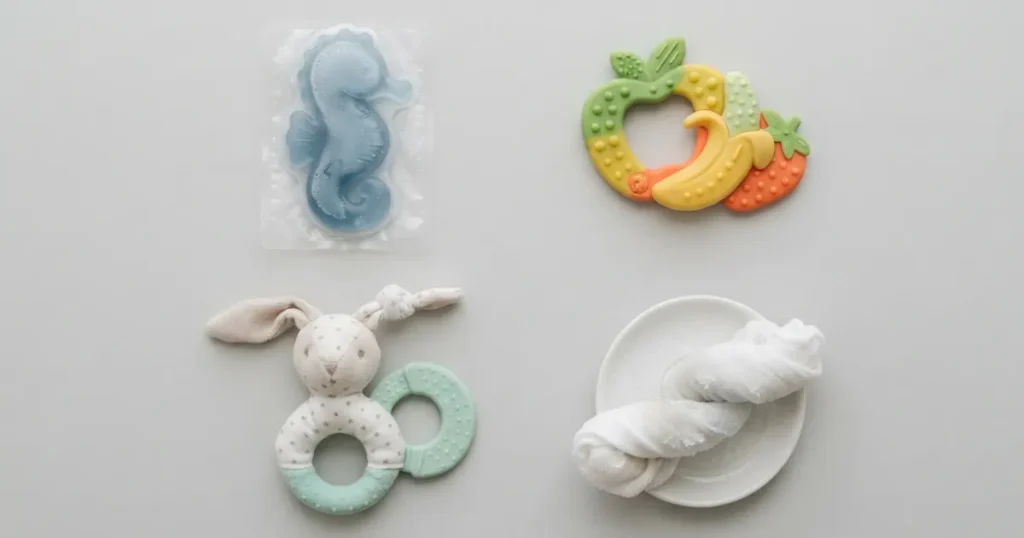
| Frozen washcloth, DIY | Budget relief | Soft, cold, and cheap |
Freezable teething toys
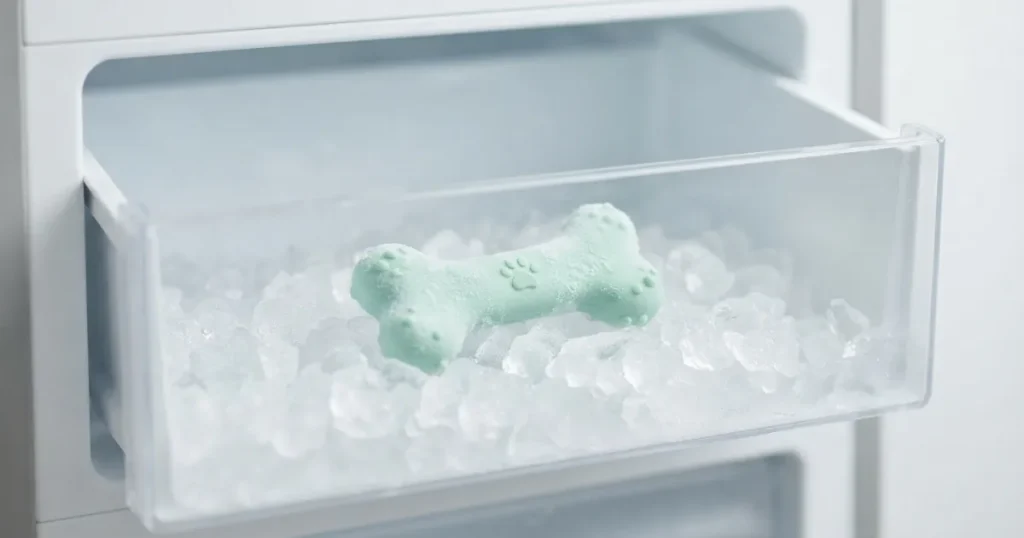
Freezable teething toys for puppies are the front-line choice. Pop one in the freezer, then hand it over when the gums flare.
- Choose a puppy-specific freezable toy, softer than an adult chew.
- Keep two or three rotating, so a cold one is always ready.
- Pick teething toys for puppies that freeze solid throughout, not just on the surface, for longer-lasting cold.
How to use cold safely
Cold is powerful, so use it in short bursts:
- Offer a frozen toy for about 10 to 20 minutes, then take a break.
- Repeat two or three times a day during the worst weeks.
- Swap in a room-temperature toy between sessions, so small jaws do not get over-chilled.
Textured rubber teethers
A soft rubber teether with nubs is a great all-day option between cold sessions. It massages gums without the intense cold, so your puppy can chew it freely under supervision. Many teething toys for puppies use this nubbed design for exactly that reason.
Soft plush teethers
Young puppies with tender mouths often love a soft plush teether. Early baby teeth rarely shred them, but always supervise, and switch to tougher toys once adult teeth arrive. For everyday durable chews, see our chew toy guide.
Chew toys for teething puppies vs everyday chews
It helps to know how chew toys for teething puppies differ from regular chews. They solve different problems.
- Teething toys are soft, cold, and gum-focused. They soothe pain while baby teeth are loose.
- Everyday chews are firmer and jaw-focused. They satisfy the chewing drive once adult teeth are in.
A simple way to think about it:
- Reach for a teething toy during the sore, gummy months.
- Move toward sturdier chews as the adult teeth settle in, including tough toys for big chewers.
Using the wrong one is a common mistake. A hard adult chew can hurt a teething mouth, while a soft teether will not last a strong adult chewer.
Best teething toys for dogs by size and stage
The best teething toys for dogs should match both the size and the stage of your puppy. Unlike general teething toys for puppies, sizing here is the deciding factor, since a chew that is safe for a small breed can be swallowed by a fast-growing Golden.
Small vs large-breed puppies
- Small breeds need lighter, smaller teethers suited to tiny mouths.
- Large breeds like Goldens need bigger teethers that still cannot be swallowed as they grow fast.
Size up as your puppy does, and recheck the fit every few weeks.
Matching the toy to the teething stage
- Early teething (3 to 4 months). Soft, cold, gentle teethers for maximum relief.
- Late teething (5 to 6 months). Firmer textured toys as adult teeth strengthen.
Once teething passes, your puppy is ready for the wider lineup of the best puppy toys.
How to introduce a teething toy
Even the best teething toys for puppies only work if your puppy actually uses them. Make it easy:
- Offer at the right moment. Hand over a teething toy the instant your puppy starts gnawing on the wrong thing.
- Chill it first. A cold teething toy is far more tempting to a sore mouth than a warm one.
- Praise the swap. Reward your puppy every time it chooses the toy over your hand or the furniture.
- Keep some in every room. Teething toys for puppies work best when a soothing one is always within reach.
Consistency turns the toy into your puppy’s go-to comfort, which makes the whole phase calmer.
What to avoid for a teething puppy
A few common items do more harm than good during teething.
Toys and materials to skip
- Hard chews. Bones, antlers, hooves, and hard plastic can crack fragile baby teeth.
- Small parts. Squeakers, bells, or plastic eyes that can be chewed off and swallowed.
- Shreddable items. Thin fabric or foam that breaks into swallowable pieces.
Why not ice cubes
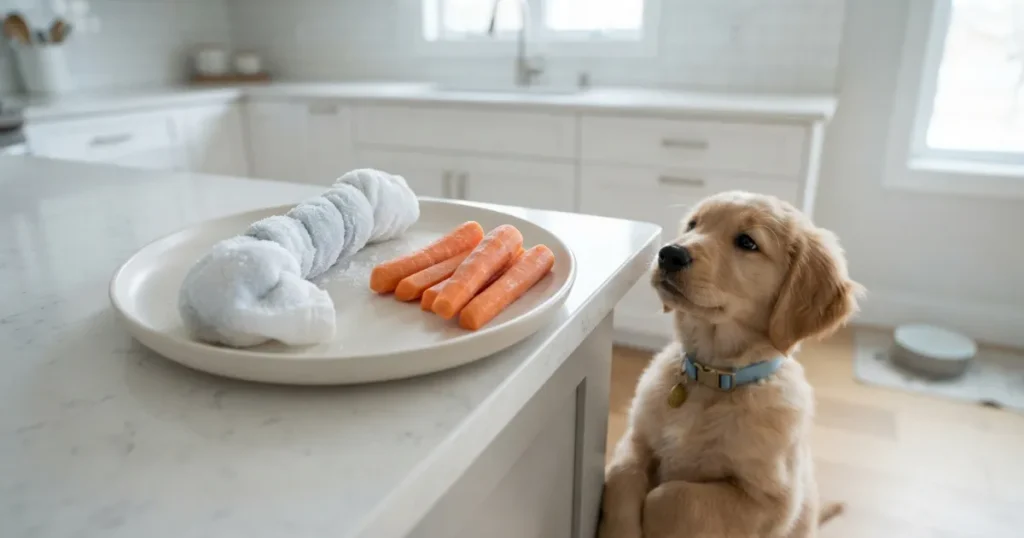
Ice cubes seem like a cheap fix, but vets advise against them. They are too hard on teeth and can crack them, and a whole cube is a choking risk. A chilled soft toy or a frozen washcloth is far safer.
Never use human teething gels
Human teething gels are made for babies, not puppies. Some contain benzocaine or xylitol, which can be dangerous or toxic to dogs.
Only ever use a gel if your own vet recommends a specific pet-safe product. When in doubt, stick to cold toys and call your vet.
Do not pull loose teeth
It is tempting to help a wobbly tooth along, but do not. Baby teeth have long roots that can break, causing pain or infection. Let them fall on their own.
Soothing a teething puppy beyond toys
Teething toys for puppies are the core of relief, but a few extras help too:
- Frozen washcloth. Wet a clean, thread-free cloth, twist it, and freeze it for supervised chewing.
- Chilled dog-safe snacks. Frozen carrot sticks, green beans, or blueberries can feel good on sore gums.
- Puppy popsicles. Freeze a stuffable toy with a little puppy food or plain yogurt inside.
- Calm and comfort. Extra rest, a cozy spot, and a steady routine ease a fussy, teething puppy.
- Redirect, do not punish. Chewing is instinct, so calmly swap in a toy rather than scolding.
- Rotate the relief. Alternate a few teething toys for puppies, so a fresh, cold one is always ready.
Expert Insight
The two teething mistakes I correct most are ice cubes and human teething gels. Both feel helpful, and both can harm a puppy, from cracked teeth to a real toxicity risk. Cold, soft, puppy-specific toys in short sessions are safer and work better. And please never pull a loose tooth, since the roots run deeper than owners expect.
How to soothe sore gums fast.
Reach for a soft, freezable teething toy, chill it, and offer it in short sessions. Cold numbs the ache better than anything else. Skip ice cubes and rock-hard chews, which can crack baby teeth, and never use human teething gels, which can be toxic to dogs. Supervise every chew.
What are the best teething toys for puppies?
The best teething toys for puppies are soft, freezeable, and gently textured, so cold and nubs soothe sore gums. Rotate a few, chill them, and offer short sessions. Avoid hard chews that can crack fragile baby teeth.
What makes good toys for teething dogs?
Good toys for teething dogs are soft, flexible, freezeable, and correctly sized, with a gentle texture to massage gums. They are gentler than adult chews, because a teething mouth is sore and baby teeth crack easily under hard pressure.
Are chew toys for teething puppies different from normal chews?
Yes. Chew toys for teething puppies are softer and often cold, designed to soothe pain while baby teeth are loose. Everyday chews are firmer and made to satisfy strong adult jaws once teething is over.
What are the best teething toys for dogs by size?
The best teething toys for dogs match the dog’s size, so small breeds need lighter teethers and large breeds need bigger ones that cannot be swallowed. Whatever the size, keep them soft, cold, and puppy-appropriate during teething.
When do puppies start and stop teething?
Puppies get about 28 baby teeth by six weeks, start losing them around three to four months, and usually finish with 42 adult teeth by six months. Chewing peaks in the middle of that window.
How does cold help a teething puppy?
Cold numbs nerve endings, narrows blood vessels, and reduces gum swelling, much like an ice pack on a bruise. That is why chilled or frozen teething toys soothe sore gums far better than room-temperature ones during a flare-up.
Can I give my puppy ice cubes for teething?
No. Vets advise against ice cubes because they are too hard and can crack teeth, and a whole cube is a choking hazard. Use a chilled soft toy or a frozen washcloth for safe, effective cold relief instead.
Are human teething gels safe for puppies?
No. Human teething gels can contain benzocaine or xylitol, which are dangerous or toxic to dogs. Never use them unless your vet recommends a specific pet-safe product. Cold toys are the safer everyday choice for relief.
How long should a puppy chew a frozen teething toy?
Keep cold sessions short, around ten to twenty minutes, two or three times a day. Offer a room-temperature toy in between, so a small puppy jaw does not get over-chilled during a long session.
Are soft plush toys okay for teething puppies?
Often yes, for young puppies with tender mouths, since early baby teeth rarely shred them. Always supervise, and move to tougher toys once adult teeth arrive, because a stronger mouth will start to destroy plush.
Why is my teething puppy’s gum bleeding a little?
A little bleeding as baby teeth loosen and fall is usually normal. You may see small spots on toys. If bleeding is heavy, persistent, or paired with swelling or pain, contact your vet to be safe.
Should I pull my puppy’s loose baby tooth?
No. Baby teeth have long roots that can break if pulled, causing pain or infection. Let loose teeth fall out naturally. If a tooth has not fallen by six months, ask your vet to check it.
The bottom line
Teething toys for puppies are soft, freezable, and gently textured, and they work because cold soothes the ache of adult teeth coming in. Rotate a few, chill them, and offer them in short sessions.
Just as important is what to skip. Avoid hard chews and ice cubes that can crack baby teeth, and never use human teething gels. Pair the right toys with a little cold comfort and a calm routine, and you will both get through the teething months in far better shape. The best teething toys for puppies are a small investment in your puppy’s comfort and your own peace of mind.
What finally soothed your puppy through teething, and which toy became the freezer favorite? Share your best tips in the comments to help other owners survive the chewing months.