
Consider euthanizing a dog with liver cancer when the liver begins to fail, shown by yellow, jaundiced gums, a swollen, painful belly, confusion or seizures, and a refusal to eat. Signs of liver failure usually mean the time is near. The tumor type matters greatly, since a single massive tumor can sometimes be cured by surgery and grant years.
Deciding on liver cancer in dogs when to euthanize is painful, but it becomes clearer once you understand what the liver does and what happens when cancer overwhelms it. The liver filters toxins, makes clotting factors, and processes nutrients, so when it fails, the whole body feels it. This guide explains the signs with honesty and care.
In my practice, the question I sort out first with liver cancer is the type, because it changes everything. A single large mass, called a massive tumor, can sometimes be removed with surgery and give years of good life. Other forms, and cancer that has spread to the liver from elsewhere, carry a far poorer outlook. For a Golden Retriever, liver tumors are often tied to the breed’s tendency toward hemangiosarcoma, which is why knowing exactly what you are facing matters so much before you decide.
What Liver Cancer Does to a Dog, and the Signs of Liver Failure
Liver cancer does its damage by slowly destroying the organ that keeps the rest of the body running. The liver filters toxins from the blood, makes the proteins that let blood clot, and processes food into energy. As a tumor takes over, all three jobs start to fail, and that failure is what produces the signs you see.
Early signs of dog liver cancer are frustratingly vague. You might notice lethargy, a smaller appetite, gradual weight loss, occasional vomiting, and increased thirst and urination. Because these are so general, liver cancer in dogs is often advanced by the time it is recognized. This is where routine bloodwork earns its keep. Raised liver enzymes and a rising bilirubin level can flag dog liver cancer before the outward signs appear, which is one reason senior wellness panels matter for an older Golden.
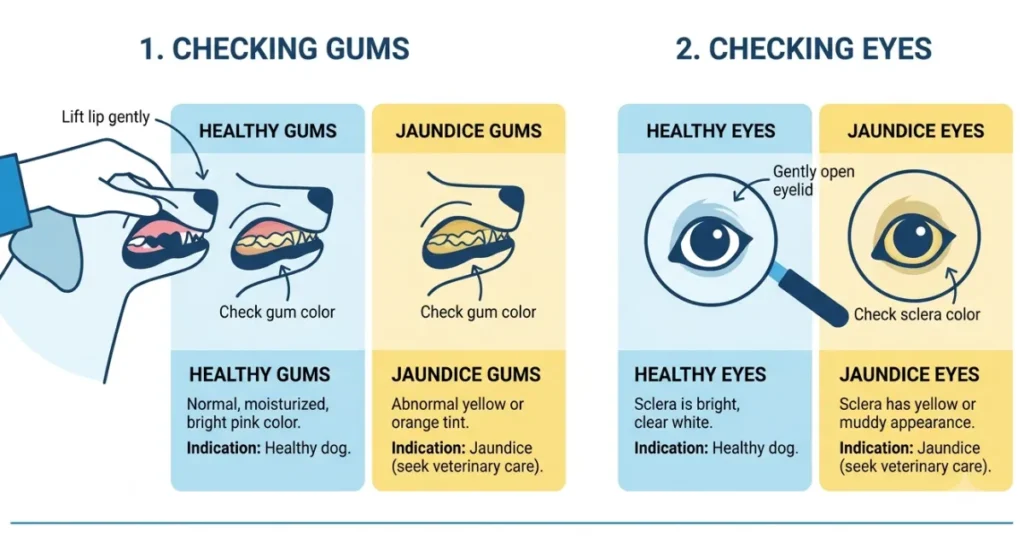
As the liver fails, the signs sharpen. The hallmark is jaundice, a yellow tint to the gums, the whites of the eyes, and the skin, which appears when the liver can no longer process a pigment called bilirubin. A swollen belly from fluid buildup, called ascites, weakness, pale gums, and easy bruising follow.
The bruising deserves a word of its own, because the liver makes the proteins that let blood clot. When it fails, small bumps bruise, and gums may ooze, a quiet sign that dog liver cancer has reached an advanced stage. Recognizing this shift from vague to specific is the heart of understanding the road ahead. The wider arc of decline is mapped in the stages of cancer leading to death.
Liver Cancer in Dogs When to Euthanize: The Signs That Matter
So, how do you know the right moment for liver cancer in dogs when to euthanize? A handful of signs carry the most weight, and most reflect a liver that can no longer do its job.
Jaundice that deepens, a belly swollen and tense with fluid, and a complete refusal to eat are among the clearest. Persistent vomiting, profound weakness, and the inability to stand follow. The most distressing sign is confusion or disorientation, sometimes with head pressing or seizures, which happens when toxins the liver should clear build up and affect the brain. Pain in the abdomen and pale gums from internal bleeding round out the picture. Pain is easy to miss because dogs hide it.
Watch for a hunched back, reluctance to be touched on the belly, restlessness, or a dog who no longer wants to be picked up. With dog liver cancer, several of these signs usually arrive together over days, and it is that cluster, not any single bad moment, that signals the decline has turned.
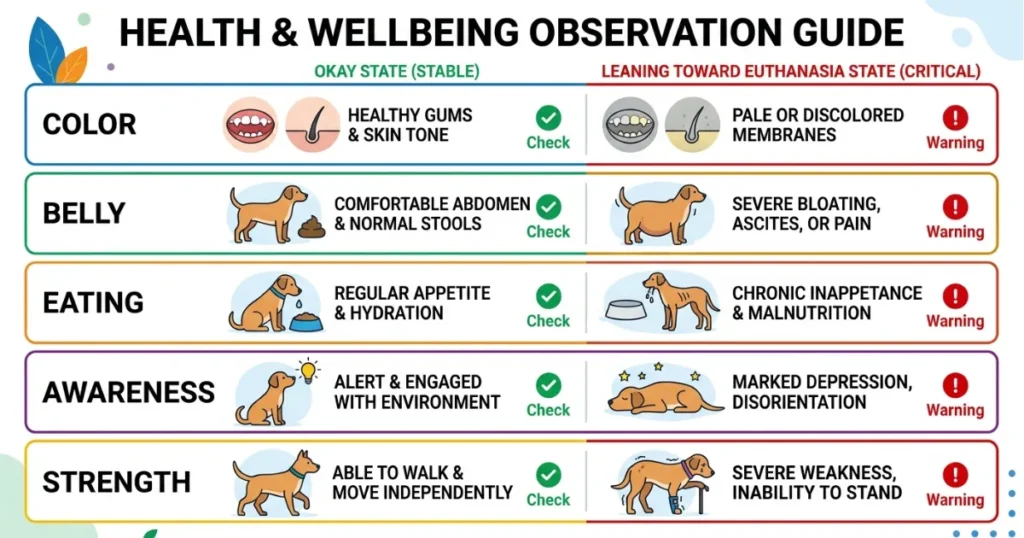
None of these has to appear alone. The liver cancer decision is about a pattern, several signs together, and a trend that does not turn around. The general framework for weighing quality of life lives in our guide on knowing when it is time to say goodbye, and the table below focuses that lens on liver cancer specifically.
Liver Cancer Quality of Life: Signs It May Be Time
| Area | Still doing okay | Leaning toward euthanasia |
| Color | Pink gums, clear eyes | Yellow jaundiced gums, eyes, and skin |
| Belly | Soft and comfortable | Swollen, tense, or painful with fluid |
| Eating | Eating willingly | Refusing food, persistent vomiting |
| Awareness | Alert and engaged | Confused, head pressing, or seizing |
| Strength | Standing and walking | Too weak to rise, collapsing |
The Two Emergencies: Internal Bleeding and Hepatic Encephalopathy
Liver cancer carries two true emergencies, and knowing them helps you act fast rather than freeze. Both can turn a stable dog critical within hours.
The first is internal bleeding. A liver tumor, especially a hemangiosarcoma or even a benign mass, can rupture and bleed into the abdomen, causing sudden weakness, pale or white gums, and collapse. This is the same pattern we describe in why a dog can bleed before dying, and it is a call your vet immediately situation, day or night. If it happens, the only safe move is to rush to an emergency vet, where a transfusion and surgery may buy time, though for a bleeding hemangiosarcoma, the relief is often brief.
The second is hepatic encephalopathy. When the failing liver can no longer filter toxins, those toxins reach the brain and cause confusion, drooling, circling, head pressing, and seizures, signs that can look much like a dog brain tumor. A dog in a hepatic crisis is suffering and needs urgent care.
Such a crisis can sometimes be eased with a medication called “lactulose,” which traps the toxins in the gut, along with a low protein diet and a calm, quiet space. But when these crises keep returning, they are telling you the liver is failing for good. When an emergency strikes and cannot be controlled, many families and veterinarians agree that the kindest answer to liver cancer in dogs when to euthanize is to let go with peace.
For a Golden, the Type of Liver Cancer Decides Everything
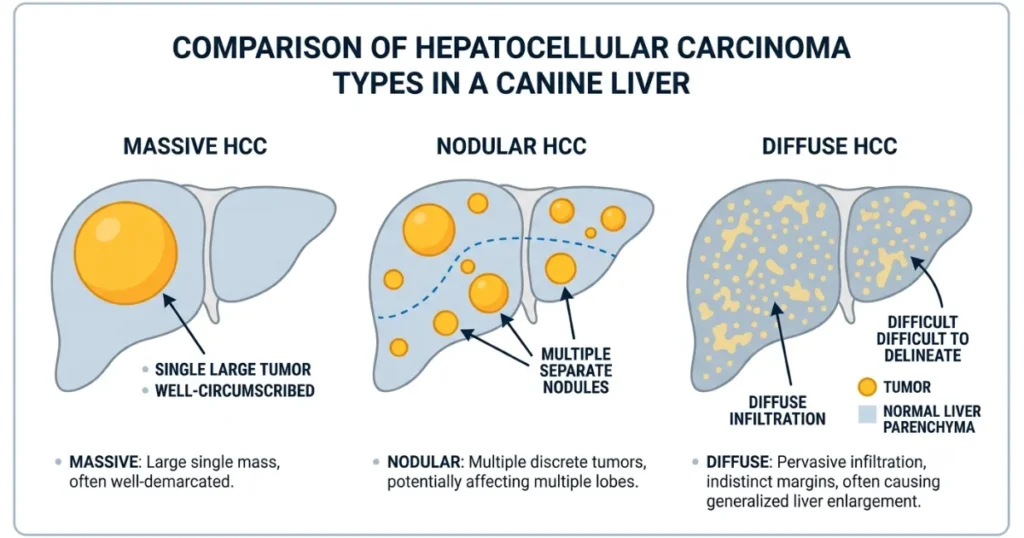
Here is the message I most want Golden owners to hear before despair takes over. With liver cancer, the type of tumor changes everything, and not all of it is grim. The most common primary liver cancer, hepatocellular carcinoma, comes in three forms. A massive tumor is a single large mass, it is the most common form, it grows slowly, and surgery can often remove it because the liver regenerates. Dogs with a massive tumor removed can live around four years on average and frequently die of something else entirely.
The harder truth is that the other forms, nodular and diffuse tumors, bile duct cancer, and cancer that has spread to the liver, usually cannot be removed and carry a poor outlook. For Goldens, this matters because the breed’s signature cancer, hemangiosarcoma, can grow in the liver or spread there, and that form bleeds and behaves aggressively. Other carcinomas, including bladder cancer, can also seed the liver.
Telling these apart takes more than a guess. An abdominal ultrasound shows the shape and spread of the tumor, a needle sample or biopsy confirms the type, and imaging of the chest checks whether the cancer has spread before any surgery is considered.
So before you decide, push for a clear diagnosis of the type. Our guide on Golden Retriever cancer symptoms explains how the breed’s cancers behave. The gap between a curable massive tumor and aggressive spread is the gap between years and weeks, and it should shape the whole conversation.
How Long Dogs Live With Liver Cancer, and What Treatment Offers
The outlook for liver cancer in dogs swings widely with the type, which is exactly why a precise diagnosis matters before the decision. A massive hepatocellular carcinoma that is surgically removed offers the best prognosis by far, with an average survival around four years, and many dogs are eventually lost to unrelated causes. Without surgery, that same tumor type usually gives under a year. It helps to know why surgery works so well here.
The liver is the one organ that regenerates, so a surgeon can remove a large affected lobe, and the remaining liver grows back to do the work. The operation usually means referral to a specialist, and a blood marker called alpha fetoprotein can help confirm the tumor and watch for any return afterward.
The picture darkens for the other forms. Nodular and diffuse tumors, bile duct carcinoma, and metastatic liver cancer are generally inoperable, resist chemotherapy, and carry a survival of roughly three to six months, often less. Liver cancer can also spread onward to the lymph nodes and the lungs, covered in making the call with lung cancer.
Treatment beyond surgery focuses on comfort, with liver supporting supplements such as SAMe and milk thistle, anti-nausea medication, pain relief, and lactulose to manage the toxin buildup behind hepatic encephalopathy. Full survival ranges across cancers are gathered in how long a dog can live with cancer.

Making the Decision with Your Vet, and the Final Days
When the signs of liver failure gather, you should not carry the decision alone. Your veterinarian can confirm the tumor type with ultrasound and a sample, tell you whether surgery is realistic, and explain what the road ahead looks like. The general tools for weighing the whole picture, including quality of life scales and good day tracking, live in our guide on making the euthanasia decision.
The final days of liver cancer usually bring deepening jaundice, a swollen belly, refusal to eat, profound weakness, and sometimes the confusion of hepatic encephalopathy. Comfort is the only goal that matters now. Keep your dog calm and warm, offer small amounts of any food he will take, and lean on your vet for anti-nausea medication, pain relief, and sedation if distress sets in.
The principle that holds across every cancer is simple. Ending suffering is the last kindness. For more support as you prepare, our Golden Retriever health library is here for you. Choosing peace for a dog whose liver can no longer sustain him is not giving up. It is love finishing the job it started.

Expert Insight
The liver cancer cases that haunt me are the ones where a family gave up before the biopsy, assuming the worst, when the dog had a massive tumor that surgery could have removed for years of good life. So do not let the word cancer make the decision for you. Find out the type first. It can be the difference between weeks and a long, happy goodbye much later.
Emergency, call your vet now vs discuss with your vet soon
| Emergency, call your vet now | Decline to discuss with your vet soon |
| Collapse with pale or white gums | Slowly worsening appetite or energy |
| A rapidly swelling, tense belly | Mild, occasional vomiting |
| Seizures or severe confusion | A yellow tint starting in the gums |
| Sudden severe weakness | Gradual weight loss |
| Bleeding that will not stop | Drinking and urinating a bit more |
When do you euthanize a dog with liver cancer?
Euthanize a dog with liver cancer when the liver is failing, shown by deep jaundice, a swollen painful belly, confusion or seizures, and refusal to eat. When these gather and comfort cannot be restored, it is usually time.
Liver cancer in dogs, when to euthanize?
Consider euthanasia when liver cancer causes liver failure, with yellow gums, fluid in the belly, weakness, or confusion from toxin buildup. There is no perfect day, but signs that the liver can no longer function usually mean the time has come.
What are the final stages of liver cancer in dogs?
The final stages bring deepening jaundice, a swollen fluid filled belly, refusal to eat, persistent vomiting, profound weakness, and sometimes confusion or seizures. Internal bleeding from a tumor can also occur suddenly.
How long can a dog live with liver cancer?
It depends on type. A single massive tumor removed by surgery averages around four years. Diffuse, nodular, bile duct, and metastatic liver cancer are usually inoperable, with survival of roughly three to six months.
Is liver cancer in dogs painful?
It can be. A large tumor or swollen belly causes abdominal discomfort, and nausea adds to it. Pain is often manageable with medication, but a ruptured tumor or end stage liver failure brings real distress.
What happens if a dog’s liver fails from cancer?
When the liver fails, toxins build up, clotting falters, and bilirubin causes jaundice. The dog grows weak and confused, may bleed or seize, and stops eating. This is not reversible in cancer and signals the end is near.
Is it safe to treat a dog’s liver cancer at home?
Comfort care at home, with prescribed liver supplements, anti-nausea drugs, and pain relief, is appropriate alongside veterinary guidance. But liver cancer cannot be managed at home alone, and sudden bleeding or a hepatic crisis needs urgent care.
Do Golden Retrievers get liver cancer?
Yes, though Goldens have no strong predisposition to primary liver cancer specifically. More often, liver tumors in a golden are hemangiosarcoma or cancer that has spread there, reflecting the breed’s broader cancer risk.
Why do Golden Retrievers get liver tumors?
In Golden Retrievers, liver tumors are often hemangiosarcoma, the blood vessel cancer the breed is prone to, growing in or spreading to the liver. The liver is also a common destination for cancer spreading from elsewhere in the body.
Can Golden Retrievers survive liver cancer?
Sometimes, if it is a single massive hepatocellular carcinoma that surgery can remove, which can grant years. But if the cancer is hemangiosarcoma, diffuse, or spread, long term survival is unlikely, and comfort becomes the goal.
What is jaundice in dogs with liver cancer?
Jaundice is a yellow tint to the gums, the whites of the eyes, and the skin, caused when a failing liver cannot process bilirubin. Deepening jaundice signals the liver is shutting down.
When should I rush my dog with liver cancer to the vet?
Go immediately for collapse, pale or white gums, a rapidly swelling belly, seizures, or severe confusion. These signal internal bleeding or a toxin crisis from liver failure, both life threatening emergencies that cannot wait.
How is liver cancer in dogs diagnosed?
Liver cancer is diagnosed with bloodwork showing raised liver enzymes and bilirubin, an abdominal ultrasound, and a tissue sample. A marker called alpha fetoprotein and a CT scan help confirm the type and extent.
What is the difference between massive and diffuse liver cancer in dogs?
A massive tumor is a single large mass, the most common and most treatable form, often removable by surgery. Diffuse liver cancer spreads throughout the whole liver, cannot be removed, and carries a poor prognosis.
When should I consider euthanasia for a dog with liver cancer?
Consider euthanasia when the liver is failing, with jaundice, a swollen belly, confusion, weakness, or refusal to eat that treatment cannot ease. Let the signs of liver failure guide the timing.
Conclusion
Knowing the right time for liver cancer in dogs when to euthanize comes down to the signs of a failing liver, deepening jaundice, a swollen painful belly, refusal to eat, weakness, and the confusion of toxins reaching the brain. When these gather and comfort slips, that is usually the moment.
But before you decide, learn the tumor type, because a single massive hepatocellular carcinoma can sometimes be cured with surgery and grant years, while other forms call for comfort. Lean on your vet, watch for liver failure, and know that releasing a dog from a failing liver is the kindest gift.
If you have faced liver cancer with a dog you loved, what sign told you it was time, and did knowing the tumor type change your path? Your story, shared below, could guide another owner standing where you once stood. What do you wish you had asked your vet sooner?