
Consider putting down a dog with lung cancer when breathing becomes a constant struggle, when your dog cannot rest or eat without gasping, or when coughing no longer responds to treatment. Labored breathing at rest is the clearest sign it is time. For a Golden, lung cancer is usually spread from another tumor, making comfort the realistic goal.
Knowing dog lung cancer when to put down comes down to one thing above all: your dog’s ability to breathe comfortably. When breathing becomes hard work, quality of life drains away fast. This guide explains the signs to watch for with honesty and compassion.
In my practice, the lung cancer cases that reach the hardest point are the ones where breathing distress sets in, because no dog can find peace when every breath is a struggle. That is the true deciding factor. There is also a breed truth worth saying early. Primary lung cancer in dogs is rare, and Golden Retrievers have no special predisposition to it.
But the lungs are the most common place for other cancers to spread, and the cancers Goldens do get, like hemangiosarcoma, often travel there. So a Golden with lung cancer usually has metastatic disease, which shapes everything that follows.
What Lung Cancer Does to a Dog, and Why Breathing Drives the Timeline
Lung cancer takes its toll by stealing the one thing a dog cannot do without, the ability to move air. As tumors grow in the lung tissue, they crowd out the space the lungs need to expand, and they can trigger fluid to build up around the lungs. Both make breathing harder and harder.
The earliest sign of dog lung cancer is usually a cough, and more than ninety percent of dogs with symptoms cough. Other early signs include tiring quickly on walks, faster breathing, lethargy, weight loss, and a fading appetite. One detail surprises owners.
About a quarter of dogs with a primary lung tumor show no signs at all, and the tumor is found by chance on an X-ray taken for another reason. One unusual sign catches owners off guard. Some lung tumors trigger hypertrophic osteopathy, where the limbs swell and the dog goes lame, as if the trouble were in the legs rather than the chest.
Why does breathing drive the decision about dog lung cancer when to put down? Because as the disease advances, the cough deepens, the breathing grows labored, and eventually a dog cannot get enough air even at rest. A dog can cope with a mild cough for a long time, but once breathing itself becomes work, comfort collapses quickly. Recognizing that turning point is what this article is really about. The wider arc of decline is mapped in the stages of cancer leading to death.
Dog Lung Cancer When to Put Down: The Signs That Matter
So how do you know the right moment for dog lung cancer when to put down? A handful of signs carry the most weight, and most families notice several arriving together.
Labored breathing is the one that matters most, especially breathing that is hard even when your dog is resting or sleeping. A dog that cannot get comfortable, that stands with its elbows out and neck extended to pull in air, is struggling badly. A cough that brings up blood, a complete loss of appetite, exhaustion after the smallest effort, and the inability to sleep through the night because of breathing all point the same way.
There is a simple number you can track at home that tells you a great deal. Count your dog’s breaths for thirty seconds while he sleeps and double it. A resting breathing rate under about thirty breaths per minute is normal, while a rate that climbs above forty, especially day after day, is a real warning that the lungs are losing ground. Steady weight loss alongside it confirms the disease is advancing.
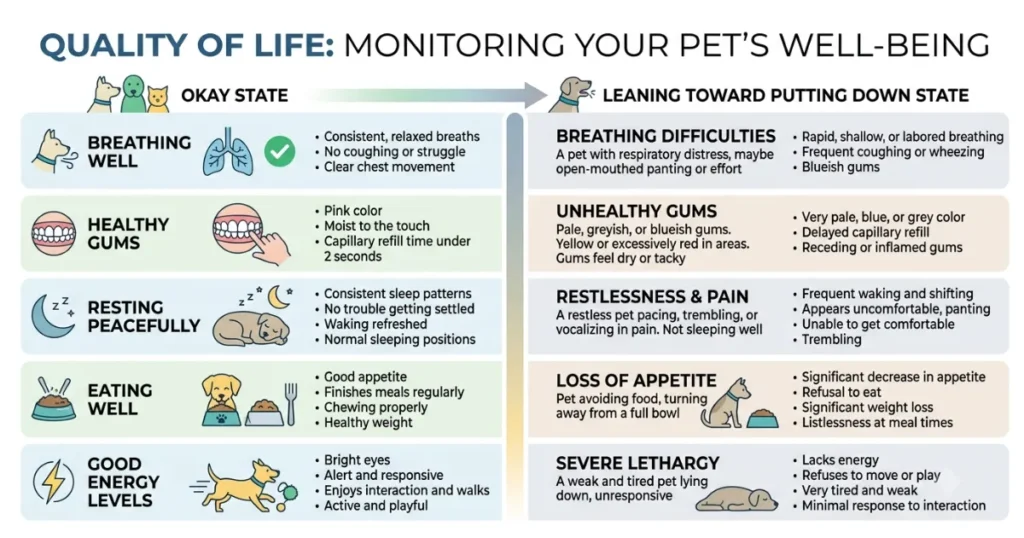
None of these has to appear alone. The lung cancer decision is about a pattern, several signs together, and a downward trend that does not turn around. The general framework for weighing quality of life lives in our guide on knowing when it is time to say goodbye, and the table below focuses that lens on lung cancer specifically.
Lung Cancer Quality of Life: Signs It May Be Time
| Area | Still doing okay | Leaning toward putting down |
| Breathing | Easy and quiet at rest | Labored or fast even when resting |
| Gums | Healthy pink | Pale, grey, or bluish |
| Rest | Sleeps comfortably | Cannot lie down or sleep for breathing |
| Eating | Eating willingly | Refusing food, losing weight fast |
| Energy | Enjoys gentle activity | Exhausted by any small effort |
The Breathing Distress Threshold: The Emergency You Cannot Miss
For lung cancer, breathing distress is the line in the sand, so it helps to know exactly what crosses it. Occasional coughing or mild fast breathing during exercise is concerning but not, by itself, an emergency. The picture changes when your dog struggles to breathe at rest.
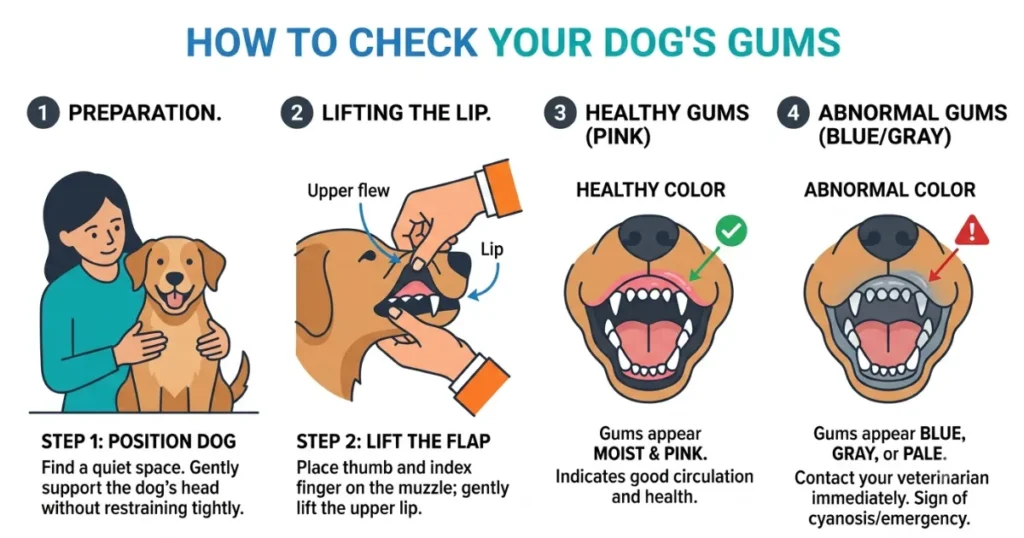
The true emergencies are open mouth breathing while lying down, gums that turn pale, grey, or blue, gasping, an inability to lie down because breathing is easier sitting up, and collapse. This means your dog is not getting enough oxygen, and they are a call your vet immediately situation, day or night. A buildup of fluid around the lungs, called pleural effusion, can cause this suddenly, and a vet can sometimes drain it to bring temporary relief.
If your dog hits a breathing crisis at home, stay calm, because panic spreads and makes the struggle worse. Keep the room cool, do not restrain or crowd him, let him choose the position that helps, often sitting upright, and get to a vet right away. If fluid is the culprit, a procedure called thoracocentesis can remove it from around the lungs and ease breathing within minutes.
When breathing distress reaches this stage and cannot be eased, many veterinarians and families agree the kindest path is to let go. A dog who cannot breathe is frightened and suffering, and that is the clearest answer to dog lung cancer when to put down. Choosing peace in that moment is mercy, not surrender.
For a Golden, Is It Primary or Metastatic? Why It Changes Everything
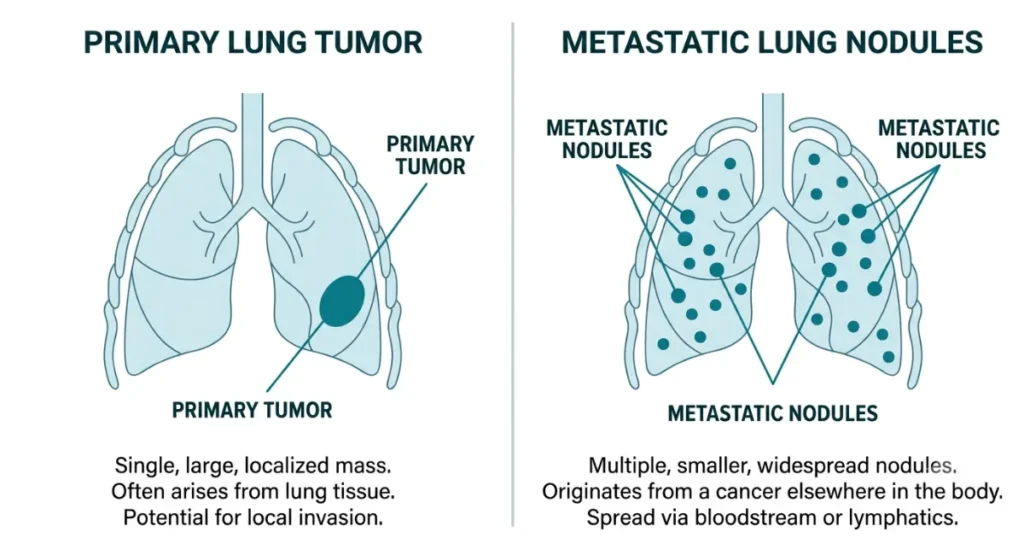
Here is the distinction that matters most for a Golden, and it is one generic articles skip. Lung cancer comes in two very different forms. A primary lung tumor starts in the lung itself, is rare, and when it is a single mass that has not spread, surgery can sometimes remove it and grant a year or more of life. Metastatic lung cancer is different. It is cancer that began elsewhere and spread to the lungs, and it signals advanced, end stage disease.
For Goldens, this difference is everything. The breed has no special tendency toward primary lung cancer. But the lungs are the most common place for other cancers to spread, and the cancers Goldens are prone to, especially hemangiosarcoma and osteosarcoma, frequently travel there.
A hemangiosarcoma in the spleen or heart, the kind we describe in why a dog can bleed before dying, often seeds the lungs. Osteosarcoma, the bone cancer Goldens also face, spreads to the lungs the same way. A sobering detail, more than forty percent of metastatic lung tumors are too small to see on an early x-ray, so a clear scan does not always mean clear lungs.
So when a Golden is diagnosed with lung cancer, it usually means metastatic spread, which carries a poor outlook and points toward comfort care. Our guide on Golden Retriever cancer symptoms explains how the breed’s primary cancers behave. Knowing whether you face a treatable primary tumor or metastatic disease changes the whole conversation about when to put your dog down.
How Long Dogs Live With Lung Cancer, and What Treatment Offers
The outlook for lung cancer in dogs depends heavily on whether it is primary or metastatic and on whether it has reached the lymph nodes. The numbers help you plan rather than guess. A single primary lung tumor that has not spread to the lymph nodes, removed with surgery, gives an average survival of around twelve months, and some dogs live two years or more.
Once the lymph nodes are involved or multiple tumors are present, survival drops to roughly two months. It is worth knowing that about eighty percent of primary lung tumors in dogs are malignant and tend to regrow or spread after treatment, which is why chest X-rays before any surgery are essential to confirm the cancer has not already traveled.
Metastatic lung cancer, the more common scenario in Goldens, carries the shortest outlook, usually weeks to a few months, because it reflects cancer that has already advanced. Surgery is rarely useful here, and chemotherapy offers limited help for most lung tumors, so treatment focuses on comfort, easing the cough with medications like butorphanol and supporting breathing.
Knowing your dog’s specific situation, ideally with chest X-rays and your vet’s input, lets you set realistic expectations. The same spread that reaches the lungs can affect other organs, including the brain, covered in a dog brain tumor. Other carcinomas, including bladder cancer, can seed the lungs as well. Full survival ranges across cancers are gathered in how long a dog can live with cancer.

Making the Decision with Your Vet, and the Final Days
When the breathing signs gather, you do not have to decide alone, and you should not. Your veterinarian can tell you whether the tumor is primary or metastatic, whether draining chest fluid might buy comfortable time, and what the realistic road ahead looks like. The general tools for weighing the whole picture, including quality of life scales and good day tracking, live in our guide on making the euthanasia decision.
The final days of lung cancer usually center on the breath. You may see faster, shallower breathing, a worsening cough, deep fatigue, and a refusal to eat. Comfort is the only goal that matters now. Keep your dog cool and calm, prop him up so breathing is easier, limit exertion, and lean on your vet for medication and, if distress sets in, sedation.
Whether a Golden faces this or another diagnosis like liver cancer, the principle holds. Ending the struggle to breathe is a profound kindness. For more support as you prepare, our Golden Retriever health library is here for you. Choosing peace for a dog who can no longer breathe with ease is not giving up. It is love doing its last and hardest job.

Expert Insight
The kindest thing I can tell a family watching a dog labor to breathe is this. Air hunger is one of the most distressing feelings there is, and dogs feel it the way we would. So when breathing at rest becomes a struggle that medication cannot ease, do not wait for a dramatic final scene. That struggle is the sign. Letting go then is mercy.
Emergency: call your vet now vs discuss with your vet soon
| Emergency, call your vet now | Decline to discuss with your vet soon |
| Open mouth breathing while resting or lying down | A cough that is slowly worsening |
| Gums that look pale, grey, or bluish | Tiring faster on normal walks |
| Gasping, or not being able to lie down to breathe | Eating a little less than usual |
| Sudden collapse or extreme weakness | Occasional fast breathing after activity |
| Coughing up blood that will not stop | Sleeping more, lower energy |
When should you put down a dog with lung cancer?
Put down a dog with lung cancer when breathing becomes a constant struggle, when gums turn pale or blue, or when coughing and exhaustion no longer ease. Labored breathing at rest is the clearest sign.
Dog lung cancer, when to put down?
Consider putting your dog down when lung cancer causes labored breathing at rest, refusal to eat, or distress medication cannot relieve. Breathing that is hard work even at rest usually means the time has come.
What are the final stages of lung cancer in dogs?
The final stages bring fast, labored breathing even at rest, a worsening cough sometimes with blood, deep fatigue, refusal to eat, and pale or bluish gums. Fluid around the lungs may build.
How long can a dog live with lung cancer?
It depends on the type. A single primary tumor removed by surgery averages about twelve months. Once lymph nodes are involved, survival falls to roughly two months, and metastatic lung cancer allows only weeks to months.
Is lung cancer in dogs painful?
Lung cancer is often more distressing than painful because struggling to breathe causes air hunger and anxiety. Coughing tires the dog, and some tumors cause chest discomfort. Vets ease this with medication.
What happens if a dog with lung cancer can’t breathe?
If a dog cannot breathe, oxygen levels fall, the gums turn pale or blue, and the dog panics. This is a life threatening emergency. Go to a vet immediately for oxygen or fluid drainage.
Is it safe to treat a dog’s lung cancer at home?
Comfort care at home, with prescribed cough and breathing medications, is appropriate alongside vet guidance. But lung cancer cannot be managed at home alone, and sudden breathing distress needs urgent care.
Do Golden Retrievers get lung cancer?
Yes, though primary lung cancer is rare, and Goldens have no special predisposition to it. More often, lung tumors in a Golden are metastatic, spread from cancers the breed is prone to, like hemangiosarcoma and osteosarcoma.
Why do Golden Retrievers get lung tumors?
In Golden Retrievers, lung tumors are usually metastatic rather than primary. The lungs are the most common site for cancer to spread, and the cancers Goldens develop, especially hemangiosarcoma, frequently travel there through the bloodstream.
Can Golden Retrievers survive lung cancer?
Sometimes, if it is a single primary tumor caught early and removed by surgery. But because lung cancer in Goldens is usually metastatic, long term survival is unlikely, and comfort care becomes the goal.
Is a cough always lung cancer in dogs?
No. Most coughs come from infections, heart disease, kennel cough, or airway irritation, not cancer. But a cough that persists, worsens, or brings up blood in an older dog needs a chest x-ray.
When should I rush my dog with lung cancer to the vet?
Go immediately for open mouth breathing at rest, pale, grey, or blue gums, gasping, an inability to lie down, or collapse. These mean your dog is not getting enough oxygen and needs emergency care without delay.
How is lung cancer in dogs diagnosed?
Lung cancer is diagnosed first with chest X-rays, which reveal tumors or nodules. A definitive answer needs a tissue sample or chest fluid analysis. CT scans and a specialist may follow to stage it.
What is the difference between primary and metastatic lung cancer in dogs?
Primary lung cancer starts in the lung, is rare, and can sometimes be removed by surgery. Metastatic lung cancer spreads from another organ, is far more common, and signals advanced, end stage disease.
When should I consider euthanasia for a dog with lung cancer?
Consider euthanasia when breathing is labored at rest, when gums turn pale or blue, or when your dog cannot rest, eat, or move without distress. Let the breathing guide the timing.
Conclusion
Knowing the right time for dog lung cancer when to put down comes down to the breath. When your dog labors to breathe at rest, when gums turn pale or blue, and coughing no longer eases with treatment, which is usually the moment.
For a Golden, lung cancer is most often a metastatic spread, which means comfort, not cure, is the honest goal. Lean on your vet, watch the breathing, and remember that releasing a dog from the struggle to breathe is the kindest gift. Air hunger is suffering, and sparing him from it is love.
If you have faced lung cancer with a dog you loved, what sign told you it was time, and what helped you find peace with the decision? Your story, shared below, could steady another owner watching their dog struggle to breathe right now. What do you wish you had known sooner?