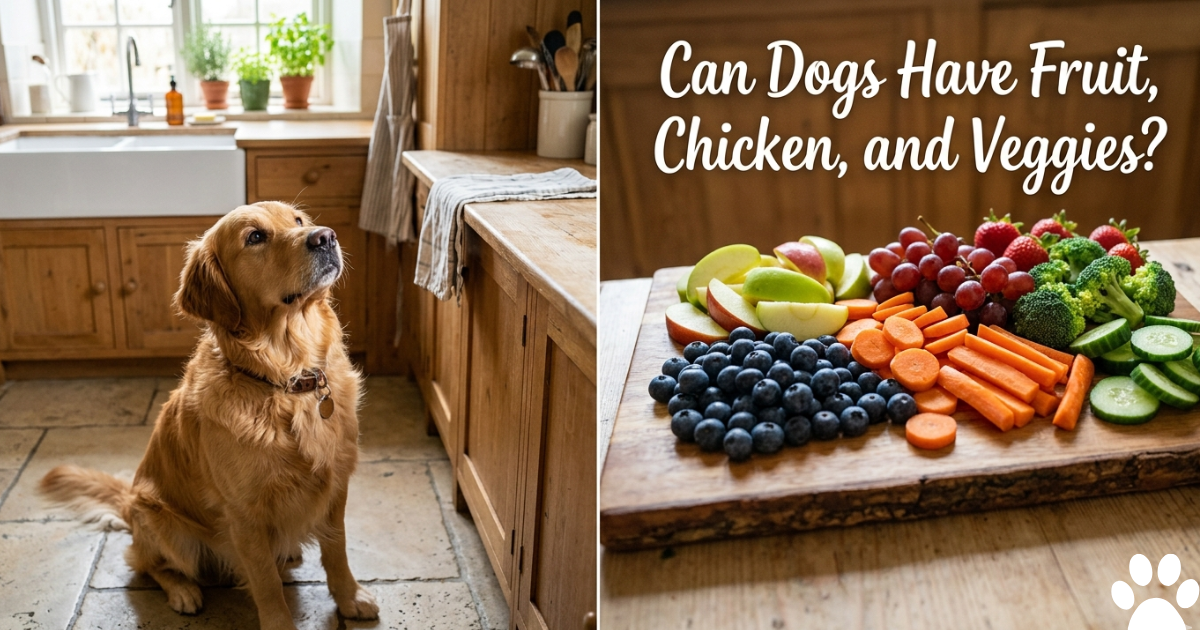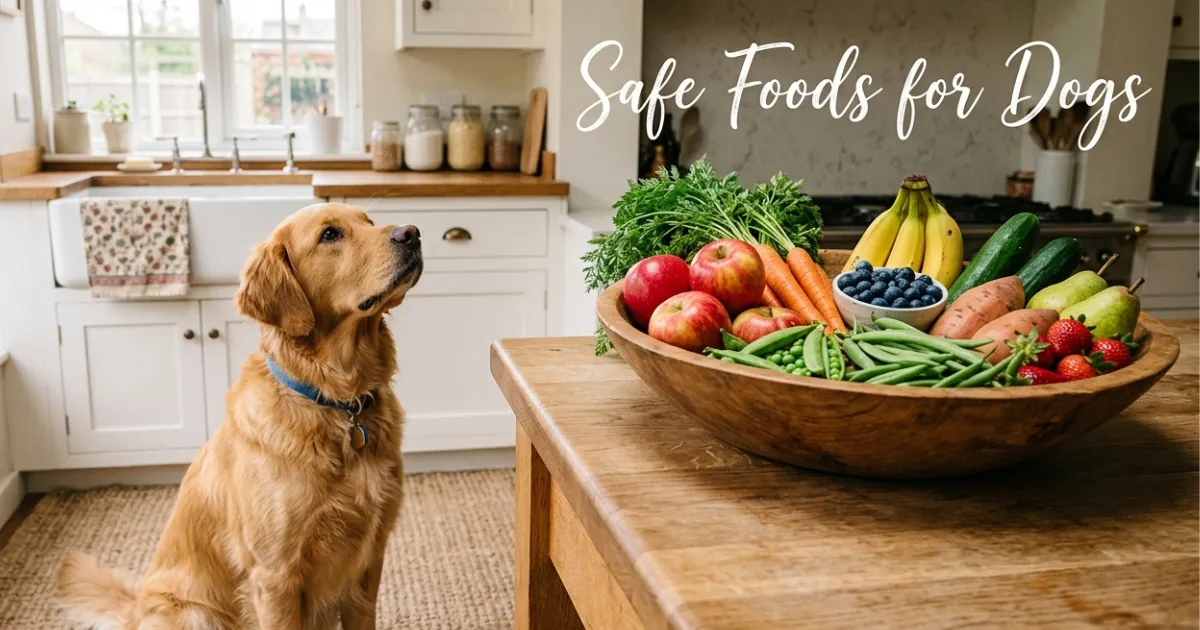
Dog friendly foods include fruits, vegetables, lean proteins, whole grains, and certain dairy products. Golden Retrievers can enjoy most of these safely. Still, the breed’s specific tendencies regarding weight gain, food allergies, and skin sensitivity affect how you should approach each item on the list.
Most generic dog food guides skip this entirely. They list blueberries as safe and move on. What they miss is that Golden Retrievers are one of the few breeds where the food you choose as a daily extra can show up directly in the condition of their coat, the state of their skin, and the number on the vet’s scale. I have seen this pattern play out consistently: a Golden whose owner switches from fatty commercial treats to plain cooked fish and raw carrots often shows visible coat improvements within six to eight weeks. The food choice was not random. It was deliberate.
Golden Retrievers are predisposed to atopic dermatitis and food sensitivities, with animal proteins such as chicken, beef, and dairy being the most commonly reported triggers according to PetMD. That does not mean those foods are off the table. It means the way you rotate and introduce those matters more for this breed than for most.
Dog Friendly Foods That Work Especially Well for Goldens
Dog friendly foods that genuinely benefit Golden Retrievers share three qualities: they are low enough in fat to avoid weight drift, high enough in nutrients to serve a real purpose, and free from the common allergens this breed reacts to most.
Raw carrots top this list for me. They are crunchy, low in calories, high in beta-carotene, and they satisfy a Golden’s urge to chew without adding any meaningful fat load. For a 65-pound adult Golden Retriever, a small handful of baby carrots used as training treats replaces a high-calorie commercial biscuit at a fraction of the cost and caloric impact.
Cooked salmon and canned fish with soft bones are another group worth adding deliberately, not just occasionally. Omega-3 fatty acids reduce systemic inflammation, and for a breed already predisposed to skin conditions and joint stress, a weekly serving of plain cooked fish is one of the most targeted nutritional choices an owner can make. For a 65-pound Golden, two to three ounces of plain cooked salmon once or twice a week is a useful addition.
Plain cooked sweet potato rounds out the short list of highest-value dog friendly foods for this breed. It is high in fiber, moderately filling, and provides vitamin A and potassium without the fat or sugar load that most commercial treats carry. One to two tablespoons added to a meal is a practical serving for most adults.

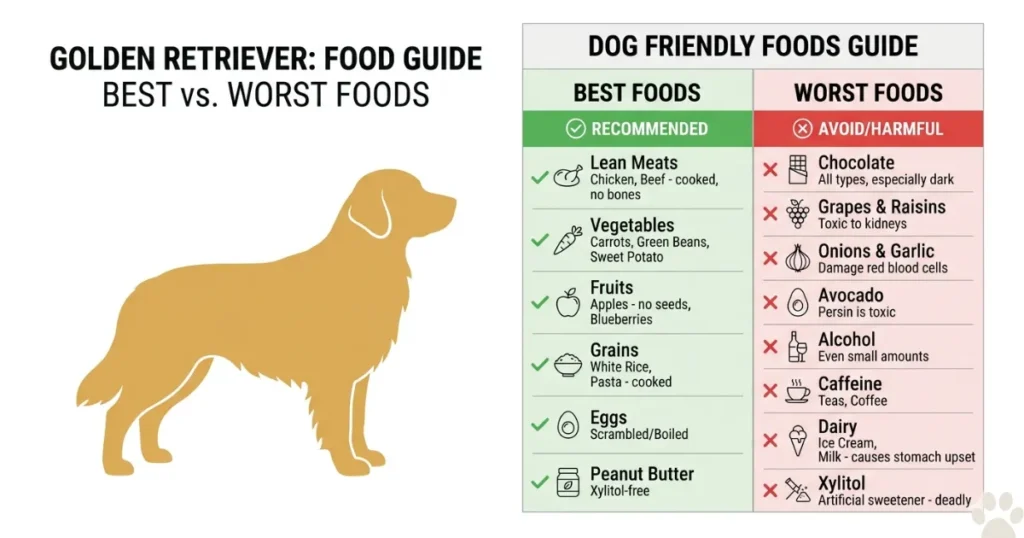
Human Foods Safe for Dogs: The Full Golden Retriever Table
Human foods safe for dogs cover a wider range than most owners expect. The table below provides an at a glance view with serving guidance specifically for Golden Retrievers.
| Food | Safe? | Serving for 65-lb Golden | Key Benefit or Risk |
| Carrots (raw) | Yes | 4–6 baby carrots | Low calorie, dental benefit, beta-carotene |
| Blueberries | Yes | 10–15 berries | Antioxidants, low sugar fruit |
| Apple slices | Yes (no seeds) | 1–2 thin slices | Fiber, vitamin C, breath freshening |
| Cooked salmon | Yes | 2–3 oz, once or twice weekly | Omega-3s for skin and joint health |
| Cooked chicken (plain) | Yes | 1–2 oz per serving | High-quality protein, easily digestible |
| Cooked eggs (fully cooked) | Yes | 1 egg, 2–3x weekly | Protein, biotin support |
| Plain pumpkin puree | Yes | 1–2 tbsp | Digestive fiber, settles loose stools |
| Green beans (plain) | Yes | Small handful | Low calorie, high fiber, meal extender |
| Watermelon (no seeds/rind) | Yes | 1–2 small cubes | Hydration, low calorie summer treat |
| Plain cooked sweet potato | Yes | 1–2 tbsp | Fiber, vitamin A, gentle on gut |
| Peanut butter (no xylitol) | Yes | 1 tsp maximum | Fat-dense, use sparingly |
| Cheese (low-fat) | Yes, occasionally | 1 small cube | Calorie-dense, useful pill hider |
| Grapes or raisins | NO | None | Acute kidney failure, call vet immediately |
| Onions or garlic (any form) | NO | None | Destroys red blood cells, hemolytic anemia |
| Chocolate | NO | None | Cardiac and neurological toxicity |
| Xylitol | NO | None | Severe hypoglycemia, life-threatening |
Adjust serving sizes proportionally for Goldens above or below 65 pounds. Puppies under 6 months should receive no human food supplementation.
Why Skin and Coat Matter When Choosing Dog Friendly Foods
Every top-ranking article on dog friendly foods lists the same items: carrots, blueberries, peanut butter, and chicken. None of them connect food choice to the Golden Retriever’s documented predisposition to skin conditions.
This is the gap worth addressing. Golden Retrievers develop atopic dermatitis, food sensitivities, and recurring ear infections at higher rates than most breeds. Their dense, double coat traps moisture near the skin, creating the right environment for yeast overgrowth and hot spots. What they eat can either aggravate or support that environment.
Animal proteins are the most common food allergen category in dogs, responsible for more than three times as many confirmed allergy cases as plant-based ingredients, according to a study cited by Wild Earth. For Goldens, the most frequently implicated proteins are chicken, beef, and dairy. This does not mean every Golden will react. It means that if your Golden has persistent itching, ear infections, or a dull coat, the food extras you are adding daily should be the first variable you examine.
Expert Insight
In Golden Retrievers, diet and dermatology are more closely linked than most owners realize. The breed’s genetic predisposition to atopic skin conditions means that dietary fat quality, protein source rotation, and caloric load all influence inflammatory tone. Omega-3-rich foods actively compete with inflammatory pathways at the cellular level. Choosing dog friendly foods with this in mind is not optional for this breed. It is part of managing long-term skin health.
Practically, this means prioritizing omega-3 rich options like salmon and sardines, rotating protein sources rather than defaulting to chicken, and watching for skin and ear changes when introducing any new food. The coat tells you a lot. A dull, flaky coat on a Golden that is eating well often points to a food-related inflammatory response before any other symptom appears.
What I Actually Recommend: My Dog Friendly Food Rotation for Goldens
I keep it simple. For a healthy adult Golden at a stable weight, my weekly food rotation looks like this: raw carrots daily as a training reward, a small amount of plain cooked salmon or canned sardines in water twice a week, one cooked egg mid-week, and plain pumpkin puree stirred into a meal on days when the dog’s digestion seems off.
That rotation covers omega-3s for skin and joint inflammation, high-quality protein without defaulting to chicken every day, digestive support from fiber, and a low-calorie training treat that does not require me to reduce kibble to compensate.
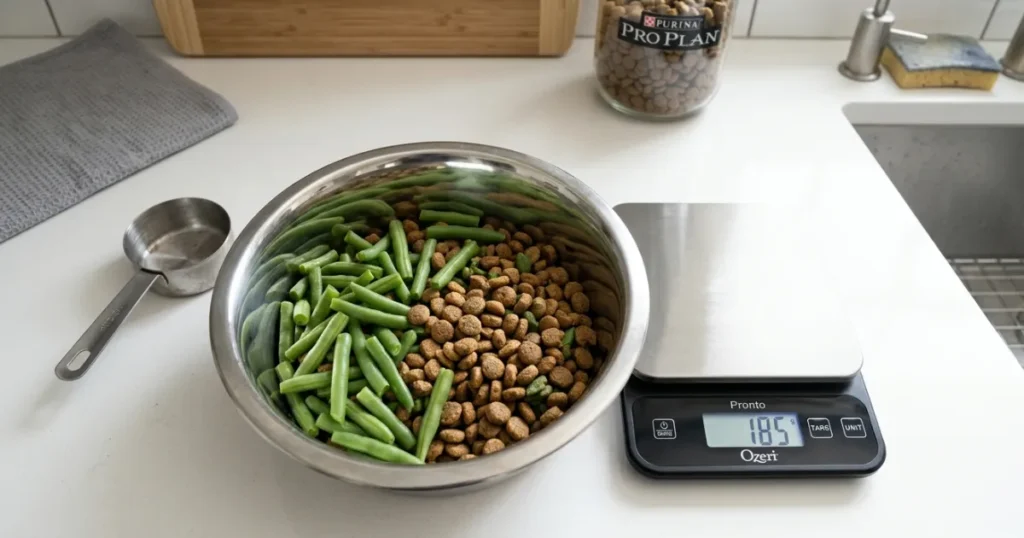
I also use green beans as a meal extender for Goldens that are managing their weight. Replacing roughly a quarter of the kibble volume with plain green beans keeps the bowl visually full, adds fiber to help the dog feel satisfied, and cuts caloric intake by a meaningful amount without requiring a switch to a weight-management formula. For a breed that notices exactly how full its bowl looks, this small adjustment matters.
Find more on building a complete food plan through the Golden Retriever food category and the broader overview at GoldenRetrieverInsight.com. For the full breakdown of safe and unsafe foods, see our safe foods for dogs guide.

Foods to Avoid: Dog Unfriendly Items That Harm Goldens Specifically
TOXIC – Call your vet immediately:
Grapes and raisins cause acute kidney failure in dogs through an unidentified compound. There is no established safe dose for any size dog. The ASPCA Animal Poison Control Center lists them among the most dangerous foods dogs can encounter. Chocolate contains theobromine, a compound that can disrupt cardiac rhythm and trigger neurological symptoms.
Dark and baking chocolate carries the highest risk, but no form is safe. Xylitol, found in sugar-free gum, certain peanut butters, and some baked goods, causes severe hypoglycemia in dogs by triggering a rapid, uncontrolled insulin release. As little as 0.1 grams per kilogram of body weight is potentially fatal. Onions and garlic in all forms, including powders and cooked preparations, destroy red blood cells and cause hemolytic anemia.
PROBLEMATIC – Monitor for 24- 48 hours:
High-fat table scraps, including turkey skin, bacon, and meat trimmings, are not acutely toxic but can frequently trigger digestive upset and increase the risk of pancreatitis in dogs already carrying excess weight. For a Golden that is already overweight, even a single fatty meal can cause significant gastrointestinal distress. Raw dough causes bloating as yeast ferments in the stomach and produces alcohol as a byproduct, which can cause alcohol toxicity.
UNSUITABLE for Golden Retrievers specifically:
Chicken as the sole protein source, fed daily, raises the risk of sensitization in a breed already prone to protein-based food allergies. Goldens that eat exclusively chicken-based meals and treats can develop immune reactions to that protein over time, which may first show as itchy paws, recurring ear infections, or a dull coat. Rotating proteins reduces that risk.
When to Call the Vet
| URGENT — Call immediately | MONITOR — Watch 24–48 hours |
| Any grapes, raisins, or grape products consumed | Loose stool after introducing a new food |
| Xylitol ingestion from any source | Mild bloating after green vegetables |
| Chocolate or cocoa ingestion | Vomiting once with no other symptoms |
| Onion or garlic ingestion, any form | Reduced appetite for less than 24 hours |
| Seizures, tremors, or collapse after eating | Slight lethargy after a new food introduction |
| Pale gums at any point | Gas or digestive noise after a high-fiber meal |
| Bloated or distended abdomen | — |
Decision Framework: Choosing Dog Friendly Foods for Your Golden’s Life Stage.
If your Golden is under 6 months old, skip all human food additions entirely. Puppies have developing digestive systems and different protein and calcium requirements. Introducing variables too early makes it harder to identify the cause if digestive or skin issues appear.
If your adult Golden weighs over 75 pounds and your vet has flagged their weight, replace commercial treats with raw carrots or plain green beans completely. Remove peanut butter and cheese from the rotation until the weight is under control. These two swaps alone can reduce daily caloric extras by 150-200 calories.
If your Golden has recurring ear infections or persistent paw licking, rotate away from chicken as the primary protein in both kibble and extras for eight weeks. Introduce salmon, sardines, or plain cooked turkey instead and monitor for symptom changes. Food sensitivities in Goldens often manifest in the skin and ears before digestive symptoms appear.
If your senior Golden is over 8 years old, prioritize omega-3 sources and high-fiber, low-fat additions. Cooked salmon, plain pumpkin, green beans, and cooked sweet potato are the most useful extras at this stage, supporting joint health, gut regularity, and a healthy weight on a metabolism that has slowed.

What are the best dog friendly foods to use as daily training treats?
Raw carrots, small cubes of plain cooked chicken, and thin apple slices are the best dog friendly foods for daily training. They are low in calories, easy to handle, and safe for repeated use without significantly affecting a Golden Retriever’s daily caloric budget.
Which dog friendly foods support Golden Retriever skin and coat health?
Dog friendly foods that support Golden Retriever skin and coat health include cooked salmon, canned sardines in water, and cooked eggs. These provide omega-3 fatty acids and biotin, which reduce skin inflammation and improve coat condition. For a 65-pound Golden, two ounces of plain cooked salmon twice weekly is a practical starting point.
What human foods safe for dogs and also help with Golden Retriever digestion?
Plain cooked pumpkin puree is one of the most useful human foods safe for dogs that directly supports digestion. One to two tablespoons added to a meal provides soluble fiber that normalizes stool consistency. Cooked white rice and plain boiled chicken serve the same purpose during stomach upset.
Are there dog friendly foods that help Golden Retrievers manage their weight?
Plain green beans are the most practical dog friendly food for Golden Retriever weight management. They are low in calories, high in fiber, and filling. Replacing up to a quarter of kibble volume with plain green beans reduces caloric intake while keeping the bowl visually satisfying for a food-motivated breed.
Which safe foods for dogs should I avoid if my Golden has skin allergies?
If your Golden has skin allergies, rotate away from chicken and beef as primary protein extras, since these are the most commonly reported food allergens in dogs. Choose safe foods for dogs from alternative protein sources, such as salmon, sardines, or cooked turkey. Monitor skin and ear condition over eight weeks after any protein change.
Can dogs eat salmon safely every day?
Dogs can eat plain, cooked salmon safely, but daily feeding is not necessary and can add up in cost. Two to three times per week is sufficient to deliver a meaningful omega-3 benefit. Always serve salmon fully cooked and plain, with no seasoning, garlic, or onion. Never serve raw salmon, which can carry harmful parasites.
What vegetables are dog friendly and safe to give every day?
Raw carrots and plain green beans are dog friendly vegetables safe for daily use. Both are low in calories, digestible, and provide fiber and micronutrients without raising fat intake. Broccoli is safe in small amounts but should not be fed daily due to mild gastrointestinal irritation from isothiocyanates.
How do I introduce new dog friendly foods without upsetting my dog’s stomach?
Introduce one new food at a time in a very small portion. Start with a teaspoon or a single piece, and watch for loose stools, vomiting, or changes in energy over 48 hours. Then gradually increase the amount over one to two weeks. Introducing multiple new foods at once makes it impossible to identify the cause if a reaction occurs.
Is it safe to feed my dog fruit every day as part of their diet?
Fruit is safe for dogs in small amounts, but should not be a daily staple due to natural sugar content. Low-sugar options like blueberries or apple slices are better choices for daily use than bananas or mangoes. For any dog managing weight, fruit should be counted toward the daily 10% treat allowance.
Is it safe to give my Golden Retriever the same dog friendly foods every day?
Rotating among several dog friendly foods is safer and more beneficial than feeding the same item daily. Variety reduces the risk of developing a food sensitivity to a single protein, provides a broader nutrient profile, and keeps the dog’s interest in training rewards high. Aim to rotate through at least three or four different extras per week.
Are salmon and fish dog friendly foods for Golden Retriever puppies?
Plain cooked white fish is suitable for Golden Retriever puppies over 6 months old in small amounts. Salmon is safe after that age, but should always be fully cooked. Never feed raw or smoked fish to puppies. Start with a teaspoon-sized portion and monitor for any digestive changes before increasing the serving.
Do dog friendly foods like blueberries help with Golden Retriever joint health?
Blueberries contain antioxidants that reduce oxidative stress, which supports joint tissue over time. They are not a replacement for a dedicated joint supplement, but including them as a regular part of Golden’s food rotation provides low-level and anti-inflammatory support that complements other dietary choices, like fish-based omega-3s.
How do I know if a dog friendly food is causing a reaction in my Golden Retriever?
Watch for paw licking, ear scratching, and changes in stool consistency, and coat dullness in the two weeks after introducing a new food. Golden Retrievers often show food sensitivity through skin and ear symptoms before any obvious digestive upset. If any of those signs appear, remove the new food and monitor for improvement over one week.
What happens if my Golden Retriever eats too much fruit in one sitting?
Eating too much fruit at once typically causes loose stools or mild vomiting due to sugar and fiber overload. This is a monitor at home situation unless symptoms persist beyond 24 hours, the dog becomes lethargic, or vomiting continues. Grapes are the exception. Any ingestion of grapes requires immediate veterinary contact, regardless of quantity.
What is the safest way to use dog friendly foods to replace high-calorie commercial treats for a Golden on a diet?
Replace commercial treats with raw carrots, plain green beans, or small pieces of cooked lean chicken. These provide the reward value a food-motivated Golden needs during training without the caloric load of processed biscuits. Count any protein-based extras against the daily kibble allowance to keep total intake stable.
Conclusion.
Dog friendly foods give Golden Retriever owners a real tool for supporting their dog’s health beyond the kibble bowl. The practical takeaway is this: build a short rotation of four or five extras that earn their place through nutritional value, keep fat content low, and rotate protein sources to reduce the risk of food sensitivities, which this breed is particularly prone to.
The coat is your early warning system. If your Golden’s coat starts looking dull or their ears become a recurring problem, the food extras you are adding deserve a close look before anything else. Golden Retrievers are food-motivated in a way that very few breeds match. Many Goldens develop clear preferences for specific textures or flavors over time, and some owners notice their dog’s allergy symptoms shift depending on the protein being used.
Has your Golden ever had a reaction to a food you thought was safe, or have you found a specific dog friendly food that made a visible difference in their coat or energy? Share what worked for your dog and how long it took you to notice a change.