
Call your dog’s name without touching him. A dreaming dog wakes and acts normally. A dog having a seizure cannot be roused, remains rigid, and is confused afterward. That single test settles most cases in seconds.
Deciding whether your dog is twitching in sleep or having a seizure comes down to one test: try to rouse him with your voice, not your hands. A dreaming dog wakes and behaves normally within seconds. A seizing dog stays unresponsive and rigid, often loses bladder control, and is disoriented afterward.
When you’re staring at your dog twitching in sleep or seizure, fear takes over. Here’s the fastest way to know. A dreaming golden answers to his name. A seizing one doesn’t. That’s the line that separates a harmless dream from a neurological event.
Most sleep movement is completely normal. According to the AKC’s chief veterinarian, all dogs dream, and some show it with twitching, paddling, or kicking of the legs, and these movements are usually brief, lasting less than 30 seconds, and intermittent. The picture changes when the movements turn rigid and violent.
You’re in the right place if you’ve been watching your dog jerk at night and wondering. Our main guide to what a seizure looks like covers waking seizures in detail, while this page focuses on the sleep-specific question.
Dog Twitching in Sleep or Seizure: The Fast Answer
Whether your dog is twitching in sleep or having a seizure, the ROUSE test answers it faster than any checklist. Speak, don’t touch.
If you need to wake a sleeping dog, it’s better to call their name loudly or make a noise rather than touch them, because touching a dreaming dog can startle them into biting. A dreaming dog lifts its head, blinks, and settles or gets up normally. A seizing dog gives you nothing.
That unresponsiveness is the giveaway. When a sleeping dog has a seizure, the biggest difference from a dream is that you absolutely cannot wake them, not with your voice or even a gentle touch. If your Golden won’t respond and stays stiff, you’re not looking at a dream.
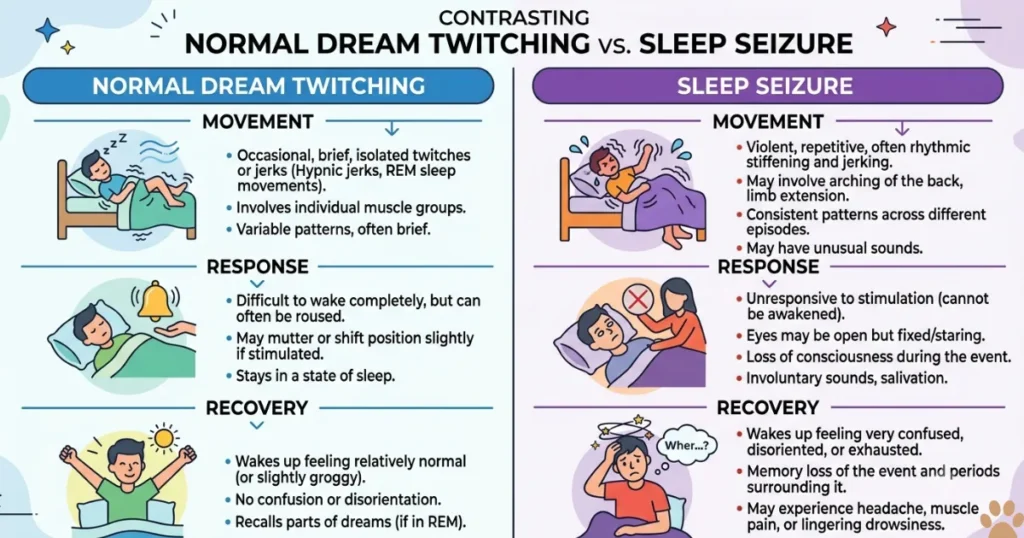
What Normal Twitching in Sleep Looks Like
Normal dog twitching in sleep is soft, brief, and easy to interrupt, and it usually starts well into a nap. This is healthy REM sleep, not a problem.
During REM, dogs paddle their paws, flick their whiskers and lips, let out little woofs or whimpers, and flutter their eyelids while the eyes dart underneath. Dreams tend to begin about 20 minutes after a dog falls asleep, and the pons in the brainstem normally stops dogs from fully acting out their dreams, which is why this is usually limited to small movements.
Age changes how much you’ll see. The pons works less effectively in young and elderly dogs, which is why puppies and senior dogs tend to twitch more in their sleep while dreaming. So a golden puppy paddling and squeaking through a nap is almost always just dreaming hard.
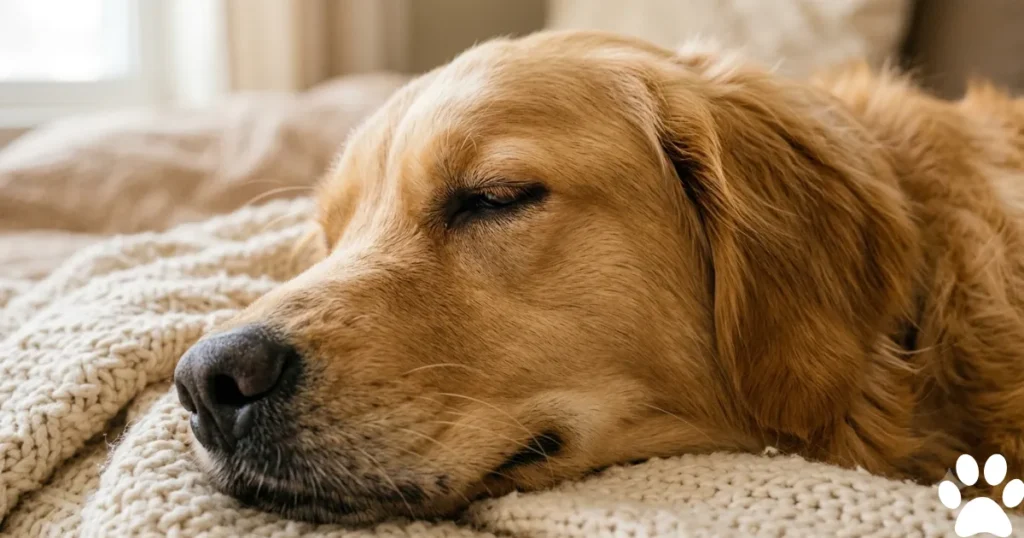
What a Dog Seizure While Sleeping Looks Like
A dog seizure while sleeping looks rigid and violent rather than soft, and the dog cannot be woken through it. This is where a dog fitting in sleep diverges sharply from a dream.
A nocturnal seizure usually mirrors a waking one, with body stiffening, violent shaking, a complete lack of response, and sometimes loss of bladder or bowel control. The limbs go stiff and paddle hard, not in the loose, intermittent way of a dream.
Two more markers seal it. A sleep seizure can be severe and prolonged, unlike short-lived dreams, and afterward, the dog often shows confusion and disorientation. That recovery fog never follows a normal dream. Worth noting too: most seizures actually strike while a dog is awake or just waking, so a true sleep seizure is the less common pattern.
How to Tell If Your Dog Is Dreaming or Having a Seizure
To tell if your dog is dreaming or having a seizure, compare the movement, the response, and the recovery side by side. Most guides simply say twitching is normal, which leaves owners unable to catch the rare but real nocturnal seizure.
The movement tells you a lot. Dreams are soft, brief, and stop and start. A seizure is rigid, rhythmic, and relentless until it ends. The response tells you more, since a dreaming dog answers your voice and a seizing dog does not. The recovery tells you the rest, because a dream ends with a stretch and a shake, while a seizure ends in minutes to hours of confusion.
In a representative case, owners of a 3 years old male Golden assumed months of “intense dreaming” were normal. The clips they finally recorded showed unrousable, rigid episodes. The diagnosis was idiopathic epilepsy with nocturnal seizures. The lesson I share: when in doubt, film it and run the ROUSE test.
Why Golden Retrievers’ Sleep Movements Worry Owners
Golden Retrievers give owners a real reason to check sleep movements because the breed sits in the high-risk window for epilepsy during the same young-adult years that owners notice heavy dreaming. The worry isn’t irrational.
A genetic study of idiopathic epilepsy in the Golden Retriever found that most affected dogs showed generalized grand-mal seizures, with onset within one to three years in 75% of cases and a predisposition in males. A two years old male Golden is squarely in that window, so a genuine nocturnal seizure is plausible, not paranoid.
That said, Goldens are also enthusiastic dreamers, and most sleep twitching in a young, otherwise healthy Golden is just that. The trigger side of the picture, including toxins and metabolic causes, sits in our guide to what causes seizures in dogs and the broader condition in our canine epilepsy overview.
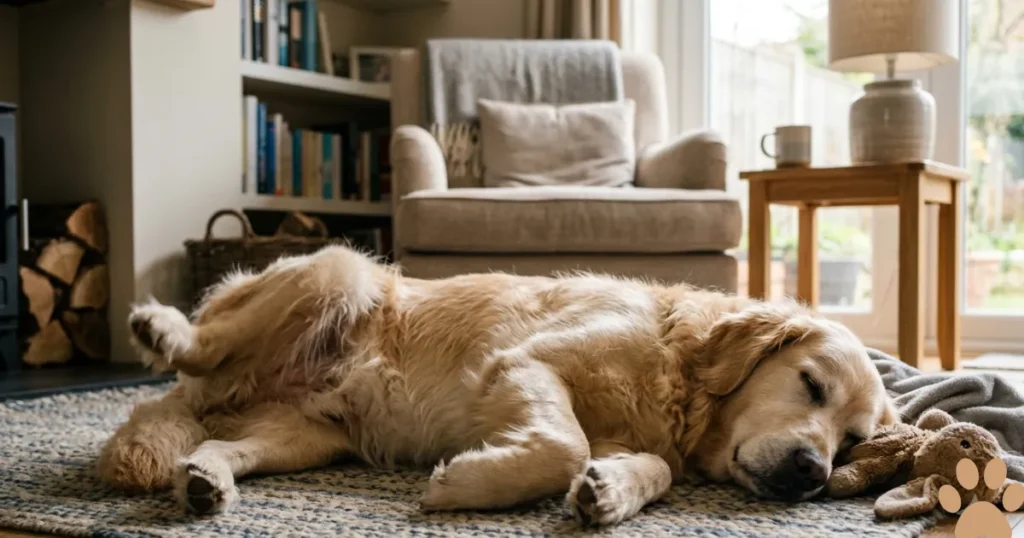
The GRI Sleep Twitch Test
Use this named test to decide in under a minute whether your Golden’s sleep movement needs a vet. Run the three steps in order.
Step 1—ROUSE by voice.
If you call your dog’s name and he wakes and acts normally, then it was almost certainly a dream. Let him settle.
Step 2—Watch the body.
If he stays rigid, paddles violently, and does not respond, then film it and note the start time. You’re likely watching a seizure.
Step 3—Check the aftermath.
If he wakes confused or disoriented or loses bladder control, then call your vet. Call immediately if any episode lasts longer than five minutes.
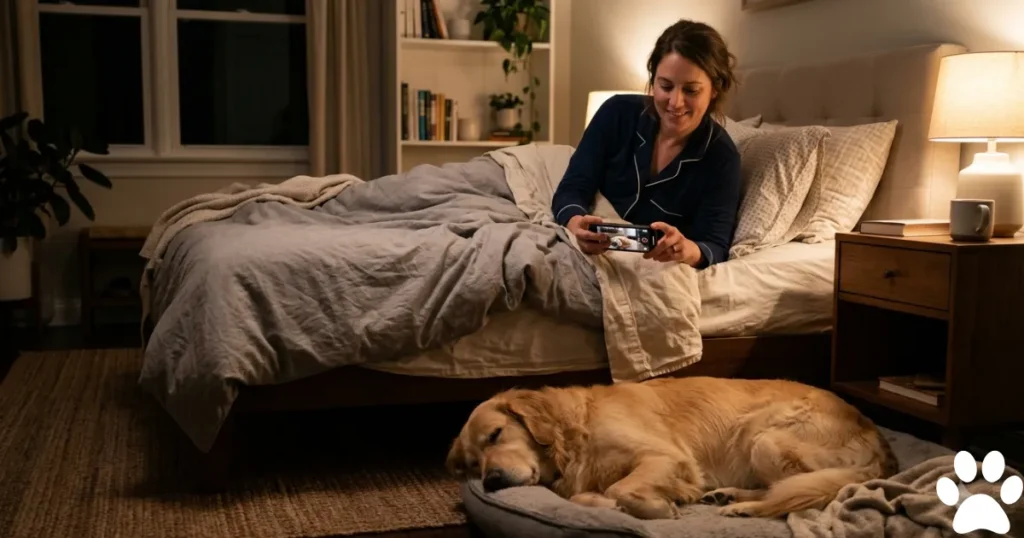
Keep your phone by the bed. A short clip plus the result tells your vet in seconds what took you a worried night to puzzle over.
EXPERT INSIGHT
The owners who catch nocturnal seizures early are the ones who stopped assuming and started testing. One calm voice cue, no hands, tells you almost everything. If your Golden can’t be roused and wakes confused, that’s not a dream, no matter how much he dreams otherwise.
When to Call the Vet About Sleep Twitching or a Seizure
Call immediately if a sleep episode lasts over five minutes, repeats in a night, or leaves your golden unable to wake or confused. Routine dream twitching needs no vet at all.
| 🔴 URGENT — Call now | 🟢 MONITOR — No action needed |
| Episode lasting 5 minutes or longer | Brief, soft twitches under 30 seconds |
| Cannot be roused, then confused afterward | Wakes normally when you call his name |
| Loss of bladder or bowel control during sleep | Paddling, whisker flicks, soft woofs |
| Two or more episodes in one night | Movement starting about 20 minutes into sleep |
| Rigid, violent shaking while asleep | A puppy or senior twitching more than usual |

How do I tell if it’s my dog twitching in sleep or seizure?
Call his name without touching him. A dog twitching in sleep or seizure is easiest to separate this way: a dreaming dog wakes and acts normally, while a seizing dog stays rigid and unresponsive, then confused.
What does a dog twitching in sleep or seizure look like at night?
Normal sleep twitching is soft paddling and whisker flicks for under 30 seconds. A nighttime seizure is rigid, violent, and unrousable, often with loss of bladder control and confusion afterward when the episode ends.
Why do dogs twitch in their sleep?
Dogs twitch during REM sleep while dreaming. The pons normally limits movement to small paddles, kicks, and whisker flicks. These twitches are brief, intermittent, and stop when you call your dog’s name.
What does a dog sleeping look like?
A dog fitting in sleep looks stiff and convulsive, with violent paddling, possible vocal crying, and loss of bladder control. The dog cannot be woken during the episode and is disoriented for minutes to hours afterward.
Can a dog have a seizure while sleeping?
Yes, dogs can have nocturnal seizures, though most seizures happen while awake or just after waking. A sleep seizure shows rigid shaking, no response to your voice, and a confused recovery, unlike a normal dream.
How to know if my dog is dreaming or having a seizure?
Watch the response and recovery. A dreaming dog wakes to your voice and is instantly normal. A seizing dog cannot be roused, stiffens or shakes violently, and stays disoriented afterward, often losing bladder control.
How long do normal sleep twitches last in dogs?
Normal dream twitches last under 30 seconds and come and go intermittently. Anything rigid, violent, or lasting minutes, especially with no response when you call your dog, points to a seizure rather than a dream.
Is it safe to wake a dog that is twitching in its sleep?
Use your voice, not your hands. Touching a dreaming dog can startle him into an involuntary bite. Call his name or make a noise instead, then reassure him gently once he wakes.
Why do puppies and senior dogs twitch more in their sleep?
The pons in the brainstem, which limits dream movement, works less effectively in young and elderly dogs. That is why puppies and senior dogs commonly paddle, kick, and twitch more during REM sleep than adults.
Can a dog die from a seizure during sleep?
Rarely, a seizure lasting over five minutes, called status epilepticus, is life-threatening and a true emergency. A single brief nocturnal seizure is usually not fatal, but it always warrants a veterinary exam.
Do Golden Retrievers twitch in their sleep more than other breeds?
Not especially, though Golden Retrievers are active dreamers. What matters more is that Goldens are predisposed to idiopathic epilepsy, so a rigid, unrousable sleep episode deserves closer attention than ordinary dream twitching in the breed.
Why do Golden Retrievers have nocturnal seizures?
Golden Retrievers carry a genetic predisposition to idiopathic epilepsy, which can produce generalized seizures at rest, including during sleep. Breed studies show that most affected Goldens have generalized grand-mal seizures beginning in early adulthood.
Do Golden Retrievers have seizures while sleeping?
Some do. Golden Retrievers predisposed to idiopathic epilepsy can seize during sleep, usually with onset between one and three years of age. The episode is rigid and unrousable, unlike the breed’s normal, easily interrupted dreaming.
Can Golden Retrievers twitch in their sleep without it being a seizure?
Yes, most twitching in a healthy Golden Retriever is normal REM dreaming: soft paddling, whisker flicks, and little woofs that stop the moment you call his name. Concern starts only with rigid, unrousable movement.
When should I take my golden retriever to the vet for sleep twitching?
Go immediately if a sleep episode lasts over five minutes, repeats in one night, or leaves your Golden Retriever unable to wake or confused. Ordinary soft dream twitching needs no visit at all.
Conclusion
When you’re caught between a dog twitching in sleep or seizure, the rouse test decides it: a dreaming dog wakes to your voice and acts normal, while a seizing dog stays rigid, unresponsive, and confused afterward.
Your one move today is to keep your phone by the bed, because a short clip plus the result gives your vet everything needed. For a young Golden, take a rigid, unrousable episode seriously, since the breed’s epilepsy window opens in early adulthood.
Has your Golden ever made you freeze mid-sleep, wondering if it was a dream or a seizure? What did the Rouse test show when you called his name, and how old was he? If you’ve caught a clip, what gave it away in the end? Your story could calm another owner staring at their dog at 3 a.m.