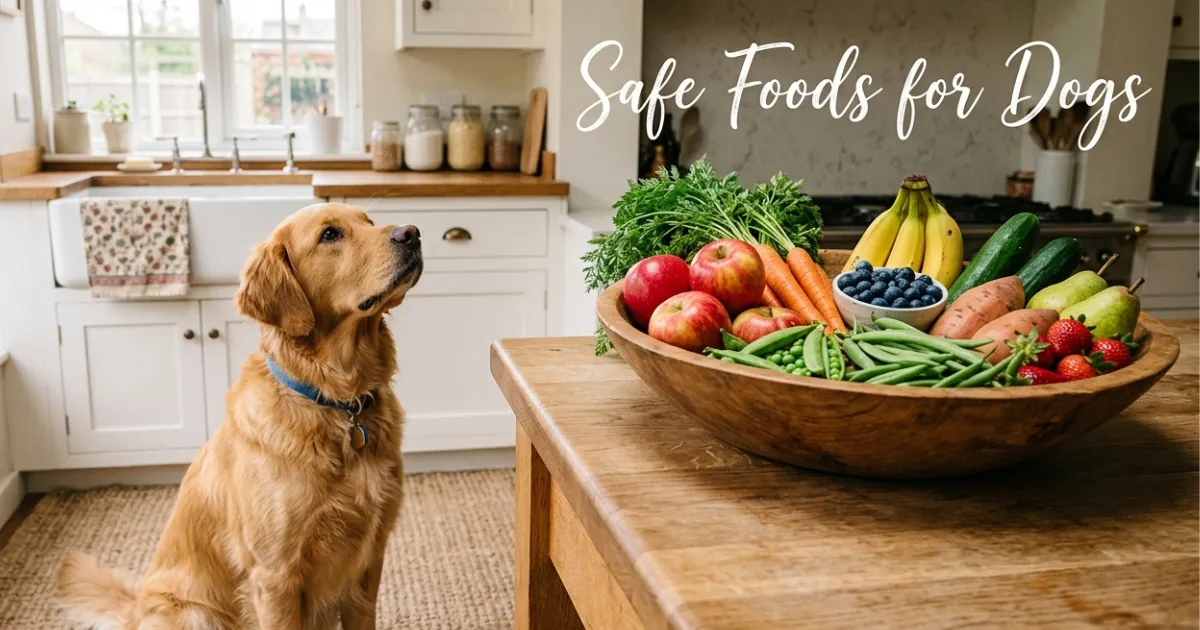
Are apples ok for dogs? Yes, and for Golden Retrievers specifically, they are one of the more useful fruits you can add to the treat rotation. Apples are safe when you remove the core, seeds, and stem, and they deliver fiber, vitamin C, and a set of antioxidants that matter more for this breed than most owners realize. For a 65-pound adult Golden Retriever, two to three peeled, cored apple slices two to three times per week is the right serving range.
Most articles stop at “yes, remove the seeds.” I want to go further, because Golden Retrievers are not a generic dog. Approximately 61.4% of North American Golden Retrievers develop cancer in their lifetime, according to a health report published by the Golden Retriever Club of America. Apples contain quercetin, catechin, and chlorogenic acid, three antioxidant compounds with documented anti-inflammatory and anti-cancer properties. No competing article makes this connection. For a Golden Retriever owner, that context transforms apples from a casual snack into a deliberate dietary choice.
Apples are also relevant to this breed’s second most common health burden. Golden Retrievers are genetically predisposed to skin allergies and mast cell tumors. Quercetin, the primary flavonoid in apple flesh, works by stabilizing mast cells and reducing histamine release, the exact mechanism driving skin reactions in allergy-prone Goldens.
Are Apples Okay for Dogs: What the Science Actually Says?
Are apples okay for dogs? Yes, apples are a safe fruit. It comes down to one preparation rule and one portion rule. The preparation rule: always remove the core, seeds, and stem before your Golden gets anywhere near the fruit. The portion rule: keep the apple within the 10% daily treat ceiling alongside all other treats.
Apple flesh is nutritionally dense relative to its calorie count. A quarter cup of raw chopped apple delivers roughly 15 calories, vitamins A, C, and K, calcium, phosphorus, and soluble fiber. The AKC confirms apples are a safe, low-calorie treat option recommended by veterinarians as an alternative to fatty commercial rewards.
The real nutritional story for Golden Retrievers is in the polyphenol content. Quercetin, catechin, and chlorogenic acid are concentrated in both the flesh and skin of apples. These compounds neutralize free radicals, reduce systemic inflammation, and have shown antiangiogenic properties in research contexts, meaning they may inhibit the formation of new blood vessels that tumors rely on to grow. For a breed that carries the cancer predisposition Goldens do, that is not a trivial detail.
Apple Seeds and Cyanogenic Glycosides: The Mechanism Owners Need to Know
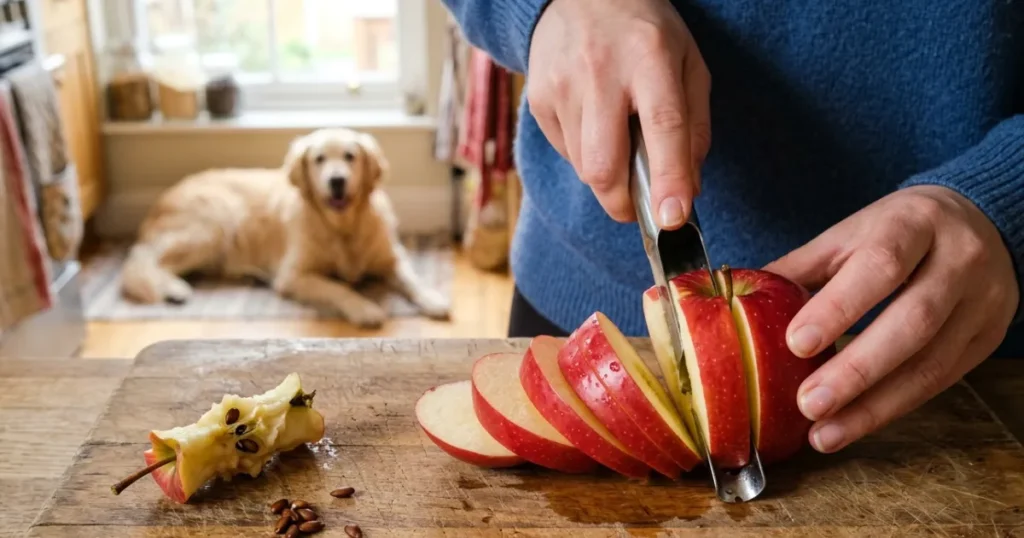
Apple seeds are not immediately lethal, but they are genuinely toxic, and the mechanism matters. Apple seeds contain amygdalin, a cyanogenic glycoside that releases hydrogen cyanide when chewed and metabolized. According to the ASPCA Animal Poison Control Center, cyanide interferes with cellular oxygen utilization, affecting the heart and central nervous system. A Golden Retriever would need to ingest a large quantity of seeds to reach a clinically dangerous dose, but the correct response is always removal, not risk calculation. Remove every seed, every time.
Are Apples Safe for Dogs with Golden Retriever-Specific Health Risks
Are apples safe for dogs? In this breed context, it requires understanding three intersecting health concerns that generic dog articles completely miss.
Cancer predisposition.
The Golden Retriever Lifetime Study, conducted by Morris Animal Foundation and tracking over 3,000 Golden Retrievers longitudinally, is the most comprehensive canine health study ever conducted. Dietary antioxidant intake is one of the variables being tracked directly. Apples contribute quercetin, which research indicates may slow cancer progression and support cellular defense against oxidative damage. I feed my Goldens apple slices specifically because of this breed’s documented cancer vulnerability. No other common treat delivers polyphenols at this concentration with this low a calorie cost.
Skin allergies and mast cell activity.
Golden Retrievers are one of the most allergy-prone breeds in North America. Mast cell tumors are among the most commonly diagnosed cancers in this breed, according to research published in the International Scholarly Research Notices. Quercetin stabilizes mast cells by inhibiting histamine and inflammatory cytokine release. Feeding quercetin-rich foods like apples does not replace veterinary allergy management, but it supports the same biological pathway that allergy treatments target.
Weight management.
According to the Association for Pet Obesity Prevention’s 2022 survey, approximately 56% of dogs in the United States are classified as overweight or obese. Golden Retrievers are among the highest-risk breeds due to their food drive and tendency to gain weight easily. Apple’s low calorie density, roughly 15 calories per quarter cup, makes it one of the few treats that satisfies a Golden’s desire for food reward without meaningfully compressing their daily protein budget.
How Much Apple Can a Golden Retriever Eat by Weight and Age
The serving size for apples for dogs depends entirely on body weight and life stage. Here is the framework I use.
| Life Stage | Approximate Weight | Safe Apple Amount | Frequency |
| Puppy (3–6 months) | 15–30 lbs | 1 thin slice, peeled and cored | Once per week |
| Puppy (6–12 months) | 30–55 lbs | 1–2 slices, peeled and cored | Twice per week |
| Adult Golden | 55–75 lbs | 2–3 slices, peeled and cored | 2–3 times per week |
| Senior Golden (8+ years) | 55–75 lbs | 1–2 slices, peeled and cored | Twice per week |
One slice = approximately half an inch thick, core and seeds fully removed. Peel is optional, but it reduces fiber load for sensitive digestive systems.
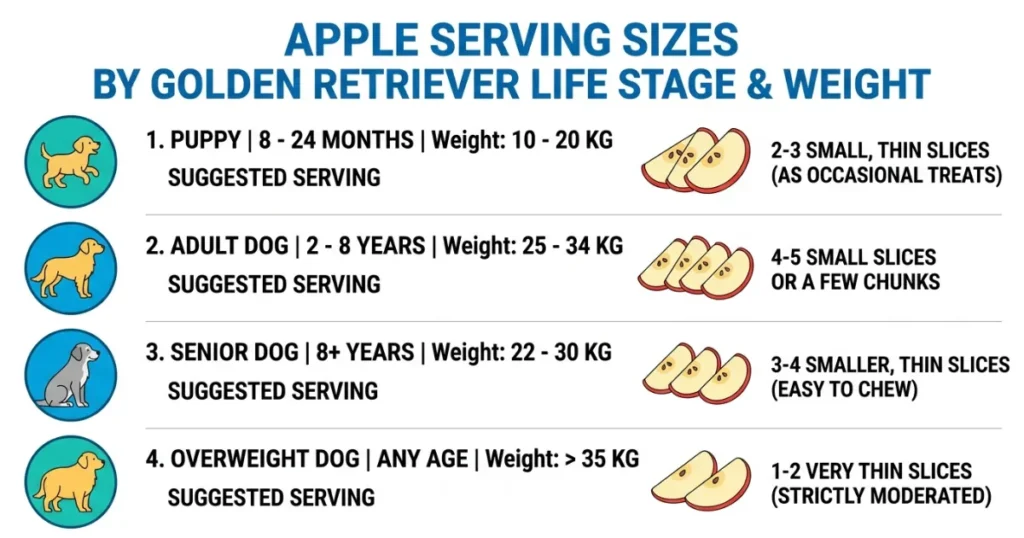
Senior Golden Retrievers get a reduced serving despite similar body weight. Older Goldens often have slower digestive motility, and higher fiber intake from apple skin can cause loose stools in dogs over 8 years old. I always peel apples for seniors and reduce frequency to twice weekly.
Are Apples Good for Dogs: Serving and Preparation Guide
Are apples good for dogs only if you prepare them correctly. The preparation steps are simple but non-negotiable for Golden Retriever owners.
Wash thoroughly.
Many commercially grown apples have pesticide residues on their skins. Rinse under cold water and scrub the surface before slicing. Organic apples reduce this concern but still require washing.
Remove the core, stem, and every seed.
The core is a choking hazard and can cause intestinal obstruction. The stem contains cyanide-producing compounds in the same family as the seeds. Remove all three completely before the apple reaches your dog.
Cut into appropriately sized pieces.
For a 65-pound adult Golden Retriever, half-inch slices are appropriate. Golden puppies under 6 months should receive quarter-inch pieces. Goldens eat fast, and large pieces increase the risk of choking in a breed known for gulping food.
Peel for sensitive stomachs.
Apple skin increases fiber load. For Golden Retrievers with known digestive sensitivity or those on veterinary gastrointestinal diets, peeling the apple reduces the risk of loose stools while preserving most of the polyphenol benefit in the flesh.
Avoid all processed apple products.
Applesauce often contains added sugar. Apple pie contains nutmeg, which contains myristicin, a toxin that causes hallucinations, high blood pressure, and seizures in dogs, according to the Pet Poison Helpline. Dried apple products frequently contain preservatives and concentrated sugars. Fresh, raw apple only.
Expert Insight
The quercetin content in apples is particularly relevant for Golden Retrievers, given this breed’s disproportionate cancer burden and mast cell predisposition. Quercetin stabilizes mast cells, reduces histamine release, and provides antioxidant protection, supporting cellular health. Two to three apple slices, two to three times per week, deliver a meaningful polyphenol dose in a treat format that costs almost nothing calorically. For this breed, that is a genuinely purposeful food choice, not just a safe one.
Warning: When Are Apples Ok for Dogs Becomes a Problem
TOXIC – call your vet immediately
Apple seeds ingested in large quantities release hydrogen cyanide via amygdalin hydrolysis, interfering with cellular oxygen use in the heart and central nervous system. If your Golden consumed a large number of seeds, an entire core, or apple leaves and stems, call your vet immediately. Do not wait for symptoms. Contact the ASPCA Animal Poison Control Center at 888-426-4435.
PROBLEMATIC – monitor for 24 to 48 hours
Overfeeding apples causes loose stools and stomach discomfort from the combined sugar and fiber load. This is the most common reaction and resolves within 24 hours if you remove apples from the diet and keep water available. Escalate to your vet if diarrhea continues past 24 hours or if you see blood in the stool.
UNSUITABLE – avoid, not acutely dangerous
Apple for Golden Retrievers has already been used for diabetes or active pancreatitis. The natural sugar in apples, approximately 19 grams per medium apple, can disrupt blood glucose regulation in diabetic dogs. Ask your vet before feeding any fruit to a Golden with either condition.

When to Call the Vet
| URGENT — Call Immediately | MONITOR — Watch 24–48 Hours |
| Ingestion of a large quantity of seeds, core, or stem | Soft stool after first apple feeding |
| Vomiting, weakness, or labored breathing after eating seeds | Mild gas or stomach gurgling |
| Suspected apple pie ingestion with nutmeg | Reduced appetite at next meal |
| Signs of obstruction: vomiting, straining, abdominal distension | Loose stool that firms within 24 hours |
Decision Framework: Are Apples Okay for Dogs in Your Golden’s Specific Situation
Suppose your Golden is under 12 weeks old
Skip apple entirely. Focus on puppy kibble only. Digestive systems at this age are not ready for any fruit fiber.
If your Golden is 3 to 6 months old
One thin, peeled, cored slice once per week. Introduce alone, not alongside other new foods. Watch stool quality for 24 hours before repeating.
If your Golden is a healthy adult weighing 55 to 75 pounds
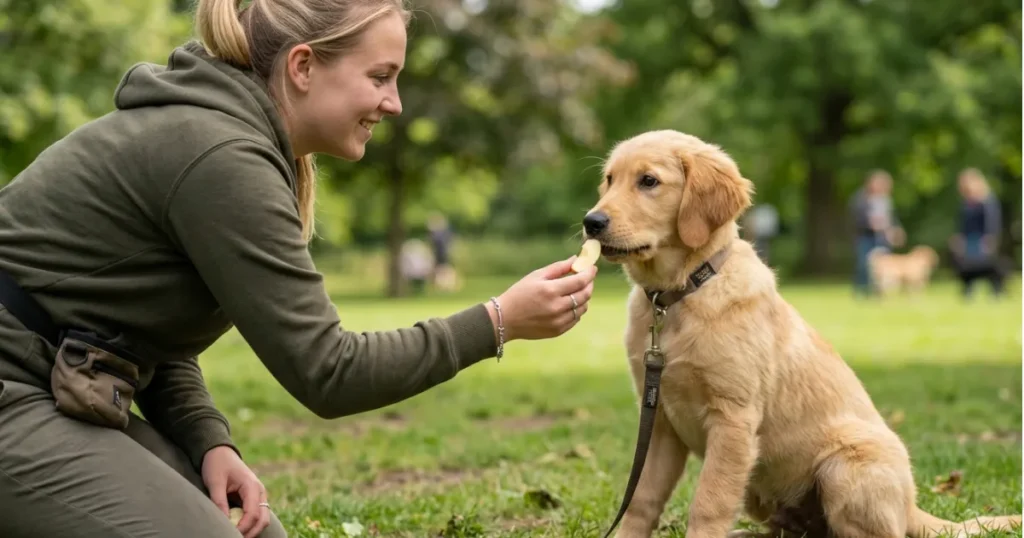
Two to three peeled, cored slices two to three times per week is within safe limits. Use as a training reward or food topper for maximum nutritional benefit.
If your Golden is overweight
Apple is one of your best treat substitutions. At roughly 15 calories per quarter cup, it replaces commercial treats at a fraction of the caloric cost. Use it to fill the treat quota without contributing to further weight gain. Check our best fruits and vegetables for dogs for other low-calorie options.
If your Golden has known skin allergies
Apple is actively supportive. Quercetin’s mast cell stabilizing function aligns directly with allergy management. Discuss with your vet whether increasing your intake of quercetin-rich foods fits within the overall allergy protocol.
If your Golden is diabetic or has pancreatitis, do not feed apples without explicit veterinary clearance. The sugar content is manageable for healthy dogs, but problematic for dogs with glucose regulation disorders.

Are apples ok for dogs every day?
Daily apple is not recommended. The sugar and fiber content adds up across daily servings and can cause loose stools or disrupt caloric balance in dogs on large-breed formulas. Two to three times per week is the right frequency for Golden Retrievers. This delivers the antioxidant benefit without the cumulative sugar load.
Are apples ok for dogs if I leave the skin on?
Yes, with caveats. Apple skin contains concentrated levels of quercetin and fiber, both of which are beneficial in moderate amounts. For Golden Retrievers with sensitive digestion, active gastrointestinal issues, or those aged 8 and over, peeling the apple reduces fiber load and lowers the risk of loose stools while preserving most of the nutritional value in the flesh.
Are apples okay for dogs with allergies?
Are apples okay for dogs with allergies is a question worth asking, specifically for Goldens. Apples contain quercetin, a flavonoid that stabilizes mast cells and reduces histamine release. Golden Retrievers are one of the most allergy-prone breeds, and quercetin-rich foods support the same biological pathway that allergy medications target. Apple is not a treatment, but it is a supportive dietary addition for allergy-prone Goldens.
Are apples okay for dogs with allergies?
Are apples okay for dogs with allergies is a question worth asking, specifically for Goldens. Apples contain quercetin, a flavonoid that stabilizes mast cells and reduces histamine release. Golden Retrievers are one of the most allergy-prone breeds, and quercetin-rich foods support the same biological pathway that allergy medications target. Apple is not a treatment, but it is a supportive dietary addition for allergy-prone Goldens.
Are apples okay for dogs who are overweight Golden Retrievers?
Apples are among the best treats for overweight Golden Retrievers. At roughly 15 calories per quarter cup, apples replace high-fat commercial treats at a fraction of the caloric cost. The fiber content also supports satiety. Keep servings to two to three slices and use the apple as the primary treat reward to reduce the overall daily calorie load from treats.
Can dogs eat apple cores?
No. Apple cores are a choking hazard and can cause intestinal obstruction in dogs of all sizes. The core also concentrates seeds, which contain amygdalin, a compound that releases cyanide when chewed. Always remove the core completely and dispose of it before giving any apple to your dog.
Can dogs eat applesauce?
Plain, unsweetened applesauce is safe for dogs in small amounts. Most commercial applesauce contains added sugar, which is not appropriate for dogs. Check the ingredient list carefully and avoid any product containing xylitol, which is toxic to dogs and causes rapid, severe hypoglycemia. If feeding applesauce, a tablespoon as a food topper is sufficient.
How much apple can a dog eat without getting sick?
Most dogs tolerate one to three slices without issue. More than that, there is a risk of loose stools from the combined sugar and fiber load. The safe amount scales with body weight. Large breeds like Golden Retrievers can handle two to three slices. Small dogs weighing less than 20 pounds should receive only one thin slice. Always introduce apple gradually and monitor stool quality for 24 hours.
Can dogs eat green apples?
Yes. Green apples are slightly lower in sugar than red varieties and contain the same beneficial antioxidants. The preparation rules are identical: remove core, seeds, and stem, wash thoroughly, and cut into appropriate serving sizes. Some dogs prefer the tartness of green apples while others favor sweeter red varieties. Try both and observe your Golden’s preference.
Are apples good for Golden Retrievers with cancer risk?
Apples contain quercetin, catechin, and chlorogenic acid, antioxidants with documented anti-inflammatory properties and potential antiangiogenic effects. Golden Retrievers have a 61.4% lifetime cancer rate, according to data from the Golden Retriever Club of America. While apple is not a cancer-prevention treatment, its polyphenol content makes it one of the more purposeful treatment choices for this breed. Read more at Can Dogs Eat Apples.
Is it safe to give my Golden Retriever apples as a daily treat?
Two to three times per week is better than daily for Golden Retrievers. Daily apple servings introduce cumulative sugar that competes with the dietary precision of large-breed adult formulas. The antioxidant benefit can be achieved at a two-to-three-times-per-week frequency without the sugar accumulation that daily feeding causes.
Can Golden Retriever puppies eat apples safely?
Yes, from around 12 weeks onward. Start with one thin, peeled, cored slice introduced alone. Watch stool quality for 24 hours before repeating. Golden Retriever puppies have developing digestive systems and lower daily caloric ceilings than adults, so keep apples to once per week until 6 months. More puppy-specific fruit guidance for dogs and apples.
What happens if my Golden Retriever eats apple seeds?
A small number of seeds from a single apple is unlikely to cause acute toxicity. Apple seeds contain amygdalin, which releases hydrogen cyanide when chewed, but a clinically dangerous dose requires a large quantity. Monitor for vomiting, lethargy, or difficulty breathing. If your Golden consumed an entire core with multiple seeds, or repeatedly ate seeds, call your vet immediately. Do not wait for symptoms to develop.
Is it safe to give my Golden Retriever apple slices every day?
Daily apple slices are not the best approach for Golden Retrievers. Two to three times per week delivers the antioxidant and fiber benefits without the cumulative sugar load that daily servings create. For a breed already predisposed to weight gain, keeping treat frequency controlled matters even when the treat itself is low in calories.
What parts of an apple are dangerous for dogs?
The seeds, core, and stem are the three parts of an apple that are unsafe for dogs. Seeds contain amygdalin, which releases cyanide when chewed. The core and stem are choking hazards and can cause intestinal blockage. The flesh and skin are safe for dogs when washed. See the full list of what fruits are bad for dogs for broader context.
How do I prepare an apple safely for my Golden Retriever?
Wash the apple thoroughly under cold water. Remove the stem, core, and every seed. Cut into half-inch slices appropriate for a large breed. Peel if your Golden has a sensitive stomach or is over 8 years old. Serve fresh and raw. Never feed apple pie, applesauce with added sugar, or dried apple chips with preservatives. Two to three slices is the right amount for a healthy adult dog. More preparation details can be found at can dogs have fruit.
Conclusion.
Are apples ok for dogs? For Golden Retrievers, yes, and more purposefully than any generic breed article acknowledges. Remove the core, seeds, and stem, wash the fruit, cut it to the right size for your dog’s weight, and serve 2 to 3 slices 2 to 3 times per week. The practical takeaway specific to this breed: Apple’s quercetin content makes it one of the few common treats that directly support the biological pathways most relevant to Golden Retriever health, anti-inflammatory defense, mast cell stability, and antioxidant protection in a breed carrying anextraordinary cancer risk. That is not a reason to overfeed. It is a reason to feed deliberately.
Golden Retrievers have a specific and documented vulnerability that changes how I think about every food decision for them. I’d love to know how other Golden owners approach this. Does your Golden get apples regularly, and have you noticed any change in coat condition, allergy symptoms, or digestive health since introducing them?
Goldens with known skin issues or recurring hot spots sometimes respond noticeably when quercetin-rich foods are added consistently. If you’ve seen that play out with your own dog, or if you’ve found a preparation method your Golden prefers over plain slices, share it in the comments below.