Your Golden just grabbed something off the counter – a grape, a cherry, a slice of avocado – and you’re already reaching for your phone. That instinct is correct. What fruits are bad for dogs isn’t a trivial question, and for Golden Retrievers specifically, the answer matters more than most owners realize.
Goldens are food-motivated at a genetic level. A POMC gene deletion documented in the breed impairs satiety signaling, meaning Golden Retrievers experience hunger more intensely and persistently than most other dogs. They counter-surf. They clean up dropped food immediately. They eat first and show symptoms later. That behavioral profile, combined with fruits that cause kidney failure, cyanide toxicity, or life-threatening hypoglycemia, creates a real and specific danger in the average Golden Retriever household.
What fruits are bad for dogs breaks down cleanly into three categories: immediately toxic with no safe dose, problematic in excess, and unsuitable without being acutely dangerous. Every Golden owner needs to know which fruit is in which category – and why – before the next counter-surf incident.
What Fruits Are Bad for Dogs: The Immediately Toxic Category
What fruits are bad for dogs in any quantity? Several common fruits cause acute organ damage in Golden Retrievers with no established safe threshold. These aren’t portion-management problems – they’re avoid-completely situations.
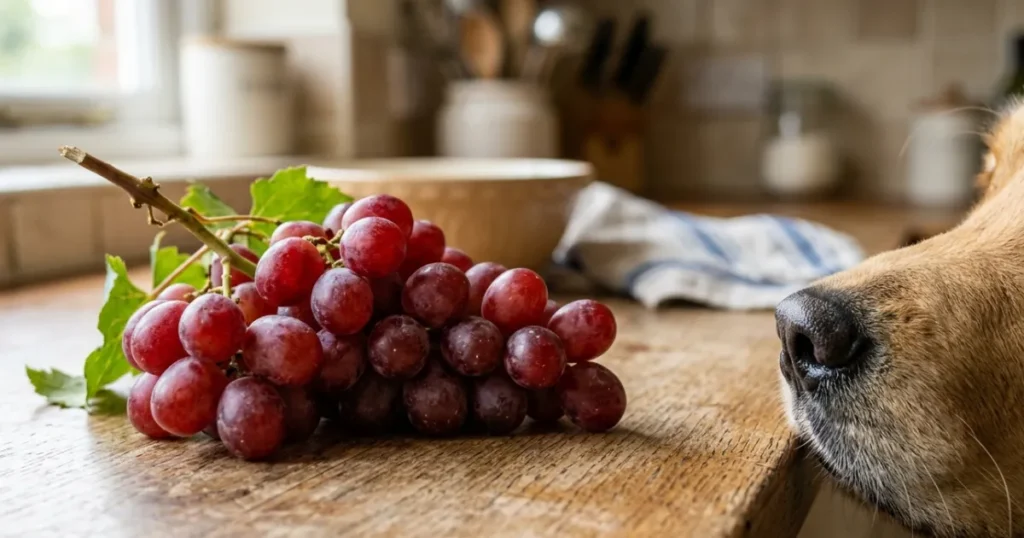
Grapes and raisins
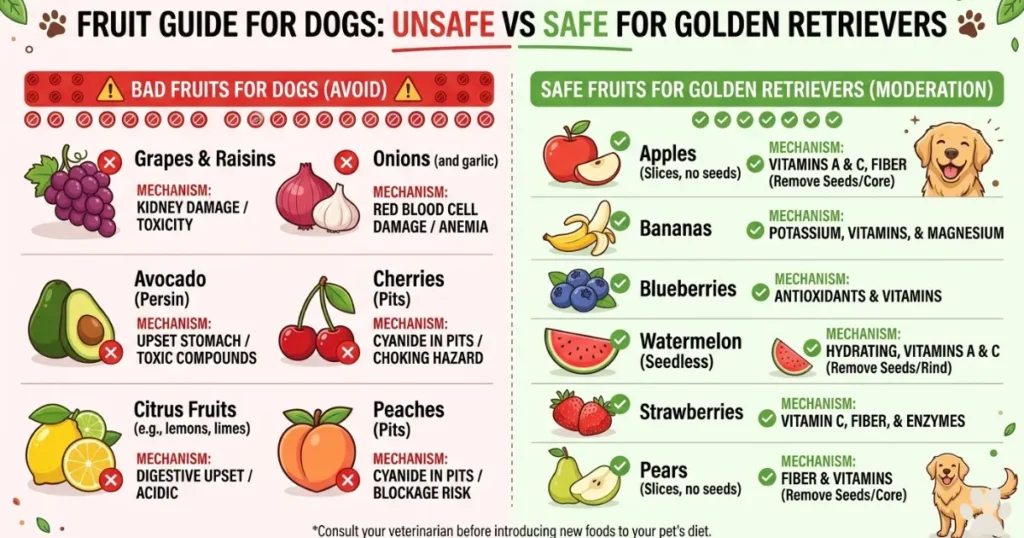
Top every legitimate toxic food list for dogs. The ASPCA Animal Poison Control Center classifies grapes and all grape products – raisins, currants, grape juice, and grape jam – as toxic to dogs. The mechanism remains incompletely understood, but the outcome is consistently documented: acute kidney failure. What makes grapes particularly dangerous for Golden Retrievers is individual sensitivity – some dogs develop renal failure from a single grape, others tolerate more before showing signs. No safe dose exists. Because no threshold has been established, any grape or raisin ingestion warrants a call to ASPCA Poison Control (888-426-4435) or your emergency vet immediately.
Cherries
They contain cyanogenic glycosides – primarily in the pit, stem, and leaves, but present in trace amounts in the flesh. Cyanide inhibits cytochrome c oxidase, disrupting cellular respiration. A Golden Retriever that swallows one or two pitted cherries is unlikely to experience acute toxicity, but a dog that accesses a bowl of whole cherries with pits faces real risk. The AKC advises against feeding cherries to dogs specifically due to cyanide exposure and the pit-swallowing hazard.
Why Golden Retrievers Face a Higher Risk from Toxic Fruits
Golden Retrievers’ food-seeking behavior means toxic fruit exposure is rarely a single-piece incident. I’ve seen Goldens clear an entire fruit bowl in the time it takes to answer a door. A breed that eats cautiously and one piece at a time faces less cumulative toxic exposure than a Golden that consumes whatever is available in under a minute. Portion-dependent toxicity – where a few pieces are low-risk but a large quantity causes acute damage – is genuinely more dangerous in this breed than in more discriminate eaters.
Fruits Bad for Dogs Because of Organ-Specific Damage
Some fruits bad for dogs operate through targeted organ damage rather than broad systemic toxicity. Understanding the mechanism helps owners recognize symptoms faster and respond appropriately.
Avocado contains persin, a fungicidal toxin concentrated in the skin, pit, and flesh – with higher concentrations in some varieties than others. According to VCA Animal Hospitals, persin causes myocardial damage in some species, though dogs show more resistance than birds and rabbits. The primary risk in Golden Retrievers is the pit: large, smooth, and exactly the size to cause intestinal obstruction in a dog that swallows food without thorough chewing – a common Golden trait. Guacamole adds additional risk through onion content.
Star fruit (carambola) contains soluble calcium oxalates that cause acute kidney injury. The mechanism – oxalate crystal deposition in renal tubules – is the same pathway responsible for toxicity in other oxalate-containing plants. Star fruit is less common in North American households but increasingly present in health-food contexts. Any ingestion by a Golden Retriever warrants a vet call.
The Citrus Category – Problematic, Not Always Toxic
Citrus fruit – lemons, limes, grapefruit – contains psoralens and essential oils that cause GI upset, photosensitivity, and, in large quantities, central nervous system depression. The ASPCA lists citrus plants as toxic due to these compounds. A Golden that licks a lemon slice experiences GI irritation and probable rejection. A Golden that accesses a large quantity of citrus flesh is at risk for more significant symptoms. Small accidental exposure is low-urgency; intentional or large-volume feeding is not appropriate.
What Fruits Can Dogs Not Eat Due to Seed and Pit Hazards
What fruits can dogs not eat safely because of what’s inside them, not the flesh itself? Several otherwise lower-risk fruits carry embedded toxins in seeds, pits, and cores that Golden Retriever owners must prepare before serving.
Apple
Apple seeds contain amygdalin, which converts to hydrogen cyanide during digestion through intestinal bacterial metabolism. The flesh of apples is safe – covered in detail in the green apple safety guide for Golden Retrievers. The seeds are not. A Golden Retriever eating a whole apple repeatedly – seeds included – accumulates cyanogenic exposure with no benefit. Remove seeds and core every time, without exception.
Peach and plum pits
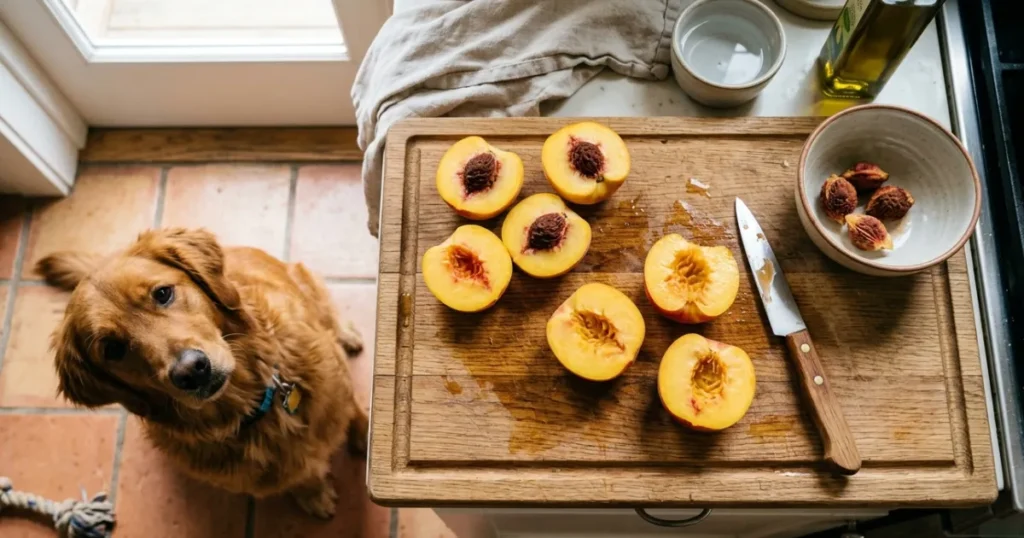
They contain amygdalin through the same cyanogenic mechanism as apple seeds, but at higher concentrations per unit. The pit is also a choking hazard and intestinal obstruction risk for a breed that frequently swallows without adequate chewing. Peach flesh, properly pitted and portioned, is safe. The pit is not – ever.
Apricot
Its pits, stems, and leaves carry amygdalin at concentrations high enough to cause clinical cyanide toxicity in dogs. The flesh in small quantities is generally tolerated. Still, the risk of pit access makes apricots a fruit to prepare with extra caution for Golden Retrievers who may grab discarded pits from compost bins or countertops.
Fruits That Are Bad for Dogs in High Quantities – The Overconsumption Risks
Not every dangerous fruit is toxic at any dose. Several fruits occupy a middle category where the risk to Golden Retrievers is proportional to quantity – safe in small amounts, problematic in excess.
Figs
It contain ficin (a proteolytic enzyme) and psoralen that cause oral irritation, GI upset, and skin reactions in sensitive dogs. A single small fig is unlikely to cause significant harm in most adult Goldens. Repeated feeding or access to a large quantity causes drooling, vomiting, and diarrhea. Fig leaves contain higher concentrations of these compounds than the fruit and should never be accessible to Goldens with garden access.
Tomatoes
Botanically a fruit – present a split-risk profile. Ripe red tomato flesh is safe in small quantities. Green tomatoes and all tomato plant parts contain solanine and tomatine, glycoalkaloids that inhibit acetylcholinesterase and disrupt nerve transmission. A Golden accessing a tomato garden is at risk not from the ripe fruit but from stems, leaves, and unripe fruit at eye and nose level.
What the Top Results Miss about Fruit Risk for Golden Retrievers
Generic “fruits bad for dogs” articles list the same five fruits and move on. What they don’t address is the preparation gap – the moment between a safe fruit and an unsafe one that happens in the kitchen. Peach flesh is fine; the pit on the cutting board that drops to the floor is not. Apple slices are fine; the apple core tossed into the compost bin that a Golden Retriever noses open is not. For a breed that processes its environment at floor level and acts on food opportunities faster than most owners can intervene, preparation hygiene is part of the safety protocol, not an afterthought. Check the best fruits and vegetables for dogs guide for the complete preparation framework.
Decision Framework: What Fruits Are Bad for Dogs in Your Golden’s Specific Situation
- Your Golden ate a grape, raisin, or currant – any quantity → Call ASPCA Poison Control (888-426-4435) or emergency vet immediately. Do not wait for symptoms. Individual sensitivity means no safe dose exists.
- Your Golden ate a cherry with the pit → Call your vet. Pit ingestion risk includes both cyanide exposure and obstruction. Cherry flesh without pit in one or two pieces: monitor at home.
- Your Golden accessed whole cherries, peach pits, or apricot pits in quantity → Emergency vet call. Cumulative cyanogenic exposure scales with quantity consumed.
- Your Golden ate avocado flesh → Monitor for vomiting, diarrhea, and lethargy. If a pit was swallowed, call your vet immediately – obstruction risk is real.
- Your Golden ate green tomato or tomato plant parts → Monitor for drooling, GI upset, muscle weakness. Call the vet if symptoms appear or the quantity is significant.
- Your Golden ate ripe tomato flesh, a fig, or citrus in small quantities → Monitor at home for 24 hours. These are low-urgency unless the quantity is large or symptoms appear.
- Your Golden is a puppy or senior with known health conditions → Lower your call-the-vet threshold for all of the above. Compromised systems process toxins less efficiently.

Warning: Severity Ladder for Fruits Bad for Dogs
Toxic—Vet Now
Grapes, raisins, currants (any quantity – kidney failure mechanism, no established safe dose). Cherry pits, peach pits and apricot pits in quantity (cyanide via amygdalin conversion). Star fruit (oxalate-mediated acute kidney injury). Any fruit containing xylitol as an added ingredient in processed form (hypoglycemia within 30 minutes).
Problematic—Monitor 24 – 48 Hours
Avocado flesh in moderate quantity (persin exposure; monitor for vomiting, lethargy, and breathing changes). Apple seeds in repeated exposure (cumulative cyanogenic load). Figs in excess (ficin-mediated GI irritation). Green tomato or tomato plant parts (solanine – monitor for neurological signs). Citrus flesh in significant quantity (psoralen and essential oil GI effects).
Unsuitable—Avoid, Not Dangerous
Dried fruit of any kind as a regular treat (concentrated sugar; dried currants behave like raisins – treat as toxic). Fruit juice (concentrated fructose, no fiber benefit). Canned fruit in syrup (sugar load inappropriate for a weight-prone breed).
When to Call the Vet After Your Golden Eats Problematic Fruit
URGENT – Call Immediately
| Fruit Ingested | Symptom or Scenario |
| Any grape, raisin, or currant | Any quantity — don’t wait for symptoms |
| Cherry, peach, or apricot pit | Swallowed whole; any quantity |
| Star fruit | Any ingestion |
| Unknown fruit or large unidentified quantity | Photograph and call Poison Control: 888-426-4435 |
| Collapse, seizure, or pale gums after any fruit | Emergency vet — possible systemic toxicity |
MONITOR AT HOME (24 – 48 Hours).
| Symptom | Action |
| Single vomiting after ripe tomato or fig | Withhold food 4h; offer water; monitor |
| Loose stools after citrus or excessive safe fruit | Bland diet; no more fruit; resolves in 24h |
| Mild lethargy after avocado flesh | Monitor closely; call vet if worsens or persists |
| Drooling or lip-licking after citrus contact | Rinse mouth; monitor GI signs for 12h |
Expert Insight
The fruit risk conversation for Golden Retrievers is less about what’s on the approved list and more about preparation, discipline and household access. A Golden Retriever owner who knows grapes are toxic but leaves a fruit bowl accessible on a low table, or who tosses peach pits into an open compost bin, knows without the safety outcome. This breed’s food drive and physical access to the counter level means the preparation surface, the bin, and the dropped item are all part of the risk environment – not just what ends up intentionally offered in the bowl.

What fruits are bad for dogs in any quantity?
Grapes, raisins, and all grape-derived products cause acute kidney failure in dogs with no established safe dose. Individual sensitivity varies – some Golden Retrievers develop renal failure from a single grape. Any ingestion requires an immediate call to ASPCA Poison Control (888-426-4435) or your emergency vet, regardless of the quantity consumed.
What fruits are bad for dogs because of their seeds or pits?
Apple seeds, cherry pits, peach pits, plum pits, and apricot pits all contain amygdalin – a cyanogenic compound that converts to hydrogen cyanide during digestion. The flesh of these fruits is safe when properly prepared. The pit, seed, and core are not. For Golden Retrievers that swallow food quickly, pit access is a choking and toxicity hazard simultaneously.
Is avocado bad for dogs?
Avocado flesh poses a moderate risk through persin content – it causes vomiting, diarrhea, and myocardial stress in sensitive dogs. The greater danger for Golden Retrievers is the pit: large, smooth, and likely to cause intestinal obstruction in a breed that doesn’t chew thoroughly. Guacamole adds an onion toxicity risk. Avoid entirely rather than manage around.
What happens if my Golden Retriever eats grapes?
Call your vet or ASPCA Poison Control immediately – don’t wait for symptoms. Grapes cause acute kidney failure in dogs through an incompletely understood mechanism, and individual sensitivity means no quantity is proven safe. Early intervention, including induced vomiting and IV fluids under vet supervision, significantly improves outcomes. Time is the critical variable.
Are cherries bad for dogs?
Whole cherries with pits are bad for Golden Retrievers – the pit contains amygdalin that converts to cyanide. One or two pitted cherries rarely cause acute toxicity, but pit swallowing creates both cyanide and obstruction risk. Cherry flesh in small quantities is low-risk when the pit, stem, and leaves are completely removed. Most vets advise avoiding cherries entirely, given the preparation margin.
Is it safe to give Golden Retrievers citrus fruit?
Small accidental exposure – a lemon lick, a single orange segment – causes GI upset and probably self-rejection from bitterness. Citrus is not appropriate as a regular treat: psoralens and essential oils in the peel, pith, and juice cause irritation and, in large doses, CNS depression. The fruit isn’t worth the preparation complexity when safe alternatives exist.
What happens if my dog eats a peach pit?
Call your vet. Peach pits contain amygdalin at concentrations capable of causing clinical cyanide toxicity, and the pit’s size creates intestinal obstruction risk in Golden Retrievers. Don’t wait for symptoms – cyanide toxicity signs (dilated pupils, difficulty breathing, bright red mucous membranes) indicate the crisis is already underway. Peach flesh without the pit, properly portioned, is safe.
Are tomatoes bad for dogs?
Ripe red tomato flesh is safe for Golden Retrievers in small quantities. The risk is in green tomatoes and the plant itself – stems, leaves, and unripe fruit contain solanine and tomatine that disrupt nerve transmission. A Golden with garden access to tomato plants is at risk from plant parts, not from ripe harvest fruit. Remove plant access; allow ripe flesh in small amounts.
How much fruit can a Golden Retriever eat safely?
Safe fruits – blueberries, watermelon flesh, and apple flesh without seeds – should not exceed 10% of daily caloric intake per AKC nutritional guidelines. For a 60- 70 lb adult Golden at | 1,300 kcal daily, that’s 130 kcal maximum from all treats, including fruit. The ceiling for most Goldens is also fiber tolerance – excessive fruit of any kind causes loose stools regardless of safety status.
Is it safe to give my Golden dried fruit?
No – dried fruit is not appropriate for Golden Retrievers as a regular treat. Sugar concentration increases significantly during drying. Dried currants are particularly dangerous: they behave identically to raisins in causing acute kidney failure. No dried fruit product should be assumed safe without confirming it contains no grape, currant, or xylitol derivatives.
What fruits are bad for dogs that are senior Golden Retrievers?
Senior Goldens face heightened risk from all toxic fruits due to reduced kidney and liver function – organs that process toxins less efficiently with age. Any toxic fruit exposure in a senior Golden warrants a lower call-the-vet threshold than in adults. Even safe fruits like blueberries and apple flesh should be portioned conservatively in seniors, particularly those on cardiac or renal medications.
Is watermelon safe for Golden Retrievers?
Ripe watermelon flesh is safe – low calorie, high water content, and well-tolerated by most Goldens. The rind is not appropriate: tough, indigestible, and likely to cause GI upset or partial obstruction in a breed that doesn’t chew adequately. Seeds should be removed. Seedless watermelon flesh, rind removed, in 2-3 small cubes for a 60 – 70 lb adult. Golden is a sound, warm-weather treat.
What fruits can Golden Retriever puppies not eat?
Puppies under 6 months should avoid all fruit – digestive systems are still developing, and growth nutrition should come from a complete puppy formula. After 6 months, introduce only known-safe fruits in 2- 3 pieces and monitor for 24 hours. All toxic fruits – grapes, cherries, avocado, and citrus in quantity – apply with equal urgency to puppies. Lower body weight means lower toxicity thresholds.
How do I know if my Golden ate something toxic from the fruit bowl?
Watch for vomiting, lethargy, and loss of coordination, excessive drooling, pale or bright red gums, difficulty breathing, or collapse within minutes to hours of fruit access. Don’t wait for all symptoms to appear – if you know or suspect your Golden accessed a toxic fruit, call ASPCA Poison Control (888-426-4435) before symptoms start. Early intervention always improves outcomes.
What fruits are bad for dogs that have kidney disease?
Any fruit with oxalate content like star fruit, certain berries adds an oxalate load that a compromised kidney handles poorly. All grape products remain absolutely off-limits. Even safe fruits like blueberries carry potassium that may need dietary management in kidney disease. If your Golden Retriever has a kidney diagnosis, get specific dietary guidance from your vet before introducing any fruit, regardless of general safety status.
Conclusion.
What fruits are bad for dogs comes down to three groups: never at any dose (grapes, raisins, cherry and peach pits), avoid with breed-specific caution (avocado, citrus, and figs in quantity), and safe with preparation (apple flesh without seeds, watermelon without rind, blueberries). For Golden Retrievers – a breed that eats fast, eats opportunistically, and doesn’t always get a second chance before symptoms appear – knowing which category each fruit belongs to before it hits the counter is the entire game.
Save ASPCA Poison Control in your phone: 888-426-4435. Check the best fruits and vegetables for dogs guide for the full safe-fruit framework. And when in doubt about what fruits are bad for dogs in your specific situation, call before symptoms start.
Golden Retriever owners – I want to hear from you:
- Has your Golden ever gotten into something from the fruit bowl before you could stop them?
- Which toxic fruit concerns you most, given your household setup – grapes on a low table, a compost bin your Golden can nose open, fruit trees in the yard?
- And if you’ve switched to safe fruits like blueberries or watermelon as training treats, has your Golden made the swap enthusiastically?
Drop your experience below – especially if you’ve navigated a real fruit ingestion incident and want to share what the vet response looked like.