Golden Retriever ear cleaning takes three steps. Fill the canal with a vet-approved solution, massage the base of the ear for about 30 seconds, then let your dog shake and wipe away the loosened debris with a cotton ball. Clean every one to two weeks for most Goldens, and always after swimming. Never use cotton swabs.
Golden Retriever ear cleaning sounds simple, and most of the time it is. The catch is that the wrong method causes more harm than doing nothing at all.
Pushing a cotton swab into the canal can pack wax against the eardrum. If you clean a healthy ear every day, you strip its natural defenses. Reach for hydrogen peroxide, and you irritate the very lining you are trying to protect. Each of these is common, and each raises the risk of the infection you were trying to prevent.
The good news is that the safe method is quick and easy to learn. Most Goldens tolerate it well once it becomes routine.
This guide covers the right solution, the step-by-step method, how often to do it, and the mistakes that send dogs to the vet. For the bigger picture on why this breed needs the attention, start with why this breed is prone to ear trouble.
Does your Golden Retriever actually need an ear clean?
Here is the part that surprises owners. A healthy Golden ear often needs no cleaning at all.
Cornell University’s veterinary team is clear on this. For a dog with healthy, normal ears, a routine clean is only needed when you can see dirt or debris. Cleaning a clean ear does more harm than good.
So the first skill is not cleaning. It is checking. Lift the flap and look. If the canal is pale pink, nearly odor-free, and free of discharge, leave it alone. If you can see wax or dirt, or the ear got wet, it is time to clean it.
This restraint matters more in Goldens than in most breeds, because the hanging flap and the water habit already stress the ear. Adding daily cleaning on top of that is often the thing that tips a healthy ear into an irritated one. You can read more breed-care guidance like this across more on Golden Retriever health, alongside our other Golden Retriever guides.
Once you know your dog’s baseline, the decision to clean or not takes five seconds.
What you need, and what to keep away from the ear
The supply list is short. Getting it right matters more than the method itself, because the wrong product causes the damage.
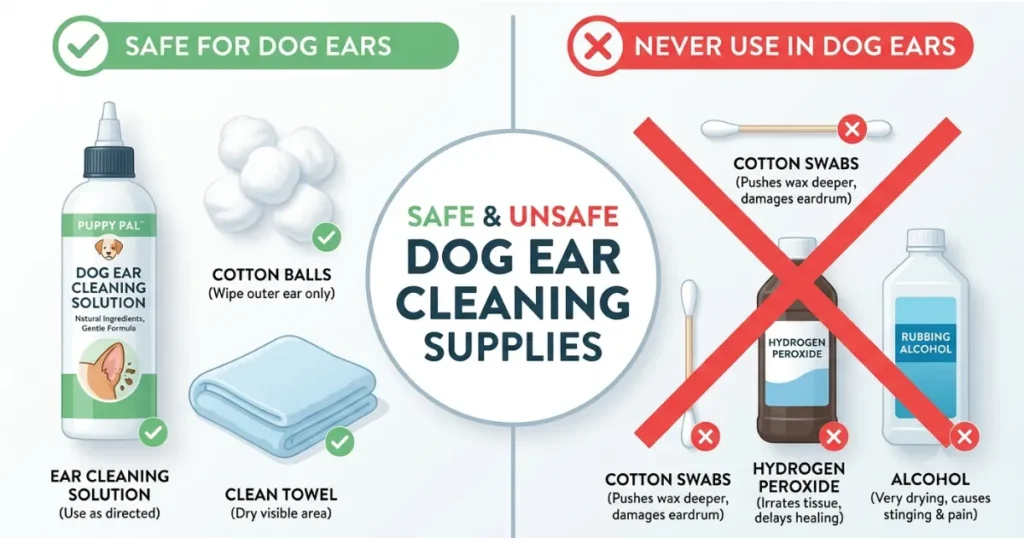
Use these
- A vet-approved dog ear cleaning solution. These are formulated for the dog ear canal and its natural acidity.
- Cotton balls or cotton pads. For wiping the visible canal and the flap.
- A towel. Your dog will shake, and you want to catch the spray.
- Treats. A calm dog makes the whole thing easier.
Keep these away from the ear
Several products commonly found in the bathroom cabinet cause real harm inside a dog’s ear.
| Product | Why it harms the ear |
| Cotton swabs | Pushing wax and debris deep can damage the eardrum |
| Hydrogen peroxide | Irritates the canal lining and leaves moisture behind |
| Rubbing alcohol | Stings broken skin and dries the canal |
| Vinegar on raw skin | Burns an inflamed or broken lining |
| Essential oils | Can be toxic and irritating in the canal |
The pattern is simple. Anything that stings, dries, or reaches deep does not belong in the ear. If you are curious about the home remedies people suggest online, what not to put in a dog’s ear sorts the harmless from the harmful.
How to clean dog ears, step by step
Here is the method. It works for any dog, and it takes about two minutes per ear once you have done it a few times.
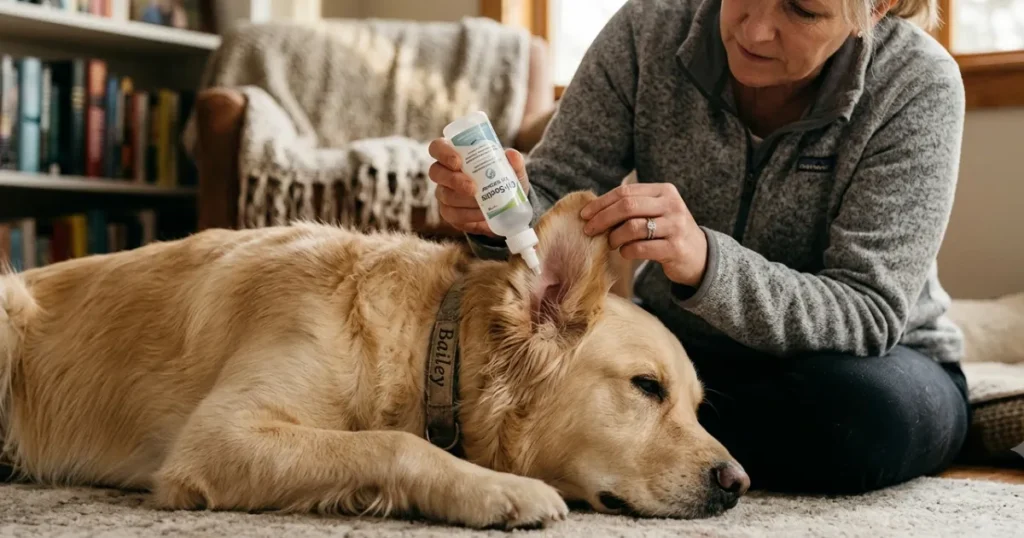
Step 1: Settle your dog and fill the canal
Sit your dog somewhere calm. Lift the ear flap straight up to open the canal.
Squeeze the vet-approved solution into the canal until it looks full. Do not let the bottle tip touch the ear, because that keeps the nozzle clean for next time.
Step 2: Massage the base
Gently massage the base of the ear between your thumb and finger for 20 to 30 seconds. You will feel the canal as a soft tube, and you will often hear a squishy sound.
This is the step that does the work. The massage loosens wax and debris from the walls of the canal so it can travel up and out.
Step 3: Let the shake do its job
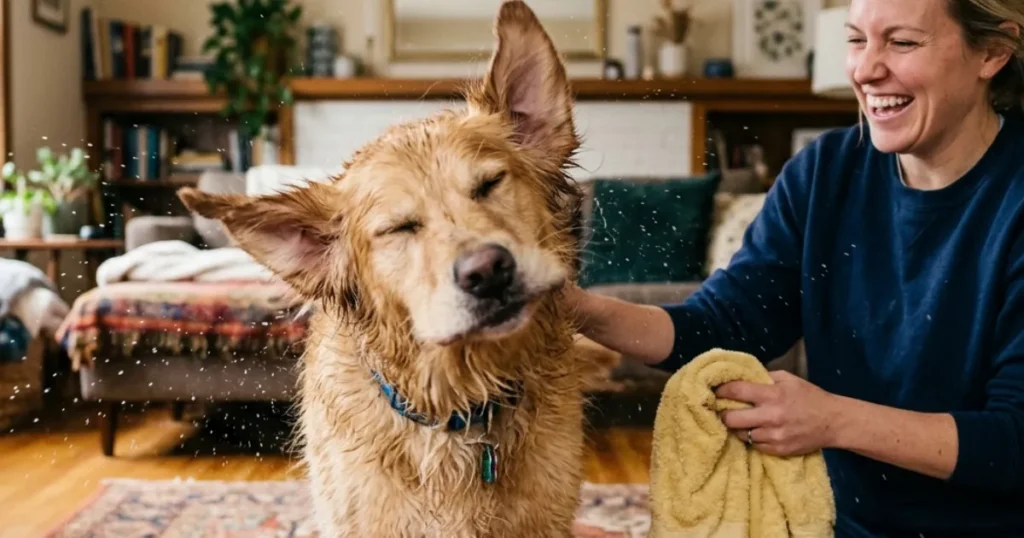
Step back and let your dog shake his head. This is not a failure of the process. It is part of it.
The shake brings loosened debris up from the lower canal to the opening, where you can reach it. Have your towel ready.
Step 4: Wipe, do not dig
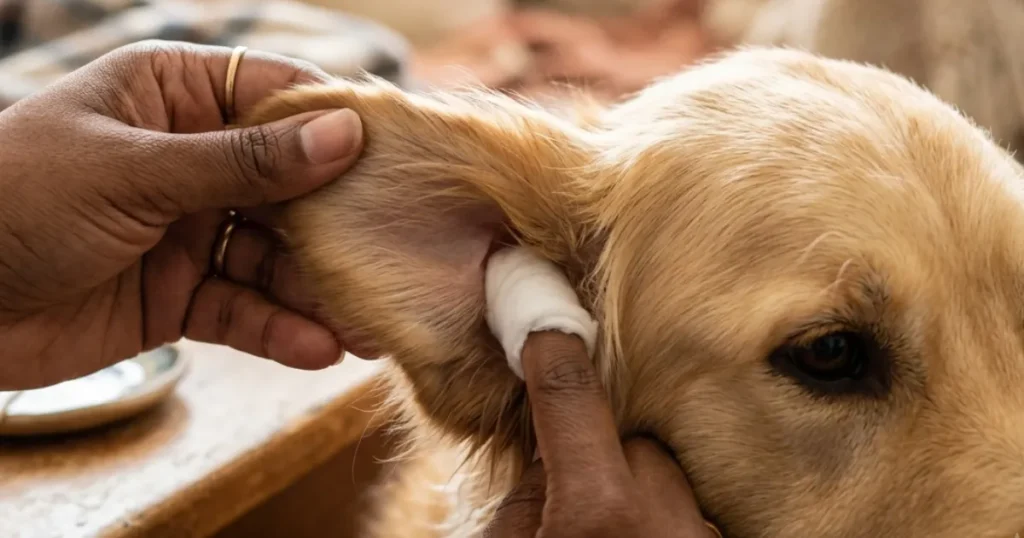
Wrap a cotton ball around your finger. Wipe the parts of the canal you can reach easily and the inside of the flap.
Never go deeper than one finger-width, which is about one knuckle. Cornell’s team sets the same limit. If debris is deeper than that, it is a job for your vet, not for you.
Repeat the wipe with a fresh cotton ball until it comes away clean. Then do the other ear.
How often to clean dog ears in a Golden Retriever
This is where breed matters and where most advice is too vague to help. General guides say floppy-eared dogs need cleaning more often than upright-eared ones, which is true but not specific.
Here is a Golden-focused schedule, based on veterinary guidance for a floppy-eared, water-loving breed.
| Situation | How often |
| Healthy adult Golden, no swimming | Check weekly; clean only when you see debris |
| Golden that swims or bathes | Clean or at least dry after every session |
| Maintenance for a Golden prone to problems | Every one to two weeks |
| Treating an active infection | Only as your veterinarian directs, sometimes daily |
Two rules hold this together.
Check often, clean less.
A weekly look is always right. A weekly clean is often too much. Cornell’s veterinary team warns that over-cleaning irritates the ears, which is the opposite of what you want.
Water changes everything.
A golden was bred to retrieve from water, so swimming is not an exception in this breed. It is the routine. Drying after every swim matters more here than in almost any other breed, and how to protect the ears after water covers them.
Your dog’s own needs come first. A Golden with allergies or a history of infections may need a different schedule, which is a conversation for what drives repeat ear infections.
The three cleaning mistakes that cause infections
Most ear damage in this breed is not caused by neglect. It is caused by cleaning wrong. These three mistakes appear again and again. Here are the ones I see most often.
Mistake 1: The cotton swab
A cotton swab feels like the right tool. It is the wrong one. It packs wax against the eardrum and can tear the lining.
Every major veterinary source says the same thing. Use a cotton ball on your finger, never a swab in the canal.
Mistake 2: Cleaning too often
An owner who cleans a healthy ear every day believes they are being careful. They are stripping the canal of its natural protection and irritating the lining.
More is not better here. Match the frequency to the dog, and when in doubt, clean less.
Mistake 3: Cleaning a painful ear
If your dog flinches when you touch the base of his ear, stop. Do not clean it.
A painful ear may already be infected, and pouring solution into it can push material against a damaged eardrum. That ear needs what an active ear infection looks like and a vet, not a clean. The same is true if you spot an unusual color or smell, which how to tell wax from yeast, mites, or infection helps you read.
The Golden Ear Cleaning Decision Guide
Use this before every clean. It takes ten seconds and prevents the three mistakes above.
| What you see or feel | What to do |
| Pale pink, no smell, no debris | Do not clean. Check again next week |
| Light wax, no smell, dog comfortable | Clean using the method above |
| The ear is wet after a swim or bath | Dry it, and clean if debris is visible |
| Redness, heavy discharge, or strong smell | Do not clean. Book a vet visit |
| A dog flinches, cries, or pulls away in pain | Do not clean. Call your vet |
| One ear looks or smells far worse than the other | Do not clean. Book a vet visit |
The guide has one theme. Ear cleaning is for maintenance, not for treatment. A problem ear needs a diagnosis first. You can trim the hair around the ear too, which some owners find helps airflow, and how to trim the hair around the ear explains the current thinking on that.
Quick Protocol
- Step 1. Fill the ear canal with a vet-approved cleaning solution.
- Step 2. Massage the base of the ear for 20 to 30 seconds. Listen for a squishy sound.
- Step 3. Let your dog shake, then wipe the visible canal and flap with a cotton ball.
- Never use a cotton swab, and never go deeper than one finger-width into the ear.
Expert Insight
The owners who get this right are the ones who clean least. They check every week, they clean only when the ear tells them to, and they dry after every swim. The owners in my exam room with raw, infected canals are almost always cleaning too hard and too often, with the wrong tools, out of love.
How do I do Golden Retriever ear cleaning safely at home?
Fill the canal with a vet-approved solution, massage the base for 20 to 30 seconds, let your dog shake, then wipe with a cotton ball. Never use a cotton swab or go deeper than one finger-width.
Is Golden Retriever ear cleaning necessary every week?
Check weekly, but clean only when you see wax or debris, or after your dog gets wet. A healthy golden ear often needs no cleaning at all, and over-cleaning irritates the canal.
What is the safest way to clean dog ears?
Use a vet-approved solution and a cotton ball on your finger. Fill the canal, massage the base, let the dog shake, and then wipe. Avoid cotton swabs, alcohol, and hydrogen peroxide, which all harm the canal.
How often should I clean my dog’s ears?
For most Goldens, every one to two weeks as maintenance, and after every swim or bath. Healthy ears with no debris need only a weekly check. Your veterinarian can set a schedule for your dog.
Can I use cotton swabs to clean my Golden Retriever’s ears?
No. Cotton swabs push wax and debris deep into the canal and can damage the eardrum. Use a cotton ball wrapped around your finger, and never reach deeper than about one knuckle.
What solution should I use for Golden Retriever ear cleaning?
Use a cleaning solution made for dogs and approved by your veterinarian. These match the natural acidity of the ear canal. Avoid alcohol, hydrogen peroxide, and vinegar, which sting and dry the lining.
Can I clean my dog’s ears with hydrogen peroxide?
No. Hydrogen peroxide irritates the canal lining and leaves moisture behind, which encourages infection. A vet-approved dog ear cleaner is safer and more effective. Cornell’s veterinary team advises against peroxide and alcohol.
How do I clean my Golden Retriever’s ears after swimming?
Dry the flap and visible opening with a towel or cotton ball right after the swim. If you see debris, clean with a vet-approved solution. Drying after every swim is the single most useful habit for this breed.
Why does my Golden hate having his ears cleaned?
Often because a previous cleaning hurt, or the ear is already sore. Go slowly, pair cleaning with treats, and stop if he shows pain. A dog who flinches may have an infection that needs a vet.
Can cleaning my dog’s ears too much cause problems?
Yes. Over-cleaning strips the canal’s natural protection and irritates the lining, which can trigger the infections you are trying to prevent. Clean only when needed, and check rather than clean by default.
Do Golden Retrievers need professional ear cleaning?
Most do not for routine care, which owners can do at home. A groomer or vet can help with deep debris or heavy ear hair. An infected ear always needs a veterinarian rather than a groomer.
What happens if I clean my dog’s ears wrong?
The most common harm comes from cotton swabs, which push wax deep and can damage the eardrum, and from over-cleaning, which irritates the canal. Both can cause the infection you were trying to avoid.
Is it safe to clean a Golden Retriever puppy’s ears?
Yes, gently and only when needed. Start by handling the ears daily without cleaning, so your puppy learns to accept it. Use the same soft method, and never insert anything into the canal.
How long does Golden Retriever ear cleaning take?
About two minutes per ear once you are used to it. The massage takes 20 to 30 seconds, then a shake and a wipe. A calm dog and treats make it faster and easier every time.
When should I stop cleaning and call the vet instead?
Stop if the ear is red, swollen, painful, strongly smelly, or full of discharge, or if one ear is far worse than the other. These signs mean infection, and cleaning can make a painful ear worse.
The bottom line
Golden Retriever ear cleaning is less about scrubbing and more about judgment. The best owners check every week and clean only when the ear asks for it.
The method is three simple steps. Fill, massage, and wipe with a vet-approved solution and a cotton ball, never a swab. Go no deeper than one knuckle, dry the ears after every swim, and match the frequency to your own dog rather than a fixed rule.
Most of the damage this breed suffers comes from cleaning too hard, too often, or with the wrong tools. Do less, do it gently, and stop the moment the ear looks or feels wrong. That single habit prevents more infections than any product ever will.
Every Golden owner develops their own ear-cleaning routine, and some learn the hard way. Maybe you started with cotton swabs before you knew better or found a solution your dog finally tolerates.
We would like to hear what worked for you. How to clean dog ears, and what finally made your dog sit still for it? If a swimming habit changed your routine, let us know how you handle drying afterward. Your trick might be the one another owner needs.