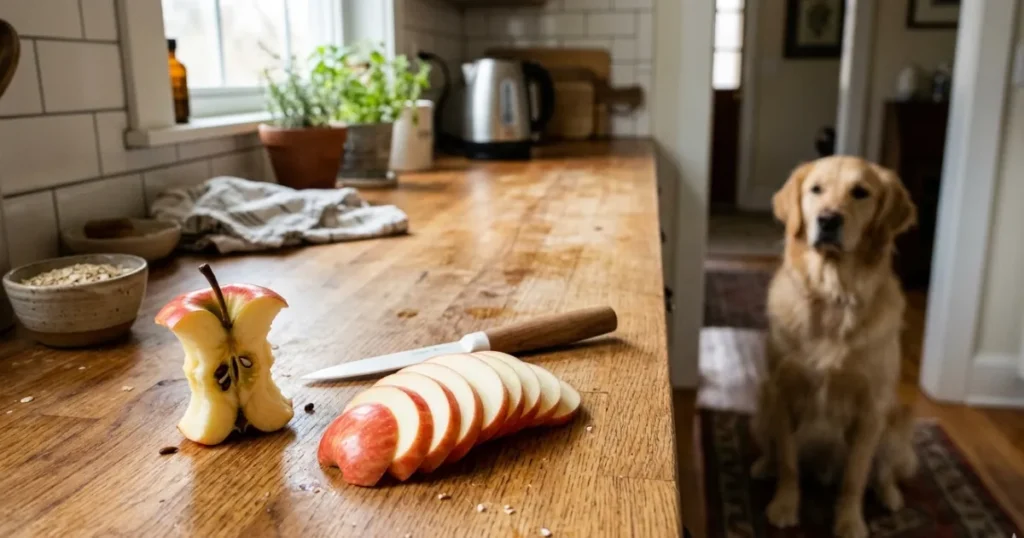
Yes, you can feed your dog apples. For Golden Retrievers, apples are safe and genuinely useful when you remove the core, seeds, and stem before serving. A 65-pound adult Golden Retriever can handle two to three cored, peeled slices two to three times per week without any caloric or digestive concern.
Most guides cover the basics and stop there. What they miss is the breed-specific reason why asking, “Can I feed my dog apples?” matters more to Golden Retriever owners than to most. Approximately one in four Golden Retrievers develops hypothyroidism over their lifetime, according to the Golden Retriever Club of America’s breed health survey. Hypothyroidism slows metabolism and causes steady weight gain even on a controlled diet. That makes caloric density a real concern in every treat decision, and apple, at roughly 15 calories per quarter cup, is one of the few options that satisfies a Golden’s food drive without compressing the protein budget their formula is built around.
Apple also delivers quercetin, a flavonoid with antihistamine and antioxidant properties; pectin fiber, which supports gut health as a prebiotic; and vitamins A and C. For a breed carrying Golden Retrievers’ documented health burden, those are not incidental benefits.
Can I Feed My Dog Apples Every Day or Just Occasionally
Can I feed my dog apples daily is the follow-up question most owners ask, and the answer is no for Golden Retrievers. Two to three times per week is the right frequency. Daily apple servings introduce cumulative sugar that works against the caloric precision of a large-breed adult formula, and the fiber load from daily skin-on apple can produce loose stools in a breed already prone to digestive sensitivity.
A medium apple contains approximately 19 grams of sugar, according to the AKC’s nutrition guidance. For a healthy adult Golden Retriever, two to three slices per session stays well within the 10% daily treat ceiling. More than that, especially daily, compounds sugar exposure across a week of feeding and chips away at the protein to calorie ratio the base diet is designed to maintain.
I treat apples as a rotation fruit alongside blueberries and watermelon rather than a daily fixture. That approach captures the nutritional benefit across multiple antioxidant profiles without leaning on any single fruit’s sugar load. Browse our best fruits and vegetables for dogs guide for more breed-specific fruit comparisons.
Why Frequency Matters More for Goldens Than Other Breeds
Golden Retrievers prone to hypothyroidism gain weight more easily than healthy dogs even on the same caloric intake, because a slowed metabolic rate changes how efficiently calories are used. A dog whose metabolism is already compromised cannot afford daily treat sugar on top of their base diet without consequences. Keeping apples at two to three times per week, even for healthy adults, builds a sustainable feeding habit that holds up if hypothyroidism develops later.
What Happens When You Feed a Golden Retriever Apples: The Nutritional Breakdown
Feeding apples to Golden Retriever delivers four specific benefits that generic dog articles rarely explain with breed context.
Quercetin and allergy support.
Golden Retrievers are one of the most allergy-prone breeds. Quercetin stabilizes mast cells and reduces histamine release, according to research on canine flavonoid metabolism. Fresh apple with skin provides approximately 4.4 milligrams of quercetin per 100 grams of fruit, according to the Dogs Naturally analysis of apple polyphenol content. That is a meaningful contribution for a breed whose skin and ear issues frequently trace back to mast cell overactivity.
Pectin and gut health.
Pectin, the primary soluble fiber in apple flesh, acts as a prebiotic by feeding beneficial gut bacteria. Golden Retrievers frequently experience digestive sensitivity during dietary transitions and in their senior years. Pectin supports stool consistency and feeds the gut microbiome that underpins immune function. This is not a generic fiber benefit. It is specifically useful for a breed whose digestive tract is regularly disrupted by environmental and dietary change.
Low calorie density for weight management.
Approximately 56% of dogs in the United States are classified as overweight or obese, according to the Association for Pet Obesity Prevention’s 2022 survey. Golden Retrievers sit at elevated risk due to food drive, hypothyroid predisposition, and breed-wide tendency to gain weight through middle age. Apple replaces higher-calorie commercial treats without sacrificing the reward value a food-motivated Golden expects.
Vitamin A for skin and coat.
Golden Retrievers carry a dense double coat that requires consistent nutritional support to remain healthy and reduce shedding. Vitamin A, present in apple flesh, supports skin cell turnover and coat condition directly. For a breed where coat health is both a grooming concern and an early indicator of underlying thyroid or allergy problems, vitamin A from whole-food sources complements what the base diet delivers.

Can I Give My Dog Apples: The Step-by-Step Preparation Guide
Can I give my dog apples safely starts with four non-negotiable preparation steps.
Step 1: Wash thoroughly.
Many commercially grown apples carry pesticide residue. Rinse under cold water and scrub the skin before cutting. Organic apples reduce residue risk but still require washing.
Step 2: Remove the core, stem, and every seed.
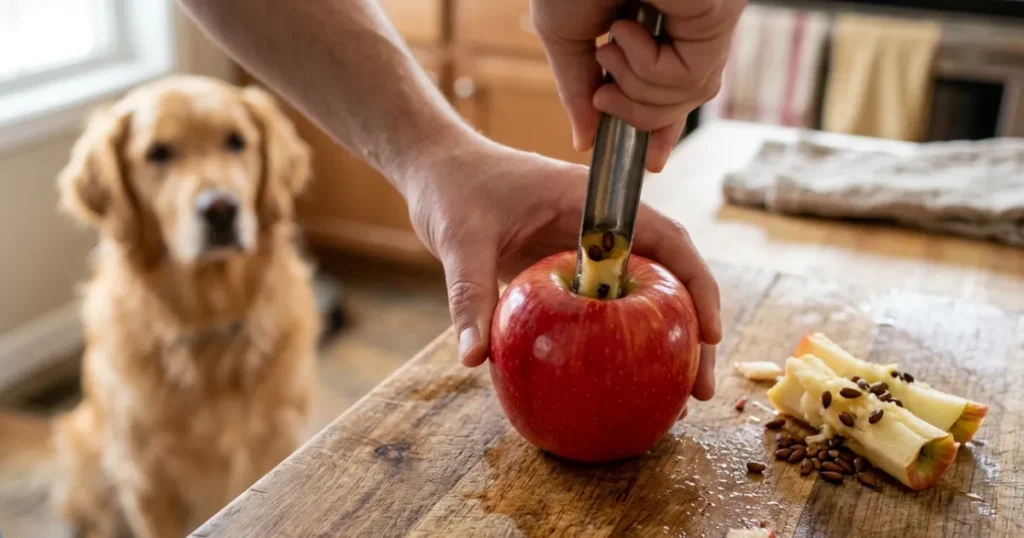
Apple seeds contain amygdalin, a cyanogenic glycoside that releases hydrogen cyanide when chewed. According to the ASPCA Animal Poison Control Center, cyanide interferes with cellular oxygen utilization, affecting the heart and central nervous system. A Golden Retriever would need to consume a large quantity of seeds to reach an acutely dangerous dose, but removing every seed every time removes the risk entirely. The stem contains the same compounds. Discard both.
Step 3: Cut to the right size for your Golden.
For a 55-75-pound adult Golden Retriever, half-inch slices work well. Goldens eat fast, and large chunks increase the risk of choking. Puppies under 6 months need quarter-inch pieces. Senior Goldens with dental wear benefit from smaller, softer pieces that require less pressure to chew.
Step 4: Peel for sensitive systems.
Apple skin is not harmful, but it is high in fiber. For Golden Retrievers with known digestive sensitivity, active gastrointestinal issues, or those in their senior years, peeling the apple reduces fiber load while preserving the nutritional value in the flesh.
What to avoid entirely
Apple pie contains nutmeg, which contains myristicin, a toxin that causes hallucinations, high blood pressure, and seizures in dogs, according to the Pet Poison Helpline. Sweetened applesauce and commercial dried apple products often contain xylitol. Xylitol triggers a rapid and potentially fatal insulin release in dogs by causing disproportionate pancreatic secretion. According to the ASPCA Animal Poison Control Center, as little as 0.1 grams of xylitol per kilogram of body weight is life-threatening. For a 65-pound Golden, that threshold is reached quickly. Fresh, raw, plain apple only.
Feeding Apples to Dogs: Serving Size by Weight and Life Stage
Feeding apples to dogs correctly means scaling the portion to the dog in front of you, not the generic weight category on a label. Here is the framework I use for Golden Retrievers.
| Life Stage | Approximate Weight | Safe Apple Amount | Frequency |
| Puppy (8–16 weeks) | 8–20 lbs | 1 thin slice, peeled and cored | Once per week |
| Puppy (4–9 months) | 20–50 lbs | 1–2 slices, peeled and cored | Twice per week |
| Adult Golden | 55–75 lbs | 2–3 slices, cored | 2–3 times per week |
| Senior Golden (8+ years) | 55–75 lbs | 1–2 slices, peeled and cored | Twice per week |
One slice is approximately half an inch thick, with the core, seeds, and stem fully removed. Peel is optional for healthy adults, recommended for puppies, seniors, and dogs with digestive sensitivity.
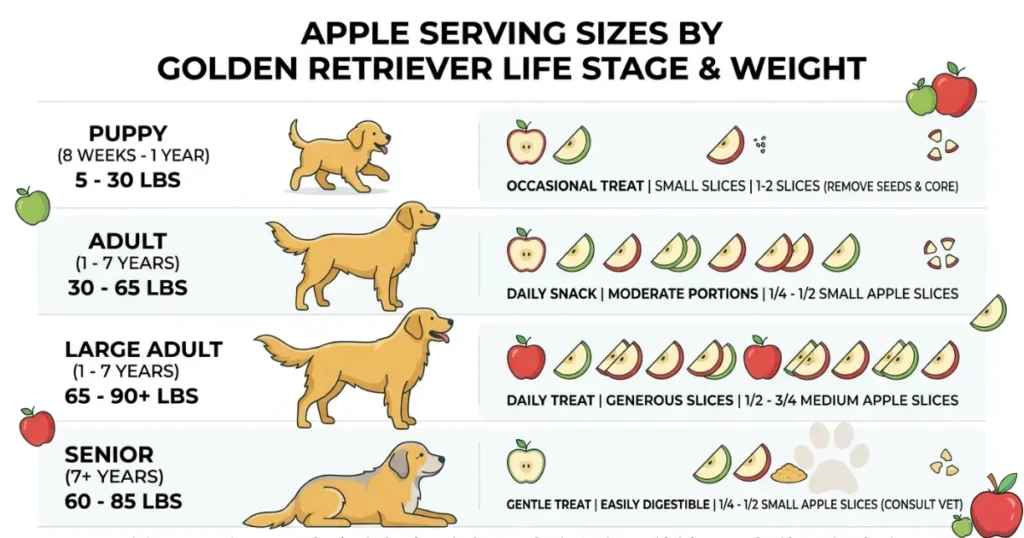
Senior Golden Retrievers receive a reduced serving despite similar adult body weight. Older Goldens have slower digestive motility and reduced metabolic efficiency, particularly in those who have developed hypothyroidism. Both a smaller serving and peeling the apple reduce the digestive workload without removing the treat value.
Expert Insight
For Golden Retrievers specifically, apple is one of the more purposeful low-calorie treats available. The pectin feeds the gut microbiome, which supports immune function; the quercetin addresses the mast cell pathway that drives this breed’s allergy burden; and the calorie count is low enough to fit within a hypothyroid Golden’s tightly managed daily intake. Preparation is simple. The challenge is portion discipline in a breed that will always communicate that one more slice is needed.
What Generic Apple Articles Get Wrong for Golden Retrievers
Every top result for ‘can I feed my dog apples‘ gives the same advice: remove the seeds, avoid the core and stay within the 10% treat rule. That covers the safety basics. It does not cover the Golden Retriever-specific context that changes how you apply those basics.
The hypothyroid weight gain connection is ignored.
Approximately one in four Golden Retrievers develops hypothyroidism, per the GRCA’s breed health survey. These dogs gain weight more readily than metabolically healthy dogs, significantly tightening their daily treat ceiling. An owner following generic “large dog” apple serving advice may be overfeeding a hypothyroid Golden without knowing it.
The food-motivation gulping risk is ignored. Golden Retrievers eat fast.
They are one of the breeds most likely to swallow a treat whole rather than chew it. A half-inch apple slice that a Labrador chews thoroughly can become a choking hazard in a Golden that gulps. Cutting an apple into quarter-inch pieces for Golden Retrievers is not generic cautious advice. It is breed-specific preparation based on how this breed eats.
The prebiotic gut benefit is ignored.
Not a single competing article mentions pectin’s role as a prebiotic for the gut microbiome. For Golden Retrievers, who frequently present with digestive sensitivity, loose stools during transitions, and age-related digestive decline, that is the single most practically useful benefit apple delivers beyond its calorie profile. Browse our best fruits and vegetables for dogs guide for more breed-specific fruit comparisons.
Warning: When Can I Feed My Dog Apples Becomes Dangerous
TOXIC – call your vet immediately
Any apple-containing product that may contain xylitol, nutmeg, or raisins. Xylitol triggers disproportionate insulin release that drives blood glucose to dangerous lows within 30 to 60 minutes, affecting the pancreas and liver. Nutmeg contains myristicin, which causes neurological symptoms at high doses. Raisins carry a mechanism of kidney toxicity that is not fully understood but is consistent and severe. Call your vet or ASPCA Animal Poison Control at 888-426-4435 immediately upon suspected ingestion.
PROBLEMATIC – monitor for 24 to 48 hours
Overfeeding fresh apples causes loose stools and stomach discomfort from the combined sugar and fiber load. This typically resolves within 24 hours if you remove apple from the diet and keep water available. Escalate to your vet if diarrhea persists for more than 24 hours or if you see blood in the stool.
UNSUITABLE – avoid without acute danger
Apple for any Golden Retriever managed for diabetes or active pancreatitis. The natural sugar in a medium apple, approximately 19 grams, can disrupt blood glucose regulation in diabetic dogs. Confirm with your vet before feeding apples and other fruits to Golden Retriever with either condition.
When to Call the Vet
| URGENT — Call Immediately | MONITOR — Watch 24–48 Hours |
| Any xylitol, nutmeg, or raisin ingestion via apple product | Soft stool after feeding apples |
| Large quantity of seeds, entire core, or stem consumed | Mild gas or stomach gurgling |
| Vomiting, weakness, or labored breathing after apple ingestion | Slightly reduced appetite at next meal |
| Signs of obstruction: vomiting, straining, abdominal distension | Loose stool that firms within 24 hours |
Decision Framework: Feeding Fruits to Golden Retriever Apple Right Now
If your Golden is under 8 weeks old
No apple and no human food of any kind. Puppy formula or kibble only.
If your Golden just arrived home and is under 16 weeks old
Wait 2 weeks before introducing any treats. Digestive sensitivity during transition mimics food intolerance. Let the gut stabilize first before introducing apple.
If your Golden is a healthy adult weighing 55 to 75 pounds
Two to three cored, washed apple slices, two to three times per week, used as a training reward or food topper. Track against the daily treat ceiling. See more serving ideas at Can Dogs Eat Apples.
If your Golden has been diagnosed with hypothyroidism
Ask your vet what the daily treat calorie ceiling is based on their current metabolic rate. Apple is still one of the best treat options because of its low calorie density, but the frequency and serving size should reflect a tighter ceiling than a metabolically healthy dog.
If your Golden has skin allergies or recurring hot spots
Apple is supportive. Feed with skin on to maximize quercetin content. Two to three times per week aligns apple with the allergy management protocol without introducing daily sugar. Read more at: Are apples ok for dogs?
If your Golden is diabetic or has pancreatitis
Avoid feeding apples without explicit veterinary clearance. The sugar content is manageable for healthy dogs but not for those with glucose regulation disorders.

Can I feed my dog apples if they have a sensitive stomach?
Yes, with adjustments. Peel the apple to reduce fiber load, remove all seeds and core, and cut into small pieces. Start with one thin slice and monitor stool quality for 24 hours before repeating. For Golden Retrievers with known digestive sensitivity, peeled apples two to three times per week are within safe limits, and pectin can actually support stool consistency.
Can I feed my dog apples as a daily training treat?
Daily apple is not ideal for Golden Retrievers. The cumulative sugar load across daily servings disrupts the caloric precision of a large-breed formula. Use Apple Two to Three times per week as a high-value training reward. Cut one slice into four small pieces per session to stretch the treat volume while staying within the daily calorie ceiling.
Can I give my dog apples with the skin still on?
Yes, for healthy adults. Apple skin concentrates quercetin and fiber, both beneficial in moderate amounts. For Golden Retrievers with digestive sensitivity, active gut issues, or those aged 8 and over, peel the apple to reduce fiber load. The flesh retains most of the nutritional value regardless of whether the skin is present.
Can dogs eat apples as a weight management treat?
Yes. Apples are one of the best weight management treats for Golden Retrievers because a quarter cup contains only 14 to 16 calories. For a breed prone to hypothyroidism and associated weight gain, apples replace high-fat commercial treats at a fraction of the caloric cost, without sacrificing the food reward a Golden expects. Keep servings to two to three slices and track against daily treat limits.
Can dogs eat apples with peanut butter?
Yes, if the peanut butter is xylitol-free and unsweetened. Many commercial peanut butter brands contain xylitol, which is toxic to dogs and causes rapid hypoglycemia. Always check the ingredient label before combining. Adding peanut butter also significantly increases the calorie count, negating the apple’s low-calorie benefit. Use plain apple slices unless the combination serves a specific training purpose.
How much apple can a dog eat in one sitting?
One to three slices are appropriate for most medium to large-sized dogs. More than that, there is a risk of loose stools from the combined sugar and fiber. For large breeds like Golden Retrievers weighing 55 to 75 pounds, two to three half-inch slices per session is the right serving. Small dogs weighing less than 20 pounds should receive only one thin slice. Always introduce apples gradually and watch for digestive changes.
Are all apple varieties safe for dogs?
Yes. Red Delicious, Honeycrisp, Gala, Granny Smith, and Fuji are all safe for dogs when prepared correctly. Green apples are slightly lower in sugar than red varieties and share the same antioxidant profile, making them a useful alternative for Goldens on stricter caloric limits. The preparation rules are identical regardless of variety. More variety guidance on whether dogs can eat green apples.
What happens if a dog eats apple seeds?
A small number of seeds from a single apple is unlikely to cause acute toxicity. Apple seeds contain amygdalin, which releases cyanide when chewed, but a clinically dangerous dose requires a large quantity. Monitor for vomiting, lethargy, or labored breathing. If your Golden consumed an entire core with multiple seeds, call your vet immediately. Do not wait for symptoms to develop before seeking guidance.
Can Golden Retrievers with hypothyroidism eat apples?
Yes, but with tighter portion control. Golden Retrievers with hypothyroidism gain weight more easily due to slowed metabolism. Apple’s low calorie density makes it one of the better treat options for these dogs, but the daily treat ceiling is lower than for a metabolically healthy Golden. Confirm the appropriate calorie allocation with your vet and use apple within that limit.
Is apple good for Golden Retrievers with skin allergies?
Yes. Apples contain quercetin, a flavonoid that stabilizes mast cells and reduces histamine release, which is the mechanism behind allergic skin reactions in Golden Retrievers. Feeding apples with the skin on maximizes quercetin intake. Two to three times per week supports the allergy management pathway without adding problematic daily sugar.
Can Golden Retriever puppies eat apples safely?
Yes, from around 12 weeks onward. Start with one thin, peeled, cored slice introduced alone, not with other new foods. Watch stool quality for 24 hours before repeating. Keep apple to once per week for the first 6 months, then move to twice per week as the digestive system matures. Never feed the peel to puppies under 4 months due to their lower fiber tolerance.
What should I do if my Golden Retriever ate an apple core?
Watch for vomiting, loss of appetite, lethargy, abdominal distension, or straining to defecate. These are observable signs of intestinal obstruction. A small piece of core may pass without issue in a healthy adult Golden. A large piece, or if your dog ate the core whole, warrants an immediate vet call. Report the estimated size of the core, when it was consumed, and your dog’s current weight when you call.
Is it safe to give my Golden Retriever apples every day?
Daily apple is not recommended for Golden Retrievers. Feeding apples 2 to 3 times per week delivers antioxidant and prebiotic benefits without the daily sugar accumulation that strains a large-breed formula’s caloric precision. For Goldens with hypothyroid predisposition, keeping treatment frequency consistent and controlled is especially important.
How do I prepare an apple safely for my dog?
Wash the apple under cold water, remove the stem, core every seed completely, and cut into half-inch slices. Peel if your Golden has a sensitive stomach or is over 8 years old. Serve fresh and raw. Never feed apple pie, sweetened applesauce, or preservative-laden dried apple chips. Two to three slices is the right serving for a healthy adult Golden. More options for can dogs have fruit.
What fruits are bad for dogs if apples are safe?
Grapes and raisins are toxic to dogs through a mechanism affecting the kidneys, even in small amounts. Cherries contain cyanide in their pits, stems, and leaves. Avocado contains persin, which causes vomiting and diarrhea. Eating large amounts of citrus fruit irritates the digestive system. Apples are safe when prepared correctly, but these common fruits should never reach your Golden. Full list of what fruits are bad for dogs.
Can I Feed My Dog Apples?
Yes, you can feed your dog apples. Apples are safe and genuinely useful when you remove the core, seeds, and stem before serving. A 65-pound adult dog can handle two to three cored, peeled slices two to three times per week without any caloric or digestive concern.
Conclusion.
Yes, you can feed your dog apples, and for Golden Retrievers, the case for doing so is stronger than any generic breed article acknowledges. Remove the core, seeds, and stem every time. Cut to the right size for your dog’s weight and age. Keep servings to two to three slices, two to three times per week.
The breed-specific takeaway: Apple earns its place in a Golden Retriever’s treat rotation not just because it is safe, but because its quercetin, pectin, and low calorie count directly address the allergy burden, digestive sensitivity, and weight management challenges that define this breed’s health picture across their lifetime. Golden Retrievers with hypothyroidism, skin allergies, or a history of digestive sensitivity all have a specific reason to reach for apples over commercial treats.
I’d love to know how other Golden owners are using it.
- Has your Golden responded differently to apple compared to other fruits in the rotation?
- If your dog has known skin issues, have you noticed any change in scratching frequency or coat quality since consistently adding quercetin-rich foods?
Drop your observations in the comments, especially if your Golden is in their middle years, when hypothyroid symptoms tend to appear first, because those real-world observations help the whole community make better feeding apples decisions.