
The berry question is one of the most genuinely dangerous in canine nutrition – not because the category is harmful, but because the gap between a safe berry and a lethal one is sometimes a single plant misidentification. Golden Retrievers make this more urgent than most breeds: they’re outdoor dogs that explore with their mouths and eat opportunistically. A Golden that finds wild berries on a trail doesn’t stop to assess them.
Can dogs eat berries? The answer is species-dependent. Blueberries, raspberries, and strawberries are safe, low-calorie, and beneficial for a breed predisposed to obesity and cancer. Yew berries and holly berries can kill. A third category sits in the middle – not acutely toxic but likely to cause significant GI distress in a breed already prone to digestive sensitivity.
Golden Retrievers specifically benefit from safe berry consumption because anthocyanins – the antioxidant pigment in blueberries, blackberries, and raspberries – reduce oxidative cellular stress, a documented factor in cancer development. For a breed where cancer incidence approaches 60% over a lifetime, per the Morris Animal Foundation’s Golden Retriever Lifetime Study, that’s a meaningful dietary lever.
Can Dogs Eat Berries Safely? The Direct Answer
Can dogs eat berries? Yes, when the species is confirmed safe, and absolutely not when it isn’t. The ASPCA Animal Poison Control Center classifies multiple berry-producing plants as toxic to dogs through documented biochemical mechanisms. Generic “berries are mostly fine” answers are dangerous because they skip the one variable that determines everything: which berry.
For Golden Retriever owners, species-level clarity – not category reassurance – is the functional answer.
Safe Berries for Golden Retrievers: Approved Species with Serving Sizes
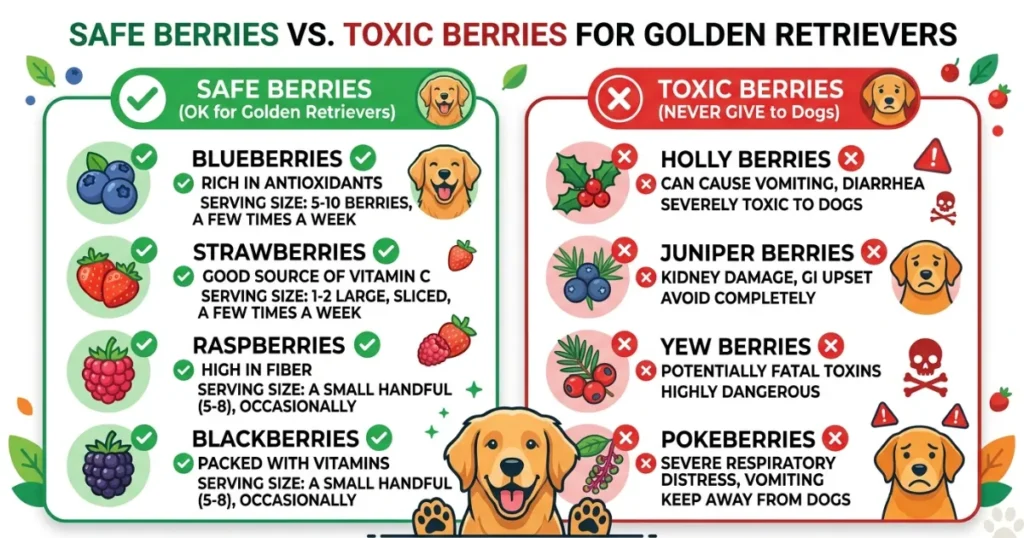
Can dogs have berries from this list? Yes – these are safe for Golden Retrievers when fresh, plain, and portioned correctly. This is the foundation of safe fruit choices covered in the best fruits and vegetables for dogs guide for this breed.
| Berry | Safe? | Preparation | Serving (60–70 lb adult Golden) |
| Blueberries | ✅ Yes | None — serve whole | 10–15 per session |
| Strawberries | ✅ Yes | Remove the stem and hull | 2–3 medium berries |
| Raspberries | ✅ Yes | None — serve whole | 5–10 per session |
| Blackberries | ✅ Yes | None — serve whole | 5–10 per session |
| Cranberries (fresh, plain) | ⚠️ Caution | Plain only | 3–5 per session |
| Boysenberries | ✅ Yes | None — serve whole | 5–8 per session |
Practical ceiling isn’t calories – it’s fiber. More than 15- 20 berries of any variety in a single session commonly causes loose stools in Golden Retrievers regardless of species.
Are Berries Good for Dogs Beyond Basic Safety?
Are berries good for dogs in a functional nutritional sense? For Golden Retrievers, yes. Anthocyanins neutralize reactive oxygen species that damage DNA and cellular membranes. Vitamin C supports collagen synthesis – relevant for a breed with high rates of joint degeneration. Soluble fiber (pectin) feeds beneficial gut bacteria and supports stool consistency in a breed prone to dietary sensitivity. Safe berries earn their place in a Golden’s diet on evidence, not novelty.
Toxic Berries That Are Never Safe for Dogs – Mechanism Included.
Most articles list toxic berry names. What they omit is the mechanism that determines severity, urgency, and what to watch for. Golden Retriever owners need both.
Toxic Berries
Yew berries (Taxus species)
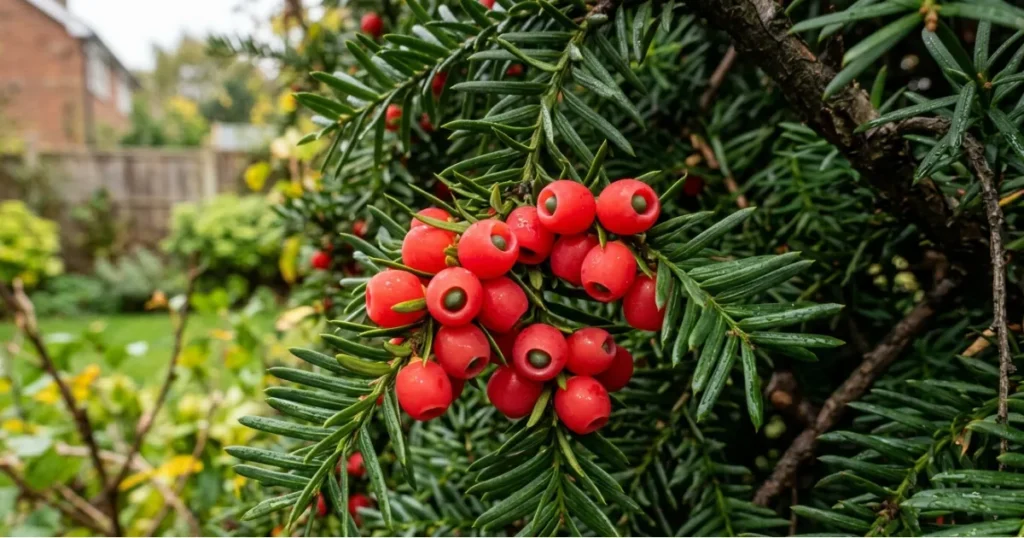
The most acutely dangerous berries accessible to domestic dogs. Taxine alkaloids disrupt cardiac conduction directly, causing arrhythmia and potentially fatal cardiac arrest within hours of significant ingestion. Yew is extremely common as garden hedging in North America and the UK.
Holly berries (Ilex species)
It contains saponins and methylxanthines that cause vomiting, diarrhea, lethargy, and, in larger doses, central nervous system depression. The ASPCA classifies holly as toxic to dogs and cats. Common in gardens and widespread in seasonal decorations.
Mistletoe berries (Phoradendron species)
It contains lectins and phoratoxins, causing GI irritation, bradycardia, and, in significant ingestion, cardiovascular collapse.
Nightshade berries (Solanum species)
It contains solanine and glycoalkaloids that inhibit acetylcholinesterase, disrupting nerve transmission. Signs include excessive drooling, weakness, and confusion.
Pokeweed (Phytolacca americana)
Dark purple-black berries on reddish stems. Phytolaccine causes severe GI distress and, in larger doses, respiratory depression. Common in eastern North American woodland edges.
Wild Berries on Trails – The Risk Competitors Miss
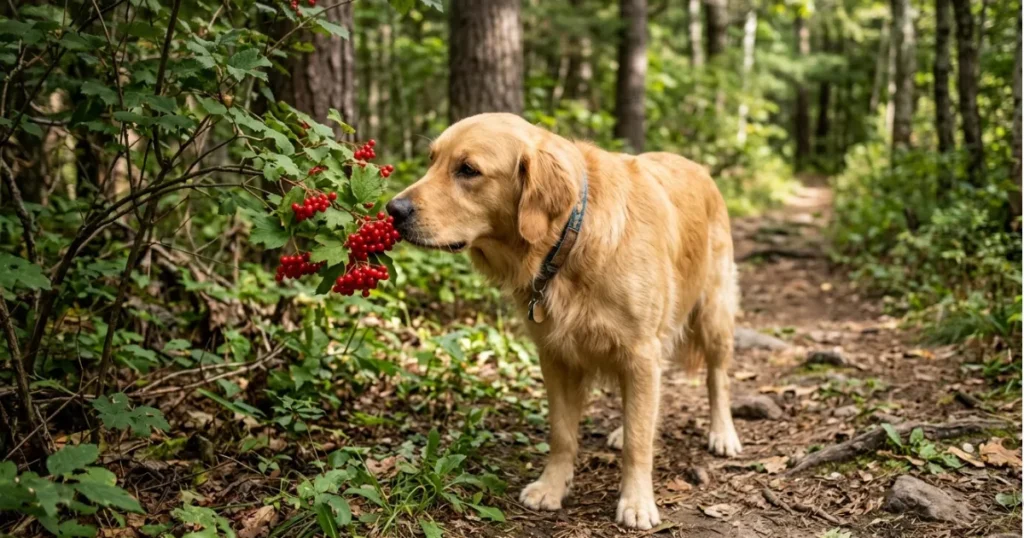
The top-ranking articles on “can dogs eat berries” address intentional feeding. None address trail exposure – which is where Golden Retrievers actually encounter toxic species. Off-lead on a hiking trail, a Golden’s retrieval instinct means berry clusters at nose height get investigated by mouth before a recall command reaches them. If your Golden eats unidentified wild berries: photograph the full plant immediately, estimate the quantity consumed, and call ASPCA Poison Control at 888-426-4435. Don’t wait for symptoms – with cardio-toxic species, symptom onset is the crisis.
Can Dogs Have Berries From the Garden? What Grows at Home?
Can dogs have berries from a home garden safely? Usually yes – with two exceptions that most owners don’t anticipate.
Strawberry plants:
Fruit is safe. Leaves are non-toxic but cause mild GI irritation in volume. Raspberry and blackberry canes produce safe fruit – the actual hazard is the thorns. Goldens pushing through bramble can scratch their gums and face; check for lacerations after garden access.
Tomatoes (botanically a berry):
Ripe red flesh is safe in small amounts. Green tomatoes and all tomato plant parts contain solanine, the same mechanism as nightshade. A Golden chewing tomato plant stem warrants monitoring.
Currants vs. dried currants:
Fresh red and black currants are safe in small portions. Dried currants are a completely different risk – they behave identically to raisins, causing acute kidney failure through a mechanism documented by VCA Animal Hospitals. No safe threshold for dried currants has been established. Never feed them to a Golden Retriever.

Decision Framework: Should Your Golden Eat Berries?
- Healthy adult (1 – 7 years), normal weight, fresh blueberries/raspberries/blackberries/ strawberries → Yes. Portions per the table above. Excellent daily treat option.
- Overweight Golden on caloric restriction → Yes – safe berries are among the best swaps for higher-calorie treats.
- Puppy under 6 months → Avoid. After 6 months, 2 – 3 safe berries occasionally is appropriate.
- Senior (8+) on cardiac or kidney medication → Confirm with vet before regular berry feeding. Vitamin K and potassium may need accounting.
- Golden ate an identified safe wild berry → Monitor 24 hours for digestive response.
- Golden ate an unidentified wild berry → Photograph the plant, estimate quantity, and call ASPCA Poison Control immediately.
- Dried, juiced, or processed berry product → Check every ingredient. Xylitol and dried currant content are life-threatening risks.

Warning: Severity Ladder for Berry Risks in Golden Retrievers.
Toxic – Vet Now
Yew, lily of the valley, mistletoe, pokeweed, and baneberry berries. Each operates through a documented mechanism, causing cardiac, neurological, or organ damage. Any confirmed or suspected ingestion requires an immediate emergency vet call or ASPCA Poison Control contact (888-426-4435). Dried currants and xylitol in processed berry products also fall here – kidney failure and hypoglycemia, respectively, with no established safe dose.
Problematic
Monitor 24 – 48 Hours Overconsumption of safe berries (20+ in one session) causes fiber overload – gas, bloating, and loose stools within 6 – 12 hours. Not toxicity; manageable at home. Withhold food for 4 – 6 hours, offer water, and resume a bland diet. Holly berries in very small quantities typically produce self-resolving GI distress – monitor closely and call the vet if symptoms escalate.
Unsuitable
Avoid, not dangerous: cranberry juice, sweetened dried cranberries, blueberry-flavored commercial treats with unread ingredient lists, and juniper berries. No crisis at minimal exposure, but no upside either.
When to Call the Vet After Your Golden Eats Berries.
URGENT – Call Immediately.
| Symptom | Likely Cause |
| Collapse or sudden weakness | Cardiotoxic species — yew, lily of the valley |
| Irregular heartbeat, pale gums | Cardiac glycoside or taxine toxicity |
| Seizure or muscle rigidity | Alkaloid or solanine toxicity |
| Suspected xylitol or dried currant ingestion | Hypoglycemia or renal failure onset |
| Severe bloody vomiting or diarrhea | Pokeweed or high-volume nightshade |
MONITOR AT HOME (24- 48 Hours).
| Symptom | Action |
| Soft stools or gas after safe berry session | Withhold berries; resume bland diet |
| Single vomiting episode | Offer water; monitor; no more berries today |
| Blue-tinged stool after blueberries/blackberries | Normal pigment response — not a concern |
| Mild lethargy same day | Monitor; call vet if persists past 24 hours |
Expert Insight:
The berry conversation for Golden Retrievers isn’t primarily about nutrition – most owners already understand blueberries are beneficial. The real risk is trail and garden exposure. A Golden’s foraging instinct doesn’t suspend outdoors, and berry clusters at nose height are exactly what this breed investigates by mouth before a command lands. Safe berries offered intentionally are a genuinely good dietary choice for Goldens. Berries encountered opportunistically on walks are where the clinical risk lives – and a reliable “leave it” command is worth more than any berry safety list.
Can dogs eat berries every day?
Yes, when the berry is a confirmed safe species. Blueberries, raspberries, and blackberries can be offered daily to healthy adult Golden Retrievers within the 10% treat guideline. The practical limit is fiber tolerance, 10 – 15 berries per session, not calories. Strawberries are slightly larger; 2- 3 per day is appropriate.
Can dogs eat berries found in the wild or on a trail?
Only if you can positively identify the species as safe. Unknown wild berries should be treated as potentially toxic. Photograph the plant immediately, estimate the quantity of Golden consumed, and call ASPCA Poison Control at 888-426-4435. Don’t wait for symptoms – cardiotoxic species like yew act fast.
Can dogs have berries if they are overweight?
Safe berries are one of the best treat options for overweight Golden Retrievers. Blueberries and raspberries contain approximately 1 calorie each, making them effective training rewards that support the 10% daily treat ceiling without displacing meal nutrition. Replace higher-calorie commercial treats with berries during weight management.
Are berries good for dogs with joint problems?
The anti-inflammatory properties of anthocyanin’s in safe berries offer modest support for dogs with joint inflammation. For Golden Retrievers with hip dysplasia or osteoarthritis – both common in the breed – consistent berry consumption complements omega-3 supplementation and weight management. It is a supportive dietary measure, not a replacement for veterinary joint care.
What happens if my Golden eats holly berries?
Holly berries cause vomiting, diarrhea, and lethargy through saponin content. A small number typically produces self-resolving GI distress, monitor closely at home. Larger quantities or worsening symptoms, including extreme lethargy, repeated vomiting, or bloody stool, require a vet call. Don’t delay if your Golden appears significantly distressed.
Is it safe to give dogs blueberries and raspberries together?
Yes. Both are safe for Golden Retrievers and combine without adverse interaction. The combined fiber load means the same practical ceiling applies 10 – 15 total berries per session. No nutritional conflict exists between safe berry varieties when served fresh and plain.
How much can a Golden Retriever eat of safe berries in one sitting?
For a 60- 70 lb adult golden, 10- 15 blueberries, raspberries, or blackberries per session is the practical ceiling- not because of calories but because fiber content beyond this volume commonly causes loose stools. Strawberries are larger; 2- 3 medium berries per session is appropriate for the same size dog.
Can dogs have berries from a home garden?
Yes – strawberries, raspberries, and blackberries growing in a home garden are safe if no pesticides or herbicides have been applied. Rinse before serving. Watch for thorn scratches on Goldens that push through berry canes. Never feed dried currants from the garden – they behave like raisins and can cause acute kidney failure.
What are the most dangerous berries for Golden Retrievers?
Yew berries are the most acutely dangerous, taxine alkaloids disrupt cardiac conduction and can cause fatal arrhythmia rapidly. Lily of the valley berries contain cardiac glycosides with similar urgency. Pokeweed, mistletoe, and holly berries follow. All are common in North American and UK gardens or woodland edges where Goldens walk.
Can senior Golden Retrievers eat berries safely?
Yes, with modified portions. Senior Goldens benefit from antioxidant intake but have slower digestive motility – lower fiber tolerance than adults. Keep portions to 5 – 8 berries per session. If your senior is on anticoagulant medication, confirm with your vet before regular berry feeding – vitamin K in berries interacts with blood-thinning drugs.
What should I do if my Golden ate an unknown berry on a walk?
Stop immediately. Photograph the full plant – leaves, berries, stem, and growth pattern. Estimate the quantity consumed and note your Golden’s weight. Call ASPCA Poison Control at 888-426-4435 with this information. Don’t induce vomiting unless specifically directed by a vet. Get to an emergency clinic fast if symptoms appear.
Can dogs eat strawberries, including the leaves?
The fruit is safe. Leaves and stems are non-toxic but can cause mild GI irritation when eaten in volume. Remove the hull and stem before serving as standard practice. Never feed strawberry jam, syrup, or flavored yogurt – sugar concentration and potential xylitol content make all processed strawberry products inappropriate for Golden Retrievers.
Are cranberries safe for dogs?
Fresh plain cranberries are safe in small quantities 3 – 5 per session for an adult Golden. The tartness causes most dogs to reject them. Cranberry sauce, juice, and dried sweetened cranberries are not appropriate – sugar load and concentrated fructose outweigh any benefit. Plain, fresh only.
Can Golden Retriever puppies eat berries?
Puppies under 6 months should not receive berries – their developing digestive systems benefit from staying on vet-approved growth nutrition. After 6 months, 2- 3 fresh, safe berries occasionally is fine as enrichment. Berries provide no nutritional benefit beyond what a quality puppy formula already delivers, so keep quantities minimal and frequency low.
Conclusion.
Can dogs eat berries safely? Yes – when the species is confirmed, the form is fresh, and the portion is controlled. Blueberries, raspberries, blackberries, and strawberries are genuinely beneficial for Golden Retrievers: antioxidant-rich, low-calorie, and appropriate for daily use within sensible limits. Yew, holly, mistletoe, and pokeweed belong in a different conversation entirely – one where the stakes are a vet emergency, not a digestive inconvenience.
Save ASPCA Poison Control in your phone (888-426-4435) before trail season, and establish a reliable “leave it” command before it matters. Can dogs eat berries from a bowl you’ve prepared? Absolutely. From a hedgerow they’ve beaten you to? That’s when this question becomes urgent.
Golden Retriever owners – I want to hear from you:
- Has your Golden ever eaten something on a trail or in the garden before you could stop them?
- Which safe berry does your Golden go completely wild?
- Have you found a specific way to use berries in enrichment or training that works particularly well?
If you have a senior Golden you’ve added safe berries to for health reasons, drop your experience in the comments – especially if you’ve noticed changes in coat condition, energy, or digestion over time.