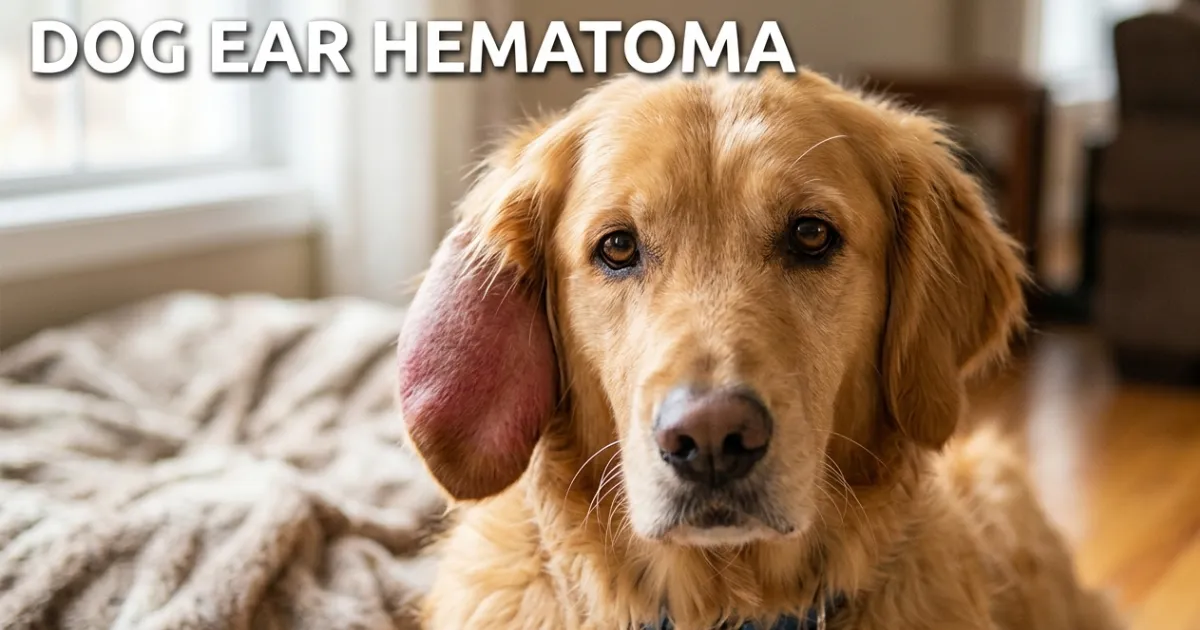
A dog bleeding from mouth before dying is usually bringing up blood from the stomach or lungs, bleeding from a tumor, or losing the ability to clot. Causes like rat poison or trauma are reversible emergencies. If your dog was not already terminally ill, treat fresh bleeding as an emergency and call your vet now.
Few sights frighten an owner more than blood coming from their dog’s mouth, especially when the dog already seems to be fading. A dog bleeding from mouth before dying can mean the body is shutting down, but it does not always mean the end has arrived. That distinction is the most important thing to understand tonight.
In my practice, the first thing I sort out is where the blood is coming from, because vomited blood, coughed up blood, and blood from the mouth itself point to very different problems. The second thing I ask is whether your dog was already known to be terminally ill.
For a Golden Retriever, the breed’s signature cancer, hemangiosarcoma, usually causes hidden internal bleeding that shows as pale gums and collapse rather than visible blood. So visible blood from the mouth often points somewhere else and sometimes to a cause your vet can still treat.
Reasons: Dog Bleeding From Mouth Before Dying
Blood from the mouth has several possible sources, and in a dog near the end of life, more than one can be at play. Knowing the common causes helps you understand what you are seeing.
Bleeding in the upper digestive tract is one frequent source. Stomach ulcers, bleeding tumors in the stomach or esophagus, certain poisons, and clotting problems can all cause a dog to vomit blood. Bright red blood tends to mean fresh bleeding near the mouth or upper stomach, while a coffee ground look means the blood has sat and partly digested, a sign that the bleeding has gone on for a while. Confusingly, blood from the nose or lungs can be swallowed and then brought back up, which is one reason the source is not always obvious from the mouth alone.
The lungs and airways are another source. Tumors in the lungs, including cancer that has spread there; pneumonia; and heart failure can make a dog cough up blood. Lung tumors are covered in our guide on making the call with lung cancer. Our Golden Retriever cancer symptoms walk through how these cancers first show up.
The mouth itself can bleed from oral tumors such as oral melanoma, from dental disease, or from trauma. And in advanced cancer, blood may come from a failing clotting system rather than one spot. Bleeding looks different across cancers, from blood in the urine with bladder cancer to the abdominal bleeding seen with liver tumors. The pattern your vet looks for tells them where to act.
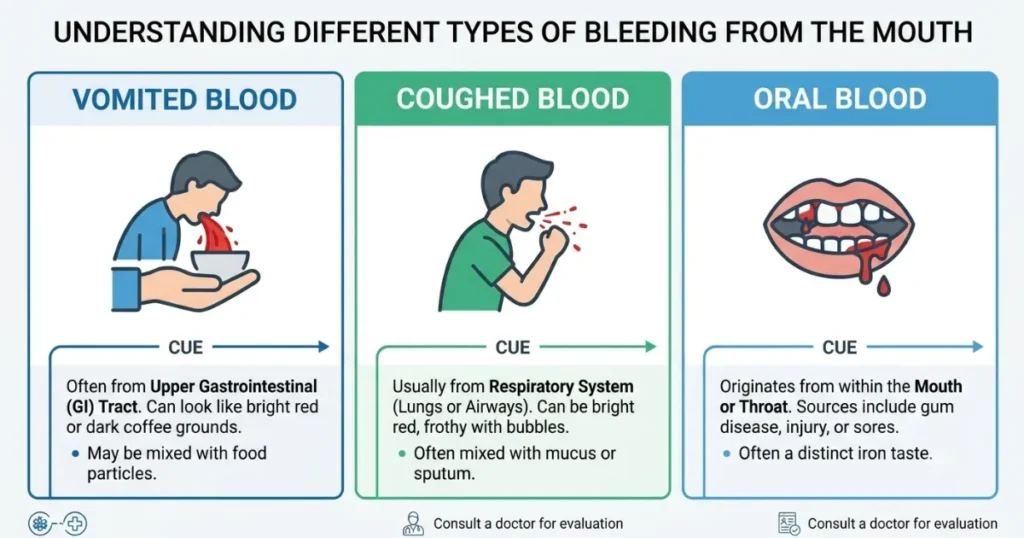
Is It Vomited, Coughed, or From the Mouth Itself?
Here is the distinction most owners miss, and it changes everything about what comes next. Blood from the mouth is not one symptom but three, and telling them apart helps your vet move fast.
Vomited blood, called hematemesis, comes up with retching or nausea and often looks dark or like coffee grounds when it has sat in the stomach. Coughed up blood, called hemoptysis, comes with coughing or gagging and tends to be bright red and frothy from the airways. Blood from the mouth itself usually pools or drools, with no retching or coughing, and points to an oral tumor, dental disease, or an injury.
You do not need to diagnose this yourself. But noticing whether your dog was retching, coughing, or simply drooling blood, and whether the blood was bright or dark, gives your vet a real head start when minutes matter.
Why does the source matter so much? Because the vet’s first steps differ for each. Suspected lung bleeding leads to chest imaging, suspected stomach bleeding leads to a clotting check and an abdominal scan, and an oral source leads to a careful mouth exam.
There is also a fourth possibility worth ruling out, regurgitation, where food and fluid come up passively without the heaving of true vomiting. If you can safely do so, snap a photo of the blood and note the time and what your dog was doing. That small record often shortens the road to the right treatment.
Where the Blood Is Coming From
| What you see | Likely source | Often points to |
| Retching, dark or coffee ground blood | Stomach or upper gut | Ulcer, GI tumor, poison, clotting failure |
| Coughing, bright red frothy blood | Lungs or airways | Lung tumor, pneumonia, heart failure |
| Drooling or pooling blood, no retching | Mouth or nose | Oral tumor, dental disease, trauma |
Not Every Bleed Means the End: The Reversible Emergencies
Before you assume the worst, there is something hopeful worth knowing. Not every dog bleeding from the mouth is dying, and a few causes are genuinely reversible if you act fast.
The most important is anticoagulant rat poison. These rodenticides block the body’s use of vitamin K, the vitamin blood needs to clot, so a poisoned dog can bleed from the mouth, nose, gums, or internally. The lifesaving part is that there is an antidote, vitamin K1, and dogs treated early often recover fully. If there is any chance your dog reached rat bait, this is an emergency. Get to a vet immediately, and do not try to make your dog vomit or give anything at home, since that can do real harm.
Trauma to the mouth from chewing something sharp, a bleeding stomach ulcer, and certain immune clotting disorders can also be treated. This is exactly why a dog who was not already known to be terminally ill should be rushed in rather than watched at home. The cause might be fixable, and the only way to know is a fast exam, bloodwork, and a clotting check.
A few more reversible causes are worth naming. Immune-mediated thrombocytopenia, where the body destroys its own clotting platelets, often responds to treatment, as can bleeding ulcers, including those from a dog swallowing human painkillers like ibuprofen. One important note about rat poison: the bleeding can appear days after the dog ate the bait, so if there is any known exposure, tell your vet even if your dog seems fine right now.

What Mouth Bleeding Means in a Golden Retriever
Golden owners need a breed specific frame here because the most likely internal cause looks different from what the title describes. Hemangiosarcoma, the cancer Golden Retrievers are most prone to along with German Shepherds, is a blood vessel cancer that grows fragile, leaky tumors that rupture. The catch is that it usually bleeds internally, into the abdomen or around the heart, so the visible sign is pale gums, sudden weakness, and collapse, not blood from the mouth.
So a golden, true bleeding from the mouth points more toward a tumor in the stomach, cancer that has spread to the lungs and causes coughing of blood, an oral tumor, or a failing clotting system at the very end.
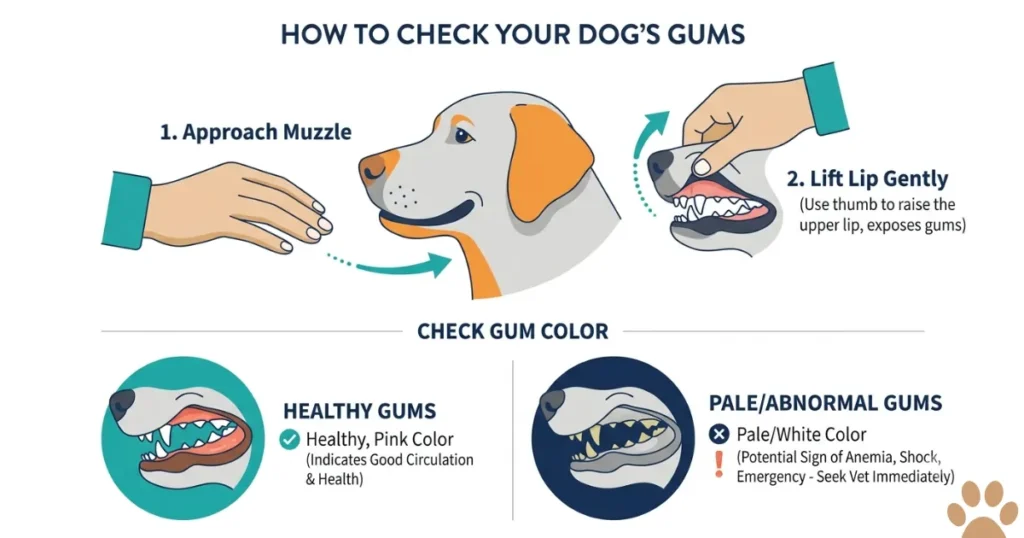
Every golden owner should learn the gum check, because it catches internal bleeding fast. Lift your dog’s lip and look at the gums. Healthy gums are pink, and when pressed, the color returns within about two seconds. Pale, white, or grey gums that refill slowly suggest your dog is losing blood internally, and that is an immediate emergency.
Here is the practical takeaway for a Golden. If your dog collapses with pale gums, suspect internal hemangiosarcoma bleeding and treat it as an emergency. If your dog is bringing up or drooling visible blood, the source is likely elsewhere, and the same urgency applies unless your dog is already in known, late stage decline.
When Bleeding Is Part of the End: Comfort in the Final Hours
Sometimes the bleeding truly is part of the end, and it helps to know what that looks like so you can focus on comfort. In a dog with known terminal cancer, the clotting system can fail in a process called disseminated intravascular coagulation, or DIC, where the body bleeds because it has used up the factors that let blood clot. Blood tinged fluid from the mouth or nose can appear as organs shut down.
If your dog is already in the final stage, the goal shifts from rescue to peace. Keep your dog warm, quiet, and close. A calm, dim room and gentle reassurance matter more than anything else now. Concretely, comfort care can include sedation from your vet to ease any distress, soft towels to manage any discharge, and keeping the head slightly raised so breathing stays easier.
What your dog feels at this point is usually weakness and sleepiness rather than sharp pain, which is a small mercy worth holding onto. This stage sits within the broader stages of cancer leading to death, and the survival ranges that led here are covered in how long a dog can live with cancer.
When bleeding marks the end and your dog is distressed, the kindest option is often in home or in clinic euthanasia, which spares a frightening, drawn out passing. There is no failure in choosing peace at this point. It is the last gift of a long love.

Emergency or End of Life? A Quick Decision Guide
When blood appears, you have to make one fast decision, and a simple guide helps you make it without panic. I call it the Known or New check.
Known. If your dog already has a terminal cancer diagnosis and is in clear, late stage decline, bleeding is likely part of the end. Focus on comfort and call your vet or an end of life service to discuss knowing when to consider euthanasia.
New. If the bleeding is new and your dog was not known to be dying, treat it as an emergency and go now. The cause could be reversible, like rat poison or trauma, and waiting can cost the chance to fix it.
When in doubt, choose the emergency path. A vet can always shift to comfort care, but a missed reversible cause cannot be undone. The same timing question shapes other cancers too, whether a dog faces a brain tumor or another diagnosis, and our Golden Retriever health library can help you prepare for whichever path is ahead.

Expert Insight
The hardest calls I take are from owners watching blood and assuming the end has come, when the real cause is rat poison from two yards over. If your dog was bright yesterday and is bleeding today, do not write it off as dying. Come in. And if your dog truly is at the end, know that a peaceful goodbye beats a frightening one every time.
Emergency now vs end of life comfort
| Treat as an emergency, go now | Likely end of life, focus on comfort |
| Fresh bleeding in a dog not known to be terminally ill | Known terminal cancer already in late decline |
| Collapse, pale or white gums, labored breathing | A peaceful, quiet fading at home |
| Any chance your dog reached rat poison | Blood tinged fluid as the body gently shuts down |
| Large amounts of blood, or it will not stop | Your vet has confirmed nothing more can be done |
| Mouth trauma from chewing something sharp | Your dog is calm, sedated, or sleeping |
What does it mean when a dog bleeds from the mouth before dying?
It usually means blood is coming from the stomach, lungs, an oral or internal tumor, or a failing clotting system. Some causes, like rat poison or trauma, are reversible, so fresh bleeding warrants an immediate vet visit.
Is a dog bleeding from mouth always dying?
No. While bleeding can mark the end in terminal illness, causes like rat poison, mouth trauma, stomach ulcers, and clotting disorders are treatable. A dog not known to be dying should be seen as an emergency.
How do I know if my dog is coughing or vomiting blood?
Coughed up blood comes with coughing or gagging and looks bright red and frothy. Vomited blood comes with retching and often looks dark or like coffee grounds. Telling your vet which one helps them find the source.
What happens if a dog eats rat poison?
Anticoagulant rat poison blocks the blood’s ability to clot, causing bleeding from the mouth, nose, gums, or internally within days. It is an emergency, but the antidote, vitamin K1, often works well when treatment starts early.
Is it safe to treat a dog bleeding from the mouth at home?
No. Never induce vomiting or give medication at home, since it can worsen some causes. Keep your dog calm and warm and get to a vet immediately. Only a vet can find the source and treat it safely.
Why do dogs bleed internally before dying?
Internal bleeding before death often comes from a ruptured tumor like hemangiosarcoma or from a clotting system that fails as organs shut down. The visible signs are usually pale gums, weakness, and collapse rather than external blood.
Do Golden Retrievers bleed from the mouth when dying of cancer?
Sometimes, but Goldens more often bleed internally from hemangiosarcoma, which shows as pale gums and collapse. Visible mouth blood in a golden usually points to a GI tumor, lung spread, an oral tumor, or end stage clotting failure.
Why do Golden Retrievers get hemangiosarcoma?
Golden Retrievers carry a genetic predisposition to hemangiosarcoma, a blood vessel cancer, alongside German Shepherds. The Golden Retriever Lifetime Study is investigating the genes behind this and the other cancers the breed faces.
Can a dog recover from bleeding from the mouth?
Yes, when the cause is treatable. Rat poison, mouth trauma, ulcers, and some clotting disorders can be reversed with prompt care. Recovery is unlikely only when bleeding stems from advanced, untreatable cancer or organ failure.
How long does a dog live after bleeding from a tumor?
It varies widely. A ruptured hemangiosarcoma can be fatal within hours, while a slowly bleeding tumor managed with care may allow weeks. Once major tumor bleeding begins, the timeline is short.
When should I rush my dog to the vet for mouth bleeding?
Go immediately for any fresh bleeding in a dog not known to be terminally ill or for collapse, pale gums, labored breathing, or large amounts of blood. When in doubt, treat mouth bleeding as an emergency.
Is bleeding painful for a dying dog?
Bleeding itself is often not painful, though the cause may be. Internal bleeding tends to cause weakness and breathlessness rather than sharp pain. Your vet can provide sedation to keep a dying dog calm.
What is DIC in dogs?
DIC, or disseminated intravascular coagulation, is a breakdown of normal clotting seen in advanced cancer and critical illness. The body uses up its clotting factors and begins to bleed, which can be a terminal event.
Can Golden Retrievers survive hemangiosarcoma bleeding?
A single bleeding episode can sometimes be stabilized with emergency care and a transfusion, but hemangiosarcoma carries a poor long term outlook. Most Golden Retrievers survive months, not years, even with surgery and chemotherapy.
When should I consider euthanasia if my dog is bleeding?
Consider euthanasia when bleeding stems from untreatable advanced cancer and your dog is distressed, weak, or in pain. A peaceful goodbye spares a frightening passing. Your vet can help judge whether the cause is reversible first.
Conclusion
A dog bleeding from mouth before dying is frightening, but the right response depends entirely on the cause. The blood may come from the stomach, the lungs, the mouth, or a failing clotting system, and some sources, like rat poison or trauma, are reversible if you act fast.
For a Golden, hemangiosarcoma usually bleeds internally, causing pale gums and collapse, so visible mouth blood often points elsewhere. Use the Known or New check. If the bleeding is new, treat it as an emergency. If your dog is truly at the end, choose comfort and a peaceful goodbye.
If your dog has bled at the end, what helped you stay calm and make the right call in that moment? Your experience, shared below, could steady another owner facing the same frightening night. What do you wish someone had told you before it happened?