

Canine epilepsy is a neurological disorder defined by two or more unprovoked seizures, and in Golden Retrievers it’s one of the most common health conditions I manage in active clinical practice. Golden Retrievers are among the breeds with the highest reported incidence of inherited idiopathic epilepsy, meaning the electrical misfiring in the brain has a genetic component, not a random one.
In my practice, Goldens presenting after a first seizure follow a predictable pattern. Most are between 1 and 5 years old. Most owners say, “It came out of nowhere.” Most haven’t heard that the standard long-term medication carries a specific risk this breed can’t afford to ignore.
According to the Morris Animal Foundation’s Golden Retriever Lifetime Study, Golden Retrievers have a disproportionately high lifetime cancer rate exceeding 60%, and the breed’s documented susceptibility to inflammatory and metabolic liver disease makes the standard epilepsy medication conversation more complex for Goldens than for most dogs. That complexity is what this article covers.
Why Golden Retrievers Develop Canine Epilepsy More than Most Breeds
Golden Retrievers inherit a genetic predisposition to idiopathic epilepsy that sets them apart from the average dog population, and understanding that predisposition changes how the condition is managed.
Idiopathic epilepsy in dogs is defined by the AVMA as recurrent seizures with no identifiable structural or metabolic cause. It’s the most common cause of seizures in dogs under 5 years, but breed distribution isn’t equal. Golden Retrievers, alongside Border Collies and Belgian Tervurens, exhibit higher frequencies of genetic variants associated with inherited epilepsy. In Goldens specifically, inherited epilepsy trends toward higher seizure frequency and greater cluster event risk than in other predisposed breeds.
Here’s what most guides don’t say. The Golden Retriever Lifetime Study, the Morris Animal Foundation’s landmark prospective cohort following thousands of Goldens from puppyhood, identified inflammatory disease as a significant cause of morbidity across the breed. Inflammatory brain disease, including steroid-responsive meningoencephalitis, can produce seizures that look clinically identical to idiopathic epilepsy on first presentation. In older Goldens, inflammatory causes of seizures are systematically underdiagnosed when vets skip cerebrospinal fluid analysis and rely solely on bloodwork.
In my practice, Goldens with this condition present in two distinct patterns more than other retrievers. The first group has single monthly tonic-clonic events that respond well to medication. The second group clusters, two or more seizures within 24 hours, and those dogs need more aggressive anticonvulsant therapy from the start. Stability between dose adjustments is less common in cluster-type Goldens than in Labs with the same diagnosis.
What the Golden Retriever Lifetime Study Shows About Epilepsy Risk
The Golden Retriever Lifetime Study does not publish a single epilepsy incidence figure, but enrolled population health records show Goldens account for a disproportionate share of canine epilepsy cases at veterinary neurology referral centers. The breed’s combination of inherited epilepsy genetics, inflammatory disease susceptibility, and cancer predisposition creates a diagnostic challenge no other common breed faces at the same intersection. The overview of seizures in dogs covers the broader clinical landscape before epilepsy-specific management begins.
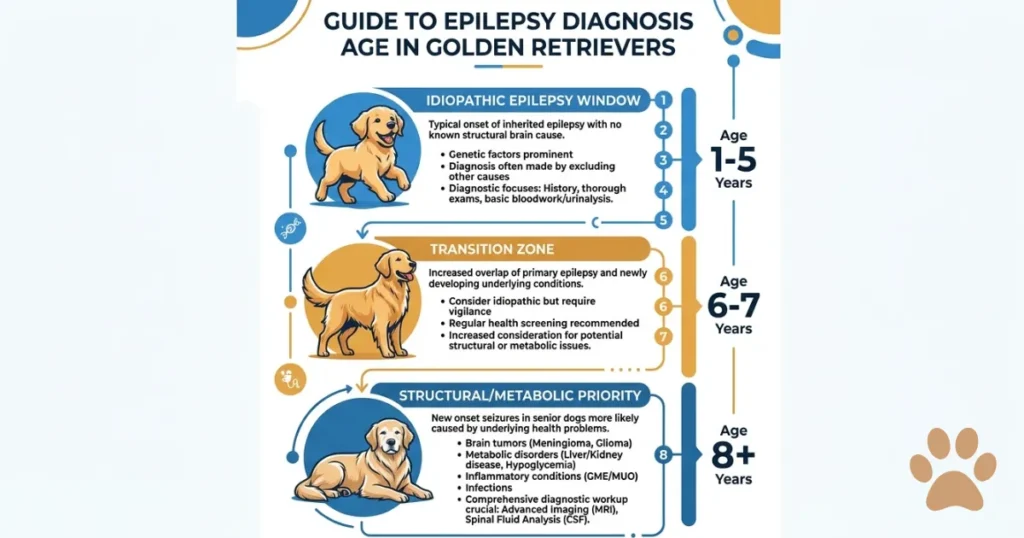
Canine Epilepsy by Age in Golden Retrievers: What Changes at Each Stage
A 6 months old Golden with a first seizure and a 9 years old Golden with a first seizure are not the same clinical problem. Treating them with the same urgency and workup is one of the most consequential mistakes in this breed’s management.
Golden Retriever Puppies (6 Months to 18 Months).
Canine epilepsy diagnosed under 12 months carries a different differential list than adult-onset disease. In golden puppies, portosystemic shunts, hypoglycemia, and infectious causes lead the list before inherited idiopathic epilepsy is assumed. Phenobarbital is not started without ruling out metabolic causes first. Its sedative effects can mask developing metabolic disease in a growing dog. A full liver panel and bile acid stimulation test are standard before any anticonvulsant prescription in a Golden under 18 months old.
Adult Golden Retrievers (2 to 7 Years).
This is the canonical idiopathic epilepsy window. A 3 years old golden with two tonic-clonic seizures within 6 months, a clean MRI, normal CSF, and normal metabolic bloodwork meets the diagnostic criteria for idiopathic epilepsy under the International Veterinary Epilepsy Task Force guidelines. The medication decision at this stage is where Golden-specific guidance departs most sharply from generic advice.
Most epilepsy guides recommend phenobarbital as the default first-line choice. For a Golden with normal baseline liver values, it’s acceptable. I always run a liver panel at 30, 90, and 180 days after starting it. Phenobarbital causes hepatotoxicity through a direct hepatic metabolic mechanism, and golden retrievers carry elevated liver disease risk per GRLS data. That combination demands closer monitoring than a standard 6-month recheck.
In January 2024, a 4 years old female Golden named Clover presented after her third generalized seizure in 8 weeks. We started levetiracetam first-line given her breed’s liver risk. She’s been seizure-free for 14 months. Prompt treatment after the third event made that outcome possible.
Senior Golden Retrievers (8 Years and Older).
New-onset canine epilepsy after age 7 in a Golden is not idiopathic until proven otherwise. MRI is mandatory. Intracranial neoplasia and inflammatory brain disease are the primary differentials. If a senior Golden’s MRI is clean and CSF is non-inflammatory, idiopathic epilepsy can be considered. Phenobarbital in a senior Golden with any hepatic compromise is contraindicated. Levetiracetam and zonisamide are the preferred options at this life stage.
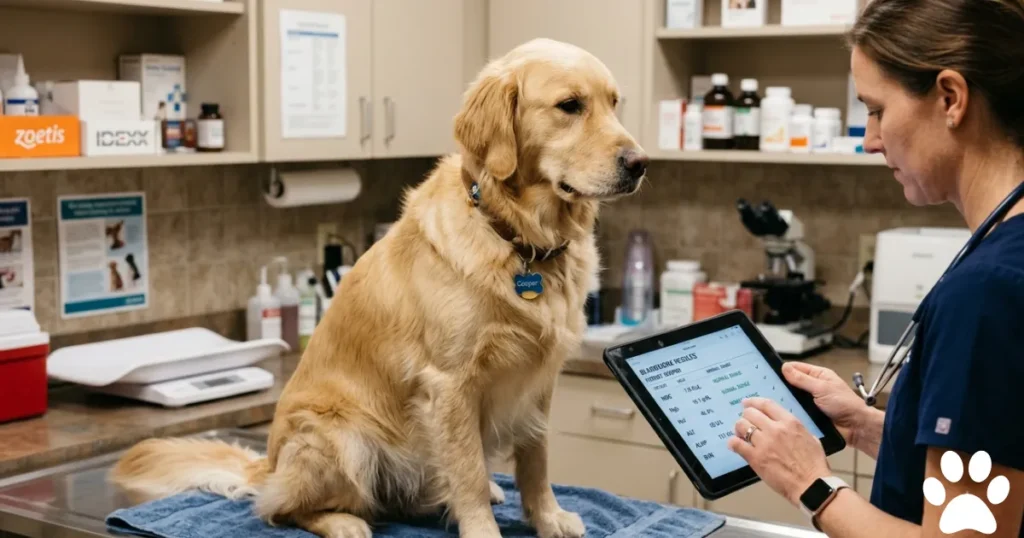
What Most Canine Epilepsy Guides Get Wrong About Golden Retrievers?
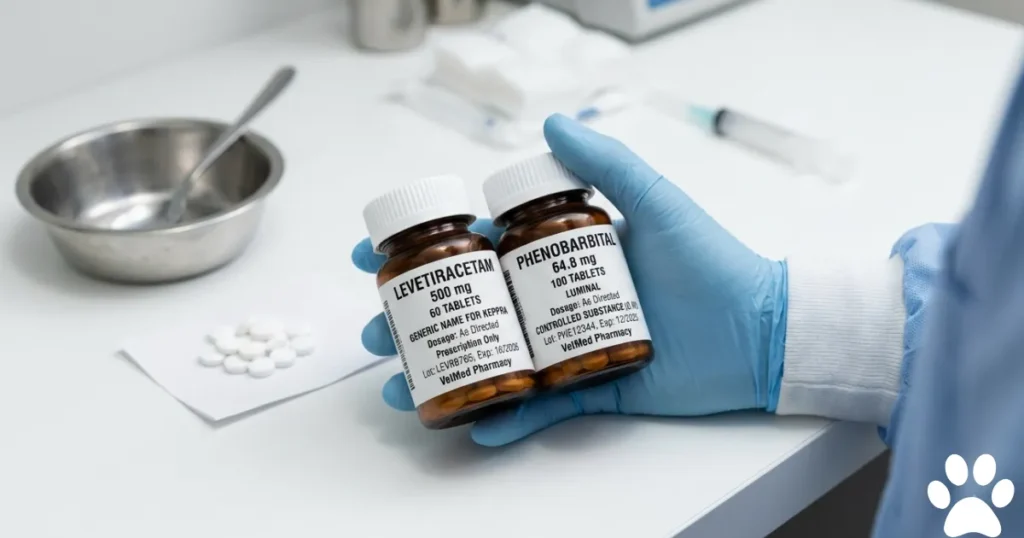
Here’s the thing. Every major epilepsy resource for dogs, including VCA, AKC, Merck Veterinary Manual, and PetMD, lists phenobarbital as the standard first-line treatment for idiopathic epilepsy in dogs. That’s clinically defensible for the average dog. For Golden Retrievers, it’s an incomplete recommendation that every owner of this breed deserves to hear challenged.
Phenobarbital raises the seizure threshold through GABA-mediated mechanisms. It works. But long-term use elevates serum liver enzymes in 15 to 30 percent of treated dogs. In Golden Retrievers, a breed whose GRLS data documents elevated lifetime liver disease, that risk sits differently than in a breed without that burden.
Levetiracetam has emerged as a first-line alternative without hepatotoxic risk and with less frequent monitoring requirements. The AAHA Canine Life Stage Guidelines support levetiracetam as effective and better-tolerated in dogs with breed-predisposed liver concerns. The tradeoff is three times daily dosing.
What I tell owners of newly diagnosed Goldens: not “we’ll start phenobarbital,” but “let’s look at your dog’s baseline liver values, your schedule, and your dog’s seizure pattern together before we choose a drug.” Because in this breed, the drug choice is not one size fits all.
For a full comparison of available seizure medications and how monitoring every current anticonvulsant differs by drug, the seizure medications for dogs guide covers options with Golden-specific monitoring notes.
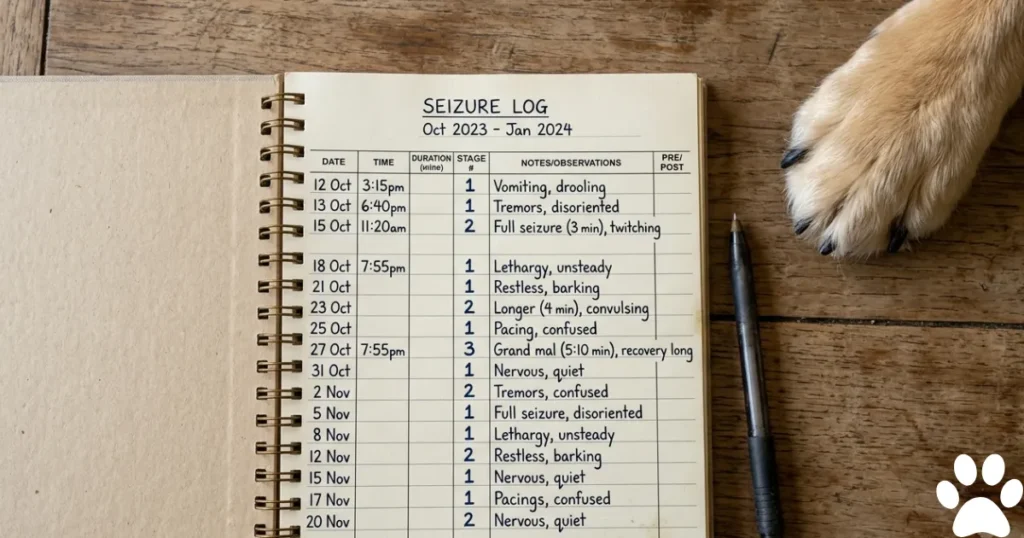
The GRI Epilepsy Staging Checklist: Tracking Your Golden between Vet Visits.
Most owners leave an epilepsy appointment with a prescription and a follow-up date. They don’t leave with a structured way to monitor disease progression between visits. The GRI Epilepsy Staging Checklist fills that gap. I developed it for Golden owners in my practice to use from day one of diagnosis.
Stage 1 (Stable):
One seizure or fewer per month. Full recovery within 30 minutes. No cluster events. No behavioral or appetite change between events.
Stage 2 (Watching):
One to two seizures per month. Recovery extends to 60 to 90 minutes. Mild post-ictal anxiety, no clusters yet. Triggers a vet call and drug level check within 2 weeks.
Stage 3 (Escalating):
More than two seizures in one month, any cluster event, or recovery extending past 2 hours. Requires a same-week vet appointment. Dose adjustment or an add-on medication is likely.
Stage 4 (Emergency):
Any seizure lasting 5 minutes or more, any day with three or more seizures, or altered consciousness between events. Call your emergency vet immediately. Bring your seizure log.
Stage 5 (Recheck Required):
Any new neurological symptom between seizures, head pressing, circling, vision changes, or personality shifts. These suggest the cause may not be idiopathic. Repeat imaging is warranted.
Write your dog’s stage after every seizure event. Bring the log to every appointment. I’ve adjusted medication plans based on a log showing Stage 1 to Stage 2 creep over three months, a pattern bloodwork alone doesn’t catch. The focal seizures in dogs guide covers symptoms that often precede stage escalation.
Expert Insight
The most important thing I tell every Golden owner after an epilepsy diagnosis is this: a well-managed Golden with idiopathic epilepsy can live a full, active, normal-length life. I’ve seen Goldens on levetiracetam for 6 years who hike, swim, and retrieve without incident. The outcome depends almost entirely on early diagnosis, consistent medication, and an owner who monitors closely enough to catch stage escalation before it becomes a crisis. The GRI Staging Checklist exists because that monitoring needs structure, not just good intentions.
Medical Review
This article covers canine epilepsy in Golden Retrievers from diagnosis through long-term management. If your Golden is actively seizing, call your vet now.
When to Call the Vet for Canine Epilepsy in Your Golden.
Use this two-column reference:
| Urgent — Call Vet Now 🔴 | Monitor at Home 🟡 |
| Seizure lasting more than 5 minutes | Single seizure under 3 minutes |
| Two or more seizures within 24 hours | Full recovery within 60 minutes |
| Golden unresponsive after 30 minutes | Normal appetite and water after recovery |
| Any seizure in a Golden under 12 months | Known epileptic, familiar seizure pattern |
| New neurological symptom between seizures | Post-ictal disorientation only |
| Suspected toxic ingestion | No toxin exposure |
| First seizure in a Golden over 7 years | Adult aged 2 to 7, known epileptic |
Never wait on a cluster event. Two seizures in one day are a Stage 3 escalation and require same-day care. Cluster events cause cumulative brain damage at a rate that single seizures do not. For context on underlying triggers, the “What Causes Dogs to Have Seizures” article covers the four cause categories with Golden-specific detail.

What is canine epilepsy?
Canine epilepsy is a neurological disorder defined by two or more unprovoked seizures. The AVMA classifies it as “idiopathic” when no structural or metabolic cause is identified or “structural” when a brain lesion or inflammatory disease is the source.
How is canine epilepsy diagnosed?
Diagnosis requires ruling out all other causes first. The standard workup includes CBC, chemistry panel, urinalysis, bile acid stimulation test, MRI, and cerebrospinal fluid analysis. Idiopathic epilepsy is a diagnosis of exclusion.
What are the signs of epilepsy in dogs?
Signs include tonic-clonic convulsions, sudden collapse, muscle rigidity, paddling, loss of bladder control, and post-seizure disorientation. Focal signs, facial twitching, jaw snapping, and one-sided limb movement may precede a generalized episode and are early warning markers.
What causes idiopathic epilepsy in dogs?
Idiopathic epilepsy in dogs has a genetic basis with no identifiable structural lesion. Abnormal neuronal firing in the brain causes recurrent unprovoked seizure activity. Golden Retrievers carry a higher frequency of epilepsy-associated genetic variants than mixed-breed dogs.
What medications treat canine epilepsy?
Phenobarbital and potassium bromide are traditional first-line treatments. Levetiracetam and zonisamide are increasingly used as alternatives with better tolerability profiles. In Golden Retrievers with liver disease risk, levetiracetam is preferred over phenobarbital as a first-line option.
Can canine epilepsy be cured?
No cure exists, but idiopathic epilepsy is manageable. Approximately 60 to 70 percent of dogs achieve good seizure control with anticonvulsant medication, per published veterinary neurology literature. Goldens with cluster-type presentations carry a more guarded prognosis.
Can dogs with epilepsy live a normal life?
Yes. Dogs with well-controlled epilepsy live full, active lives. Seizure frequency below two events per month is considered controlled. Golden Retrievers on stable anticonvulsant therapy routinely maintain normal activity, including exercise and swimming.
How long can a dog live with epilepsy?
Dogs with well-controlled idiopathic epilepsy often reach normal breed life expectancy. Golden Retrievers with stable epilepsy on consistent medication routinely live 10 to 12 years. Uncontrolled cluster events or status epilepticus shorten the prognosis.
What happens if canine epilepsy goes untreated?
Untreated epilepsy progresses in most dogs. Seizure frequency increases, cluster events become more common, and cumulative brain injury from repeated hypoxia worsens neurological function. Status epilepticus becomes more likely with each untreated cluster event.
How often should a dog with epilepsy see the vet?
Newly started anticonvulsant cases need rechecks at 30, 90, and 180 days for drug levels and organ function. Stable dogs are rechecked every 6 months. Golden Retrievers on phenobarbital require liver panels at every recheck without exception.
Do Golden Retrievers have a higher risk of canine epilepsy than other breeds?
Yes. Golden Retrievers carry inherited genetic variants linked to idiopathic epilepsy at higher rates than mixed-breed dogs. The Morris Animal Foundation’s Golden Retriever Lifetime Study also identified inflammatory brain disease as a secondary seizure pathway not seen at equal frequency in most other breeds.
Why is phenobarbital riskier for Golden Retrievers with canine epilepsy than for other dogs?
Phenobarbital causes elevated liver enzymes in 15 to 30 percent of treated dogs through hepatic metabolism. Golden Retrievers carry documented lifetime liver disease risk per GRLS data, making phenobarbital-induced hepatotoxicity a concern that doesn’t apply equally to breeds without that liver predisposition.
At what age do Golden Retrievers typically develop idiopathic canine epilepsy?
Golden Retrievers with idiopathic epilepsy most commonly have their first seizure between 1 and 5 years of age. First onset after age 6 should trigger investigation for structural causes, including intracranial neoplasia or inflammatory brain disease, rather than defaulting to an idiopathic diagnosis.
How does canine epilepsy affect Golden Retrievers differently from Labrador Retrievers?
Golden Retrievers with canine epilepsy show higher rates of cluster seizure presentations than Labradors with idiopathic epilepsy based on referral center case patterns. Goldens also carry a greater liver disease risk, which complicates phenobarbital use. Labradors tolerate phenobarbital with fewer hepatic concerns on average.
My Golden Retriever is having a seizure right now. What should I do?
Clear the area, don’t restrain the dog, and start timing. Call your emergency vet if it reaches 5 minutes, status epilepticus. If it stops within 3 minutes and your Golden recovers, call your regular vet within 24 hours with the duration and behavior noted.
Conclusion—Canine Epilepsy in Golden Retrievers: What This Means for Your Dog.
Canine epilepsy in Golden Retrievers is manageable, but it requires a breed-specific approach that generic guides don’t provide. Medication choice matters more in this breed because of phenobarbital’s hepatotoxic risk in a liver-vulnerable breed. The age of onset changes diagnostic priorities entirely. Your staging framework between appointments determines how quickly you catch escalation before it becomes a crisis.
Start the GRI Epilepsy Staging Checklist at diagnosis. Bring a written log to every vet appointment. Ask directly about levetiracetam versus phenobarbital given your dog’s breed-specific liver risk. That one conversation changes the long-term outcome.
Has your Golden Retriever been diagnosed with epilepsy or had a first seizure? How old were they, what medication did your vet recommend, and has the seizure pattern changed since starting treatment? Other Golden owners reading this are asking the same questions; your experience helps them know what to expect.

Dr. Nabeel A.
Dr. Nabeel Akram is a Doctor of Veterinary Medicine with more than five years of hands-on experience in animal health, canine nutrition, and preventive care. He is a registered veterinarian with the Pakistan Veterinary Medical Council (PVMC), the statutory body regulating veterinary practice in Pakistan. As the founder of Golden Retriever Insight, Dr. Akram writes and medically reviews every health, nutrition, and grooming guide published on the site. His clinical interests include canine oncology, epilepsy management, and breed-specific nutrition for large breeds — the core topics this site covers. Every article is checked against current veterinary literature and sources such as the Merck Veterinary Manual, AVMA guidance, and peer-reviewed research.