The best dog food for Chihuahua dogs is a small-breed formula that is calorie-dense per cup, high in protein, easy to chew with small kibble, and formulated to support dental health and a fast metabolism. If you are a Golden Retriever owner researching this for a second dog, a family member’s Chihuahua, or simply curious about how small breed nutrition differs from what your Golden eats, the differences are more significant than most people expect.
I have worked with both ends of the size spectrum, and the gap between what a Chihuahua and a Golden Retriever need is not just about portion size. It runs through calorie density, kibble dimensions, hypoglycemia risk, dental vulnerability, and how overfeeding shows up differently in a six-pound dog than in a 65-pound one. A Chihuahua that gains half a pound has added nearly 10% of its body weight. The same half pound on a Golden Retriever is nearly invisible on a scale and inconsequential in terms of joint load. Context matters enormously here.
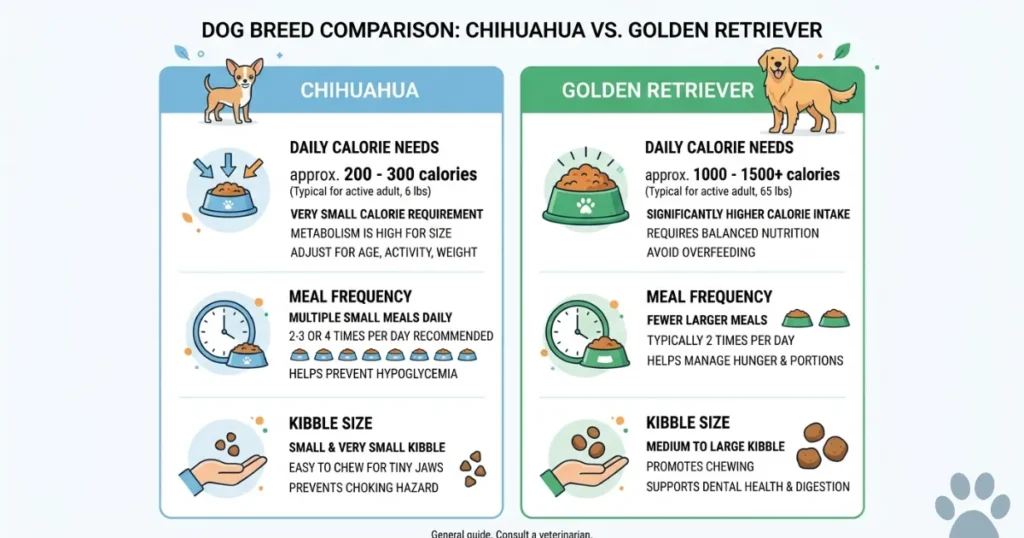
Chihuahuas require approximately 35 to 40 calories per pound of body weight daily, significantly more per pound than large breeds, according to the AKC’s feeding guidelines. A healthy 6-pound adult Chihuahua needs roughly 225 calories per day, while a 65-pound adult Golden Retriever needs 1,400 to 1,800 calories. The math behind those numbers reflects fundamentally different metabolic rates, not just different body sizes.
Best Dog Food for Chihuahua: What the Formula Actually Needs to Do
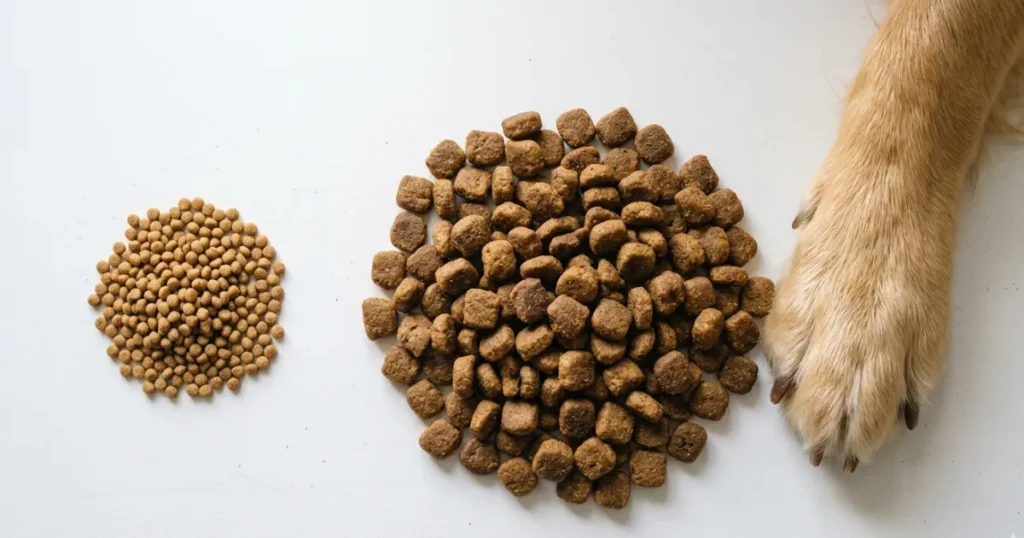
The best dog food for Chihuahua dogs must accomplish things a large breed formula does not prioritize. Small kibble size is non-negotiable. A Chihuahua’s jaw is small, their teeth are crowded, and large kibble pieces are a genuine choking and dental risk. Most adult large-breed kibbles are too large for comfortable chewing in a six-pound dog with a jaw the size of a walnut.
High calorie density per cup matters because Chihuahuas eat very small volumes. A 6-pound Chihuahua may eat only one quarter to one half cup of dry food per day. If that food is not calorie-dense and nutritionally complete in that small volume, the dog will be underfed in practical terms even while technically eating enough.
Protein concentration above 25% of dry matter supports muscle maintenance in a breed with a high surface area to body mass ratio and a high rate of energy expenditure. Chihuahuas are not fragile lap dogs; they are energetic. They are active and alert and need lean muscle support to stay healthy across a lifespan that commonly reaches 14 to 17 years, according to PetMD’s Chihuahua breed overview.
Dental health support through kibble texture is more relevant for Chihuahuas than for most breeds. Their teeth are crowded into a very small jaw, which increases the risk of plaque buildup, gum disease, and early tooth loss. A formula with a texture designed to clean teeth during chewing mechanically addresses a real physiological need. This is a notable contrast with Golden Retrievers, whose larger jaw and spacing significantly reduce the risk of dental crowding.
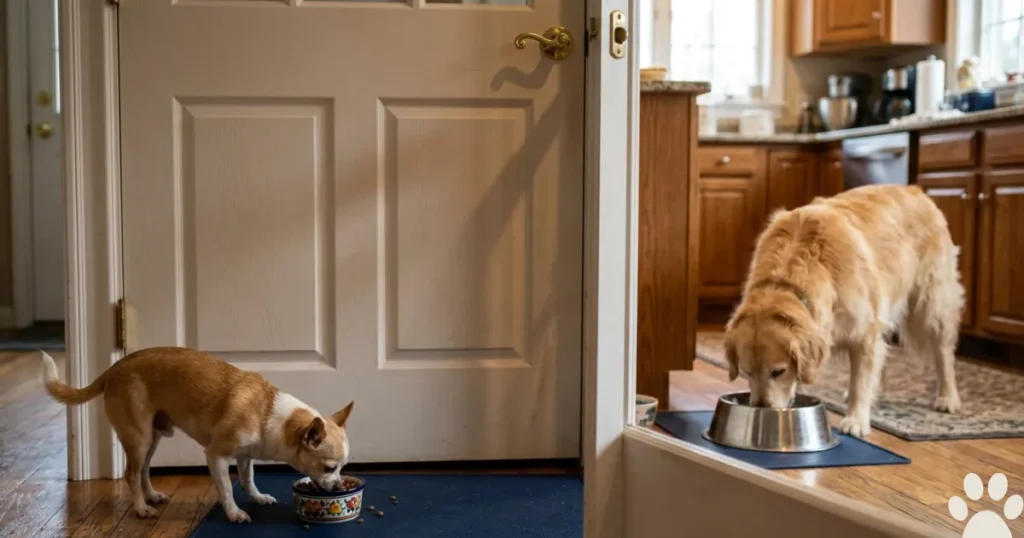
If you also own a Golden Retriever, keep food and feeding stations completely separate. Never allow either dog to eat the other’s food. For the Golden’s full safe food breakdown, see our safe foods for dogs guide. For comparing what both breeds can share as extras, our dog friendly foods breakdown and things dogs can eat guide covers both ends of the size range. More on fruit and protein additions for both breeds is in our Can Dogs Have Guide.
How Chihuahua Nutrition Differs from Golden Retriever Nutrition
Both Chihuahuas and Golden Retrievers need protein as their primary macronutrient, and both benefit from omega-3 fatty acids for skin, coat, and joint health. That is where the similarities end in terms of practical feeding strategy.
Calorie density.
Chihuahua formulas are designed to deliver more calories per cup because the dog eats so little. Golden Retriever formulas or large-breed formulas are often designed to moderate calorie density, because a large breed eating freely can gain weight very quickly. Feeding a Chihuahua a large-breed kibble risks undernutrition in the volume they realistically consume. Feeding a Golden Retriever a small-breed formula risks overfeeding because its calorie density is higher than a large dog’s daily calorie budget can accommodate at normal bowl volumes.
Hypoglycemia risk.
Chihuahuas, particularly puppies and toy-sized adults under four pounds, are prone to hypoglycemia, a dangerous drop in blood sugar that can cause tremors, weakness, and in severe cases, seizures. This is rare in adult Golden Retrievers at any healthy weight. A Chihuahua that skips a meal or goes too long between feedings faces a genuine health risk that a Golden does not. This is why Chihuahua puppies are typically fed three to four small meals per day rather than one or two.
Fat tolerance.
Golden Retrievers are more sensitive to dietary fat spikes than most owners realize, with overweight Goldens at elevated risk of pancreatitis from high-fat meals. Chihuahuas are not particularly predisposed to pancreatitis in the same way. A Chihuahua formula with slightly higher fat content to support its energy needs does not carry the same risk profile as it would for a Golden already managing its weight.
Joint considerations.
Golden Retrievers have above-average rates of hip dysplasia and elbow issues. Formulas for this breed often include glucosamine and chondroitin, and owners are advised to manage caloric intake to reduce joint load. Chihuahuas develop patellar luxation, a condition where the kneecap slips out of place, at high rates. This is a structural issue partially influenced by weight. Keeping a Chihuahua at a lean, healthy weight reduces the stress on the kneecap joint, making overfeeding prevention just as important in this breed as it is for a Golden.
What Chihuahua Food Roundups Never Mention
Every top-ranking article on the best dog food for Chihuahua dogs is a product list. They compare brands, rate kibble sizes, and recommend fresh-food subscriptions. None of them addresses what happens when an owner with one large-breed dog brings home a small-breed dog for the first time and applies the same feeding instincts.
That is the real knowledge gap. A Golden Retriever owner who used to measuring a cup and a half of kibble twice daily may look at a Chihuahua’s quarter cup per meal and feel unsure if it is enough. It usually is. The temptation to add more, or to supplement with human food in meaningful volumes, is where Chihuahua overfeeding begins. A 6-pound Chihuahua that receives one tablespoon of peanut butter has just added roughly 95 calories to a daily budget of 225. That single addition represents over 40% of a safe daily treat allowance.
Expert Insight
The most common feeding mistake in multi-dog households is applying large-breed intuition to small-breed portions. A Golden Retriever owner who finds a Chihuahua bowl visually underwhelming is at real risk of supplementing unnecessarily. In small dogs, the consequences of persistent mild overfeeding compound quickly. A Chihuahua that is ten percent overweight is carrying a proportionally larger burden on its joints and cardiovascular system than a large breed at the same overweight percentage.
In a home with both a Golden Retriever and a Chihuahua, feed them separately, in different rooms if needed, to prevent the Chihuahua from eating Golden food and the Golden from finishing the Chihuahua’s bowl. Both scenarios cause problems: the Chihuahua eating large-breed kibble faces a choking risk and potentially unbalanced nutrition, while the Golden eating calorie-dense small-breed food risks caloric surplus at scale.
What to Look for in the Best Dog Food for Chihuahua: A Practical Checklist
The best dog food for Chihuahuas, whether adults or puppies, shares a core set of characteristics. Here is what matters most when evaluating a formula.
Named protein as the first ingredient.
Chicken, turkey, salmon, or beef should be the lead ingredient. Avoid any formula where a grain or by-product meal leads the ingredient list.
Small breed or toy breed labeling.
These formulas calibrate kibble size, calorie density, and nutrient concentration for dogs weighing less than 20 pounds. Generic adult formulas designed for all breeds are not optimally calibrated for a six-pound dog’s needs.
AAFCO complete and balanced statement.
The label must confirm the food meets Association of American Feed Control Officials standards for the appropriate life stage. For Chihuahua puppies, look for a puppy or all-life-stages designation.
Dental health support.
Kibble texture that provides mechanical cleaning during chewing is valuable for a breed with known dental crowding. Some formulas include added zinc or specific antioxidants that support gum health.
Controlled calorie count.
Even small-breed formulas vary in calorie density. For an adult Chihuahua at a healthy weight, around 350-400 calories per cup is a reasonable range. Check the bag’s calorie content and calculate the actual daily intake against the 225-calorie guideline for a six-pound dog.
Feeding Chihuahuas by Life Stage: Puppy, Adult, and Senior
Chihuahua Puppies (Under 12 Months).
Chihuahua puppies need three to four small meals per day to maintain blood sugar. Their stomach capacity is tiny, and the risk of hypoglycemia between meals is real. Choose a formula labeled for puppies or all life stages. Caloric needs are higher per pound at this stage than for adults, typically 45 to 55 calories per pound of body weight daily.
Adult Chihuahuas (1-8 Years).
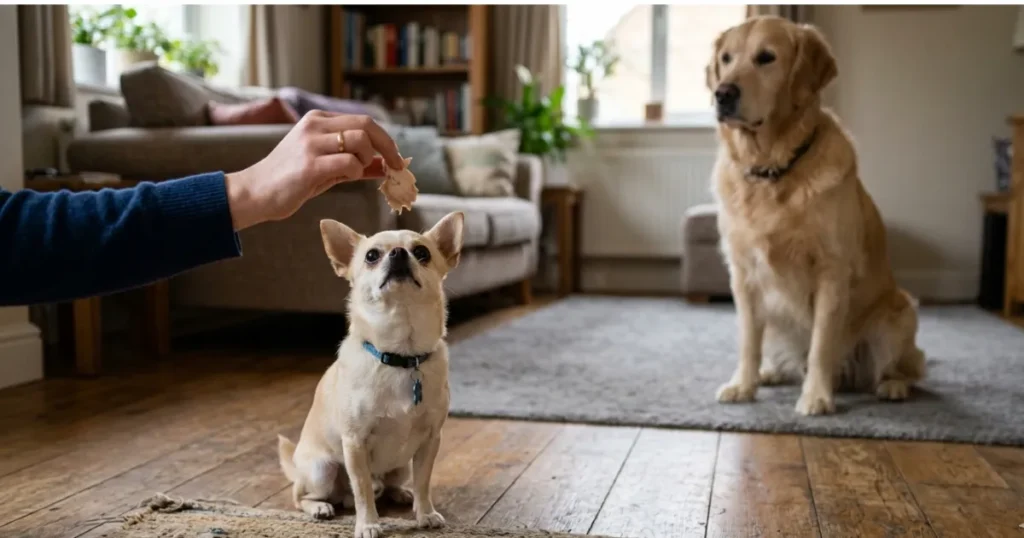
Transition to two meals daily. A healthy adult at six pounds needs approximately 225 calories per day. Treats should account for no more than 10% of that total, or roughly 20-25 calories. A single small training treat for a Chihuahua should be the size of a pea. What functions as a training treat for a Golden Retriever is a meaningful meal addition for a six-pound dog.
Senior Chihuahuas (9 Years and Older).
Senior Chihuahuas often have reduced kidney function and early dental wear. A senior small-breed formula with controlled phosphorus, soft kibble or wet food options, and maintained protein levels supports aging needs without stressing the kidneys. Caloric needs may decrease slightly, but protein should not be reduced without veterinary guidance.
When to Call the Vet: Chihuahua Food-Related Emergencies.
| URGENT — Call immediately | MONITOR — Watch 24–48 hours |
| Tremors, weakness, or glassy eyes after skipping a meal | Loose stools after a food transition |
| Collapse or unresponsiveness at any point | Mild vomiting once with no repeat |
| Pale gums after eating anything unusual | Reduced appetite for one meal |
| Suspected xylitol, grape, or chocolate ingestion | Slight bloating after a new food |
| Seizures or loss of coordination | Temporary lethargy after new food introduction |
Hypoglycemia in Chihuahuas can escalate within minutes. If your Chihuahua shows tremors or weakness and has not eaten recently, rub a small amount of honey or corn syrup on their gums and call your vet immediately, per VCA Animal Hospitals guidance.
Decision Framework: Best Dog Food for Chihuahua in Your Specific Situation.
If your Chihuahua is a puppy under 12 months, feed a puppy or all life stages small-breed formula three to four times daily. Never allow more than four hours between meals during the day to prevent hypoglycemia.
If your adult Chihuahua is at a healthy weight, feed twice daily using a small-breed adult formula. Measure portions using the calorie guidelines on the bag rather than the cup measurements, as cup measurements can vary significantly between formulas.
If your Chihuahua is overweight, reduce daily intake by 10% and increase activity. Even 20 extra calories daily adds up to nearly two pounds per year on a six-pound dog. Consult your vet before making significant dietary changes for a dog that is already managing a health condition.
What is the best dog food for Chihuahua adults at a healthy weight?
The best dog food for Chihuahua adults is a small-breed formula with a named protein as the first ingredient, small kibble size, AAFCO certification, and roughly 350 to 400 calories per cup. Feed twice daily in measured portions, targeting 225 calories total for a six-pound adult.
Is the best dog food for Chihuahua puppies different from adult formulas?
Yes. The best dog food for Chihuahua puppies is labeled for puppies or all life stages and supports more frequent feeding, typically three to four small meals daily. Puppy formulas provide higher calorie density and the specific nutrient ratios needed for bone and muscle development in a growing toy breed.
How does small breed dog food differ from large breed formulas?
Small-breed dog food has smaller kibble, a higher calorie density per cup, and a higher protein concentration than large-breed formulas. Large-breed formulas are calibrated to moderate caloric intake and reduce joint load. Feeding a small breed formula to a large breed risks overfeeding; feeding a large-breed formula to a Chihuahua risks undernutrition at realistic meal volumes.
Can a Chihuahua and a Golden Retriever eat the same food?
No. Chihuahua formulas have calorie density and kibble sizes calibrated for a six-pound dog’s stomach and jaw. A Golden Retriever eating Chihuahua food would consume too many calories per cup relative to their daily budget. A Chihuahua eating Golden Retriever kibble faces a choking risk and may not receive adequate nutrition in the small volume they consume.
What are the signs of overfeeding a Chihuahua?
Visible weight gain despite a small body, reduced willingness to jump or climb stairs, difficulty breathing after mild activity, and a waistline that is no longer visible when viewed from above are all signs of overfeeding in a Chihuahua. In a six-pound dog, even a half-pound of excess weight represents nearly 10% of body mass.
Is wet or dry food better for Chihuahuas?
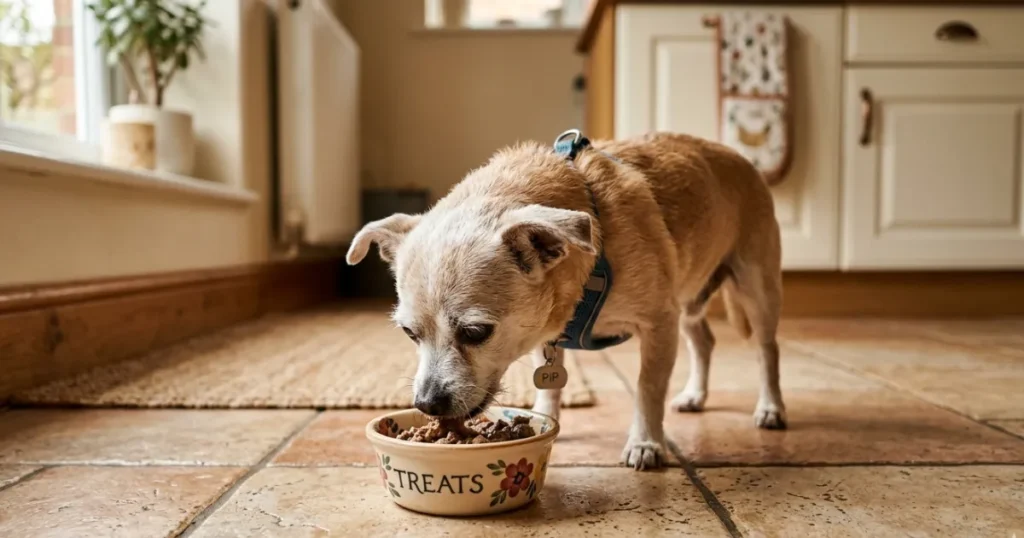
Both work, and many Chihuahua owners use a combination of them. Dry kibble provides mechanical dental cleaning during chewing, which is particularly important for a breed prone to dental crowding. Wet food adds hydration and is easier to eat for seniors with dental wear. If using wet food exclusively, add dental chews or regular toothbrushing to compensate for the loss of mechanical cleaning.
How many times a day should a Chihuahua eat?
Adult Chihuahuas should eat twice daily. Puppies under 12 months old need 3 to 4 small meals per day to prevent hypoglycemia. Senior Chihuahuas can typically maintain twice-daily feeding, though smaller seniors with dental issues may benefit from smaller, more frequent meals using softer food.
Can dogs with different size breeds share the same human food treats?
Most safe human food extras, including plain carrots, blueberries, cooked chicken, and green beans, are appropriate for both Chihuahuas and Golden Retrievers. The portion size is the critical difference. A baby carrot is a small treat for a Golden and a meaningful portion for a Chihuahua. Scale every extra against the individual dog’s daily caloric budget.
Is grain-free food a good choice for Chihuahuas?
Grain-free food is appropriate for Chihuahuas with confirmed grain sensitivity. For most Chihuahuas without diagnosed allergies, grain-inclusive formulas with whole grains provide beneficial fiber and B vitamins. The FDA has investigated a potential link between grain-free diets and dilated cardiomyopathy in some breeds. Discuss grain-free choices with your vet before making the switch.
What should I feed a Chihuahua that is a picky eater?
Picky eating in Chihuahuas is often reinforced by owners offering alternatives when the dog refuses. Start with a high-quality small-breed dry food, add a small amount of warm water to enhance the aroma, and avoid switching formulas frequently. If the dog is otherwise healthy, most picky behavior resolves within a few days when alternatives are removed.
Is it safe to give my Golden Retriever and Chihuahua the same treats?
Yes, as long as the treat is safe for both breeds and portioned appropriately for each dog. A single baby carrot is fine for a Chihuahua. A small piece of cooked chicken is appropriate for both dogs, regardless of size. Never share high-calorie treats like peanut butter straight from a spoon between a large and small dog in the same quantity.
What health conditions affect Chihuahua food choices differently than Golden Retrievers?
Chihuahuas are prone to patellar luxation, dental disease, and hypoglycemia. Diet choices for Chihuahuas center on weight control for joint health, dental-supporting kibble texture, and frequent small meals for blood sugar stability. Golden Retrievers have an elevated risk of hip dysplasia, obesity, and certain cancers. Diet choices for Goldens center on caloric discipline, omega-3 intake for inflammation, and protein rotation for allergy management.
Can a Golden Retriever owner use the same feeding structure for a Chihuahua?
Not directly. A Golden Retriever owner accustomed to twice-daily meals, large bowl volumes, and treat-based training will need to adjust their approach significantly. Chihuahua bowls are much smaller, treats must be pea sized rather than thumb-sized, and puppies need more frequent meals. The feeding habits that work for a large breed can lead to chronic overfeeding in a small breed without the owner realizing it.
How do I transition a Chihuahua to a new food safely?
Transition over seven to ten days by gradually mixing the new food into the old. Start with 25% new and 75% old for three days, move to 50/50 for three days, then 75% new for two days, then full transition. Chihuahuas have small digestive systems, and abrupt changes in diet can cause significant gastrointestinal upset more readily than in larger breeds.
What is the biggest feeding mistake Chihuahua owners make?
The most common mistake is treating small portions as insufficient and adding extras without tracking the caloric impact. A six-pound Chihuahua eating 225 calories per day has almost no margin for untracked additions. A single tablespoon of peanut butter, one dog biscuit, and a small piece of cheese can eliminate the entire daily treat allowance before dinner. Measure everything.
Conclusion.
The best dog food for Chihuahua dogs is a small-breed formula with small kibble, high protein, AAFCO certification, and a calorie density appropriate for a dog eating very small volumes. The single most actionable takeaway for any owner, especially one coming from experience with a larger breed, is this: measure in calories, not cups. A Chihuahua’s daily budget is tight, and visual intuition built around large-breed portions will consistently overshoot it.
For Golden Retriever owners managing both breeds in the same household, the feeding structures must remain completely separate. If you share your home with both a Golden and a Chihuahua, we would genuinely like to hear how you manage feeding time.
Have you found a reliable system for keeping each dog on their own food, or has your Golden figured out how to finish the Chihuahua’s bowl before you turn around?
What has worked, and what has been the biggest challenge in feeding two dogs with such different nutritional needs under one roof?