Recognizing upset stomach in dogs prevents it from escalating from mild digestive discomfort to serious conditions requiring emergency intervention. I’ve treated countless Golden Retrievers where owners dismissed early symptoms – decreased appetite, grass eating, and belly rumbling – as “just an upset tummy” only to discover gastritis, pancreatitis, or intestinal obstruction hours later when vomiting and lethargy appeared. The challenge lies in distinguishing between self-limiting dietary indiscretion (eating something inappropriate) and serious underlying disease, determining when home care suffices and when veterinary attention is required, and recognizing Golden Retriever-specific digestive vulnerabilities that make certain stomach issues more common or more dangerous in this breed.
Golden Retrievers experience increased frequency and severity of digestive upset due to breed characteristics that affect gastrointestinal health. Their indiscriminate eating habits mean they consume inappropriate items – garbage, compost, foreign objects – triggering acute gastritis. Their genetic predisposition to food sensitivities creates chronic low-grade inflammation manifesting as recurring stomach issues. Their enthusiasm for exercise after meals increases the risk of gastric dilatation-volvulus (bloat). Their large, deep chest anatomy predisposes them to life-threatening stomach torsion that smaller, shallow-chested breeds rarely develop. Additionally, Golden Retrievers’ stress sensitivity means changes in routine, boarding, or household upheaval trigger stress-induced gastritis more frequently than in stoic breeds.
This comprehensive guide identifies upset stomach in dogs through symptom patterns distinguishing mild from serious cases, explains dog upset stomach causes specific to Golden Retrievers including breed predispositions often overlooked, provides evidence-based home remedies for dog stomach issues appropriate for mild cases, and details emergency protocols for dogs belly upset situations requiring immediate veterinary care including the critical signs Golden Retriever owners consistently miss until too late.
Dog Upset Stomach: Recognizing Symptoms by Severity
Symptom severity determines appropriate response – home care versus emergency intervention:
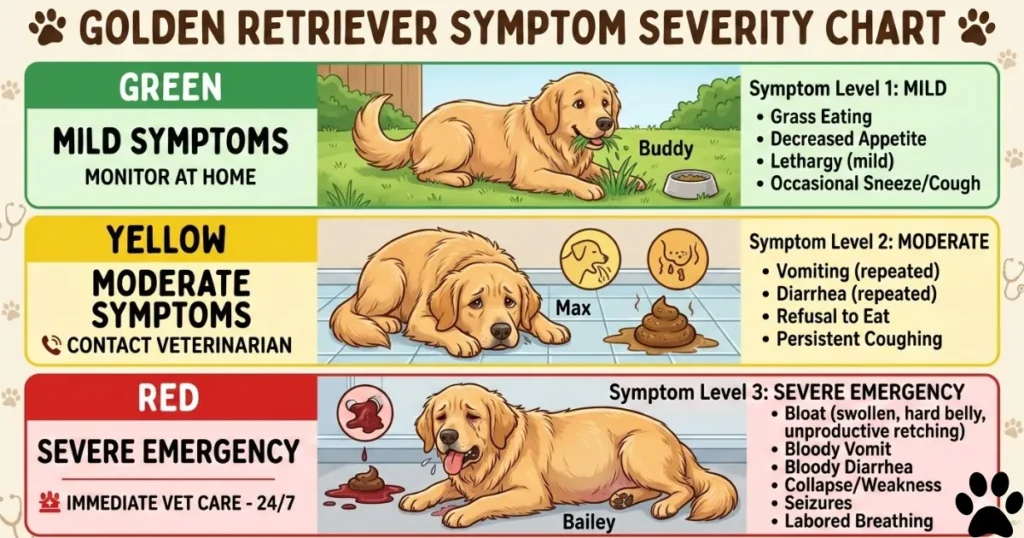
Mild Upset Stomach Symptoms
Indicators of Self-Limiting Digestive Upset:
Decreased Appetite:
- Skips one meal but drinks normally
- Shows interest in high-value treats even if refusing kibble
- Returns to normal appetite within 12-24 hours
- No other concerning symptoms present
Mild Borborygmi (Stomach Gurgling):
- Audible stomach sounds, but the dog is otherwise comfortable.
- Not accompanied by pacing, whining, or restlessness.
- Occurs intermittently, not constantly.
- Dog is still interested in activities.
Grass Eating:
- Common self-soothing behavior in Golden Retrievers.
- Small amounts of grass consumption.
- No frantic, compulsive grass eating.
- Dog is able to keep grass down or vomits a small amount of grass/foam only.
Subtle Behavior Changes:
- Slightly less energetic than usual.
- Seeks quiet resting spots.
- Mild reluctance to play, but not lethargic.
- Responds normally to interaction.
Single Vomiting Episode:
- Vomits once, then appears normal.
- Vomit contains only food/water (no blood, foreign objects).
- Interested in water shortly after.
- No repeat vomiting within 6-8 hours.
Moderate Dog Stomach Issues.
Symptoms Requiring Close Monitoring:
Multiple Vomiting Episodes (2-4 times in 12 hours):
- Unable to keep water down.
- Increasingly frequent vomiting.
- Foam or bile (yellow/green) in vomit.
- Dog appears uncomfortable between episodes.
Diarrhea:
- Soft stool or loose consistency.
- Increased frequency (3-4 times daily vs. normal 1-2).
- Small amounts of mucus present.
- No blood visible.
Abdominal Discomfort:
- Prayer position (front legs down, rear elevated).
- Reluctance to lie on belly.
- Flinches when the belly is touched gently.
- Restlessness, can’t get comfortable.
Loss of Appetite 12-24 Hours:
- Refuses all food, including treats.
- May drink water, but is reluctant.
- Weight loss is not evident yet.
- Otherwise alert and responsive.
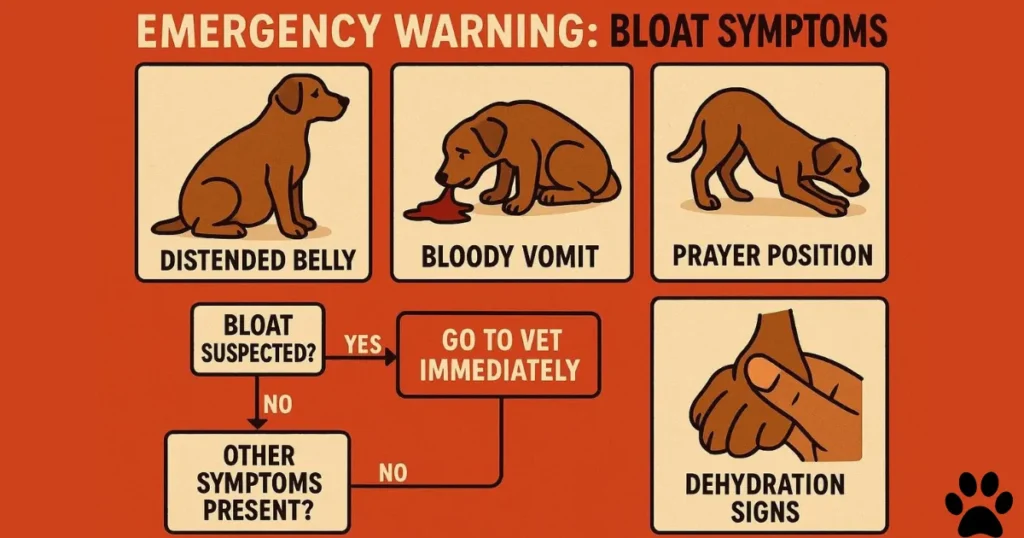
Vet’s Tip: The “prayer position” (also called “play bow” when not playing) is dogs’ instinctive response to abdominal pain. Front legs stretched forward, chest down, rear end elevated. This position stretches abdominal muscles, attempting to relieve discomfort. If your Golden Retriever holds this position repeatedly without invitation to play, abdominal pain is present – not playfulness.
Severe Dogs Belly Upset (Emergency).
Immediate Veterinary Care Required:
Projectile or Bloody Vomiting:
- Forceful vomiting traveling several feet.
- Red blood (fresh) or coffee-ground appearance (digested blood).
- Repeated unsuccessful attempts to vomit (dry heaving).
- Vomit contains foreign objects.
Severe or Bloody Diarrhea:
- Large volumes of watery diarrhea.
- Bright red blood or black tarry stool (melena).
- 6+ episodes in 12 hours.
- Foul odor beyond normal stool smell.
Bloat Symptoms (Gastric Dilatation-Volvulus):
- Distended, tight, drum-like abdomen.
- Repeated unsuccessful vomiting attempts.
- Excessive drooling.
- Rapid breathing, pale gums.
- Weakness, collapse.
- THIS IS LIFE-THREATENING – MINUTES MATTER.
Extreme Lethargy:
- Won’t stand or struggles to stand.
- Unresponsive to name or favorite treats.
- Glassy-eyed, disoriented.
- Collapse or inability to walk.
Dehydration Signs:
- Skin doesn’t snap back when pulled (tenting).
- Dry, tacky gums.
- Sunken eyes.
- No urination for 8+ hours.
Abdominal Rigidity:
- Hard, board-like belly when touched.
- Extreme pain response to gentle pressure.
- Dog guards abdomen, won’t allow touch.
- Accompanied by fever (rectal temp > 103 °F).
Dog Stomach Issues: Common Causes in Golden Retrievers.
Understanding causes guides prevention and treatment:
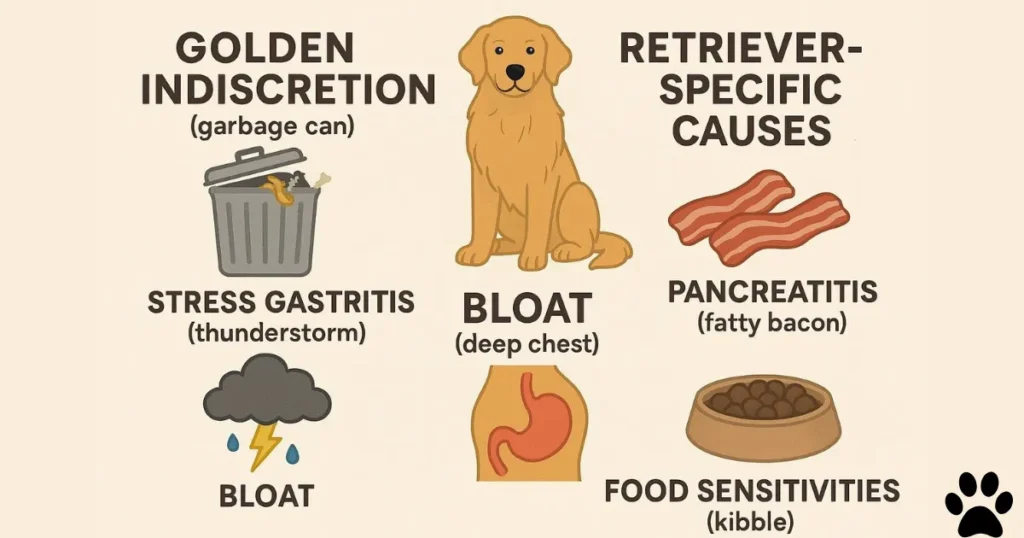
Dietary Indiscretion.
Most Common Cause of Upset Stomach in Dogs:
Golden Retrievers’ indiscriminate eating creates a constant risk of dietary indiscretion. They consume:
- Garbage, compost, rotting food.
- Deceased wildlife, feces (coprophagia).
- Spoiled human food.
- Excessive treats or table scraps.
- Rapid diet changes.
Pathophysiology:
Inappropriate dog food items irritate the gastric lining, causing acute gastritis. Bacterial contamination (Salmonella, Clostridium, and E. coli) triggers infectious gastroenteritis. High-fat items induce pancreatitis secondary to stomach upset.
Timeline:
Symptoms appear 2-12 hours post-consumption. Mild cases resolve in 24-48 hours with supportive care.
Food Sensitivities and Allergies.
Chronic Low-Grade Inflammation:
Golden Retrievers commonly develop sensitivities to:
- Beef (most common).
- Chicken.
- Dairy products.
- Wheat/grains (less common than believed).
Mechanism:
Immune response to specific proteins causes chronic gastritis and inflammatory bowel disease (IBD). Differs from acute upset stomach – recurring pattern over weeks/months.
Symptoms:
Intermittent vomiting; chronic soft stools; gas; rumbling; weight loss despite normal appetite.
Parasites.
Internal Parasites Causing Digestive Upset:
- Roundworms (Toxocara canis): Vomiting, diarrhea, pot-bellied appearance, visible worms in vomit/stool.
- Hookworms (Ancylostoma): Bloody diarrhea, anemia, weakness.
- Whipworms (Trichuris vulpis): Chronic diarrhea with mucus, weight loss.
- Giardia: Foul-smelling diarrhea, intermittent nature, difficult to diagnose.
- Coccidia: Watery diarrhea, especially in puppies.
Diagnosis:
Fecal testing required. Some parasites shed intermittently, requiring multiple fecal samples.
Pancreatitis.
Golden Retriever Predisposition:
This breed has genetic susceptibility to acute and chronic pancreatitis triggered by:
- High-fat meals (bacon, fatty meat, fried foods).
- Sudden diet changes.
- Certain medications.
- Obesity.
- Concurrent diseases (diabetes, Cushing’s).
Symptoms:
- Severe vomiting and diarrhea.
- Prayer position (abdominal pain).
- Loss of appetite.
- Lethargy, depression.
- Fever.
Why Serious: Can progress to life-threatening hemorrhagic pancreatitis requiring intensive hospitalization.
Gastric Dilatation-Volvulus (Bloat).
Life-Threatening Emergency in Large Deep-Chested Breeds:
Risk Factors in Golden Retrievers:
- Deep, narrow chest anatomy.
- Eating rapidly.
- Large single meals (versus multiple smaller meals).
- Exercise immediately after eating.
- Stress, anxiety.
- First-degree relative with bloat history (genetic component).
What Happens:
- Stomach fills with gas and fluid (dilatation).
- Stomach rotates on its axis (volvulus/torsion).
- Blood supply cut off.
- The spleen may rotate with the stomach.
- Shock develops within hours.
- Death occurs without emergency surgery.
Timeline:
Progressive worsening over 1-6 hours. Survival depends on the speed of surgery.
Stress-Induced Gastritis.
Golden Retrievers’ Emotional Sensitivity:
Stressors triggering upset stomach:
- Boarding, grooming, veterinary visits.
- Household changes (moving, new baby, new pet).
- Owner absence/separation anxiety.
- Loud noises (thunderstorms, fireworks).
- Travel.
Mechanism:
Stress hormones (cortisol) increase stomach acid production, causing gastric irritation and delayed gastric emptying.
Dog Sore Tummy: Home Remedies for Mild Cases.
Evidence-based home care for mild upset stomach in dogs:
The 12-24 Hour Fast.
Purpose: Allows the gastric lining to rest and heal.
Protocol:
- Remove all food for 12-24 hours.
- Provide unlimited fresh water (critical – prevents dehydration).
- Monitor for worsening symptoms.
- After fasting, begin a bland diet.
When NOT to Fast:
- Puppies under 6 months (hypoglycemia risk).
- Diabetic dogs (blood sugar issues).
- Dogs are already weak/lethargic.
- If vomiting continues with water consumption.
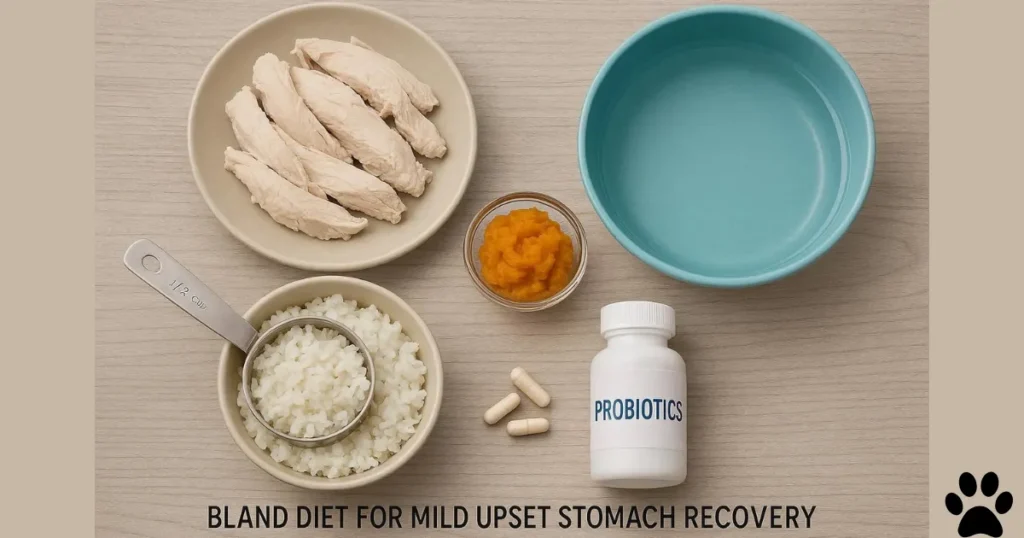
Bland Diet Protocol.
Gold Standard for Dog Upset Stomach Recovery:
Recipe:
- Boiled boneless skinless chicken breast OR lean ground turkey.
- Plain white rice (easier to digest than brown).
- Ratio: 1 part protein to 2 parts rice.
Preparation:
- Boil chicken thoroughly (no pink meat).
- Cook rice in plain water (no salt, butter, or oil).
- Shred chicken into small pieces.
- Mix together when cool.
- Feed at room temperature.
Feeding Schedule:
- Day 1 post-fast: Small meals every 3-4 hours (1/4 cup for 70-lb dog).
- Day 2-3: Gradually increase to normal volume, still frequent meals.
- Day 4-7: Transition back to regular food (mix 25% regular food with 75% bland diet, gradually increasing regular dog food ratio over 3-4 days).
Golden Retriever Portions:
- 60-70 lbs: 2-3 cups bland diet daily (split into 4-6 meals).
- 70-80 lbs: 3-4 cups bland diet daily.
Plain Pumpkin.
Digestive Health Benefits:
Why It Works:
- Soluble fiber absorbs excess water (helps with diarrhea).
- Adds bulk to stool (helps constipation).
- Soothes irritated GI tract.
- Provides nutrients without irritation.
Dosage:
- Small dogs: 1 tablespoon per meal.
- Golden Retrievers (60-80 lbs): 2-4 tablespoons per meal.
- Maximum: 4 tablespoons daily for large dogs.
Critical: Plain canned pumpkin ONLY. NOT pumpkin pie filling (contains sugar, spices, potentially xylitol).
Probiotics.
Restore Beneficial Gut Bacteria:
Benefits:
- Replaces good bacteria disrupted by upset stomach.
- Reduces harmful bacteria overgrowth.
- Supports immune function (70% immune cells in the GI tract).
- Speeds recovery time.
Types:
- Veterinary probiotics: Proviable, FortiFlora (most effective).
- Human probiotics: Some strains are beneficial (Lactobacillus, Bifidobacterium).
- Plain yogurt: Contains live cultures but lower bacterial counts.
Dosage (Veterinary Probiotics):
- Follow product instructions.
- Typically 1-2 capsules daily for large dogs.
- Give 2+ hours away from antibiotics if on medication.
Small Frequent Meals.
Reduces Gastric Workload:
Instead of 2 large meals:
- Feed 4-6 small meals daily during recovery.
- Prevents the stomach from becoming too empty (acid irritation).
- Avoids overloading the compromised digestive system.
- Continue until symptoms are resolved for 48+ hours.
Slippery Elm Bark.
Natural GI Soother:
How It Works: Forms a protective mucilage coating over the irritated stomach lining.
Dosage:
- Powder form: 1/4 teaspoon per 10 lbs body weight.
- Mix with a small amount of water to create a paste.
- Give 30 minutes before meals.
- 2-3 times daily.
Duration: 3-7 days during active symptoms.
Definitive Statements on Upset Stomach in Dogs.
In veterinary gastroenterology, distinguishing between self-limiting dietary indiscretion and serious disease depends primarily on symptom progression and severity rather than initial presentation. A single vomiting episode after eating grass may resolve spontaneously, while identical initial vomiting from intestinal obstruction progresses to a life-threatening emergency within 12-24 hours – making careful monitoring and reassessment critical.
Golden Retrievers’ genetic predisposition to gastric dilatation-volvulus (bloat) makes any dog stomach issues involving abdominal distension, repeated unsuccessful vomiting attempts, and restlessness an immediate emergency. This breed’s deep, narrow chest creates anatomical risk where stomach rotation cuts off blood supply, causing death within hours without emergency surgical intervention.
Understanding the causes of dog upset stomach in Golden Retrievers requires recognizing that dietary indiscretion accounts for 60-70% of acute cases. At the same time, breed-specific pancreatitis susceptibility, food sensitivities, and stress-induced gastritis explain most chronic, recurring upset stomach patterns. Identifying whether stomach issues are acute, isolated incidents, or chronic patterns determines whether dietary management or a comprehensive diagnostic workup is indicated.
The dogs belly upset symptom most often misinterpreted by owners is the “prayer position” – front legs stretched forward, chest down, rear legs elevated. Owners mistake this for playful stretching or play bow invitation when it actually indicates significant abdominal pain requiring veterinary evaluation, especially when held repeatedly without playful context or accompanied by reluctance to move.
Home remedies for dog sore tummy including fasting, a bland diet, pumpkin, and probiotics effectively resolve 70-80% of mild acute gastritis cases within 48-72 hours. However, these same remedies delay appropriate treatment for serious conditions when applied to cases requiring immediate veterinary intervention – making accurate severity assessment paramount before initiating home care.
8 Emergency Signs Requiring Immediate Veterinary Care.
Sign 1: Bloat Symptoms (Golden Retriever Emergency).
Symptoms:
- Distended, tight abdomen.
- Repeated unproductive vomiting (trying but nothing comes up).
- Excessive drooling.
- Restlessness, pacing.
- Rapid shallow breathing.
- Pale gums.
- Weakness.
Timeline:
Progressive worsening over 1-6 hours. IMMEDIATE emergency surgery required.
Sign 2: Blood in Vomit or Stool.
Red Blood (Fresh):
- Bright red in vomit: esophageal, stomach, or upper GI bleeding.
- Bright red in stool: lower intestinal or rectal bleeding.
Black/Coffee-Ground Appearance:
- Digested blood from the stomach or upper intestine.
- Indicates significant bleeding.
Causes: Ulcers, foreign body perforation, toxin ingestion, clotting disorders, and cancer.
Sign 3: Repeated Vomiting (5+ Episodes in 12 Hours).
Why Emergency:
- Severe dehydration develops rapidly.
- Electrolyte imbalances (potassium, sodium).
- Cannot keep water down.
- May indicate obstruction or toxin.
Requires: IV fluids, anti-nausea medication, and diagnostic imaging.
Sign 4: Extreme Lethargy or Collapse.
Indicators:
- Won’t stand or struggles to stand.
- Unresponsive to stimuli.
- Glassy-eyed, vacant stare.
- Collapse.
Suggests: Shock, severe dehydration, internal bleeding, bloat, toxin, sepsis.
Sign 5: Abdominal Rigidity/Board-Like Belly.
What It Means:
- Peritonitis (abdominal cavity inflammation).
- Organ rupture (stomach, intestine, bladder).
- Severe pancreatitis.
- Internal bleeding.
Feel: Belly feels hard, tense, and “board-like” instead of soft/pliable.
Sign 6: Known Toxin Ingestion.
Even Without Symptoms Yet:
- Chocolate, grapes, xylitol, onions, medications.
- Antifreeze.
- Rodenticide.
- Any suspected toxin.
Action: Immediate veterinary care BEFORE symptoms appear improves outcomes dramatically.
Sign 7: Dehydration Signs.
Check:
- Skin tenting (pinch skin, doesn’t snap back).
- Dry, sticky gums.
- Sunken eyes.
- No urination for 8+ hours.
- Extreme weakness.
Why Emergency: Severe dehydration causes organ damage. IV fluids required.
Sign 8: Symptoms Lasting 24+ Hours without Improvement.
Any Of:
- Vomiting beyond 24 hours.
- Diarrhea beyond 24 hours.
- Loss of appetite beyond 24 hours.
- Abdominal pain persists.
Even if mild: Extended duration indicates an underlying disease requiring diagnosis.
What are the first signs of upset stomach in dogs?
First signs: decreased appetite, grass eating, stomach gurgling (borborygmi), mild restlessness, seeking quiet spots, and reluctance to play. Golden Retrievers may lip-smack excessively, drool more than usual, or eat grass compulsively. Single vomiting episode or soft stool may occur.
How do I know if my dog upset stomach is serious?
Serious dog upset stomach indicators: repeated vomiting (5+ episodes), bloody vomit/stool, severe lethargy/collapse, distended, tight abdomen, prayer position held repeatedly, inability to keep water down, symptoms lasting 24+ hours, dehydration signs (skin tenting, dry gums).
What causes dog stomach issues in Golden Retrievers specifically?
Golden Retriever causes: dietary indiscretion (eating inappropriate items), genetic predisposition to pancreatitis (fatty foods trigger), food sensitivities (beef, chicken), stress-induced gastritis (emotional sensitivity), bloat risk (deep-chested anatomy), rapid eating, exercise after meals, and parasites.
Can I give my dog anything for dogs belly upset at home?
Home remedies for mild cases: 12-24 hour fast (with water access), bland diet (boiled chicken and rice), plain pumpkin (2-4 tbsp for large dogs), probiotics, and small, frequent meals. Do NOT give human medications (Pepto-Bismol, Imodium) without veterinarian approval.
How long does an upset stomach in dogs usually last?
Mild dietary indiscretion: resolves 24-48 hours with supportive care.
Moderate gastritis: 3-5 days recovery.
Chronic issues (food sensitivities, IBD): ongoing until the underlying cause is addressed.
If symptoms persist for more than 24 hours or worsen, veterinary care is needed.
What should I feed my dog with a sore tummy?
Feed a bland diet: boiled, boneless, skinless chicken or lean turkey, mixed with plain white rice (1:2 ratio). Feed small amounts every 3-4 hours. Add plain pumpkin (2-4 tbsp). Transition back to regular food gradually over 3-4 days once symptoms resolved for 48+ hours.
When is dog upset stomach an emergency?
Emergencies: bloat symptoms (distended abdomen, unproductive vomiting), bloody vomit/diarrhea, extreme lethargy/collapse, abdominal rigidity, known toxin ingestion, dehydration signs, repeated vomiting preventing water intake, symptoms 24+ hours without improvement, prayer position held continuously.
What are bloat symptoms in Golden Retrievers?
Bloat (GDV) symptoms: distended, tight drum-like abdomen, repeated unsuccessful vomiting attempts (dry heaving), excessive drooling, rapid, shallow breathing, pale gums, weakness/collapse, extreme restlessness. THIS IS LIFE-THREATENING. Emergency surgery is required immediately. Minutes determine survival.
Can stress cause an upset stomach in dogs?
Yes, stress causes gastritis in Golden Retrievers more than in many other breeds due to their emotional sensitivity. Triggers: boarding, vet visits, household changes, owner absence, storms, travel. Stress increases stomach acid and delays gastric emptying, causing vomiting, diarrhea, and loss of appetite.
What’s the difference between dog stomach issues and pancreatitis?
Pancreatitis includes: severe abdominal pain (prayer position), repeated vomiting, diarrhea, complete loss of appetite, fever, and lethargy. More severe than simple gastritis. Golden Retrievers are genetically predisposed. Requires veterinary diagnosis (blood tests) and treatment (hospitalization, IV fluids, pain management).
Should I let my dog eat grass with an upset stomach?
Small amounts of grass eating are normal self-soothing behavior. However, frantic compulsive grass consumption or eating large amounts indicates significant nausea. If grass eating is accompanied by vomiting, diarrhea, or other symptoms, veterinary evaluation is needed.
How do I prevent upset stomach in my Golden Retriever?
Prevention: consistent, high-quality diet without sudden changes; avoid table scraps/fatty foods; prevent garbage/compost access; slow eating (puzzle feeders); no exercise 1 hour before/after meals; reduce stress; regular deworming; food sensitivity elimination if chronic issues; probiotic supplementation.
What causes chronic recurring dog stomach issues?
Chronic causes: food sensitivities/allergies (beef, chicken, dairy), inflammatory bowel disease (IBD), chronic pancreatitis, parasites (Giardia), exocrine pancreatic insufficiency (EPI), liver/kidney disease. Requires comprehensive diagnostic workup: blood tests, fecal tests, imaging, possibly endoscopy/biopsy.
Can Golden Retrievers have sensitive stomachs?
Yes, many Golden Retrievers have sensitive stomachs due to: food sensitivities (common in the breed), stress-triggered gastritis, genetic predisposition to digestive issues, and a tendency toward dietary indiscretion. May require limited ingredient diets, probiotics, and stress management protocols.
When should I take my dog to the vet for belly upset?
Veterinary care needed: symptoms lasting 24+ hours, repeated vomiting (5+), bloody vomit/stool, extreme lethargy, distended abdomen, severe pain, dehydration, known toxin ingestion, puppies (dehydrate faster), senior dogs, dogs with chronic diseases, any uncertainty about severity.
Conclusion.
Recognizing upset stomach in dogs requires distinguishing between mild, self-limiting gastritis that resolves with home care and serious conditions that require immediate veterinary intervention. Mild dog upset stomach presents with single vomiting episodes, decreased appetite, grass eating, and stomach gurgling – typically resolving within 24-48 hours with fasting, a bland diet, pumpkin, and probiotics. Serious dog stomach issues manifest through repeated vomiting, bloody vomit or stool, extreme lethargy, abdominal distension, or symptoms persisting beyond 24 hours.
Golden Retrievers face elevated digestive upset risk from genetic predispositions, including pancreatitis susceptibility (fatty food triggers), gastric dilatation-volvulus potential (deep chest anatomy making bloat life-threatening), food sensitivities (beef and chicken commonly), and stress-induced gastritis (emotional sensitivity). The dogs belly upset symptom requiring immediate recognition is bloat: distended abdomen, repeated unsuccessful vomiting attempts, excessive drooling, rapid breathing, and restlessness – this emergency requires surgery within hours to prevent death.
Home remedies for dog sore tummy include 12-24 hours of fasting with water access, a bland diet of boiled chicken and white rice (1:2 ratio), plain pumpkin (2-4 tablespoons for large dogs), probiotics, and small frequent meals. These resolve 70-80% of mild acute cases. However, veterinary care becomes mandatory when vomiting exceeds 5 episodes, blood appears in vomit or stool, lethargy progresses to collapse, the abdomen becomes rigid, or any symptoms persist beyond 24 hours without improvement.
Has Your Golden Retriever Experienced Stomach Upset?
Share your experiences with digestive issues – symptoms you noticed, home remedies that worked, when you sought veterinary care, and recovery timelines. Your real-world stories help other owners recognize serious situations and respond appropriately.
- What symptoms did your dog show?
- How did you treat it?
- Any lessons learned?
Share in comments or tag #GoldenRetrieverHealth and #DogStomachIssues.