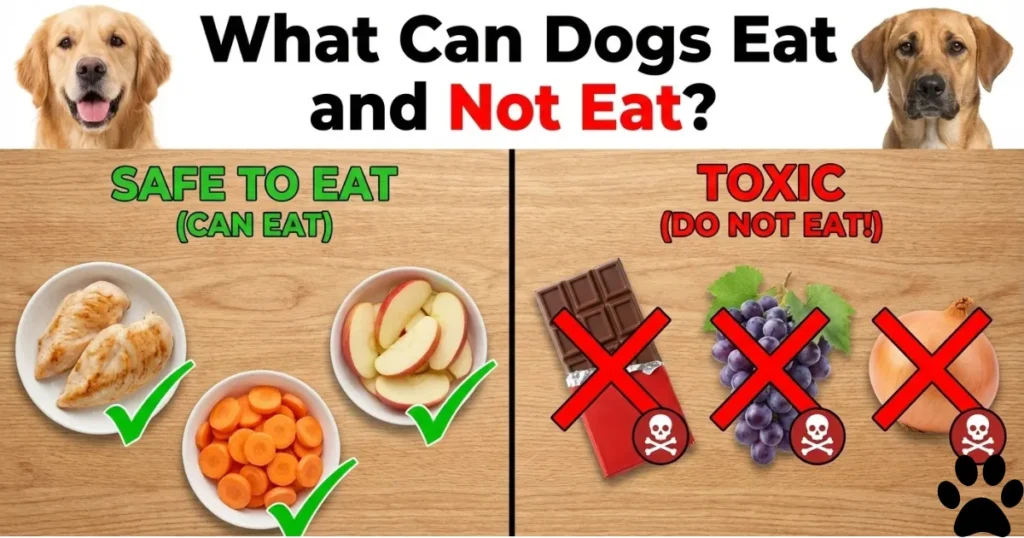
Understanding what can dogs eat and not eat prevents the emergency calls I receive weekly about Golden Retrievers who’ve consumed chocolate, grapes, or xylitol-containing products. The confusion stems from contradictory online information, well-meaning friends sharing incorrect advice, and the fact that some human foods are perfectly safe. In contrast, others cause organ failure from tiny amounts. Golden Retrievers’ enthusiastic appetite and tendency to counter-surf or consume found items make food safety knowledge absolutely critical for this breed.
Golden Retrievers present unique food safety challenges. Their indiscriminate eating habits mean they’ll consume almost anything accessible; their large size allows them to reach countertops and tables that other breeds can’t; and their friendly demeanor encourages visitors to offer treats without asking permission. Additionally, certain toxic foods affect Golden Retrievers differently than smaller breeds – the dose that makes a Chihuahua sick may be lethal for a 70-pound Golden due to the total toxin load.
This comprehensive guide clarifies what can dogs eat and not eat with definitive answers for common foods, explains the mechanisms behind food toxicity in dogs, provides emergency protocols when dangerous foods are consumed, and addresses Golden Retriever-specific considerations on portion sizes and risk factors that standard food safety lists ignore.
Contents
- 1 Foods Dogs Can Eat Safely: The Complete List
- 2 Foods Dogs Cannot Eat: Dangerous and Toxic Items.
- 3 Definitive Statements on Dog Food Safety.
- 4 What to Do If Your Dog Eats Dangerous Food.
- 5 8 Common Golden Retriever Food Safety Mistakes.
- 5.1 1. Trusting “My Dog Ate This Before and Was Fine”.
- 5.2 2. Assuming Quantity Doesn’t Matter.
- 5.3 3. Not Reading Peanut Butter Labels.
- 5.4 4. Believing “Natural” Means “Safe”.
- 5.5 5. Letting Guests Feed Without Permission.
- 5.6 6. Leaving Accessible Foods on Counters.
- 5.7 7. Sharing “Just a Bite” of Human Meals.
- 5.8 8. Not Considering Cumulative Effects.
- 5.9 What can dogs eat and not eat from human food?
- 5.10 Can dogs eat chocolate in any amount?
- 5.11 What happens if my dog eats grapes or raisins?
- 5.12 Can dogs eat peanut butter safely?
- 5.13 What vegetables can dogs not eat?
- 5.14 Can dogs eat cheese and dairy products?
- 5.15 What fruits can dogs not eat?
- 5.16 Can dogs eat bones safely?
- 5.17 What should I do if my dog ate chocolate?
- 5.18 Can dogs eat avocados?
- 5.19 What human foods are toxic to Golden Retrievers?
- 5.20 Can dogs eat raw meat safely?
- 5.21 What can dogs eat as healthy treats?
- 5.22 Can dogs eat bread and baked goods?
- 5.23 What can dogs eat when they have an upset stomach?
- 6 Conclusion.
Foods Dogs Can Eat Safely: The Complete List
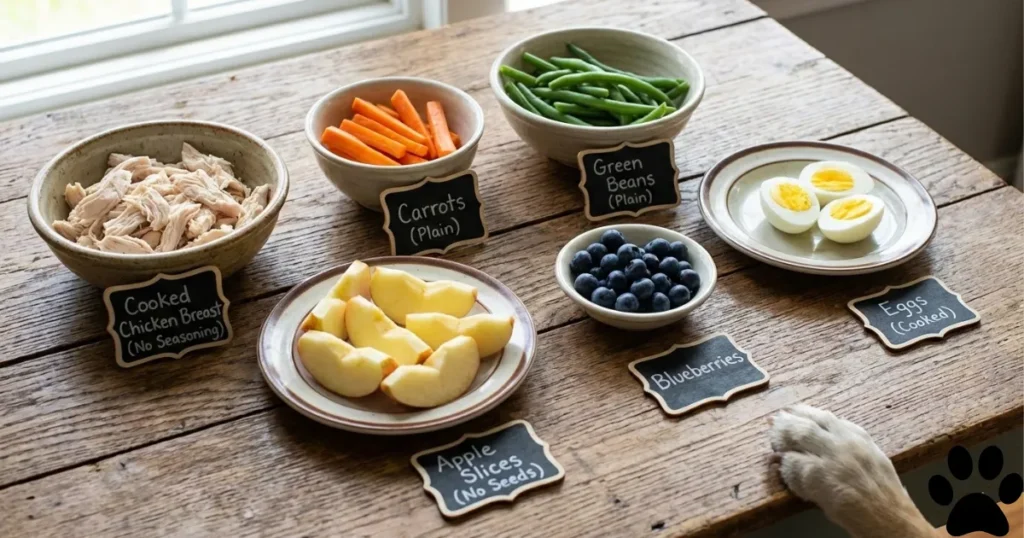
These dog foods are safe for Golden Retrievers when fed in appropriate amounts:
Proteins (Cooked, Unseasoned).
Chicken:
Plain, boneless, skinless chicken breast or thighs provide lean protein. Remove all bones – cooked chicken bones splinter dangerously. Feed in moderation as treats or meal toppers.
Turkey:
Similar to chicken. Avoid skin (too fatty) and ensure no bones remain. Plain roasted turkey without seasonings, butter, or gravy is safe.
Beef:
Lean ground beef or steak cut into pieces works well. Trim excess fat to prevent pancreatitis. Cook thoroughly – raw beef carries bacterial risks.
Salmon:
Rich in omega-3 fatty acids, supporting coat health. Must be fully cooked – never raw due to parasite risks. Remove all bones carefully.
Eggs:
Excellent protein source. Scrambled or hard-boiled without butter, oil, or seasonings. One egg = a substantial treat for portion control purposes.
Vegetables (Fresh or Cooked).
Carrots:
Raw or cooked, excellent low-calorie crunch. High in fiber and beta-carotene. Cut into appropriate sizes to prevent choking.
Green Beans:
Plain, fresh, or cooked without salt or seasonings. Very low calorie, high fiber – great for weight management.
Sweet Potatoes:
Cooked, plain, without butter or seasonings. High in fiber and vitamins. Feed in moderation due to carbohydrate content.
Pumpkin:
Plain canned (not pie filling) or cooked fresh. Excellent for digestive health. Small amounts help with both diarrhea and constipation.
Broccoli:
Small amounts only (under 10% of diet). Contains compounds that can cause gastric irritation in large quantities. Florets are safer than stems.
Cucumbers:
Low calorie, hydrating snack. Remove large seeds for puppies or small dogs. Excellent for overweight Golden Retrievers.
Fruits (Limited Quantities).
Apples:
Remove seeds and core (contain cyanide compounds). Slice into bite-sized pieces. High in fiber and vitamins, moderate sugar.
Blueberries:
Antioxidant-rich, low calorie. Excellent training treats. Feed 5-10 berries as snacks, not by the handful.
Watermelon:
Remove seeds and rind. High water content makes it hydrating. Feed seedless varieties or carefully remove all seeds.
Strawberries:
Fresh only, no added sugar. Cut into quarters for large dogs. Moderate amounts due to natural sugar content.
Bananas:
High in potassium but also high in sugar. Small slices occasionally, not entire bananas. Good for active Golden Retrievers post-exercise.
Other Safe Foods.
Plain Rice:
White or brown rice cooked plain. Helpful for upset stomachs. Not nutritionally complete – use as a supplement only.
Plain Oatmeal:
Cooked with water, no milk, sugar, or toppings. Good fiber source. Feed in moderation.
Peanut Butter:
Must be xylitol-free (check ingredients meticulously). High calorie foods – use sparingly. 1 teaspoon maximum for a 70-lb dog.
Plain Yogurt:
Unsweetened, unflavored. Provides probiotics supporting gut health. Avoid varieties with artificial sweeteners.
Foods Dogs Cannot Eat: Dangerous and Toxic Items.
These foods cause serious harm and must be completely avoided:
Highly Toxic Foods (Emergency Situations).
Chocolate:
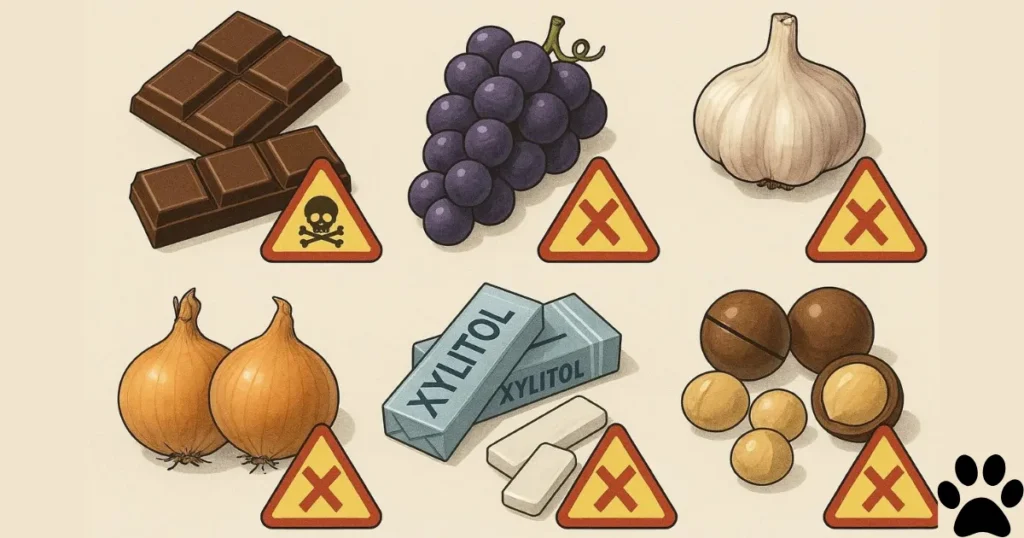
Contains theobromine and caffeine – both toxic to dogs. Dark chocolate and baking chocolate are the most dangerous. Even small amounts cause vomiting, diarrhea, seizures, heart problems, and death. A 70-lb Golden Retriever can experience toxicity from as little as 2-3 ounces of dark chocolate.
Grapes and Raisins:
Cause acute kidney failure in dogs. The toxic compound remains unidentified, but the effects are severe. Even small amounts (4-5 grapes) can cause kidney shutdown in Golden Retrievers. No safe dose exists.
Xylitol:
Artificial sweetener in sugar-free gum, candy, baked goods, peanut butter, and some medications. Causes rapid insulin release leading to hypoglycemia. Doses as small as 0.1 g per kg body weight cause life-threatening blood sugar drops. A 70-lb dog can be poisoned by 2-3 pieces of xylitol-containing gum.
Onions and Garlic:
All forms (raw, cooked, powdered) contain compounds that damage red blood cells. Cumulative toxin – repeated small amounts cause problems over time. Symptoms appear days after ingestion. Garlic powder is the most concentrated and dangerous form.
Macadamia Nuts:
Cause weakness, vomiting, tremors, and hyperthermia in dogs. Mechanism remains unknown. Effects appear within 12 hours. Even small amounts (6-40 nuts, depending on dog size) cause problems.
Alcohol:
Extremely toxic. Even small amounts cause dangerous intoxication, vomiting, diarrhea, coordination problems, central nervous system depression, difficulty breathing, coma, and death. Never offer as a “joke” or allow access to alcoholic beverages.
Dangerous Foods (Severe Health Risks).
Avocados:
Contain persin throughout the plant (fruit, leaves, bark). Causes vomiting and diarrhea in dogs. Large amounts can cause more serious problems. Pit presents a choking/obstruction hazard.
Coffee and Caffeine:
Similar to chocolate – contains methylxanthines, which can cause toxicity. All forms are dangerous: coffee grounds, beans, tea bags, energy drinks. Severe cases cause death.
Raw Yeast Dough:
Expands in a warm, moist stomach environment. Causes painful bloat and potentially life-threatening gastric dilatation-volvulus (GDV). Fermentation produces alcohol, compounding toxicity.
Cooked Bones:
Splinter easily, creating perforation risks. Chicken, turkey, and pork bones are especially dangerous. It can cause choking, oral injuries, intestinal obstruction, or perforation. Raw bones carry different risks but don’t splinter as readily.
Fatty Foods:
High-fat items like bacon, sausage, fatty meat trimmings trigger pancreatitis in Golden Retrievers predisposed to this condition. Symptoms include vomiting, diarrhea, and abdominal pain. It can become life-threatening.
Salt:
Excessive sodium causes sodium ion poisoning. Symptoms include vomiting, diarrhea, tremors, elevated body temperature, and seizures. Large amounts of salty snacks, play dough, and rock salt are dangerous.
Foods Causing Moderate Problems.
Dairy Products:
Many dogs are lactose intolerant. Causes gas, bloating, diarrhea. Small amounts of plain yogurt or cheese may be tolerated, but milk and ice cream cause problems in most dogs.
Citrus:
Small amounts of fruit flesh are generally safe but can cause stomach upset. Stems, leaves, peels, and seeds contain oils that cause vomiting.
Coconut:
Small amounts of flesh or coconut oil are occasionally okay, but high fat content. Coconut water is high in potassium – not recommended.
Nuts (General):
Most nuts are too high in fat. It can cause pancreatitis. Choking hazards for enthusiastic eaters. Avoid all nuts except small amounts of unsalted peanuts or peanut butter (xylitol-free).
Definitive Statements on Dog Food Safety.
In veterinary toxicology, grapes and raisins cause idiosyncratic kidney failure in dogs with no identified safe dose. Even 4-5 grapes can trigger acute renal failure in Golden Retrievers, making complete avoidance the only safe approach regardless of whether individual dogs have tolerated them previously.
Xylitol toxicity occurs at doses as low as 0.1 grams per kilogram body weight, meaning a single piece of xylitol-containing gum can cause life-threatening hypoglycemia in dogs. This artificial sweetener increasingly appears in unexpected products, including peanut butter, baked goods, and medications, requiring vigilant label reading.
Chocolate toxicity depends on theobromine content, making dark chocolate and baking chocolate far more dangerous than milk chocolate. A 70-pound Golden Retriever experiencing toxicity from consuming just 2-3 ounces of dark chocolate requires immediate veterinary intervention to prevent seizures, cardiac problems, and death.
Golden Retrievers’ enthusiastic eating habits and indiscriminate consumption patterns increase the risk of toxic food exposure compared to more selective breeds. Their tendency to consume entire containers – not just samples – means toxic doses often exceed those that affect smaller or more cautious dogs.
Vet’s Tip: What can dogs eat and not eat? Keep a bottle of 3% hydrogen peroxide in your pet’s first aid kit. Under veterinary phone guidance, it can induce vomiting if dangerous food is consumed within the past 2 hours – but NEVER induce vomiting without veterinary approval, as some toxins cause more damage coming back up.
What to Do If Your Dog Eats Dangerous Food.
Time-sensitive protocols when Golden Retrievers consume toxic items:
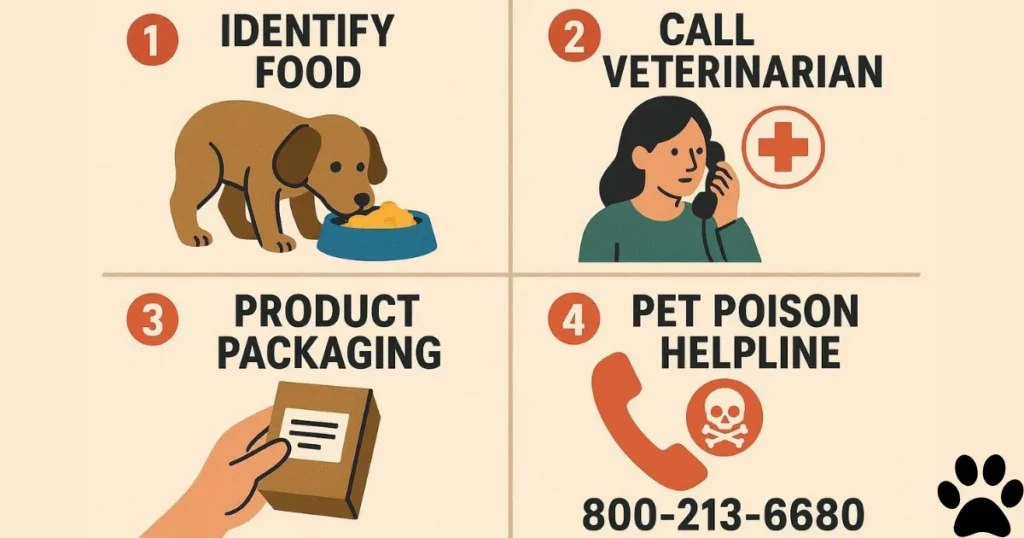
Immediate Actions (First 5 Minutes).
- Identify exactly what was eaten: Note the food type, estimated amount, and time of consumption.
- Call your veterinarian or Pet Poison Helpline.
- Do NOT induce vomiting without professional guidance: Some substances cause more damage when vomited.
- Gather product packaging: Ingredient lists help veterinarians assess danger.
- Separate dog from food source: Prevent additional consumption.
Veterinarian Guidance (Next Steps).
Vomiting May Be Induced If:
- Consumption occurred within 2 hours.
- Substance benefits from removal before absorption.
- The dog is conscious and can swallow normally.
- Veterinarian provides specific authorization.
Emergency Clinic Visit Required For:
- Chocolate (any amount of dark/baking chocolate).
- Grapes or raisins (any amount).
- Xylitol-containing products (any amount).
- Onions/garlic in large amounts.
- Signs of distress: vomiting, diarrhea, lethargy, tremors, seizures.
Monitor at Home With Veterinary Guidance For:
- Small amounts of moderately problematic foods.
- Foods causing mild GI upset but not toxicity.
- Situations where vomiting has already occurred.
- When the veterinarian determines the risk is low.
Signs Requiring Immediate Emergency Care.
- Vomiting (especially if repetitive or contains blood).
- Diarrhea (especially if bloody).
- Lethargy or weakness.
- Tremors or seizures.
- Difficulty breathing.
- Collapse or inability to stand.
- Pale gums.
- Excessive drooling or pawing at the mouth.
8 Common Golden Retriever Food Safety Mistakes.
1. Trusting “My Dog Ate This Before and Was Fine”.
Individual tolerance doesn’t guarantee safety. Previous exposure without obvious symptoms doesn’t mean no internal damage occurred. Grape toxicity, for example, can appear after several exposures – not necessarily the first.
2. Assuming Quantity Doesn’t Matter.
Owners think “just a tiny piece” of chocolate or “one grape” is safe. For toxic foods, NO amount is proven safe. What seems insignificant can cause serious harm, especially with cumulative toxins like onions.
3. Not Reading Peanut Butter Labels.
Xylitol increasingly appears in peanut butter brands. Owners who have used peanut butter for years suddenly buy a xylitol-containing variety without checking the label. Always verify ingredients before feeding ANY processed food.
4. Believing “Natural” Means “Safe”.
Grapes, macadamia nuts, and many toxic plants are completely natural yet dangerous. Natural doesn’t equal safe for dogs – many naturally occurring compounds are toxic to canines.
5. Letting Guests Feed Without Permission.
Visitors offer table scraps, chocolate, or other dangerous items without asking. Golden Retrievers’ friendly demeanor encourages this behavior. Establish clear “do not feed” rules with all visitors before they arrive.
6. Leaving Accessible Foods on Counters.
Counter-surfing Golden Retrievers can reach surprising heights. Foods left on tables, counters, or low shelves become accessible. Store ALL food in closed cabinets or high locations.
7. Sharing “Just a Bite” of Human Meals.
Restaurant portions of fatty foods, dishes cooked in butter or oil, or dishes seasoned with salt cause pancreatitis. The rich foods humans enjoy are too fatty, salty, or seasoned for Golden Retrievers’ digestive systems.
8. Not Considering Cumulative Effects.
Feeding small amounts of garlic powder daily in homemade dog food causes cumulative red blood cell damage. Small amounts of fat daily contribute to obesity and increased risk of pancreatitis over time.
What can dogs eat and not eat from human food?
Dogs can safely eat cooked chicken, turkey, beef, salmon, eggs, carrots, green beans, sweet potatoes, apples, and blueberries. Dogs cannot eat chocolate, grapes, raisins, xylitol, onions, garlic, macadamia nuts, alcohol, avocados, or cooked bones – all of which can cause serious harm.
Can dogs eat chocolate in any amount?
No, dogs cannot safely eat chocolate in any amount. Chocolate contains theobromine, causing toxicity – vomiting, seizures, heart problems, and death. Dark chocolate is the most dangerous. A 70-lb Golden Retriever can experience toxicity from as little as 2-3 ounces of dark chocolate.
What happens if my dog eats grapes or raisins?
Grapes and raisins cause acute kidney failure in dogs. Even 4-5 grapes can trigger kidney shutdown in Golden Retrievers. No safe dose exists. Immediate veterinary care is essential – symptoms include vomiting, diarrhea, lethargy, and decreased urination within 12-24 hours.
Can dogs eat peanut butter safely?
Dogs can eat xylitol-free peanut butter in small amounts. Always check ingredient labels – xylitol (artificial sweetener) increasingly appears in peanut butter and causes life-threatening toxicity. Use 1 teaspoon maximum for a 70-lb dog due to high calorie content.
What vegetables can dogs not eat?
Dogs cannot eat onions, garlic, leeks, chives, or shallots – all damage red blood cells. Avoid raw potatoes and tomato plants (green parts). Limit broccoli to under 10% of the diet. Most other vegetables are safe when plain and appropriately sized.
Can dogs eat cheese and dairy products?
Dogs can eat small amounts of plain cheese or yogurt, but many are lactose intolerant, which can cause gas, bloating, and diarrhea. Avoid milk and ice cream. If feeding dairy, start with tiny amounts and monitor for digestive upset.
What fruits can dogs not eat?
Dogs cannot eat grapes, raisins, or cherries (pits contain cyanide). Avoid citrus peels and seeds. Apple seeds and cores contain cyanide compounds – remove before feeding. Most other fruits are safe in moderation, but always remove seeds, pits, and cores.
Can dogs eat bones safely?
Dogs should not eat cooked bones – they splinter, causing choking, oral injuries, intestinal obstruction, or perforation. Raw bones carry different risks but don’t splinter as readily. Recreational bones, such as beef knuckles, are safer than poultry bones for supervised chewing.
What should I do if my dog ate chocolate?
Call your veterinarian or Pet Poison Helpline immediately. Note the type of chocolate, amount consumed, and time of ingestion. Do not induce vomiting without veterinary guidance. Dark chocolate and baking chocolate require emergency care.
Can dogs eat avocados?
Dogs should not eat avocados. They contain persin, which causes vomiting and diarrhea. Large amounts cause more serious problems. The pit presents choking and obstruction hazards. Avoid all parts of the avocado plant, including fruit, leaves, and bark.
What human foods are toxic to Golden Retrievers?
Foods toxic to Golden Retrievers include chocolate, grapes, raisins, xylitol (gum, peanut butter, baked goods), onions, garlic, macadamia nuts, alcohol, avocados, coffee, raw yeast dough, and cooked bones. These cause organ failure, seizures, or death.
Can dogs eat raw meat safely?
Raw meat poses bacterial risks (Salmonella, E. coli) that are dangerous to dogs and humans who handle it. Cooked meat is safer. If feeding raw, use high-quality sources, handle carefully, and consult a veterinarian about balanced raw diets.
What can dogs eat as healthy treats?
Healthy treats include plain cooked chicken, carrots, green beans, blueberries, apple slices (no seeds), plain rice, scrambled eggs, and small amounts of xylitol-free peanut butter. Keep treats under 10% of daily calories – approximately 150-200 calories for a 70-lb Golden Retriever.
Can dogs eat bread and baked goods?
Plain bread in small amounts is generally safe but provides little nutrition and unnecessary calories. Avoid baked goods containing chocolate, raisins, xylitol, or excess sugar. Never feed raw yeast dough – it expands dangerously in the stomach.
What can dogs eat when they have an upset stomach?
Dogs with upset stomachs benefit from a bland diet: plain boiled chicken and white rice, plain pumpkin, or plain scrambled eggs. Feed small amounts frequently. If vomiting/diarrhea persists beyond 24 hours, consult a veterinarian.
Conclusion.
Understanding what can dogs eat and not eat prevents the emergencies I see too often with Golden Retrievers who’ve consumed chocolate, grapes, xylitol, or other toxic foods. Safe foods include cooked chicken, turkey, beef, salmon, eggs, carrots, green beans, sweet potatoes, apples, and blueberries – all excellent occasional treats when fed plain and in appropriate portions for a 60-80 pound dog.
Dangerous and toxic foods requiring complete avoidance include chocolate, grapes, raisins, xylitol, onions, garlic, macadamia nuts, alcohol, avocados, cooked bones, and raw yeast dough. These cause organ failure, seizures, severe illness, or death from relatively small amounts. No safe dose exists for grapes, raisins, or xylitol – even tiny quantities trigger life-threatening toxicity in Golden Retrievers.
The key to food safety for Golden Retrievers is recognizing that this breed’s indiscriminate eating habits and enthusiastic appetite make them particularly vulnerable to toxic food exposure. Their counter-surfing abilities, friendly demeanor, encouraging guests to feed them, and tendency to consume entire containers rather than sample means toxic doses often exceed those affecting smaller or more selective breeds.
When dangerous food is consumed, immediate action is critical. Call your veterinarian or Pet Poison Helpline within minutes, identify exactly what was eaten and how much, and follow professional guidance about whether to induce vomiting or proceed directly to emergency care. Time matters enormously with toxins like xylitol and chocolate, where rapid intervention prevents absorption and reduces harm significantly.
Have You Dealt With Food Safety Issues in Your Golden Retriever?
Share your experience to help other owners recognize dangers and respond quickly. Stories about close calls or successful emergency responses provide valuable real-world lessons.
Tell us: What food safety situation did you face? How did you handle it? Any lessons learned you’d share with other Golden Retriever owners?
Drop your story in the comments or tag us with #GoldenRetrieverSafety and #DogFoodSafety.

Dr. Nabeel A.
Hi, I’m Dr. Nabeel Akram – a farm management professional by trade and a passionate Golden Retriever enthusiast at heart. With years of experience in animal science and livestock care, I’ve built a career around understanding animals—how they live, thrive, and bring value to our lives. This blog is a personal project born from that same passion, focusing on one of the most loyal and lovable breeds out there: the Golden Retriever. Whether I’m managing farm operations or sharing insights on canine health, behavior, and care, it all ties back to one core belief—animals deserve thoughtful, informed, and compassionate attention. Welcome to a space where professional expertise meets genuine love for dogs.
Facebook |
Links will be automatically removed from comments.