
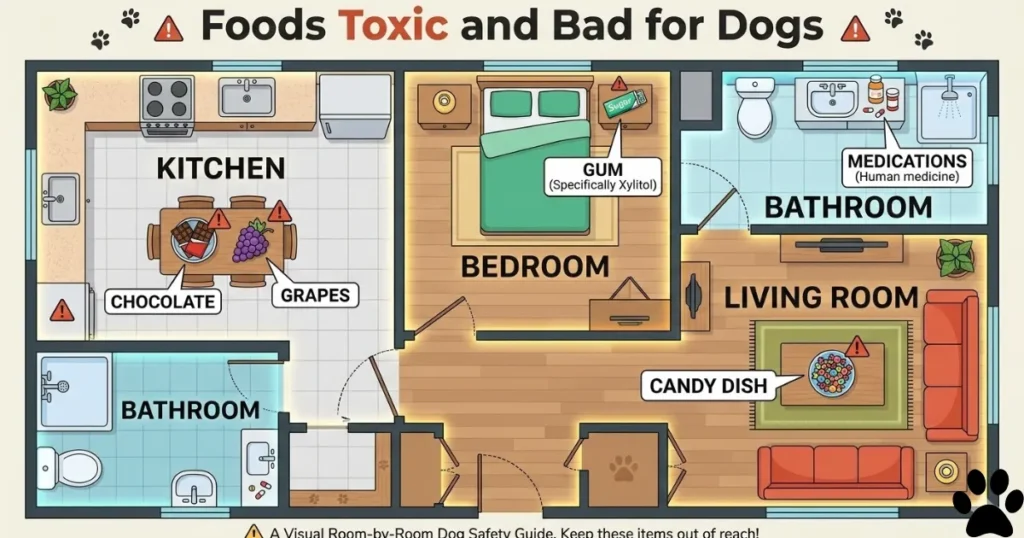
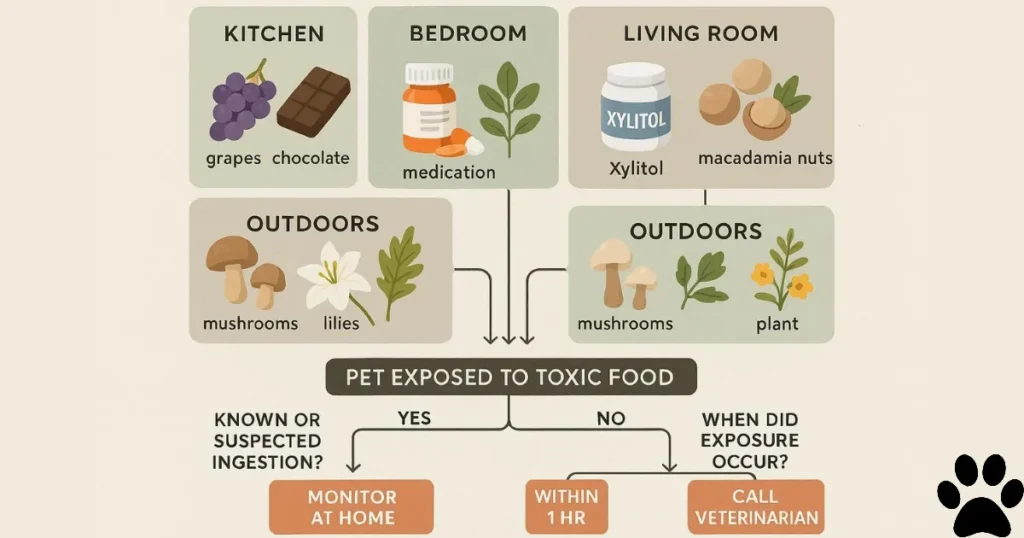
Identifying foods that are toxic to dogs saves lives – yet most owners focus on obvious dangers like chocolate while overlooking the sugar-free gum in their purse, onion powder in their spice rack, or xylitol-containing peanut butter in their pantry. The insidious danger comes from location blindness: owners secure chocolate from counter-surfing Golden Retrievers but forget about the equally lethal macadamia nuts in the bedroom nightstand, grapes in the dining room fruit bowl, or raw yeast dough rising on the stovetop. Golden Retrievers’ ability to access multiple rooms and their indiscriminate eating habits create exposure risk throughout entire homes rather than just obvious food storage areas.
Golden Retrievers face unique vulnerability to foods that are toxic to dogs due to breed characteristics that amplify exposure and harm. Their counter-surfing abilities allow them to reach kitchen counters, dining tables, and bathroom cabinets that other breeds cannot. Their retriever instinct makes them pick up and mouth anything encountered anywhere in the home. Their large size means they consume larger total amounts, increasing toxic doses beyond small-breed thresholds. Their enthusiastic appetite drives them to eat entire containers rather than sample. Additionally, visitors unfamiliar with what foods are bad for dogs often offer dangerous treats from purses, coat pockets, or lunch bags in entryways and living rooms.
This room-by-room guide identifies foods that are toxic to dogs, organized by household location rather than alphabetically, explains why location-based thinking prevents more poisonings than memorizing food lists, provides Golden Retriever-specific toxic dose calculations for each substance, and details which rooms require the most vigilant toxic food management based on emergency case patterns I see repeatedly.
Contents
- 1 Foods That Are Toxic to Dogs Found in the Kitchen
- 2 Foods Bad for Dogs Stored in Non-Kitchen Locations
- 3 Definitive Statements on Foods That Are Toxic to Dogs
- 4 8 Room-Specific Toxic Food Prevention Strategies
- 4.1 Strategy 1: Kitchen Cabinet Reorganization
- 4.2 Strategy 2: Bedroom Purge Protocol
- 4.3 Strategy 3: Bathroom Lockdown.
- 4.4 Strategy 4: Living Room Zero-Tolerance Policy.
- 4.5 Strategy 5: Office and Workspace Rules.
- 4.6 Strategy 6: Garage and Storage Security.
- 4.7 Strategy 7: Guest Education Protocol.
- 4.8 Strategy 8: Regular Home Audits.
- 5 Emergency Response: When Dogs Access Foods That Are Toxic.
- 5.1 Immediate Actions (0-5 Minutes).
- 5.2 Xylitol Exposure (Fastest Response).
- 5.3 Chocolate Consumption.
- 5.4 Grape/Raisin Ingestion.
- 5.5 Onion/Garlic Exposure.
- 5.6 What foods that are toxic to dogs are in every kitchen?
- 5.7 What foods bad for dogs do owners not realize are dangerous?
- 5.8 Where are foods that are toxic to dogs stored outside kitchens?
- 5.9 What are the most common foods that are toxic to dogs in emergencies?
- 5.10 How do I identify foods bad for dogs in my pantry?
- 5.11 What foods that are toxic to dogs cause immediate symptoms?
- 5.12 What household foods bad for dogs surprise veterinarians?
- 5.13 Which rooms contain the most foods that are toxic to dogs?
- 5.14 What foods that are toxic to dogs require immediate emergency care?
- 5.15 How do foods bad for dogs affect Golden Retrievers differently?
- 5.16 What are foods that are toxic to dogs visitors might bring?
- 5.17 Can foods that are toxic to dogs be stored safely?
- 5.18 What foods bad for dogs cause cumulative toxicity?
- 5.19 Where do Golden Retrievers find foods that are toxic to dogs most often?
- 5.20 What foods that are toxic to dogs have no safe dose?
- 6 Conclusion.
Foods That Are Toxic to Dogs Found in the Kitchen
The kitchen contains the highest concentration of toxic foods dogs encounter, foods dogs can’t eat:
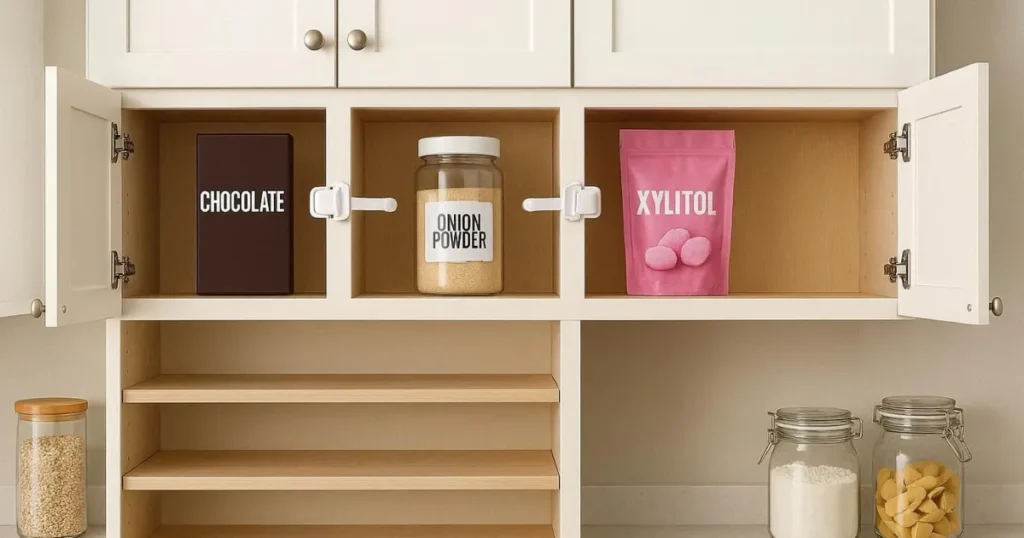
Pantry Dangers
Chocolate and Baking Supplies:
Baking chocolate and cocoa powder are foods that are toxic to dogs, stored at eye level in many pantries. A 70-lb Golden Retriever experiences severe toxicity from just 2-3 ounces of baking chocolate (450mg theobromine per ounce).
Onion and Garlic Powder:
Concentrated dried alliums on spice racks are more dangerous than their fresh counterparts. One teaspoon of garlic powder can cause anemia in Golden Retrievers by causing cumulative red blood cell destruction.
Xylitol-Containing Foods:
Sugar-free products increasingly populate pantries, including baking mixes, protein powders, and flavored coffee creamers. Check every “sugar-free” label – xylitol causes life-threatening hypoglycemia within 30 minutes.
Raisins and Trail Mix:
Dried fruits and snack mixes containing raisins cause acute kidney failure. Just 4-5 raisins per 10 pounds of body weight can trigger kidney shutdown in susceptible Golden Retrievers.
Macadamia Nuts:
Stored in baking sections or snack areas, 20-30 macadamia nuts cause weakness, vomiting, and hyperthermia in 70-lb Golden Retrievers within 12 hours.
Counter and Table Foods That Are Toxic to Dogs
Raw Yeast Dough:
Rising bread dough expands in warm, moist stomachs, causing painful bloat and gastric dilatation-volvulus (GDV). Fermentation produces alcohol, compounding toxicity. Never leave dough unattended – Golden Retrievers can access counters.
Grapes in Fruit Bowls:
Decorative fruit bowls on counters and tables make grapes easily accessible. Unknown compounds cause idiopathic kidney failure – no safe dose exists. Even 4-5 grapes trigger toxicity in some Golden Retrievers.
Fatty Meat Trimmings:
Bacon, sausage, ham fat, and poultry skin are foods bad for dogs predisposed to pancreatitis like Golden Retrievers. Excess fat triggers acute pancreatitis requiring hospitalization.
Avocados:
Whole avocados on counters contain persin, which can cause vomiting and diarrhea. Large pits present choking and obstruction hazards for Golden Retrievers who swallow items whole.
Coffee and Tea:
Coffee makers, coffee grounds, tea bags, and energy drinks contain concentrated caffeine – methylxanthines that can cause severe toxicity similar to that of chocolate. A 70-lb dog experiences symptoms from 4-5 coffee beans.
Refrigerator Hidden Dangers
Sugar-Free Peanut Butter:
Many brands are increasingly common and contain xylitol. A 70-lb Golden Retriever consuming 2-3 tablespoons of xylitol-containing peanut butter faces life-threatening hypoglycemia.
Alcohol-Containing Foods:
Beer, wine, rum-soaked cakes, bourbon-marinated meats. Even small amounts of alcohol cause dangerous intoxication in dogs that lack alcohol dehydrogenase enzymes for efficient metabolism.
Moldy Foods:
Expired dairy, produce, or bread in the back of the refrigerator may contain tremorgenic mycotoxins that can cause seizures, tremors, and hyperthermia.
Vet’s Tip: Take 10 minutes to audit your kitchen RIGHT NOW. Remove or relocate any food that is toxic to dogs to high cabinets (5+ feet) with childproof latches. Golden Retrievers can open standard cabinets – locking mechanisms aren’t optional, they’re essential.
Foods Bad for Dogs Stored in Non-Kitchen Locations
Many toxic dog food exposures occur outside traditional food storage areas:
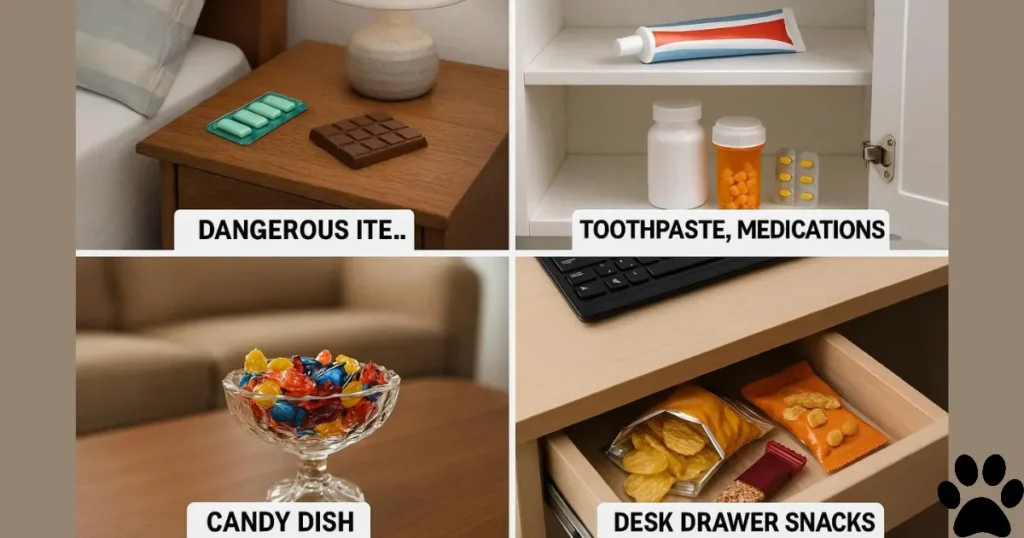
Bedroom and Nightstand Foods That Are Toxic to Dogs
Sugar-Free Gum and Mints:
Purses, nightstands, and dresser drawers commonly contain xylitol gum. Just 2-3 pieces cause severe hypoglycemia in 70-lb Golden Retrievers. This is the # 1 non-food-room exposure I treat.
Medications with Food Flavoring:
Chewable vitamins, supplements, and medications stored in bedrooms often contain xylitol or are flavored, making them attractive to dogs. Antidepressants, NSAIDs, and ADHD medications are deadly if consumed in multiples.
Chocolate in Night Tables:
Dark chocolate bars, chocolate-covered almonds, cocoa in bedside snack drawers. Golden Retrievers can find entire bars lethal; 2-3 ounces of dark chocolate can cause severe symptoms.
Bathroom Toxins
Sugar-Free Products:
Toothpaste, mouthwash, breath mints, and chewable vitamins often contain xylitol. Dogs attracted to mint flavoring or sweetness will consume these bathroom items.
Medications:
While not foods, many medications are food-flavored or accidentally dropped, becoming accessible. Antidepressants (SSRIs), pain medications, and ADHD drugs are foods bad for dogs when flavored appealingly.
Living Room and Entertainment Areas
Candy Dishes:
Coffee tables with chocolate, hard candies, and sugar-free mints pose a constant exposure risk. Visitors contribute to candy dishes, bringing unknown products that may contain xylitol.
Snack Foods:
Macadamia nut clusters, onion-flavored chips, garlic crackers, and chocolate-covered raisins in entertainment centers expose Golden Retrievers to multiple toxins simultaneously.
Alcohol:
Unfinished wine glasses, beer bottles, liquor left on low tables. Even small amounts cause severe intoxication – 1-2 ounces of 40% alcohol can be lethal for 70-lb dogs.
Home Office and Workspace
Desk Drawer Snacks:
Protein bars (xylitol), dark chocolate (productivity snack), macadamia nut trail mix, sugar-free gum accumulated in desk storage areas.
Breakroom Foods:
Shared office spaces often have communal food areas with coffee, baked goods containing chocolate chips or raisins, and sugar-free products.
Garage and Workshop Foods That Are Toxic to Dogs
Bulk Food Storage:
Large chocolate containers, onion storage, garlic bulbs, and nuts stored in garage pantries or secondary freezers.
Compost Bins:
Moldy foods producing tremorgenic mycotoxins, rotting produce, and food waste are attractive to Golden Retrievers but highly toxic.
Antifreeze (Not Food But Critically Dangerous):
Sweet-tasting ethylene glycol causes acute kidney failure. Small amounts (a few tablespoons) are lethal. Store securely – not technically food but a critical garage toxin.
Definitive Statements on Foods That Are Toxic to Dogs
In veterinary toxicology, location-based toxic exposure patterns reveal that 40% of xylitol poisonings originate from purses and bedrooms rather than kitchens. Golden Retrievers who access sugar-free gum in coat pockets, nightstands, and desk drawers can consume lethal doses before owners realize dangerous foods are outside food-storage areas.
Understanding foods that are toxic to dogs requires room-by-room assessment rather than simple food memorization. Chocolate stored in high kitchen cabinets becomes irrelevant when Golden Retrievers access chocolate bars on bedroom nightstands, in living room candy dishes, or in garage bulk storage areas.
The most dangerous foods bad for dogs are those that owners don’t realize they have: xylitol in peanut butter purchased without label checking, garlic powder in homemade dog food recipes, and onion soup mix in pantries. Hidden toxins cause more emergencies than recognized dangers like chocolate because vigilance is absent.
Golden Retrievers’ counter-surfing abilities, combined with multi-room access, create a toxic exposure risk throughout entire homes. A dog prevented from accessing kitchen counters but allowed in bedrooms, bathrooms, and living rooms faces an equal or greater risk from foods that are toxic to dogs stored in these alternative locations.
8 Room-Specific Toxic Food Prevention Strategies
Strategy 1: Kitchen Cabinet Reorganization
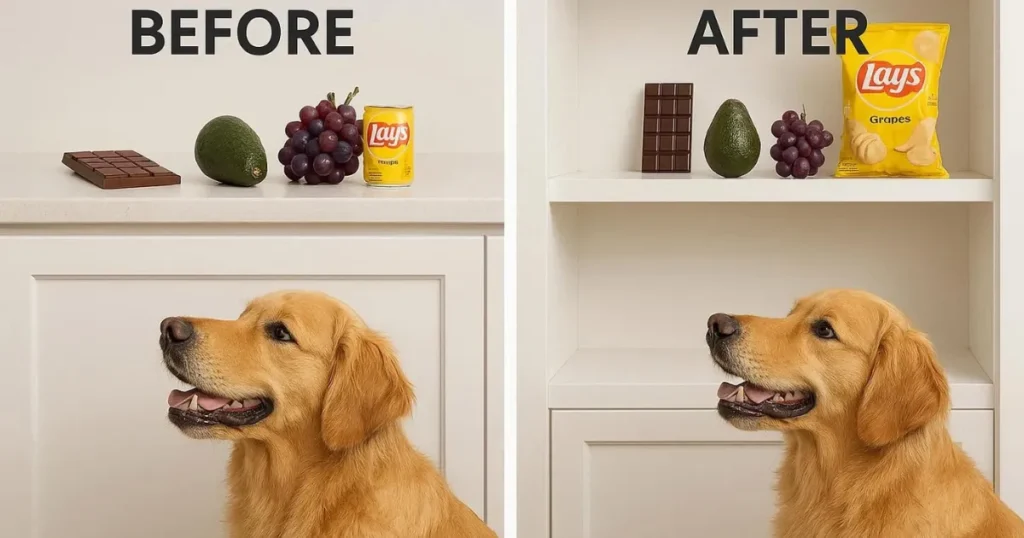
Move ALL foods that are toxic to dogs to cabinets 5+ feet high with child-proof latches. Don’t rely on closed doors – Golden Retrievers open standard cabinets easily.
Priority Items to Elevate:
- Chocolate and baking supplies
- Xylitol-containing products
- Onion/garlic powders
- Raisins and nuts
- Coffee and tea
Strategy 2: Bedroom Purge Protocol
Remove all edible items from bedrooms, including nightstands, dressers, and closets. Store purses containing gum on high hooks or in closed closets.
Complete Bedroom Removal:
- Sugar-free gum and mints
- Chocolate bars or snacks
- Medications (move to locked bathroom cabinet).
- Vitamins and supplements.
Strategy 3: Bathroom Lockdown.
Use child-proof latches on all bathroom cabinets. Store medications in high medicine cabinets, not counter-level drawers, that Golden Retrievers can nose open.
Strategy 4: Living Room Zero-Tolerance Policy.
Eliminate ALL food from living rooms and entertainment areas. No candy dishes, no snack bowls, no unfinished drinks left on coffee tables.
Strategy 5: Office and Workspace Rules.
If you work from home, keep the office door closed or establish a strict no-food-in-desk-drawers policy. Break rooms in home offices need the same protocols as kitchens.
Strategy 6: Garage and Storage Security.
Install locking mechanisms on garage doors leading into the home. Secure bulk food storage in rodent- and dog-proof containers elevated off the ground.
Strategy 7: Guest Education Protocol.
Inform ALL visitors that foods bad for dogs are not to be offered under any circumstances. Visitors should store purses on hooks or in closets, not on the floor or on low furniture where Golden Retrievers can reach them.
Strategy 8: Regular Home Audits.
Monthly walk-through of every room, asking: “Could my Golden Retriever access anything edible here?” Dropped medications, forgotten candy, and pantry items moved during cleaning all create new risks.
Emergency Response: When Dogs Access Foods That Are Toxic.
Time-sensitive protocols when Golden Retrievers consume toxic foods:
Immediate Actions (0-5 Minutes).
- Identify the toxic substance precisely – product name, estimated amount consumed.
- Call veterinarian or Pet Poison Helpline – (855) 764-7661, available 24/7.
- Note time of consumption – critical for treatment timing decisions.
- Remove remaining toxic substance – prevent additional consumption.
- Do NOT induce vomiting without approval – some toxins are more dangerous if vomited.
Xylitol Exposure (Fastest Response).
Timeline Critical: Hypoglycemia develops 15-30 minutes post-consumption.
- Emergency veterinary care IMMEDIATELY while driving.
- Do NOT wait for symptoms.
- Every minute affects survival.
Chocolate Consumption.
Timeline: 0-2 Hours Optimal.
- Calculate theobromine dose based on chocolate type.
- Induce vomiting with veterinary approval if within 2 hours.
- Activated charcoal prevents continued absorption.
Grape/Raisin Ingestion.
Timeline: 0-2 Hours Critical.
- Kidney protection must begin IMMEDIATELY.
- Even 4-5 grapes warrant emergency evaluation.
- Aggressive IV fluids for 48-72 hours.
Onion/Garlic Exposure.
Timeline: 24-48 Hours for Evaluation.
- Symptoms are delayed 3-5 days as anemia develops.
- Bloodwork monitors red blood cell destruction.
- Cumulative toxicity requires tracking all exposures.
What foods that are toxic to dogs are in every kitchen?
Foods that are toxic to dogs in all kitchens include: chocolate (pantry/baking supplies), onion and garlic powder (spice rack), xylitol products (sugar-free section), grapes/raisins (fruit bowls), macadamia nuts (baking supplies), raw yeast dough (counters), and coffee grounds.
What foods bad for dogs do owners not realize are dangerous?
Owners don’t realize these foods bad for dogs are toxic: sugar-free peanut butter (xylitol), onion powder in seasonings, garlic salt, macadamia nuts in cookies, grapes in salads, raw bread dough, alcohol-soaked desserts.
Where are foods that are toxic to dogs stored outside kitchens?
Foods that are toxic to dogs hide in: bedroom nightstands (chocolate, gum), bathrooms (toothpaste with xylitol, medications), living rooms (candy dishes), home offices (desk snacks), purses (sugar-free mints), garages (bulk chocolate storage).
What are the most common foods that are toxic to dogs in emergencies?
Most common emergency foods that are toxic to dogs: xylitol products (gum, peanut butter), chocolate (all types), grapes and raisins, onions/garlic (often in human food), macadamia nuts, fatty foods (pancreatitis), and alcohol.
How do I identify foods bad for dogs in my pantry?
Identify foods bad for dogs by checking labels for: xylitol (sugar-free products), chocolate, raisins in snacks, garlic powder, onion powder, macadamia nuts, and anything moldy. Read EVERY ingredient list on sugar-free items.
What foods that are toxic to dogs cause immediate symptoms?
Foods causing immediate symptoms: xylitol (15-30 minutes – weakness, collapse), alcohol (immediate intoxication), raw yeast dough (30 minutes – bloat, pain). Most toxins, like chocolate and grapes, cause delayed symptoms (hours to days).
What household foods bad for dogs surprise veterinarians?
Surprising foods bad for dogs: sugar-free peanut butter (xylitol, increasingly used in brands), onion powder (cumulative daily seasoning), macadamia nuts (in bedroom snacks), grapes (single servings at kid’s lunches), garlic in “healthy” homemade dog food recipes.
Which rooms contain the most foods that are toxic to dogs?
Kitchens contain most foods that are toxic to dogs (60% of exposures), followed by bedrooms (20% – xylitol gum in nightstands/purses), living rooms (10% – candy dishes), bathrooms (5% – medications/toothpaste), and garages (5% – bulk storage, compost).
What foods that are toxic to dogs require immediate emergency care?
Immediate emergency foods: xylitol (any amount), baking chocolate/dark chocolate (2+ oz), grapes or raisins (any amount), large amounts of onions/garlic, alcohol, raw yeast dough, certain wild mushrooms. Call the vet BEFORE symptoms appear.
How do foods bad for dogs affect Golden Retrievers differently?
Foods bad for dogs affect Golden Retrievers through greater total consumption (eating entire containers), increased counter access (reaching elevated surfaces), indiscriminate eating (not sampling first), and breed predisposition to pancreatitis (fatty foods are especially dangerous).
What are foods that are toxic to dogs visitors might bring?
Visitors bring foods that are toxic to dogs in: purses (xylitol gum, chocolate), coat pockets (mints, candy), diaper bags (raisins, crackers with garlic), and lunch boxes (grapes, chocolate cookies). Establish firm no-feeding rules before guests arrive.
Can foods that are toxic to dogs be stored safely?
Foods that are toxic to dogs can be stored safely using cabinets 5+ feet high with child-proof latches, locking pantries, airtight containers, garage storage with secure doors, and eliminating bedroom/bathroom/living room food entirely.
What foods bad for dogs cause cumulative toxicity?
Cumulative toxicity foods bad for dogs: onions and garlic (daily small amounts worse than a single large dose), fatty foods (repeated exposure increases pancreatitis risk). Most toxins are acute (chocolate, xylitol), but alliums accumulate damage.
Where do Golden Retrievers find foods that are toxic to dogs most often?
Golden Retrievers find foods that are toxic to dogs: kitchen counters (35%), bedroom nightstands/purses (25%), living room candy dishes (15%), dining tables (10%), garages (10%), bathrooms (5%). Counter-surfing accounts for the majority.
What foods that are toxic to dogs have no safe dose?
Foods with no safe dose: xylitol (2-3 gum pieces toxic), grapes/raisins (4-5 grapes dangerous), baking chocolate (2oz causes severe symptoms). “A little bit” doesn’t exist for these foods that are toxic to dogs.
Conclusion.
Understanding foods that are toxic to dogs requires a room-by-room assessment beyond a simple kitchen focus. Toxic exposures occur throughout homes: 60% in kitchens (pantries, counters, refrigerators), 20% in bedrooms (nightstands with gum, purses with chocolate), 10% in living rooms (candy dishes, snack bowls), and 10% elsewhere (bathrooms, offices, garages). Golden Retrievers’ counter-surfing abilities and multi-room access create exposure risk far beyond traditional food storage areas.
Critical foods bad for dogs include xylitol (found in gum, peanut butter, toothpaste), chocolate (stored in kitchens, bedrooms, offices), grapes and raisins (fruit bowls, lunch boxes, pantries), onions and garlic (spice racks, seasonings, homemade dog food), macadamia nuts (snack drawers, bulk storage), and alcohol (living rooms, refrigerators). Location matters as much as substance – chocolate stored in high kitchen cabinets becomes irrelevant when Golden Retrievers access it from bedroom nightstands.
The most dangerous pattern involves xylitol products that owners don’t realize they possess. Sugar-free peanut butter purchased without label checking, gum in purses accessible to Golden Retrievers, and mint-flavored toothpaste in bathroom cabinets cause 40% of the xylitol emergencies I treat – all preventable through simple location-based vigilance.
Where Did Your Golden Retriever Access Toxic Foods?
Share your story about where your Golden Retriever found foods that are toxic to dogs. Understanding real-world exposure locations helps other owners effectively secure these areas.
- Which room was the exposure in?
- What toxic food did they access?
- How did they reach it?
Share in comments or tag #GoldenRetrieverSafety and #ToxicFoodLocation to help others learn from your experience.

Dr. Nabeel A.
Hi, I’m Dr. Nabeel Akram – a farm management professional by trade and a passionate Golden Retriever enthusiast at heart. With years of experience in animal science and livestock care, I’ve built a career around understanding animals—how they live, thrive, and bring value to our lives. This blog is a personal project born from that same passion, focusing on one of the most loyal and lovable breeds out there: the Golden Retriever. Whether I’m managing farm operations or sharing insights on canine health, behavior, and care, it all ties back to one core belief—animals deserve thoughtful, informed, and compassionate attention. Welcome to a space where professional expertise meets genuine love for dogs.
Facebook |
Links will be automatically removed from comments.