
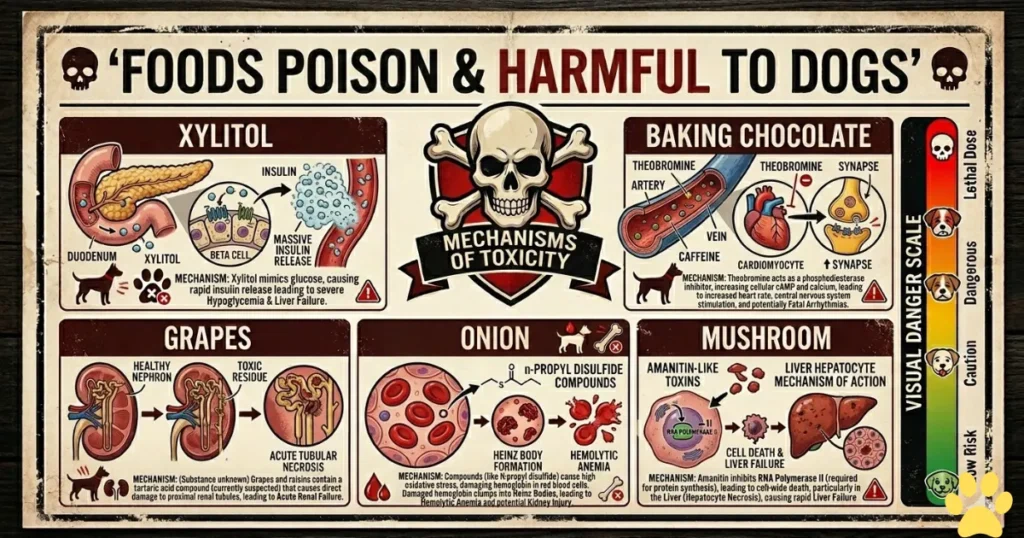
Identifying foods harmful to dogs requires understanding how these foods poison dogs – not just memorizing lists, but comprehending the toxic mechanisms that explain why certain foods harm dogs differently than they harm humans. I’ve treated countless Golden Retrievers where owners knew chocolate was “bad” but didn’t understand theobromine accumulation, recognized onions as toxic without realizing cumulative hemolytic effects, or heard about xylitol dangers while missing the dual-mechanism hypoglycemia-plus-hepatotoxicity pattern. This mechanism knowledge transforms vague danger awareness into actionable emergency response because understanding HOW foods poison dogs dictates WHAT treatment saves lives.
Golden Retrievers experience huge harm from foods poison to dogs due to breed characteristics affecting both exposure and toxicity severity. Their enthusiastic consumption means faster ingestion rates that overwhelm first-pass metabolism; their large size creates higher absolute toxin loads when accessing entire containers; and their genetic predisposition to certain conditions (pancreatitis, hemangiosarcoma) makes specific toxins more dangerous for this breed. Their retriever genetics drive outdoor foraging behaviors, increasing exposure to wild mushrooms and poisoned bait beyond typical household food dangers.
This toxin-class-focused guide organizes foods harmful to dogs by mechanism of action rather than alphabetically, explains why understanding toxin categories enables better emergency decision-making than simple food lists, provides antidote information where specific reversal agents exist versus supportive-care-only situations, and addresses the foods poison to dogs through mechanisms Golden Retriever owners consistently fail to understand despite knowing the foods are dangerous.
Contents
- 1 Foods Harmful to Dogs: Methylxanthine Toxins
- 2 Foods Poison to Dogs: Sugar Alcohols (Polyol Toxins).
- 3 Foods Harmful to Dogs: Hemolytic Toxins.
- 4 Definitive Statements on Foods Harmful to Dogs.
- 5 8 Toxin Classes and Their Antidotes.
- 5.1 Class 1: Methylxanthines (Chocolate, Coffee, Tea).
- 5.2 Class 2: Sugar Alcohols (Xylitol).
- 5.3 Class 3: Unknown Renal Toxins (Grapes, Raisins).
- 5.4 Class 4: Hemolytic Agents (Onions, Garlic).
- 5.5 Class 5: Amatoxins (Death Cap Mushrooms).
- 5.6 Class 6: Ethanol (Alcohol).
- 5.7 Class 7: Tremorgenic Mycotoxins (Moldy Foods).
- 5.8 Class 8: Fatty Food-Induced Pancreatitis.
- 6 Foods Poison to Dogs: Treatment Decision Tree.
- 6.1 Toxins with Absorption Prevention (Activated Charcoal).
- 6.2 Toxins Requiring Specific Supportive Care.
- 6.3 Toxins with Elimination Enhancement.
- 6.4 What foods harmful to dogs require immediate emergency care?
- 6.5 How do foods poison dogs differently than humans?
- 6.6 What are the most common foods harmful to dogs by toxin class?
- 6.7 Which foods poison to dogs have antidotes?
- 6.8 Why are some foods harmful to dogs but not humans?
- 6.9 What foods harmful to dogs cause cumulative toxicity?
- 6.10 How do toxin mechanisms affect treatment for foods poison to dogs?
- 6.11 What foods harmful to dogs affect Golden Retrievers worse than other breeds?
- 6.12 Which foods poison to dogs through liver damage?
- 6.13 What foods harmful to dogs require blood transfusions?
- 6.14 How long do foods poison to dogs stay in the system?
- 6.15 What foods harmful to dogs show delayed symptoms?
- 6.16 Can understanding toxin mechanisms save dogs from foods poison to them?
- 6.17 What foods harmful to dogs require the longest hospitalization?
- 6.18 Which foods poison to dogs have highest mortality rates?
- 7 Conclusion.
Foods Harmful to Dogs: Methylxanthine Toxins
What can dogs eat and not eat? Methylxanthines (theobromine, caffeine) are competitive non-selective phosphodiesterase inhibitors causing cardiac and CNS toxicity:
Chocolate – Theobromine and Caffeine
Toxic Mechanism:
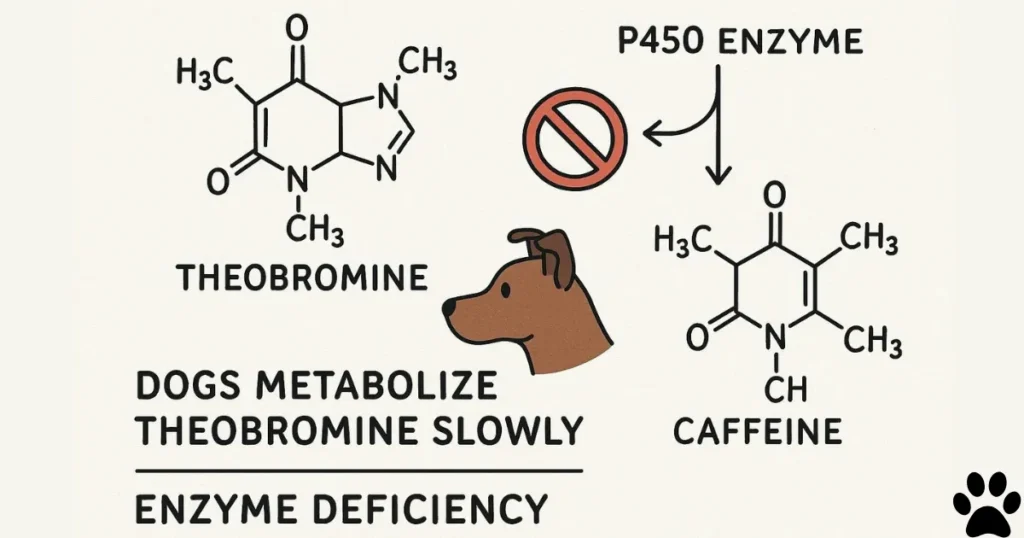
Methylxanthines inhibit phosphodiesterase enzymes, increasing intracellular cyclic AMP. This causes increased calcium mobilization, catecholamine release, and myocardial stimulation. Dogs metabolize theobromine 3-4x slower than humans (an 18-hour half-life versus 3 hours), allowing it to accumulate to toxic levels.
Why These Are Foods Harmful to Dogs:
Dogs lack efficient cytochrome P450 enzymes for theobromine metabolism. Humans rapidly convert theobromine to methylxanthine metabolites, which are quickly eliminated – dogs cannot, causing sustained elevated blood levels.
Clinical Effects by System:
- Cardiovascular: Tachycardia, arrhythmias, hypertension
- Neurological: Tremors, seizures, hyperthermia
- Gastrointestinal: Vomiting, diarrhea
- Renal: Diuresis, potential kidney damage
Theobromine Content:
- Cocoa powder: 800mg/oz
- Baking chocolate: 450mg/oz
- Dark chocolate: 160mg/oz
- Milk chocolate: 60mg/oz
Treatment:
No specific antidote. Activated charcoal prevents absorption. IV fluids, anti-arrhythmics, and benzodiazepines for seizures. Lipid emulsion therapy for severe cases.
Golden Retriever Specifics:
Large breed means higher total theobromine consumed when accessing chocolate containers. A 70-lb dog consuming an entire bag of chocolate chips may ingest 2000-3000mg theobromine – well into the lethal range.
Coffee and Tea
Toxic Mechanism: Identical to chocolate – methylxanthine toxicity. Caffeine is an additional methylxanthine compound with effects.
Caffeine Content:
- Coffee beans: 10-20mg per bean
- Brewed coffee: 100-200mg per cup
- Energy drinks: 80-150mg per serving
Why More Concentrated:
Coffee and tea lack theobromine dilution in cacao solids. Pure caffeine is MORE toxic per gram than theobromine.
Foods Poison to Dogs: Sugar Alcohols (Polyol Toxins).
Xylitol and other sugar alcohols trigger insulin-mediated hypoglycemia and hepatotoxicity:
Xylitol – Dual Mechanism Toxin.
Toxic Mechanism # 1 – Hypoglycemia:
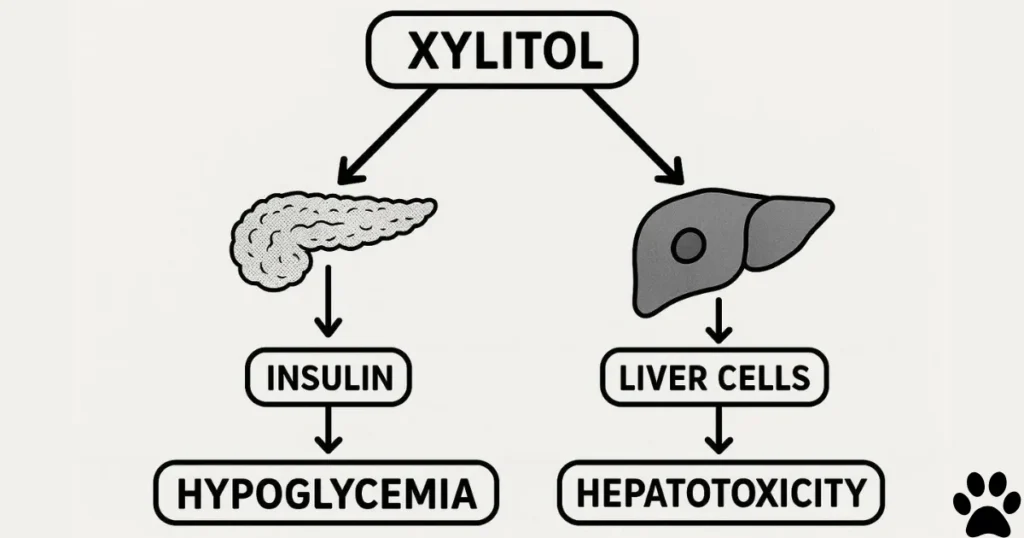
Xylitol triggers massive insulin release from pancreatic beta cells in dogs (but NOT in humans). Dogs’ insulin response to xylitol is 5-7x higher than glucose response. This causes a rapid blood sugar plummet (15-30 minutes), leading to weakness, seizures, and death.
Toxic Mechanism # 2 – Hepatotoxicity:
Higher doses cause direct hepatocyte damage through an unknown mechanism. Acute hepatic necrosis develops 12-24 hours post-ingestion, causing liver failure by 48-72 hours.
Why These Foods Poison Dogs But Not Humans:
Humans’ pancreatic beta cells do NOT respond to xylitol with insulin secretion. Dogs have xylitol-responsive insulin secretion, unique among mammals.
Dose-Dependent Effects:
- 0.1 g/kg: Hypoglycemia only.
- 0.5 g/kg: Hepatotoxicity begins.
- 1.0 g/kg: Severe liver failure likely.
Treatment:
IV dextrose for hypoglycemia. Hepatoprotectants (S-adenosylmethionine, N-acetylcysteine). No reversal agent exists. Supportive care determines survival.
Hidden Sources of Foods Harmful to Dogs:
- Peanut butter (increasing brands).
- Baked goods.
- Medications and supplements.
- Dental products.
- Nasal sprays.
Vet’s Tip: Xylitol content isn’t always listed as grams on labels. Look for “sugar alcohols” in nutrition facts. If present, assume xylitol content equals the total sugar alcohol grams listed and calculate toxicity accordingly.
Foods Harmful to Dogs: Hemolytic Toxins.
These damage red blood cells, causing anemia:
Onions, Garlic, Leeks, Chives (Allium Species).
Toxic Mechanism:
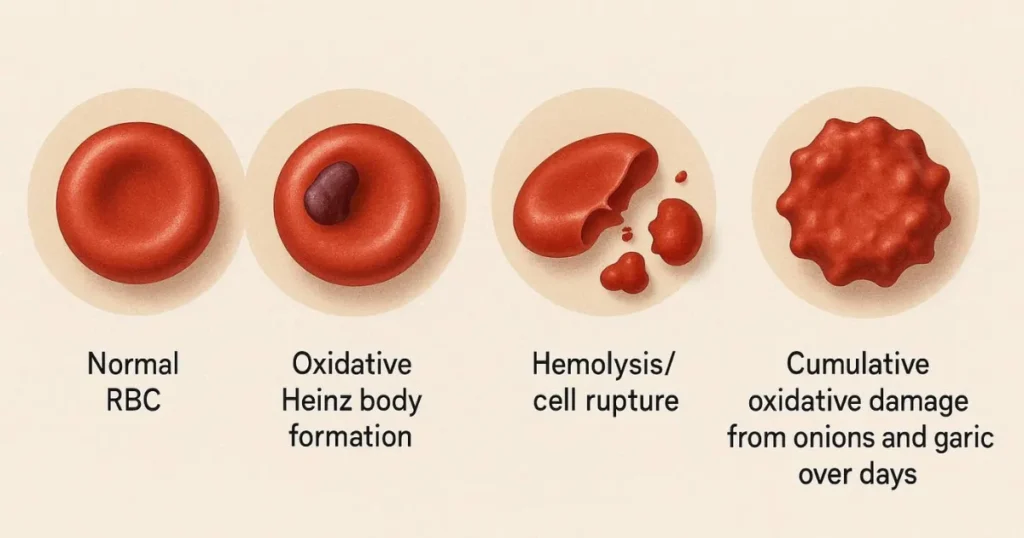
N-propyl disulfide and sodium n-propylthiosulfate oxidize hemoglobin to methemoglobin and create Heinz bodies (denatured hemoglobin attached to RBC membranes). Oxidative damage causes red blood cells to rupture (hemolysis), releasing hemoglobin. Bone marrow cannot produce new RBCs fast enough to compensate, leading to progressive anemia.
Why Cumulative Toxicity:
Unlike acute poisons, allium compounds accumulate. Each exposure adds oxidative damage. Small daily amounts cause MORE severe anemia than single large doses because ongoing hemolysis prevents recovery.
All Forms Toxic:
- Raw and cooked.
- Dried and powdered (MORE concentrated).
- Onion/garlic salt.
- Foods cooked with alliums (compounds remain).
Clinical Timeline:
- Days 1-3: No symptoms (lag time).
- Days 3-5: Weakness, pale gums, red/brown urine.
- Days 5-7: Severe anemia, tachycardia, collapse.
- Recovery: 2-4 weeks if treated.
Treatment:
No antidote. Supportive care: IV fluids, oxygen therapy. Severe cases require blood transfusion. S-adenosylmethionine may reduce oxidative damage.
Golden Retriever Risk:
Owners add “healthy” garlic to homemade dog food daily. 1/4 teaspoon garlic powder daily for 10-14 days causes severe anemia requiring transfusion.
Definitive Statements on Foods Harmful to Dogs.
In veterinary toxicology, understanding toxin mechanisms enables better emergency response than memorizing food lists. Knowing xylitol causes dual-mechanism toxicity (hypoglycemia plus hepatotoxicity) explains why treatment must address blood sugar IMMEDIATELY while preparing for liver failure 24 hours later – information simple “xylitol is toxic” warnings don’t convey.
Foods poison to dogs through mechanisms absent in human physiology. Xylitol triggers canine pancreatic insulin release that doesn’t occur in humans. Theobromine accumulates in dogs due to the deficient cytochrome P450 metabolism that humans possess. Allium compounds cause oxidative damage to RBCs, and dogs are uniquely susceptible because of specific differences in hemoglobin structure.
The foods harmful to dogs, causing most preventable deaths, are those that owners recognize as “toxic foods” without understanding the mechanism. They know chocolate is bad, but don’t realize ongoing theobromine accumulation means treatment must continue 18-24 hours post-ingestion. They avoid onions without recognizing that cumulative daily garlic powder exposure is MORE dangerous than a single large onion dose.
Golden Retrievers’ rapid consumption rates overwhelm first-pass hepatic metabolism, which protects dogs that eat slowly. A 70-lb Golden eating 6 ounces of baking chocolate in 60 seconds delivers a massive theobromine bolus, exceeding the liver’s detoxification capacity; the same amount consumed over 6 hours allows partial metabolism, reducing toxicity.
8 Toxin Classes and Their Antidotes.
Class 1: Methylxanthines (Chocolate, Coffee, Tea).
- Mechanism: Phosphodiesterase inhibition
- Antidote: None
- Treatment: Activated charcoal, lipid emulsion (experimental), supportive care
- Golden Retriever Dose: 200mg theobromine/kg lethal (6oz baking chocolate for 70-lb dog).
Class 2: Sugar Alcohols (Xylitol).
- Mechanism: Insulin surge → hypoglycemia; direct hepatotoxicity.
- Antidote: None.
- Treatment: IV dextrose, hepatoprotectants, hospitalization.
- Golden Retriever Dose: 0.1 g/kg hypoglycemia, 0.5 g/kg hepatotoxicity (3-16g for a 70-lb dog).
Class 3: Unknown Renal Toxins (Grapes, Raisins).
- Mechanism: Unknown compound → acute kidney failure
- Antidote: None
- Treatment: Aggressive IV fluids, activated charcoal, kidney monitoring
- Golden Retriever Dose: Idiosyncratic – as few as 4-5/10 lbs have caused death.
Class 4: Hemolytic Agents (Onions, Garlic).
- Mechanism: Oxidative RBC damage → hemolytic anemia
- Antidote: None
- Treatment: Blood transfusion (severe), S-adenosylmethionine, supportive care
- Golden Retriever Dose: 5g onion/kg (160g for 70-lb dog), cumulative garlic powder is more dangerous food.
Class 5: Amatoxins (Death Cap Mushrooms).
- Mechanism: RNA polymerase II inhibition → hepatocyte death
- Antidote: None (silibinin helps, not a true antidote)
- Treatment: Aggressive supportive care, silibinin IV, activated charcoal
- Golden Retriever Dose: Single mushroom potentially lethal.
Class 6: Ethanol (Alcohol).
- Mechanism: CNS depression, metabolic acidosis, and hypoglycemia.
- Antidote: None (ethanol sometimes used for ethylene glycol, not ethanol itself).
- Treatment: IV fluids, dextrose, warming, and respiratory support.
- Golden Retriever Dose: 5-8g ethanol/kg (160-256g for a 70-lb dog = 5-8oz vodka).
Class 7: Tremorgenic Mycotoxins (Moldy Foods).
- Mechanism: GABA antagonism → neurological hyperexcitability
- Antidote: None
- Treatment: Benzodiazepines, methocarbamol, temperature control
- Golden Retriever Source: Compost bins, garbage, moldy foods.
Class 8: Fatty Food-Induced Pancreatitis.
- Mechanism: Excessive fat → pancreatic inflammation → systemic effects
- Antidote: None
- Treatment: NPO (nothing by mouth), IV fluids, pain management, antiemetics
- Golden Retriever Risk: Breed predisposition makes fatty foods MORE harmful foods.
Foods Poison to Dogs: Treatment Decision Tree.
Understanding the poisons and toxin class determines the treatment approach.
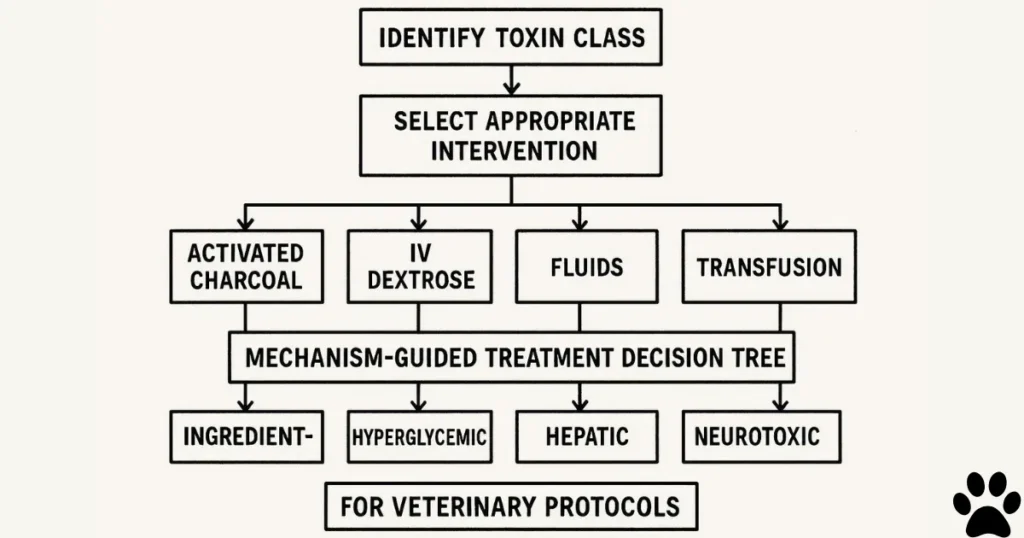
Toxins with Absorption Prevention (Activated Charcoal).
Effective For:
- Chocolate (theobromine).
- Onions/garlic (oxidants).
- Grapes (unknown toxin).
- Mushrooms (amatoxins).
Time Window:
Within 1-4 hours post-ingestion Mechanism: Binds toxins in the GI tract, preventing absorption.
Toxins Requiring Specific Supportive Care.
Xylitol:
- IV dextrose (hypoglycemia).
- Hepatoprotectants (liver damage).
- Frequent glucose monitoring.
Chocolate:
- Anti-arrhythmics (cardiac effects).
- Benzodiazepines (seizures).
- IV fluids (diuresis).
Grapes:
- Aggressive IV fluids (kidney protection).
- Dialysis if available (kidney failure).
Onions/Garlic:
- Blood transfusion (severe anemia).
- Oxygen therapy (tissue hypoxia).
- S-adenosylmethionine (antioxidant).
Toxins with Elimination Enhancement.
Chocolate (Theobromine):
- IV fluids increase renal excretion.
- Multiple-dose activated charcoal prevents enterohepatic recirculation.
Ethanol:
- Warming (hypothermia prevention).
- IV dextrose (hypoglycemia).
What foods harmful to dogs require immediate emergency care?
Foods harmful to dogs requiring immediate care: xylitol (hypoglycemia within 30 minutes), chocolate (cardiac effects 6-12 hours), grapes (kidney protection must start immediately), Amanita mushrooms (no delay tolerated), alcohol (CNS depression), raw yeast dough (bloat/alcohol production).
How do foods poison dogs differently than humans?
Foods poison dogs through mechanisms absent in humans: xylitol triggers canine insulin release (not in humans), theobromine accumulates due to dogs’ deficient metabolism, onions cause oxidative RBC damage that dogs are susceptible to, and grapes harm dog kidneys (mechanism unknown).
What are the most common foods harmful to dogs by toxin class?
Most common by class: methylxanthines (chocolate, coffee), sugar alcohols (xylitol in gum/peanut butter), hemolytic agents (onions, garlic), unknown renal toxins (grapes, raisins), ethanol (alcohol, raw dough), amatoxins (wild mushrooms), fatty foods (pancreatitis triggers).
Which foods poison to dogs have antidotes?
NO common foods harmful to dogs have true antidotes. Treatment is supportive: IV dextrose (xylitol hypoglycemia), activated charcoal (absorption prevention), IV fluids (kidney protection, toxin elimination), and blood transfusion (severe anemia). Silibinin helps mushroom poisoning but isn’t a reversal agent.
Why are some foods harmful to dogs but not humans?
Foods harmful to dogs but safe for humans due to: different enzyme systems (theobromine metabolism), species-specific physiology (xylitol insulin response), distinct hemoglobin structures (allium oxidation), and unknown susceptibilities (grape kidney toxicity unique to dogs, cats).
What foods harmful to dogs cause cumulative toxicity?
Cumulative toxicity foods: onions and garlic (oxidative RBC damage accumulates), fatty foods (repeated pancreatitis episodes), possibly some mycotoxins. Small daily allium amounts are MORE dangerous than a single large dose because ongoing hemolysis prevents bone marrow compensation.
How do toxin mechanisms affect treatment for foods poison to dogs?
Understanding mechanisms directs treatment: xylitol (address hypoglycemia THEN liver protection), chocolate (cardiac monitoring plus seizure prevention), grapes (aggressive fluids for kidney protection), onions (antioxidants reduce oxidative damage), alcohol (warming plus glucose). Mechanism knowledge prevents treatment gaps.
What foods harmful to dogs affect Golden Retrievers worse than other breeds?
Fatty foods affect Golden Retrievers more severely due to their predisposition to pancreatitis. Theobromine affects all breeds equally by mechanism, but Golden Retrievers’ rapid consumption creates higher blood levels. Large size means higher absolute toxin loads from container consumption versus sampling.
Which foods poison to dogs through liver damage?
Liver-damaging foods: xylitol (direct hepatotoxicity at 0.5 g/kg), Amanita mushrooms (amatoxins destroy hepatocytes), excessive copper in certain foods, and moldy foods (aflatoxins). Xylitol is the most common household hepatotoxin requiring immediate intervention to prevent liver failure.
What foods harmful to dogs require blood transfusions?
Onion and garlic toxicity causes severe hemolytic anemia requiring blood transfusions when hematocrit drops below 15-20%. Severe hemorrhagic pancreatitis from fatty foods may require transfusions. Anticoagulant rodenticides (not food but ingested) definitely require transfusions.
How long do foods poison to dogs stay in the system?
Duration varies by toxin: theobromine (18-hour half-life), xylitol (rapid absorption but lingering effects 24-48 hrs), allium compounds (oxidative damage lasts weeks), grape toxin (kidney damage is permanent if not treated within hours), alcohol (metabolized in hours).
What foods harmful to dogs show delayed symptoms?
Delayed symptom foods: onions/garlic (anemia develops 3-7 days), grapes (kidney failure 48-72 hours), xylitol liver failure (12-24 hours after initial hypoglycemia), Amanita mushrooms (symptoms 6-24 hours, death 3-7 days), pancreatitis (symptoms 24-48 hours post-fatty meal).
Can understanding toxin mechanisms save dogs from foods poison to them?
Yes, knowledge of mechanisms enables better emergency response. Knowing xylitol causes dual toxicity means addressing hypoglycemia IMMEDIATELY while preparing for liver failure. Understanding theobromine’s 18-hour half-life means continuing treatment even after symptoms improve. Recognizing cumulative allium damage means evaluating total exposure, not just recent ingestion.
What foods harmful to dogs require the longest hospitalization?
Xylitol (24-72 hrs for liver monitoring), severe chocolate toxicity (24-48 hrs cardiac monitoring), grape-induced kidney failure (48-96 hrs IV fluids), Amanita mushrooms (days to weeks if survival is possible), severe pancreatitis (3-7 days NPO plus supportive care).
Which foods poison to dogs have highest mortality rates?
Highest mortality: Amanita mushrooms (> 50% even with treatment), untreated grape toxicity (high mortality if kidney failure develops), severe xylitol liver failure (significant mortality despite treatment), massive chocolate ingestion (cardiac arrest risk), severe pancreatitis with complications (15-30% mortality
Conclusion.
Understanding the toxic mechanisms of harmful foods to dogs enables a superior emergency response compared to simple food memorization. Xylitol operates through dual mechanisms – immediate insulin-mediated hypoglycemia plus delayed hepatotoxicity – requiring treatment addressing blood sugar within minutes while preparing for liver failure 24 hours later. Chocolate’s methylxanthine toxicity stems from dogs’ deficient theobromine metabolism, creating an 18-hour half-life versus 3 hours in humans, explaining why treatment must continue long after symptoms improve.
Critical foods poison to dogs through mechanisms absent in human physiology. Xylitol triggers pancreatic insulin release in dogs but not humans. Theobromine accumulates due to deficiencies in cytochrome P450. Allium compounds cause oxidative damage to red blood cells by altering hemoglobin structure, making dogs uniquely susceptible. Grapes harm dog kidneys through an unknown mechanism, and even researchers cannot identify the toxic compound.
The most dangerous pattern involves owners recognizing foods as “toxic” without understanding the mechanism. They know chocolate is harmful but don’t realize that ongoing accumulation means the dog getting WORSE 12 hours post-ingestion isn’t treatment failure – it’s expected theobromine kinetics. They avoid onions without recognizing that daily garlic powder in homemade food causes MORE damage than a single large onion dose, because cumulative oxidation prevents bone marrow compensation.
Treatment success depends on mechanism knowledge. Xylitol requires IV dextrose immediately, not in 2 hours. Chocolate needs activated charcoal, cardiac monitoring, and seizure prevention. Grapes demand aggressive IV fluids for kidney protection regardless of symptom absence. Onions need antioxidants to reduce ongoing oxidative damage. This mechanism-based approach prevents treatment gaps that simple “it’s toxic” warnings cannot address.
Did Understanding Toxin Mechanisms Help Your Emergency Response?
Share stories where knowing HOW foods poison dogs helped you make better emergency decisions. Did understanding xylitol’s dual toxicity, chocolate’s accumulation, or onion’s cumulative damage affect your treatment approach?
Tell us how mechanism knowledge changed your response in comments or tag #ToxinMechanisms and #GoldenRetrieverScience.

Dr. Nabeel A.
Hi, I’m Dr. Nabeel Akram – a farm management professional by trade and a passionate Golden Retriever enthusiast at heart. With years of experience in animal science and livestock care, I’ve built a career around understanding animals—how they live, thrive, and bring value to our lives. This blog is a personal project born from that same passion, focusing on one of the most loyal and lovable breeds out there: the Golden Retriever. Whether I’m managing farm operations or sharing insights on canine health, behavior, and care, it all ties back to one core belief—animals deserve thoughtful, informed, and compassionate attention. Welcome to a space where professional expertise meets genuine love for dogs.
Facebook |
Links will be automatically removed from comments.