
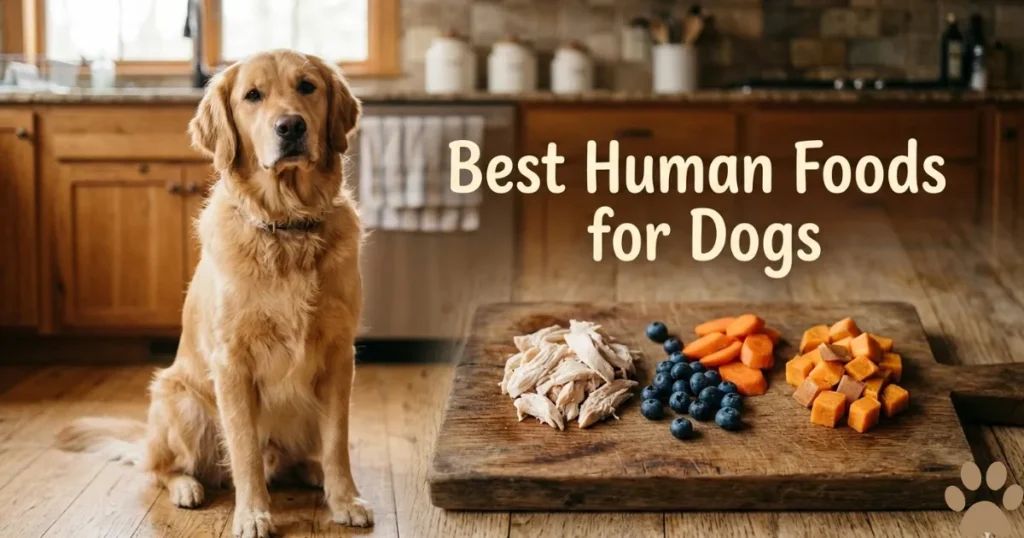
Most Golden Retriever owners share human food with their dog at some point – the question is whether that decision is guided by a real framework or a rough mental checklist built on assumptions. I often see owners get this wrong in both directions: sharing too freely without understanding the risks, or avoiding human food entirely when some of it offers genuine nutritional value.
Human foods for dogs aren’t uniformly dangerous or uniformly safe. For Golden Retrievers specifically, the stakes are higher than for many breeds. They carry above-average rates of food-triggered skin conditions, rank among the most obesity-prone dogs in veterinary practice, and hold the highest cancer incidence of any purebred breed. Each of those realities directly shapes which human foods belong in their diet and which ones don’t.
The best human food for dogs in this breed meets three criteria: it provides genuine nutritional value, it’s prepared without seasonings or additives, and it fits within daily caloric limits. This guide covers what clears that bar, what never will, the most common mistakes owners make, and how to introduce anything new without creating problems.
Contents
- 1 Best Human Food for Dogs: Safe Picks with Real Nutritional Value
- 2 Human Foods That Are Toxic to Dogs: Zero Exceptions
- 3 Why Human Foods for Dogs Require Golden Retriever-Specific Thinking
- 4 8 Mistakes Golden Retriever Owners Make With Human Food
- 4.1 1. Feeding at the table in response to begging.
- 4.2 2. Sharing seasoned food without checking ingredients.
- 4.3 3. Not tracking caloric load.
- 4.4 4. Skipping peanut butter label checks.
- 4.5 5. Assuming small amounts of toxins are safe.
- 4.6 6. Introducing multiple new foods simultaneously.
- 4.7 7. Treating natural origin as a safety signal.
- 4.8 8. Giving cooked poultry bones.
- 5 ✦ Vet Statement on Human Foods for Dogs
- 6 How to Introduce Human Foods to Your Golden Retriever
- 6.1 What are the best human foods for dogs?
- 6.2 Can dogs eat rice and chicken?
- 6.3 Is peanut butter safe human food for dogs?
- 6.4 What happens if my dog eats grapes?
- 6.5 Can Golden Retrievers eat cheese?
- 6.6 Is cooked salmon safe human food for dogs?
- 6.7 Can dogs eat apples?
- 6.8 What human food helps dogs with an upset stomach?
- 6.9 Can dogs eat eggs?
- 6.10 Is watermelon safe for dogs?
- 6.11 What vegetables are safe human foods for dogs?
- 6.12 How much human food can a Golden Retriever eat daily?
- 6.13 Can dogs eat tomatoes?
- 6.14 Is avocado toxic for dogs?
- 6.15 Can dogs eat oatmeal?
- 7 Conclusion
Best Human Food for Dogs: Safe Picks with Real Nutritional Value
These aren’t just technically safe – each one earns its place based on its nutritional contribution to Golden Retriever health.
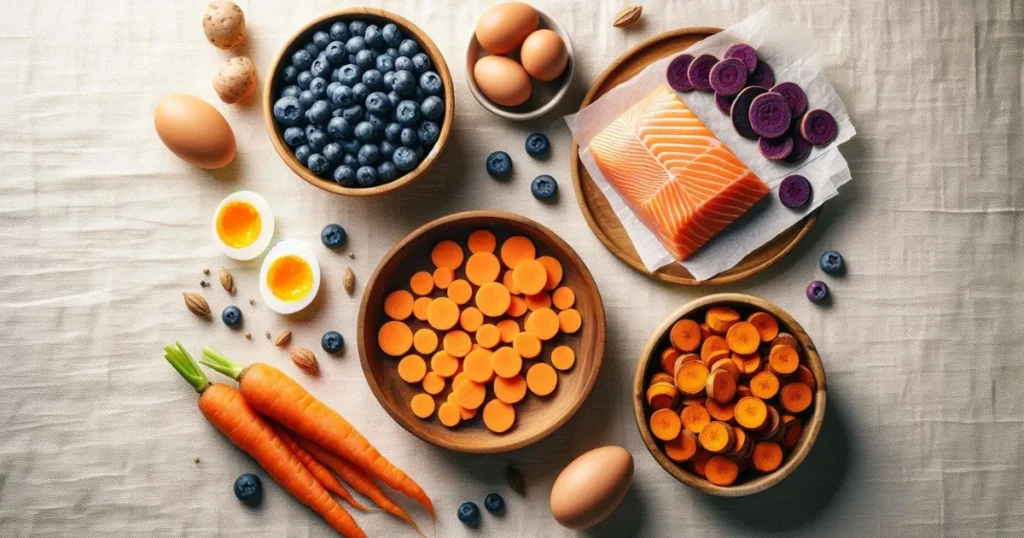
Plain Cooked Chicken or Turkey
Lean, boneless, skinless poultry, cooked without seasoning, is the most clinically useful human food for dogs. It forms the basis of veterinary elimination diets for diagnosing food sensitivities – directly relevant for a breed with elevated protein allergy rates. Boiled chicken with plain white rice is the first dietary intervention I recommend for Goldens with acute GI upset.
No skin – concentrated fat raises pancreatitis risk. No cooked bones – they splinter and lacerate the GI tract. No seasoning of any kind. Virtually every rotisserie preparation contains garlic or onion powder and is not safe.
Blueberries
Blueberries are among the best human food for dogs from a functional standpoint. Rich in anthocyanins and polyphenols, they deliver antioxidant activity directly relevant to a breed in which approximately 60% will develop cancer in their lifetime. Near-zero caloric load makes them ideal training treats. Frozen blueberries work equally well for enrichment in warmer months.
Serving: 8 – 10 berries per session. Rinse and offer as-is.
Plain Canned Pumpkin
Plain canned pumpkin – not sweetened pie filling – is one of the most underused human foods for dogs in this breed. Its soluble fiber works bidirectionally: it firms loose stool and relieves mild constipation, typically within 24 – 48 hours at 1 to 2 tablespoons. In canine gastroenterology, pumpkin is recognized as a prebiotic-rich food, supporting gut microbiome diversity and is relevant for Goldens with recurring GI sensitivity.
Cooked Sweet Potato
Plain baked or boiled sweet potato is a nutritionally dense human food that dogs benefit from directly – fiber, vitamins A and C, potassium, and digestible complex carbohydrates. It’s regularly recommended in integrative veterinary nutrition for Golden Retrievers with skin or immune concerns. Serve without butter, salt, or spice. Raw sweet potato is harder to digest and should be avoided.
Plain Cooked Eggs
Eggs carry one of the highest biological protein values in canine nutrition. Scrambled or hard-boiled with no butter or salt, they support coat condition, muscle maintenance, and recovery from illness. Raw eggs introduce a risk of salmonella and avidin, a compound that blocks biotin absorption over time. Always cook them. One egg, two to three times per week, is appropriate for an adult Golden.
Cooked Salmon
Fully cooked plain salmon is among the best human food for dogs, particularly for aging Golden Retrievers. Its EPA and DHA omega-3 content supports coat quality, joint mobility, and immune regulation – active concerns in this breed. Raw salmon can carry Neorickettsia helminthoeca, responsible for salmon poisoning disease in dogs, which is potentially fatal. Always cook fully. No seasoning.
Cooked Carrots
Raw and cooked carrots are low-calorie, well-tolerated human foods for dogs that can be handled at any reasonable serving size. Cooked versions improve beta-carotene bioavailability; raw versions provide dental abrasion benefits. For Goldens on calorie-restricted diets – common in this breed – carrots are a practical and defensible commercial treat substitute. Frozen baby carrots double as safe enrichment chews for anxious dogs.
Vet’s Tip: Commercial broths – including “natural” and low-sodium versions – regularly contain onion or garlic powder. Many owners add broth to food for palatability without checking the label. This is one of the most consistent sources of cumulative Allium exposure I see in dogs presenting with unexplained anemia. Read every ingredient before using any store-bought broth near your dog’s bowl.
Human Foods That Are Toxic to Dogs: Zero Exceptions
These foods cause serious, sometimes fatal outcomes. Ordered by clinical severity.
Grapes and Raisins
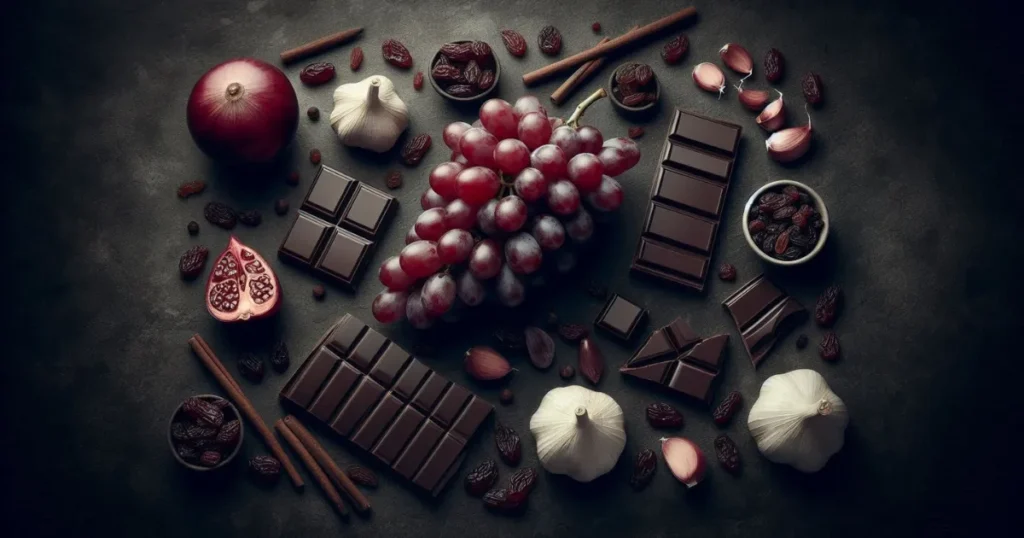
Mechanism unknown in veterinary medicine; outcome consistent: acute kidney failure, sometimes from a single exposure. No safe dose exists. Individual sensitivity is unpredictable – complete exclusion is the only defensible position.
Xylitol
Found in sugar-free gum, multiple peanut butter brands, baked goods, and flavored yogurts. Triggers rapid, severe insulin release in dogs, causing fatal hypoglycemia within hours. Liver failure at higher doses. Always check peanut butter labels – brands reformulate without notice. Natural peanut butter made with only peanuts is the sole safe option.
Onions, Garlic, Leeks, and Chives
All Allium family members – raw or cooked – oxidatively damage canine red blood cells, causing hemolytic anemia. Toxicity is cumulative. Small daily amounts from seasoned table food compound across days and weeks without any single obvious incident. Commercial broth is the most common low-visibility exposure route.
Chocolate
Theobromine and caffeine are toxic. Dark and baking chocolate have far higher concentrations than milk chocolate – but no form is safe. A 65-pound Golden faces GI distress from milk chocolate, cardiac arrhythmia and seizures from dark or baking chocolate.
Macadamia Nuts
Reliably produce neurological syndrome: weakness, tremors, hyperthermia, vomiting within 12 hours. Mechanism unclear. Clinical consistency warrants complete exclusion.
Raw Bread Dough
Rises inside a dog’s stomach, releasing ethanol while causing simultaneous bloating. Dogs metabolize alcohol far less efficiently than humans – disorientation, respiratory depression, and coma are realistic outcomes.
Avocado
Contains persin, causing vomiting and diarrhea. The pit is a choking and obstruction hazard. No nutritional value justifies the risk.
Why Human Foods for Dogs Require Golden Retriever-Specific Thinking
Generic lists treat all dogs as equivalent. For Golden Retrievers, three predispositions make it a clinical error.
Protein Allergy Pattern
In canine dermatology, Golden Retrievers rank among the breeds with the highest prevalence of dietary-triggered skin conditions. The trigger is protein – not grain. Chicken, beef, and dairy are the three most common food allergens in dogs – and the three proteins most frequently shared as human food. If your Golden has recurring ear infections, persistent paw licking, or skin irritation without a clear environmental cause, review every protein in the diet, including table scraps. A vet-supervised elimination diet with a novel single protein is the most reliable diagnostic tool.
Obesity and the 10% Ceiling
Golden Retrievers are among the five most obesity-prone breeds in veterinary practice. All human food, treats, and extras combined must not exceed 10% of daily caloric intake. For a moderately active 65-pound Golden on approximately 1,200 daily calories, that is 120 calories – one tablespoon of peanut butter or a small handful of cheese. Most owners sharing casually exceed this before they realize it.
Cancer Risk and Antioxidant Rationale
Golden Retrievers carry the highest cancer burden of any breed – approximately 60% will develop it in their lifetime. No diet prevents canine cancer. However, antioxidant-rich human foods for dogs – blueberries, cooked sweet potato, and plain salmon – are increasingly referenced in integrative veterinary oncology as nutritionally supportive. When choosing between human foods of comparable safety, this is a rational basis for favoring foods higher in nutritional density over empty-calorie options.

“Over the years, I’ve noticed Golden Retrievers with the most stable skin and digestive health are rarely fed the widest variety of human food. They’re fed a short, deliberate rotation of three to four known-safe foods held consistently. In a breed with documented sensitivity patterns, a narrow intentional rotation consistently outperforms a generous but unpredictable variety.”
8 Mistakes Golden Retriever Owners Make With Human Food
1. Feeding at the table in response to begging.
Reinforces the behavior directly. Human food should be a deliberate, separate event – never a reactive one.
2. Sharing seasoned food without checking ingredients.
Garlic and onion powder are present in most savory preparations. Even dishes that don’t taste of either often contain enough Alliums for cumulative harm.
3. Not tracking caloric load.
An ounce of cheddar is approximately 110 calories – nearly 10% of a 65-pound Golden’s daily budget from a single casual piece.
4. Skipping peanut butter label checks.
Brands contain xylitol and reformulate without announcement. Verify every container, including familiar brands.
5. Assuming small amounts of toxins are safe.
No safe dose exists for grapes, xylitol, or chocolate. Outcome depends on weight, individual metabolism, and cumulative history.
6. Introducing multiple new foods simultaneously.
When a reaction occurs with multiple new introductions, the cause is unidentifiable. One food, one 48-hour observation window.
7. Treating natural origin as a safety signal.
Grapes, macadamia nuts, and avocado are natural. None are safe for dogs. This is one of the most consequential assumptions I encounter from otherwise careful owners.
8. Giving cooked poultry bones.
Cooked bones splinter and lacerate the GI tract. This is a veterinary emergency. No cooked bone of any kind is safe.
✦ Vet Statement on Human Foods for Dogs
✦ In Golden Retrievers, food-triggered skin conditions are more commonly caused by protein sources – chicken, beef, or dairy – than by grain, making protein selection in human foods a breed-critical decision.
✦ In canine toxicology, xylitol is among the most acutely dangerous human food substances for dogs, capable of causing fatal hypoglycemia at doses inconsequential to a human.
✦ Human foods for dogs should not exceed 10% of total daily caloric intake – a threshold with heightened relevance for obesity-prone Golden Retrievers.
✦ In veterinary medicine, grape and raisin toxicity in dogs is dose-unpredictable – no safe threshold exists, and complete exclusion is the only defensible recommendation.
✦ The best human food for dogs combines safety, nutritional value, and portion discipline – plain cooked chicken, blueberries, pumpkin, eggs, sweet potato, salmon, and carrots meet all three criteria when prepared without seasoning.

How to Introduce Human Foods to Your Golden Retriever
- One new food at a time, plain and unseasoned
- Start small: one teaspoon for solids, one tablespoon for softer foods
- Observe 24 – 48 hours for loose stool, vomiting, skin reactions, or energy changes
- No reaction: food enters rotation with consistent portion discipline
- Keep a food log if your Golden has known sensitivities
- Consult your vet before introducing anything new if your dog is medicated, managing a chronic condition, or has had prior food reactions
If signs of toxic ingestion appear – sudden vomiting, collapse, pale gums, bloating, or disorientation – contact your vet or the ASPCA Animal Poison Control Center immediately.
What are the best human foods for dogs?
Plain cooked chicken, blueberries, cooked sweet potato, plain pumpkin, cooked eggs, and cooked salmon are the best human foods for dogs – safe, nutritious, and well-suited to Golden Retriever health when portioned correctly.
Can dogs eat rice and chicken?
Yes. Plain boiled chicken and white rice are one of the safest human food combinations for dogs, especially during GI recovery. Boneless, skinless, unseasoned chicken only. No broth.
Is peanut butter safe human food for dogs?
Only without xylitol. Check every label – multiple brands contain it, and reformulate without notice. Natural peanut butter with peanuts as the only ingredient is the safest option.
What happens if my dog eats grapes?
Reach out to your vet or the ASPCA Animal Poison Control Center near you right away. Grape toxicity causes acute kidney failure. Do not wait for symptoms – early intervention significantly improves outcomes.
Can Golden Retrievers eat cheese?
In small amounts, yes. High fat content raises pancreatitis risk. Use tiny pieces only as high-value training rewards. Avoid for overweight dogs or those with dairy sensitivity.
Is cooked salmon safe human food for dogs?
Yes. Fully cooked plain salmon is among the best human foods for dogs – rich in omega-3s that support coat, joints, and immunity. Raw salmon can cause a potentially fatal disease called salmon poisoning. Always cook fully.
Can dogs eat apples?
Yes, with core and seeds removed. Apple seeds contain trace cyanogenic compounds. The flesh is safe and fiber-rich. Slice and serve without the core.
What human food helps dogs with an upset stomach?
Plain boiled chicken with white rice, plain canned pumpkin (one to two tablespoons), and plain cooked oatmeal are the most effective human foods for dogs with mild GI upset.
Can dogs eat eggs?
Yes. Cooked only – scrambled or hard-boiled, no butter or salt. Raw eggs carry salmonella risk and block biotin absorption via avidin. One egg, two to three times per week, for an adult Golden.
Is watermelon safe for dogs?
Yes. Seedless watermelon flesh is safe and hydrating. Remove all seeds and rind. Cubed or frozen works well as a summer treat.
What vegetables are safe human foods for dogs?
Carrots, green beans, peas, cooked sweet potato, plain pumpkin, and cucumber are all safe. Avoid all Allium vegetables and raw potatoes without exception.
How much human food can a Golden Retriever eat daily?
No more than 10% of total daily caloric intake. For a 65-pound Golden on 1,200 daily calories, that is approximately 120 calories. Track this consistently.
Can dogs eat tomatoes?
Ripe red tomato flesh in small amounts is generally safe. All green parts – stem, leaves, unripe flesh – contain solanine and tomatine, which are toxic to dogs.
Is avocado toxic for dogs?
Yes. Avocado contains persin, which can cause vomiting and diarrhea. The pit is a choking and obstruction hazard. None of the avocado is safe or beneficial for human food for dogs.
Can dogs eat oatmeal?
Yes. Plain cooked oatmeal in water – not milk, not flavored instant – is safe and digestively useful. Two to three tablespoons for an adult Golden. Always check instant varieties for xylitol.
Conclusion
Human foods for dogs stop being a liability the moment they’re approached with a clear, breed-specific framework applied consistently. The harm almost always comes from sharing without structure – not from sharing itself.
Golden Retrievers are food-motivated, sensitivity-prone, and genuinely responsive to dietary quality. The best human food for dogs in this breed delivers real nutritional value, is prepared safely, and is served in appropriate portions. Blueberries over table scraps. Cooked salmon over seasoned leftovers. Plain sweet potato over buttered mash.
Build a short rotation of safe, nutritious human foods. Hold the 10% caloric ceiling without exception. Introduce anything new, one item at a time. For Goldens with existing sensitivities, weight concerns, or chronic conditions, run every dietary decision through your vet first. Intentional sharing, applied consistently, is not restrictive – for this breed, it is the right standard.
Share Your Experience
Has a specific human food become a reliable training reward or digestive staple for your Golden?
Or have you discovered what this breed doesn’t tolerate – through trial and error or a vet visit? Share it in the comments. Real owner observations about human foods for dogs help every Golden Retriever family make smarter decisions, and with a breed this food-motivated, honest experience is some of the most useful guidance available.

Dr. Nabeel A.
Hi, I’m Dr. Nabeel Akram – a farm management professional by trade and a passionate Golden Retriever enthusiast at heart. With years of experience in animal science and livestock care, I’ve built a career around understanding animals—how they live, thrive, and bring value to our lives. This blog is a personal project born from that same passion, focusing on one of the most loyal and lovable breeds out there: the Golden Retriever. Whether I’m managing farm operations or sharing insights on canine health, behavior, and care, it all ties back to one core belief—animals deserve thoughtful, informed, and compassionate attention. Welcome to a space where professional expertise meets genuine love for dogs.
Facebook |
Links will be automatically removed from comments.